
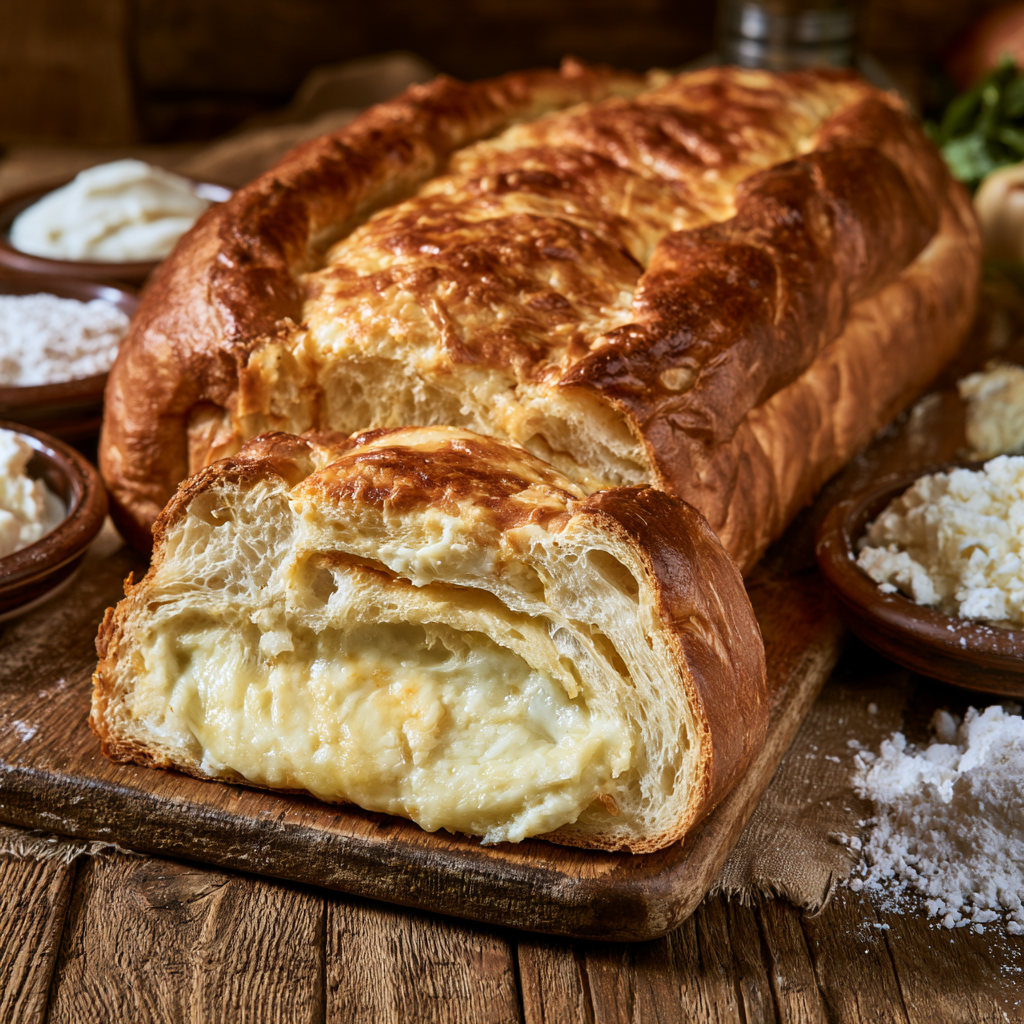
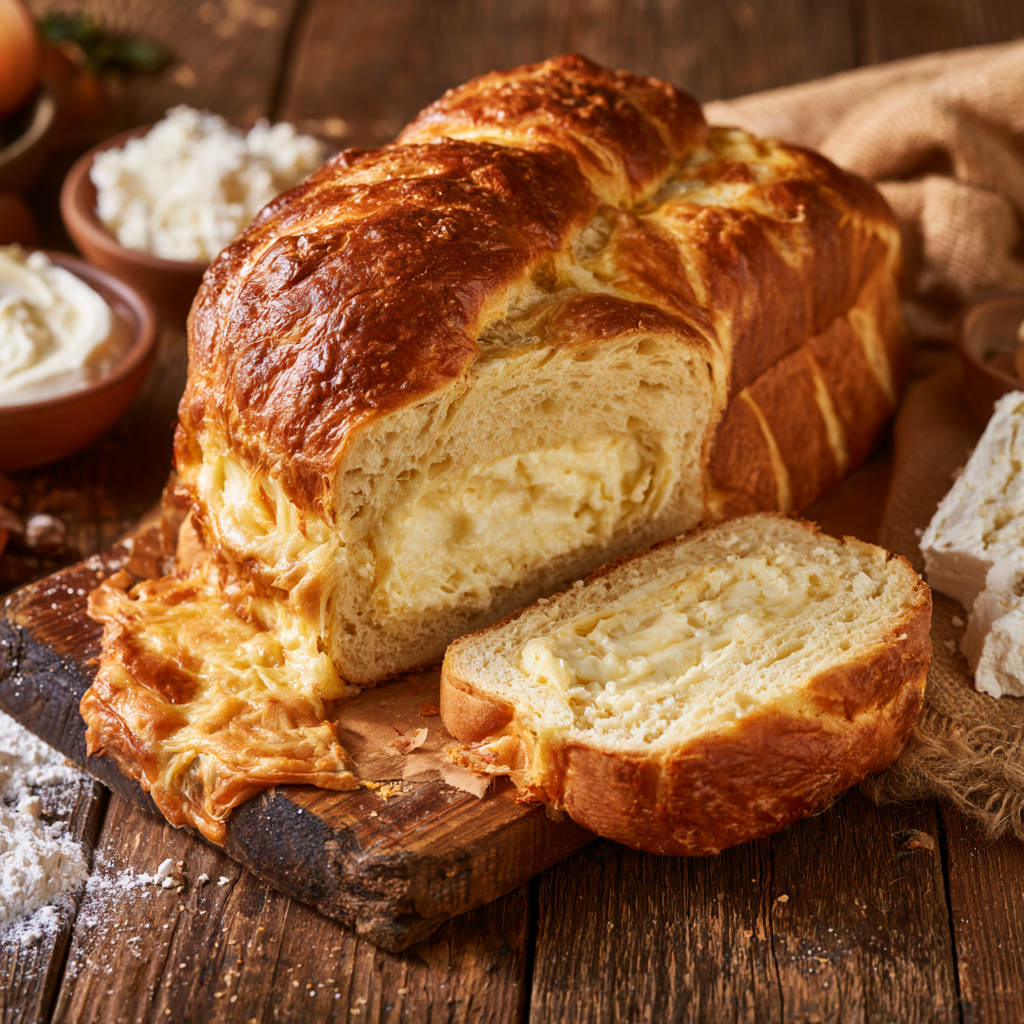
Mastoris cheese bread recipe combines a delectable mixture of rather sweet dough with a decadently rich cheesy filling that balances on the verge between slightly sweet and savoury. This type of bread has softer dough compared to a normal savoury cheese roll and is more like cake/bakery, so it allows breakfast, brunch or coffee snack time for this.
For home bakers wanting to recreate this kind of bread, it isn’t only about adding cheese – you will also need a dough with good oven spring that doesn’t collapse after baking. How to Make Mastoris Cheese Bread at Home: Ingredients, How to Prepare the Dough, Filling Technique (also ways of avoiding common mistakes!), and Baking Process.
What Makes This Cheese Bread Different?
Many cheese breads focus mainly on the cheese itself, but this recipe style stands out because of the contrast between the dough and filling.
It is only slightly sweetened, enriched with milk and butter to form a soft crumb rather than make a crusty loaf, besides providing a creamy, salty component to balance out the sweetness of the bread.
The result is a bread that works in both sweet and savoury settings.
Ingredients for Mastoris Cheese Bread
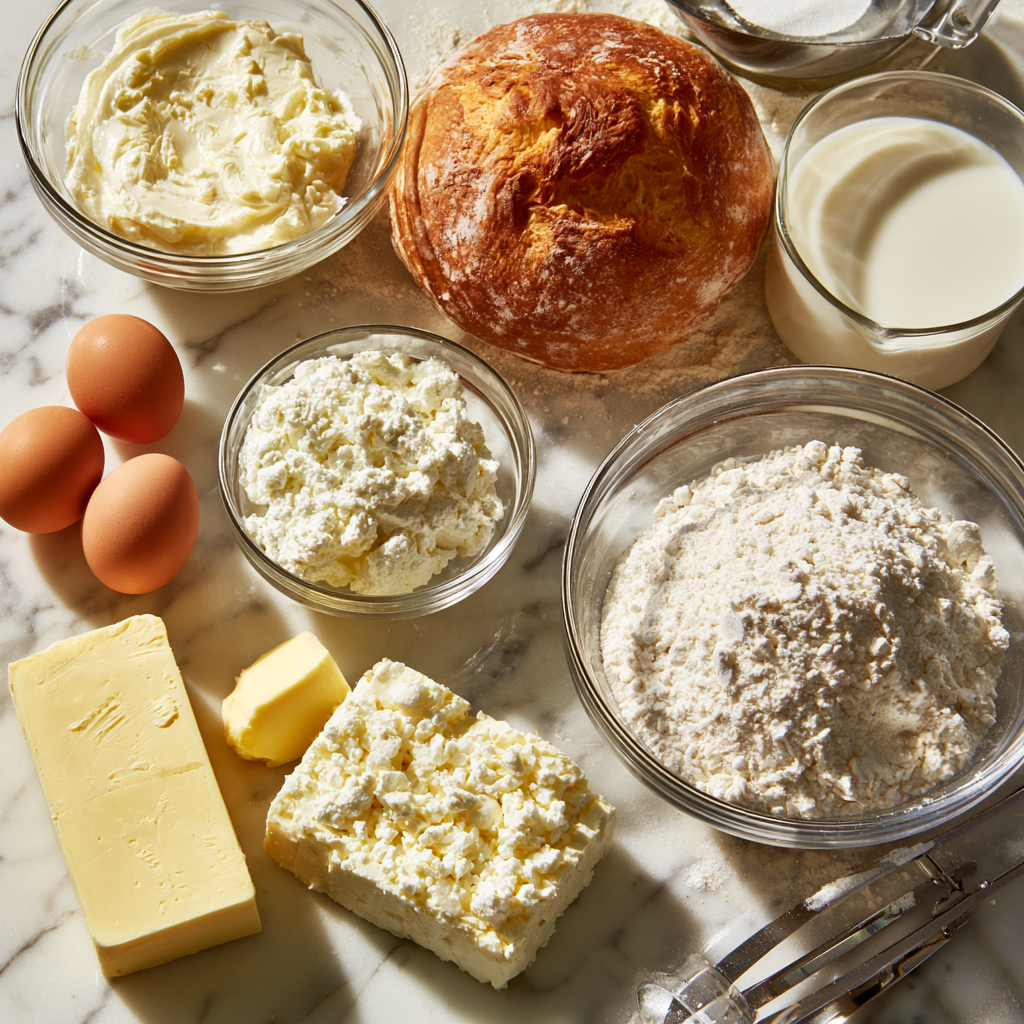
A good Mastoris-style cheese bread starts with a soft enriched dough and a balanced cheese mixture.
For the Sweet Bread Dough
- 3 ½ cups all-purpose flour
- ¼ cup granulated sugar
- 2 ¼ teaspoons active dry yeast
- ¾ cup warm milk
- 2 large eggs
- ¼ cup unsalted butter, softened
- 1 teaspoon salt
- 1 teaspoon vanilla extract (optional, for a sweeter bakery-style flavour)
For the Cheese Filling
- 8 ounces cream cheese, softened
- 1 cup ricotta cheese
- ½ cup crumbled feta cheese
- ¼ cup granulated sugar
- 1 egg yolk
- 1 tablespoon all-purpose flour
- Pinch of salt
For Finishing
- 1 egg mixed with 1 tablespoon milk for egg wash
- Optional: sesame seeds or a light dusting of powdered sugar after baking
Choosing the Right Cheese
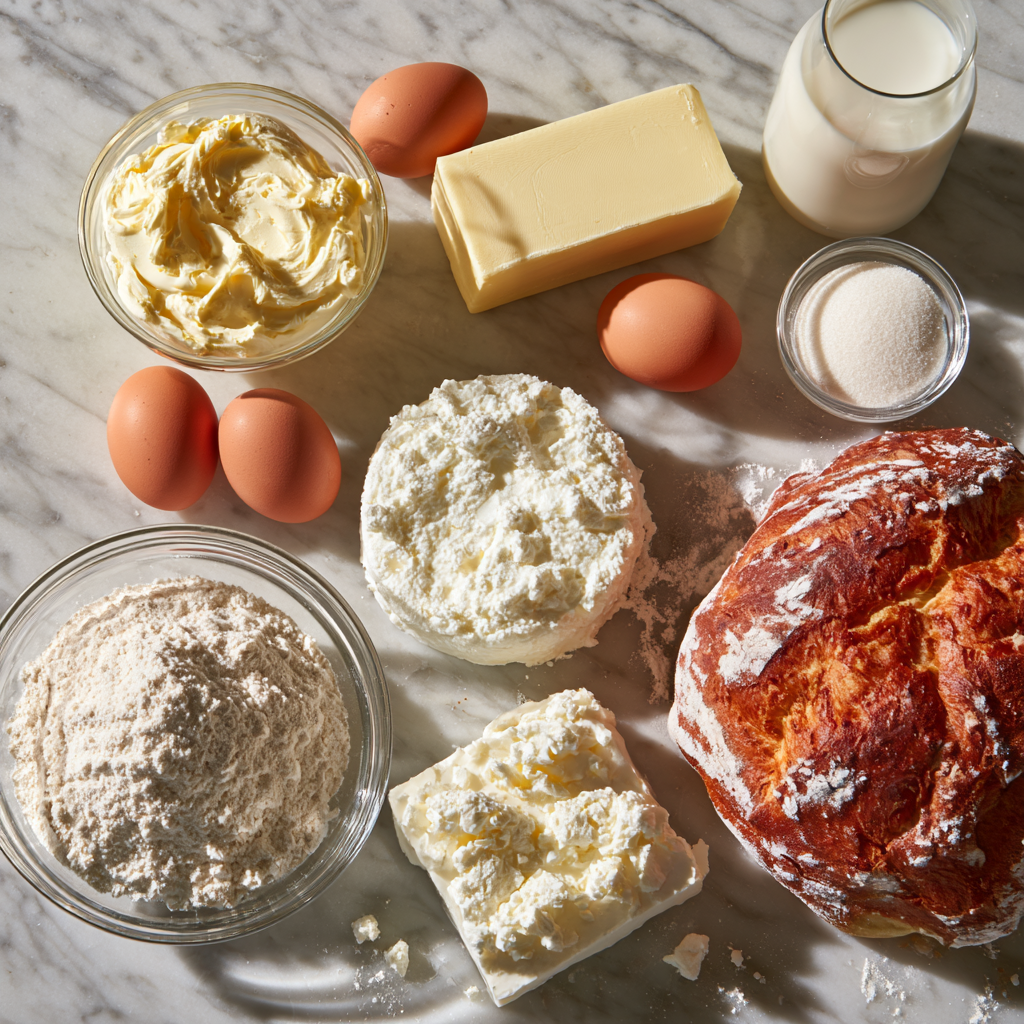
The cheese mixture determines the character of the bread.
Cream cheese provides smoothness and helps create a creamy filling. Ricotta gives the filling a lighter texture, while feta introduces a mild salty contrast that balances the sweetness of the dough.
If you want a more decadent cheese bread, feel free to bump up the cream cheese just slightly. If you like a stronger savoury taste, increase the feta balance but don’t over-salt (the dough already has sugar and butter).
How to Make Mastoris Cheese Bread at Home
1. Prepare the Dough
Warm the milk until it feels slightly warm to the touch, not hot. Mix in the yeast and a small amount of sugar, then allow it to sit for about 5–10 minutes until it becomes slightly foamy.
In a large bowl, combine flour, remaining sugar, and salt. Add the yeast mixture, eggs, butter, and vanilla extract if using.
Mix until a dough forms. Knead the dough for about 8–10 minutes until it becomes smooth and elastic. It should feel soft and slightly tacky but should not stick heavily to your hands.
Place the dough in a lightly greased bowl, cover it, and let it rise until doubled in size, usually about 1–2 hours depending on room temperature.
2. Make the Cheese Filling
While the dough rises, prepare the filling.
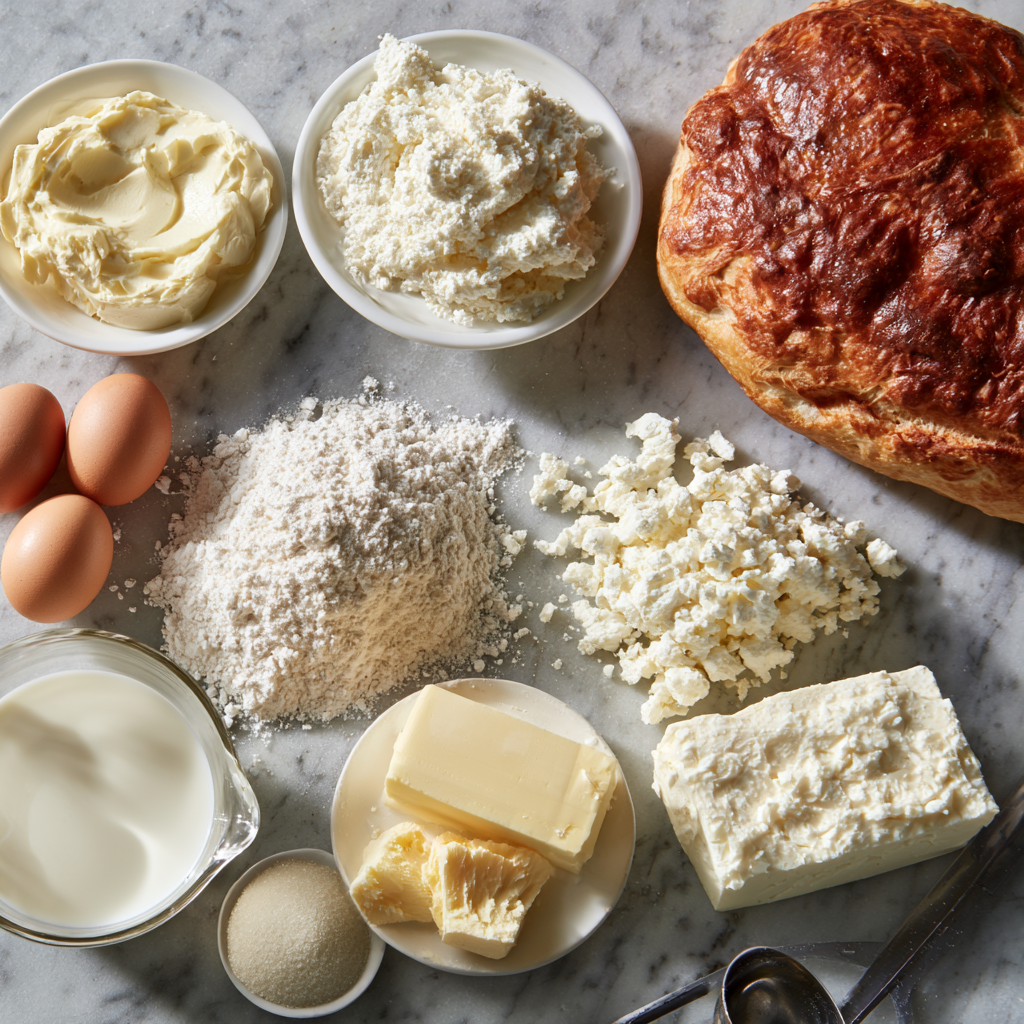
Beat cream cheese until smooth. Add ricotta, feta, sugar, egg yolk, flour, and salt. Mix until combined.
The filling should be thick enough to hold its shape. If it looks too loose, refrigerate it for 15–20 minutes before assembling the bread.
3. Shape the Bread
Once the dough has risen, gently press out excess air.
Roll the dough into a rectangle on a lightly floured surface. Spread the cheese mixture evenly over the dough, leaving a small border around the edges.
Fold or roll the dough depending on the shape you prefer:
- For a loaf-style bread, roll it tightly like a jelly roll and place it in a loaf pan.
- For individual breads, cut portions and shape them into rounds.
Seal the edges carefully so the filling stays inside during baking.
4. Second Rise
Place the shaped bread on a lined baking tray or prepared pan.
Cover lightly and allow it to rise again for about 30–45 minutes. This step helps create a softer final texture.
The bread should look noticeably puffier before baking.
5. Bake Until Golden
Brush the surface with egg wash.
Bake at 350°F (175°C) for approximately 25–35 minutes, depending on the size and shape.
The bread is ready when:
- the top is golden brown;
- the surface feels firm;
- the dough sounds slightly hollow when tapped.
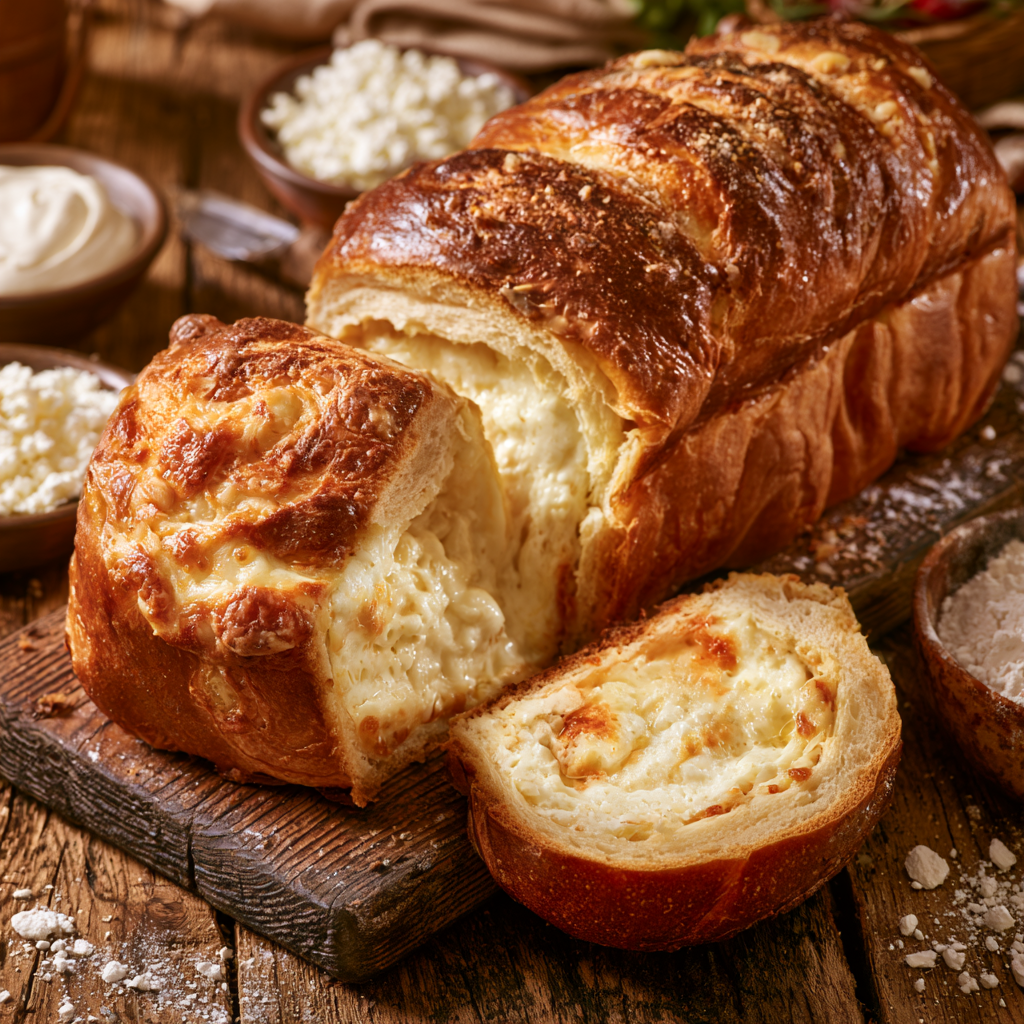
Allow it to cool for at least 15 minutes before slicing so the cheese filling can set.
Tips for a Better Cheese Bread
Keep the Dough Soft
Adding too much flour can create a dense bread. The dough should remain soft and elastic rather than stiff.
Do Not Overfill
A generous amount of cheese sounds appealing, but too much filling can cause leaking during baking. A moderate layer gives the best balance between bread and cheese.
Let the Dough Rise Fully
Skipping the first or second rise often results in bread that feels heavy instead of fluffy.
Chill Loose Filling
If the cheese mixture is runny, chilling it briefly makes shaping much easier.
Common Problems and How to Fix Them
The Bread Turned Out Dense
Possible cause: The dough did not rise enough or too much flour was added.
Solution: Allow proper rising time and measure flour carefully. Adding flour gradually helps maintain a soft dough.
The Cheese Filling Leaked Out
Possible cause: The dough was overfilled or edges were not sealed.
Solution: Leave space around the edges and press seams firmly before baking.
The Bread Is Too Sweet or Too Savoury
Possible cause: The balance between dough sugar and cheese salt is off.
Solution: Adjust the filling gradually. A small amount of feta can add depth without overpowering the sweet dough.
Substitutions That Work
Cheese Options
If ricotta is unavailable, cottage cheese blended until smooth can work as a replacement, although the texture may be slightly different.
For a milder filling, reduce feta and increase cream cheese.
Milk Alternatives
Regular dairy milk gives the richest texture, but unsweetened milk alternatives can be used. The flavour and softness may vary slightly.
Flour Options
All-purpose flour works best for this style of bread. Bread flour can create a slightly chewier texture.
Storage and Reheating
Store leftover cheese bread in an airtight container in the refrigerator for up to 3–4 days.
To reheat:
- Warm slices in a microwave for a few seconds for softness.
- Heat in a covered oven-safe dish at low temperature for a fresher bakery-style texture.
The bread can also be frozen after cooling. Wrap portions tightly and thaw before reheating.
Serving Ideas
Mastoris-style cheese bread works well:
- as a breakfast bread with coffee or tea;
- as a brunch centrepiece;
- as an afternoon snack;
- alongside fresh fruit for a lighter meal.
It is especially enjoyable slightly warm when the cheese filling becomes softer and creamier.
Mastoris Cheese Bread Recipe
Ingredients
Equipment
Method
- Activate yeast with warm milk and sugar.

- Mix flour, salt, eggs, butter, and yeast mixture into a soft dough.
- Knead until smooth and allow it to rise until doubled.
- Mix filling ingredients until creamy.
- Roll dough, add cheese filling, and shape.
- Allow shaped bread to rise again.
- Brush with egg wash.
- Bake at 350°F (175°C) for 25–35 minutes until golden.
- Cool slightly before slicing.
Video
Notes
- Keep the dough soft for the best texture.
- Avoid adding excessive filling because it may leak during baking.
- Allow the bread to cool briefly before cutting for cleaner slices.
Calories: 305 kcal | Carbohydrates: 38g | Protein: 9g | Fat: 14g | Saturated Fat: 8g | Sodium: 420mg | Potassium: 120mg | Fiber: 1g | Sugar: 10g | Vitamin A: 420IU | Vitamin C: 0mg | Calcium: 150mg | Iron: 1.5mg
FAQ
Can I make Mastoris cheese bread without feta cheese?
Yes. Feta adds a salty contrast, but you can replace it with additional cream cheese or ricotta for a milder flavour.
Can I prepare the dough ahead of time?
Yes. The dough can be prepared and refrigerated after the first rise. Allow it to come closer to room temperature before shaping.
Why is my cheese bread not fluffy?
Dense bread usually comes from insufficient rising time, too much flour, or under-kneaded dough. A properly developed dough should feel soft and elastic before baking.
Can I freeze cheese bread?
Yes. Cool the bread completely, wrap it well, and freeze in portions. Reheat gently before serving.