
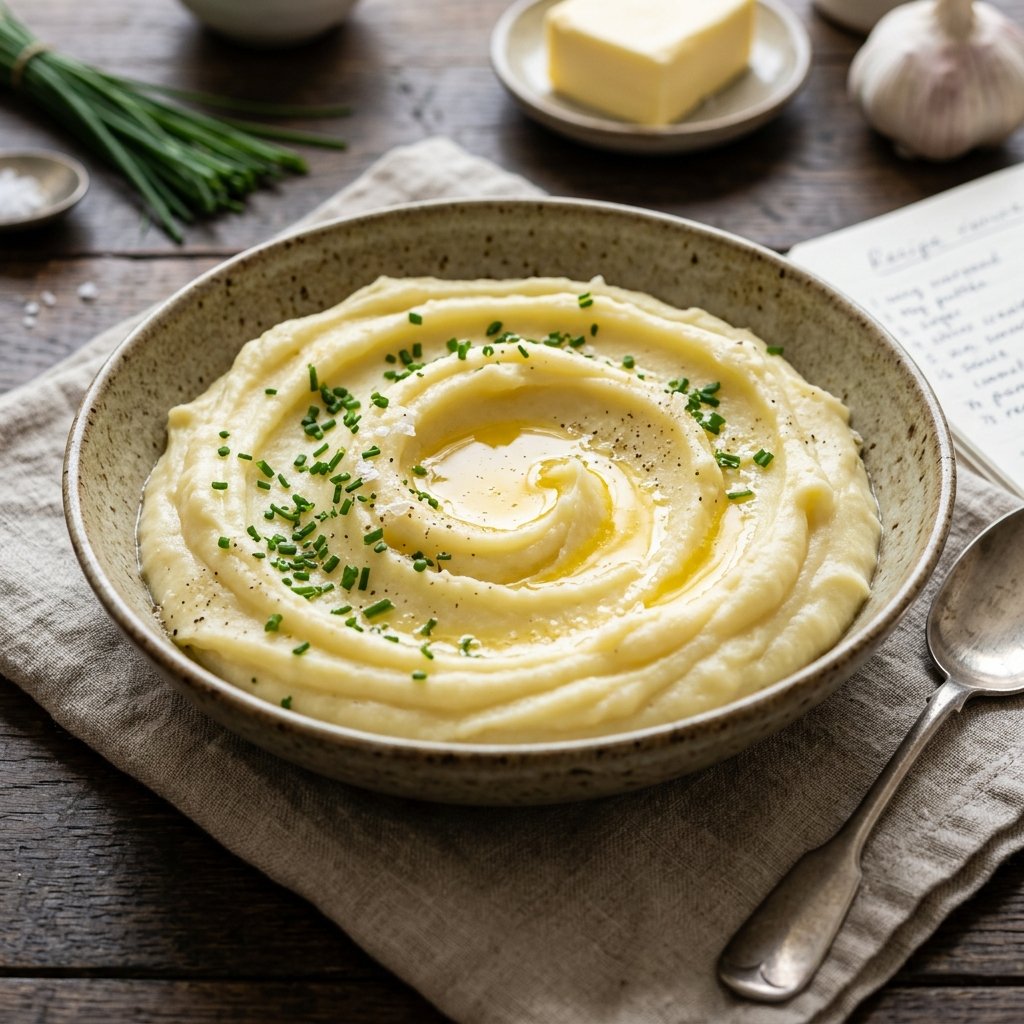
This pommes puree recipe is mashed potatoes the way a French bistro makes them: smooth enough to nearly pour, rich enough that you taste butter first and potato second, and glossy rather than fluffy. It uses ingredients you already know, and the difference comes almost entirely from technique. A few small habits, like drying the potatoes before you mash them and adding the butter cold, take a regular side dish and turn it into the one people ask about.
If you only want the quantities, jump to the recipe. If you want to know why some batches come out silky and others gluey, stick around. That part is where the real value is.
What a Pommes Puree Recipe Actually Is
Pommes puree (often written pommes purée) simply means mashed potatoes in French, but the name has come to mean the very smooth, very buttery style made famous by chef Joël Robuchon. According to Not Quite Nigella, he put it on the menu at his first Paris restaurant, Jamin, in 1981, at a time when fancy French kitchens tended to ignore humble ingredients like potatoes. His version is known for an unusually high butter-to-potato ratio, and published versions of the recipe differ on the exact numbers.
What makes it different from ordinary mash is that it behaves like an emulsion. You are not just crushing potatoes and stirring in dairy. You are working cold butter into hot, dry potato until it turns satiny. That is why the order of the steps matters so much, and why a good pommes puree recipe reads more like a technique than a list of ingredients.
One more thing worth knowing: Robuchon’s own notes reportedly warn against using a food processor, because the blades turn the starch gluey, a point one food writer who tested the method repeats. The same rule applies here. Use a ricer, a food mill, or a masher, never a blender.
Pick Your Level: Everyday, Bistro, or Robuchon
You do not have to commit to a pound of butter to get something good. These are three realistic versions, based on 2 pounds (900 g) of potatoes.
| Level | Butter | Tool | Result |
|---|---|---|---|
| Everyday | 4 tablespoons (57 g) | Masher or ricer | Creamy, slightly rustic |
| Bistro (the recipe below) | 8 tablespoons (113 g) | Ricer, optional sieve | Silky, glossy, spoonable |
| Robuchon-style | Up to about 1 lb (450 g) | Ricer plus fine sieve | Very rich, almost pourable |
The bistro level is the sweet spot for most home cooks. It gives you that luxurious texture without turning the plate into a butter dish. If you want to go further, scale the butter up a few tablespoons at a time and taste as you go. The Robuchon-style numbers are a rough guide, since sources vary.
Ingredients, and Why Each One Matters
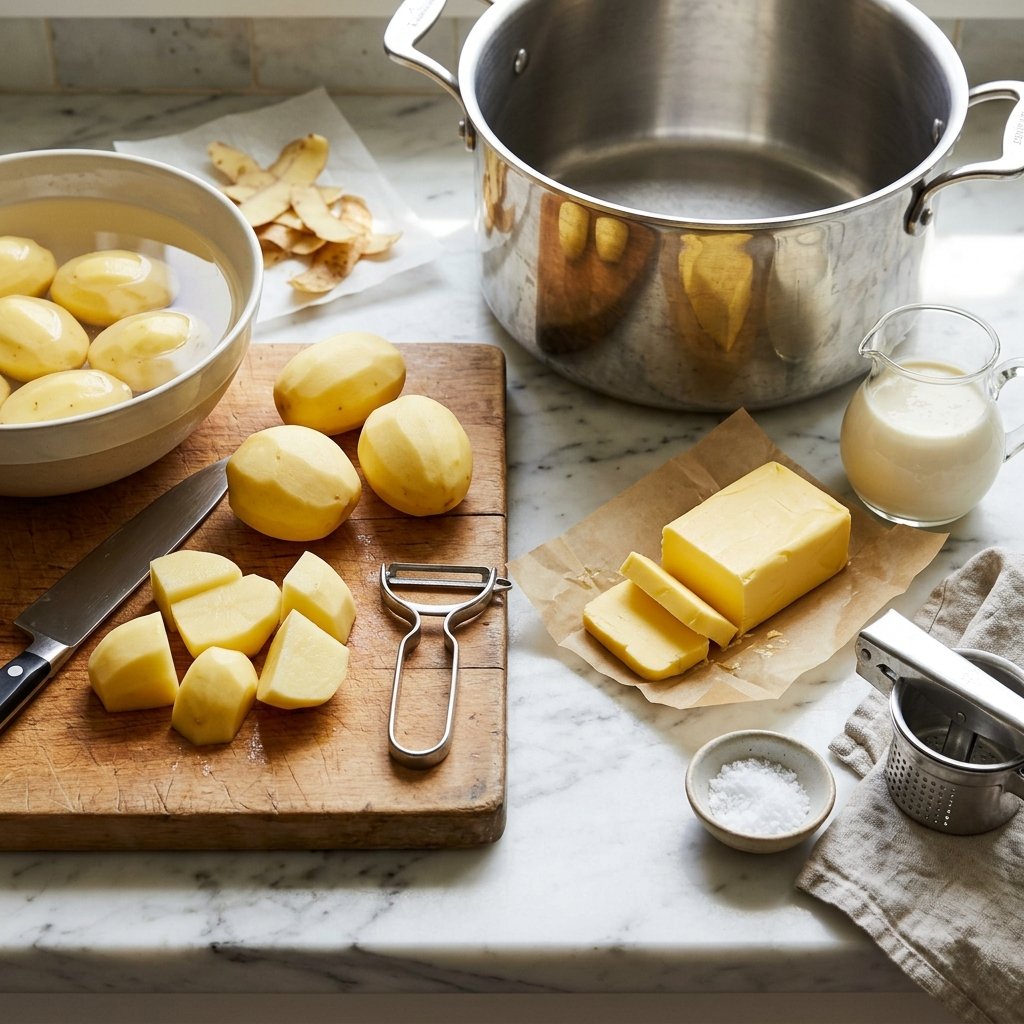
Potatoes. Yukon Golds are the usual choice, and Cook’s Illustrated’s version uses them too. They are naturally buttery and creamy, with enough starch to mash smoothly but not so much that they turn mealy. Choose potatoes that are about the same size so they cook evenly. Russets work if that is what you have, but expect a drier, fluffier result.
Butter. Use good unsalted butter, and keep it cold. Cold butter melts slowly as you fold it in, which is what helps it blend into the potatoes instead of pooling on top. European-style butter, with its higher fat content, is a nice upgrade if you can find it.
Milk. Whole milk, heated until steaming. Cold milk would cool the potatoes and make the butter harder to incorporate. Some cooks swap part of it for cream, which makes the puree richer and slightly heavier.
Salt and white pepper. Salt the cooking water well, then adjust at the end. White pepper keeps the surface clean and pale, though black pepper is fine if that is what you have.
Pommes Puree Recipe: Step by Step
This pommes puree recipe serves 6 as a side dish. Prep time: 15 minutes. Cook time: 30 minutes.
Ingredients
- 2 lb (900 g) Yukon Gold potatoes, peeled and cut into 1½-inch (4 cm) chunks
- 1 tablespoon kosher salt, for the cooking water
- 8 tablespoons (113 g) cold unsalted butter, cut into small cubes
- ¾ cup (180 ml) whole milk
- Fine salt and white pepper, to taste
- Optional: a pinch of freshly grated nutmeg
Method
- Start in cold water. Put the potatoes in a large pot and cover with cold water by about 1 inch. Add the tablespoon of salt. Starting cold helps the potatoes cook evenly from the outside in.
- Simmer, don’t boil hard. Bring the water to a gentle simmer and cook for 20 to 25 minutes, until a knife slides into a chunk with no resistance. A rolling boil batters the outsides and makes them waterlogged.
- Heat the milk. While the potatoes cook, warm the milk in a small saucepan until steaming, then keep it hot over very low heat.
- Drain and dry. Drain the potatoes well and let them sit in the colander for a minute. Return them to the empty pot over low heat for 1 to 2 minutes, shaking the pot gently, to steam off the surface moisture. This step is easy to skip and it matters. Wet potatoes make a slack, watery puree that no amount of butter fixes.
- Rice while hot. Set a potato ricer or food mill over a large pot or bowl and press the potatoes through in batches while they are still hot. Hot potatoes rice more smoothly than cooled ones.
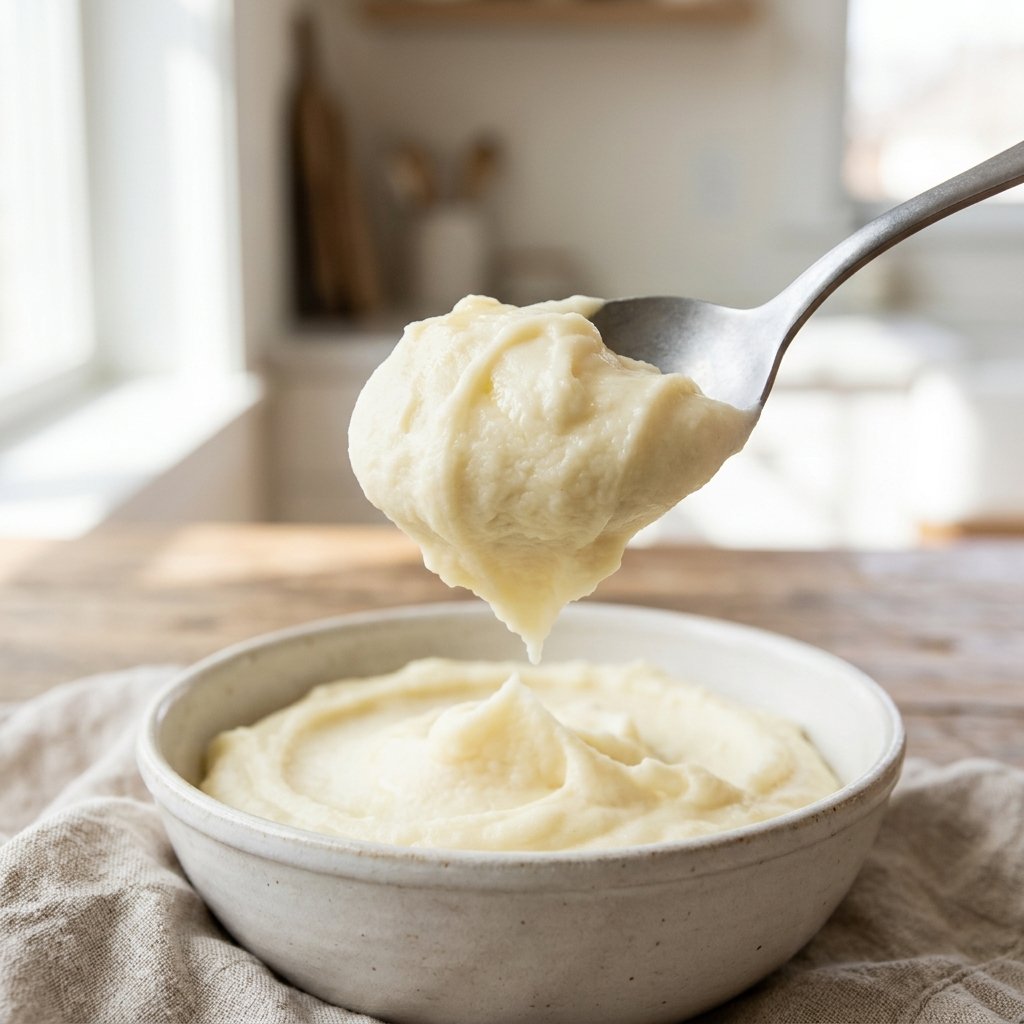
- Fold in the cold butter. Put the riced potatoes over very low heat. Add a few cubes of butter at a time, folding gently with a flexible spatula until each addition melts before adding the next. Do not whip or beat vigorously. Overworking the potatoes releases starch and makes them gluey.
- Add the hot milk. Pour in the milk in a slow stream, stirring gently, until the puree looks glossy and loosens to your preferred texture. It should hold softly on a spoon and relax slowly. You may not need every drop.
- Season. Taste and add fine salt, white pepper, and a pinch of nutmeg if you like. Potatoes soak up salt, so you may be surprised how much it needs.
- Optional: sieve for extra silk. For restaurant-level smoothness, push the puree through a fine-mesh sieve with a flat scraper. It is extra work and not required, but it makes a visible difference.
- Serve warm. Spoon into a warm bowl and make a shallow well in the center for a small knob of butter.
What Goes Wrong, and How to Fix It
Gluey or sticky. The potatoes were overworked, or a blender or food processor was used. Unfortunately, you cannot fully undo it. Next time, rice them and fold gently.
Watery or loose. The potatoes were not dried enough, or too much milk went in. Return the puree to low heat and stir for a minute or two to evaporate some moisture, then add milk more cautiously.
Greasy or separated. The butter went in too fast or the potatoes were too cool. Warm the puree gently while stirring, and add a spoonful of hot milk to help the fat blend back in.
Lumpy. The potatoes were undercooked, or the cooked chunks varied in size. Cook until a knife slides in effortlessly, and press through a ricer or sieve to fix stubborn lumps.
Bland. Almost always under-salting. Salt the cooking water, and taste again at the end.
Pommes Puree Recipe Variations
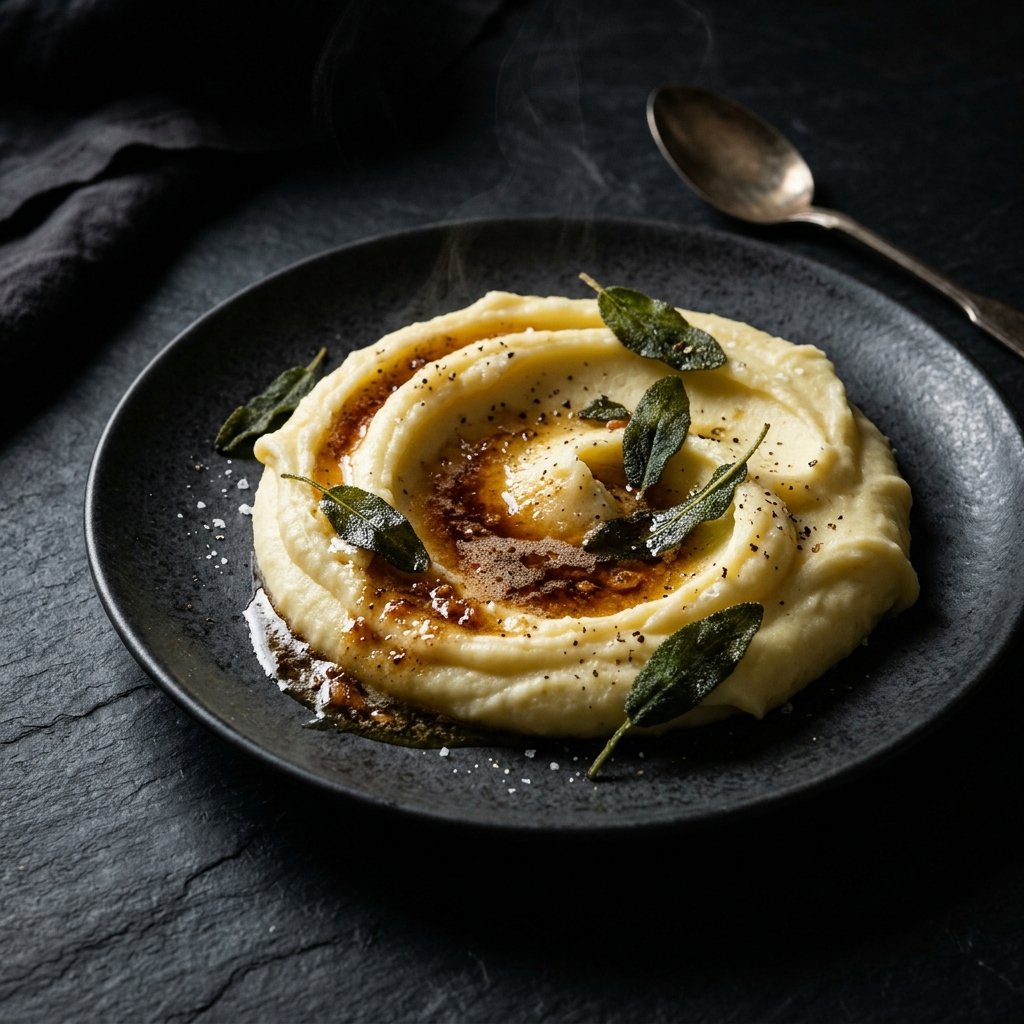
- Brown butter. Melt 4 tablespoons of butter in a small pan and cook, swirling, until it smells nutty and turns golden brown. Spoon it over the finished puree instead of using that amount of plain butter.
- Roasted garlic. Squeeze a head of roasted garlic into the butter stage for a mellow, sweet garlic flavor.
- Herbed. Fold in finely chopped chives or tarragon at the end. Robuchon’s potatoes are traditionally served plain, so keep the herbs light.
- Cheesy. Stir in ½ cup of finely grated Gruyère for a richer, slightly nutty version.
- Dairy-free. Use a good plant-based butter and warm unsweetened oat or soy milk. The texture will be a little less rich but still smooth.
- Lighter. Reduce the butter to 4 tablespoons and replace some of the milk with warm potato cooking water for a looser, less rich result.
What to Serve with Pommes Puree
Because pommes puree is so rich, it pairs best with food that is simple and a bit sharp or savory. Think seared steak, roast chicken, braised short ribs, or pan-seared fish with a lemony sauce. A mound of puree under something with a pan sauce, like our Kansas City strip steak or the New York steak roast, gives you a plate that tastes a lot like a restaurant dinner. Add something green, like roasted asparagus or green beans, to cut the richness.
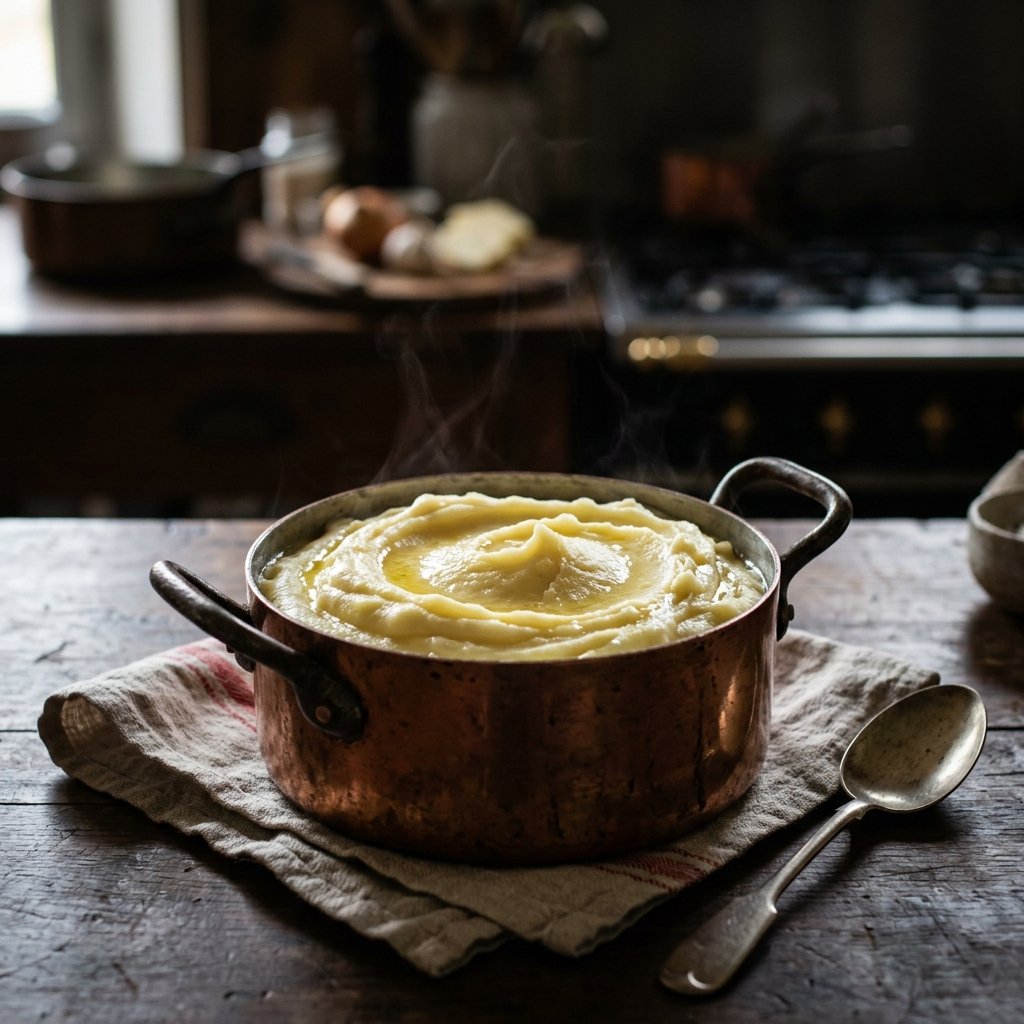
If you want a different potato side on the table, our honey gold potatoes are crisp and golden at the edges, and the crispy mini baked potatoes make a good contrast to something smooth. Leftover puree also makes a good base for a creamy potato soup: thin it with warm stock or milk and season to taste.
Make Ahead, Store, and Reheat
Pommes puree is best served right away, but it holds well for a short time. To keep it warm for dinner, place the bowl over a pan of barely simmering water, cover the surface with plastic wrap or a lid, and stir in a splash of hot milk just before serving. This way it stays silky for about an hour.
Leftovers keep in an airtight container in the refrigerator for about 3 days. Reheat gently in a saucepan over low heat, stirring in a few tablespoons of milk or cream to loosen it, and warm it until it is steaming hot all the way through (the USDA recommends 165°F for leftovers). The USDA’s leftovers and food safety page covers the general rules. Freezing is possible, but the texture can turn a little grainy, so it is better to make only what you will eat.
Pommes Puree Recipe FAQs
What is the difference between pommes puree and mashed potatoes?
Pommes puree is a very smooth, buttery style of mashed potatoes made by ricing the potatoes and folding in a large amount of cold butter and hot milk. Regular mashed potatoes are usually rougher and use less butter.
Do I have to use a ricer?
A ricer or food mill gives the smoothest result. A hand masher works for the everyday level, but the texture will be less silky. Avoid blenders and food processors, which make the potatoes gluey.
Which potatoes are best for pommes puree?
Yukon Golds are a reliable choice for their buttery flavor and creamy texture. Robuchon’s recipe is traditionally made with specific French potato varieties such as Ratte, and russets give a fluffier, drier result.
Why are my mashed potatoes gluey?
Overworking releases starch from the potatoes. Rice them, fold in the butter gently, and never use a food processor.
Can I make pommes puree ahead of time?
Yes, for a short time. Keep it warm in a covered bowl over barely simmering water for about an hour, and loosen with hot milk before serving. For longer storage, refrigerate and reheat gently.
How much butter should I use?
For a bistro-style puree, use 8 tablespoons for 2 pounds of potatoes. You can go lower for an everyday version, or higher if you want something closer to Robuchon’s famously rich style.
Can I use salted butter?
You can, but unsalted gives you more control. If you use salted butter, hold back on the salt until the end and taste first.
Is pommes puree gluten-free?
Yes. Potatoes, butter, milk, and salt are all naturally gluten-free, though you should check the labels on any extras you add.
Final Thoughts on This Pommes Puree Recipe
A great pommes puree recipe is mostly about restraint: gentle cooking, thorough drying, cold butter, hot milk, and a light hand. None of it is difficult, and once you have done it a couple of times, you will know what the potatoes should look like by sight. Start with the bistro level, taste, and adjust the butter to your own preference. It is a small change to make at dinner, and it is the sort of thing people remember.
Pommes Puree (Silky French Mashed Potatoes)
Ingredients
Equipment
Method
- Put the potatoes in a large pot and cover with cold water by about 1 inch. Add 1 tablespoon of kosher salt.
- Bring to a gentle simmer and cook for 20 to 25 minutes, until a knife slides into a chunk with no resistance.
- While the potatoes cook, warm the milk in a small saucepan until steaming, then keep it hot over very low heat.
- Drain the potatoes well and let them sit in the colander for a minute. Return them to the empty pot over low heat for 1 to 2 minutes, shaking gently, to steam off the surface moisture.
- Set a ricer or food mill over a large pot or bowl and press the hot potatoes through in batches.
- Put the riced potatoes over very low heat. Add the cold butter a few cubes at a time, folding gently with a flexible spatula until each addition melts before adding the next. Do not whip.
- Pour in the hot milk in a slow stream, stirring gently, until the puree is glossy and loosens to your preferred texture. You may not need every drop.
- Season with fine salt, white pepper, and nutmeg if using. Taste and adjust.
- Optional: for extra silk, push the puree through a fine-mesh sieve with a flat scraper.
- Serve warm in a warm bowl with a small knob of butter in the center.
Notes
- Use Yukon Gold potatoes of similar size so they cook evenly. Russets work but give a fluffier, drier result.
- Dry the potatoes after draining. Wet potatoes make a watery puree that no amount of butter fixes.
- Rice the potatoes while hot, and never use a blender or food processor. It turns the starch gluey.
- Keep the butter cold and the milk hot. This helps the butter blend in smoothly.
- Everyday version: use 4 tablespoons of butter. Robuchon-style: increase the butter gradually, up to roughly 1 lb for 2 lb of potatoes, and sieve the puree.
- Brown butter variation: cook 4 tablespoons of butter until golden and nutty, then spoon it over the finished puree.
- Dairy-free: use a good plant-based butter and warm unsweetened oat or soy milk.
- To keep warm for up to about an hour, cover the bowl and set it over barely simmering water, then stir in a splash of hot milk before serving.
- Refrigerate leftovers in an airtight container for about 3 days. Reheat gently over low heat with a few tablespoons of milk until steaming hot (165°F). Freezing is possible but can make the texture slightly grainy.
- Quantities, times, and calories are estimates. Test the recipe once and adjust the milk and butter to your taste.