
This duck poppers recipe takes strips of marinated duck breast, tucks them against a sliver of jalapeño and a smear of cream cheese, and rolls the whole thing in bacon. They bake at 400°F until the bacon is crisp, then get a brush of hot honey and a quick trip under the broiler. You end up with a two-bite appetizer that is salty, smoky, rich, a little hot, and a little sweet.
Duck poppers are a duck-camp and tailgate classic. Hunters often make them because they turn a limit of wild ducks into something the whole table will eat, including people who claim not to like duck. They work just as well with farm-raised duck breast from the store. Below you will find what makes them work, the cut and the marinade, oven, grill, and air fryer timing, and fixes for the usual problems. Jump to the recipe if you only need the quantities.
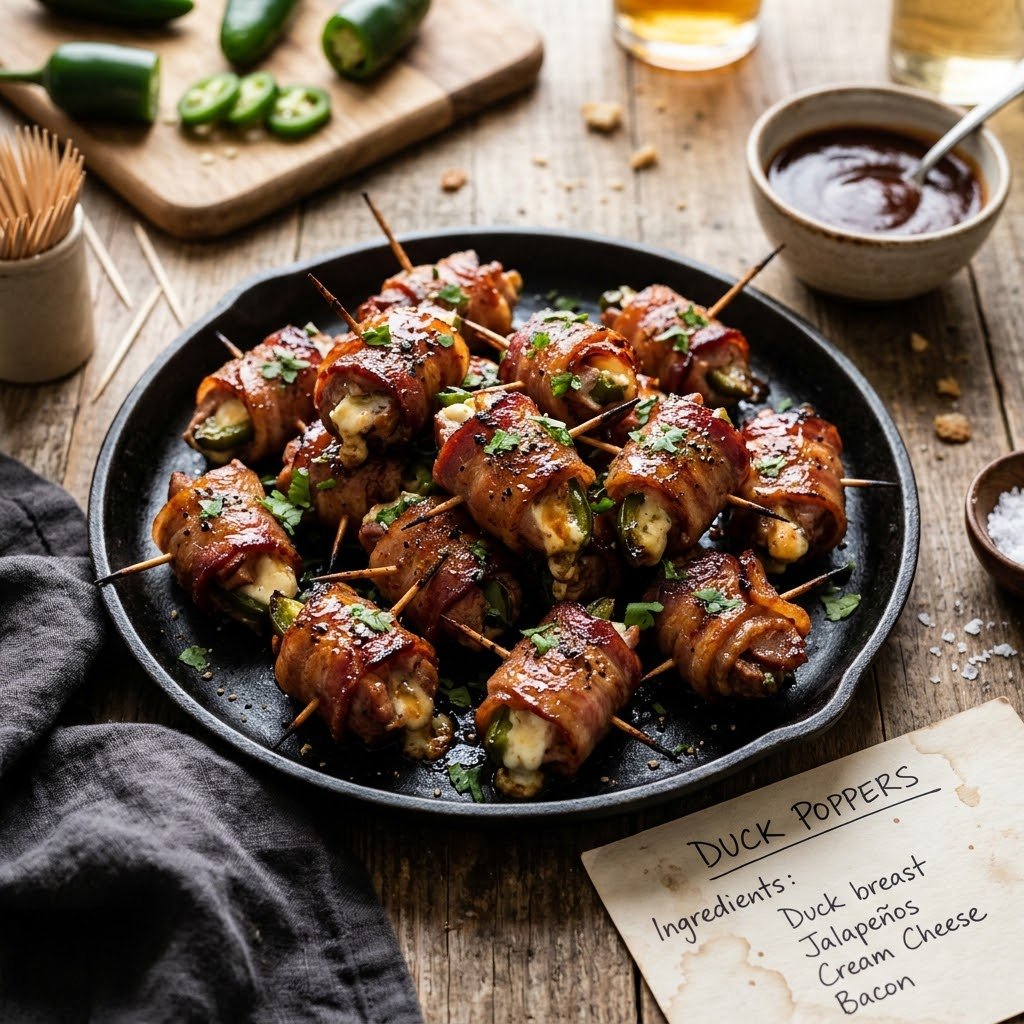
Duck Poppers at a Glance
- Yield: about 24 poppers, enough for 6 to 8 people as an appetizer
- Hands-on time: 25 minutes
- Marinating: 2 to 8 hours
- Cook time: 20 to 25 minutes in the oven
- Main ingredients: duck breast, jalapeño, cream cheese, thin-cut bacon, honey
- Key tool: an instant-read thermometer
Why This Duck Poppers Recipe Works
Duck breast is lean, dark, and full-flavored, closer to steak than to chicken. That is good news for flavor and bad news for moisture. Wild duck in particular carries almost no fat on the breast once the skin is gone, so it dries out quickly if you leave it alone in a hot oven. Each part of a popper solves part of that problem:
- The bacon bastes the duck as it renders and shields it from direct heat.
- The cream cheese adds fat and a cool, creamy layer between the meat and the pepper.
- The jalapeño brings heat and a fresh, green bite that cuts through all that richness.
- The marinade seasons the meat and softens the strong, irony note that some people notice in wild birds.
- The honey glaze caramelizes on the bacon and ties the sweet and spicy flavors together.
If you have cooked a whole crispy roast duck, you know duck loves a contrast of fat and crisp texture. Poppers deliver the same idea in a much faster, party-friendly format.
Choosing the Duck
Wild duck
Mallards, gadwalls, teal, and wood ducks all work in this duck poppers recipe. Diving ducks can taste stronger, so give them the full 8 hours in the marinade. Before cutting, look over each breast for embedded shot and bloodshot areas, and trim them away along with the silver skin. Ducks Unlimited has a helpful piece on duck poppers from a hunter’s point of view if you want more background.
Store-bought duck
Farm-raised Pekin or Moulard breasts are larger and milder. Remove the thick skin and fat cap (save it for rendering duck fat), then slice the meat. One large Moulard breast can yield 12 or more strips.
How to cut it
Aim for strips about 1 inch wide and 2 to 3 inches long, roughly the size of a jalapeño quarter. Cutting across the grain keeps each bite tender. Strips that are too thick will still be underdone when the bacon is ready; strips that are too thin will overcook.
The Marinade: Short and Savory
A simple mix of soy sauce, Worcestershire, olive oil, honey, garlic, and black pepper does the job. The salt in the soy sauce seasons the meat all the way through, while the honey helps it brown. Two hours is enough to make a difference; overnight (about 8 hours) gives the deepest flavor. Past 12 hours the salt starts to change the texture, and the meat can turn soft and a little mealy.
Common alternatives you will see at duck camps:
- Italian dressing: the classic shortcut, tangy and herby.
- Teriyaki: sweeter, and great with the honey glaze. Our honey teriyaki sauce works well here.
- Buttermilk with salt and hot sauce: mild and good for anyone who finds wild duck too gamey.
Whichever you choose, discard the marinade once the raw duck has been in it, and pat the strips dry before wrapping. Wet meat steams under the bacon instead of browning.
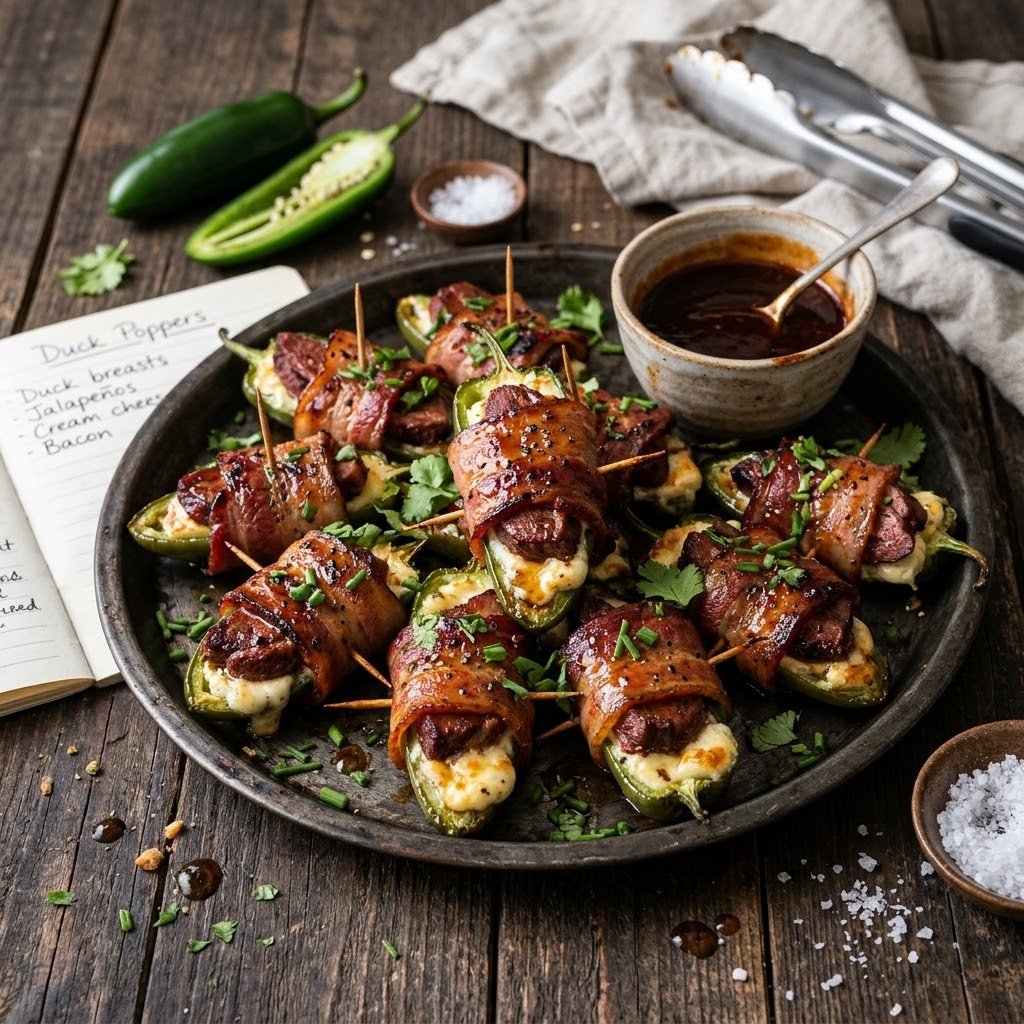
How to Make Duck Poppers, Step by Step
1. Prep the peppers and cheese
Wear gloves if your skin is sensitive. Cut the stems off the jalapeños, slice them in half lengthwise, scrape out the seeds and white ribs, then cut each half into two strips. The ribs hold most of the heat, so leave a few in if you want spicier poppers. Let the cream cheese soften on the counter so it spreads without tearing the pepper.
2. Wrap them tight
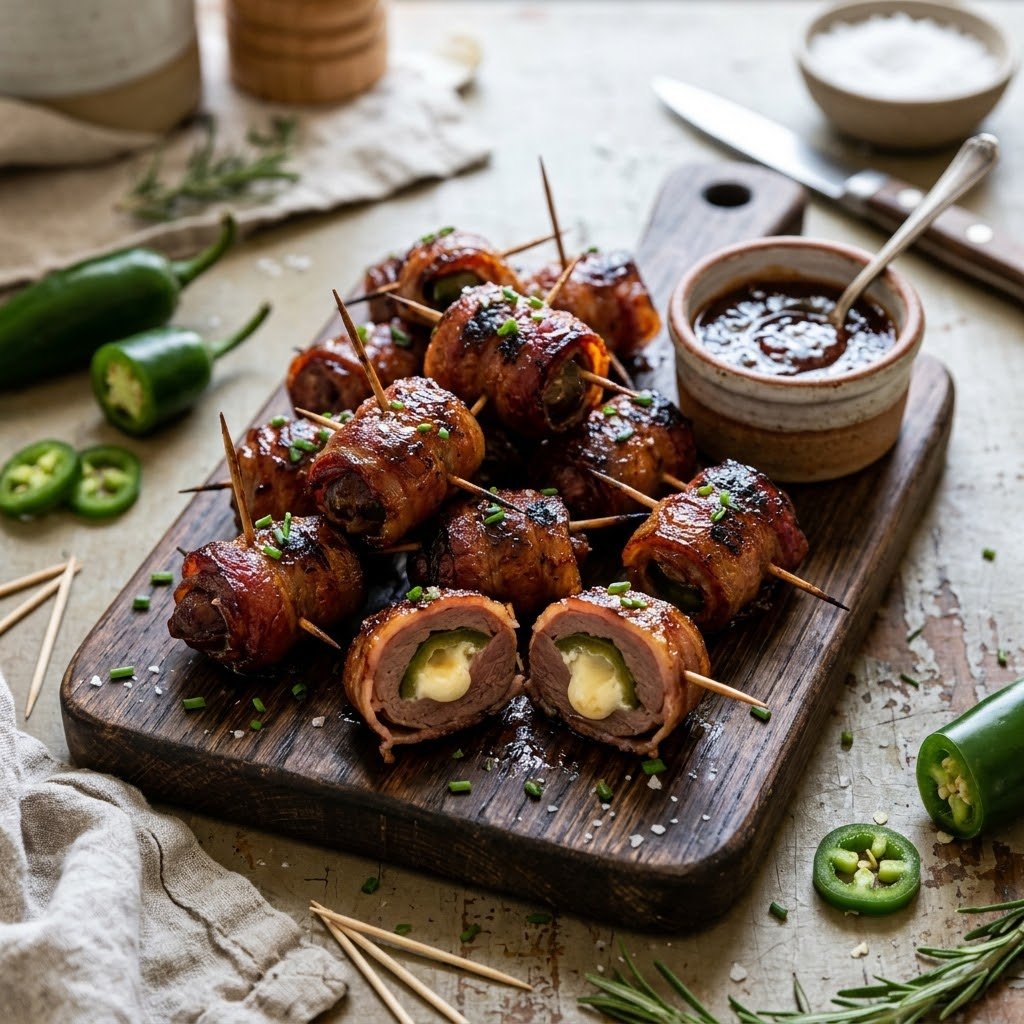
Lay a half slice of thin-cut bacon flat on the board. Set a jalapeño strip on it, spread about a teaspoon of cream cheese on the pepper, and lay a duck strip on top. Roll firmly from one end, keeping the cheese in the middle, and pin the seam with a toothpick. A snug wrap holds the cream cheese in; a loose one lets it melt out onto the pan.
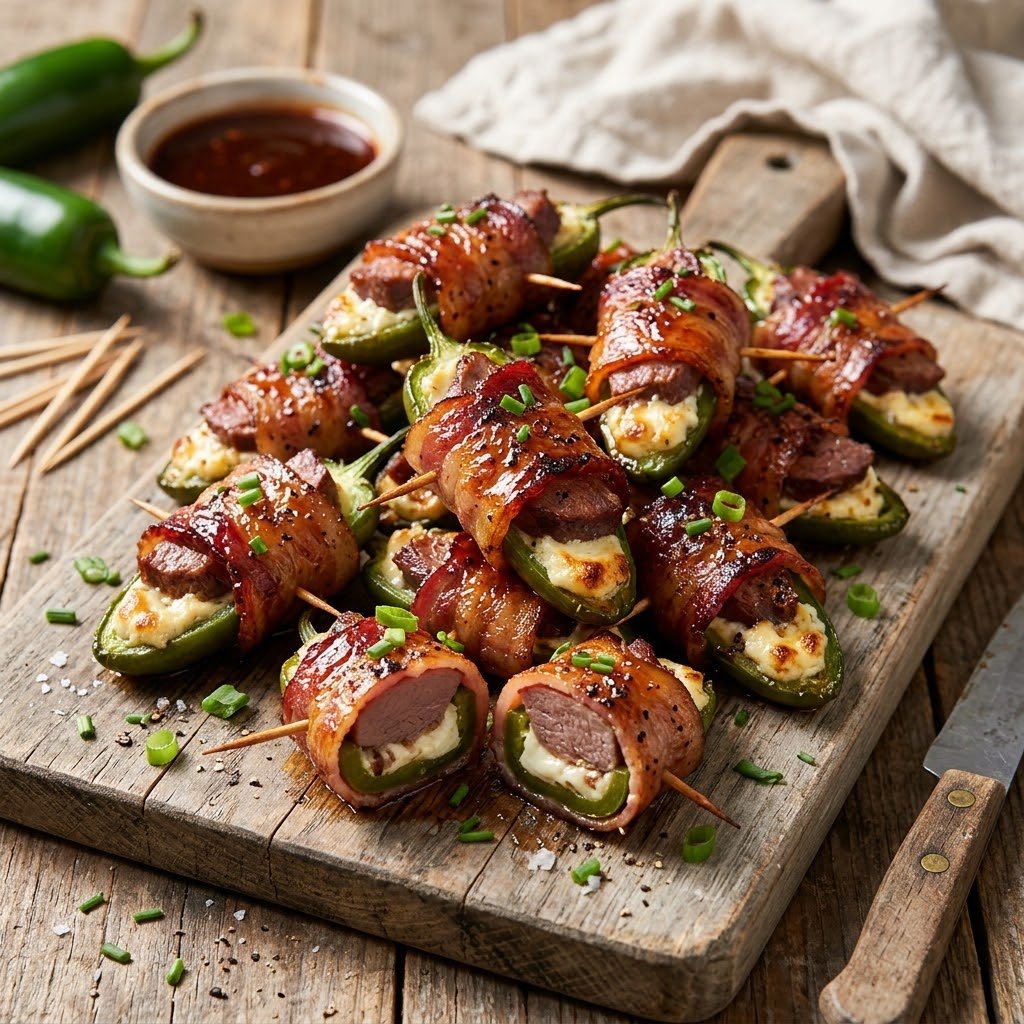
There is a second style you will see a lot: halve the jalapeño, fill the boat with cream cheese, press a piece of duck on top, and wrap the whole half. That version is bigger, milder (the pepper softens more), and looks great on a platter, as in the photo above. The method and timing are nearly the same.
3. Bake on a rack
Set the poppers seam side down on a wire rack over a foil-lined baking sheet. The rack lets the bacon fat drip away so the bottoms crisp instead of frying in grease. Bake at 400°F (200°C) for 20 to 25 minutes, until the bacon is browned.
4. Check the temperature
Insert a thermometer into the duck, not the cheese. The USDA’s guidance for duck is 165°F (74°C), the same as other poultry. Many hunters prefer wild duck breast cooked less, closer to medium, which is a personal call; if you are serving guests, children, or anyone with a weaker immune system, stick to the USDA number. The bacon and cream cheese keep the meat juicier than you might expect, even at 165°F.
5. Glaze and broil
Warm the honey with hot sauce and a little butter until it is loose, brush it over the poppers, and slide them under the broiler for 1 to 2 minutes. Stay at the oven door: honey goes from glossy to burnt very fast. Let the poppers rest for 5 minutes so the cheese sets slightly before anyone bites in.
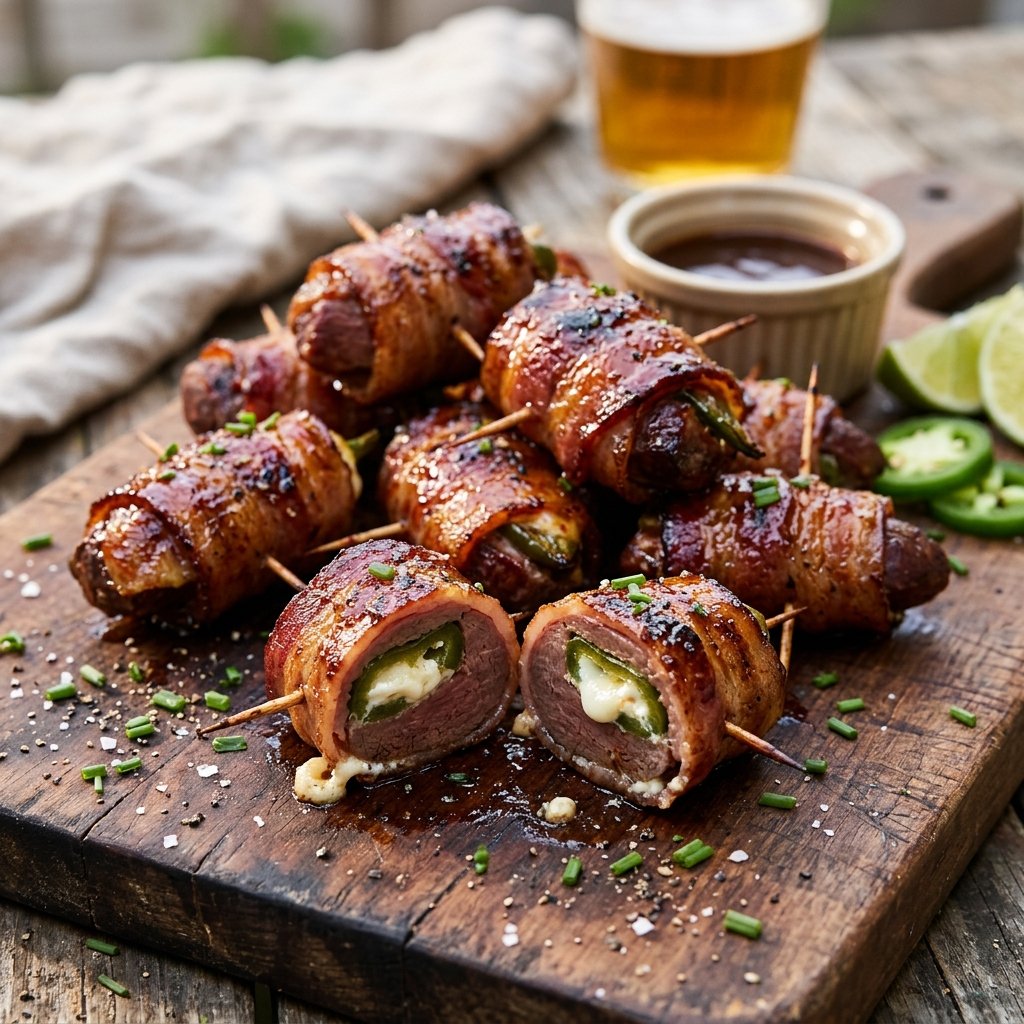
Oven, Grill, Smoker, or Air Fryer?
The same wrapped poppers can go almost anywhere you have heat. These times are starting points; your thermometer has the final say.
| Method | Temperature | Approximate time | Tip |
|---|---|---|---|
| Oven | 400°F (200°C) | 20–25 minutes | Use a wire rack; broil 1–2 minutes after glazing |
| Grill | 350–375°F, indirect heat | 20–30 minutes | Crisp over direct heat 1–2 minutes per side at the end |
| Smoker / pellet grill | 250–275°F | About 1 hour or more | Raise heat or sear at the end so the bacon is not rubbery |
| Air fryer | 380°F (193°C) | 10–14 minutes | Single layer, glaze during the last 2 minutes |
On the grill, flare-ups from dripping bacon fat are the main risk. Keep the poppers on the cool side of the grates for most of the cook, and only move them over the coals at the very end. If you use wooden toothpicks on an open flame, soak them in water for 20 minutes first.
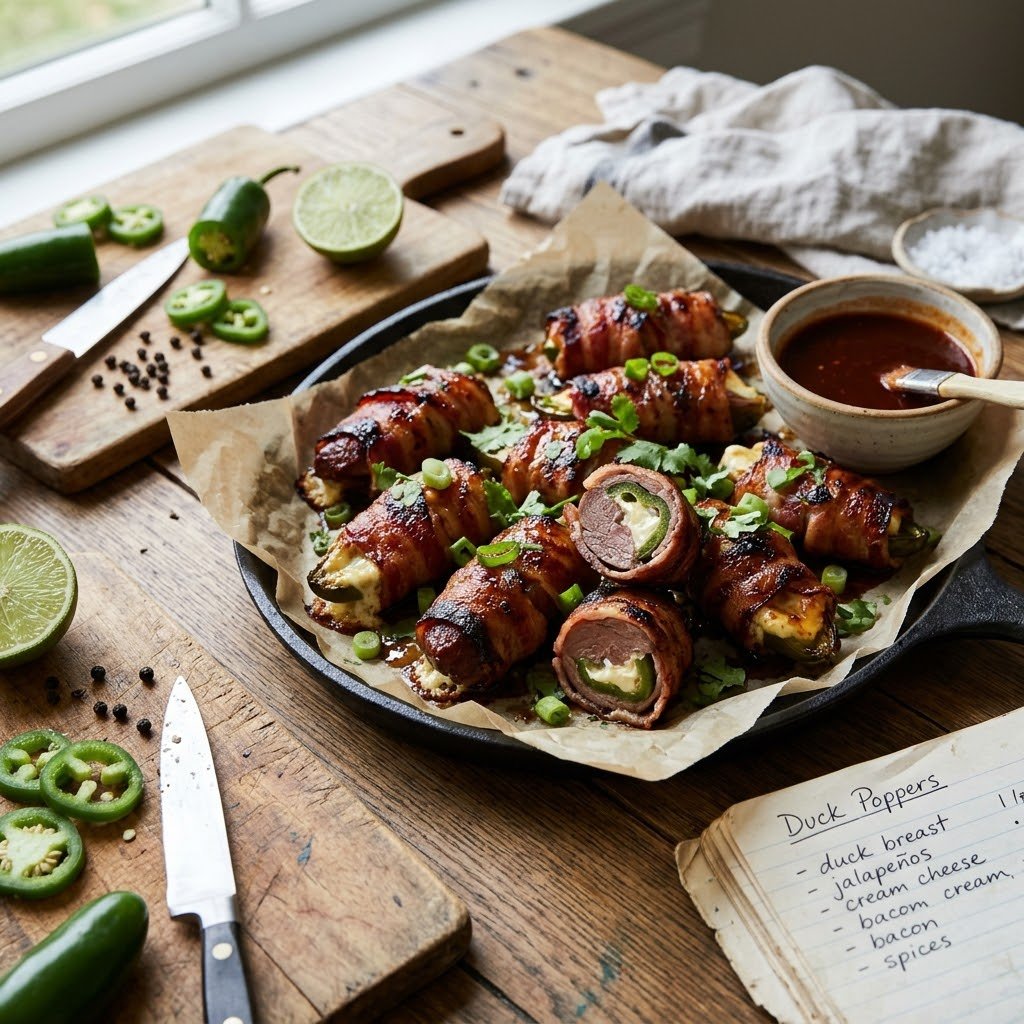
Fixing Common Duck Popper Problems
The bacon is still chewy but the duck is done. Your bacon is too thick, or the poppers were crowded. Switch to thin-cut, give each popper some space, or par-cook thick bacon for about 5 minutes before wrapping.
The cream cheese leaked out. The wrap was loose or the cheese was overfilled. Use about a teaspoon per popper and roll tightly so the bacon overlaps itself.
The duck is tough and gray. The strips were too thin or the poppers stayed in the oven too long. Cut thicker strips next time and start checking the temperature at 18 minutes.
They taste too gamey. Trim all the silver skin and bloodshot meat, and marinate longer (up to 8 hours) or try the buttermilk option.
The glaze burned. Broilers vary a lot. Move the rack down one level, or skip the broiler and bake 2 more minutes after glazing.
Sweet Heat: Glaze and Dipping Sauce Ideas
Honey is a natural partner for duck, which is why so many duck dishes lean sweet: orange, cherry, plum, and teriyaki all show up regularly. For this duck poppers recipe, the simple hot honey glaze is enough on its own, but you can push it in a few directions:
- Swap the glaze for a spoonful of our garlic hot honey.
- Melt a little raspberry jalapeño jam and brush it on instead; the fruit flavor is excellent with duck.
- Serve a bowl of hot honey ranch on the side for dipping.
- Mix honey with Dijon mustard and a squeeze of orange for a milder, kid-friendly version.
Variations to Try
- Pepper jack or pimento cheese: replace the cream cheese for a sharper filling.
- Water chestnut crunch: add a thin slice of water chestnut in place of or alongside the jalapeño.
- Pineapple: a small chunk of pineapple adds sweetness and juice.
- Goose or dove: the same method works with goose breast strips or whole dove breasts.
- No duck on hand? Chicken thigh strips work too, and so does the Cajun spirit of our alligator bites if you like trying other wild meats.
Serving, Make-Ahead, and Storage
Serve the poppers warm, straight from the pan or piled on a board with sliced jalapeños, lime wedges, and a dip or two. They fit right in next to other game-day food like smoky burnt ends. For more party bites, browse our appetizer recipes.
Make ahead: Assemble the poppers up to 24 hours ahead, cover, and refrigerate. Bake straight from the fridge, adding 2 to 3 minutes.
Freeze: Freeze uncooked, assembled poppers on a tray, then move them to a freezer bag. Thaw overnight in the fridge before baking. Cream cheese can turn a little grainy after freezing, but the texture is fine once cooked.
Leftovers: Refrigerate in an airtight container for up to 3 days. Reheat at 375°F for 8 to 10 minutes or in the air fryer for 4 to 5 minutes so the bacon crisps again. The microwave works but leaves the bacon soft.
Duck Poppers Recipe FAQs
What are duck poppers?
They are bite-size appetizers made by wrapping a piece of duck breast, usually with jalapeño and cream cheese, in bacon and cooking it until crisp. They are especially popular with waterfowl hunters.
What temperature should duck poppers be cooked to?
The USDA recommends 165°F (74°C) for duck. Some hunters cook wild duck breast to a lower temperature by preference, but 165°F is the safe-food-handling guideline.
How long do you bake duck poppers at 400°F?
About 20 to 25 minutes on a wire rack, then 1 to 2 minutes under the broiler after glazing. Check the duck with a thermometer.
How do you get the gamey taste out of wild duck?
Trim away silver skin, fat, and any bloodshot meat, then marinate for several hours. Soy-based marinades, Italian dressing, and buttermilk are all common choices.
Can I make duck poppers without cream cheese?
Yes. Duck, jalapeño, and bacon alone are a classic combination. You can also use pepper jack, cheddar, or goat cheese.
Can I use store-bought duck?
Yes. Remove the skin and fat cap from farm-raised duck breast and cut the meat into strips. It is milder than wild duck and works perfectly.
Should I precook the bacon?
Not with thin-cut bacon. With thick-cut bacon, par-cook it for about 5 minutes so it is still pliable but will finish crisp.
Can I make duck poppers in an air fryer?
Yes. Cook at 380°F for 10 to 14 minutes in a single layer, adding the glaze in the last couple of minutes.
Final Thoughts on This Duck Poppers Recipe
A great duck poppers recipe comes down to a few habits: cut even strips, marinate for a few hours, wrap tightly in thin bacon, cook on a rack, and trust a thermometer more than the clock. Finish with a brush of hot honey and you have a crowd-pleasing appetizer that shows off duck at its best, whether it came from the marsh or the meat counter.
Bacon-Wrapped Duck Poppers with Hot Honey Glaze
Ingredients
Equipment
Method
- Trim the duck breasts of silver skin and any visible shot or bloodshot spots (for wild duck). Cut into 24 strips about 1 inch wide.
- Whisk the soy sauce, Worcestershire, olive oil, honey, garlic, and pepper. Add the duck, seal, and refrigerate for 2 to 8 hours. Do not go past 12 hours, or the texture turns soft.
- Heat the oven to 400°F (200°C). Set a wire rack on a rimmed baking sheet lined with foil.
- Remove the duck from the marinade, discard the marinade, and pat the strips dry with paper towels.
- Lay a half slice of bacon flat. Place a jalapeño strip on it, spread about 1 teaspoon of cream cheese on the jalapeño, and lay a duck strip on top. Roll the bacon tightly around the bundle and secure with a toothpick. Repeat.
- Arrange the poppers seam side down on the rack with space between them. Bake for 20 to 25 minutes, until the bacon is browned and the duck reaches your target temperature (USDA recommends 165°F / 74°C for poultry).
- While the poppers bake, warm the honey, hot sauce, and butter in a small saucepan just until loose. Do not boil.
- Brush the glaze over the poppers and broil for 1 to 2 minutes, watching closely, until the glaze bubbles and the bacon crisps. Rest 5 minutes and serve warm.
Notes
- Bacon: Thin-cut bacon cooks through in the same time as the duck. Thick-cut bacon stays chewy unless you par-cook it for 5 minutes first.
- Grill: Cook over indirect medium heat (350–375°F) for 20–30 minutes, then move over direct heat for 1–2 minutes per side to crisp.
- Air fryer: 380°F for 10–14 minutes in a single layer, glaze in the last 2 minutes.
- Make ahead: Assemble up to 24 hours ahead and refrigerate, covered. Add 2–3 minutes to the bake time.
- Storage: Refrigerate leftovers up to 3 days. Reheat at 375°F for 8–10 minutes so the bacon re-crisps.
- Food safety: Never reuse the raw marinade as a sauce. Use a thermometer rather than guessing by color.