
This raw cream ice cream recipe makes about a quart of rich, pale-gold vanilla ice cream from just a few ingredients: raw heavy cream, raw whole milk, egg yolks, honey, a vanilla bean, and a pinch of salt. It is a no-cook base, so the dairy is never heated, and it is sweetened with honey instead of white sugar, which gives the ice cream a softer scoop and a gentle floral note.
Because the cream and eggs stay raw, this is a recipe to make with care. Below you will find a frank section on safety, the reasons the ratio works, three ways to freeze it (with an ice cream maker, without one, and a cooked custard option for anyone who should avoid raw dairy), flavor ideas, and fixes for icy or rock-hard ice cream. For quantities only, skip to the recipe card.
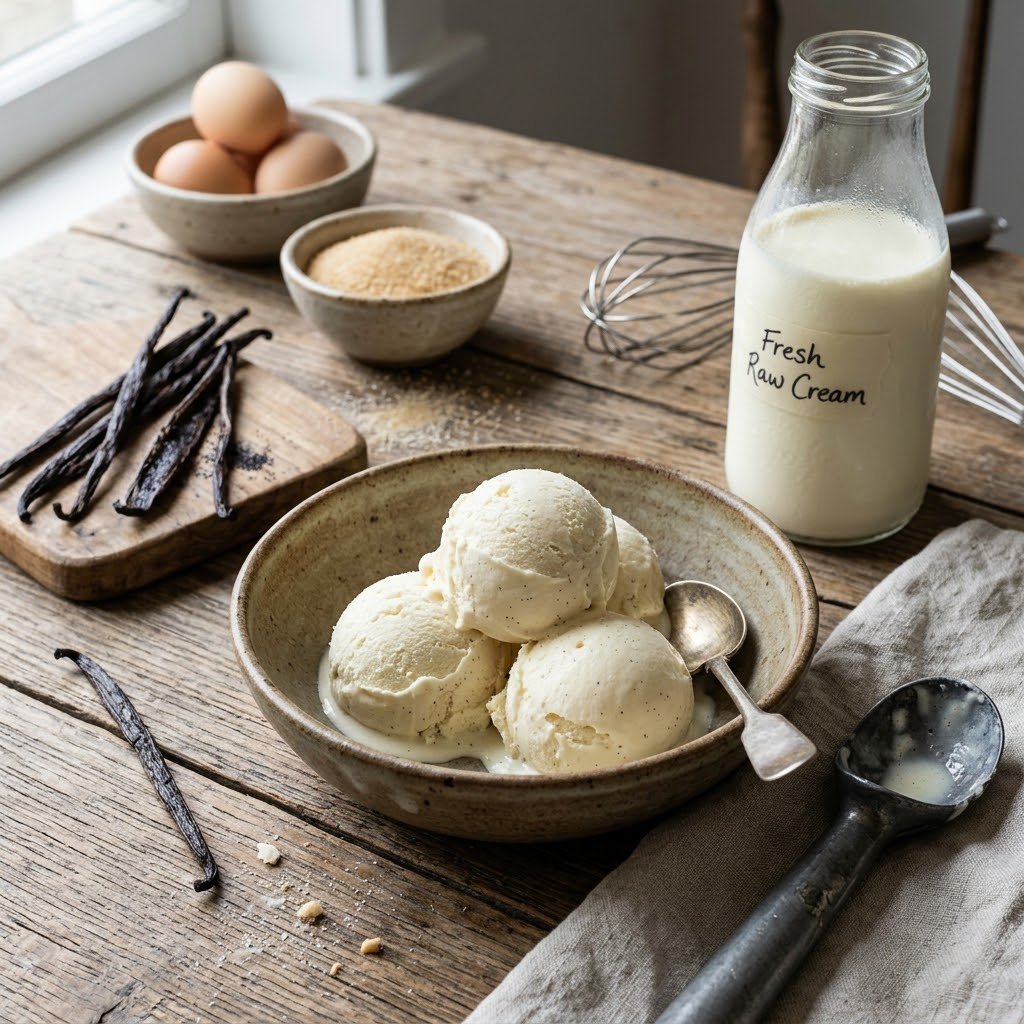
What Is Raw Cream Ice Cream?
Raw cream is the fat-rich layer that rises to the top of milk that has not been pasteurized or homogenized. Raw cream ice cream, often called raw milk ice cream, is simply ice cream made from that unheated dairy. A typical raw cream ice cream recipe is no-cook: the base is whisked together cold, chilled, and churned, so the cream keeps its fresh, sweet, grassy flavor rather than the slightly cooked taste of a stovetop custard.
People who buy raw dairy from a local farm often turn to homemade ice cream because the cream is so thick and flavorful. Cream from grass-fed cows in particular tends to have a deeper yellow color, which shows up as the warm ivory tone in the finished ice cream. Fat content varies with the breed, the season, and how the cream was skimmed, so raw cream can be noticeably richer or thinner than the standardized heavy cream sold in supermarkets. That variation is worth keeping in mind, and the recipe notes below explain how to adjust for it.
Before You Start: Raw Dairy Safety
This part matters, so it comes before the recipe rather than at the end.
Raw milk and raw cream have not been heated to kill germs. According to the CDC’s guidance on raw milk, unpasteurized dairy can carry harmful bacteria such as Salmonella, E. coli, Listeria, and Campylobacter, and it is linked to far more illness outbreaks than pasteurized dairy. Freezing does not kill these bacteria; it only pauses them. Since 2024, U.S. health agencies have also advised against raw milk because of avian influenza (H5N1) found in dairy cattle.
- Who should not eat raw cream ice cream: pregnant people, babies and young children, older adults, and anyone with a weakened immune system. For them, use the cooked custard method below with pasteurized cream, or simply make the recipe with store-bought pasteurized dairy.
- Know your source. If you choose raw dairy, buy it from a farm that tests its milk regularly and handles it cleanly, keep it at 40°F (4°C) or below, and use it well before its date.
- Check local rules. The sale of raw milk and cream is legal in some U.S. states, limited in others, and banned in some.
- Eggs: the yolks in a no-cook base are raw as well. Pasteurized-in-shell eggs are the safer choice, or make the egg-free version.
Everything in this raw cream ice cream recipe works the same with pasteurized cream and milk, so you can follow it exactly whatever dairy you use.
Ingredients for Raw Cream Vanilla Ice Cream
The list is short, so each ingredient carries weight.
- Raw heavy cream, 2 cups (480 ml). The main source of fat and body. Shake or stir the jar first, because the thickest cream settles at the top.
- Raw whole milk, 1 cup (240 ml). Thins the base just enough so the ice cream is creamy rather than buttery or greasy.
- Egg yolks, 4 large. Yolks add richness, help emulsify the fat, and slow down ice crystal growth, which keeps the texture smooth for longer in the freezer. They are optional; see the egg-free option below.
- Mild honey, ½ cup (170 g). Honey sweetens and, because it contains more fructose and glucose than table sugar, lowers the freezing point a little more, so the ice cream stays easier to scoop. Choose a light, mild honey such as clover, orange blossom, or wildflower so it does not overpower the cream. You can read more about varieties from the National Honey Board.
- Vanilla bean, 1 (or 2 teaspoons pure vanilla extract). A split, scraped bean gives the flecked look and the deepest flavor. Extract works well too.
- Fine sea salt, ⅛ teaspoon. Not enough to taste salty; it simply sharpens the sweetness and the cream flavor.
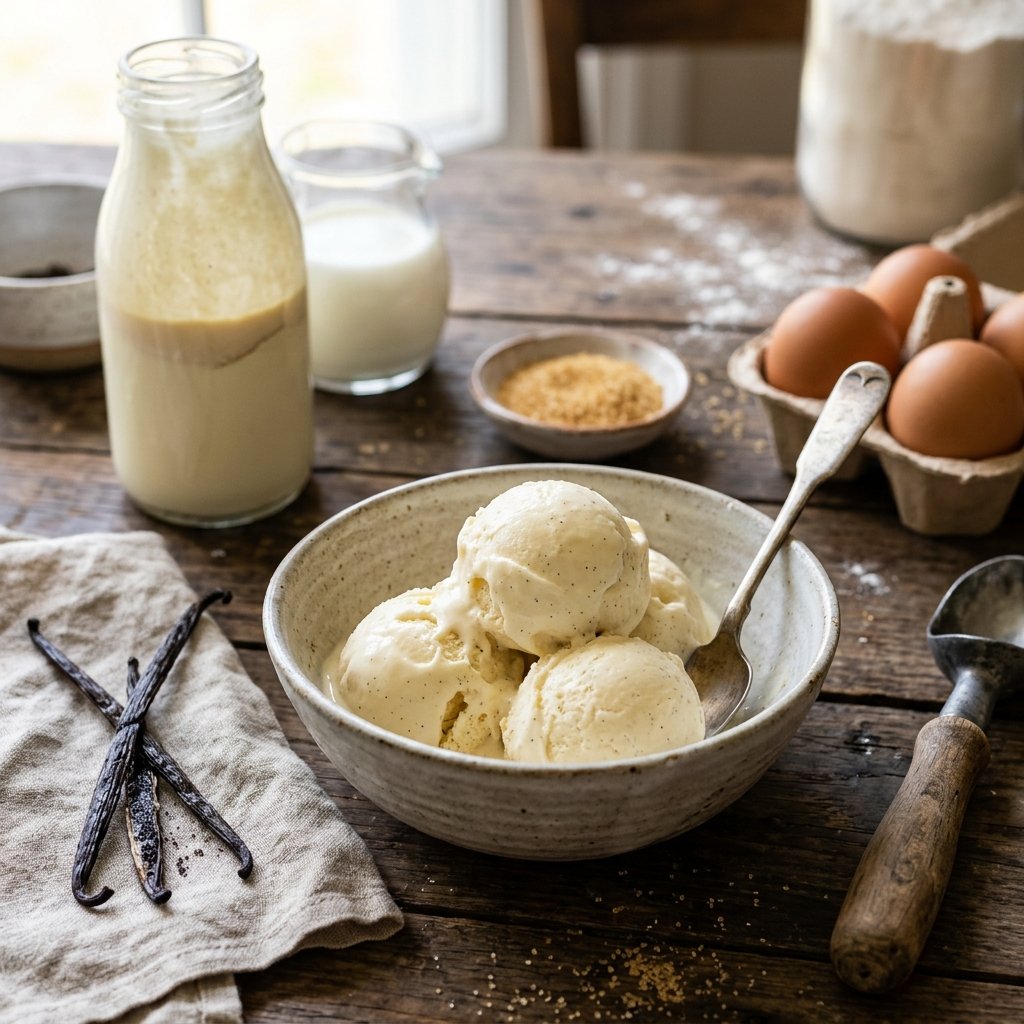
Choosing a Sweetener
Honey is the default here, but any of these will make good honey sweetened ice cream or its alternatives. The amounts are matched for similar sweetness.
| Sweetener | Amount | Flavor | Texture |
|---|---|---|---|
| Mild honey | ½ cup (170 g) | Light, floral | Softest scoop |
| Maple syrup | ⅔ cup (210 g) | Warm, caramel-like | Soft, slightly less rich |
| Unrefined cane sugar | ⅔ cup (130 g) | Light molasses note | Firmer, classic |
| Granulated sugar | ⅔ cup (130 g) | Clean, neutral | Firmer, classic |
If you use a granulated sugar, whisk it with the yolks for a full two minutes so it dissolves before the cream goes in. Undissolved sugar makes ice cream gritty.
Why This Raw Cream Ice Cream Recipe Works
Good homemade ice cream is a balance between fat, sugar, and water. Too much water and you get large ice crystals; too much fat and the ice cream feels waxy and coats your mouth; too little sugar and it freezes rock hard.
Two parts cream to one part milk lands in the range of most premium ice creams, around 15 to 18 percent fat once the yolks are counted, depending on how rich your cream is. The yolks add emulsifiers that keep the fat evenly dispersed. The honey brings both sweetness and freezing-point control. If your raw cream is very thick, almost spoonable, swap ½ cup of the cream for milk. If it is thin and pours like half-and-half, use all cream and only ½ cup of milk.
How to Make Raw Cream Ice Cream in an Ice Cream Maker
This is the method the recipe card follows. It is a classic ice cream maker recipe with no stove involved.
Step 1: Freeze the bowl
If your ice cream maker uses a freezer bowl, put it in the coldest part of the freezer at least 24 hours ahead. It should be frozen so solid that you hear no liquid sloshing when you shake it.
Step 2: Make the base
Split the vanilla bean lengthwise and scrape out the seeds with the back of a knife. In a large bowl, whisk the egg yolks, honey, salt, and vanilla seeds until smooth and slightly paler, about 1 minute. Slowly whisk in the milk, then the cream, until everything is evenly blended. Do not whip it; you want a smooth liquid, not soft peaks.
Drop the empty vanilla pod into the base. It will keep adding flavor while the base chills.
Step 3: Chill thoroughly
Cover and refrigerate the base for at least 2 hours, or up to 24 hours. It should be 40°F (4°C) or colder before it goes into the machine. A cold base churns faster, and faster churning means smaller ice crystals and smoother ice cream. Keeping raw dairy cold the whole time is also part of handling it safely.
Step 4: Churn
Remove the vanilla pod and whisk the base once more. Pour it into the running machine and churn according to the manufacturer’s directions, usually 20 to 25 minutes, until it looks like thick soft serve and has grown in volume.
Step 5: Firm it up
Scrape the ice cream into a chilled loaf pan or freezer container, press a piece of parchment directly onto the surface, cover, and freeze for 3 to 4 hours, until scoopable. Let it sit at room temperature for 5 minutes before serving.
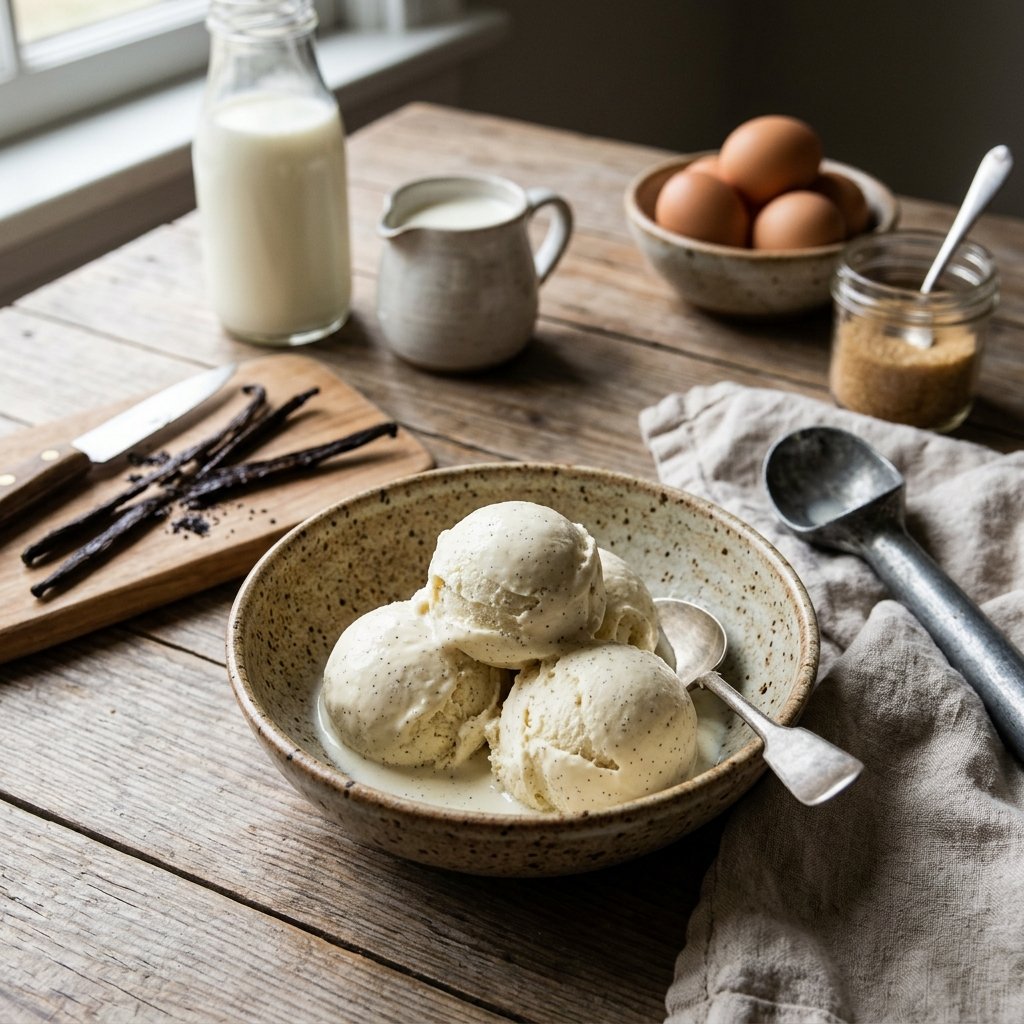
No Churn Raw Milk Ice Cream
No machine? You can still make it, with a little more patience. The result is slightly firmer and less airy than churned ice cream, but still smooth.
- Prepare and chill the base exactly as above.
- Pour it into a shallow metal pan, such as an 8-inch square baking pan. Metal chills faster than glass.
- Freeze for 45 minutes, until the edges begin to set.
- Stir hard with a fork or whisk, pulling the frozen edges into the soft center. Return to the freezer.
- Repeat every 30 minutes for about 3 hours, until the ice cream is evenly thick and creamy.
- Transfer to a container, cover the surface with parchment, and freeze until firm.
For an even smoother no-churn texture, once the mixture is mostly frozen, break it into chunks and pulse it briefly in a food processor, then freeze again.
Cooked Custard Option (Not Raw)
If anyone eating the ice cream is in a higher-risk group, or you simply prefer a cooked base, turn the same ingredients into a classic custard. This heats the dairy and eggs enough to make them safe, at the cost of the fresh raw-cream flavor.
- Warm the milk, half the cream, the honey, salt, and the vanilla bean and seeds in a saucepan until steaming.
- Whisk the yolks in a bowl, then slowly whisk in about a cup of the hot mixture to temper them.
- Pour everything back into the pan and cook over medium-low heat, stirring constantly, until the custard thickens enough to coat a spoon and reaches 170°F (77°C).
- Strain into a bowl holding the remaining cold cream, cool in an ice bath, then chill and churn as above.
Our honey ice cream recipe uses a cooked custard method from start to finish if you want a fully tested version of that approach.
Egg Free Ice Cream Version
To make this raw cream ice cream recipe without eggs, leave out the yolks. That gives you a Philadelphia-style ice cream: lighter, cleaner, and very focused on the flavor of the cream. It is the simplest form of no cook ice cream and the one many raw dairy fans prefer.
- Use 2½ cups (600 ml) cream and ¾ cup (180 ml) milk, so the higher fat makes up for the missing yolks.
- Keep the honey, vanilla, and salt the same.
- Whisk until the honey fully dissolves, chill, and churn.
Egg-free ice cream freezes harder and gets icy sooner, so it is best eaten within a week. Letting it soften for 10 minutes before scooping helps.
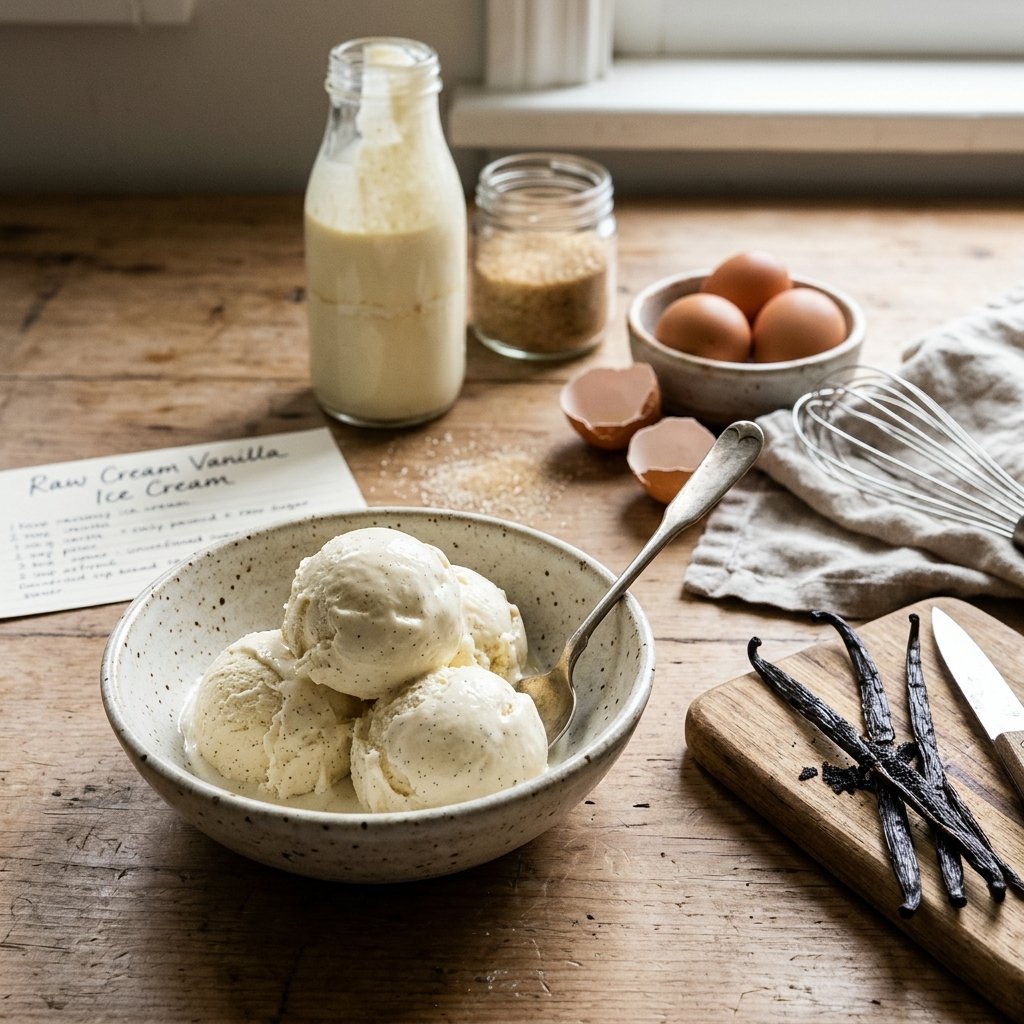
Flavor Ideas for Homemade Raw Cream Ice Cream
Vanilla shows off the cream best, but the base takes other flavors well. Add mix-ins during the last 2 minutes of churning, and swirl sauces in as you transfer the ice cream to its container.
- Honey and cinnamon: add ½ teaspoon ground cinnamon to the base and drizzle a little extra honey between layers in the container.
- Maple pecan: sweeten with maple syrup and fold in ¾ cup toasted, chopped pecans.
- Salted caramel swirl: ribbon in ½ cup of cooled caramel sauce. Our goat milk caramel is a lovely match.
- Strawberry: cook 2 cups chopped strawberries with 2 tablespoons honey until jammy, cool completely, and swirl in.
- Chocolate: whisk ⅓ cup cocoa powder with the honey and yolks before adding the dairy, and increase the honey by 2 tablespoons.
- Coffee: dissolve 2 tablespoons instant espresso powder in the milk.
- Toffee crunch: fold in chopped toffee, in the spirit of our butter brickle ice cream.
Troubleshooting
Why is my ice cream icy?
Usually the base was not cold enough before churning, the freezer bowl was not fully frozen, or the ice cream sat uncovered in the freezer. Chill the base overnight, freeze the bowl for a full day, and always press parchment onto the surface before storing.
Why is it hard as a rock?
Homemade ice cream has no stabilizers and less air than commercial brands, so it freezes harder. Let it rest on the counter for 5 to 10 minutes before scooping. Honey helps, and so does a tablespoon of vodka or bourbon stirred into the base, since alcohol does not freeze.
Why does it feel greasy or buttery?
The cream was very high in fat, or it was over-churned. Raw cream can partly turn to butter if it is churned too long or starts too warm. Thin the base with more milk next time and stop churning as soon as it reaches a soft-serve texture.
Why did it taste flat?
Cold dulls flavor, so the base should taste slightly too sweet and too strongly flavored before freezing. Do not skip the salt.
How to Serve It
Scoop it plain to taste the cream, or serve it with warm fruit crisp, a slice of pie, a drizzle of honey and crushed walnuts, or a spoonful of mascarpone whipped cream for an extra-rich sundae. It also pairs well with a slice of Cuban flan for a dessert table. For a fun outdoor project with kids, using pasteurized dairy, try our ice cream in a ball.
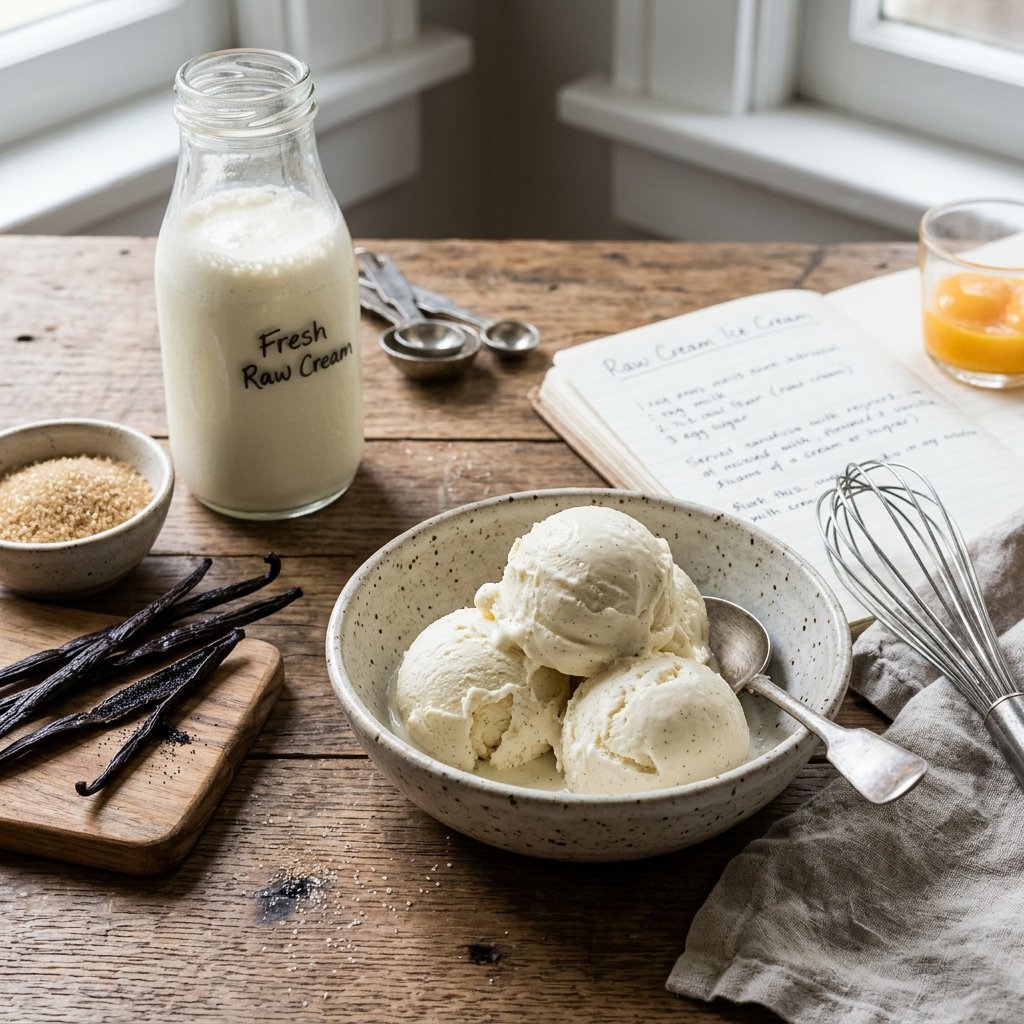
Storing Homemade Raw Cream Ice Cream
- Store it in an airtight container with parchment pressed onto the surface, in the back of the freezer where the temperature is steadiest.
- For the best texture, eat it within 1 to 2 weeks. It stays safe frozen for longer, but it becomes icier.
- Do not let it melt and refreeze. Besides ruining the texture, repeated thawing gives any bacteria in raw dairy a chance to grow.
- Keep the unchurned base in the fridge for no more than 24 hours.
Raw Cream Ice Cream Recipe FAQ
Can I use only raw milk instead of cream?
You can, but the ice cream will be much icier and closer to ice milk, because milk has a lot more water and far less fat. For a lighter version, use equal parts cream and milk rather than all milk.
Can I make raw milk ice cream with cream I skimmed myself?
Yes. Let the fresh milk sit undisturbed in the fridge for 24 to 48 hours, then skim the cream from the top with a ladle. Home-skimmed cream varies a lot in thickness, so taste and feel it and adjust the cream-to-milk ratio as explained above.
Is it safe to use raw egg yolks in ice cream?
Raw eggs carry a small risk of Salmonella. Pasteurized-in-shell eggs reduce that risk, and the egg-free or cooked custard versions avoid it. People in higher-risk groups should avoid ice cream with raw egg yolks.
Does freezing make raw cream safe?
No. Freezing stops bacteria from multiplying but does not kill them. Only heating, as in the cooked custard method, does that.
How much does this recipe make?
About 1 quart (1 liter), or eight ½-cup servings. It fits a standard 1½- or 2-quart ice cream maker. Do not fill the machine more than two-thirds full, since the base expands as it churns.
Can I use less honey?
You can reduce it to ⅓ cup, but expect firmer, icier ice cream, because sugar is what keeps it soft. Remove it from the freezer 10 minutes before serving.
The Bottom Line
This raw cream ice cream recipe is about letting good dairy speak for itself: cold cream, a little milk, rich yolks, honey, and real vanilla, chilled well and churned fast. Make it with raw dairy only if you understand and accept the risks, use the cooked or pasteurized version for anyone who is vulnerable, and you will have a bowl of vanilla ice cream that tastes of fresh cream above all. The full recipe is below.
Raw Cream Vanilla Ice Cream (Honey Sweetened)
Ingredients
Equipment
Method
- Freeze the ice cream maker bowl for at least 24 hours, until completely solid.
- Split the vanilla bean lengthwise and scrape out the seeds with the back of a knife.
- In a large bowl, whisk the egg yolks, honey, salt, and vanilla seeds until smooth and slightly paler, about 1 minute.
- Slowly whisk in the milk, then the cream, until evenly blended without whipping. Add the empty vanilla pod.
- Cover and refrigerate for at least 2 hours or up to 24 hours, until the base is 40°F (4°C) or colder.
- Remove the vanilla pod, whisk the base briefly, and churn in the ice cream maker for 20 to 25 minutes, until it looks like thick soft serve.
- Transfer to a chilled container, press parchment onto the surface, cover, and freeze for 3 to 4 hours until scoopable.
- Let the ice cream sit at room temperature for about 5 minutes before scooping.
Notes
- Safety: raw (unpasteurized) cream, milk, and egg yolks can carry harmful bacteria, and freezing does not kill them. Pregnant people, young children, older adults, and anyone with a weakened immune system should use pasteurized dairy or the cooked custard method.
- Cooked custard option: heat the milk, 1 cup of the cream, the honey, salt, and vanilla until steaming; temper into the yolks; cook, stirring, to 170°F (77°C); strain into the remaining cold cream, chill, and churn.
- Egg-free version: omit the yolks and use 2 1/2 cups cream and 3/4 cup milk. Best eaten within a week.
- No ice cream maker: freeze the base in a shallow metal pan, stirring hard every 30 minutes for about 3 hours.
- Sweetener swaps: 2/3 cup maple syrup or 2/3 cup (130 g) cane sugar instead of honey.
- Very thick cream: replace 1/2 cup of the cream with milk. Thin cream: use all cream and only 1/2 cup milk.
- Storage: airtight, with parchment on the surface, for best texture within 1 to 2 weeks. Do not refreeze melted ice cream.