
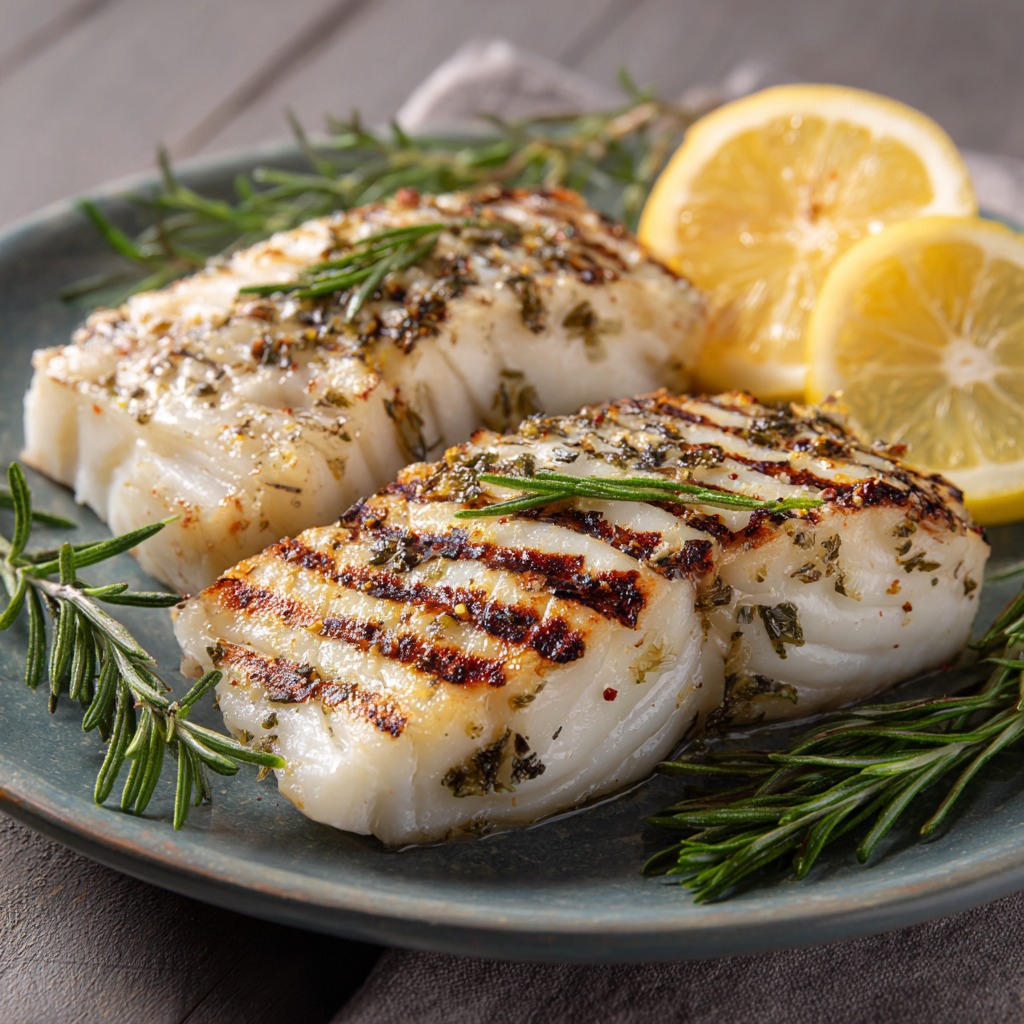
This Atlantic wolffish recipe is about as simple as fish gets: thick white fillets, brushed with olive oil, seasoned with salt, pepper and a little thyme or rosemary, then grilled hot and fast and finished with lemon. It takes under 20 minutes. The reason it works so well is the fish itself. Wolffish has firm, dense, slightly sweet flesh that holds together on a grill grate where cod or flounder would fall apart.
If you have never cooked it before, the rest of this page covers what you actually need to know: where the wolffish in your store comes from (it is not legal to land it from U.S. federal waters), how it behaves in the pan compared with other white fish, how to tell when it is done, and four other ways to cook it once you have the grilled version down.
Quick Answer: How to Cook Atlantic Wolffish
- Best methods: grilling, pan-searing, baking, and simmering in soups or stews. It stays in chunks instead of flaking apart.
- Heat: medium-high on the grill, about 3 to 5 minutes per side for a 1-inch fillet.
- Doneness: opaque all the way through and 145°F (63°C) in the thickest part.
- Flavor partners: lemon, garlic, butter, thyme, parsley, capers, tomatoes, white wine.
- Good substitutes: monkfish, halibut, tilefish, or thick cod loin.
What You Are Buying: A Short Guide to Wolffish
Atlantic wolffish (Anarhichas lupus) is a cold-water bottom fish from the North Atlantic. It gets its name from a set of large, canine-like front teeth, which it uses to crush the scallops, crabs and sea urchins it eats. That shellfish diet is often credited for the sweet, rich taste of the meat. You may also see it sold as ocean catfish, sea cat or striped wolffish.
There are three closely related Atlantic species, the striped, spotted and northern wolffish. According to the SeafoodSource Seafood Handbook, there is little difference among them in the kitchen. The same source notes that Iceland runs the largest directed fishery for wolffish, with additional supply from Canada and Norway.
Is Atlantic wolffish legal to buy in the U.S.?
Yes, but here is the part most recipes skip. In U.S. federal waters off New England, Atlantic wolffish is a zero-possession species. NOAA Fisheries lists the U.S. stock as overfished, and federally permitted groundfish boats are not allowed to keep or land it. So the wolffish sold in American fish counters and online is imported, mostly from Iceland and Norway. When you buy it, ask where it was caught. A reputable fishmonger will know, and that answer tells you it came through a managed fishery rather than from local waters where it is protected.
What does wolffish taste like?
Mild, clean and a little sweet, with none of the strong “fishy” edge of mackerel or bluefish. The raw flesh is pearly white with a slight pink tint and turns bright, opaque white when cooked. The texture is the real selling point: firm, meaty and moist, closer to monkfish or halibut than to cod. It does not flake into small pieces when it is cooked through, which is why it has long been used in French fish stews such as bouillabaisse.
| Fish | Texture when cooked | Flavor | Grill-friendly? |
|---|---|---|---|
| Atlantic wolffish | Firm, meaty, holds together | Mild, sweet | Yes |
| Cod | Soft, large flakes | Mild | Only thick loins, on a mat or plank |
| Halibut | Firm, lean, can dry out | Mild, clean | Yes, watch the timing |
| Monkfish | Very firm, dense | Mild, sweet | Yes |
| Tilapia | Thin, delicate | Very mild | Not really |
Why This Atlantic Wolffish Recipe Uses the Grill
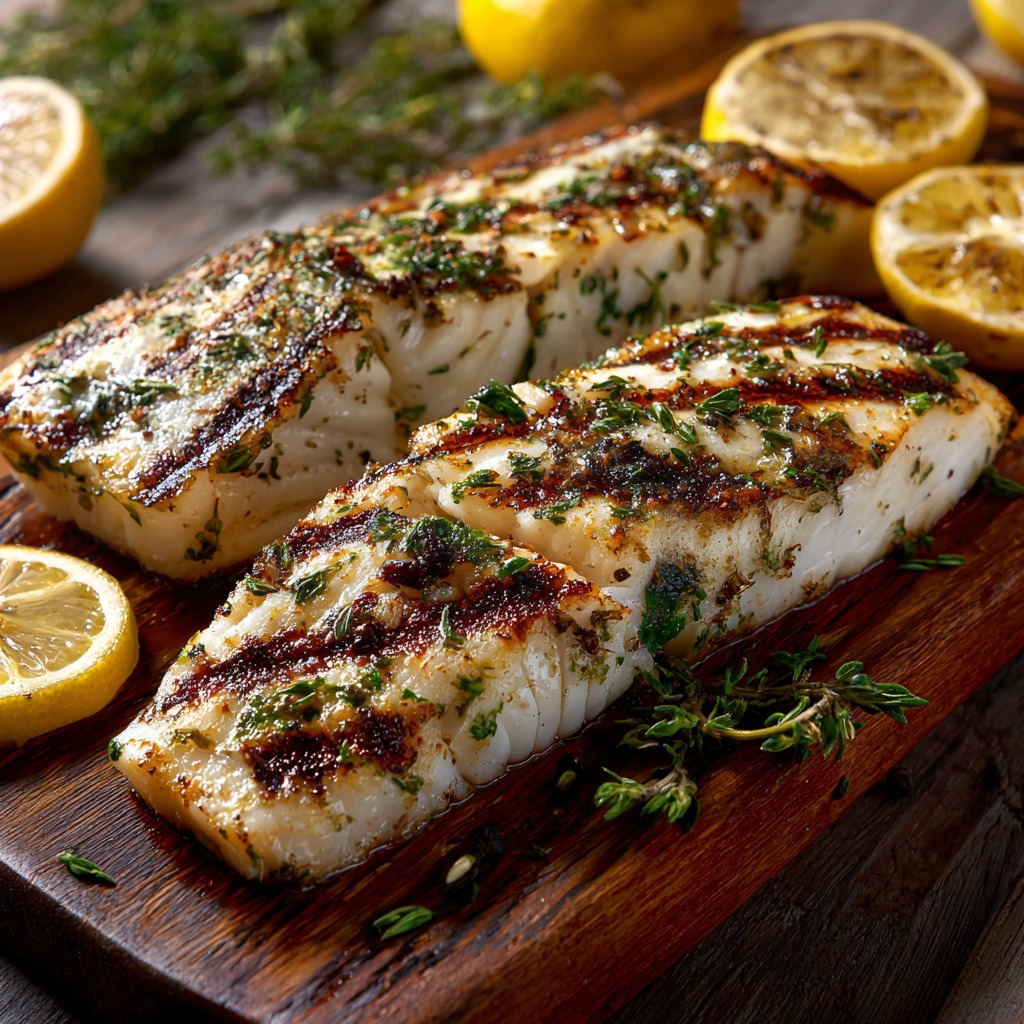
Most white fish need gentle handling. Wolffish is the exception, and the grill is where that pays off. High heat gives you browned grill marks and a little smoke on the outside while the dense interior stays juicy. The seasoning is kept deliberately light so the sweetness of the fish comes through: olive oil to stop sticking, salt and pepper, a woody herb, and fresh lemon at the end instead of a marinade. Acidic marinades start to “cook” the surface of the fish and can make it mushy if left too long, so the lemon goes on after cooking.
Ingredients and What Each One Does
- Wolffish fillets (two, about 6 ounces each): skinless is normal for wolffish. Aim for fillets about 1 inch thick so they cook evenly.
- Olive oil: brushed on the fish, not the grill, so it does not burn off before the fish goes down.
- Lemon: half for squeezing over the cooked fish, half sliced for serving.
- Fresh thyme or rosemary: finely chopped. Dill or oregano also work.
- Salt and black pepper: season right before grilling. Salting too early draws water to the surface and fights the sear.
- Fresh parsley: optional, for color and a fresh finish.
How to Grill Atlantic Wolffish, Step by Step
- Thaw properly if frozen. Much of the wolffish sold in the U.S. arrives frozen. Thaw it overnight in the refrigerator, still in its packaging, set on a plate. If you are short on time, seal it in a zip-top bag and submerge it in cold water for about an hour.
- Heat and clean the grill. Bring a gas or charcoal grill (or a grill pan) to medium-high, roughly 400 to 450°F. Scrub the grates clean and wipe them with an oiled paper towel held in tongs.
- Dry the fish. Pat the fillets very dry with paper towels. Surface moisture is the number one reason fish sticks.
- Oil and season. Brush both sides with olive oil, then season with salt, pepper and the chopped herbs.
- Grill without fussing. Lay the fillets down at an angle to the grates and leave them alone for 3 to 4 minutes. When the underside is marked and the fish releases easily, turn it once with a wide spatula.
- Finish and check. Grill the second side for another 3 to 4 minutes. Thicker pieces may need 1 to 2 minutes more. The fish is done when it is opaque in the center and reads 145°F on an instant-read thermometer.
- Rest and serve. Move to a warm plate, squeeze lemon over the top, scatter with parsley and serve with lemon slices.
How to Tell When Wolffish Is Cooked
Because wolffish does not flake easily, the “flakes with a fork” test that works for cod is less reliable here. Use a thermometer if you have one. The U.S. guideline for fish is 145°F, per the FoodSafety.gov minimum temperature chart. Without a thermometer, slide a thin knife into the thickest part and look: the flesh should be fully white with no glassy, translucent center. Pull it as soon as it gets there. Wolffish is forgiving, but it will turn chewy if left on high heat much longer.
| Fillet thickness | Approx. time per side (medium-high) | Notes |
|---|---|---|
| 1/2 inch | 2 to 3 minutes | Use a grill basket; thin pieces cook fast |
| 1 inch | 3 to 5 minutes | Ideal thickness for this recipe |
| 1 1/2 inches | 5 to 6 minutes | Move to indirect heat to finish if the outside browns too fast |
Full Recipe Card
The card below has exact amounts, timing and a printable version.
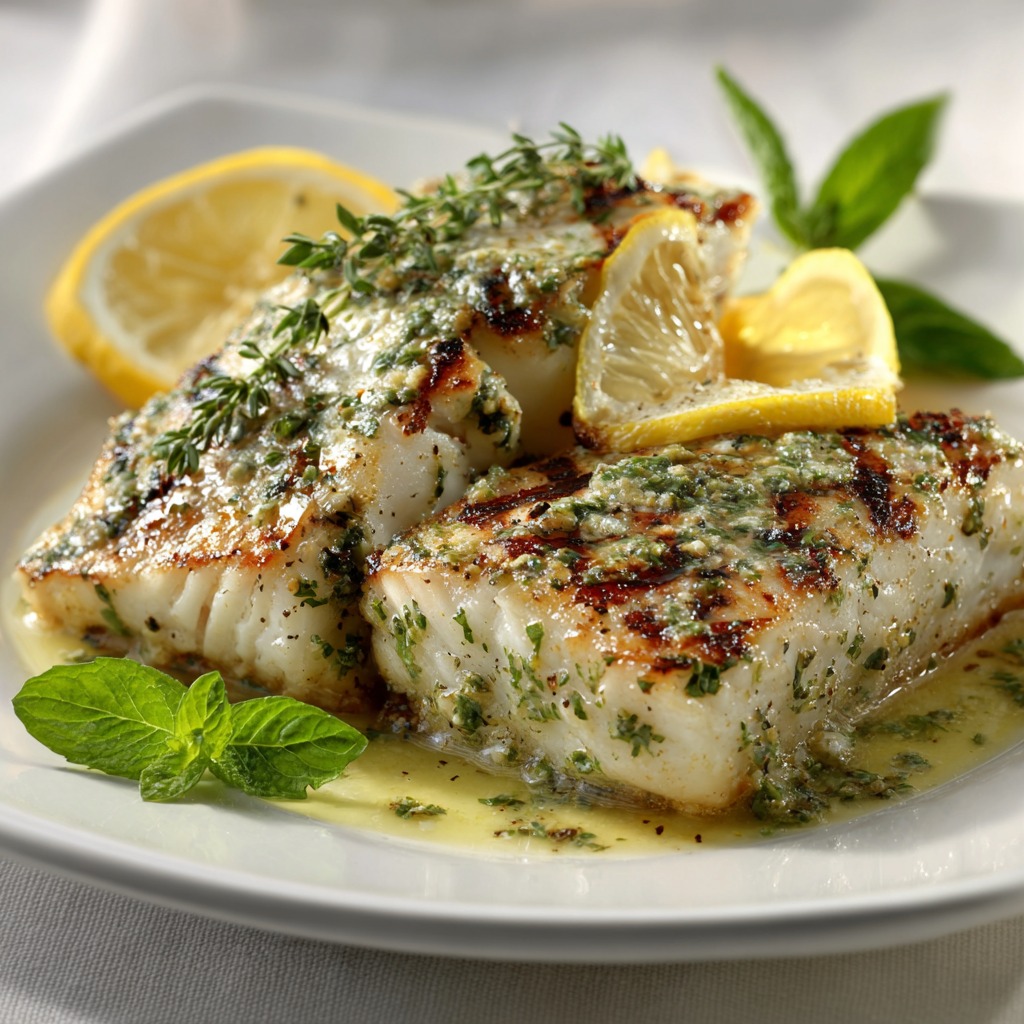
Grilled Atlantic Wolffish with Lemon and Herbs
Equipment
- Grill or grill pan
- Basting brush
- Wide fish spatula
- Instant-read thermometer
- Paper towels
Ingredients
- 2 Atlantic wolffish fillets about 6 oz (170 g) each, 1 inch thick, thawed if frozen
- 2 tablespoons extra virgin olive oil
- 1 lemon half juiced, half sliced
- 1 teaspoon fresh thyme or rosemary finely chopped
- 1/2 teaspoon kosher salt or to taste
- 1/4 teaspoon black pepper freshly ground
- 1 tablespoon fresh parsley chopped, optional, for garnish
Instructions
- Heat a gas or charcoal grill, or a grill pan, to medium-high (about 400 to 450°F). Scrub the grates clean and wipe them with an oiled paper towel held in tongs.
- Pat the wolffish fillets very dry on both sides with paper towels. Dry fish sears better and is much less likely to stick.

- Brush both sides of the fillets with the olive oil. Season with the salt, pepper and chopped thyme or rosemary right before grilling.
- Lay the fillets on the grates and leave them undisturbed for 3 to 4 minutes, until well marked and the fish releases easily. Turn once with a wide spatula.
- Grill the second side for 3 to 4 minutes more (1 to 2 minutes longer for thicker fillets), until the center is opaque and an instant-read thermometer reads 145°F (63°C).
- Move the fish to a warm plate, squeeze the lemon juice over the top, sprinkle with parsley and serve with the lemon slices.


Notes
- Buying wolffish: Atlantic wolffish sold in the U.S. is imported, mainly from Iceland and Norway, because it cannot be landed from U.S. federal waters. Ask your fishmonger where it was caught.
- Thawing: Thaw frozen fillets overnight in the refrigerator, or sealed in a bag under cold water for about an hour.
- Substitutes: Monkfish, halibut, tilefish or thick cod loin work with the same method.
- Air fryer: Cook oiled, seasoned 1-inch fillets at 400°F for about 8 to 10 minutes, to 145°F.
- Storage: Refrigerate leftovers in an airtight container for up to 3 to 4 days and reheat gently, covered, in a low oven.
Four More Ways to Cook Wolffish
Once you know how the fish behaves, these variations are easy. Each uses the same basic prep: dry, season, cook to 145°F.
1. Pan-seared with garlic butter
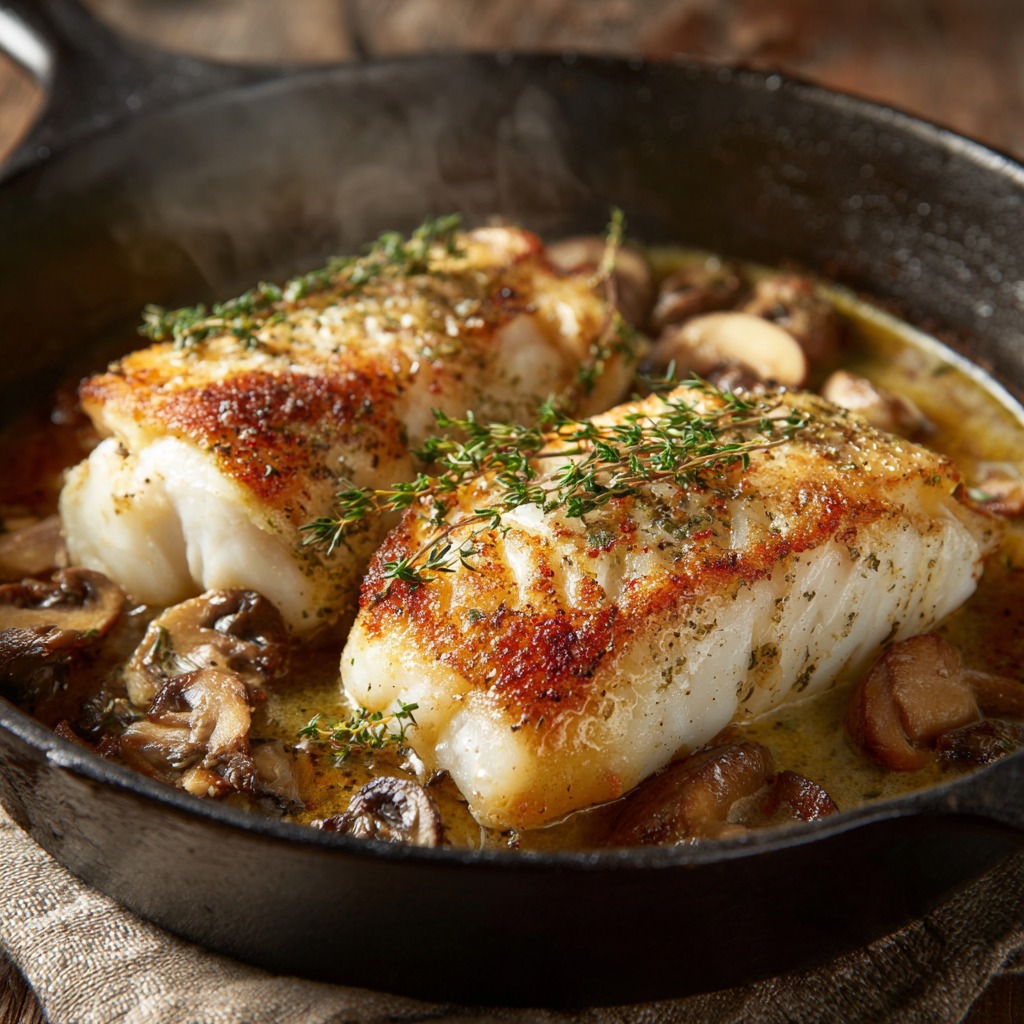
Heat a tablespoon of neutral oil in a cast iron or stainless skillet over medium-high heat. Sear the seasoned fillets for 3 to 4 minutes until golden, flip, then add 2 tablespoons of butter, 2 smashed garlic cloves and a few sprigs of thyme. Tilt the pan and spoon the foaming butter over the fish for the last 2 to 3 minutes. Sliced mushrooms can go in with the butter if you want a fuller pan sauce.
2. Baked with lemon and herbs
Heat the oven to 400°F. Set the fillets in an oiled baking dish, season, top with lemon slices and a drizzle of olive oil, and add a splash of white wine or stock to the dish. Bake for 12 to 15 minutes, depending on thickness. This is the most hands-off option and the best one for cooking for a crowd. For a crunchy top, press a mix of breadcrumbs, grated Parmesan and parsley onto the fish before baking.
3. Wolffish in broth with greens
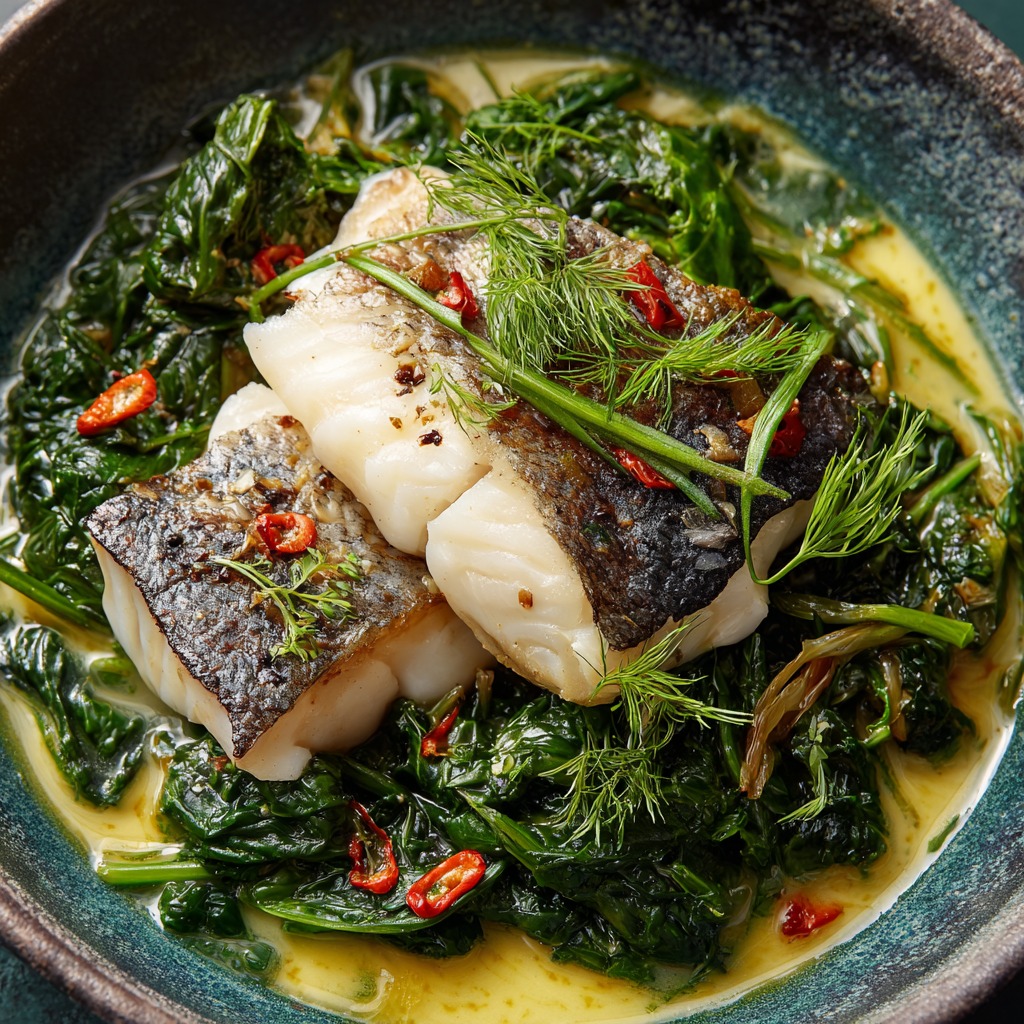
This plays to the fish’s biggest strength. Simmer garlic, a pinch of chili flakes and diced tomato in fish or chicken stock with a splash of white wine. Add 1-inch chunks of wolffish and poach gently for 5 to 6 minutes, then stir in spinach or kale until wilted. The pieces stay whole instead of breaking up. The same idea scales into chowder: add diced potato and onion first, cook until tender, then the fish, then a little cream at the end.
4. Wolffish tacos
Season strips of fish with chili powder, cumin, garlic powder and salt, then sear or grill. Because the fish holds its shape, the strips stay intact in a warm tortilla. Top with shredded cabbage, sliced radish, avocado and a lime-spiked sour cream. A sharp, vinegary cabbage slaw like our Asian coleslaw works well here too.
What to Serve With Grilled Wolffish
Keep the sides simple so the fish stays the main event.
- Starches: herbed couscous, lemon rice, roasted baby potatoes, or a smooth potato purée such as our pommes purée.
- Vegetables: grilled asparagus or zucchini (cook them on the grill while it is hot), sautéed spinach with garlic, or green beans with almonds.
- Salads: tomato and cucumber salad, or a crisp slaw such as the vinegar-based Bakesale Betty coleslaw.
- Sauces: salsa verde, a quick caper-lemon butter, tartar sauce, or chimichurri.
Common Mistakes With This Atlantic Wolffish Recipe
- Grilling wet fish. Water on the surface steams the fish and glues it to the grates. Pat it dry every time.
- A grill that is not hot enough. Fish put on a lukewarm grate sticks. Wait until the grill is fully preheated.
- Flipping too early. If the fillet will not release, it is not ready. Give it another 30 to 60 seconds.
- Marinating in lemon for hours. Acid breaks down the surface. Use lemon at the end, or limit acidic marinades to 15 to 20 minutes.
- Overcooking. Wolffish forgives a lot, but past about 150°F it starts to turn tight and rubbery.
- Assuming it is local. If someone offers “local” Atlantic wolffish in New England, that is a red flag given the federal zero-possession rule.
Substitutes If You Cannot Find Wolffish
Wolffish is not stocked everywhere. These options have a similar firm texture and mild flavor, and they use the same timing:
- Monkfish: the closest match for texture. Remove the thin gray membrane before cooking.
- Halibut: a little leaner, so pull it at 140°F and let carryover heat finish it.
- Tilefish: sweet and firm, a good match in stews.
- Thick cod loin: softer, so use a grill basket or a well-oiled plank.
Looking for other white fish ideas? Try our lemon ginger fish with rice, the snakehead fish recipe with ginger and lime, or poor man’s lobster, which also leans on a firm white fish.
Storing and Reheating Leftovers
Let cooked wolffish cool, then refrigerate it in an airtight container and eat it within 3 to 4 days. Reheat gently: a covered dish in a 275°F oven for about 10 minutes, or a covered skillet over low heat with a spoonful of water. Microwaving on full power tends to make it rubbery. Leftovers are also good cold, flaked into a salad with lemon, olive oil and capers, or folded into fish cakes.
Raw wolffish should be cooked within 1 to 2 days of buying it fresh. Frozen fillets keep best quality for several months in a 0°F freezer. Thaw in the refrigerator, never on the counter.
Atlantic Wolffish Recipe FAQs
Is wolffish a good fish to eat?
Yes. It is a lean, mild white fish with firm texture, and it suits people who usually do not like strong-tasting fish. Like other lean white fish, it is a good source of protein.
Does wolffish have bones?
Fillets sold in stores are usually boneless and skinless. Run your fingers over the fish before cooking anyway and pull out any stray pin bones with tweezers.
Can I cook wolffish from frozen?
You can bake it from frozen: add about 50 percent to the cooking time and check the temperature. For grilling and searing, thaw it first so the outside does not burn before the center cooks.
Why does my wolffish stick to the grill?
Usually one of three things: the fish was wet, the grates were not clean and oiled, or the grill was not hot enough. Fix all three and flip only when it releases on its own.
Can I use this recipe in an air fryer?
Yes. Oil and season the fillets as written and air fry at 400°F for about 8 to 10 minutes for 1-inch fillets, without flipping, until they reach 145°F.
The Bottom Line
This Atlantic wolffish recipe works because it does very little to a fish that does not need much. Buy imported fillets from a source you trust, dry them well, cook them hot and fast, and finish with lemon. Once you have made it on the grill, try the garlic butter sear or the brothy version with greens, both of which show off how well wolffish holds its shape.