
Snakehead Fish Recipe has firm, meaty flesh and is wonderful with high-heat cooking. For an easy weeknight dinner, pan-sear the fillets so they get a little browned on the outside but still stay moist inside, then serve with a quick sauce of ginger, garlic and lime for acidity, heat and fragrance without overwhelming the fish.
The secret is moisture control. Be sure to dry the fillets well before they go into the pan; don’t move them around until the first side is crusted, and check for doneness at the thickest part of the fillet, not by cooking time.
This snakehead fish recipe makes 4 servings and is ready in about 30 minutes.
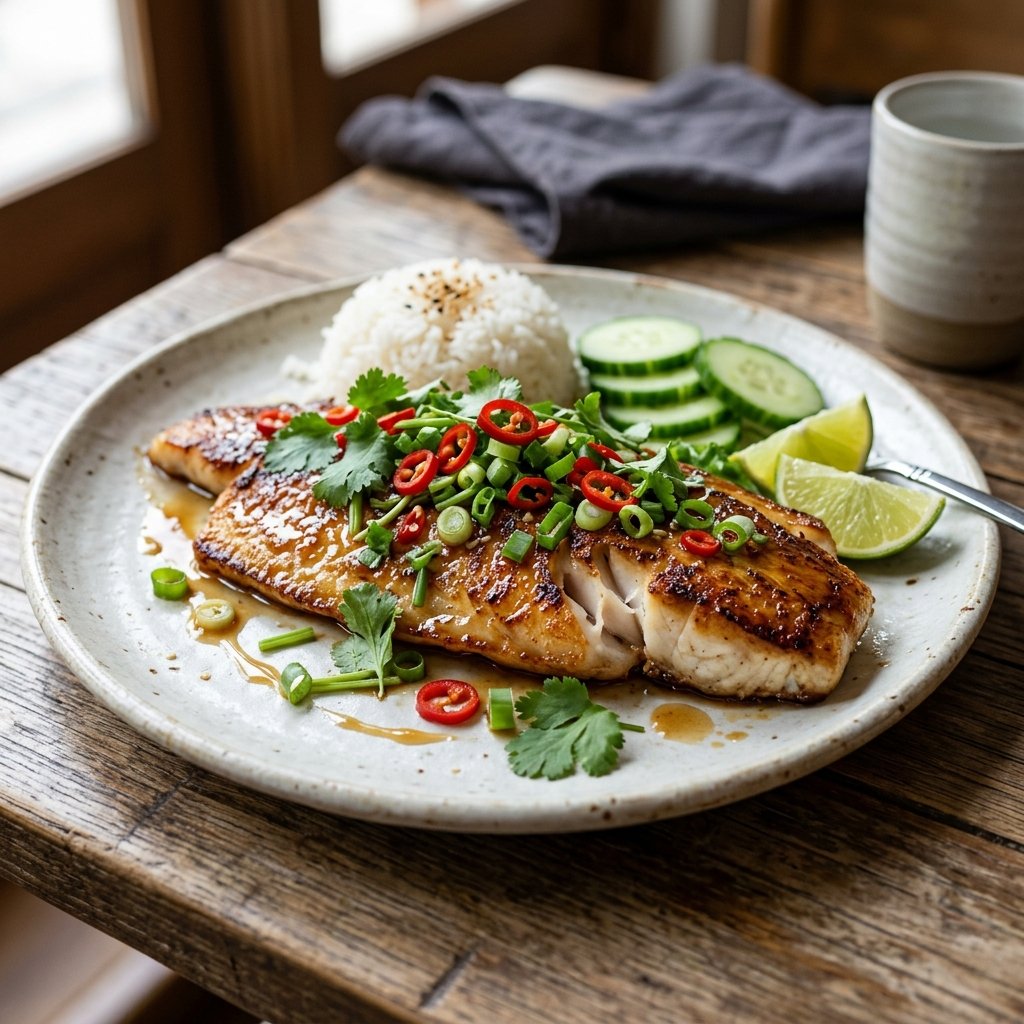
Why This Recipe Works
Snakehead is a firm-fleshed fish, so it can stand up to assertive flavors such as ginger, garlic, chili, soy sauce, and lime.
The cooking method is deliberately simple:
- Dry fish sears better. Surface moisture has to evaporate before browning can develop.
- Moderate-high heat creates the crust. Once the fish is in the pan, leaving it undisturbed for several minutes encourages even browning.
- Acid balances richness. Lime juice added near the end gives the sauce brightness without cooking the fish in acid for an extended period.
- The sauce is made separately. This prevents the fish from steaming in liquid and losing its browned exterior.
Ingredients
For the fish
- 4 snakehead fish fillets, about 150–180 g each
- 1 teaspoon fine salt
- ½ teaspoon freshly ground black pepper
- 2 tablespoons neutral cooking oil
- 1 tablespoon unsalted butter
For the ginger-garlic sauce
- 3 cloves garlic, finely minced
- 1 tablespoon fresh ginger, finely grated
- 2 tablespoons soy sauce
- 1 tablespoon fresh lime juice
- 1 teaspoon honey or brown sugar
- 1 teaspoon toasted sesame oil
- 1 small red chili, thinly sliced, optional
- 2 tablespoons water
- 2 green onions, thinly sliced
- 1 tablespoon chopped fresh cilantro, optional
To serve
- Steamed jasmine rice
- Lime wedges
- Cucumber slices or a simple green salad
- Extra sliced chili, optional
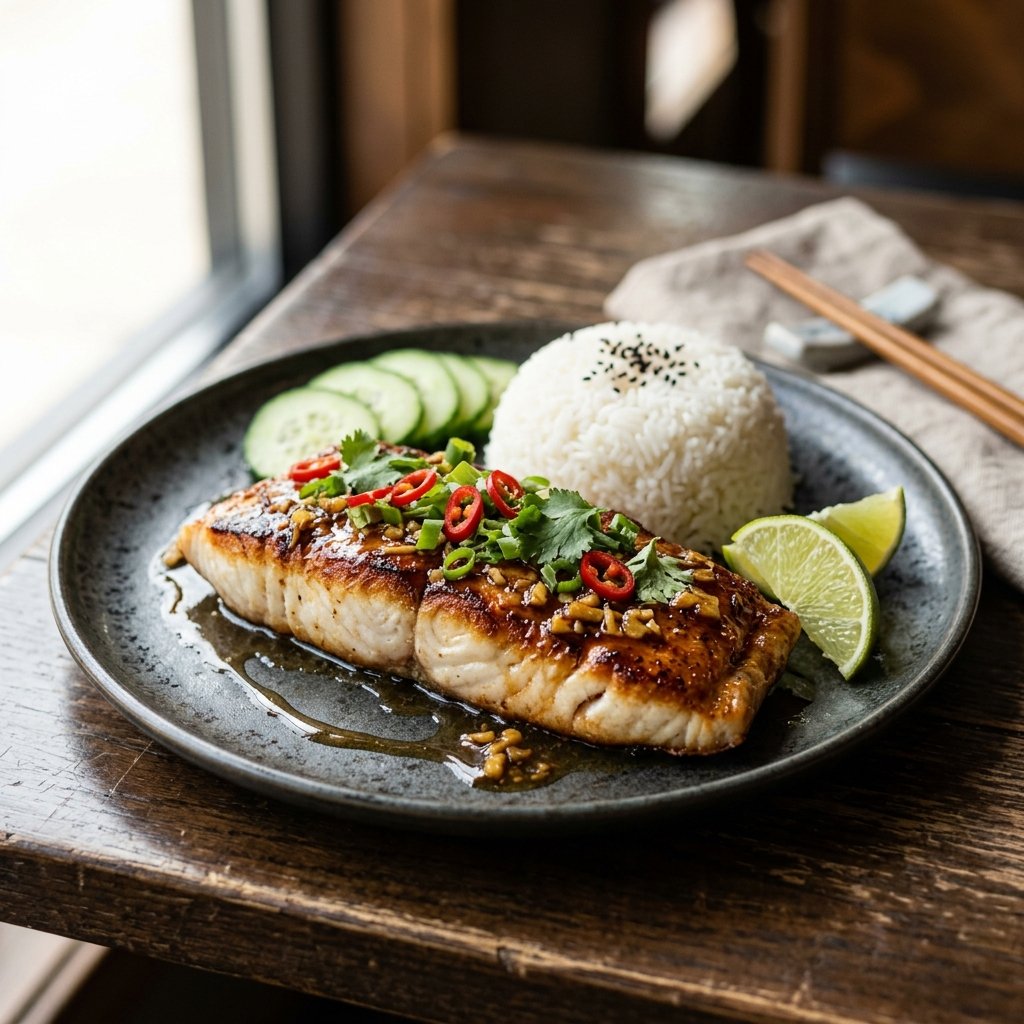
Choosing and Preparing Snakehead Fish
Look for fillets with firm flesh, a clean appearance, and no sour, rancid, or ammonia-like odor. If the fish is frozen, thaw it in the refrigerator rather than leaving it at room temperature.
Before cooking, pat the fillets thoroughly dry with paper towels. This small step makes a noticeable difference: a wet fillet releases steam into the pan, delaying browning and making it easier for the fish to stick.
If your fillets contain a particularly thick central bloodline, trim it away if desired for a milder presentation.
Equipment
- Large nonstick or well-seasoned skillet
- Small saucepan
- Fish spatula or thin turner
- Paper towels
- Instant-read food thermometer
A thin fish spatula is particularly useful because it can slide underneath the fillet without breaking the browned surface.
How to Make Snakehead Fish
1. Dry and season the fillets
Pat the snakehead fillets very dry on both sides.
Season evenly with salt and black pepper. Let the seasoned fish stand for about 5 minutes while you prepare the sauce ingredients.
Do not heavily salt the fish if your soy sauce is particularly salty. The sauce supplies additional seasoning later.
2. Mix the sauce
Combine the soy sauce, lime juice, honey or brown sugar, sesame oil, and water in a small bowl.
Keep the garlic, ginger, and chili separate for the moment.
Adding the lime juice to the sauce rather than directly to the raw fish keeps the surface relatively dry, which helps the fillets brown.
3. Sear the fish
Heat the oil in a large skillet over medium-high heat.
When the oil is hot and moves easily across the pan, place the fillets in carefully, presentation side down.
Cook for about 3–5 minutes, depending on thickness, without moving the fish.
When the underside is deeply golden and the fish releases relatively easily from the pan, turn the fillets.
Add the butter and cook for another 2–4 minutes, spooning some of the melted butter over the fish.
The exact time depends heavily on fillet thickness. The safest doneness check is an instant-read thermometer inserted into the thickest part of the fish.
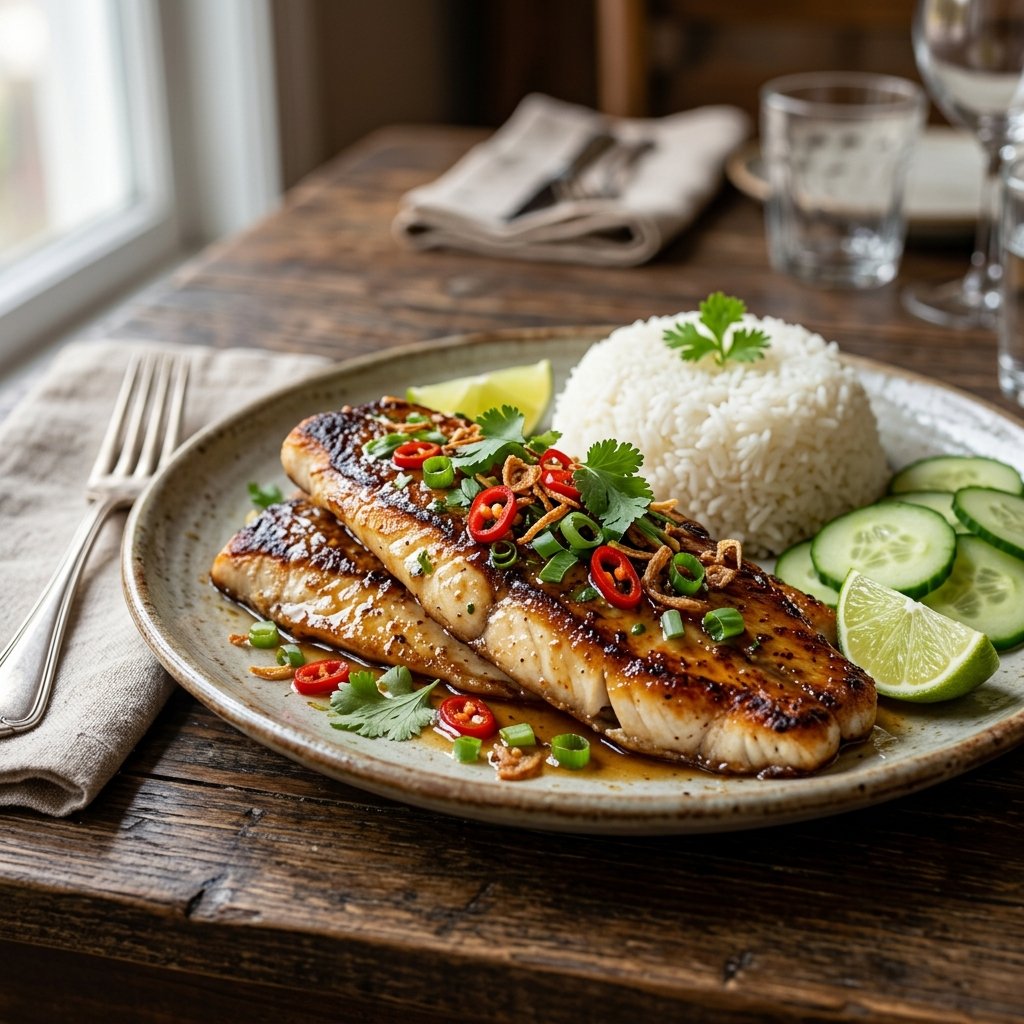
4. Check for doneness
Cook the fish until the center reaches 145°F / 63°C.
The flesh should be opaque and separate easily when gently pressed with a fork.
Avoid judging doneness by time alone. A thin fillet and a thick center-cut fillet can require substantially different cooking times.
Transfer the cooked fish to a clean plate.
5. Make the ginger-garlic sauce
Reduce the heat to medium.
Add the ginger, garlic, and sliced chili to the same skillet. Cook for about 30–45 seconds, stirring constantly, until fragrant.
Do not let the garlic become dark brown. Once garlic is heavily browned, it can turn bitter and overpower the sauce.
Pour in the soy-lime mixture and simmer for about 1–2 minutes, stirring to loosen the browned bits from the bottom of the pan.
The sauce should become slightly glossy but remain loose enough to spoon around the fish.
6. Finish and serve
Return the snakehead fillets to the pan briefly, or spoon the sauce directly over them.
Scatter over the green onions and cilantro.
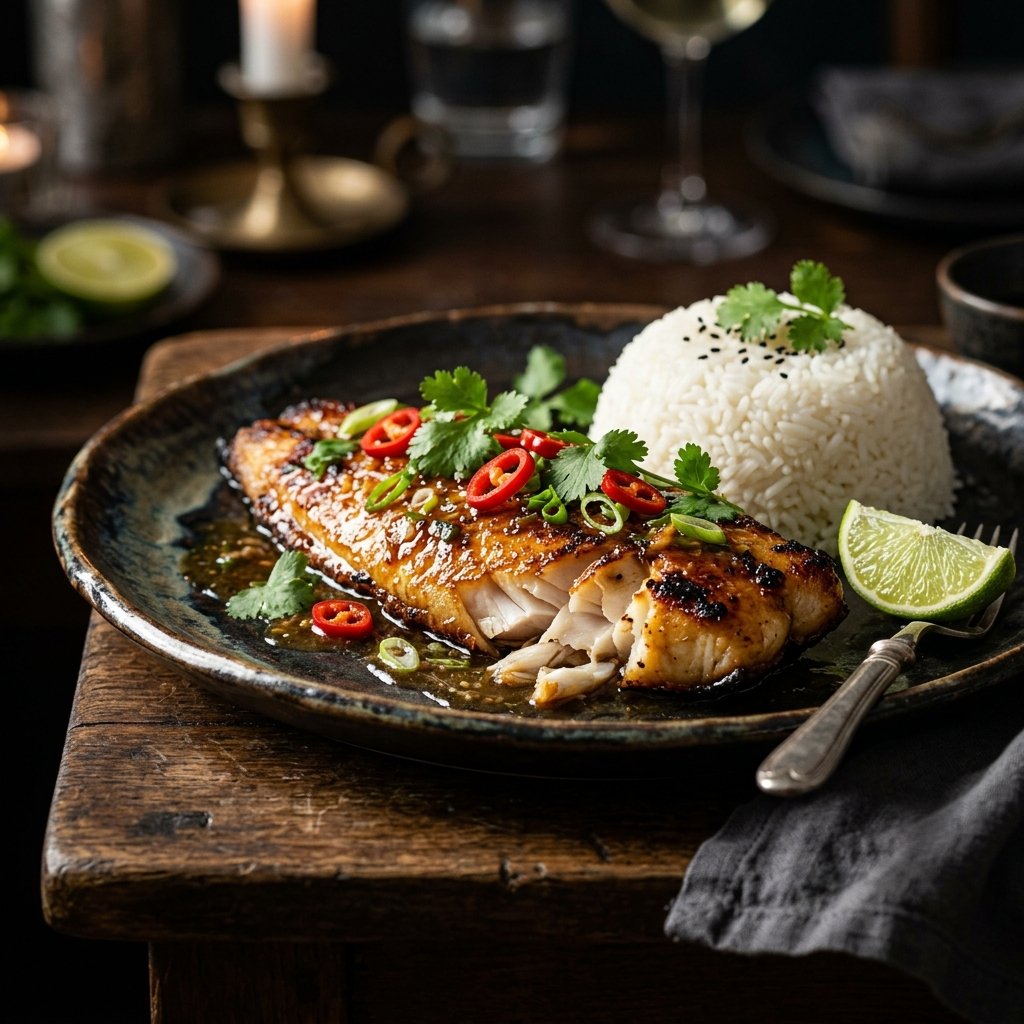
Serve immediately with steamed jasmine rice, lime wedges, and something fresh and crisp such as cucumber.
The Most Important Cooking Cues
| What to watch | What you want |
|---|---|
| Fish surface before cooking | Very dry |
| Pan | Hot enough for immediate sizzling |
| First side | Golden brown and releases relatively easily |
| Garlic | Fragrant, not dark brown |
| Sauce | Glossy and lightly reduced |
| Fish center | Opaque and cooked through |
| Internal temperature | 145°F / 63°C |
Substitutions
| Ingredient | Possible substitute | What changes |
|---|---|---|
| Snakehead | Firm white fish such as tilapia or sea bass | Cooking time will vary with thickness |
| Lime | Lemon | Slightly less tropical, still bright |
| Soy sauce | Tamari | Similar savory character; check saltiness |
| Honey | Brown sugar | Slightly deeper caramel flavor |
| Cilantro | Thai basil or parsley | Changes the herbal character |
| Neutral oil | Light olive oil | Adds a little more flavor |
Avoid replacing the snakehead with a very delicate fish without adjusting the cooking time. Delicate fillets can break apart when turned or when coated with a thick sauce.
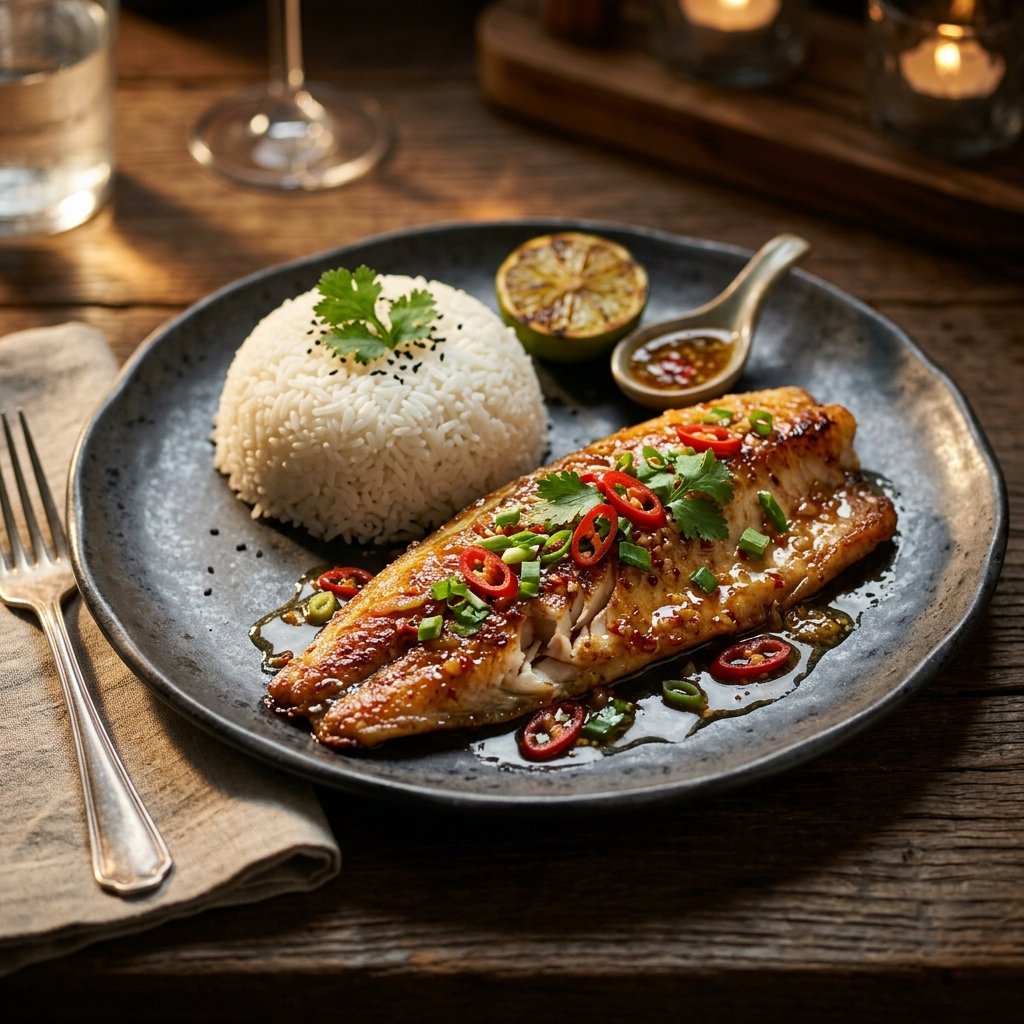
Common Mistakes
The fish sticks to the pan
The most common causes are excess surface moisture, insufficient preheating, or trying to turn the fish too early.
Pat the fish dry and give the pan time to heat. Once the fillet has formed a crust, it should become easier to lift.
The fish is browned outside but undercooked inside
The heat is probably too high for the thickness of the fillet.
Lower the heat after the initial sear and finish more gently. For especially thick pieces, covering the pan briefly can help the center cook without excessively darkening the exterior.
The fish turns dry
Fish continues to lose moisture as it cooks, so extra time is not harmless.
Use a thermometer when possible and remove the fish once it reaches the recommended safe internal temperature.
The sauce tastes too salty
Add a tablespoon or two of water and a little more lime juice rather than adding more soy sauce.
If necessary, balance the sauce with a small amount of honey or sugar.
The sauce tastes bitter
The garlic was probably cooked too aggressively.
For the next batch, reduce the heat before adding the aromatics and cook only until the garlic becomes fragrant.
Variations
Spicy Snakehead Fish
Add an extra sliced chili to the sauce and finish with a pinch of crushed red pepper.
Coconut-Ginger Snakehead
After frying the aromatics, add about ½ cup unsweetened coconut milk instead of the water. Simmer gently until slightly thickened, then finish with lime juice.
Vietnamese-Style Herb Finish
Use extra lime, cilantro, sliced green onions, and a small amount of fresh chili. Serve with steamed rice and cucumber.
Crispy Snakehead Fish
For a more pronounced crust, dust the dry fillets very lightly with rice flour before searing. Use only enough to create a thin coating; a heavy layer can obscure the fish’s natural texture.
What to Serve with Snakehead Fish
The ginger-garlic sauce is flavorful enough that the sides should stay relatively simple.
Good options include:
- Steamed jasmine rice
- Coconut rice
- Stir-fried greens
- Cucumber salad
- Steamed broccoli
- Sautéed bok choy
- Fresh herbs and lime wedges
For a lighter plate, serve the fish with cucumber, herbs, and a sharp lime dressing rather than rice.
Storage and Reheating
Refrigerate leftover cooked fish promptly in a covered container.
For best texture, use leftovers within 3–4 days.
Reheat gently in a covered skillet over low to medium-low heat with a spoonful of water or sauce. Avoid prolonged high heat, which can make firm fish noticeably drier.
If the fish was frozen before cooking, thaw it safely in the refrigerator. Do not thaw raw fish on the counter.
Freezing the finished sauced fish is possible, but the texture is generally better when the cooked fish is eaten fresh.
Frequently Asked Questions
What does snakehead fish taste like?
Snakehead has a mild flavor and firm, meaty flesh. Its relatively substantial texture makes it suitable for pan-searing, grilling, steaming, soups, and strongly seasoned sauces.
How do you cook snakehead fish?
Snakehead can be pan-seared, grilled, steamed, baked, or used in soups and curries. For fillets, pan-searing is a simple method because the firm flesh can develop a browned exterior while remaining tender inside.
What temperature should snakehead fish be cooked to?
Cook snakehead and other finfish to an internal temperature of 145°F / 63°C. Check the thickest part of the fillet with a food thermometer.
How long does snakehead fish take to cook?
A typical 150–180 g fillet takes roughly 5–9 minutes total in a hot skillet, but thickness matters more than weight. Use the cooking time as a guide and confirm doneness with temperature and visual cues.
Can you substitute another fish for snakehead?
Yes. Firm white fish such as tilapia or sea bass can work in this preparation, although their thickness and moisture content may change the cooking time.
Why should snakehead fish be dried before frying?
Drying removes surface moisture so the fish can brown instead of spending the first part of cooking steaming in its own moisture. It also helps the fish develop a more distinct crust.
Can you marinate snakehead fish before cooking?
Yes, but keep wet marinades relatively short if your goal is a browned crust. Acidic marinades can alter the surface texture, and excess liquid makes pan-searing more difficult.
What goes well with snakehead fish?
Steamed rice, cucumber, green vegetables, fresh herbs, chili, ginger, garlic, and citrus all pair well with snakehead’s mild, firm flesh.
Final Tip
For the best texture, concentrate on surface dryness, pan temperature, and doneness rather than the clock. A properly dried fillet that is left undisturbed long enough to brown will give you a much better crust than one repeatedly moved around the skillet.
Pan-Seared Snakehead Fish with Ginger, Garlic & Lime
Ingredients
Equipment
Method
- Pat the fish completely dry and season with salt and pepper.
- Mix soy sauce, lime juice, honey, sesame oil, and water in a bowl.
- Heat oil in a skillet over medium-high heat.
- Place the fish in the skillet and sear for 3–5 minutes without moving it.
- Turn the fillets, add butter, and cook for another 2–4 minutes.
- Check the thickest part with a thermometer; cook until it reaches 145°F (63°C).
- Remove the fish. Add ginger, garlic, and chili to the skillet and cook for 30–45 seconds.
- Add the sauce mixture and simmer for 1–2 minutes.
- Spoon the sauce over the fish and garnish with green onions and cilantro.
- Serve immediately with rice and lime wedges.
Notes
- Patting the fish dry is important for achieving a browned crust.
- Cooking time varies according to fillet thickness.
- Avoid overcooking, which can make the fish dry.
- Serve with jasmine rice, cucumber, or steamed vegetables.
- Refrigerate leftovers promptly and use within 3–4 days.