
This Polish winter tea recipe is the glass of tea Poland reaches for once the evenings turn dark at four: strong black tea brewed over a quick simmer of ginger, cloves and cinnamon, then finished with orange, lemon, a spoonful of raspberry syrup and a little honey. In Polish it goes by herbata zimowa (winter tea) or herbata rozgrzewająca (warming tea), and you will find versions of it on café menus and in home kitchens from November until the snow melts.
It takes about 15 minutes, needs no special equipment, and is alcohol-free unless you decide otherwise. Below is how the drink is put together, why each ingredient is there, how to make your own raspberry syrup, and how the grown-up version called herbata z prądem works. If you only want the quantities, jump to the recipe card.
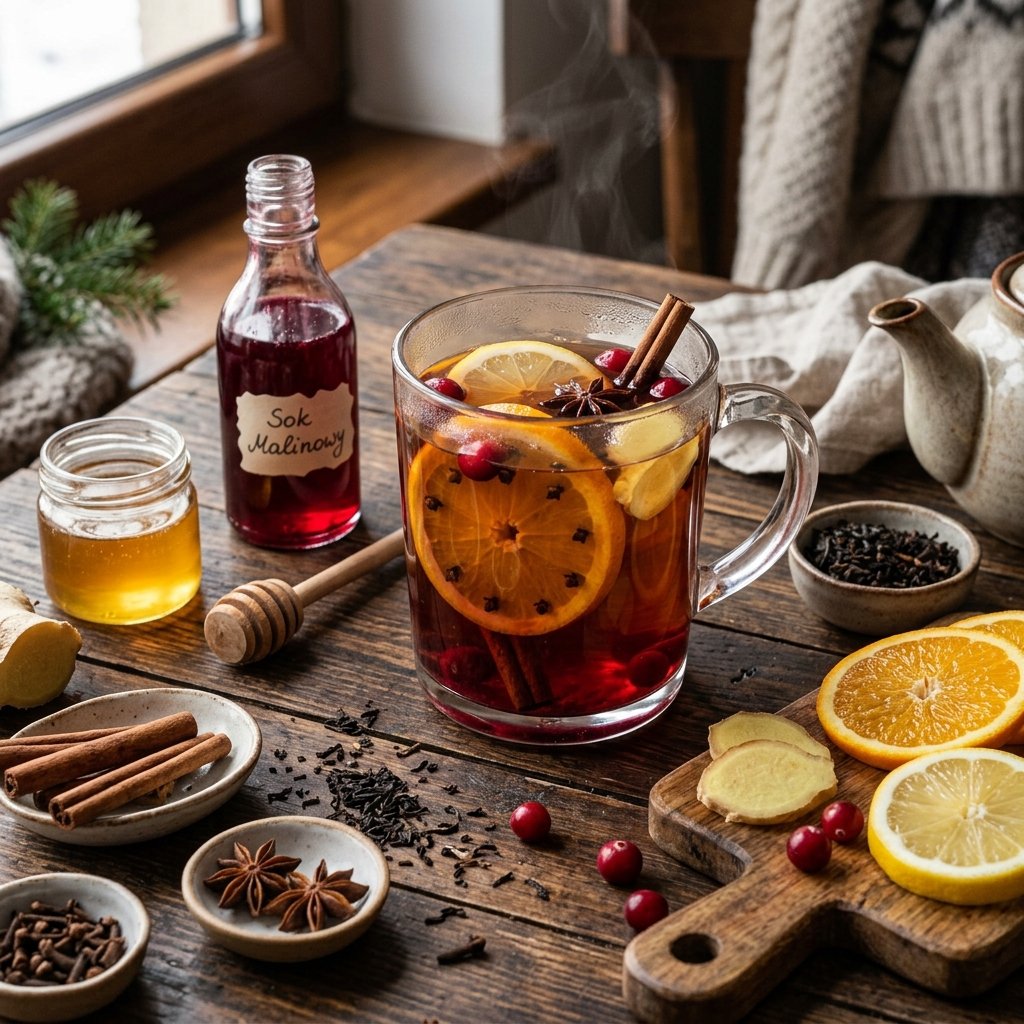
Polish Winter Tea at a Glance
| Polish names | Herbata zimowa, herbata rozgrzewająca, herbata z sokiem malinowym |
| Base | Black tea, never green |
| Spices | Fresh ginger, whole cloves, cinnamon stick, star anise (optional) |
| Fruit | Orange, lemon, cranberries (optional) |
| Sweetener | Raspberry syrup (sok malinowy) and honey |
| Time | 5 minutes prep, 10 minutes on the stove |
| Makes | 4 glasses, about 1 liter |
What Makes This Tea Polish
Tea is an everyday drink in Poland, usually black, usually with a slice of lemon, and often served in a glass rather than a cup. Winter tea builds on that habit. However, two things set it apart from a generic spiced tea: the raspberry syrup, and the way the drink is sweetened at the end rather than brewed sweet.
Sok malinowy, a thick raspberry syrup, is a pantry staple in many Polish homes. Stirred into hot tea, it turns the glass a deep ruby color and adds a soft berry sweetness, and herbata z sokiem malinowym is the drink many Poles grew up being handed when they came in cold or felt a sniffle coming on. Winter tea, in other words, takes that familiar glass and adds the warmth of ginger and clove, along with orange for brightness.
Culture.pl’s guide to Polish ways to keep warm in winter describes a café-style warming tea built on the same pieces: black tea, cloves, ginger, orange and raspberry syrup or honey. This Polish winter tea recipe follows that template and gives it exact quantities and timing, which most versions leave out.
The Ingredients, and What Each One Does
Every ingredient in a good Polish winter tea has a job. As a result, knowing what each one adds makes it easy to adjust the glass to your taste or work with what is already in your kitchen.
Black tea
A plain, sturdy black tea works best: Ceylon, English breakfast or an everyday Assam blend. After all, you want something that stays recognizable as tea under all that fruit and spice. On the other hand, Earl Grey clashes with the cloves, and green tea turns bitter and thin here.
Fresh ginger, cloves and cinnamon
These are the warming part of the drink. Simmering them in the water for five minutes before the tea goes in pulls out far more flavor than steeping them alongside the tea bags. For this reason, use whole spices only. Ground cinnamon and ground cloves make the tea gritty and cloudy.
A useful trick, shown in the photos: press the cloves into the rind of an orange slice. That way they stay put, they look lovely in a glass, and nobody ends up with a clove in their mouth.
Orange and lemon
Orange brings sweetness and aroma, and lemon brings the sharpness that keeps the syrup and honey from tasting flat. Slice them thin and add them after the tea has steeped, because long simmering pulls bitterness out of the white pith.
Raspberry syrup
This is the heart of the drink. Fortunately, Polish grocery stores and many European delis in the US sell it in tall bottles labeled sok malinowy or syrop malinowy. Otherwise, the homemade version below takes only 15 minutes.
Honey
Honey rounds out the berry flavor and softens the clove. Poland has a long beekeeping tradition, and two Polish honeys suit this tea especially well: linden honey (miód lipowy), which is floral and slightly minty, and buckwheat honey (miód gryczany), which is dark, malty and bold. Still, a mild clover or wildflower honey works fine if that is what you have. Finally, stir the honey in once the tea has stopped bubbling, so you keep its aroma instead of cooking it off.
Cranberries and star anise
Both are optional. Cranberries add tartness and color, and they bob nicely in the glass. Similarly, star anise adds a faint licorice note that pairs well with orange. Even so, leave it out if you don’t like anise.
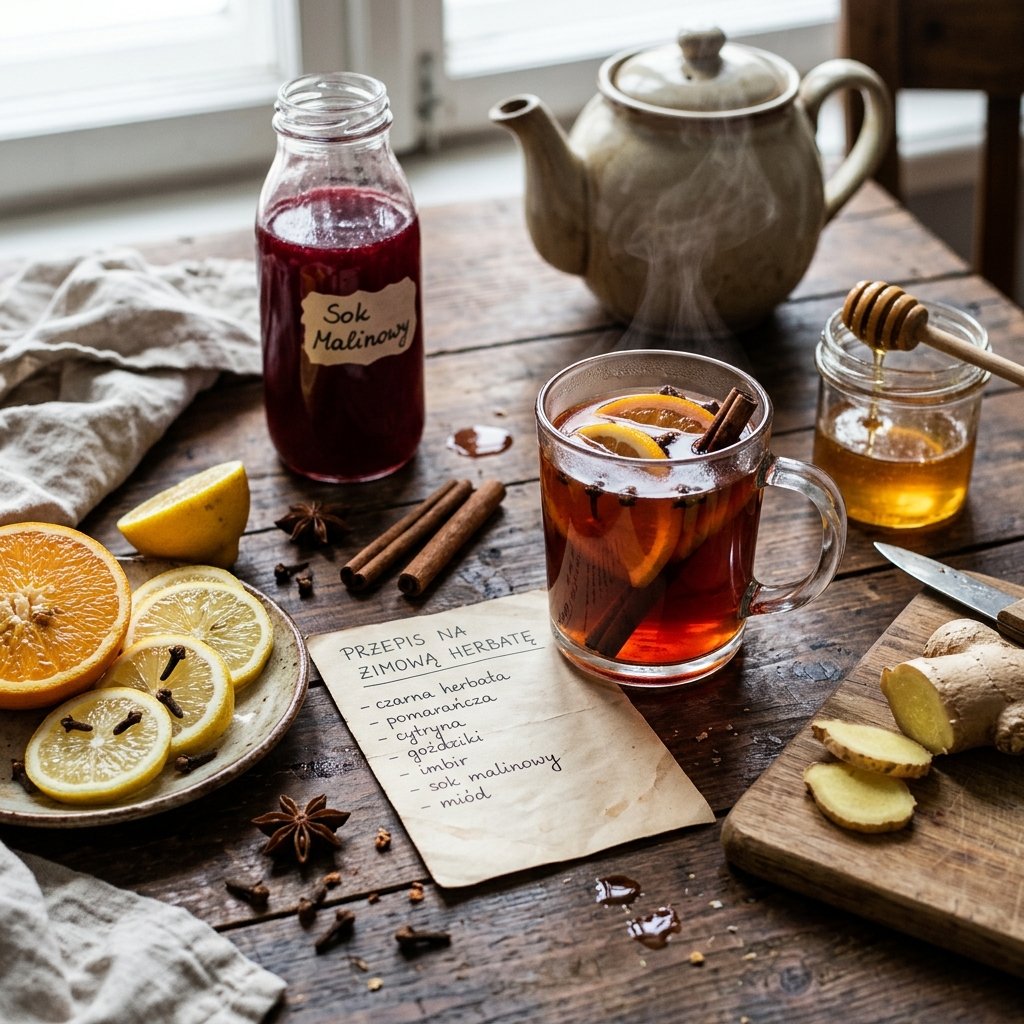
How to Make This Polish Winter Tea Recipe, Step by Step
The method has one rule that matters more than any other: spices simmer, tea steeps, and sweeteners go in last.
- Simmer the spices. Put 4 cups of water in a saucepan with the sliced ginger, cloves, cinnamon stick and star anise. Bring it to a boil, turn the heat down and simmer gently for 5 minutes. Soon the water will turn pale gold and smell strongly of clove.
- Steep the tea off the heat. Take the pan off the burner, add the tea bags and set a timer for 3 to 4 minutes. Black tea left any longer gets harsh, and the citrus will make that harshness more obvious. That is why timing matters here.
- Add the fruit. Remove the tea, add the orange and lemon slices and the cranberries, cover, and wait 2 minutes.
- Sweeten. Once the tea is steaming rather than bubbling, stir in the raspberry syrup, then the honey. Then taste. More syrup gives a deeper color and more berry flavor, and more honey gives more sweetness.
- Serve in glasses. Strain into heatproof glasses and add a fresh slice of citrus and a few cranberries to each. In Poland, a glass is often set in a metal or wicker holder so it can be held while hot.
Homemade Raspberry Syrup (Sok Malinowy)
The traditional way to make sok malinowy is slow: raspberries are layered with sugar in summer and left to release their juice. For a winter tea, however, you need something faster, and this stovetop version works with frozen berries.
- 2 cups (250 g) raspberries, fresh or frozen
- 1/2 cup (100 g) granulated sugar
- 1/2 cup (120 ml) water
- 1 teaspoon lemon juice
Combine the raspberries, sugar and water in a small saucepan and simmer for about 10 minutes, mashing the berries as they soften. Press the mixture through a fine-mesh strainer, stir in the lemon juice and let it cool. In the end you’ll get roughly 3/4 cup, enough for three pots of tea. Store it in a clean jar in the fridge and use it within a week.
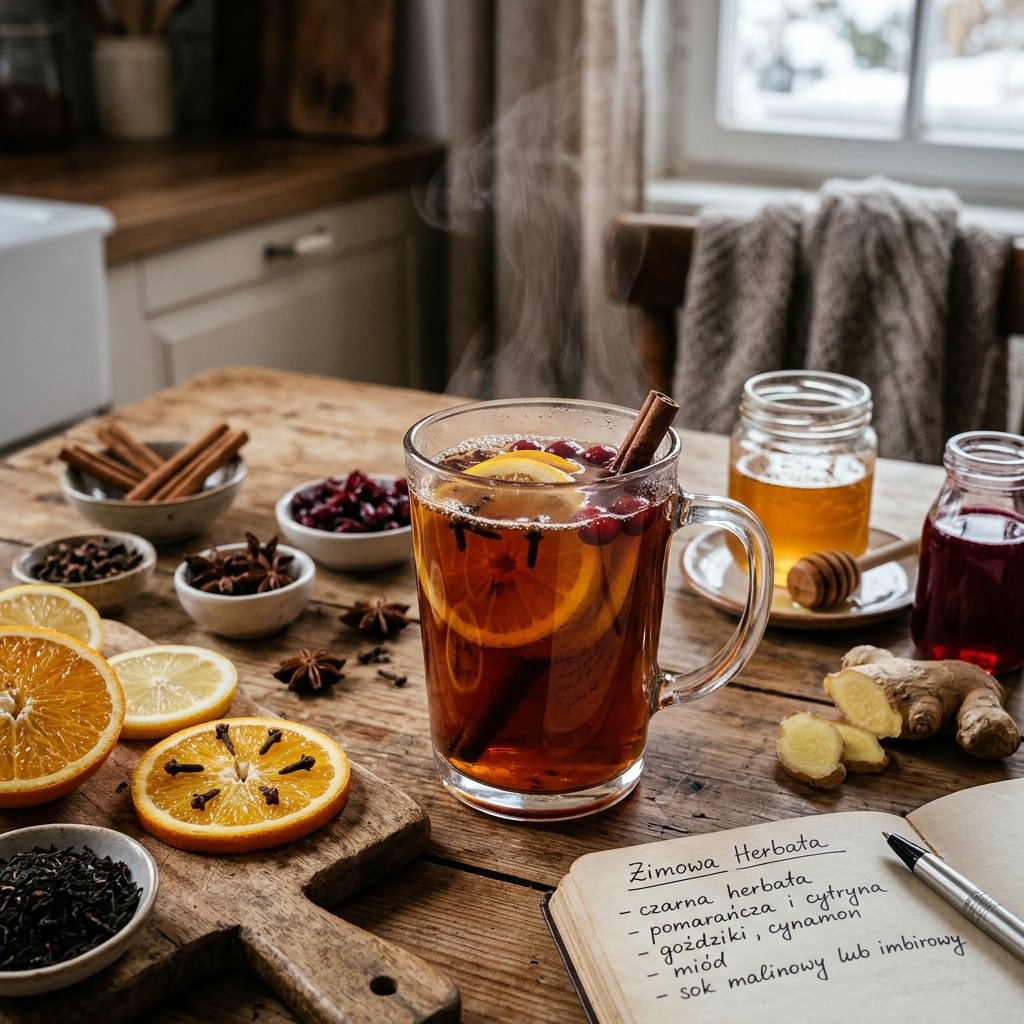
Herbata z Prądem: The Adult Version
Herbata z prądem means “tea with electricity,” and that is exactly what it is: hot tea with a shot of something strong. The custom is tied to the Tatra Mountains and the highlanders of the Zakopane region, which is why a similar drink is also called herbata góralska, or highlander tea. Rum is the most common choice, although vodka and plum brandy (śliwowica) are traditional too.
To make it from this Polish winter tea recipe, brew the tea exactly as written and add the alcohol to each glass after pouring, never to the pot on the stove. Heat drives off aroma. Besides, adding it glass by glass means anyone who wants theirs alcohol-free can still have the same tea.
About 1 ounce (30 ml) per glass is plenty. That is less than a standard US drink, which the NIH defines as 1.5 ounces of 80-proof spirits; see NIAAA’s guide to a standard drink. Warm alcoholic drinks also go down quickly, so pour with a measure instead of guessing.
Ways to Change It Up
- Caffeine-free: swap the black tea for decaf black tea or rooibos, which has a similar body.
- Linden tea: brew with dried linden blossoms (lipa), another Polish winter favorite, and sweeten with linden honey.
- Apple and cinnamon: replace the cranberries with a few thin slices of apple. It tastes a bit like szarlotka, the Polish apple cake.
- Extra ginger: double the ginger and let it simmer for 8 minutes if you like a peppery kick.
- Single glass: pour 1 cup of boiling water over 2 slices of ginger, 2 cloves and a small piece of cinnamon, steep 5 minutes, add 1 tea bag for 3 minutes, then finish with 1 tablespoon of raspberry syrup, 1 teaspoon of honey and a slice each of orange and lemon.
Making It Ahead for a Crowd
This Polish winter tea recipe doubles easily. For a party, or a pot that will last all evening, simmer a double batch of the spiced base (step 1) ahead of time, strain it and keep it in the fridge for up to 3 days. Then, when guests arrive, reheat the base, steep fresh tea for 3 to 4 minutes and finish as usual. Meanwhile, keeping it warm in a slow cooker on low works well. Add the citrus fresh every hour or so, because slices left in hot tea for a long time make it bitter.
In contrast, avoid brewing the tea itself in advance. Black tea that sits for hours with lemon goes dull and tannic, while the spiced base keeps without a problem.
What to Serve With Polish Winter Tea
In Poland, a glass of winter tea usually comes with something sweet: a slice of gingerbread (piernik), apple cake or a few honey cookies. For a savory pairing, though, it is just as good after a plate of potato and cheese perogies. For more honey-forward drinks in the same spirit, try this honey turmeric ginger drink or a jar of golden turmeric honey to stir into tea all winter.
If you like herbal blends, the Amish meadow tea and this lemon balm tea are lighter, caffeine-free options for the afternoon. For another spiced tea from a very different tradition, compare it with this Ayurvedic tea recipe.
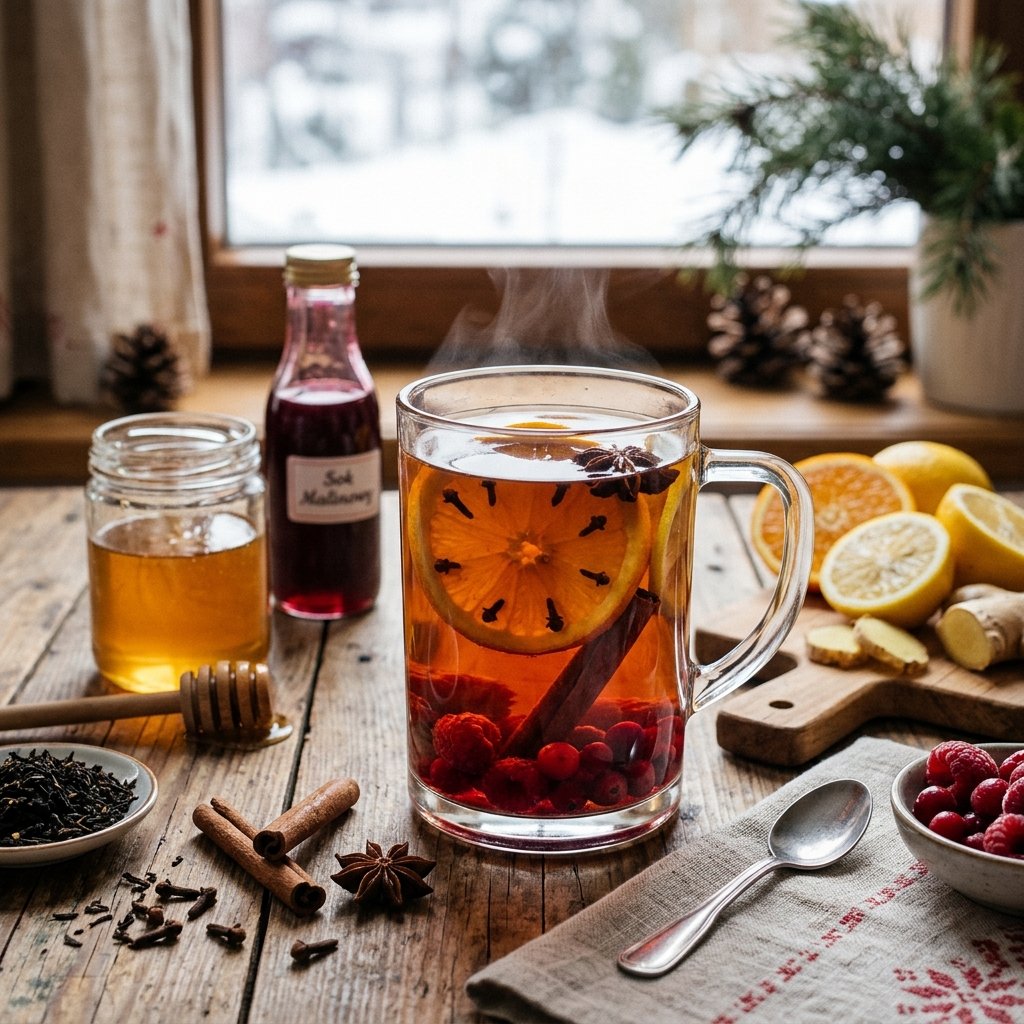
Common Mistakes With a Polish Winter Tea Recipe
- Boiling the tea bags. Simmering black tea extracts bitter tannins, so only the spices go on the heat.
- Cooking the citrus. Orange and lemon slices simmered for 10 minutes make the whole pot taste of pith.
- Sweetening too early. Raspberry syrups vary a lot in sweetness. Instead of guessing, add the syrup first, taste, then decide how much honey you need.
- Using ground spices. They never dissolve. Instead, they leave a muddy layer at the bottom of the glass.
Polish Winter Tea FAQ
What is Polish winter tea called in Polish?
It is most often called herbata zimowa (winter tea) or herbata rozgrzewająca (warming tea). Plain black tea with raspberry syrup is herbata z sokiem malinowym, and the version with a shot of alcohol is herbata z prądem.
Is Polish winter tea alcoholic?
No. The basic Polish winter tea recipe has no alcohol at all. Only herbata z prądem adds rum, vodka or plum brandy, and that splash is added to individual glasses.
Can I use raspberry jam instead of raspberry syrup?
Yes. Use about 2 tablespoons of seedless raspberry jam per pot and stir until it dissolves. The tea will be slightly cloudier, but just as flavorful.
Can I make it with tea bags only, no loose spices?
You can use a store-bought spiced or “winter” tea bag as a shortcut, but simmering whole ginger, cloves and cinnamon gives a much fuller, warmer flavor for very little extra effort.
How long does leftover Polish winter tea keep?
Strain out the fruit and spices, refrigerate, and drink within 2 days. After that, reheat gently without boiling. It’s also good poured over ice with a fresh orange slice.
Is it safe to give to children?
The alcohol-free version is a family drink in Poland. Even so, use decaf tea for younger children, and leave out the honey for babies under 12 months old.
Polish Winter Tea (Herbata Zimowa)
Ingredients
Equipment
Method
- Put the water, sliced ginger, cloves, cinnamon stick and star anise in a medium saucepan. Bring to a boil, then lower the heat and simmer gently for 5 minutes so the spices flavor the water.
- Take the pan off the heat and add the tea bags or loose tea. Steep for 3 to 4 minutes, then remove the bags or strain out the leaves. Longer steeping makes the tea bitter once the citrus goes in.
- Drop in the orange slices, lemon slices and cranberries. Cover the pan and let everything sit for 2 minutes.
- Let the tea cool for a minute until it is steaming rather than bubbling, then stir in the raspberry syrup and honey. Taste and add more syrup for a deeper berry color or more honey for sweetness.
- Strain into heatproof glasses or mugs and add a slice of orange or lemon and a few cranberries to each glass. For an adult herbata z prądem, stir 1 oz (30 ml) of dark rum, vodka or plum brandy into each glass after pouring.
Notes
- No raspberry syrup? Use 2 tablespoons of seedless raspberry jam per pot, or simmer a handful of frozen raspberries with the spices and strain.
- Sweetness: raspberry syrup is already sweet, so add the honey last and taste first.
- Make ahead: simmer the spiced base (step 1), strain and refrigerate up to 3 days. Reheat and continue from step 2 so the tea is always freshly brewed.
- Caffeine-free: use decaf black tea or rooibos.
- Honey: do not give honey to babies under 12 months old.
- Alcohol: the herbata z prądem variation is for adults only. Keep it to one measured pour per glass.