
Cuban Flan Recipe is a simple treat with a few ingredients: eggs, sweetened condensed milk, evaporated milk, sugar, and vanilla, but it’s the technique that makes it special. The aim is a custard that’s silky and creamy, rather than rubbery, with a thin layer of amber caramel that flows over the flan when unmolded.
This simple Cuban flan recipe uses a water bath to temper the heat of the oven. This gentle cooking environment allows the eggs to set slowly, giving the caramel flan a smooth texture.
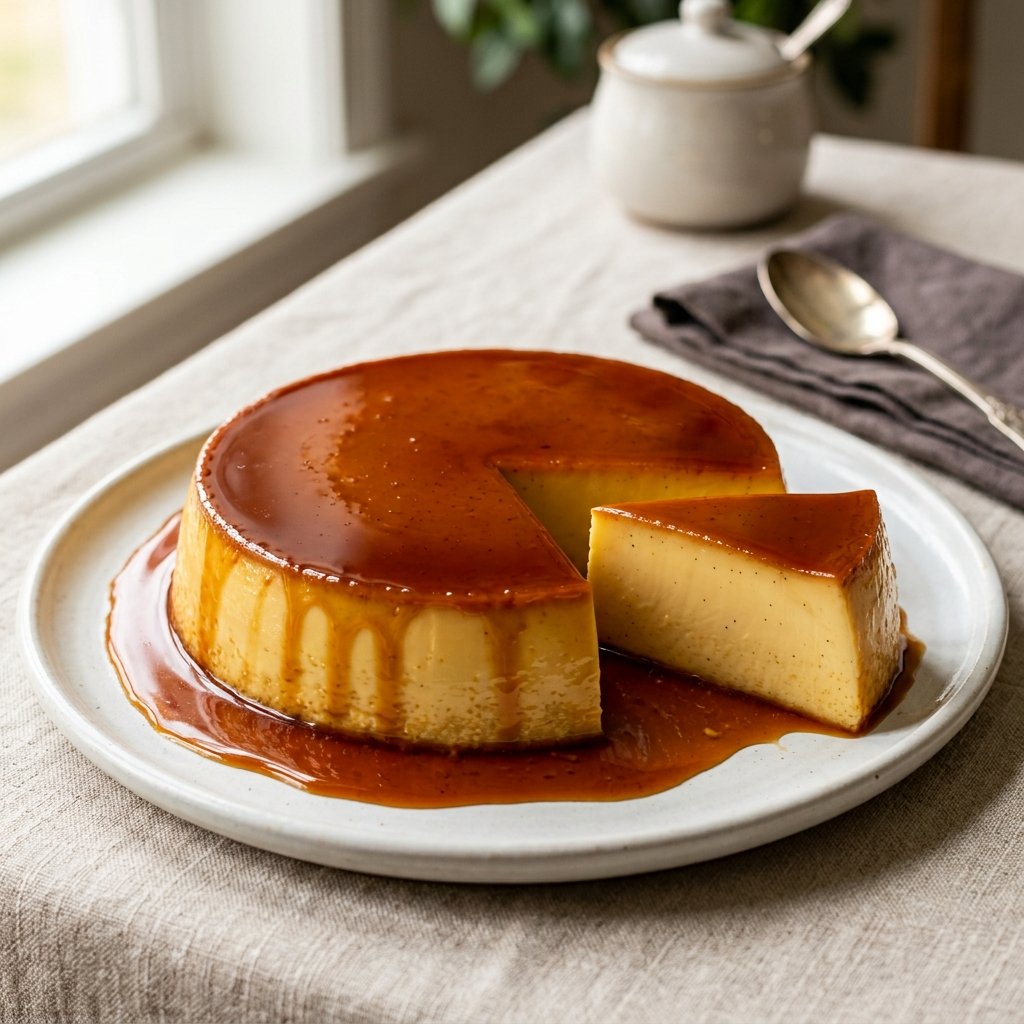
What Makes Cuban Flan Different?
Cuban flan is a baked custard with caramel topping. Sweetened condensed milk adds both sweetness and body; evaporated milk adds dairy richness without the water that regular milk has.
The eggs are the structural element. As the custard is heated, the proteins in it coagulate, turning the liquid mixture into a tender gel. The trick is to cook that blend slow enough for the proteins to set without getting too tight.
The contrast comes from the caramel: intensely sweet, slightly bitter from the browned sugar, and fluid enough to become a sauce when the chilled flan is turned onto a plate.
Ingredients
For the caramel
- 1 cup granulated sugar
- 2 tablespoons water
For the flan
- 1 can (14 ounces) sweetened condensed milk
- 1 can (12 ounces) evaporated milk
- 5 large eggs
- 2 teaspoons vanilla extract
- Pinch of salt
Equipment
- 8-inch round cake pan or flan mold
- Larger roasting pan for the water bath
- Mixing bowl
- Whisk
- Fine-mesh strainer
- Heatproof measuring cup or jug
- Large plate with a rim for unmolding
A pan with some depth is important because the caramel and custard need enough room to cook safely without overflowing.
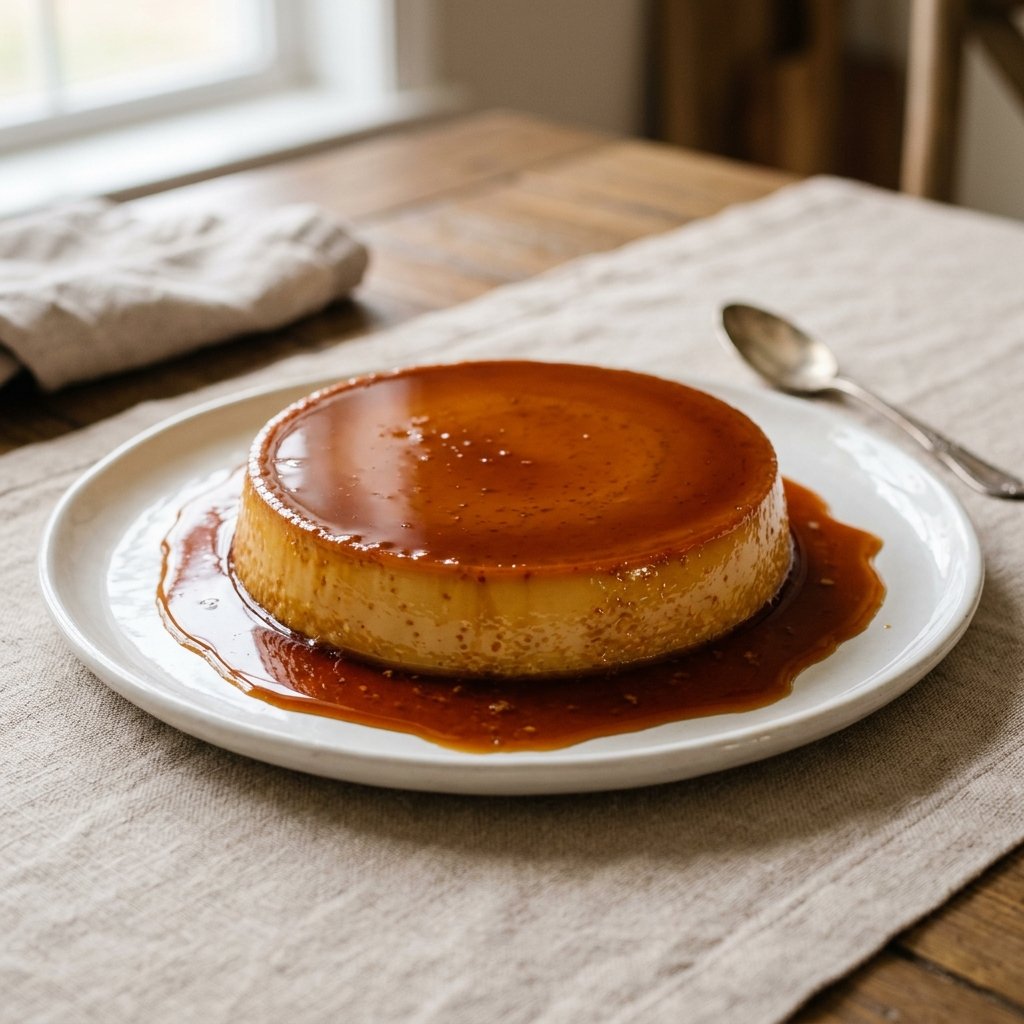
How to Make Cuban Flan
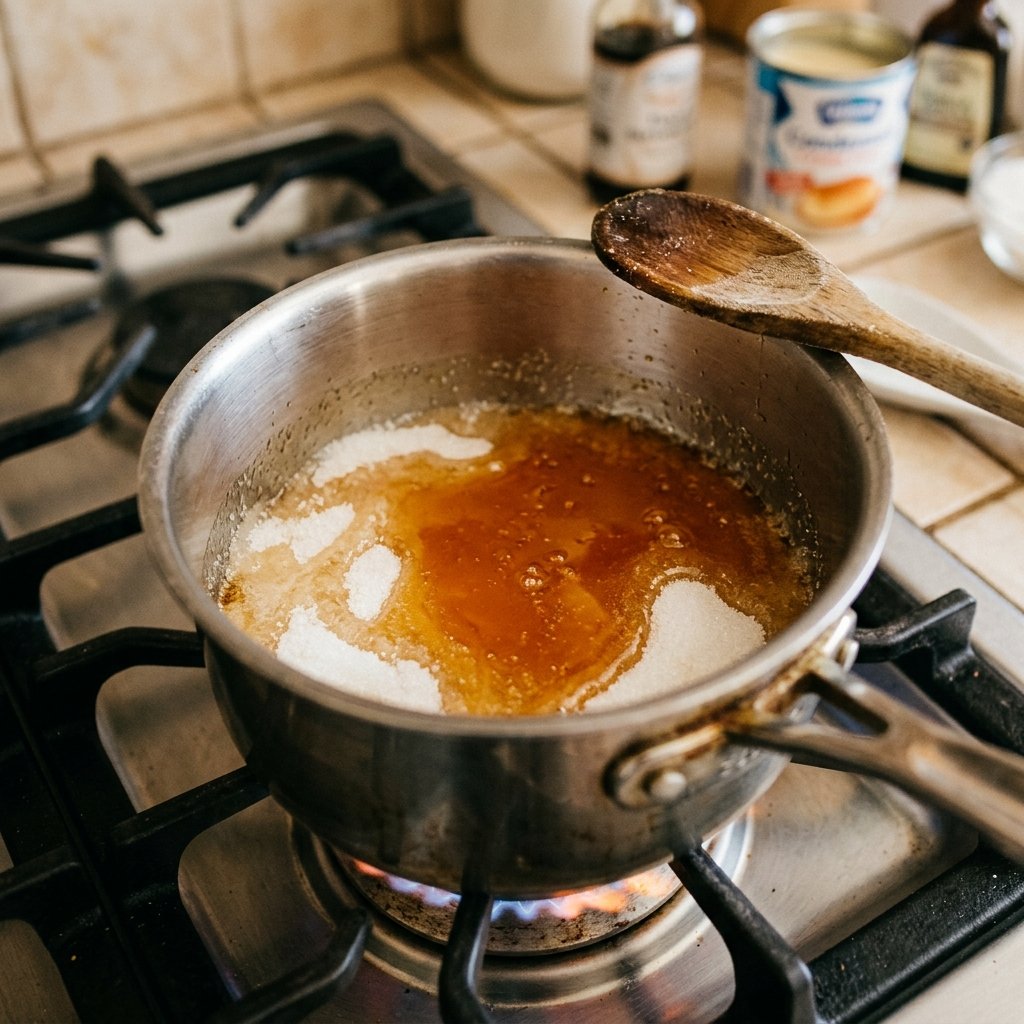
1. Prepare the caramel
Place the sugar and water in a small saucepan over medium heat. Stir just enough to moisten the sugar, then allow it to cook until it melts and develops a deep amber color.
Once the sugar begins browning, watch it closely. Caramel can move from golden to burnt surprisingly quickly.
Immediately pour the caramel into the bottom of the flan pan. Carefully tilt and rotate the pan so the caramel coats the base evenly.
Let it cool while you prepare the custard.
Why this matters: Caramel continues cooking from residual heat after it leaves the burner. A medium-to-deep amber color gives the finished dessert a more complex flavor than pale melted sugar, but very dark caramel can taste harsh and burnt.
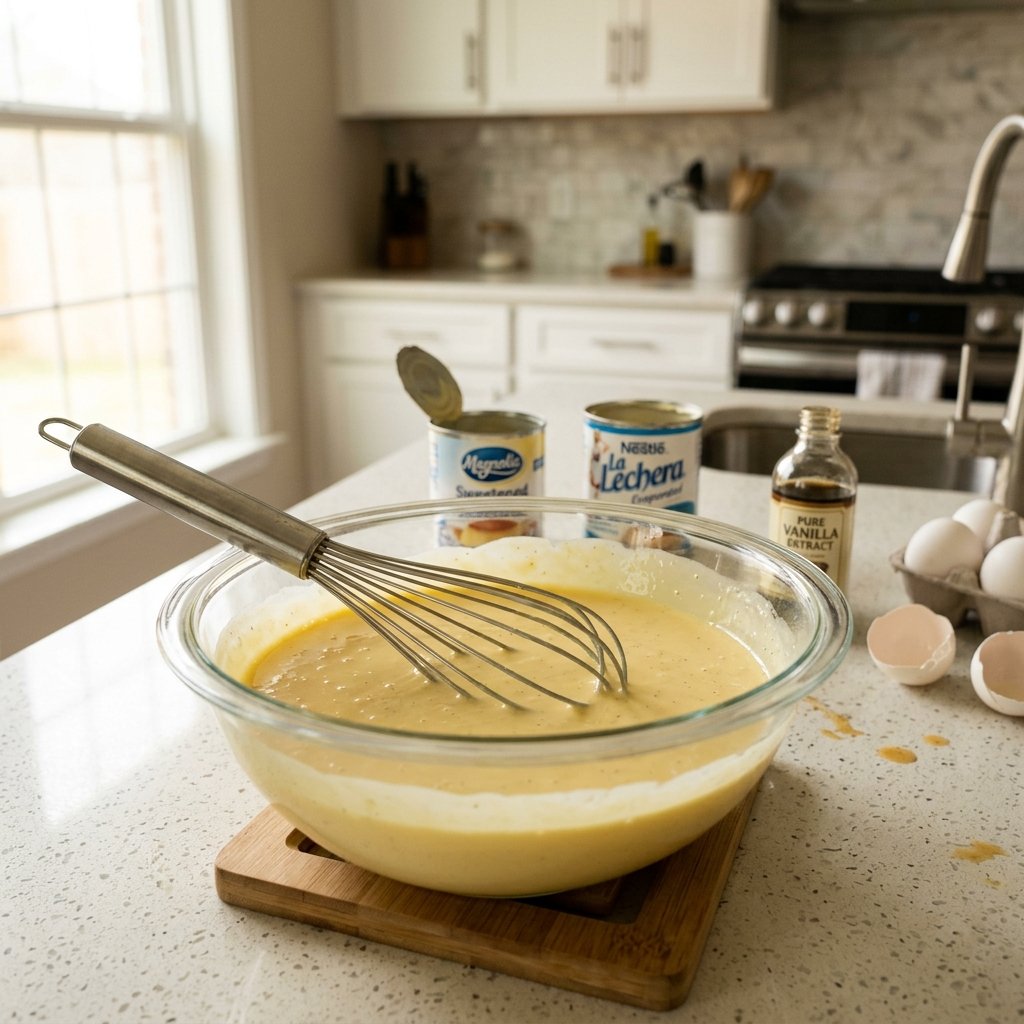
2. Make the custard
Preheat the oven to 350°F (175°C).
Add the condensed milk, evaporated milk, eggs, vanilla, and salt to a bowl. Whisk gently until the mixture is homogeneous.
Avoid vigorously beating the custard. Excessive whisking incorporates air, which can leave small bubbles or holes in the finished flan.
For an especially smooth result, pour the mixture through a fine-mesh strainer before adding it to the caramel-lined pan.
3. Fill the flan pan
Pour the strained custard slowly over the cooled caramel.
If the caramel has hardened into a glassy layer, that is completely normal. It will dissolve into a sauce as the flan chills.
Covering the pan loosely with aluminum foil can help prevent the surface from becoming overly browned during baking.
4. Bake in a water bath
Place the flan pan inside a larger roasting pan. Carefully pour hot water into the roasting pan until it reaches roughly halfway up the outside of the flan pan.
Transfer everything to the oven and bake for about 50–65 minutes.
The exact time will depend on the depth and material of the pan. Begin checking toward the lower end of the range.
The flan is ready when:
- The edges look set.
- The center still has a gentle wobble when the pan is nudged.
- A thin knife or skewer inserted near the center comes out without liquid custard clinging heavily to it.
Do not wait for the entire center to become completely firm in the oven. Residual heat continues cooking the custard after it comes out.
Why use a water bath? Water moderates the temperature around the custard, reducing the risk of the eggs overheating. This slower, gentler setting helps create a creamy texture instead of a firm, spongy one.
5. Cool completely
Remove the flan from the water bath and allow it to cool at room temperature for a while.
Then refrigerate it for at least 4 hours, preferably overnight.
Chilling does more than make the dessert cold. It allows the custard structure to firm and gives the caramel time to loosen and become syrupy around the edges.
6. Unmold the flan
Run a thin knife around the edge of the chilled flan.
Place a large rimmed plate over the pan. Hold the two firmly together and invert them in one quick motion.
Lift the pan slowly.
The caramel should flow over the top and down the sides of the flan.
If the flan resists releasing, briefly dip the outside bottom of the pan in warm water. The heat can soften the caramel just enough to help release the custard.
How to Tell When Flan Is Done
The most useful doneness cue is the wobble.
A properly baked flan should look set around the perimeter while the center moves slightly when shaken. Think of a soft gelatin dessert rather than a liquid custard.
If the entire surface moves like liquid, it needs more time.
If the center is completely rigid before the flan leaves the oven, it may already be overcooked.
Overbaking causes the egg proteins to contract more strongly, which can produce a firmer, less silky texture and sometimes small pockets or a porous appearance.
Common Cuban Flan Problems
Why did my flan turn out rubbery?
The most common cause is overcooking. Eggs become progressively firmer as their proteins coagulate, so excessive heat or baking time can push the custard beyond its ideal texture.
Use the water bath and remove the flan while the center still has a gentle wobble.
Why does my flan have bubbles or holes?
Too much air in the custard can create bubbles. Whisk gently rather than beating aggressively, and strain the mixture before baking.
A water bath also helps keep the cooking environment gentle.
Why won’t my flan come out of the pan?
The caramel may have hardened around the edges.
Run a thin knife around the perimeter and try again. If necessary, warm the bottom of the pan briefly in warm water to loosen the caramel.
Do not leave the pan submerged for long because excessive heat can soften the custard.
Why is my caramel bitter?
The sugar was probably cooked too far.
Caramel should reach a rich amber color, but once it becomes very dark, its flavor becomes increasingly bitter and eventually burnt.
Why is my caramel hard after refrigeration?
This is normal. Chilled caramel can become firm.
As the flan sits and warms slightly during serving, the caramel loosens. You can also briefly warm the bottom of the pan before unmolding.
Can You Make Cuban Flan Ahead of Time?
Yes. Flan is particularly well suited to advance preparation because it needs several hours of refrigeration before unmolding.
Making it the day before serving gives the custard plenty of time to chill and firm.
Keep the flan refrigerated and unmold it shortly before serving.
How to Store Cuban Flan
Store leftover flan covered in the refrigerator.
Because this dessert contains eggs and dairy, keep it properly refrigerated rather than leaving it at room temperature for extended periods.
For the best texture, consume it while the custard remains fresh and creamy.
Cuban Flan Variations
Coconut flan
Replace part of the dairy with coconut milk for a coconut-forward version. Expect a slightly different richness and flavor from the traditional custard.
Citrus flan
Add a small amount of finely grated orange or lime zest to the custard. The citrus aroma works particularly well with the caramel.
Coffee flan
A small amount of strongly brewed espresso or concentrated coffee can give the custard a deeper, roasted flavor. Keep the added liquid modest so the custard ratio remains stable.
What to Serve With Cuban Flan
Cuban flan is rich and sweet enough to stand on its own.
Serve individual slices with some of the melted caramel spooned over the top. Unsweetened coffee or espresso is also a natural pairing because its bitterness balances the sweetness of the custard.
For a lighter presentation, a few fresh berries or thin slices of fruit can provide acidity and contrast.
Frequently Asked Questions
What is Cuban flan made of?
Cuban flan is made primarily with eggs, sweetened condensed milk, evaporated milk, vanilla, and sugar. The sugar is caramelized first and forms the sauce that coats the finished custard.
How long does Cuban flan need to chill?
Cuban flan should chill for at least 4 hours before unmolding. Chilling overnight is convenient and gives the custard plenty of time to firm.
Why do you bake flan in a water bath?
A water bath provides a gentler and more even cooking environment around the custard. This helps the egg proteins set gradually and reduces the likelihood of an overcooked, rubbery texture.
Can I make Cuban flan without a water bath?
You can technically bake a custard without one, but the water bath provides better temperature moderation and makes it easier to achieve a smooth texture. If creamy consistency is the goal, it is worth using.
Can Cuban flan be made the day before?
Yes. Cuban flan can be prepared the day before serving and refrigerated until needed. In fact, advance preparation is useful because the dessert needs several hours to chill before it is unmolded.
How do I know when flan is done?
Flan is done when the edges are set but the center still has a gentle wobble. The center should not look liquid, but it also should not be completely rigid when the pan is moved.
Final Tips for a Creamy Cuban Flan
Making a good Cuban flan is easy: cook the sugar until it’s a deep amber, mix the custard gently, strain it for an especially fine texture, and bake it in a water bath.
Most importantly, look for a gentle wobble in the middle; don’t wait for the custard to be completely firm in the oven. That little visual cue can be the difference between a delicate custard and one that’s been cooked too long.
The Best Cuban Flan Recipe
Ingredients
Equipment
Method
- Make the caramel: Cook the sugar and water over medium heat until the sugar melts and reaches a deep amber color.
- Coat the pan: Immediately pour the caramel into the flan pan and carefully tilt the pan to coat the bottom.
- Prepare the custard: Gently whisk together the condensed milk, evaporated milk, eggs, vanilla, and salt. Avoid incorporating excessive air.
- Strain: Pour the custard through a fine-mesh strainer for a smoother texture.
- Fill the pan: Pour the custard over the caramel.
- Prepare the water bath: Place the flan pan inside a larger roasting pan and add hot water until it reaches about halfway up the sides of the flan pan.
- Bake: Bake at 350°F (175°C) for about 50–65 minutes, until the edges are set and the center has a gentle wobble.
- Chill: Remove from the water bath, cool, then refrigerate for at least 4 hours, preferably overnight.
- Unmold: Run a thin knife around the edge, place a rimmed plate over the pan, and carefully invert the flan onto the plate.
Notes
- A gentle wobble in the center is the key doneness indicator. Do not wait until the entire custard becomes completely firm.
- The water bath helps moderate the heat and reduces the risk of a rubbery or overcooked custard.
- Whisk gently to avoid incorporating excess air, which can cause bubbles or holes.
- Straining the custard helps produce a particularly smooth texture.
- Watch the caramel carefully once it begins browning because it can quickly go from amber to burnt.
- If the flan sticks during unmolding, briefly warm the bottom of the pan with warm water to loosen the caramel.
- Refrigerate leftovers and keep the dessert properly chilled.