
A honey butter shrimp skillet is the kind of dinner that looks like more effort than it is. Big shrimp hit a hot cast iron pan, pick up a little color, and then get rolled through a sauce of melted butter, garlic, honey, and lemon that turns glossy in about a minute. There is no marinating, no oven, and only one pan to wash. From the moment you open the bag of shrimp to the moment the skillet lands on the table, you are looking at roughly 20 minutes.
The catch is that shrimp cook very fast and honey burns easily, so the order of operations matters more than the ingredient list. This guide walks through that timing minute by minute, then covers how to pick the right shrimp, the three mistakes that most often ruin this dish, and what to serve with it.
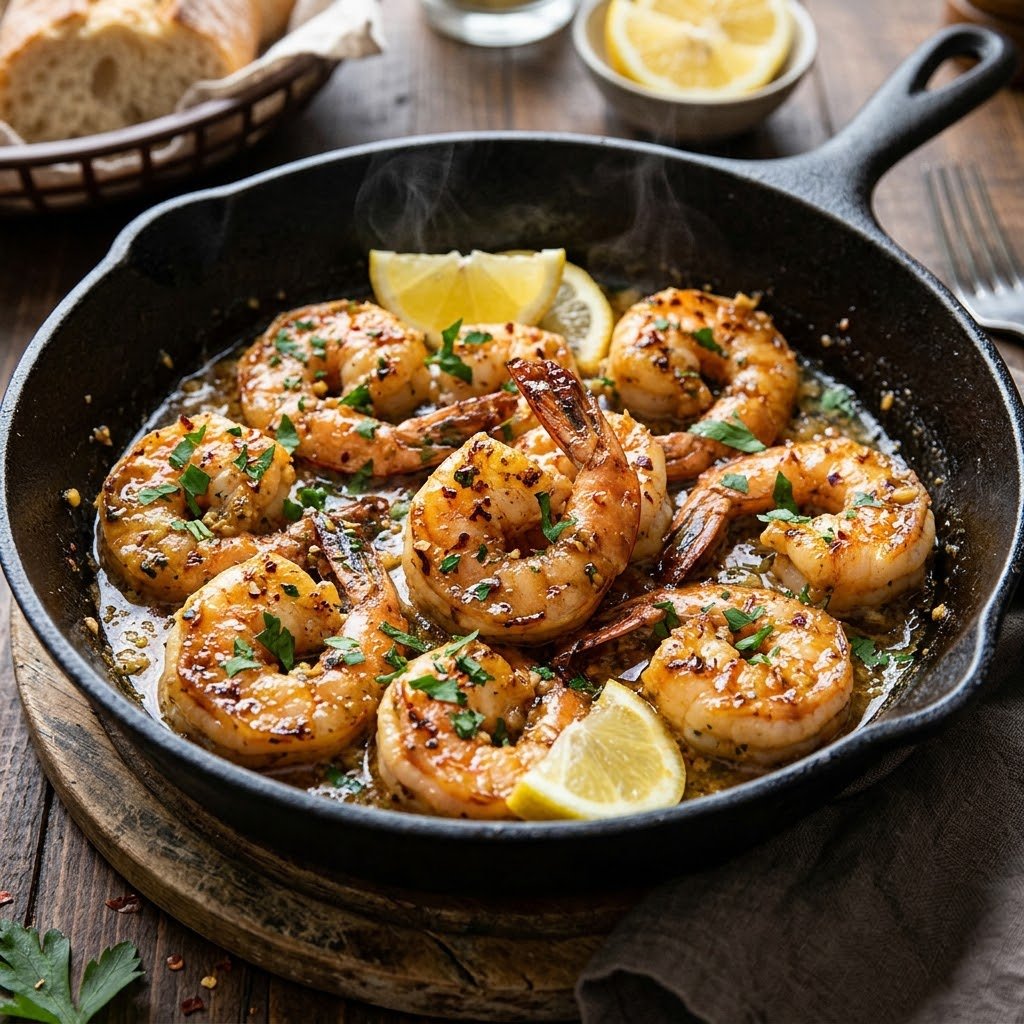
How a Honey Butter Shrimp Skillet Comes Together, Minute by Minute
Once the shrimp are dry and seasoned, the actual cooking takes about 10 minutes. Here is how that time breaks down, so you know what should be happening at each point:
- Minutes 0 to 2: The empty cast iron skillet heats over medium-high. A properly hot pan is what gives the shrimp color instead of leaving them gray.
- Minutes 2 to 5: Oil and a tablespoon of butter go in, then the shrimp in a single layer. About a minute on each side, and they come out of the pan while still slightly translucent in the middle.
- Minutes 5 to 7: Heat drops to medium-low. The rest of the butter, the garlic, and thin lemon slices go in, followed by honey, lemon juice, and red pepper flakes. The sauce bubbles and turns shiny.
- Minutes 7 to 9: The shrimp go back in with their juices and get tossed for about a minute, just until opaque all the way through.
- Minute 10: Parsley on top, skillet to the table.
Pulling the shrimp out halfway through is the key move. It means they spend only a few minutes over heat in total, and the sauce can be built at a lower temperature where neither the butter nor the honey will scorch.
What Goes Into the Pan
The shrimp. One and a half pounds of large shrimp, peeled and deveined, feeds four people. Leaving the tails on looks nice in the skillet and gives everyone something to hold, but tail-off shrimp are easier to eat over pasta or rice.
The seasoning. Kosher salt, black pepper, and a little smoked paprika. The paprika is there mostly for color and a faint smoky edge that keeps the dish from tasting one-note sweet.
The fat. A spoonful of olive oil with the first tablespoon of butter raises the smoke point a bit for the searing stage. The remaining three tablespoons of unsalted butter become the base of the sauce. Unsalted lets you control the seasoning, which matters because the shrimp are already salted.
The sauce. Fresh garlic, honey, lemon juice, a few thin lemon slices, and red pepper flakes. Three tablespoons of honey is enough to coat the shrimp without turning the dish into dessert. The lemon slices soften in the butter and add a gentle bitterness that balances the sweetness.
The finish. Chopped parsley, and a loaf of crusty bread if you want to mop up every drop of sauce, which you will.
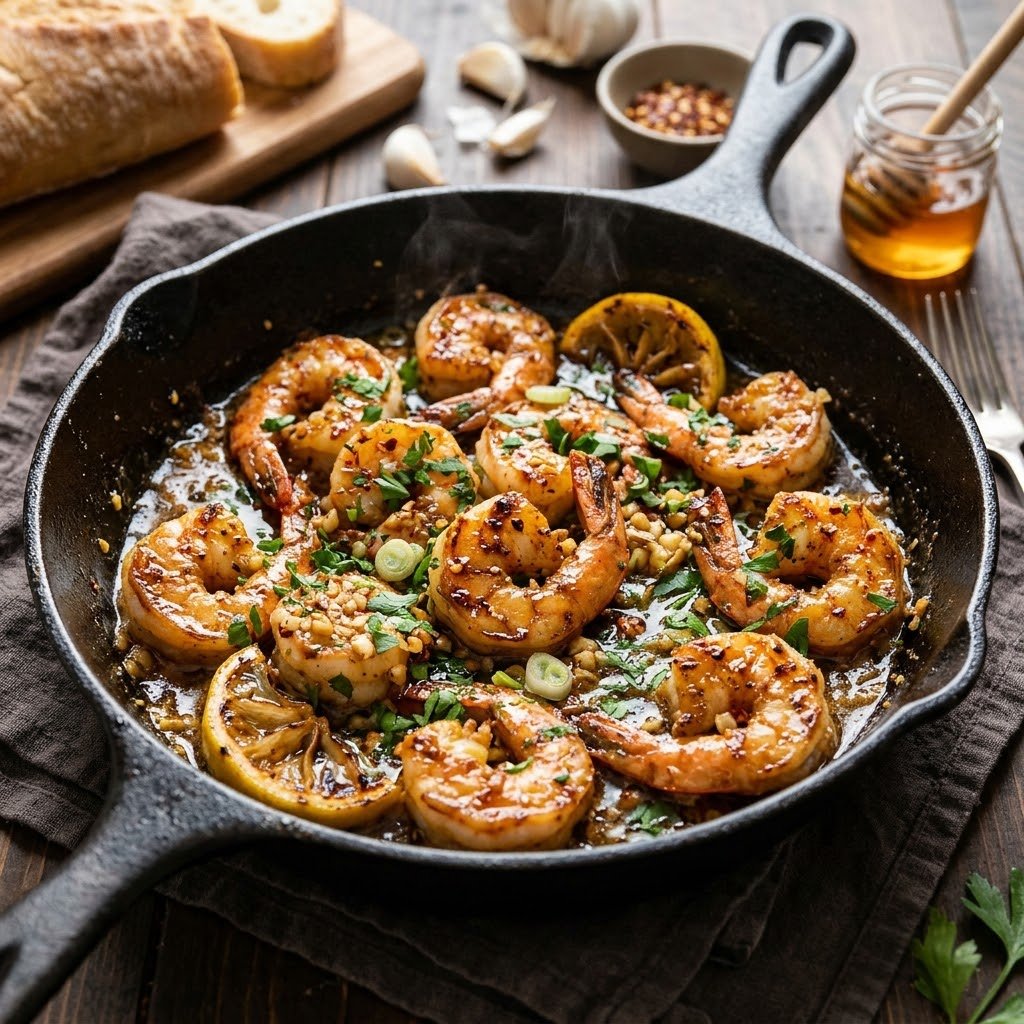
Choosing Shrimp for a Honey Butter Shrimp Skillet
Shrimp are sold by count per pound, and the number on the bag tells you how big they are and how long they need. Larger shrimp are more forgiving because they take longer to overcook, which is why this recipe uses 21/25 count.
| Label | Size | Sear time per side | Good for this recipe? |
|---|---|---|---|
| 16/20 | Extra jumbo | About 2 minutes | Yes, very juicy |
| 21/25 | Large | 1 to 1½ minutes | Best choice |
| 26/30 | Medium-large | About 1 minute | Yes, watch closely |
| 31/40 | Medium | Under 1 minute | Works, but overcooks easily |
Most shrimp sold as “fresh” at the seafood counter were frozen at some point, so a bag of frozen raw shrimp is a perfectly good option and often the better value. Thaw them overnight in the refrigerator, or seal them in a zip-top bag and submerge it in cold water for 20 to 30 minutes. The FDA’s guide to selecting and serving fresh and frozen seafood also covers what to look for when buying: shrimp should smell mild and clean, and the flesh should look firm and translucent rather than slimy.
Skip precooked shrimp for this dish. They are already cooked through, so a second round in a hot pan turns them rubbery before the sauce has time to cling.
Step-by-Step Instructions
- Dry the shrimp. Spread them on paper towels and pat the tops dry. Wet shrimp steam in the pan and never brown.
- Season. Toss the shrimp with salt, pepper, and smoked paprika right before cooking. Salting too far ahead draws moisture back out.
- Heat the skillet. Set a 12-inch cast iron skillet over medium-high heat for about 2 minutes, then add the olive oil and 1 tablespoon of butter.
- Sear. When the butter foams, lay the shrimp in a single layer. Leave them alone for a minute so they can color, flip, and cook about a minute more. Move them to a plate while they are still a little translucent in the center.
- Build the sauce. Turn the heat down to medium-low. Add the remaining butter, the lemon slices, and the garlic and stir for 30 to 45 seconds, until the garlic is fragrant but still pale.
- Add the honey. Stir in the red pepper flakes, honey, and lemon juice. Let the sauce bubble for about a minute, until it looks glossy and slightly thicker.
- Finish. Return the shrimp with any juices from the plate. Toss for about a minute, just until they are opaque and curled into a loose C shape.
- Serve. Pull the pan off the heat, scatter parsley over the top, and bring the skillet straight to the table.
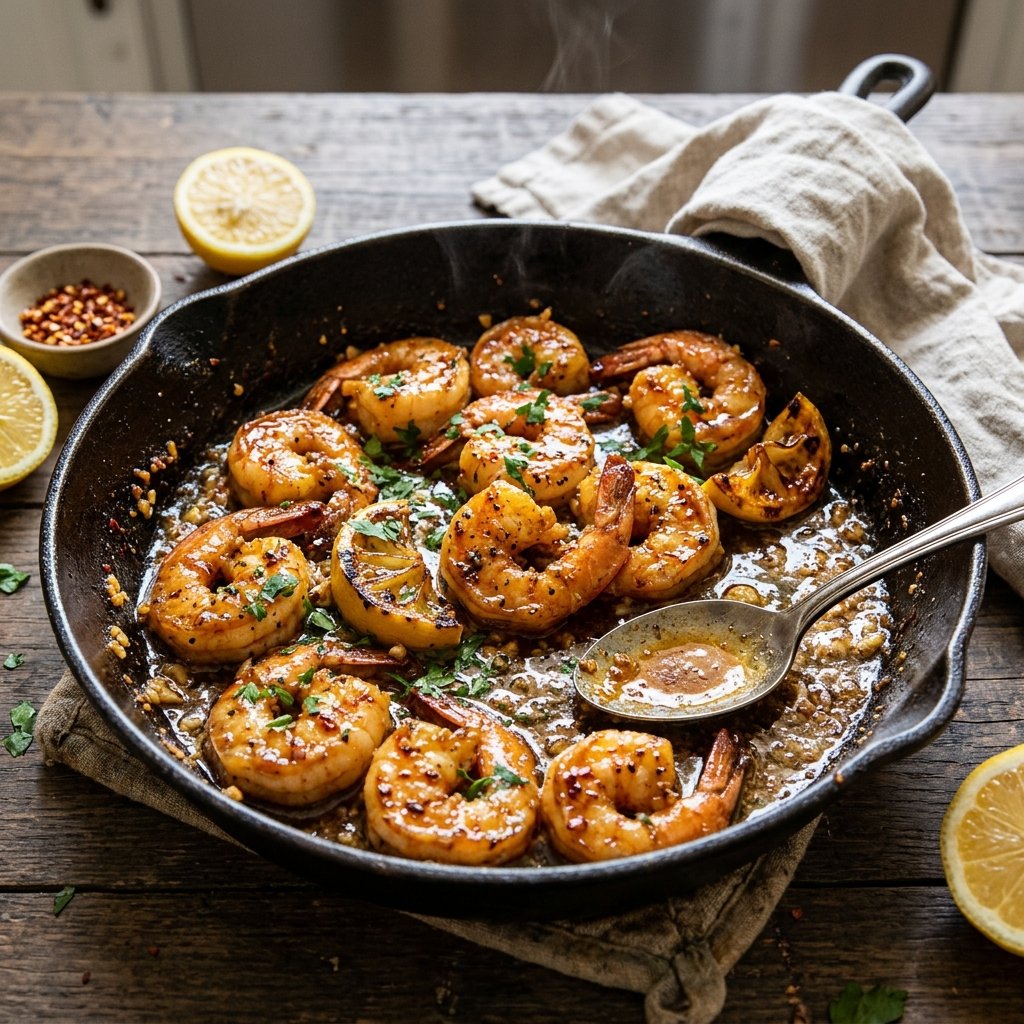
How to tell when shrimp are done
Watch the shape and the color. Raw shrimp are gray and translucent and fairly straight. Cooked shrimp turn pink and opaque and curl into a C. If they tighten all the way into an O, they have gone too far and will be chewy. The USDA lists 145°F (63°C) as the safe internal temperature for fish and shellfish, and for shrimp the visual cue of opaque, pearly flesh lines up with it well.
Three Mistakes That Ruin Honey Butter Shrimp
1. Crowding the pan. When shrimp overlap, the pan temperature drops and they release liquid. Instead of searing, they simmer in their own juices and come out pale and soft. If your skillet is smaller than 12 inches, sear in two batches. It adds two minutes and makes a real difference.
2. Adding honey to a screaming-hot pan. Honey is high in sugar and starts to darken almost immediately at searing temperatures. Pour it into a pan that is still on medium-high and you get a bitter, sticky film instead of a sauce. Turning the heat down before the butter and garlic go in solves this.
3. Cooking the shrimp the whole time. Leaving the shrimp in the skillet while you make the sauce is the most common reason they turn rubbery. Taking them out after the sear and returning them only for the last minute keeps them tender.
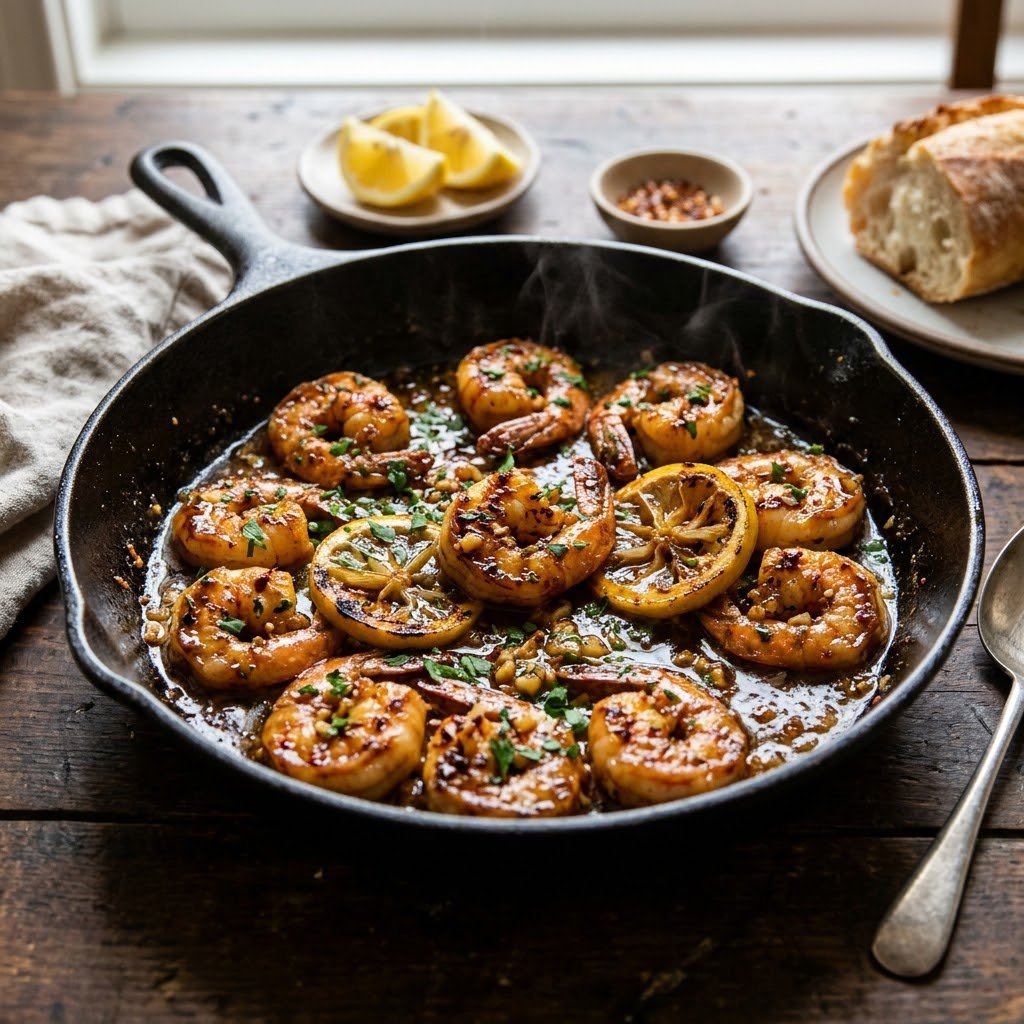
Make It Your Own
Once you have the basic method down, the sauce is easy to steer in a different direction:
- Cajun honey butter: Swap the smoked paprika for Cajun seasoning, or finish the shrimp in a few spoonfuls of this Cajun honey butter sauce.
- Hot honey: Use chili-infused honey in place of regular honey. This garlic hot honey is a good match, and the hot honey shrimp recipe takes the heat even further.
- Sweet chili: Stir a tablespoon of this sriracha honey into the sauce for a sweet and spicy finish.
- Old Bay: Replace the paprika with ½ teaspoon of Old Bay for a coastal, crab-shack flavor.
- Herby lemon: Add a sprig of thyme with the garlic and finish with lemon zest along with the parsley.
What to Serve With a Honey Butter Shrimp Skillet
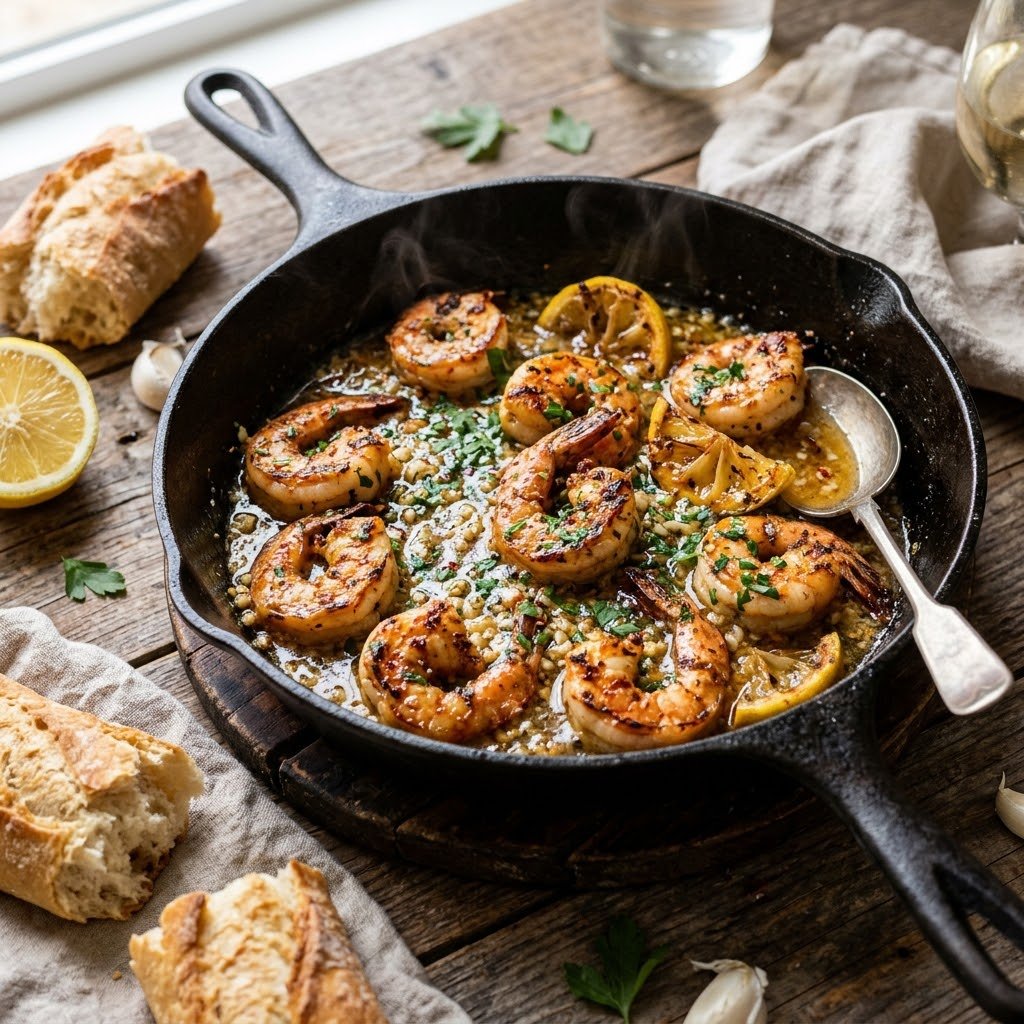
The sauce is the best part, so plan on something to soak it up. Warm crusty bread or a sliced baguette is the easiest option and the way this dish is pictured. A few other ways to turn it into a full meal:
- Rice: Plain jasmine rice or a simple cauliflower rice catches the honey butter nicely.
- Pasta: Toss the shrimp and sauce with angel hair or linguine and a splash of pasta water.
- Something green: A crisp salad with a sharp vinaigrette, roasted asparagus, or steamed green beans cut through the butter.
- A seafood spread: Serve it next to a pot of garlic white wine shrimp and mussels for a bigger dinner.
If you like this style of quick, buttery shrimp, the San Antonio-style shrimp paesano and the crispy honey walnut shrimp are worth trying next.
Leftovers and Reheating
This dish is at its best straight from the pan, but leftovers keep well enough for a next-day lunch. Cool them and refrigerate within 2 hours in an airtight container, then eat within 3 days. The USDA’s leftovers guidance has the full rules on safe storage.
Reheat gently. Warm the shrimp and sauce in a skillet over low heat for 2 to 3 minutes, stirring, just until heated through. High heat or a long stint in the microwave will make the shrimp tough. Cold leftover shrimp are also good chopped into a salad or a wrap. Freezing cooked shrimp in butter sauce is not recommended, since the texture suffers when they thaw.
Questions People Ask
Is honey butter shrimp the same as honey garlic shrimp?
They are close cousins. Honey garlic shrimp often uses soy sauce and sometimes cornstarch for a thicker, stir-fry-style glaze. Honey butter shrimp leans on butter and lemon instead, so the sauce is looser, richer, and better for dipping bread.
Can I use salted butter?
Yes. Cut the kosher salt on the shrimp down to a pinch and taste the sauce before serving.
Do I need a cast iron skillet?
No. Any large, heavy skillet works, including stainless steel or a good nonstick pan. Cast iron holds heat well, which helps the shrimp sear rather than steam, and it looks great on the table.
Can I cook the shrimp with the shells on?
You can, and shell-on shrimp stay a little juicier. Add about 30 seconds per side. The sauce will not soak into the meat as much, so it becomes more of a peel-and-dip meal.
How do I make it dairy-free?
Use a plant-based butter that is meant for cooking, or replace the butter with extra olive oil. The sauce will be thinner, so let it simmer an extra 30 seconds after adding the honey.
Can I double the recipe?
Yes, but sear the shrimp in batches so they stay in a single layer. Make the sauce once with doubled ingredients, then return all the shrimp to the pan for the final toss.
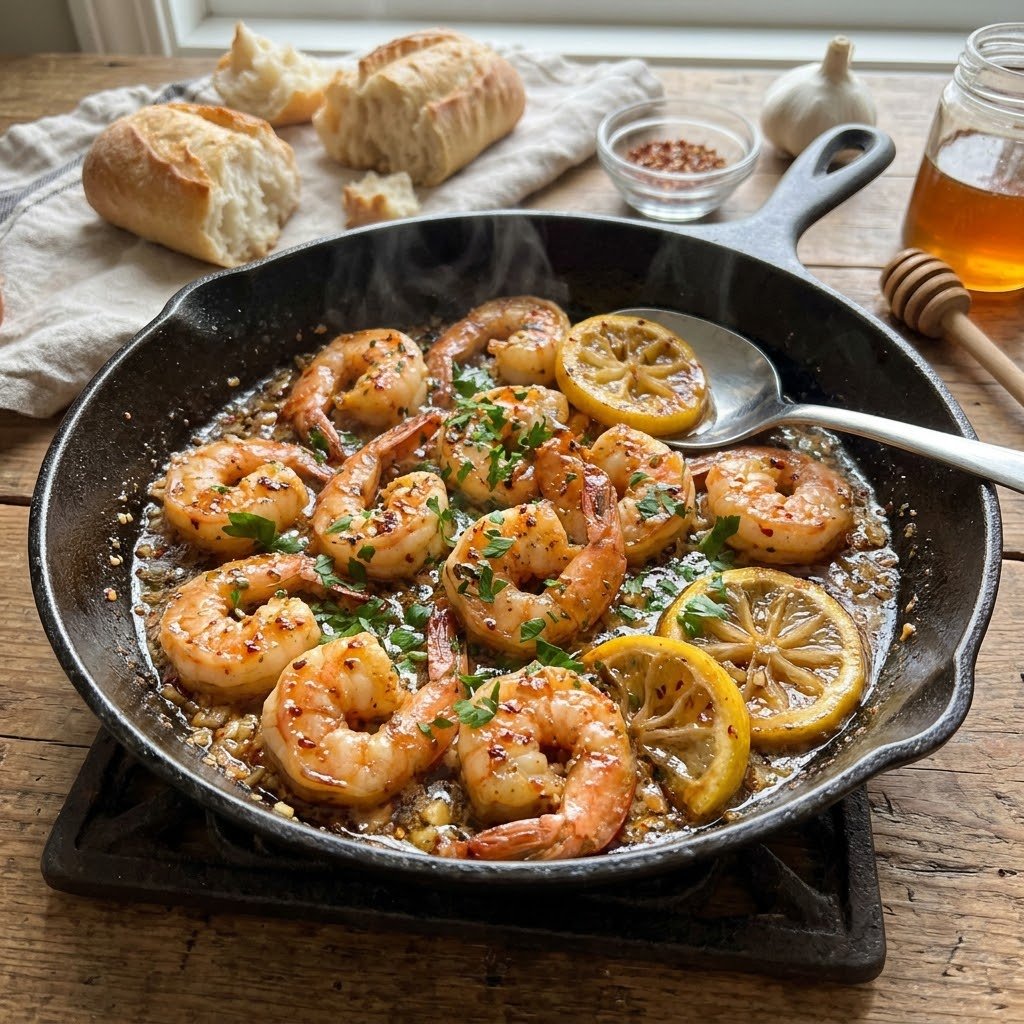
Honey Butter Shrimp Skillet Recipe Card
Here is the full recipe with exact amounts. Read through it once before you start, because once the shrimp hit the pan, the whole honey butter shrimp skillet moves quickly.
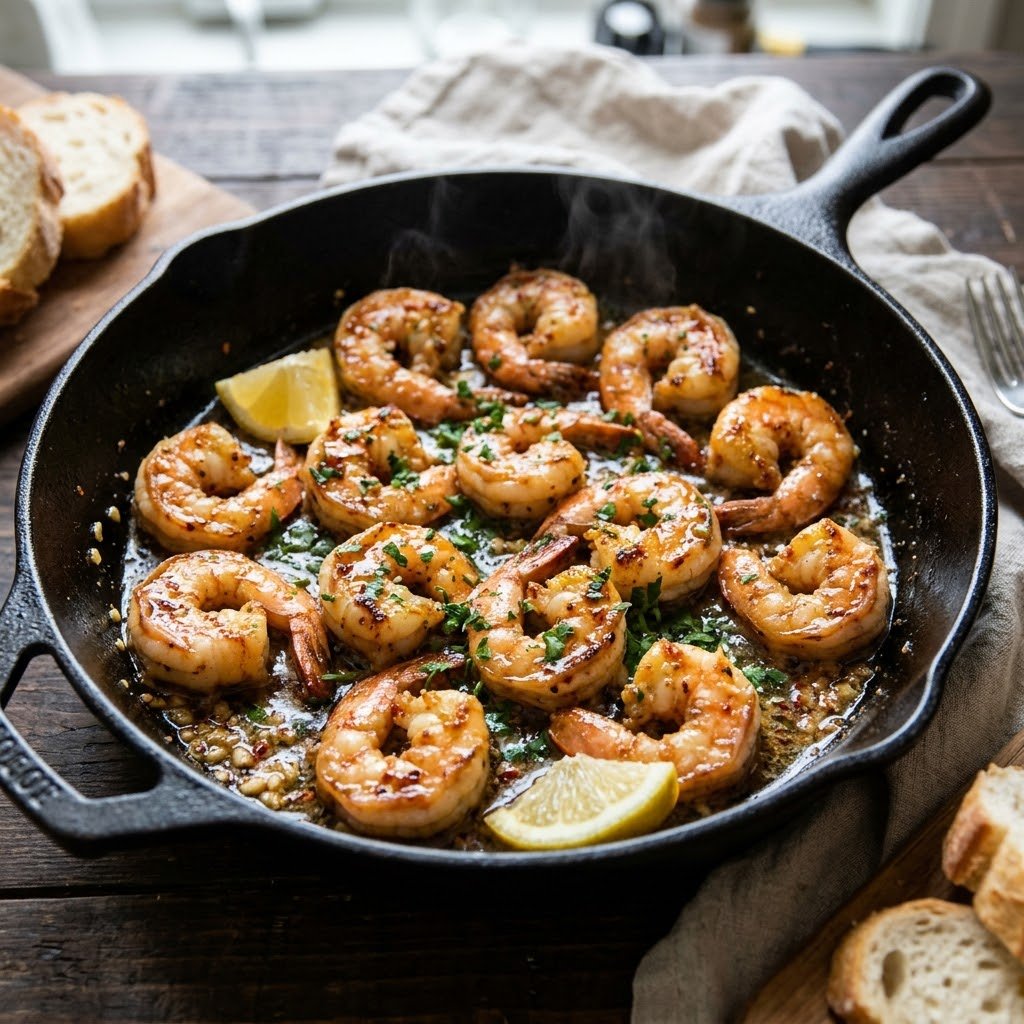
Honey Butter Shrimp Skillet
Ingredients
Equipment
Method
- Pat the shrimp very dry with paper towels. Toss with the salt, pepper and smoked paprika.
- Heat a 12-inch cast iron skillet over medium-high heat for about 2 minutes. Add the olive oil and 1 tablespoon of the butter.
- When the butter foams, add the shrimp in a single layer. Cook 1 to 1½ minutes per side, until pink outside but still slightly translucent in the center. Move them to a plate. Work in two batches if they do not fit without overlapping.
- Lower the heat to medium-low. Add the remaining 3 tablespoons butter, the lemon slices and the garlic. Cook, stirring, for 30 to 45 seconds, until the garlic smells fragrant but has not browned.
- Stir in the red pepper flakes, honey and lemon juice. Simmer about 1 minute, until the sauce is bubbling, glossy and slightly thickened.
- Return the shrimp and any juices from the plate. Toss in the sauce for about 1 minute, just until the shrimp are opaque and curled into a C shape (145°F / 63°C).
- Take the skillet off the heat, scatter with parsley and serve right away with crusty bread or rice for the sauce.
Notes
- Frozen shrimp: thaw overnight in the refrigerator, or seal in a bag and submerge in cold water for 20 to 30 minutes. Dry well before searing.
- Do not crowd the pan. Overlapping shrimp steam instead of searing.
- Keep the heat at medium-low once the honey goes in, or the butter can scorch and the honey can turn bitter.
- Leftovers keep in an airtight container in the refrigerator for up to 3 days. Reheat gently in a skillet over low heat just until warm.
- Nutrition is an estimate per serving (one quarter of the skillet, without bread), calculated from USDA FoodData Central values for the listed ingredients.