
Mac and cheese is one of the hardest comfort foods to give up on a low-salt diet, because almost all of its sodium is in the part you cannot remove: the cheese. Cheddar alone carries roughly 180 mg of sodium per ounce, and a classic recipe uses half a pound of it, plus salted butter and a teaspoon of salt in the sauce.
This low sodium mac and cheese recipe keeps the creamy, stretchy, golden result and changes the cheese math instead. A base of Swiss cheese, which is one of the lowest-sodium cheeses you can buy, gets its flavor from a smaller amount of extra-sharp cheddar, and a little cream cheese makes the sauce silky. Dry mustard, smoked paprika and a few drops of lemon do the job salt usually does. By our calculation, a generous main-dish serving has about 250 mg of sodium, roughly a quarter of a typical homemade version.

Recipe Snapshot
- Serves: 4 as a main dish, 6 as a side
- Time: 30 minutes on the stove, or 45 minutes with the optional baked top
- Sodium: about 250 mg per main-dish serving (estimate)
- Cheeses: Swiss, extra-sharp cheddar and cream cheese, 8 ounces in total
- Texture: creamy stovetop sauce; bake it if you like a crisp top
- Added salt: none, not even in the pasta water
Where the Sodium in Mac and Cheese Comes From
Pasta is naturally almost sodium-free. The salt comes from three places: the cheese, the butter, and any salt added to the pasta water or sauce. Boxed versions add a seasoned cheese powder on top of that. Here is how a typical homemade recipe compares with this one for a batch that serves four:
| Source of sodium | Classic homemade | This recipe |
|---|---|---|
| Cheese | 8 oz cheddar: about 1,450 mg | 4 oz Swiss + 2 oz cheddar + 2 oz cream cheese: about 760 mg |
| Butter | 2 tbsp salted: about 180 mg | 2 tbsp unsalted: under 10 mg |
| Milk | 2 cups: about 220 mg | 2 cups: about 220 mg |
| Added salt | 1 tsp in the sauce: about 2,300 mg | None |
| Per serving (÷4) | about 1,040 mg | about 250 mg |
These figures are our own estimates from typical USDA and label values, and they leave out any salt in the pasta water, which would add more to the classic version. For perspective, the FDA recommends less than 2,300 mg of sodium a day for most adults, while the average American eats about 3,400 mg (see Sodium in Your Diet). One bowl of classic mac and cheese can use up almost half the daily limit.
Choosing Lower-Sodium Cheese
Cheese is where you have the most control. Sodium varies a lot by type, so swapping some of the cheddar for a lower-sodium cheese makes the biggest difference without losing the cheesy flavor. Approximate values per 1-ounce serving:
| Cheese | Approx. sodium per oz | How it behaves in mac and cheese |
|---|---|---|
| Swiss (Emmental-style) | about 55 mg | Melts smoothly, mild and nutty; our base cheese |
| Cream cheese | about 90 mg | Makes the sauce silky and helps Swiss melt evenly |
| Fresh mozzarella | about 85 to 115 mg | Very stretchy, mild; good in small amounts |
| Monterey Jack | about 150 mg | Melts beautifully, mild flavor |
| Extra-sharp cheddar | about 180 mg | Big flavor and color, so a little goes far |
| Parmesan | about 300 to 450 mg | Very salty; skip it or use a pinch on top |
| American (processed) | about 400 mg or more | The saltiest common choice; avoid for low sodium |
Brands vary, so check the Nutrition Facts panel. Some stores also sell lower-sodium Swiss and cheddar, which can bring this recipe down further. You can look up any cheese in the USDA FoodData Central database.

Ingredients
- 8 ounces elbow macaroni: regular or whole wheat. Whole wheat adds fiber and a nutty taste that suits the Swiss.
- 2 tablespoons unsalted butter and 2 tablespoons all-purpose flour: the roux that thickens the sauce, so you need less cheese to make it creamy.
- 2 cups milk: whole or 2%. Skim works but makes a thinner sauce.
- Seasoning: 1 teaspoon dry mustard, 1 teaspoon garlic powder, 1 teaspoon onion powder, ½ teaspoon smoked paprika, ¼ teaspoon black pepper and a small pinch of nutmeg. Make sure none of them is a salt blend.
- 4 ounces Swiss cheese (about 1 cup shredded): the low-sodium base.
- 2 ounces extra-sharp cheddar (about ½ cup shredded): for the classic flavor and orange color. The sharper the cheddar, the less you need.
- 2 ounces cream cheese (¼ cup), softened: creaminess and body.
- ½ teaspoon lemon juice or white wine vinegar: brightens the cheese the same way salt would.
- Optional baked topping: ⅓ cup plain panko, 1 tablespoon melted unsalted butter and a pinch of smoked paprika.
How to Make Low Sodium Mac and Cheese
Step 1: Cook the pasta without salt
Bring a large pot of water to a boil and cook the macaroni 1 minute less than the package says. Before draining, scoop out ½ cup of the starchy pasta water. Skipping the salt in the water is one of the easiest savings in this recipe, and the seasoned sauce makes up for it.
Step 2: Make a seasoned roux
In a medium saucepan over medium heat, melt the butter. Whisk in the flour and cook for 1 minute, until it smells toasty. Add the dry mustard, garlic powder, onion powder, smoked paprika, pepper and nutmeg, and stir for 15 seconds so the spices bloom in the fat.
Step 3: Whisk in the milk
Pour in the milk a little at a time, whisking constantly to keep it smooth. Let it simmer gently for 3 to 4 minutes, until it thickens enough to coat a spoon.

Step 4: Melt the cheese off the heat
Take the pan off the heat. Stir in the cream cheese until it disappears, then add the Swiss and cheddar a handful at a time, stirring until each addition melts. Adding cheese off the heat keeps the Swiss from turning stringy or grainy. Stir in the lemon juice, then taste: the sauce should taste cheesy and savory, not flat. If it needs more lift, add a few more drops of lemon or a pinch more mustard.
Step 5: Combine and loosen
Add the drained pasta to the sauce and stir to coat. Swiss-based sauces tighten as they cool, so loosen it with a splash of the reserved pasta water until it is glossy and creamy. Serve right away, or bake it.
Optional Step 6: Bake for a golden top
Heat the oven to 400°F (200°C). Spread the mac and cheese in a small buttered baking dish or oven-safe skillet. Toss the panko with the melted butter and paprika, sprinkle it over the top, and bake for 12 to 15 minutes, until bubbling at the edges and golden on top. The topping adds roughly 20 mg of sodium per serving with plain panko.

Why This Version Still Tastes Cheesy
- Sharp beats salty. A small amount of extra-sharp cheddar gives more flavor per ounce than a larger amount of mild cheddar.
- Mustard and paprika. Dry mustard makes cheese taste more like itself, and smoked paprika adds depth and color.
- A touch of acid. Lemon or vinegar wakes up flavors the way salt does. You should not taste it as sour.
- Shred your own cheese. Pre-shredded cheese is coated with starch or cellulose to stop clumping, which can make the sauce gritty. Freshly shredded cheese melts smoother, so a smaller amount feels richer.
- Texture does some work. A crisp, buttery top and freshly ground pepper make each bite more interesting, so you notice salt less.
Mix-Ins and Variations
- Vegetables: stir in steamed broccoli, peas, roasted cauliflower or sautéed spinach. They stretch the dish, so each serving has less cheese.
- Protein: add shredded roast chicken or turkey you cooked yourself; deli meats, ham and bacon are high in sodium.
- Smoky BBQ mac: swirl a few spoonfuls of our low sodium BBQ sauce through the top before baking.
- Tomato mac: serve with a spoonful of our low sodium pasta sauce or bake with sliced fresh tomatoes on top.
- Spicy: add a pinch of cayenne to the roux and stir in roasted green chiles (fresh, not canned in brine).
- Dairy-free: plant-based cheeses vary widely in sodium and some are saltier than dairy cheese, so compare labels before swapping.

A Note for Kidney and Heart-Healthy Diets
For a heart-healthy or general low-sodium diet, this recipe fits comfortably into a day. By our estimate it also works out to well under 140 mg of sodium per 100 g, the threshold the FDA uses for “low sodium” meals and main dishes (see the FDA nutrient content claim rules).
If you follow a kidney diet, sodium is only part of the picture. Cheese and milk are also high in phosphorus, and this recipe has roughly 450 mg of phosphorus per main-dish serving by our calculation. A smaller portion served as a side dish, alongside vegetables, is usually a better fit. Ask your renal dietitian how much works for your plan.
What to Serve With It
- Grilled chicken or pork brushed with homemade low sodium barbecue sauce
- Roasted broccoli, green beans or a crisp salad with oil-and-vinegar dressing
- A wedge of our low sodium cornbread for a full Southern-style plate
- Sliced tomatoes and cucumbers with black pepper and fresh herbs
If you are cooking for a crowd that is not watching salt, our 3 cheese mac and cheese is the full-flavor classic. This lighter version is the one to make when sodium matters.

Storing and Reheating
- Fridge: keep leftovers in an airtight container for up to 3 days.
- Freezer: freeze in portions for up to 2 months. The sauce may be slightly less smooth after thawing.
- Reheating: add 1 to 2 tablespoons of milk per serving and warm gently in a saucepan or in the microwave in 30-second bursts, stirring in between. Swiss-based sauces need that splash of milk to turn creamy again.
- Make ahead: assemble the baked version up to 1 day ahead, cover and chill, then add the topping and bake for 20 to 25 minutes.
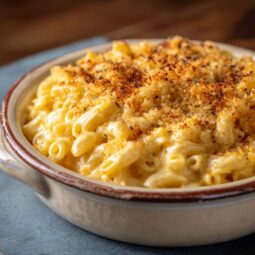
Low Sodium Mac and Cheese
Equipment
- Large pot
- Medium saucepan
- Whisk
- Box grater
- Small baking dish or oven-safe skillet (optional)
Ingredients
- 8 oz elbow macaroni regular or whole wheat
- 2 tbsp unsalted butter
- 2 tbsp all-purpose flour
- 1 tsp dry mustard
- 1 tsp garlic powder
- 1 tsp onion powder
- 1/2 tsp smoked paprika
- 1/4 tsp black pepper freshly ground
- 1 pinch ground nutmeg
- 2 cups milk whole or 2%
- 2 oz cream cheese softened, about 1/4 cup
- 4 oz Swiss cheese freshly shredded, about 1 cup
- 2 oz extra-sharp cheddar cheese freshly shredded, about 1/2 cup
- 1/2 tsp lemon juice or white wine vinegar
Optional baked topping
- 1/3 cup plain panko breadcrumbs
- 1 tbsp unsalted butter melted
- 1 pinch smoked paprika
Instructions
- Cook the pasta: Boil the macaroni in a large pot of unsalted water for 1 minute less than the package directions. Reserve 1/2 cup of the pasta water, then drain.
- Make the roux: Melt the butter in a medium saucepan over medium heat. Whisk in the flour and cook for 1 minute. Add the dry mustard, garlic powder, onion powder, smoked paprika, black pepper and nutmeg and stir for 15 seconds.
- Thicken the milk: Gradually whisk in the milk until smooth. Simmer gently, whisking often, for 3 to 4 minutes, until the sauce coats a spoon.
- Melt the cheese: Remove the pan from the heat. Stir in the cream cheese until smooth, then add the Swiss and cheddar a handful at a time, stirring until melted. Stir in the lemon juice.
- Combine: Add the drained pasta and stir to coat. Loosen with splashes of the reserved pasta water until creamy. Serve right away.
- Optional bake: Heat the oven to 400°F (200°C). Spread the mac and cheese in a buttered small baking dish. Toss the panko with the melted butter and paprika, sprinkle over the top and bake for 12 to 15 minutes, until golden and bubbling.
Notes
- Sodium: about 250 mg per main-dish serving by our calculation (about 165 mg per side-dish serving if you serve 6). The baked topping adds roughly 20 mg per serving. Brands vary, so check your cheese labels.
- Shred your own cheese: pre-shredded cheese contains anti-caking starch that can make the sauce gritty.
- Reheating: add 1 to 2 tablespoons of milk per serving and warm gently.
- Storage: refrigerate up to 3 days or freeze up to 2 months.
- Kidney diets: cheese and milk are high in phosphorus; ask your renal dietitian about portion size.
- Nutrition is an estimate calculated from USDA ingredient data, without the optional topping.
Frequently Asked Questions
What is the lowest sodium cheese for mac and cheese?
Swiss is one of the lowest-sodium cheeses that melts well, at about 55 mg per ounce. Fresh mozzarella and cream cheese are also fairly low. Use them as the base and add a little extra-sharp cheddar for flavor.
How much sodium is in regular mac and cheese?
It depends on the recipe, but a classic homemade version with 8 ounces of cheddar, salted butter and a teaspoon of salt works out to about 1,000 mg per serving by our calculation. Boxed and restaurant versions also tend to be high, so check the label or nutrition information.
Can I make it without any cheddar?
Yes. Replace the cheddar with more Swiss or with Monterey Jack. The sauce will be paler and milder, so add an extra ¼ teaspoon of dry mustard and a little more smoked paprika.
Do I need to salt the pasta water?
No. Unsalted pasta tastes plain on its own, but the seasoned cheese sauce coats every piece. Skipping the salt in the water is an easy way to keep sodium down.
Why did my sauce turn grainy?
The cheese was added over high heat or the sauce boiled after the cheese went in. Always melt the cheese off the heat, add it gradually, and use freshly shredded cheese.
Is this mac and cheese kid-friendly?
Yes. It tastes like a mild, creamy mac and cheese. Leave out the smoked paprika if your kids prefer it plain.
Comfort Food That Fits a Low-Salt Day
You do not need a salty powder packet or half a pound of cheddar to make a satisfying mac and cheese. Start with Swiss, add a little sharp cheddar and cream cheese, season the sauce with mustard, paprika and a squeeze of lemon, and you get a creamy, golden low sodium mac and cheese that the whole table will enjoy.
How can you have a recipe website without nutritional guide!