
Most bottled barbecue sauce is built on ketchup, and ketchup is built on salt. Read a few labels in the condiment aisle and you will see why people cutting back on sodium give up on BBQ sauce altogether: a dietitian review on Food Network puts most brands at 100 to 500 mg of sodium per 2-tablespoon serving, and few people stop at two tablespoons on a plate of ribs.
This low sodium BBQ sauce recipe skips the ketchup and starts with no-salt-added tomato paste instead. It is cooked in a little oil until it darkens, then simmered with apple cider vinegar, honey, molasses and smoked paprika. The result is thick, glossy, sweet-tangy and smoky, and by our ingredient math it lands at roughly 20 mg of sodium per 2 tablespoons. There is no added salt, and it takes 25 minutes in one saucepan.

The Short Version
- Yield: about 1½ cups (12 servings of 2 tablespoons)
- Time: 5 minutes prep, 20 minutes on the stove
- Sodium: about 20 mg per 2 tablespoons (estimate; depends on your tomato paste and Worcestershire)
- Style: sweet, tangy and smoky, close to a Kansas City-style sauce
- Keeps: 2 weeks in the fridge, 3 months in the freezer
- Diet notes: gluten-free if your Worcestershire is gluten-free; vegan with maple syrup and a vegan Worcestershire
Where the Sodium in BBQ Sauce Comes From
Store-bought sauce gets its sodium from three places: added salt, ketchup or tomato concentrate that was already salted, and savory extras like Worcestershire, soy sauce or “natural smoke flavor” blends. Swapping one brand for another rarely fixes that, because the base itself is salty.
A homemade low sodium barbecue sauce recipe changes the base. Here is roughly how the sodium adds up in one batch, using typical label and USDA values:
| Ingredient (whole batch) | Approx. sodium | Why it is here |
|---|---|---|
| 6 oz no-salt-added tomato paste | about 100 mg | Body, sweetness and deep tomato flavor without salt |
| 2 tsp Worcestershire sauce | about 130 mg | Savory depth; the single biggest sodium source in the pot |
| Honey, molasses, vinegar | under 15 mg | Sweet and sour balance |
| Spices and oil | under 10 mg | Smoke, heat and aroma |
| Total, 12 servings | about 250 mg | about 20 mg per 2 tablespoons |
For context, the U.S. Food and Drug Administration defines a “very low sodium” food as 35 mg or less per serving and “low sodium” as 140 mg or less (see the FDA nutrient content claim rules). Our numbers are home-kitchen estimates, not a lab test, but even if your brands run higher, the sauce stays well under the bottled range.

Ingredients and How to Shop for Them
The ingredient list is short, but two items decide whether this is a low-sodium sauce or just a homemade one. Read those labels carefully.
- No-salt-added tomato paste (one 6-ounce can, about ⅔ cup): the foundation. Look for “no salt added” on the can and check the Nutrition Facts; most brands list 0 to 20 mg of sodium per 2-tablespoon serving. Regular paste can be fine too, but some brands add salt, so compare.
- Neutral oil or olive oil (1 tablespoon): for browning the paste, which is where much of the flavor comes from.
- Water (¾ cup): thins the paste to sauce consistency.
- Apple cider vinegar (¼ cup): the tang. Acid is the most useful tool you have when cooking without salt, because it makes flavors taste brighter and more “seasoned.”
- Honey or maple syrup (3 tablespoons): classic barbecue sweetness. Honey gives a rounder, floral sweetness; maple keeps the sauce vegan.
- Molasses (1 tablespoon): the dark, slightly bitter note that makes it taste like real BBQ sauce instead of sweet tomato sauce. Dark brown sugar works in a pinch.
- Worcestershire sauce (2 teaspoons): savory depth. Use a reduced-sodium version if you can find it, or leave it out for the lowest sodium (add ½ teaspoon extra vinegar and a pinch more mustard instead).
- Spices: 1 teaspoon smoked paprika, 1 teaspoon onion powder, ½ teaspoon garlic powder, ½ teaspoon dry mustard, ¼ teaspoon black pepper, and a pinch of cayenne. Check that your blends are salt-free; “garlic salt” and many BBQ rubs are mostly salt.
- Liquid smoke (optional, ¼ teaspoon): for a pit-smoked flavor if you are using the sauce indoors.
How to Make Low Sodium BBQ Sauce
1. Brown the tomato paste
Warm the oil in a small saucepan over medium heat. Add the tomato paste and stir it constantly for 2 to 3 minutes, spreading it across the bottom of the pan, until it turns a shade darker, smells sweet and starts to stick a little. This step caramelizes the natural sugars in the tomatoes and builds the savory backbone that salt usually provides. Do not let it scorch; lower the heat if it darkens too fast.
2. Add the dry spices
Stir in the smoked paprika, onion powder, garlic powder, dry mustard, black pepper and cayenne. Cook for 30 seconds, just until fragrant. Toasting spices in the hot paste wakes up their flavor.
3. Whisk in the liquids
Pour in the water and vinegar and whisk until smooth, scraping up the browned bits. Whisk in the honey (or maple syrup), molasses, Worcestershire and liquid smoke if using.

4. Simmer until glossy
Bring to a gentle bubble, then lower the heat and simmer, uncovered, for 12 to 15 minutes, stirring every few minutes. The sauce is ready when it coats the back of a spoon and a line drawn through it holds for a second. It will thicken more as it cools.
5. Taste and balance
Taste with a fresh spoon. Without salt, balance comes from the other levers: too sharp, add a teaspoon of honey; flat, add ½ teaspoon of vinegar; not smoky enough, a pinch more smoked paprika. Cool completely and transfer to a clean jar.
Five Tricks That Make Salt-Free Sauce Taste Seasoned
- Brown the paste. Caramelized tomato tastes savory and rich, which our tongues read as “seasoned.”
- Lean on acid. Vinegar lifts every other flavor. Many low-sodium sauces taste dull because they are under-acidic, not under-salted.
- Use molasses. Its slightly bitter, mineral taste gives depth that honey alone cannot.
- Stack your smoke. Smoked paprika plus a little liquid smoke (or grill smoke) tastes like barbecue even without a salty rub.
- Heat in moderation. A little cayenne or chipotle makes food feel more flavorful, so you miss salt less. A small amount goes a long way.
How Thick Should It Be?
Use the sauce at different thicknesses for different jobs:
| Use | Consistency | How to get it |
|---|---|---|
| Glaze for ribs and chicken | Thick, coats a spoon | Simmer the full 15 minutes |
| Dipping sauce | Medium, like ketchup | Simmer 10 to 12 minutes |
| Pulled pork or chicken | Loose, pourable | Thin with 2 to 4 tablespoons water or unsalted broth |
| Marinade | Thin | Mix ¼ cup sauce with 2 tablespoons vinegar and 1 tablespoon oil |

Using It on the Grill (Without Burning It)
Because this sauce contains honey and molasses, it burns quickly over direct heat. Cook ribs, chicken or pork until almost done first, then brush on the sauce during the last 5 to 10 minutes, turning once or twice so it sets into a sticky glaze. Keep a separate bowl of sauce for the table; never reuse sauce that touched raw meat unless you boil it first.
Remember that the meat matters too. Plain fresh chicken, pork and beef are naturally low in sodium, but pre-brined or “enhanced” meats, store-bought rubs and smoked sausages can add hundreds of milligrams per portion. Season the meat with a salt-free rub of paprika, garlic powder, black pepper and brown sugar, and let the sauce do the rest.

What to Serve It With
- Grilled or oven-baked chicken thighs and drumsticks (for a sweeter oven method, see our honey glazed chicken drumsticks)
- Pork ribs, pork tenderloin or slow-cooker pulled pork
- Burgers, grilled vegetables, roasted sweet potatoes and baked tofu
- A low-sodium barbecue plate with our low sodium cornbread and low sodium mac and cheese on the side
- A drizzle over a baked potato or a bowl of beans and rice
If you want a bolder sauce for a party and sodium is less of a concern, our honey bourbon BBQ sauce is a good contrast. For a tomato-based sauce that goes on pasta instead, try our low sodium pasta sauce.
Variations
- Spicy chipotle: add ½ teaspoon chipotle powder and an extra pinch of cayenne.
- Carolina-leaning tang: increase the vinegar to ⅓ cup, add an extra ½ teaspoon dry mustard and a pinch of red pepper flakes.
- Peach or pineapple: blend ½ cup ripe peach or pineapple into the sauce after simmering, then simmer 5 minutes more.
- Lower sugar: cut the honey to 1 tablespoon and keep the molasses; the sauce will be tangier and a little thinner.
- No-Worcestershire version: skip it for the lowest sodium, and add ½ teaspoon extra vinegar plus ¼ teaspoon extra dry mustard.

Storage
- Fridge: store in a clean, airtight jar for up to 2 weeks. Always use a clean spoon.
- Freezer: freeze in ice-cube trays or small containers for up to 3 months. Two standard ice cubes are roughly one serving.
- Thawing: overnight in the fridge, or warm gently in a saucepan with a splash of water.
- Separation: a little liquid on top after a few days is normal; just stir it back in.
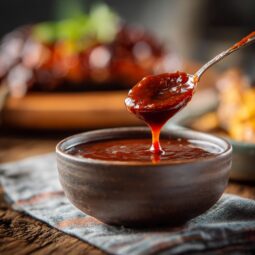
Low Sodium BBQ Sauce
Equipment
- Small saucepan
- Whisk
- Measuring cups and spoons
- Glass jar with lid
Ingredients
- 6 oz no-salt-added tomato paste 1 can, about ⅔ cup
- 1 tbsp olive oil or neutral oil
- 1 tsp smoked paprika
- 1 tsp onion powder
- 1/2 tsp garlic powder
- 1/2 tsp dry mustard
- 1/4 tsp black pepper
- 1 pinch cayenne pepper optional
- 3/4 cup water
- 1/4 cup apple cider vinegar
- 3 tbsp honey or maple syrup for vegan
- 1 tbsp molasses or dark brown sugar
- 2 tsp Worcestershire sauce reduced-sodium if available, or omit
- 1/4 tsp liquid smoke optional
Instructions
- Brown the paste: Heat the oil in a small saucepan over medium heat. Add the tomato paste and stir constantly for 2 to 3 minutes, until it darkens slightly and smells sweet. Lower the heat if it starts to scorch.
- Toast the spices: Stir in the smoked paprika, onion powder, garlic powder, dry mustard, black pepper and cayenne. Cook for 30 seconds, until fragrant.
- Add the liquids: Whisk in the water and apple cider vinegar until smooth, scraping up the browned bits. Whisk in the honey, molasses, Worcestershire sauce and liquid smoke, if using.
- Simmer: Bring to a gentle bubble, then reduce the heat to low and simmer uncovered for 12 to 15 minutes, stirring often, until the sauce coats the back of a spoon.
- Balance and store: Taste and adjust with a little more vinegar, honey or smoked paprika. Cool completely, then transfer to a clean jar and refrigerate for up to 2 weeks or freeze for up to 3 months.
Notes
- Sodium: about 20 mg per 2 tablespoons by our calculation with no-salt-added tomato paste and regular Worcestershire; about 10 mg without the Worcestershire. Check your labels, since brands vary.
- Grilling: brush the sauce on during the last 5 to 10 minutes of cooking; the honey and molasses burn over direct heat.
- Thinner sauce: stir in water or unsalted broth, 1 tablespoon at a time.
- Vegan: use maple syrup and a vegan Worcestershire sauce.
- Nutrition is an estimate calculated from USDA ingredient data.
Frequently Asked Questions
Is there a store-bought low sodium BBQ sauce?
A few brands make lower-sodium or no-salt-added sauces, but sodium varies widely, so read the Nutrition Facts panel rather than the front label. Compare the sodium per 2-tablespoon serving: 140 mg or less meets the FDA definition of low sodium, and 35 mg or less is very low sodium.
Can I use ketchup instead of tomato paste?
You can, but it defeats the purpose unless you buy a no-salt-added ketchup. Regular ketchup typically carries 150 mg of sodium or more per tablespoon. If you use no-salt-added ketchup, skip the water, reduce the honey by half (ketchup is already sweet), and simmer for 10 minutes.
How much sodium is in this BBQ sauce?
By our calculation, about 20 mg per 2-tablespoon serving with no-salt-added tomato paste and regular Worcestershire. Using reduced-sodium Worcestershire or leaving it out brings it closer to 10 mg. Exact numbers depend on the brands you use.
Why does my sauce taste flat?
Usually it needs more acid or more browning, not salt. Add vinegar ½ teaspoon at a time, and next time cook the tomato paste a minute longer before adding the liquids.
Is this sauce suitable for a kidney or heart diet?
It is very low in sodium, which suits most heart-healthy eating patterns. Tomato paste and molasses do contain potassium, so if you follow a potassium-restricted kidney diet, ask your dietitian how much fits your plan.
Can I can this sauce for shelf storage?
We do not recommend water-bath canning this recipe, because it has not been tested for safe acidity. Keep it in the fridge or freezer instead.
Big Barbecue Flavor, Very Little Salt
The FDA notes that Americans eat about 3,400 mg of sodium a day on average, well above the recommended limit of less than 2,300 mg, and that most of it comes from packaged and prepared foods (see Sodium in Your Diet). Condiments are an easy place to win some of that back. Brown the paste, balance the sweet and sour, add a little smoke, and this low sodium BBQ sauce will hold its own on any plate of ribs.