
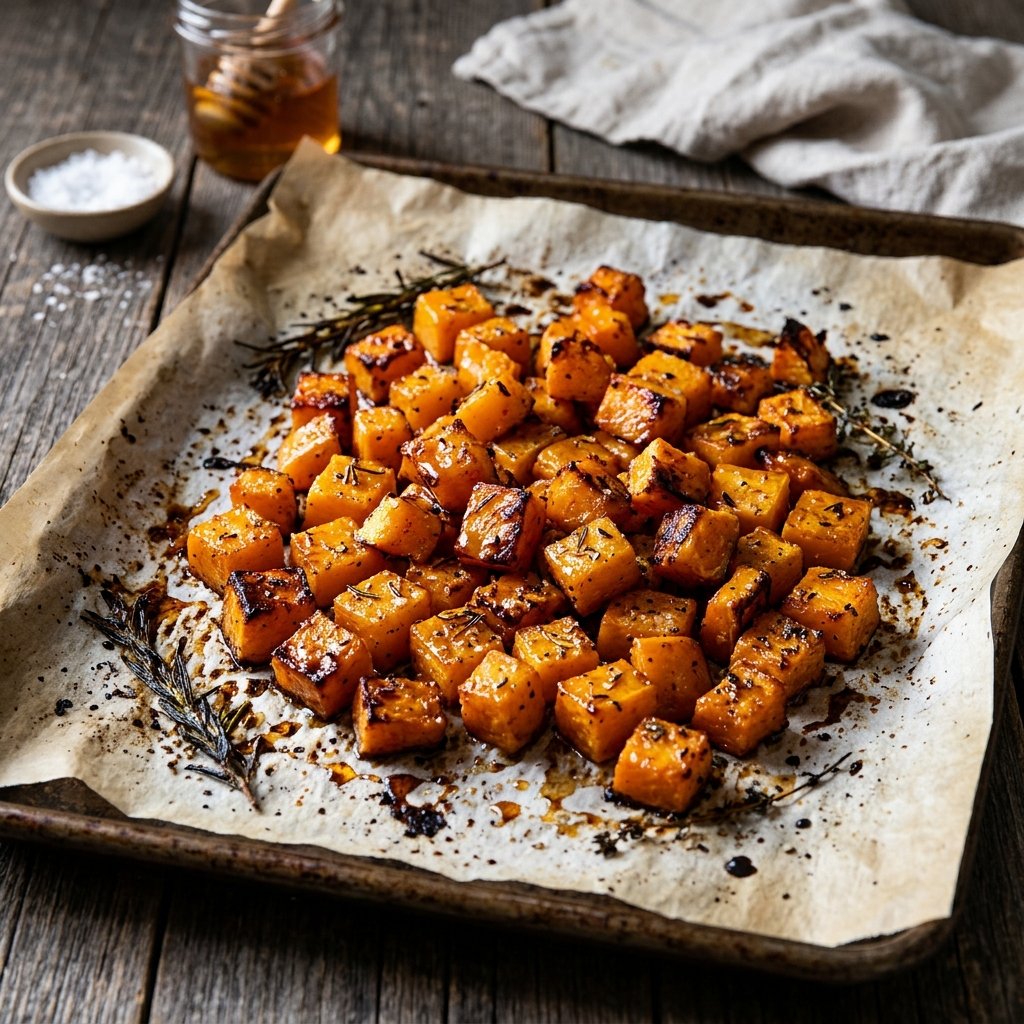
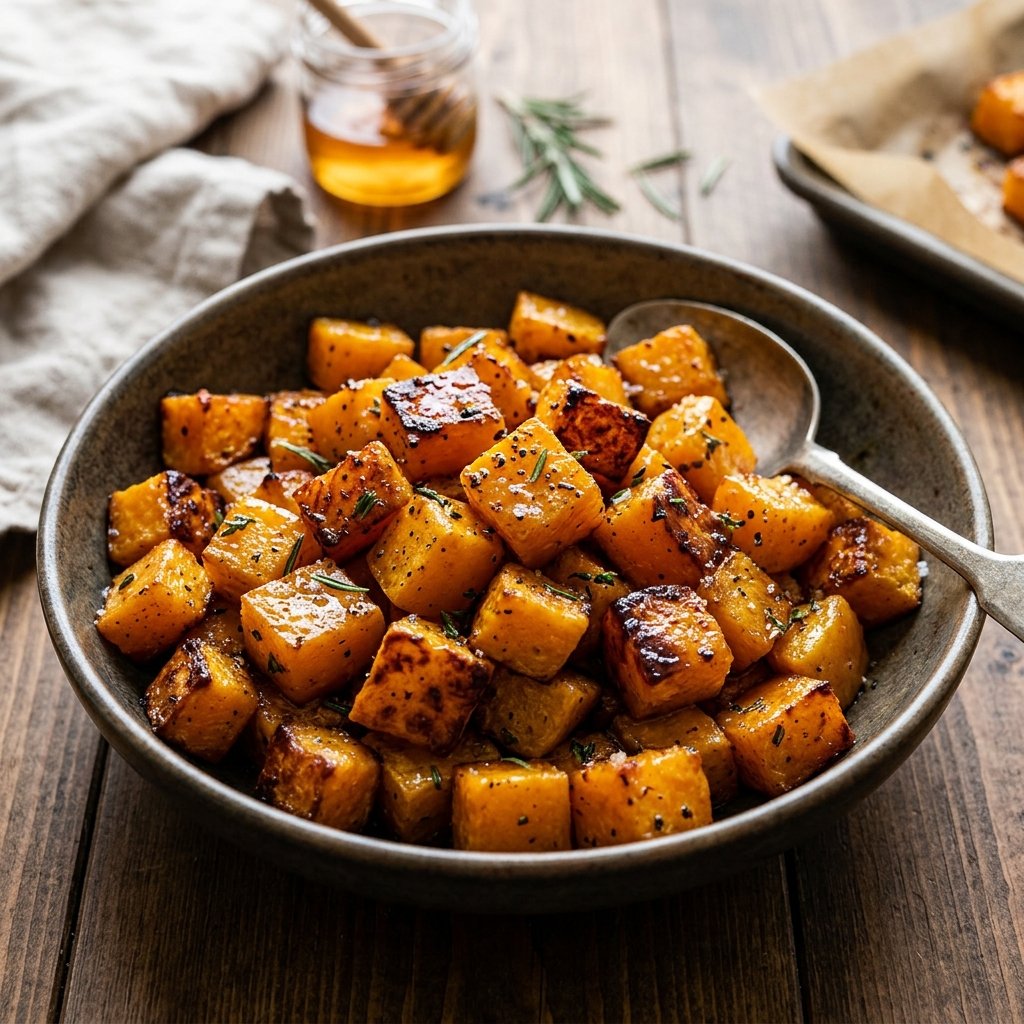
Butternut squash has a reputation for being a hassle, and it is easy to see why. It is heavy, slippery once peeled, and hard enough to make a dull knife stop halfway through. But once the squash is cut, honey roasted butternut squash cubes are one of the easiest side dishes you can make. A hot oven does almost all of the work, turning firm orange cubes into soft, sweet bites with dark caramelized corners, and a light honey glaze makes them taste like something more special than a weeknight vegetable.
Most of what goes wrong with roasted squash happens before the pan goes into the oven: uneven cubes, a crowded pan, or honey added too early so it burns before the squash is tender. This guide focuses on those details. You will learn how to break down a whole squash without fighting it, which cube size cooks the way you want, and exactly when the honey should go on. The recipe card with measurements is at the end.
What Makes These Different From Plain Roasted Squash
Plain roasted butternut squash with oil and salt is good. Add honey at the wrong moment and it becomes sticky, then bitter. Add it at the right moment and it becomes the best part of the dish. The method here uses two stages:
- A dry, hot first roast. The cubes go in with only olive oil, salt and pepper for 20 minutes at 425°F (220°C). Without sugar on the surface, they can brown properly on the bottom while the centers start to soften.
- A short glazed finish. A mixture of honey, melted butter and cinnamon gets tossed over the hot squash, which goes back in for 10 to 15 minutes. That is long enough for the honey to bubble and cling, but not long enough for it to scorch.
Honey browns at a lower temperature than plain table sugar because of its fructose content, so it darkens fast in a hot oven. Splitting the roast in two is the simplest way to get color on the squash and a glossy, not burnt, glaze. The same idea is behind the late glaze in our honey balsamic chicken sheet pan dinner.
How to Cut Butternut Squash Into Cubes Without the Struggle
Even cubes are the single biggest factor in how evenly your squash roasts. Here is a calm, safe way to get there.
Step 1: Make it stable
Put a damp paper towel under your cutting board so it cannot slide. Slice about 1/4 inch off the stem end and the bottom end of the squash. Now it has two flat sides and will stand upright without rolling.
Step 2: Soften the skin if needed
If the squash feels rock hard or your peeler skips across the skin, pierce it a few times with a fork and microwave it whole for 2 to 3 minutes. Let it cool enough to handle. The skin will peel much more easily and the flesh will still be firm enough to cube neatly.
Step 3: Peel with a Y-peeler
Stand the squash on its wide end and peel from top to bottom with a sturdy Y-shaped peeler. Keep going until you see bright orange flesh with no pale green streaks; that thin greenish layer under the skin stays tough after roasting.
Step 4: Separate the neck from the bulb
Lay the squash on its side and cut straight across where the narrow neck meets the round bottom. The neck is solid flesh and gives you the neatest cubes. The bulb holds the seeds.
Step 5: Seed, plank and cube
Halve the bulb and scrape out the seeds and stringy pulp with a sturdy metal spoon. Stand the neck on its flat end and cut it into 1-inch-thick planks, then cut the planks into 1-inch sticks and the sticks into cubes. Cut the bulb halves into 1-inch strips and then into pieces of about the same size. Some bulb pieces will be curved; that is fine as long as they are a similar thickness.
A medium 2 1/2- to 3-pound butternut squash usually gives about 6 cups of cubes, though it varies with the size of the seed cavity. Do not throw out the seeds: rinsed, dried and roasted with a little oil and salt, they make a crunchy topping, just like pumpkin seeds.
Shortcut: pre-cut squash
Pre-cubed butternut squash from the produce section works well in this recipe. Pre-cut pieces are often uneven, so take a minute to cut the largest ones in half. Pre-cut squash can also be wetter, so pat it dry with a kitchen towel before oiling; surface moisture is the enemy of browning.
Cube Size Changes Everything
The size you cut decides both the cooking time and the texture you end up with. Pick the size based on how you plan to use the squash.
| Cube size | Total time at 425°F | Texture | Best for |
|---|---|---|---|
| 1/2 inch | 18 to 22 minutes | Mostly caramelized, slightly chewy | Salads, grain bowls, tacos |
| 3/4 inch | 22 to 27 minutes | Browned outside, soft inside | Pasta, risotto toppings, meal prep |
| 1 inch | 30 to 35 minutes | Balanced: crisp corners, creamy centers | Side dishes, holiday tables |
| 1 1/2 inches | 40 to 45 minutes | Very creamy, less browning | Mashing, soups, purees |
For smaller cubes, add the honey glaze after about two-thirds of the total time rather than at the 20-minute mark, so it still gets its final 8 to 10 minutes without burning.
The Ingredients, Briefly
This is a short list on purpose. Butternut squash is the star, so choose one that feels heavy for its size, with matte, evenly tan skin and no soft spots. A long neck and small bulb means more usable flesh. Olive oil handles the first roast, and kosher salt and black pepper season the squash from the start so it does not taste flat under the sweet glaze.
The glaze is honey, melted butter and ground cinnamon, with an optional pinch of cayenne. Butter adds richness and helps the honey spread evenly; olive oil works if you want to keep the dish dairy-free. A mild clover or orange blossom honey gives clean sweetness, while a darker wildflower honey adds more depth. Fresh thyme and flaky salt at the end are optional, but the bit of salt crunch against the sweet glaze is worth it.
How to Make Honey Roasted Butternut Squash Cubes
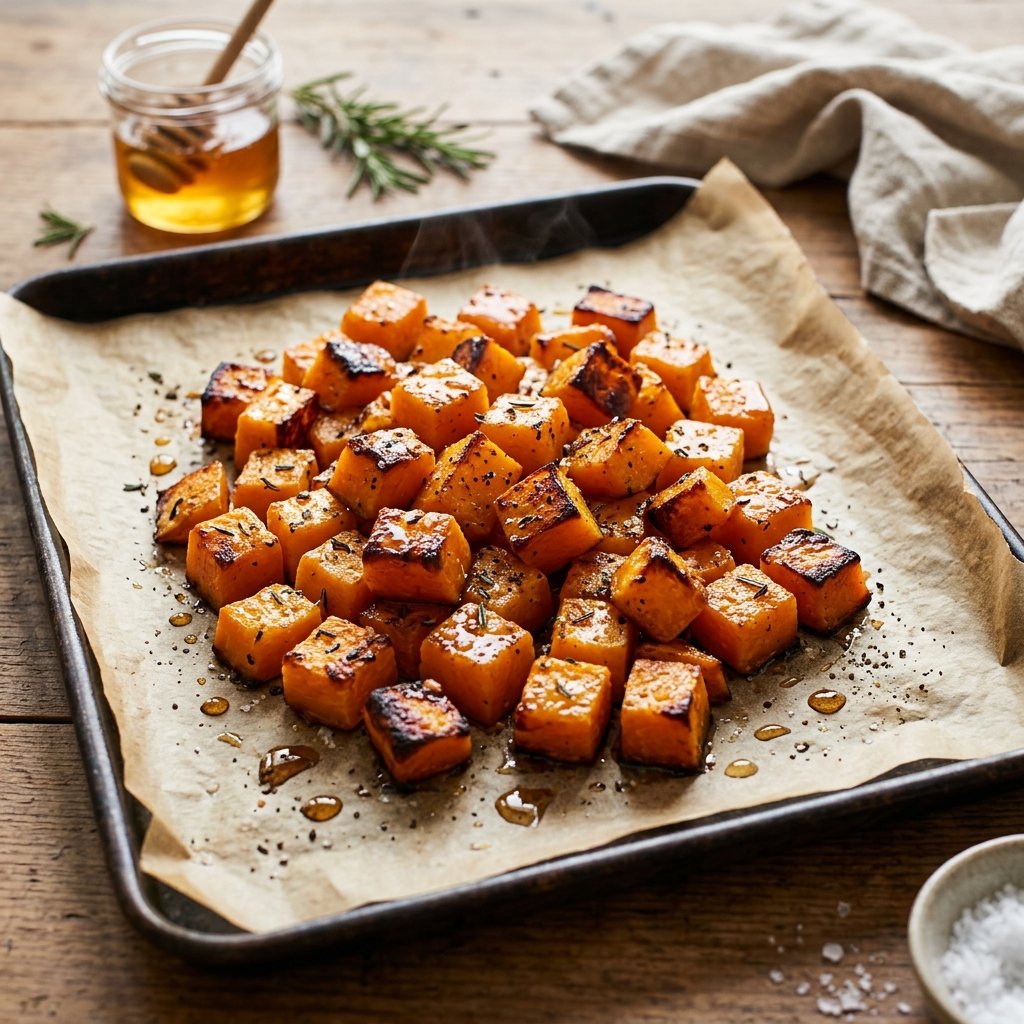
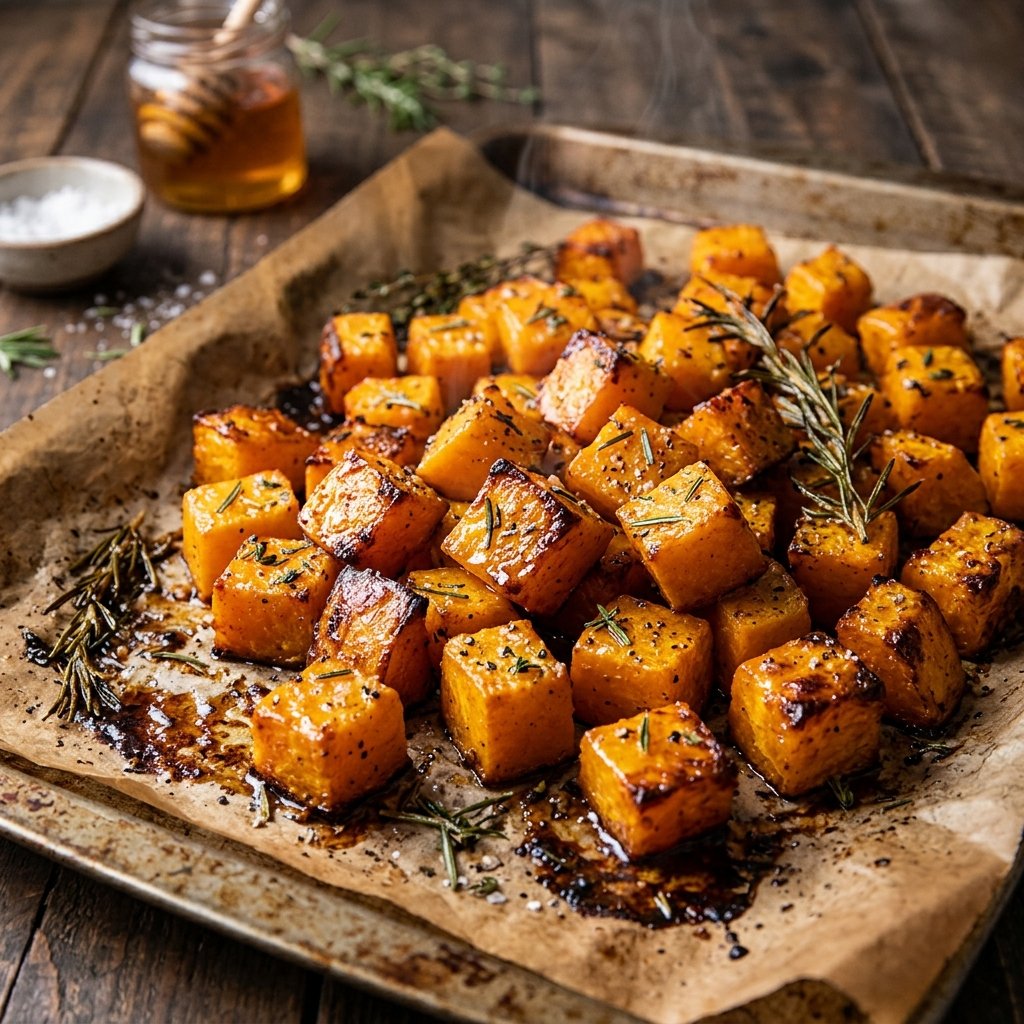
Heat the oven to 425°F with a rack in the center and line a large rimmed sheet pan with parchment. Parchment matters here: honey that drips onto a bare pan can burn onto the metal and leave a bitter taste.
Give the cubes room. Toss them with oil, salt and pepper directly on the pan and spread them out so they are not touching. One medium squash fits on an 18 x 13-inch half sheet pan. If you are doubling the recipe, use two pans and rotate them halfway through. Squash packed tightly together releases steam that has nowhere to go, and you end up with soft, pale cubes.
Leave them alone for the first 20 minutes. Do not stir. The side touching the hot pan needs uninterrupted contact to brown.
Glaze and flip. While the squash roasts, stir the honey, melted butter, cinnamon and cayenne together. Take the pan out, drizzle the glaze over the cubes, and use a thin spatula to toss and turn them so the browned side faces up and the glaze reaches every piece.
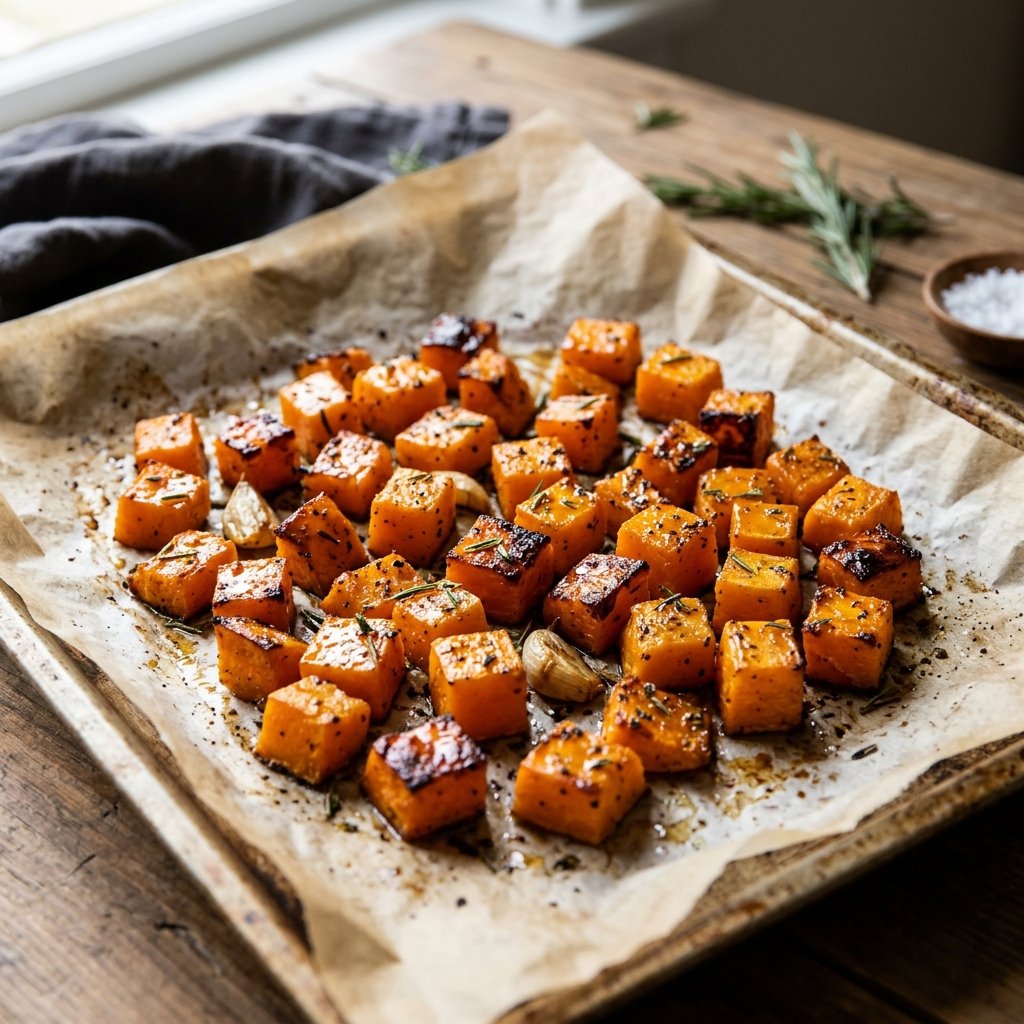
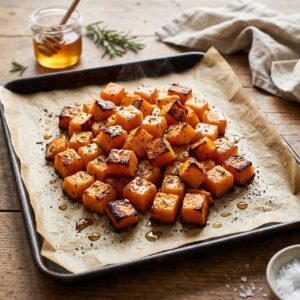
Finish and check. Roast another 10 to 15 minutes. The squash is done when a fork slides into the center of a cube with no resistance and the edges are deep golden to amber. A few dark corners are good; black spots mean it went a little long. Check at the 10-minute mark, because ovens vary and honey goes from caramelized to burnt quickly.
Rest briefly. Leave the squash on the pan for 2 to 3 minutes. The glaze firms up slightly as it cools, so it coats the cubes instead of pooling on the parchment.
Six Mistakes That Ruin Roasted Squash
- Uneven pieces. Tiny cubes burn while big chunks stay hard. Aim for one size, even if it takes an extra minute.
- A crowded pan. If the cubes touch, they steam. Use two pans rather than one overloaded pan.
- Too low a temperature. At 350°F the squash softens before it browns. 400°F to 425°F gives color and tenderness at the same time.
- Honey from the start. It darkens long before the squash is cooked through. Add it in the second half.
- Skipping salt. Sweet vegetables need salt even more than savory ones; without it the honey tastes one-dimensional.
- Wet squash. Rinsed or pre-cut squash should be patted dry before the oil goes on, or the moisture will keep the surface from browning.
Flavor Directions to Try
The basic honey cinnamon version is a classic, but the same two-stage method works with almost any glaze. Keep the honey amount the same and change what goes with it.
| Style | Add to the honey glaze | Finish with |
|---|---|---|
| Savory herb | 1 teaspoon chopped fresh rosemary, 1 small minced garlic clove (skip the cinnamon) | Grated Parmesan |
| Sweet and spicy | 1/4 teaspoon chipotle powder or a drizzle of hot honey | Lime zest |
| Maple pecan | Swap 1 tablespoon honey for maple syrup, add a pinch of nutmeg | Toasted chopped pecans |
| Balsamic | 1 tablespoon balsamic vinegar | Crumbled goat cheese |
| Warm spice | 1/4 teaspoon each ginger and smoked paprika | Toasted pumpkin seeds |
| Brown butter sage | Brown the butter first and add 4 chopped sage leaves | Flaky salt |
If you would rather brush on a ready-made glaze, our 5-minute honey glaze works here too; use about 3 tablespoons for one squash.
Ways to Use Honey Roasted Butternut Squash Cubes
As a side dish. They pair naturally with roast chicken, pork tenderloin, turkey and glazed ham, and they earn a place on a Thanksgiving or Christmas table next to green beans and stuffing.
In salads. Toss warm or room-temperature cubes with arugula or kale, dried cranberries, toasted pecans and crumbled feta or goat cheese, then dress with a simple vinaigrette. Our goat cheese recipe ideas include more ways to bring the two together.
In bowls and pasta. Add them to quinoa or farro bowls, fold them into pasta with brown butter and sage, or pile them on top of risotto just before serving.
For breakfast. Crisp leftover cubes in a skillet and serve them with fried eggs, or fold them into a frittata.
For little ones. Soft roasted squash cubes are a popular finger food for toddlers. Leave the honey off any portion for a baby under 12 months, since honey is not safe for infants that young.
Air Fryer Honey Roasted Butternut Squash
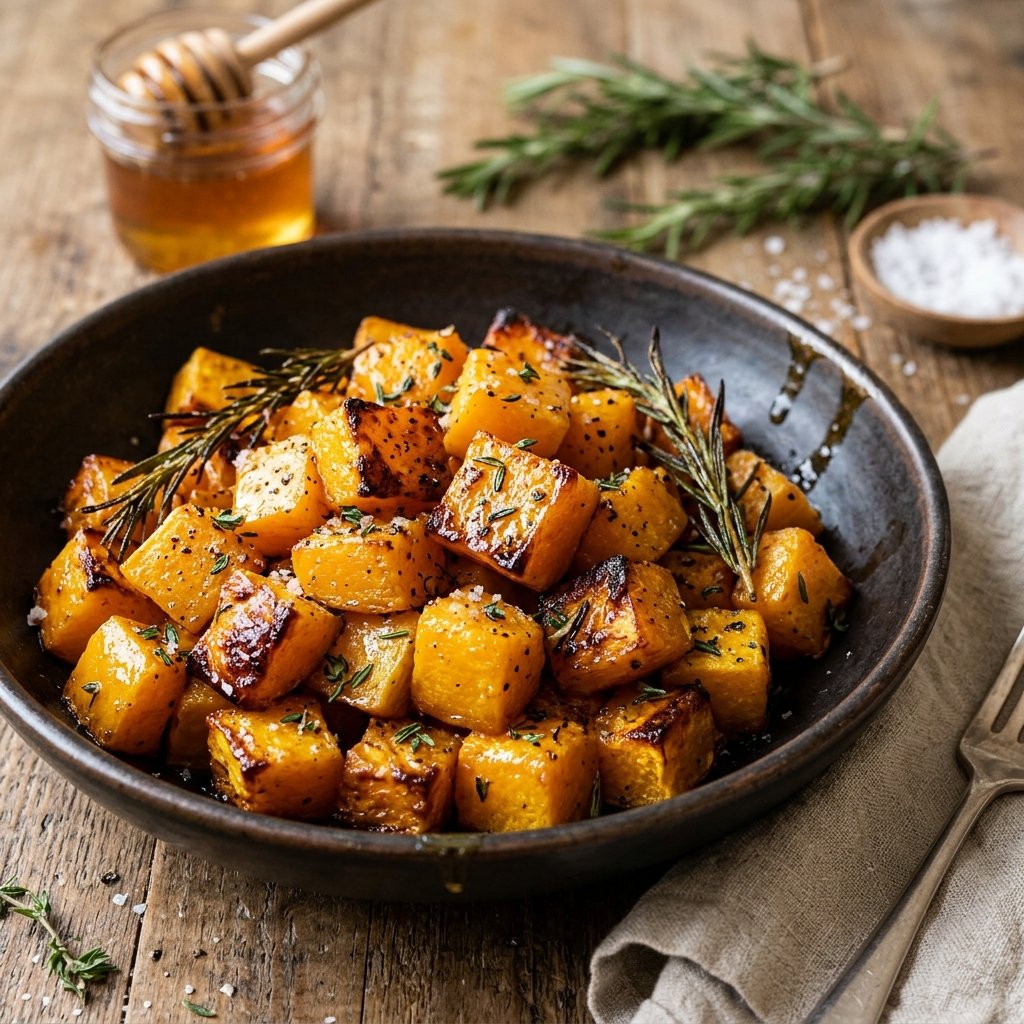
For a smaller batch, the air fryer works well. Toss 3 to 4 cups of 3/4-inch cubes with oil, salt and pepper and air fry at 400°F (205°C) for 12 minutes, shaking the basket halfway through. Toss with the honey glaze in a bowl, return them to the basket, and cook for another 3 to 5 minutes. Line the basket with a perforated parchment liner to keep the honey from sticking. If you enjoy air fryer squash, try our air fryer acorn squash as well.
Meal Prep, Storage and Reheating
Cut ahead. Raw butternut squash cubes keep in an airtight container in the refrigerator for 3 to 4 days. Pat them dry before roasting.
Leftovers. Cool roasted squash and refrigerate it within 2 hours of cooking, in line with the USDA’s guidance on leftovers and food safety. It keeps for 3 to 4 days in an airtight container.
Reheating. The microwave makes the cubes soft. To bring back the caramelized edges, spread them on a sheet pan at 400°F for 8 to 10 minutes, or air fry at 375°F for 4 to 5 minutes.
Freezing. Roasted squash can be frozen in a single layer, then bagged, for a few months. The texture softens after thawing, so frozen cubes are best used in soups, mashes or purees rather than as a crisp side.
A Quick Word on Nutrition
Butternut squash is naturally low in fat and a good source of fiber, and its deep orange color comes from beta-carotene, which the body converts to vitamin A. Three tablespoons of honey spread across six servings adds a modest amount of sugar per portion. For exact figures on raw or cooked butternut squash, the USDA’s FoodData Central database is the most reliable place to look up the numbers.
Questions People Ask About Roasted Butternut Squash Cubes
Do I have to peel butternut squash before roasting?
For cubes, yes. The skin is edible and softens when roasted, but on small cubes it stays chewy and keeps the glaze from reaching the flesh on that side. If you roast the squash in halves or thick wedges, leaving the skin on is fine.
What temperature is best for roasting butternut squash cubes?
425°F (220°C) gives the best balance of browning and tenderness for 1-inch cubes. 400°F also works, adding 5 to 10 minutes to the total time. Lower temperatures make the squash soft before it develops any color.
Can I use frozen butternut squash cubes?
You can, but expect less browning. Roast them straight from frozen (thawing makes them mushy) at 425°F, spread well apart, for about 25 minutes before adding the glaze, then 8 to 10 minutes more. Drain off any liquid that collects on the pan before glazing.
Why are my squash cubes mushy instead of caramelized?
Usually the pan was too crowded, the squash was wet, or the oven was not hot enough. Spread the cubes out with space between them, dry them well, and make sure the oven is fully preheated before the pan goes in.
Can I make honey roasted butternut squash ahead for a holiday?
Yes. Roast it up to a day ahead, refrigerate, then reheat on a sheet pan at 400°F for about 10 minutes just before serving. Add fresh thyme and flaky salt after reheating so they taste fresh.
What other squash can I roast this way?
Any dense winter squash works with this honey glaze and two-stage method, including kabocha, sugar pumpkin and red kuri. For more ideas, see our butterkin squash recipe and our candy roaster squash recipe.
Honey Roasted Butternut Squash Cubes Recipe Card
Here are the measurements and steps in a printable format. One medium squash makes about six side servings.
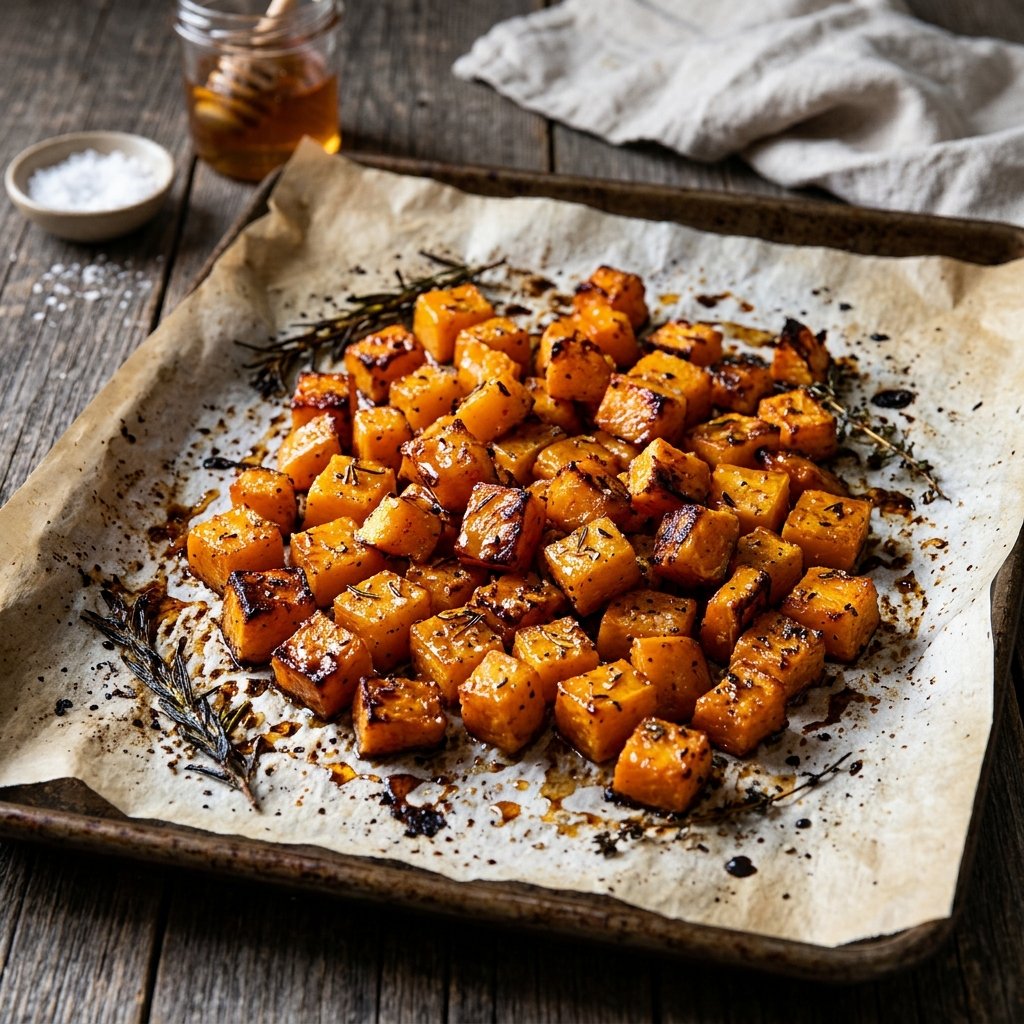
Honey Roasted Butternut Squash Cubes
Ingredients
Equipment
Method
- Place a rack in the center of the oven and heat it to 425°F (220°C). Line a large rimmed sheet pan with parchment paper.
- Trim both ends of the squash, peel it, cut the neck from the round bottom, halve the bottom and scoop out the seeds. Cut everything into even 1-inch cubes.

- Toss the cubes on the sheet pan with the olive oil, salt and pepper. Spread them in a single layer with a little space between pieces.
- Roast for 20 minutes, until the undersides are starting to brown.
- Meanwhile, stir together the honey, melted butter, cinnamon and cayenne. Drizzle it over the squash and toss gently with a spatula, turning the cubes over.
- Roast for 10 to 15 minutes more, until the cubes are fork-tender and the edges are caramelized. Watch the last few minutes closely, since honey darkens quickly.
- Let the squash rest on the pan for 2 to 3 minutes so the glaze sets, then sprinkle with thyme and flaky salt and serve warm.
Notes
- Cube size: 1-inch cubes take about 30 to 35 minutes in total. Smaller 3/4-inch cubes need about 25 minutes; 1 1/2-inch chunks need 40 to 45.
- Why the honey goes on later: Honey browns fast at 425°F. Adding it after the first 20 minutes gives caramelized edges instead of burnt ones.
- Crowding: If the cubes touch, use two pans. Crowded squash steams instead of browning.
- Vegan option: Use olive oil instead of butter and maple syrup instead of honey.
- Storage: Refrigerate leftovers in an airtight container for 3 to 4 days. Reheat at 400°F for 8 to 10 minutes or in an air fryer at 375°F for 4 to 5 minutes.
- Honey safety: Do not serve honey to babies under 12 months old.