
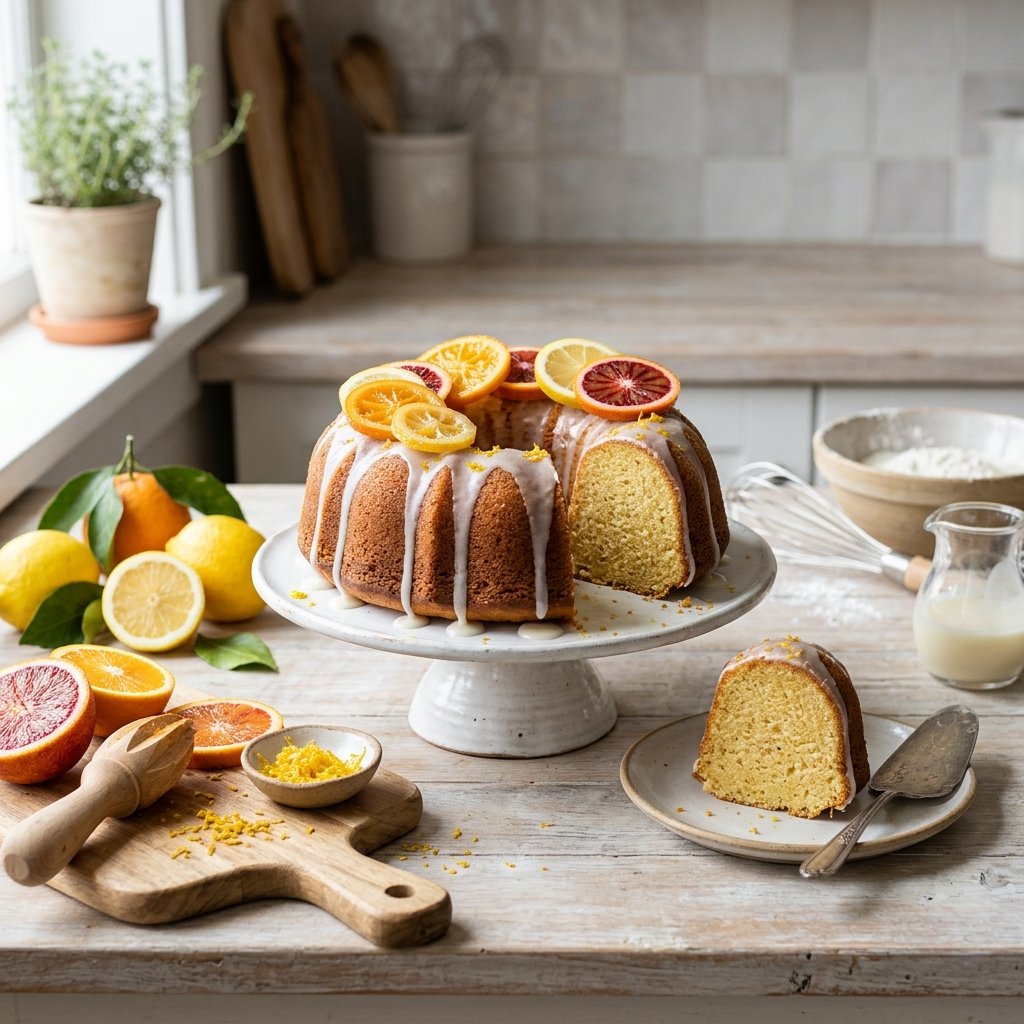
This citrus cake recipe is the one to bake when the fruit bowl is full of lemons, oranges and limes and the weather is gray. It is a tall, buttery Bundt with zest from three kinds of citrus in the batter, a warm honey-citrus syrup brushed over the cake as soon as it comes out of the oven, and a sharp glaze that sets into a thin, crackly shell.
The method is straightforward: rub the zest into the sugar, cream it with butter, then add sour cream and fresh juice. The result is a moist, fine crumb that tastes clearly of citrus rather than vaguely sweet. If you don’t own a Bundt pan, there are directions below for round, sheet and loaf pans too.
- Why This Citrus Cake Works
- Choosing Your Citrus
- Ingredients for the Citrus Cake
- How to Make Citrus Cake, Step by Step
- Getting the Glaze Right
- Baking It in a Different Pan
- Troubleshooting Your Citrus Cake
- Serving Ideas
- Make Ahead, Storage and Freezing
- Citrus Cake Recipe Card From OohDish!
- Citrus Cake Recipe FAQ
- More Citrus Recipes to Try
Why This Citrus Cake Works
- Zest rubbed into sugar. The sugar crystals release the oils in the zest, so the flavor goes all the way through the cake instead of sitting in little flecks.
- Three citrus, one balance. Lemon brings the sharpness, orange the sweetness and perfume, and lime a bright, slightly floral edge. Together they taste like “citrus” rather than one fruit.
- Sour cream for moisture. Its fat and acidity keep a large Bundt tender for days and help the baking soda give a soft, even rise.
- A honey-citrus soak. Brushing warm syrup over the hot cake adds flavor right under the crust and keeps the edges from drying out.
- A glaze made only with juice. No milk or water, so the topping stays tart and sets with a light crackle.
Choosing Your Citrus
You can make this cake with whatever is in season, but the flavor changes with the fruit. A good rule: always keep at least half of the zest and juice from lemon or lime, because sweet oranges on their own taste faint once baked.
| Citrus | What it adds | How to use it here |
|---|---|---|
| Lemon | Clean, sharp acidity | Keep it in every version; it carries the flavor |
| Navel orange | Sweetness and aroma | Main juice in the batter and the soak |
| Lime | Bright, floral bite | 1 lime for zest and a tablespoon of juice |
| Blood orange | Berry-like flavor, pink color | Use the juice in the glaze for a pale pink finish |
| Meyer lemon | Softer, almost honeyed | Swap for regular lemon and add 1 extra tablespoon of lime juice |
| Grapefruit | Bitter-sweet edge | Use up to 2 tablespoons of juice; pair with lemon |
Because you are eating the zest, wash the fruit well in warm water and dry it before grating. Unwaxed or organic citrus is a good choice if you can find it.
Ingredients for the Citrus Cake
Weights are given for the ingredients where accuracy matters most. Have the butter, eggs and sour cream at room temperature, about 65 to 70°F, so the batter stays smooth.
For the cake
| Ingredient | Amount |
|---|---|
| All-purpose flour | 3 cups (375 g), spooned and leveled |
| Baking powder | 1 teaspoon |
| Baking soda | ½ teaspoon |
| Fine salt | 1 teaspoon |
| Unsalted butter, softened | 1 cup (2 sticks, 226 g) |
| Granulated sugar | 2 cups (400 g) |
| Finely grated citrus zest | 2 tablespoons (about 1 orange, 2 lemons and 1 lime) |
| Large eggs, room temperature | 4 |
| Vanilla extract | 1 teaspoon |
| Sour cream or full-fat Greek yogurt | ¾ cup (180 g) |
| Fresh orange juice | ¼ cup (60 ml) |
| Fresh lemon juice | 2 tablespoons |
| Fresh lime juice | 1 tablespoon |
For the honey-citrus soak
3 tablespoons honey, 3 tablespoons fresh orange juice and 1 tablespoon fresh lemon juice. A mild honey such as clover or orange blossom lets the fruit lead; a darker honey gives a deeper, caramel note.
For the citrus glaze
1½ cups (180 g) powdered sugar, 2 to 3 tablespoons fresh citrus juice (lemon and lime, or blood orange), ½ teaspoon finely grated zest and a tiny pinch of salt. Thin orange, lemon and lime slices for decorating are optional.
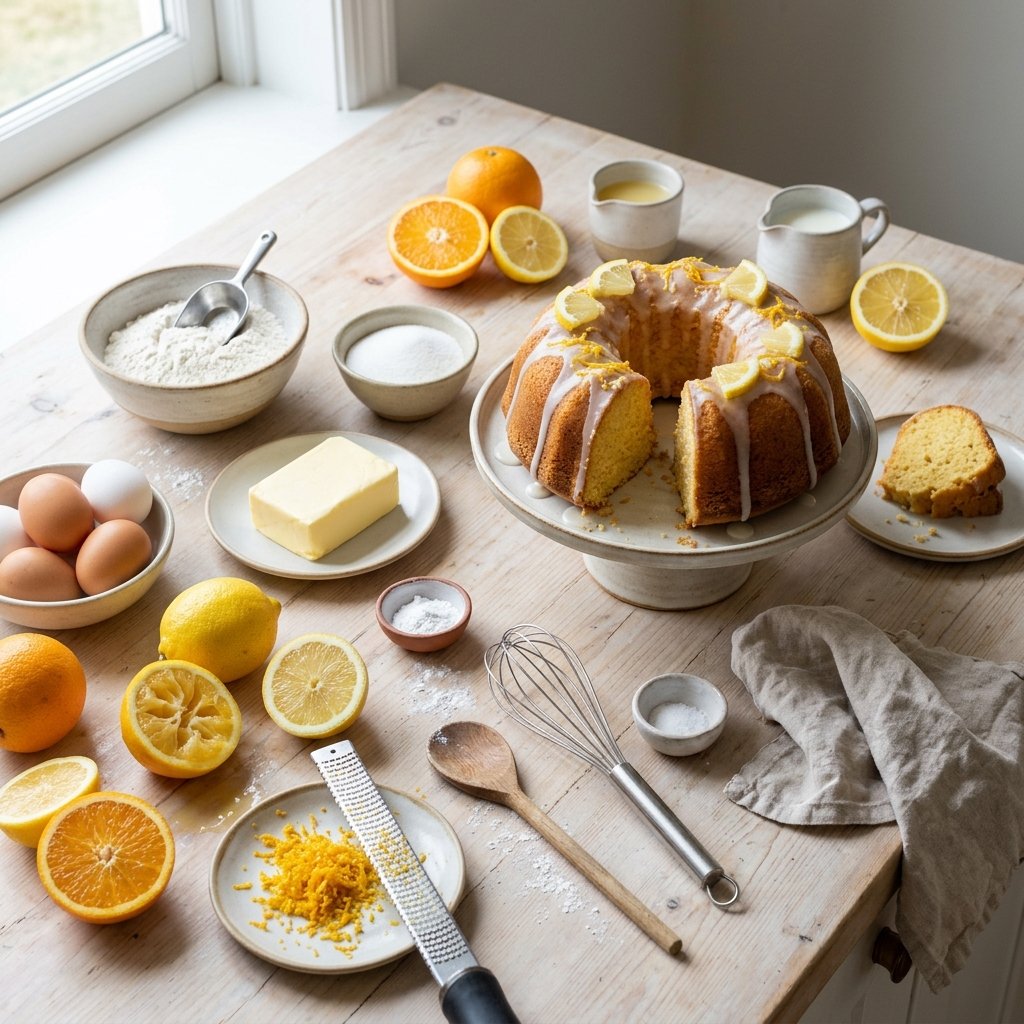
How to Make Citrus Cake, Step by Step
1. Prepare the pan and oven
Heat the oven to 350°F (175°C) with a rack in the lower-middle position. Grease a 10- to 12-cup Bundt pan thoroughly with baking spray that contains flour, or brush it with soft shortening and dust with flour, getting into every ridge. King Arthur Baking has a useful guide on how to prevent Bundt cakes from sticking if your pan is very detailed.
2. Whisk the dry ingredients
In a medium bowl, whisk the flour, baking powder, baking soda and salt. Set aside.
3. Rub the zest into the sugar
Put the sugar and zest in the bowl of a stand mixer (or a large bowl) and rub them together with your fingertips for about a minute, until the sugar looks damp and smells strongly of citrus. This small step makes the biggest difference to flavor.
4. Cream the butter and citrus sugar
Add the softened butter and beat on medium-high for 3 to 4 minutes, scraping the bowl once or twice, until the mixture is pale and fluffy. Don’t rush this; the air you beat in now helps the cake rise.
5. Add the eggs and vanilla
Beat in the eggs one at a time, letting each one disappear before adding the next, then mix in the vanilla.
6. Combine the sour cream and juices
In a small bowl, stir the sour cream with the orange, lemon and lime juice. It may look slightly curdled; that is normal.
7. Alternate dry and wet
With the mixer on low, add the flour mixture in three parts, alternating with the sour cream mixture in two parts, starting and ending with flour. Mix only until no streaks of flour remain, then finish by hand with a spatula. The batter will be thick and smooth.
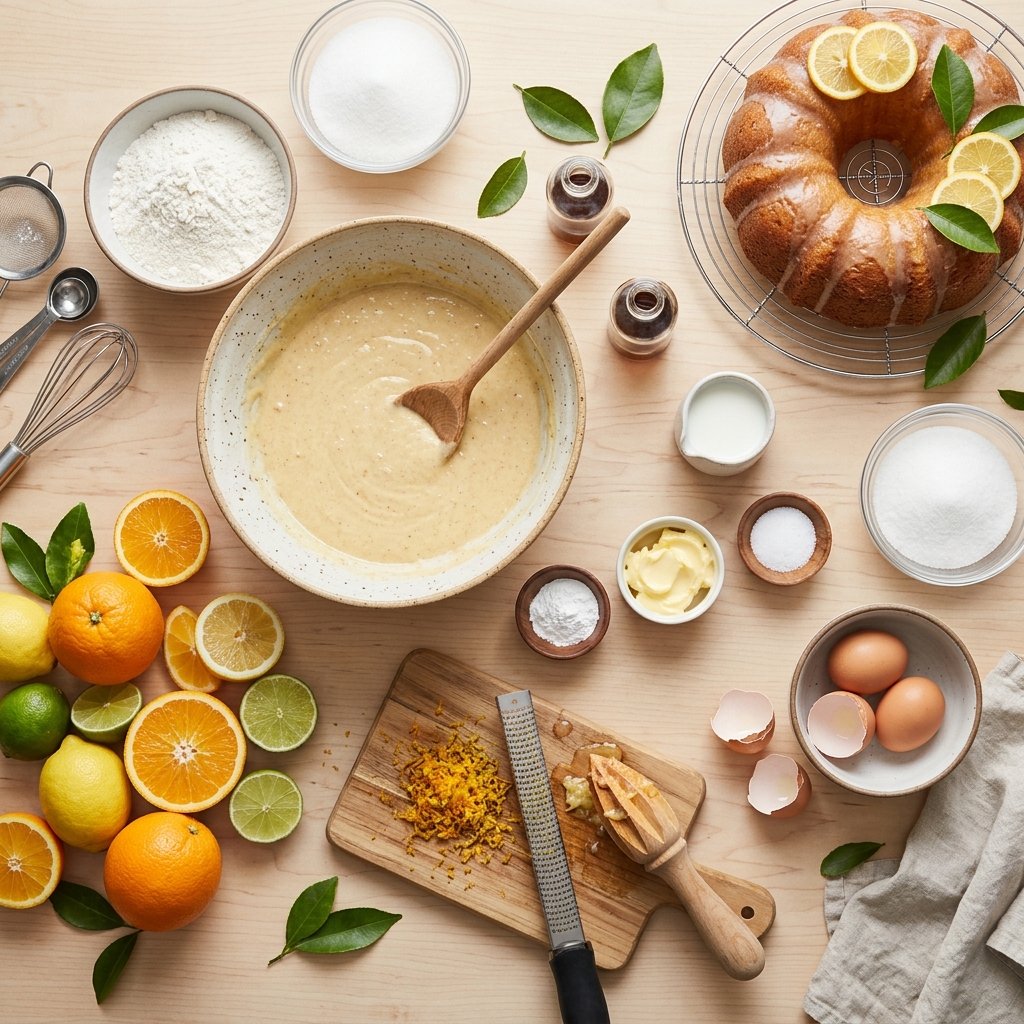
8. Bake
Spoon the batter into the pan, smooth the top and tap the pan firmly on the counter a few times to release air pockets. Bake for 55 to 65 minutes, until the top springs back and a skewer pushed into the thickest part comes out clean or with a few moist crumbs. If you use a thermometer, the center should read about 205 to 210°F.
9. Soak while warm
While the cake bakes, warm the honey with the orange and lemon juice in a small saucepan or the microwave just until the honey dissolves. Let the cake rest in the pan for 10 minutes, then turn it out onto a rack set over a tray. Poke the warm cake all over with a skewer and brush on all the syrup, a little at a time, so it soaks in.
10. Cool, then glaze
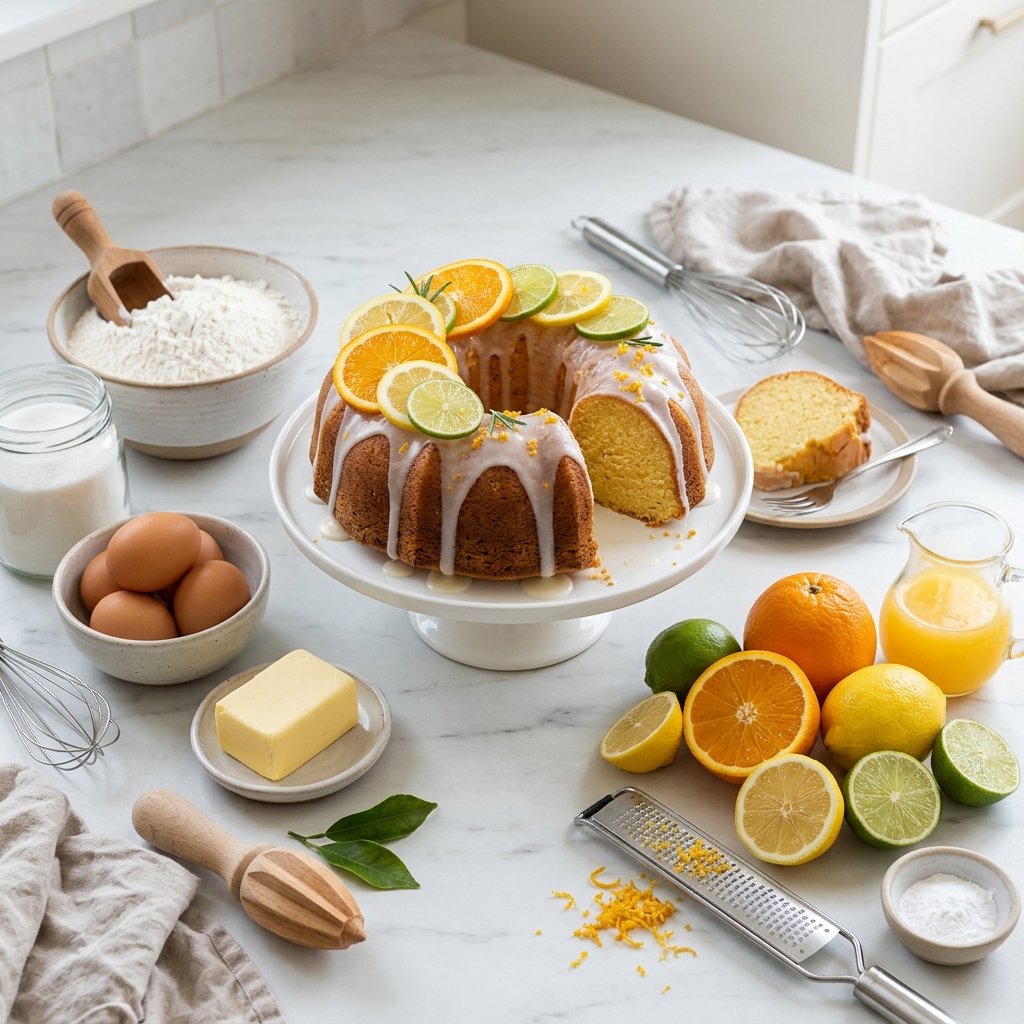
Let the cake cool completely, about 1½ hours. Whisk the powdered sugar with 2 tablespoons of juice, the zest and salt, adding more juice a teaspoon at a time until the glaze falls from the whisk in a thick ribbon. Spoon it over the top so it runs down the sides, then add citrus slices before it sets.
Getting the Glaze Right
Glaze consistency is the difference between neat drips and a puddle on the plate. Use this as a guide with 1½ cups of powdered sugar:
| Juice added | Texture | Best for |
|---|---|---|
| 2 tablespoons | Thick, slow-moving | Defined drips down the sides of a Bundt |
| 2½ tablespoons | Pourable ribbon | An even coat on a round or sheet cake |
| 3 tablespoons | Thin and translucent | A light, crackly shell over the whole cake |
Always glaze a completely cool cake. On a warm cake the sugar melts and soaks in, and the white finish disappears.
Baking It in a Different Pan
The same batter works in other pans. Grease and line flat pans with parchment, fill them no more than two-thirds full, and start checking 5 minutes before the shortest time.
| Pan | Bake time at 350°F | Notes |
|---|---|---|
| 10- to 12-cup Bundt | 55 to 65 minutes | Classic tall cake, serves about 14 |
| Two 9-inch round pans | 30 to 35 minutes | Stack with whipped cream or serve as two single-layer cakes |
| 9 x 13-inch pan | 35 to 40 minutes | Easiest for crowds; glaze in the pan |
| Two 9 x 5-inch loaf pans | 50 to 60 minutes | Freeze one for later |
For a smaller everyday cake, our glazed lemon loaf cake makes a single loaf with a similar fine crumb.
Troubleshooting Your Citrus Cake
| Problem | Likely cause | Fix |
|---|---|---|
| Stuck in the pan | Pan not greased in every groove, or cake left too long | Grease thoroughly, flour, and turn out after 10 to 15 minutes |
| Dense or heavy crumb | Cold ingredients or under-creamed butter | Use room-temperature ingredients and cream for a full 3 to 4 minutes |
| Weak citrus flavor | Zest only stirred in, or mostly orange | Rub zest into the sugar and keep lemon or lime in the mix |
| Sunken middle | Underbaked or oven door opened early | Bake until a skewer is clean; check with a thermometer |
| Bitter taste | White pith grated with the zest | Grate only the colored outer layer |
| Glaze soaked in | Cake still warm | Wait until the cake is completely cool |
Serving Ideas
- Plain, with tea or coffee: the soak and glaze make it complete on its own.
- With something creamy: a spoonful of mascarpone whipped cream or Greek yogurt sweetened with honey balances the tartness.
- With fresh fruit: segments of orange and blood orange, or a few berries.
- As part of a citrus dessert table: pair it with a citrus pavlova with lemon curd and a jug of honey lemonade.
Make Ahead, Storage and Freezing
- Make ahead: bake and soak the cake up to a day before serving, wrap it once cool and glaze it a few hours before guests arrive.
- Room temperature: keep the glazed cake under a cake dome or loosely covered for up to 3 days. The soak keeps it moist.
- Refrigerator: in a warm kitchen, refrigerate covered for up to 5 days and let slices come to room temperature before serving.
- Freezer: freeze the soaked but unglazed cake, or individual slices, wrapped tightly in plastic and foil for up to 3 months. Thaw overnight in the fridge, then glaze.
Citrus Cake Recipe Card From OohDish!

Citrus Cake Recipe (Glazed Citrus Bundt Cake)
Equipment
- 10- to 12-cup Bundt pan
- Stand mixer or hand mixer
- Microplane zester
- Citrus juicer
- Mixing bowls
- Wire cooling rack
- Pastry brush
Ingredients
Cake
- 3 cups all-purpose flour 375 g, spooned and leveled
- 1 teaspoon baking powder
- ½ teaspoon baking soda
- 1 teaspoon fine salt
- 1 cup unsalted butter 2 sticks (226 g), softened
- 2 cups granulated sugar 400 g
- 2 tablespoons finely grated citrus zest from about 1 orange, 2 lemons and 1 lime
- 4 large eggs room temperature
- 1 teaspoon vanilla extract
- ¾ cup sour cream 180 g, or full-fat Greek yogurt, room temperature
- ¼ cup fresh orange juice
- 2 tablespoons fresh lemon juice
- 1 tablespoon fresh lime juice
Honey-citrus soak
- 3 tablespoons honey mild, such as clover or orange blossom
- 3 tablespoons fresh orange juice
- 1 tablespoon fresh lemon juice
Citrus glaze
- 1½ cups powdered sugar 180 g
- 2-3 tablespoons fresh citrus juice lemon and lime, or blood orange
- ½ teaspoon finely grated citrus zest
- 1 pinch salt
- thin orange, lemon and lime slices optional, for decorating
Instructions
- Heat the oven to 350°F (175°C) with a rack in the lower-middle position. Thoroughly grease a 10- to 12-cup Bundt pan with baking spray containing flour, or brush with shortening and dust with flour.
- Whisk the flour, baking powder, baking soda and salt in a medium bowl.
- Rub the sugar and citrus zest together with your fingertips for about 1 minute, until fragrant and slightly damp.
- Add the softened butter and beat on medium-high for 3 to 4 minutes until pale and fluffy, scraping the bowl as needed.
- Beat in the eggs one at a time, then the vanilla.
- Stir the sour cream with the orange, lemon and lime juice.
- On low speed, add the flour mixture in three parts, alternating with the sour cream mixture in two parts, beginning and ending with flour. Mix just until combined.

- Spread the batter in the pan and tap it on the counter. Bake 55 to 65 minutes, until a skewer in the thickest part comes out clean or with a few moist crumbs (about 205 to 210°F inside).
- Warm the honey with the orange and lemon juice until dissolved. Cool the cake in the pan for 10 minutes, turn it out onto a rack, poke all over with a skewer and brush on all the syrup.
- Cool completely, about 1½ hours. Whisk the powdered sugar with 2 tablespoons juice, the zest and salt, adding juice a teaspoon at a time until thick but pourable. Spoon over the cake and decorate with citrus slices.


Notes
- Use room-temperature butter, eggs and sour cream for a smooth batter.
- Keep at least half of the zest and juice from lemon or lime; orange alone tastes faint once baked.
- Other pans: two 9-inch rounds 30 to 35 minutes; 9 x 13-inch pan 35 to 40 minutes; two 9 x 5-inch loaf pans 50 to 60 minutes, all at 350°F.
- Store covered at room temperature up to 3 days, or freeze the unglazed cake up to 3 months.
- Calories are an estimate per slice, calculated from standard ingredient values.
Citrus Cake Recipe FAQ
Can I use bottled juice?
Fresh juice tastes noticeably brighter, and you need the fruit for the zest anyway. If you must, bottled orange juice works in the batter, but use fresh lemon or lime for the glaze.
Can I make this citrus cake with oil instead of butter?
This recipe relies on creaming butter and sugar for its lift, so swapping in oil changes the texture. If you want an oil-based cake, look for a recipe written for olive oil, which is mixed by hand rather than creamed.
How much zest do I get from one fruit?
Roughly 1 tablespoon from a large orange, 2 to 3 teaspoons from a lemon and 1 to 2 teaspoons from a lime, depending on size. Grate before juicing; it is much easier.
Can I skip the honey soak?
Yes. The cake is still moist without it, though the soak adds flavor right under the crust. You can replace the honey with 3 tablespoons of sugar warmed with the juice until dissolved.
Can I use regular yogurt instead of sour cream?
Use full-fat Greek yogurt for the same thickness. Regular yogurt is thinner, so reduce the orange juice in the batter by 1 tablespoon.
Is this the same as a lemon cake?
It is close, but the mix of orange and lime makes it rounder and more fragrant. For a lemon-and-honey version, try our honey and lemon cake.