
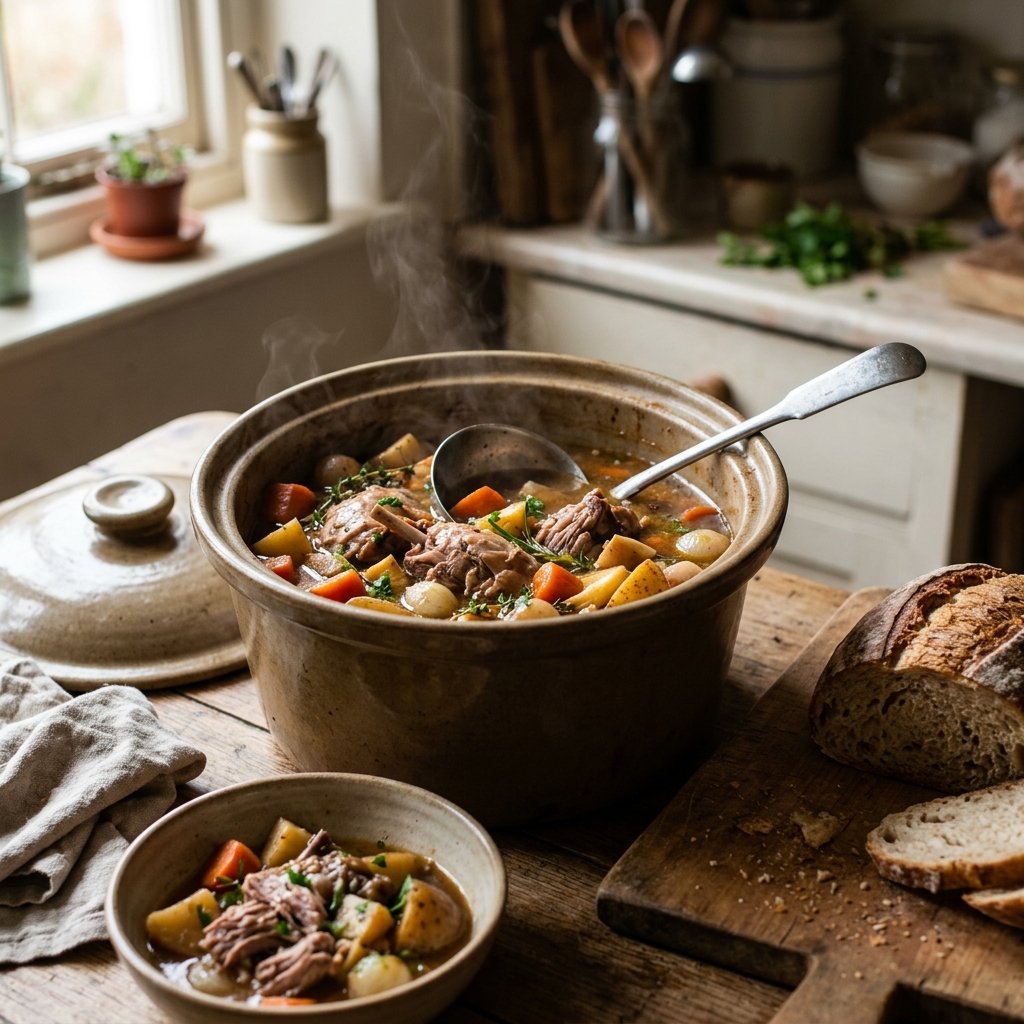
This crock pot rabbit recipe turns a lean, mild meat into something fork-tender and deeply savory, with almost no hands-on work. A whole rabbit simmers for hours in white wine, chicken broth, Dijon mustard, thyme, and vegetables until the meat slides off the bone, and the cooking liquid becomes a light sauce you can spoon over everything.
Rabbit has a reputation for being tricky, and it is easy to see why. It is very lean, so it dries out if it is cooked carelessly, and it has a lot of small bones that surprise people. But in a slow cooker it behaves well, as long as you get a few basics right: thaw it safely, cut it into even pieces, keep enough liquid in the pot, and know which cut cooks fastest. This guide covers those details and a few ways to change the dish. If you want the quantities first, jump to the recipe.
Why Rabbit Works So Well in a Slow Cooker
Rabbit is a lean, fine-grained white meat with a mild flavor that sits somewhere between chicken and the darkest parts of a turkey. Because there is little fat or marbling, quick, high-heat cooking often leaves it dry and chewy. Gentle moist heat does the opposite. Over several hours, the connective tissue in the legs breaks down, the meat softens, and it soaks up whatever it is cooked in.
That is what a slow cooker is built for. The lid traps steam, the temperature stays low and steady, and you do not have to watch a pot on the stove. This crock pot rabbit recipe leans on that, using a modest amount of liquid, a few aromatics, and time. If you want a second set of ideas for the same appliance, our guide to rabbit recipes for the slow cooker covers other flavor directions.
Food Safety Before You Start
These points matter more with rabbit than with many other meats, so read them first.
- Thaw it in the refrigerator. Do not put frozen rabbit in a slow cooker. The USDA’s rabbit guidance specifically says to thaw it first, and never at room temperature. A whole rabbit usually needs a full day in the refrigerator.
- Cook it to at least 160°F (71°C). That is the figure in the USDA’s safe minimum temperature chart, which lists rabbit, wild or farm-raised, at 160°F. After hours in a slow cooker it will be well past that, but check the thickest part of a hind leg with a thermometer anyway.
- Use a cooker that works properly. Clemson’s slow cooker food safety guide explains that a cooker should heat quickly enough to keep food out of the 40 to 140°F danger zone. Do not use a cooker that runs cool, and don’t lift the lid more than you need to.
- Wild rabbit needs extra care. If you are cooking rabbit you hunted yourself, wear gloves when handling it raw and cook it thoroughly. Wild rabbit is also leaner and tougher than farm-raised rabbit, so expect to add cooking time.
Buying and Preparing the Rabbit
What to buy. Farm-raised rabbit is the easiest to find and the most consistent. It is usually sold frozen, whole, in the 2½ to 3½ pound range, at specialty butchers, some supermarkets, and farmers’ markets. One rabbit feeds 4 to 5 people, though the bones reduce the yield, so plan on about three-quarters of a pound of rabbit per person.
How to cut it. A butcher will cut a rabbit into pieces for you, and it is worth asking. If you do it yourself, aim for 8 pieces: two hind legs, two front legs, and the loin (the saddle) cut crosswise into 2 or 3 pieces, plus the rib section. The hind legs are the meatiest and the toughest. The saddle is the leanest and the most tender. That difference matters for timing, which comes up below.
About the bones. Rabbit has fine, thin bones, especially in the ribs. Warn your guests, and if you want to be safe, pull the meat off the bones before serving.
To brine or not to brine. Farm-raised rabbit does not need it. For wild rabbit, a brief salt-water soak in the refrigerator can help. Our brine for deer meat shows the general technique for lean game.
Your Day With the Crock Pot Rabbit Recipe
This is easiest to think of as three short stages spread across a day.
The night before (5 minutes). Move the frozen rabbit from the freezer to the refrigerator, on a plate or in a container so it cannot drip onto other food.
In the morning (25 minutes). Pat the rabbit dry, dredge it in seasoned flour, and brown it in a skillet. Slice the vegetables, load the slow cooker, and set it going. If you are short on time, you can skip the browning, though the sauce will be paler and less rich.
At dinner time (15 minutes). Lift out the rabbit and vegetables, thicken the cooking liquid, and finish it with a little mustard, cream, or lemon.
Crock Pot Rabbit Recipe
This crock pot rabbit recipe serves 4 to 5. Prep time: 25 minutes. Cook time: 6 to 7 hours on low, or 3½ to 4½ hours on high. Use a 5- to 6-quart slow cooker.
Ingredients
- 1 whole rabbit (3 to 3½ lb / 1.4 to 1.6 kg), thawed and cut into 8 pieces
- ½ cup (65 g) all-purpose flour
- 1 teaspoon kosher salt, plus more to taste
- ½ teaspoon black pepper
- 2 tablespoons olive oil
- 1 tablespoon butter
- 1 large onion, sliced
- 3 carrots, cut into 1½-inch (4 cm) chunks
- 2 celery ribs, sliced
- 4 cloves garlic, smashed
- 1 lb (450 g) baby potatoes, halved (optional)
- 8 oz (225 g) cremini mushrooms, halved (optional)
- ½ cup (120 ml) dry white wine (or an extra ½ cup of broth plus 1 tablespoon of lemon juice)
- 1 cup (240 ml) low-sodium chicken broth
- 2 tablespoons Dijon mustard
- 4 sprigs fresh thyme
- 1 sprig fresh rosemary
- 2 bay leaves
- 1 tablespoon cornstarch mixed with 2 tablespoons cold water (to thicken)
- Optional: ¼ cup (60 ml) heavy cream or crème fraîche, 1 teaspoon honey
- Chopped fresh parsley and lemon wedges, to serve
Method
- Prep the rabbit. Pat the pieces very dry with paper towels. Mix the flour, salt, and pepper in a shallow dish and dredge the rabbit, shaking off the excess.
- Brown it. Heat the oil and butter in a large skillet over medium-high heat. Brown the rabbit in batches, about 2 to 3 minutes per side, until golden. Do not crowd the pan. Move the pieces to a plate.
- Build the base. Layer the onion, carrots, celery, potatoes, and mushrooms (if using) in the bottom of the slow cooker. Scatter in the garlic.
- Add the rabbit. Nestle the hind legs and front legs on top of the vegetables. Place the saddle pieces on top, where they will get slightly less direct heat. Tuck in the thyme, rosemary, and bay leaves.
- Deglaze. Pour the wine into the hot skillet and scrape up the browned bits for about a minute. Stir in the broth and mustard, then pour the mixture over the rabbit. The liquid should come about halfway up the meat. Do not submerge it.
- Cook. Cover and cook on low for 6 to 7 hours, or on high for 3½ to 4½ hours, until the meat pulls easily from the bone. If your cooker runs hot, the saddle pieces may be done first, so check them at the early end of the range and lift them out to keep warm if needed. Confirm that the thickest part of a hind leg reads at least 160°F (71°C).
- Rest and skim. Transfer the rabbit and vegetables to a warm platter and discard the herb stems and bay leaves. Skim any fat from the surface of the liquid.
- Thicken. Stir the cornstarch slurry into the liquid, turn the cooker to high, and cook uncovered for 10 to 15 minutes until it coats a spoon. Stir in the cream and honey if using. Taste and adjust with salt, pepper, and a squeeze of lemon.
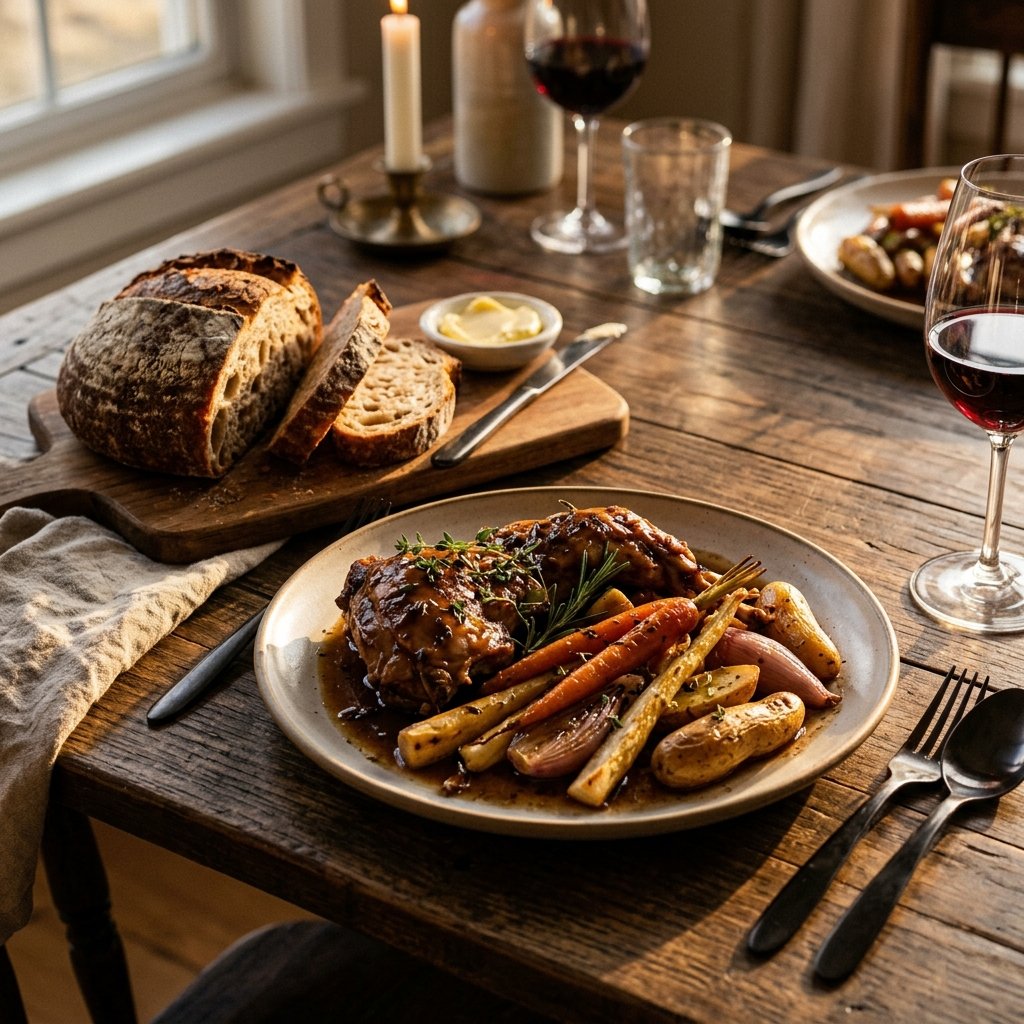
- Serve. Spoon the sauce over the rabbit and vegetables and scatter with parsley.
Three Dinners From One Rabbit
Once you have the base method, it is easy to take the same crock pot rabbit recipe in different directions.
1. Rabbit stew with Dijon and thyme (the recipe above)
This is the classic. White wine, mustard, thyme, and vegetables give a light but savory sauce. It is a good choice if you want something comforting without being heavy.
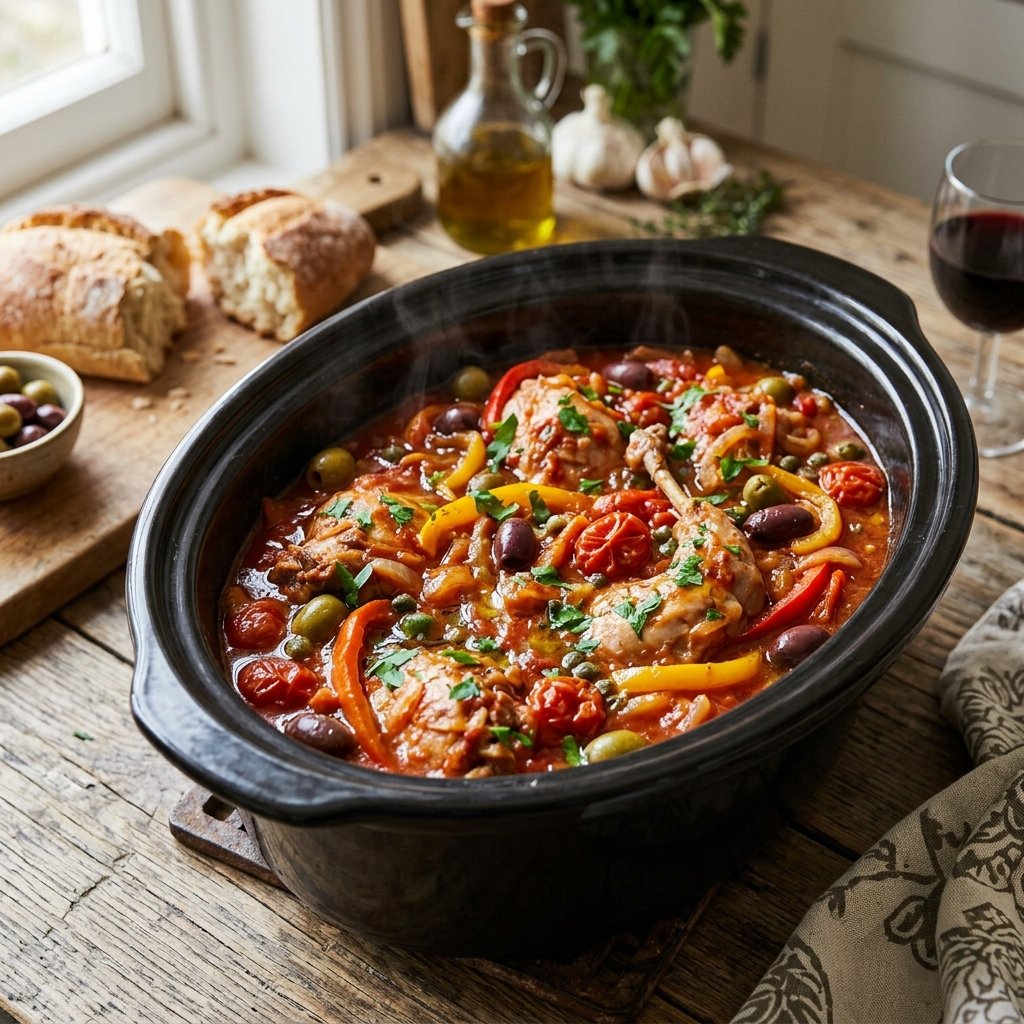
2. Rabbit cacciatore
Swap the broth and mustard for 1 can (14.5 oz) of diced tomatoes with their juice and ½ cup of the wine. Add 1 sliced bell pepper, ½ cup of olives, and 1 teaspoon of dried oregano in place of the rosemary. Cook the same way. It makes a brighter, more tomato-forward dish that works over pasta or rice.
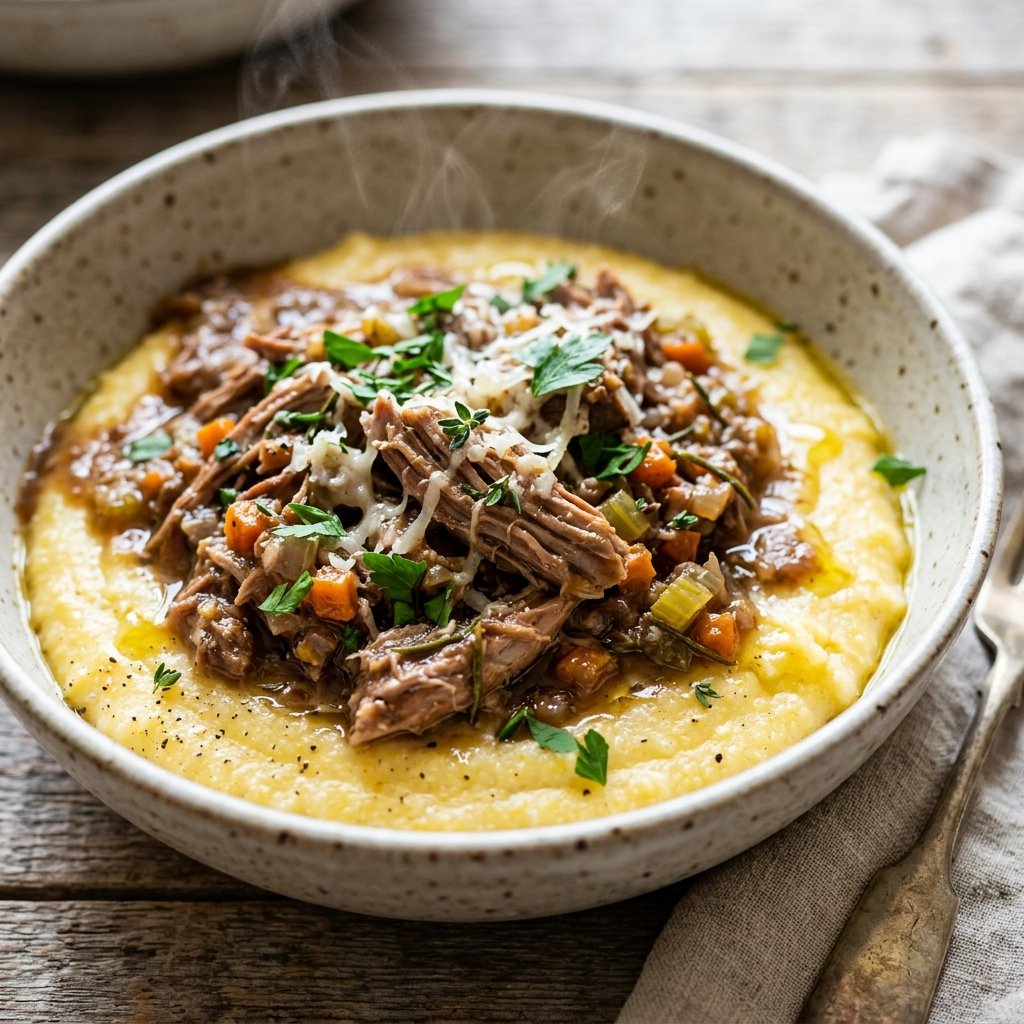
3. Rabbit ragù over polenta
Cook the rabbit with tomatoes and wine as above, then lift it out, pull the meat from the bones, and return it to the sauce. Simmer uncovered for 15 minutes to thicken, then spoon it over creamy polenta.
Other Flavor Ideas
- Honey mustard rabbit. Stir 1 tablespoon of honey into the mustard before adding it. It softens the sharpness and gives the sauce a little gloss. Our honey mustard wing sauce shows how well those two flavors balance.
- Smoky. Cook 3 slices of chopped bacon in the skillet first and brown the rabbit in the rendered fat.
- Herb and lemon. Skip the mustard and add the zest of one lemon, extra thyme, and a handful of parsley at the end.
- Creamy mushroom. Double the mushrooms and finish with the cream. Our mushroom medley has ideas for mixing varieties.
- No wine. Use extra broth and a tablespoon of lemon juice or apple cider vinegar.
Crock Pot Rabbit Recipe Troubleshooting
The meat is dry. It cooked too long, the liquid was too low, or you used a hot-running cooker. Next time, check at the early end of the range and keep the liquid halfway up the meat. A spoonful of the cooking liquid over dry meat helps in the meantime.
The meat is still tough. It has not cooked long enough, or you used wild rabbit. Cook it another hour or two and check again. Hind legs are the toughest, and they respond to time.
The sauce is thin. Slow cookers trap moisture, and the vegetables add more. Thicken with the cornstarch slurry on high with the lid off, or simmer the strained liquid on the stove.
The sauce is greasy. Skim the fat off the top with a spoon, or chill the liquid briefly so the fat rises and hardens.
The dish tastes flat. It almost always needs salt and acid. Add a pinch of salt and a squeeze of lemon or a splash of vinegar at the end.
The vegetables turned to mush. Cut them into larger chunks, or add the potatoes in the last 2 to 3 hours on low.
The meat tastes gamey. That is more common with wild rabbit. A brine or a milk soak overnight can mellow it, and a splash of vinegar in the sauce helps.
What to Serve With Slow Cooker Rabbit
Rabbit in a light sauce wants something that will soak it up. Creamy mashed potatoes, such as our silky pommes puree, buttered noodles, polenta, or crusty bread all work. Add a simple green vegetable, such as green beans or roasted broccoli, and a sharp salad to cut the richness. If you like slow-cooked meat in general, our Pikes Peak roast uses the same low-and-slow idea with beef.
Storage and Leftovers
Cool leftovers and refrigerate them in an airtight container within 2 hours. They keep for 3 to 4 days, according to the USDA’s guidance on leftovers and food safety. Store the meat in its sauce, which keeps it moist. For freezing, it holds for about 2 to 3 months, and thaws best overnight in the refrigerator.
Reheat on the stove or in the oven until steaming hot (165°F). Clemson’s guide notes that reheating leftovers in a slow cooker is not recommended, because it takes too long to reach a safe temperature.
Crock Pot Rabbit Recipe FAQs
How long does it take to cook rabbit in a crock pot?
About 6 to 7 hours on low or 3½ to 4½ hours on high for a whole rabbit cut into pieces. Wild rabbit may need longer. The meat should pull easily from the bone.
Do I have to brown the rabbit first?
No, but it adds a lot of flavor and a richer sauce. If you are short on time, skip it and expect a lighter result.
Can I cook frozen rabbit in a slow cooker?
No. The USDA says to thaw rabbit first, in the refrigerator, because frozen meat takes too long to heat up in a slow cooker.
What does rabbit taste like?
Mild and slightly sweet, similar to chicken but finer-grained and leaner, with a little more depth.
What temperature should rabbit reach?
At least 160°F (71°C) in the thickest part, per the USDA. In a slow cooker, the meat will be well past that by the time it is tender.
Can I use chicken broth and skip the wine?
Yes. Use extra broth and add a tablespoon of lemon juice or vinegar for brightness.
Can I put vegetables in with the rabbit?
Yes. Onions, carrots, celery, potatoes, and mushrooms all work. Cut them into large pieces so they do not turn to mush.
Is farm-raised or wild rabbit better for the slow cooker?
Farm-raised is more tender and mild, and easier for a first try. Wild rabbit is leaner and tougher, and needs longer cooking, though it also works well in a slow cooker.
Why is my rabbit dry?
Most often overcooking or too little liquid. Keep the liquid about halfway up the meat and check early.
Can I make it ahead?
Yes. It reheats well, and the flavor often improves the next day. Store the meat in the sauce and reheat gently on the stove.
Final Thoughts on This Crock Pot Rabbit Recipe
A good crock pot rabbit recipe comes down to a few simple habits: thaw the meat properly, brown it if you can, keep the liquid at the right level, and check on the saddle early. The rest is patience. Cook it low, thicken the sauce at the end, and serve it with something that soaks up the juices. Once you have done it once, you can take the same method to tomatoes and olives, or turn the leftovers into a ragù, and a rabbit starts to feel like a very reasonable weeknight project.
Crock Pot Rabbit
Ingredients
Equipment
Method
- Pat the rabbit pieces very dry. Mix the flour, salt, and pepper in a shallow dish and dredge the rabbit, shaking off the excess.
- Heat the oil and butter in a large skillet over medium-high heat. Brown the rabbit in batches, about 2 to 3 minutes per side, until golden. Do not crowd the pan. Move the pieces to a plate.
- Layer the onion, carrots, celery, potatoes, and mushrooms in the bottom of the slow cooker. Scatter in the garlic.
- Nestle the hind legs and front legs on top of the vegetables. Place the saddle pieces on top. Tuck in the thyme, rosemary, and bay leaves.
- Pour the wine into the hot skillet and scrape up the browned bits for about a minute. Stir in the broth and mustard, then pour over the rabbit. The liquid should come about halfway up the meat.
- Cover and cook on low for 6 to 7 hours, or on high for 3½ to 4½ hours, until the meat pulls easily from the bone. Check that the thickest part of a hind leg reads at least 160°F (71°C). If your cooker runs hot, check the saddle pieces early and lift them out to keep warm if they are done.
- Transfer the rabbit and vegetables to a warm platter and discard the herb stems and bay leaves. Skim any fat from the liquid.
- Stir the cornstarch slurry into the liquid, turn the cooker to high, and cook uncovered for 10 to 15 minutes until it coats a spoon. Stir in the cream and honey if using. Taste and adjust with salt, pepper, and lemon.
- Spoon the sauce over the rabbit and vegetables and scatter with parsley.
Notes
- Thaw the rabbit in the refrigerator, for about 24 hours. The USDA says not to cook frozen rabbit in a slow cooker, and never to thaw it at room temperature.
- Cook rabbit to at least 160°F (71°C) in the thickest part. Wild rabbit is leaner and tougher than farm-raised, so it may need longer. Wear gloves when handling wild rabbit raw.
- The hind legs are the toughest and need the most time. The saddle is the leanest and cooks fastest, so keep it on top and check it early.
- Keep the liquid about halfway up the meat. Too little makes it dry, and too much dilutes the sauce.
- Rabbit has many fine bones, especially in the ribs. Warn your guests, or pull the meat off the bones before serving.
- Browning adds flavor and richness. If you are short on time, skip it and expect a lighter sauce.
- Cacciatore variation: replace the broth and mustard with 1 can (14.5 oz) of diced tomatoes and ½ cup of wine, and add 1 sliced bell pepper, ½ cup of olives, and 1 teaspoon of dried oregano.
- Ragù variation: after cooking, pull the meat from the bones, return it to the sauce, simmer 15 minutes, and serve over creamy polenta.
- Honey mustard variation: stir 1 tablespoon of honey into the mustard before adding it.
- Refrigerate leftovers in their sauce within 2 hours and eat within 3 to 4 days. Freeze for about 2 to 3 months. Reheat on the stove or in the oven until steaming hot (165°F), not in the slow cooker.
- Times, quantities, and calories are estimates. Test the recipe once and adjust to your slow cooker, since models vary.