
Shrimp and mussels belong in the same pan. The mussels release a briny, savory liquid as they open, the shrimp add sweetness and a meaty bite, and a splash of white wine with garlic and butter pulls it all into a broth you will want to mop up with bread. This shrimp and mussels recipe is a one-skillet dinner that takes about 15 minutes of actual cooking. Most of the work is cleaning the mussels, and even that is quicker than most people expect.
Here is the short version: sear the shrimp and set them aside, build a garlic and white wine broth with cherry tomatoes, steam the mussels in it, then return the shrimp at the very end so they stay tender. Serve it with grilled bread and lemon. Want the quantities right away? Jump to the recipe.
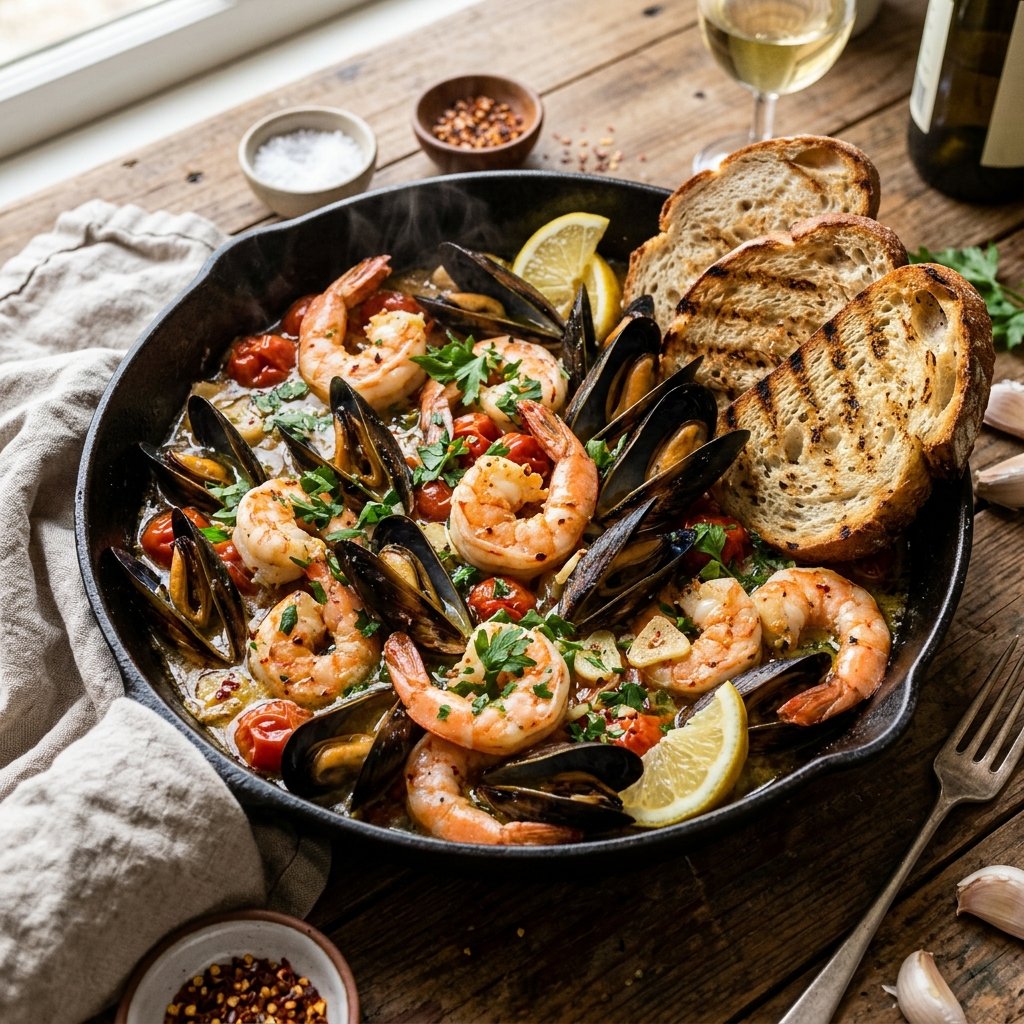
Why This Shrimp and Mussels Recipe Works
The trouble with cooking two kinds of seafood together is timing. Mussels need a few minutes of steam to open. Shrimp need barely two minutes of heat before they turn rubbery. If you throw them in together, one of them suffers. This recipe solves that in a simple way: the shrimp get a quick sear first, for color and flavor, then wait on a plate while the mussels cook. They go back in for the last minute or two, just long enough to finish.
The other thing that makes it work is the broth. Mussels give off their own liquid as they open, which is salty and full of ocean flavor. Starting with a modest amount of wine and broth, rather than drowning the pan, keeps that flavor concentrated. Butter goes in at the end, off the heat, so the sauce turns glossy instead of greasy.
Your 35-Minute Game Plan
Read this once before you start and the cooking will feel calm, even on a weeknight.
- Minutes 0 to 15: Scrub and debeard the mussels. Peel and devein the shrimp if needed. Slice the garlic, chop the shallot, halve the tomatoes, chop the parsley.
- Minutes 15 to 20: Pat the shrimp dry, season, and sear them for about a minute per side. Set aside.
- Minutes 20 to 25: Soften the shallot, bloom the garlic and chili, cook the tomatoes, add the wine and reduce it, then add the broth.
- Minutes 25 to 31: Add the mussels, cover, and steam. Toast the bread at the same time.
- Minutes 31 to 35: Shrimp back in, butter, lemon, and parsley. Discard any closed mussels and serve.
Buying Mussels and Shrimp: A Quick Field Guide
Mussels
Most mussels sold in US grocery stores are farmed, usually from Prince Edward Island or the Pacific Northwest. Farmed mussels tend to be cleaner, with less grit and smaller beards, which makes prep easier. When you buy them:
- They should smell like the sea, fresh and clean, never fishy or sour.
- Shells should be closed or close when you tap them. A few gaping shells in a bag are normal; you will sort those out at home.
- Avoid cracked or broken shells and mussels that feel unusually heavy, which can mean they are full of sand.
- Ask the fish counter to pack them in a bag that is not sealed airtight. Live mussels need to breathe.
Plan on about half a pound per person for a main course, a little less if you are serving them as a starter.
Shrimp
Look for large shrimp, labeled 21/25 count (21 to 25 per pound). They are big enough to stay juicy while the mussels steam. Frozen shrimp are a perfectly good choice; much of the “fresh” shrimp at the counter was frozen anyway. Thaw them overnight in the fridge, or seal them in a bag and set it in cold water for 20 to 30 minutes. Shell-on, deveined shrimp are a nice middle ground: you peel them yourself, and the shells can go into a quick stock.
The FDA’s guide to selecting and serving seafood safely covers what to look for at the counter and how to store shellfish once you get home.
How to Clean Mussels for This Shrimp and Mussels Recipe
This step puts people off mussels, but it takes about 10 minutes once you have done it once.
- Rinse. Put the mussels in a colander and run cold water over them while you move them around with your hands.
- Scrub. Rub off any barnacles, mud, or grit with a stiff brush or the back of a knife. Farmed mussels often need very little.
- Debeard. The beard is the bundle of fibers sticking out from between the shells. Grip it and pull firmly toward the hinge end of the shell. Do this close to cooking time.
- Sort. Tap any open mussel firmly on the counter. If it slowly closes, it is alive and fine to cook. If it stays open, throw it out. Also discard any with cracked or crushed shells.
- Chill. Keep the cleaned mussels in a bowl in the fridge, covered with a damp towel, until the pan is ready.
Do not soak mussels in a bowl of plain water for a long time. They are saltwater creatures, and fresh water can kill them before you cook them.
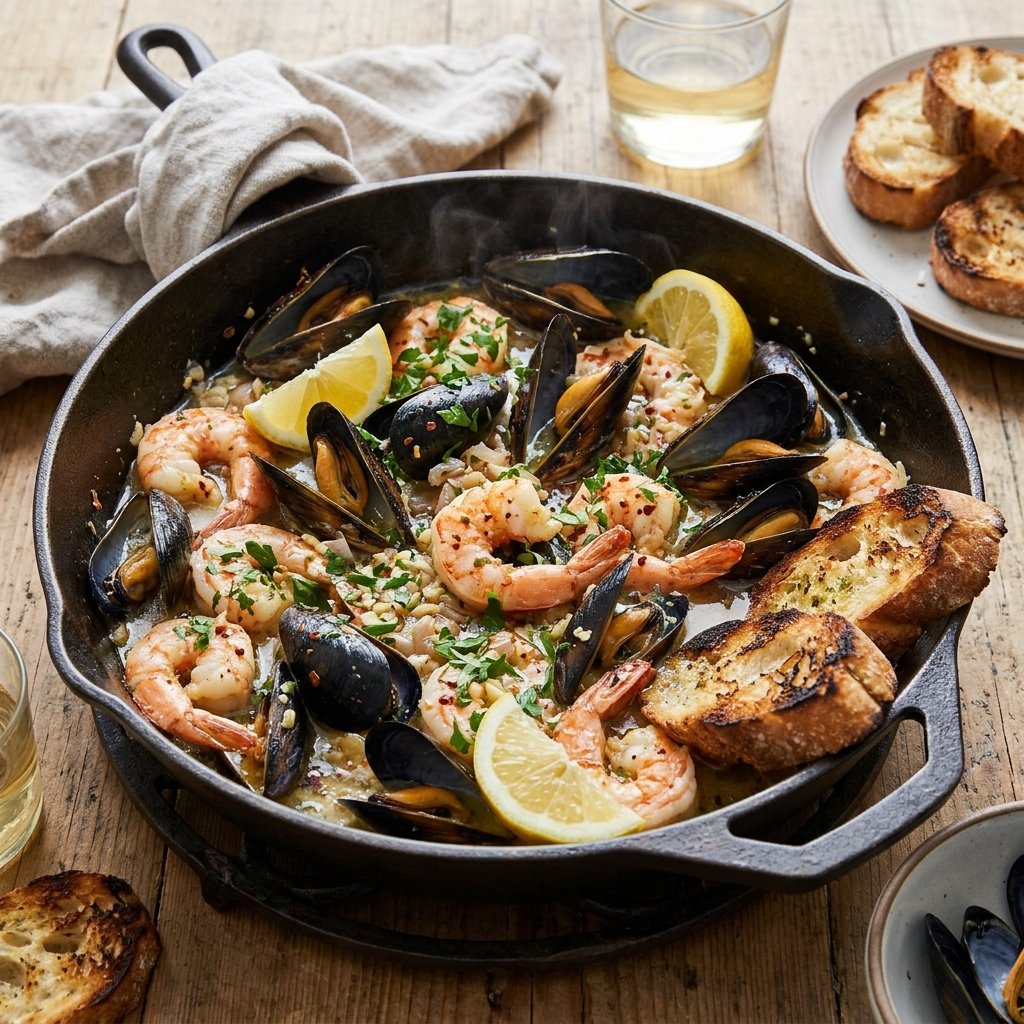
Cooking the Shrimp and Mussels Recipe: What to Watch For
The recipe card below has the full steps. These are the moments where paying attention makes the biggest difference.
The shrimp sear
Dry shrimp brown; wet shrimp steam. Pat them well with paper towels before seasoning. Use a hot pan and leave space between them. You only want a light golden color and a pink outside. They should still look slightly translucent in the middle when they come out, because they will finish in the broth.
The garlic
Sliced garlic gives sweet, mellow flavor; minced garlic is sharper and burns faster. Either works, but cook it over medium heat for no more than a minute. Browned garlic turns bitter, and that bitterness spreads through the whole broth.
The wine reduction
Let the wine bubble for about two minutes before the broth goes in. This cooks off some of the alcohol and its harsh edge, leaving the fruity, acidic flavor that makes the broth taste bright. Use a dry white you would happily drink: Sauvignon Blanc, Pinot Grigio, or a dry Vermouth all work. Avoid sweet wines like Moscato.
The steam
Once the mussels go in, cover the pan tightly and leave it alone for about four minutes. Then give it a good shake, holding the lid down, to move the mussels around. Most will be open by five or six minutes. Overcooked mussels shrink and turn chewy, so as soon as most are open, move on.
The finish
Turn the heat off before adding the last of the butter. Swirl the pan or stir gently until the butter melts into the broth. Add the lemon juice and parsley, then taste. Because mussels are naturally salty, you often need no extra salt at all.
Are Unopened Mussels Safe to Eat?
The standard advice, and the safest one, is to throw away any mussel that does not open after cooking. Some cooks argue that a closed mussel may simply have a strong muscle and be fine inside, but there is no easy way to tell at the table, and one bad mussel can ruin your evening. Do not force them open. If you see more than a few closed shells, give the covered pan another minute; if they still do not open, discard them.
For the shrimp, the FDA guidance is to cook until the flesh is pearly and opaque. In this recipe that happens in the last minute or two, once the shrimp go back into the simmering broth.
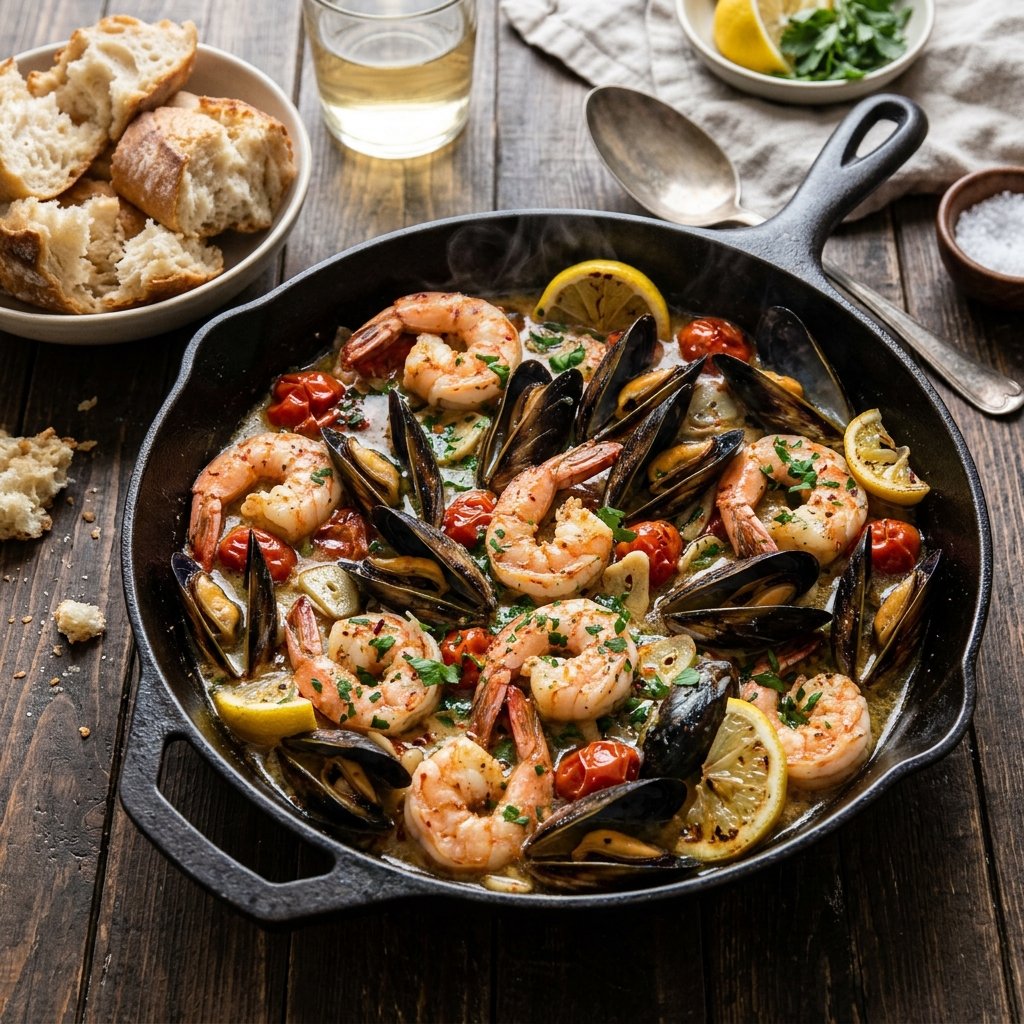
Three Ways to Change the Flavor
Once you know the method, the broth is easy to change. Keep the timing the same and swap the flavorings.
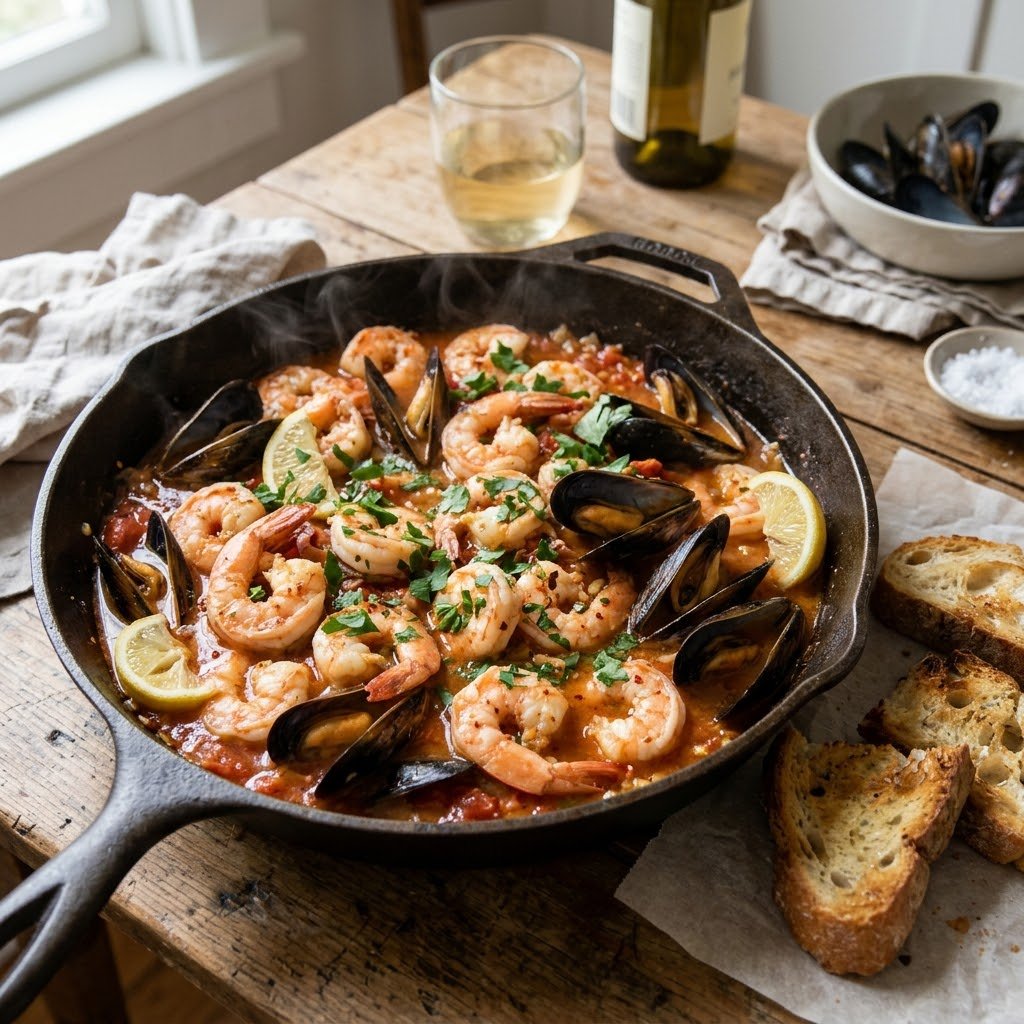
1. Spicy tomato (fra diavolo style)
Leave out the butter at the end. Add one 14-ounce can of crushed tomatoes along with the wine, increase the red pepper flakes to a full teaspoon, and finish with fresh basil. It is great over linguine. If you like this direction, our chilli mussels recipe goes even further with garlic and chili.
2. Coconut and lime
Replace the wine and broth with one 13.5-ounce can of coconut milk and half a cup of water. Add a tablespoon of red curry paste with the garlic, plus grated ginger. Finish with lime juice instead of lemon and lots of cilantro. Serve with rice instead of bread.
3. Spanish-style with chorizo
Brown 4 ounces of diced cured Spanish chorizo before the shallot and use its red oil to cook the aromatics. Add a pinch of smoked paprika and, if you have it, a few threads of saffron soaked in the warm broth. It tastes like a quick, rice-free cousin of paella.
Troubleshooting: When Things Go Sideways
My shrimp turned rubbery.
They cooked too long. Shrimp go from tender to tough in less than a minute. Next time, take them out of the sear while still a little translucent and give them only a minute or two back in the broth.
The broth tastes too salty.
Mussels release salty liquid, and broth adds more. Use low-sodium broth, skip extra salt until the end, and if it is still salty, add a splash of water and more lemon juice.
There is grit in the broth.
Some wild mussels hold sand. Lift the seafood out with a slotted spoon, then pour the broth slowly into bowls, leaving the last spoonful (where the grit settles) in the pan.
The sauce is thin and watery.
That is normal for this style. It is meant to be a broth for dipping bread. For something thicker, lift out the seafood, boil the broth for two to three minutes to reduce it, then whisk in the final butter.
Lots of the mussels did not open.
The pan may have been too crowded or the lid not tight. Mussels need room and steam. For more than 2 pounds, use a wide Dutch oven or cook in two batches.
What to Serve With This Shrimp and Mussels Recipe
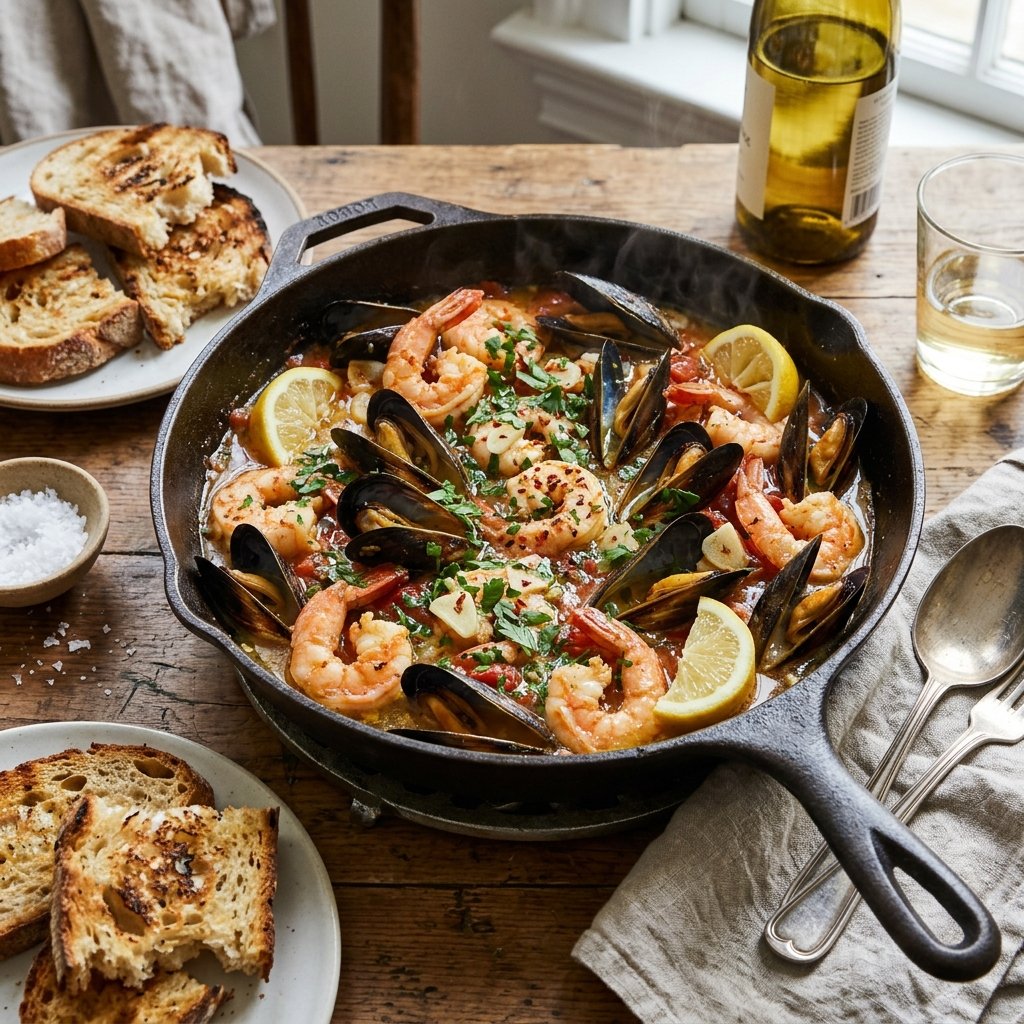
Bread is not optional here. Grilled or toasted slices of baguette or country bread, rubbed with a little garlic, are the best tool for the broth. Beyond that:
- Pasta: toss the whole pan with linguine or spaghetti for a heartier meal. For another seafood pasta night, try this shrimp rigatoni.
- French fries: the Belgian moules-frites pairing works just as well with shrimp in the pot.
- A simple green salad with a lemony dressing keeps the meal light.
- Rice if you go with the coconut version.
- To drink: the same dry white wine you cooked with.
Can You Make It Ahead or Save Leftovers?
This is a dish to cook and eat right away. Shellfish do not reheat well; reheated shrimp toughen and mussels shrink. You can prepare parts in advance, though:
- Peel and devein the shrimp up to a day ahead and keep them covered in the fridge.
- Chop the shallot, garlic, tomatoes, and parsley a few hours ahead.
- Clean the mussels an hour or two ahead, but wait to debeard them until just before cooking.
If you do have leftovers, take the mussel meat out of the shells and refrigerate it with the shrimp in the broth for up to a day. Warm gently over low heat just until hot, or turn it into a pasta sauce. Leftover broth on its own is also excellent as a base for seafood soup, or mix it with homemade crawfish stock for extra depth.
More Seafood Ideas From Our Kitchen
If this shrimp and mussels recipe becomes a regular, you might also like the lemon butter sauce in our shrimp Paesano recipe, or the sweet heat of hot honey shrimp for a fast weeknight dinner.
Shrimp and Mussels Recipe FAQs
Can I use frozen mussels?
Yes. Frozen cooked mussels, usually sold in vacuum packs, only need to be heated through. Add them in the step where the fresh mussels go in, but cook them just 2 to 3 minutes. The flavor of the broth will be a little lighter, so use seafood broth instead of chicken broth.
Can I make it without wine?
Yes. Replace the wine with more broth and a tablespoon of lemon juice to keep some acidity.
Do I need to devein the shrimp?
The dark vein is the digestive tract. It is not harmful, but it can be gritty, so most cooks remove it. Many shrimp are sold already deveined.
Tails on or tails off?
Tails on looks nicer and adds a little flavor to the broth. Tails off is easier to eat, especially if you are serving it with pasta. Either way works.
How many people does this serve?
Four as a main course with bread, or six as a starter.
What is the best pan to use?
A 12-inch deep skillet or a wide Dutch oven with a lid. Cast iron looks great at the table, but any heavy pan with a tight lid works.
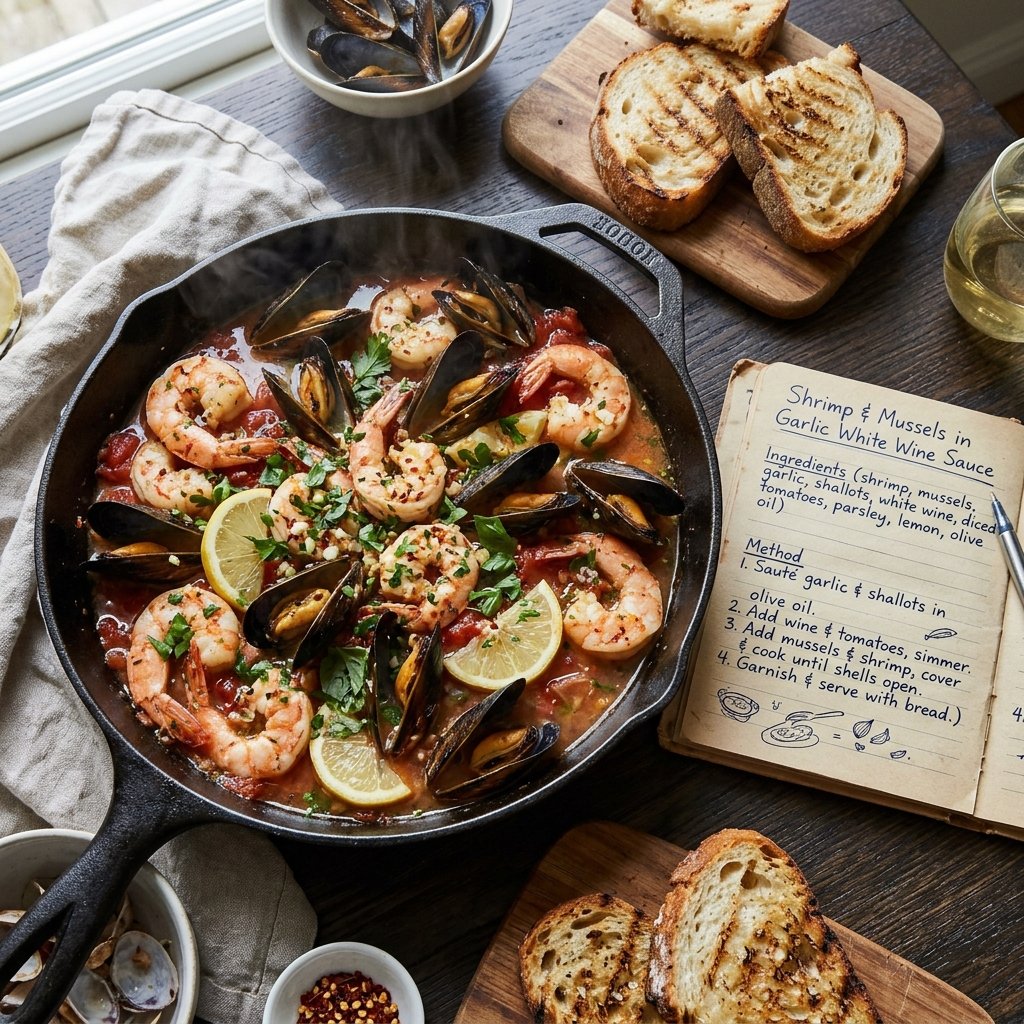
Below is the full shrimp and mussels recipe, with every quantity and step. Keep a bowl on the table for empty shells, and plenty of bread for the broth.
Garlic White Wine Shrimp and Mussels
Ingredients
Equipment
Method
- Rinse the mussels in cold water and scrub off any grit. Pull off the stringy beards by tugging them toward the hinge end. Tap any open mussels on the counter; discard any that do not close, as well as any with cracked shells. Keep the cleaned mussels in a bowl in the fridge until cooking.
- Pat the shrimp dry with paper towels and season with the salt and pepper.
- Heat 1 tablespoon olive oil in a 12-inch deep skillet or Dutch oven over medium-high heat. Add the shrimp in a single layer and sear for about 1 minute per side, just until pink on the outside. They will finish cooking later. Transfer to a plate.
- Lower the heat to medium. Add the remaining 1 tablespoon olive oil and 1 tablespoon butter. Cook the shallot for 2 minutes until soft, then add the garlic and red pepper flakes and stir for 30 to 60 seconds until fragrant, without browning the garlic.
- Add the cherry tomatoes and cook for 2 minutes until they start to soften. Pour in the white wine, scrape up any browned bits, and simmer for 2 minutes to cook off some of the alcohol. Add the broth and bring to a lively simmer.
- Add the mussels, cover with a tight-fitting lid, and steam for 4 to 6 minutes, shaking the pan once or twice, until most of the shells have opened.
- Return the shrimp and any juices to the pan, tucking them into the broth. Cover and cook for 1 to 2 minutes until the shrimp are opaque and just cooked through.
- Turn off the heat. Stir in the remaining 2 tablespoons butter, the lemon juice, and most of the parsley. Discard any mussels that stayed closed. Taste the broth and add salt only if needed.
- While the mussels steam, brush the bread slices with olive oil and toast them in a grill pan or under the broiler until golden. Rub with the cut garlic clove if you like.
- Serve straight from the skillet or in shallow bowls, with lemon wedges, the remaining parsley, the grilled bread for dipping, and an empty bowl for shells.
Notes
- Buy mussels the day you cook them if you can, and store them in a bowl covered with a damp towel in the fridge. Never store live mussels in a sealed plastic bag or submerged in water.
- Debeard just before cooking: once the beard is removed, the mussel starts to die, so do it close to cooking time.
- Shrimp size: large 21/25 shrimp hold up best. If using smaller shrimp, cut the final cooking time to about 1 minute.
- No wine? Replace it with more broth plus 1 tablespoon lemon juice.
- Make it a pasta: toss the finished dish with 12 oz cooked linguine and a splash of pasta water.
- Leftovers: shellfish is best eaten right away. Remove the meat from the shells and refrigerate it in the broth for up to 1 day, then reheat gently.