
Gumbo is one of those dishes where the main ingredient changes with what is in the freezer or the bayou: chicken and sausage, shrimp and crab, duck, and in parts of Louisiana and Florida, alligator. Gator meat is mild, lean and slightly firm, somewhere between chicken breast and a meaty white fish, and it soaks up the smoky, peppery flavors of a dark-roux gumbo beautifully.
This gator gumbo recipe is a Cajun-style gumbo built on a chocolate-brown roux, the “holy trinity” of onion, celery and bell pepper, andouille sausage and okra, with cubes of alligator tail simmered in at the end until tender. It is not a weeknight shortcut; the roux alone takes half an hour of stirring. But most of the work is hands-off simmering, it feeds a crowd, and like every gumbo it tastes even better the next day.
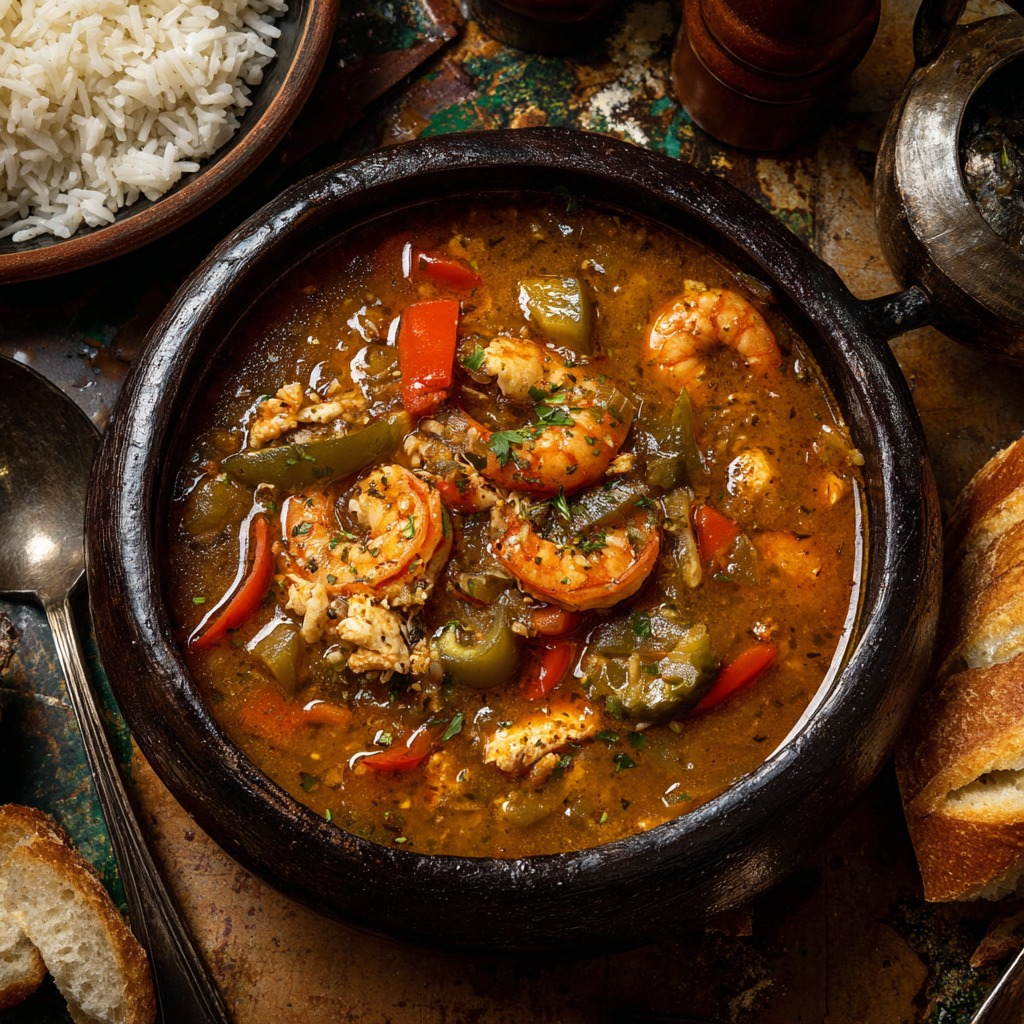
Gator Gumbo at a Glance
| Serves | 8 (about 3 quarts of gumbo) |
| Style | Cajun, dark roux, with okra; filé optional at the table |
| Main protein | 1½ lb alligator tail meat plus 12 oz andouille |
| Total time | About 2 hours 15 minutes (plus an optional 1 to 4 hour buttermilk soak) |
| Equipment | A heavy 6- to 8-quart Dutch oven and a flat-edged wooden spoon |
| Serve with | Long-grain white rice, green onions, hot sauce, potato salad or cornbread |
Buying and Preparing Alligator Meat
Most alligator sold in the United States comes from farms and licensed harvests in Louisiana and Florida, and you will usually find it frozen at seafood markets, specialty butchers or online. A few things are worth knowing before you buy.
- Tail meat is the one to look for. It is the most tender and mildest part of the animal, white and fine-grained. Packages labeled “tenderloin” usually come from the tail too. Body and leg meat is darker and tougher; it works in gumbo but needs a longer simmer.
- Thaw it slowly. Leave frozen alligator in the refrigerator overnight, in a dish to catch the drips.
- Trim it well. Cut away any fat, which can taste strong, and any tough membrane or sinew. Then cut the meat into 1-inch cubes.
- Soak it if you like. Many Louisiana cooks soak gator in buttermilk with a little Cajun seasoning before cooking. It mellows any “wild” flavor and seasons the meat. One to four hours in the fridge is plenty for tail meat; drain and pat dry before searing.
- Alligator sausage counts too. If you cannot find fresh gator, smoked alligator sausage (often a pork and alligator blend) can stand in for some or all of the andouille.
Treat raw alligator like raw poultry: keep it cold, use a separate board and wash your hands and tools after handling it. The meat is done when it is opaque all the way through and tender when pierced with a fork; the long simmer in this recipe cooks it thoroughly.
The Roux: Where a Gator Gumbo Recipe Gets Its Flavor
A roux is simply flour cooked in fat, but in gumbo it is the backbone of the dish. The longer it cooks, the darker, nuttier and toastier it gets, and the less thickening power it has. Cajun gumbos like this one usually go dark, while many Creole gumbos stop at a lighter peanut-butter color and lean on tomatoes and okra.
| Roux stage | Approximate time on medium-low | Smell and flavor |
|---|---|---|
| Blond | 5 to 8 minutes | Like a pie crust; mild |
| Peanut butter | 15 to 20 minutes | Nutty, toasty |
| Milk chocolate | 25 to 35 minutes | Deep, roasted; the target for this recipe |
| Dark chocolate | 35 to 45 minutes | Very rich, slightly bitter edge; thickens the least |
| Burnt | Any time it smells acrid or shows black specks | Bitter. Throw it out and start again |
Three habits make the roux stress-free. Have the trinity chopped before you start, because once the roux is ready you need to add the vegetables immediately to stop it cooking. Use a flat-edged wooden spoon or spatula so you can scrape the whole bottom of the pot. And stay with it: stir constantly, and turn the heat down if it is darkening faster than you can control. Hot roux sticks and burns skin, so keep children and pets clear of the stove.
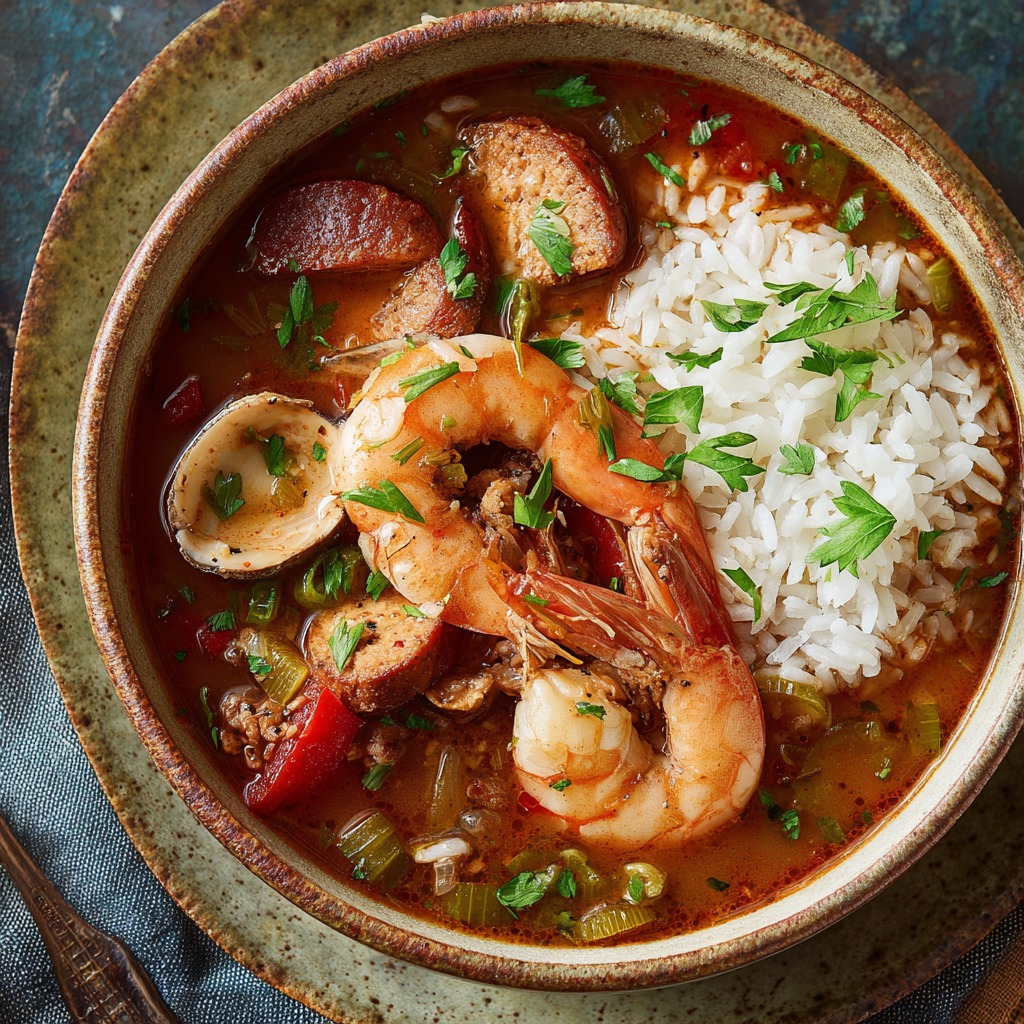
Ingredients
The exact amounts are in the recipe card below. In short you need:
- Proteins: alligator tail meat and smoked andouille sausage.
- Roux: equal parts all-purpose flour and a neutral oil such as canola, vegetable or peanut oil.
- The trinity: onion, celery and green bell pepper, plus garlic.
- Liquid: seafood or chicken stock. A homemade crawfish stock gives a gumbo with real Louisiana depth.
- Okra: fresh or frozen, sliced. It adds body and that classic slightly silky texture.
- Seasoning: Cajun or Creole seasoning, dried thyme, bay leaves, cayenne, black pepper, Worcestershire and hot sauce.
- To finish and serve: green onions, parsley, white rice and filé powder (ground sassafras leaves) if you can find it.
Check the salt in your Cajun seasoning and stock before you add any extra salt. Many blends are mostly salt, and andouille is salty too, so this recipe seasons at the end.
How to Make This Gator Gumbo Recipe
Step 1: Prep everything first
Cube the alligator and soak it in buttermilk if you are using that step. Slice the andouille into half-moons. Chop the onion, celery and bell pepper and keep them together in one bowl, with the garlic in a small separate pile. Warm the stock in a saucepan; adding warm stock to the roux helps prevent lumps.
Step 2: Brown the sausage and sear the gator
Brown the andouille in a splash of oil in the Dutch oven over medium heat, about 6 minutes, and lift it out. Drain the alligator, pat it dry, toss it with 1 teaspoon of the Cajun seasoning and sear it in the same pot in two batches until lightly browned on the outside, 2 to 3 minutes per batch. It does not need to cook through. Set it aside with the sausage in the fridge.
Step 3: Make the roux
Add the oil to the pot over medium heat and whisk in the flour. Turn the heat to medium-low and stir constantly, scraping the bottom and corners, until the roux is the color of milk chocolate, about 25 to 35 minutes. The browned bits from the meat will melt into it and add flavor.
Step 4: Add the trinity
Tip in the onion, celery and bell pepper all at once and stir well; the roux will sizzle and darken a shade more. Cook for 6 to 8 minutes, until the vegetables soften. Add the garlic, thyme, cayenne, black pepper and the rest of the Cajun seasoning and stir for 1 minute.
Step 5: Add the stock and simmer
Pour in the warm stock a ladle at a time, stirring after each addition so the roux dissolves smoothly. Add the bay leaves, Worcestershire, okra and the browned sausage. Bring it to a boil, then lower the heat and simmer, partly covered, for 45 minutes, stirring now and then and skimming off any oil that rises to the top.
Step 6: Simmer the alligator
Stir in the seared alligator and any juices. Keep the gumbo at a gentle simmer, not a rolling boil, for 30 to 40 minutes, until the gator is opaque all the way through and tender when you pierce a cube with a fork. A hard boil tightens the lean meat and makes it chewy. If you are using tougher body meat, give it another 20 to 30 minutes.
Step 7: Season and serve
Remove the bay leaves. Taste and adjust with salt, more cayenne and hot sauce. Stir in most of the green onions and parsley. Spoon rice into warm bowls, ladle the gumbo over it and finish with the remaining herbs. Put filé powder and hot sauce on the table so each person can add their own; stir filé into individual bowls rather than the pot, because boiling makes it stringy.
Timeline for Gumbo Day
| Time | What you are doing |
|---|---|
| 0:00 to 0:20 | Chop the vegetables, slice sausage, cube gator, warm the stock |
| 0:20 to 0:35 | Brown the sausage and sear the alligator |
| 0:35 to 1:05 | Stir the roux to milk-chocolate brown |
| 1:05 to 1:15 | Cook the trinity, garlic and spices |
| 1:15 to 2:00 | Add stock, okra and sausage; simmer |
| 2:00 to 2:15+ | Add the gator and simmer gently until tender; cook rice |
Okra, Filé or Neither?
Gumbo cooks argue happily about thickeners. This gator gumbo recipe uses a dark roux plus okra, with filé offered at the table, but you can choose:
- Roux only: a thinner, brothier gumbo where the roasted roux flavor is front and center. Simply leave out the okra.
- Roux and okra: more body and a green, vegetal note. Cooking the okra for the full simmer keeps it from being slimy.
- Roux and filé: filé adds a subtle earthy, almost tea-like flavor and a little thickness. Traditionally, gumbos are made with okra or filé, rarely both in the pot.
Gumbo should be thicker than a soup but much looser than a stew; it should coat a spoon and still pour easily over rice.
Common Problems and How to Fix Them
- The gator is chewy. It boiled too hard, or it is body meat that needs longer. Lower the heat and keep simmering gently; it will relax.
- The gumbo tastes flat. It almost always needs salt, then acid and heat. Add salt a little at a time, then a few dashes of hot sauce.
- It is too thin. Simmer uncovered for 15 to 20 minutes longer, or add filé to individual bowls.
- It is too thick. Stir in more warm stock.
- There is a layer of oil on top. Normal with a roux gumbo. Skim it off with a ladle during the simmer.
- It tastes bitter. The roux scorched. Unfortunately that cannot be fixed; next time keep the heat lower and stir constantly.
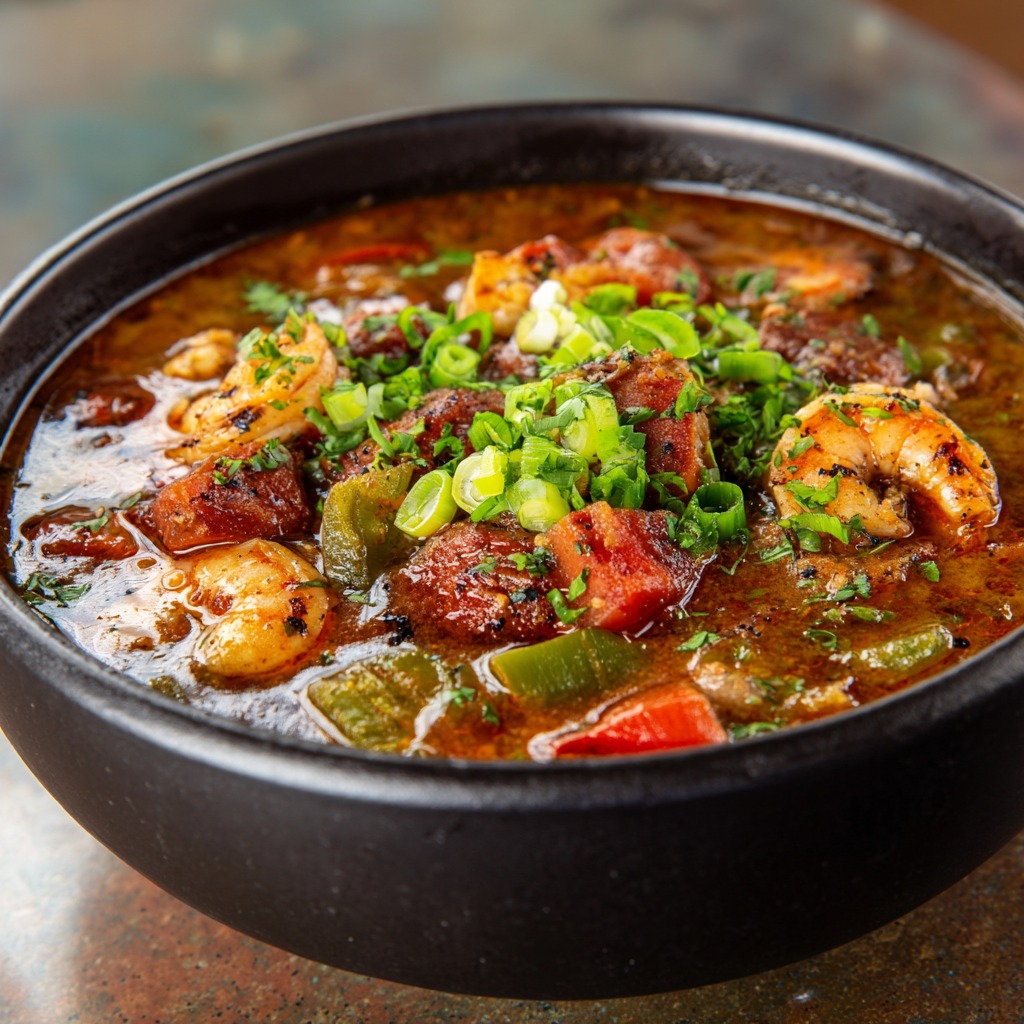
Variations
- Gator and shrimp: add 1 lb peeled shrimp in the last 4 to 5 minutes, just until pink, and use seafood stock.
- Creole-style: add a 14-ounce can of diced tomatoes with the stock and stop the roux at peanut-butter color.
- All-sausage: use 1 lb smoked alligator sausage in place of the fresh gator, as many Florida recipes such as this Florida alligator gumbo from Fresh From Florida do.
- Oven roux: whisk the oil and flour in a Dutch oven and bake uncovered at 350°F, stirring every 20 minutes, for about 1½ hours. Slower, but almost no stirring.
- No alligator? Use boneless chicken thighs; simmer them for the same time.
What to Serve With Gator Gumbo
Plain long-grain white rice is the standard. In much of Louisiana a scoop of potato salad goes right in the bowl or alongside, and crusty French bread or skillet cornbread is good for the last of the broth. For a Cajun party spread, start with crispy fried alligator bites and set out a bowl of Cajun cream sauce for dipping. If you have crawfish on hand, crawfish enchiladas make a fun Louisiana-meets-Tex-Mex second main.
Storing, Freezing and Reheating
Cool the gumbo quickly by dividing it into shallow containers and refrigerate within 2 hours. Store the rice separately. It keeps for 3 to 4 days in the fridge and up to 3 months in the freezer (the okra softens but the flavor holds up). Reheat it gently on the stove until it is steaming hot throughout, adding a splash of stock if it has thickened. Leftovers from this gator gumbo recipe often taste even better on day two, once the flavors have settled.
Gator Gumbo Recipe Card
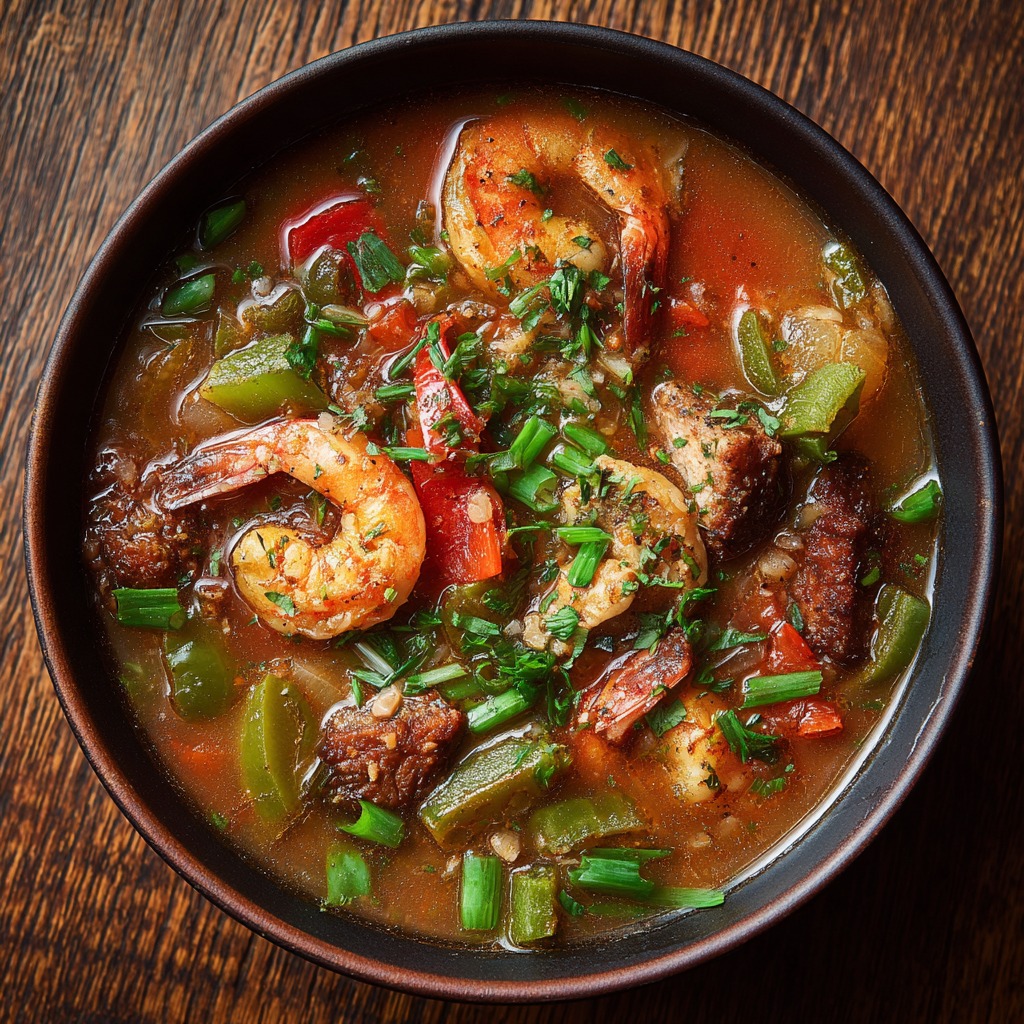
Cajun Gator Gumbo with Andouille and Okra
Ingredients
Equipment
Method
- If using, soak the cubed alligator in buttermilk in the refrigerator for 1 to 4 hours. Chop the onion, celery and bell pepper and keep them together; mince the garlic. Warm the stock in a saucepan.
- Heat 1 tbsp oil in the Dutch oven over medium heat. Brown the andouille for about 6 minutes and transfer to a plate.
- Drain the alligator, pat dry and toss with 1 tsp of the Cajun seasoning. Sear in two batches until lightly browned, 2 to 3 minutes per batch; it does not need to cook through. Refrigerate with the sausage until needed.
- Add ¾ cup oil to the pot and whisk in the flour. Cook over medium-low heat, stirring constantly and scraping the bottom, until the roux is the color of milk chocolate, 25 to 35 minutes. If it smells burnt or shows black specks, start again.
- Add the onion, celery and bell pepper and cook, stirring, for 6 to 8 minutes until softened. Add the garlic, thyme, cayenne, black pepper and remaining Cajun seasoning and cook 1 minute.
- Add the warm stock a ladle at a time, stirring well after each addition. Add the bay leaves, Worcestershire, okra and browned sausage. Bring to a boil, then simmer partly covered for 45 minutes, stirring occasionally and skimming off excess oil.
- Add the seared alligator and its juices. Keep at a gentle simmer (not a hard boil) for 30 to 40 minutes, until the alligator is opaque throughout and fork-tender. Body or leg meat may need 20 to 30 minutes longer.
- Remove the bay leaves. Season with salt and hot sauce. Stir in most of the green onions and parsley. Serve over rice, topped with the remaining herbs, with filé powder and hot sauce at the table.
Notes
- Alligator cut: Tail meat (often sold as tenderloin) is the most tender and mild. Trim away any fat, which can taste strong.
- Food safety: Handle raw alligator like raw poultry and cook until opaque throughout and fork-tender.
- Filé: Stir it into individual bowls, not the simmering pot, or it turns stringy.
- Substitutes: Use 1 lb smoked alligator sausage instead of fresh gator, or boneless chicken thighs if alligator is unavailable.
- Storage: Refrigerate within 2 hours, store rice separately, and use within 3 to 4 days. Freeze up to 3 months. Reheat until steaming hot.
Gator Gumbo FAQs
What does alligator taste like in gumbo?
Tail meat is mild, a little like chicken breast with a firmer, slightly flaky texture, and a faint hint of the sea. In a dark-roux gumbo it takes on the smoky, spicy flavors of the pot.
Do I have to soak alligator in buttermilk?
No. Good-quality tail meat is mild enough without it. A buttermilk soak is useful for body meat or if you are worried about a stronger flavor.
How long should alligator simmer in gumbo?
About 30 to 40 minutes at a gentle simmer for tail meat, and up to an hour for tougher body or leg meat. It is ready when it is opaque throughout and fork-tender.
Can I make the roux ahead?
Yes. Cool it, store it in a jar in the fridge for up to a few weeks, and warm it in the pot before adding the trinity. Jarred dark roux from the store also works when you are short on time.
Is gator gumbo Cajun or Creole?
It can be either. This version is Cajun in style, with a dark roux and no tomatoes. Add tomatoes and use a lighter roux for a Creole-style pot.
Can I make gator gumbo in a slow cooker?
Make the roux and cook the trinity on the stove first, then move everything except the alligator to the slow cooker and cook on low for 5 to 6 hours. Add the seared gator for the last hour.
Your Turn at the Pot
Every family in Louisiana has its own gumbo, and this gator gumbo recipe is a starting point for yours. Push the roux darker, add shrimp, swap the okra for filé or turn up the cayenne. If you cook it, share what you changed in the comments, especially if you have a favorite trick for alligator.