
What you’ll never know is what made these seafood dishes memorable: a nice crawfish stock recipe. This rich homemade stock, which is made by slowly simmering crawfish shells and heads with aromatic vegetables to extract the deep, savory flavor of crawfish meat, adds great richness not only to gumbo but also to étouffée, soups, or sauces.
One method to avoid tossing leftover crawfish shells is turning them into an incredible seafood base. This crawfish stock recipe uses simple ingredients with a little bit of patience to bring restaurant-quality flavors right into your own kitchen.
What Is a Crawfish Stock Recipe?
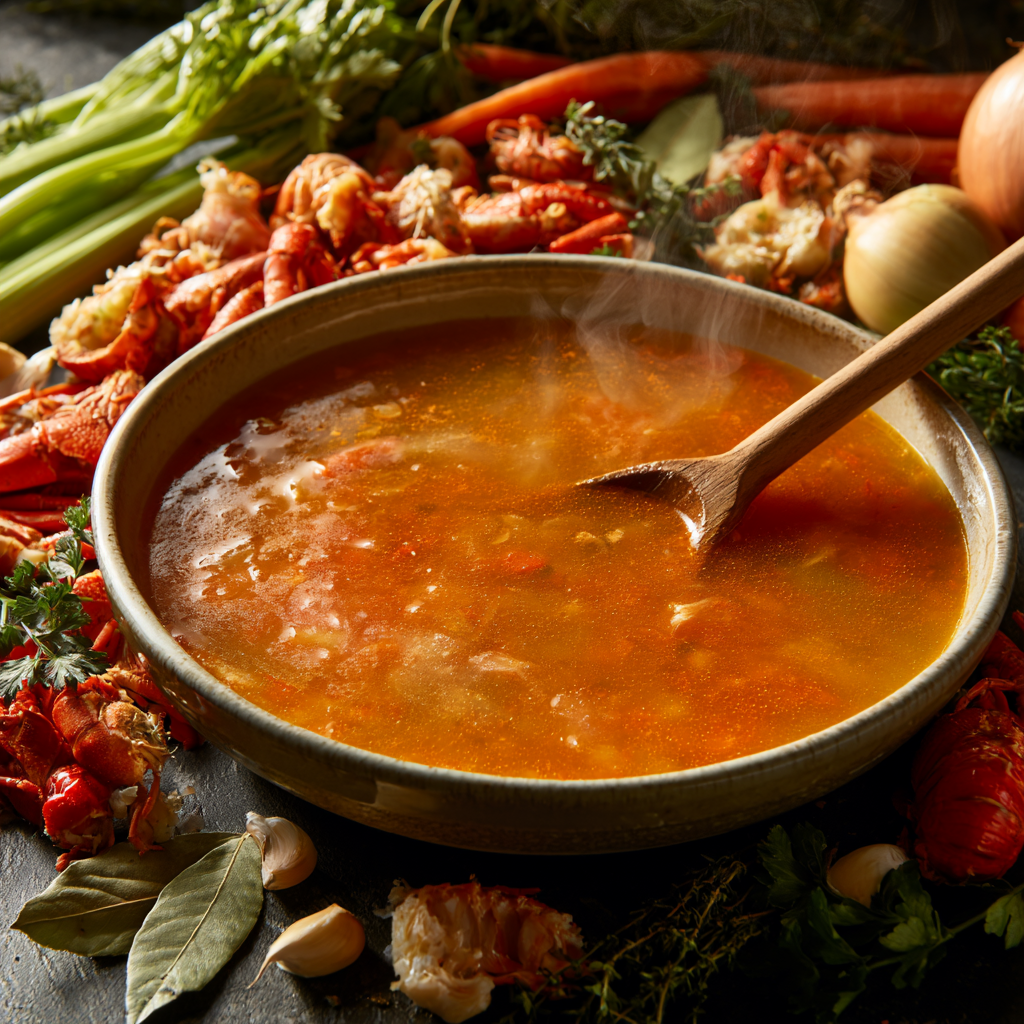
Crawfish stock is essentially just a seafood broth made by simmering whole crawfish shells, heads, and claws along with some aromatics in water to extract all the flavor. This results in an essence-like liquid full of crawfish sweetness and complexity.
Crawfish stock tastes different than the garden-varietal vegetable stock or chicken broth simply because it has an ocean-like flavor that also boasts hints of sweetness, earthiness, and profound seafood character.
Traditional Cajun and Creole cooking also uses seafood-based stocks, as they provide the building blocks for dishes like gumbo, étouffée, bisques, or most classic rice plates with fish.
A quality crawfish stock usually includes:
| Ingredient | Purpose |
|---|---|
| Crawfish shells | Provides seafood flavor and minerals |
| Crawfish heads | Adds richness and natural oils |
| Onion | Creates sweetness and depth |
| Celery | Adds freshness and balance |
| Carrots | Provides natural sweetness |
| Garlic | Enhances aroma |
| Bay leaves | Adds herbal complexity |
| Peppercorns | Adds mild spice |
| Herbs | Improves overall flavor |
The beauty of this crawfish stock recipe is that it does not require expensive ingredients. Most of the flavor comes from something many people normally throw away: crawfish shells.
Why Make a Homemade Crawfish Stock Recipe?
Many home cooks wonder whether making homemade stock is worth the extra effort. The answer is yes because homemade crawfish stock delivers a level of flavor that packaged seafood broth often cannot match.
1. Stronger Seafood Flavor
Commercial seafood stocks are usually designed to have a long shelf life. Therefore, they often contain preservatives, extra salt, or artificial flavors.
A homemade crawfish stock recipe captures the natural essence of fresh crawfish shells.
The slow extraction process allows:
- Seafood oils to blend into the liquid
- Shell minerals to release flavor
- Aromatic vegetables to build complexity
- Natural sweetness to develop
2. Reduces Food Waste
One of the biggest advantages of homemade crawfish stock is sustainability.
After a crawfish boil, many people throw away:
- Shells
- Heads
- Claws
- Body pieces
However, these parts contain concentrated flavor compounds.
By turning leftovers into stock, you create a second ingredient from the same meal.
3. Improves Classic Seafood Dishes
A strong crawfish stock recipe can upgrade many recipes.
For example:
| Dish | How Crawfish Stock Helps |
|---|---|
| Gumbo | Creates deeper seafood flavor |
| Crawfish étouffée | Builds a rich sauce base |
| Seafood soup | Adds complexity |
| Rice dishes | Improves aroma and taste |
| Pasta sauces | Creates restaurant-style flavor |
Ingredients for the Best Crawfish Stock Recipe
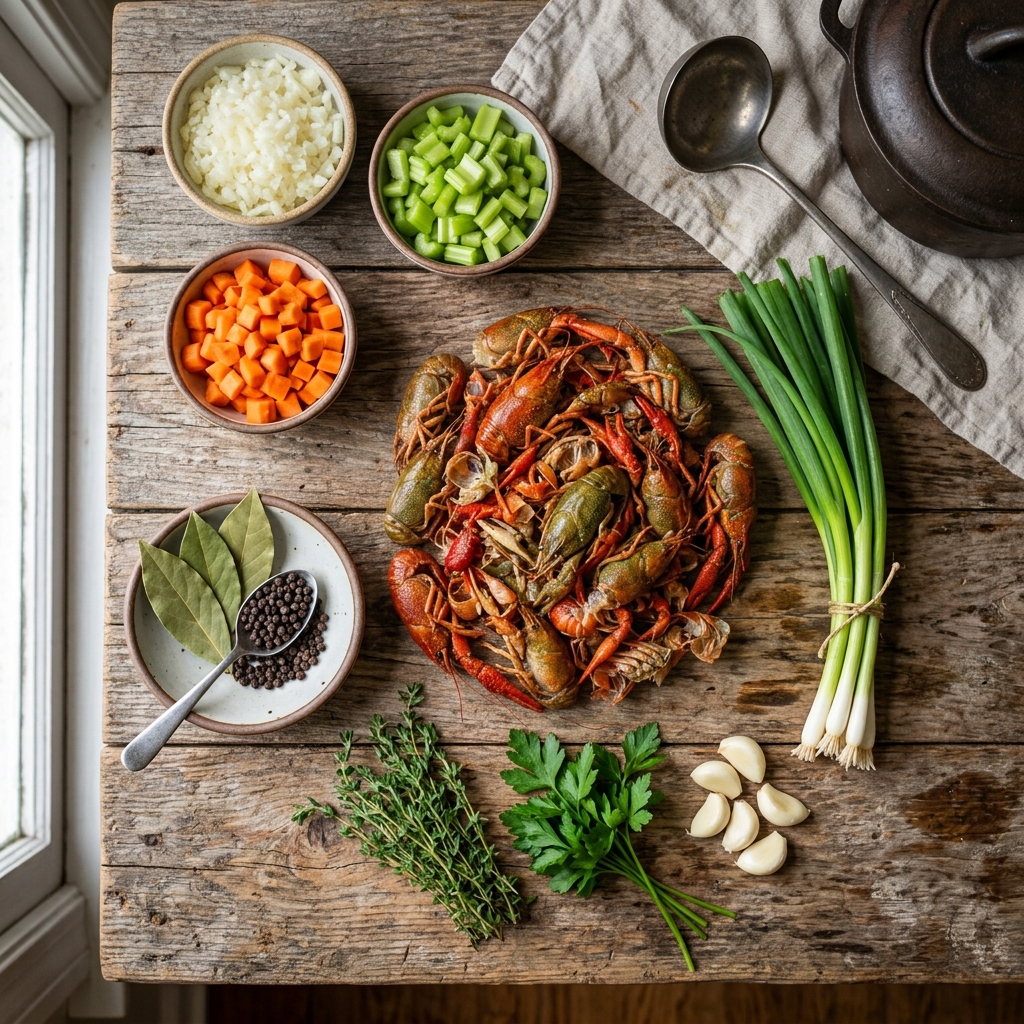
The quality of your ingredients directly affects the final flavor. Fortunately, the ingredient list is simple.
Basic Crawfish Stock Recipe Ingredients
Seafood Base
2–3 pounds crawfish shells
Use:
- Crawfish heads
- Tail shells
- Claws
- Body shells
The heads are especially valuable because they contain natural fats and flavor compounds that create a richer stock.
Vegetables (The Flavor Foundation)
Most seafood stocks use aromatic vegetables called mirepoix.
For this crawfish stock recipe, use:
- 2 large onions, roughly chopped
- 3 celery stalks, chopped
- 2 carrots, chopped
- 5 garlic cloves, crushed
These vegetables balance the strong seafood flavor.
Herbs and Seasonings
Recommended additions:
- 2 bay leaves
- 1 tablespoon black peppercorns
- Fresh parsley stems
- Thyme sprigs
- Green onion tops
Avoid adding too much salt during cooking because the stock may become concentrated later.
Crawfish Stock Recipe Ingredient Table
| Ingredient | Amount | Notes |
|---|---|---|
| Crawfish shells | 2–3 pounds | Fresh or leftover shells |
| Water | 8 cups | Adjust depending on concentration |
| Onion | 2 large | Adds sweetness |
| Celery | 3 stalks | Adds freshness |
| Carrots | 2 medium | Adds balance |
| Garlic | 5 cloves | Enhances aroma |
| Bay leaves | 2 | Adds herbal notes |
| Peppercorns | 1 tbsp | Adds mild spice |
| Parsley stems | Handful | Adds freshness |
Equipment Needed for a Crawfish Stock Recipe
Before starting, prepare the right equipment.
You will need:
- Large stockpot
- Wooden spoon
- Fine mesh strainer
- Cheesecloth (optional)
- Storage containers
- Ladle
A large pot is important because the shells need enough space to release their flavors properly.
Step-by-Step Crawfish Stock Recipe Instructions
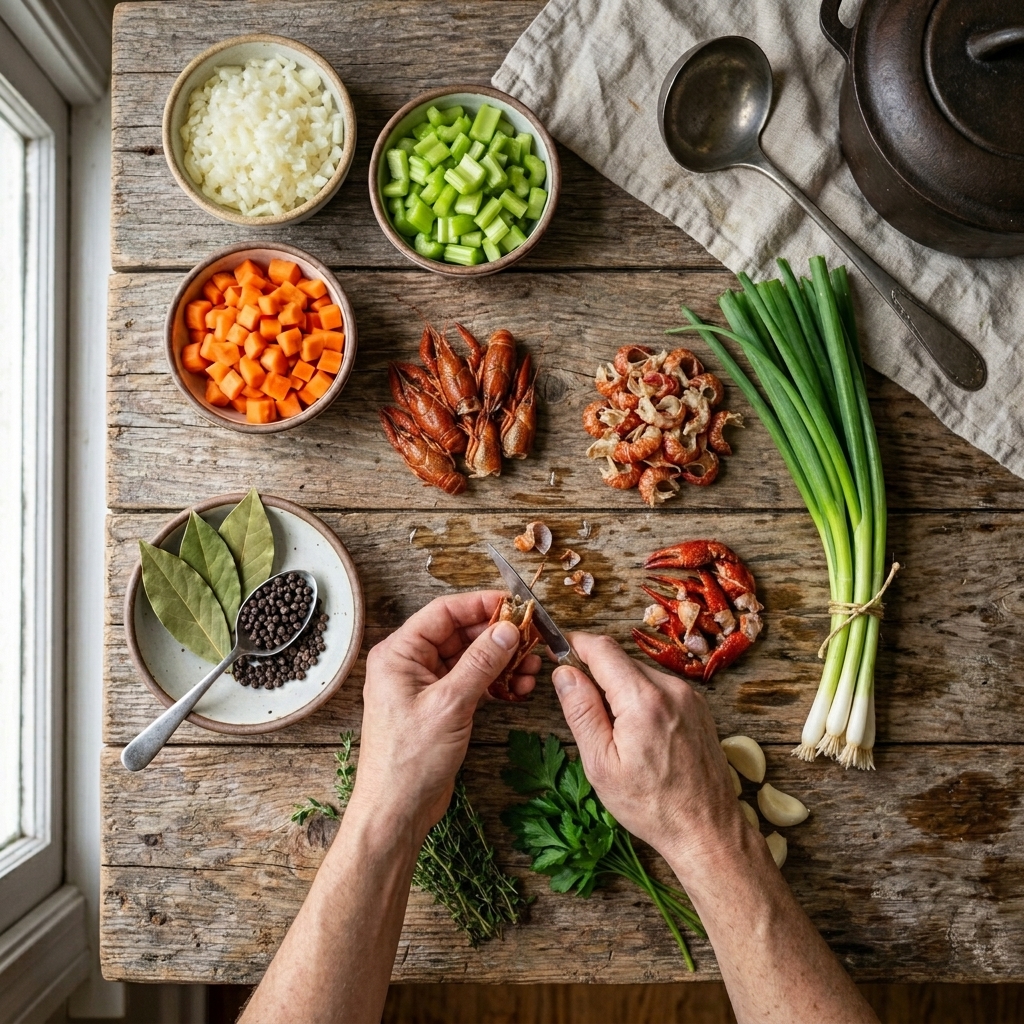
Step 1: Clean the Crawfish Shells
First, rinse the shells under cold water.
Remove:
- Excess seasoning
- Dirt
- Food particles
If you are using shells from a crawfish boil, remember that heavily seasoned shells may create a saltier stock.
Step 2: Roast the Shells for Deeper Flavor (Optional)
For a more intense crawfish stock recipe, roast the shells before simmering.
Place shells on a baking tray and roast until they become fragrant.
Roasting helps create:
- Darker color
- Richer aroma
- More intense seafood flavor
Some cooks prefer roasted shells because they add a deeper, almost nutty flavor profile.
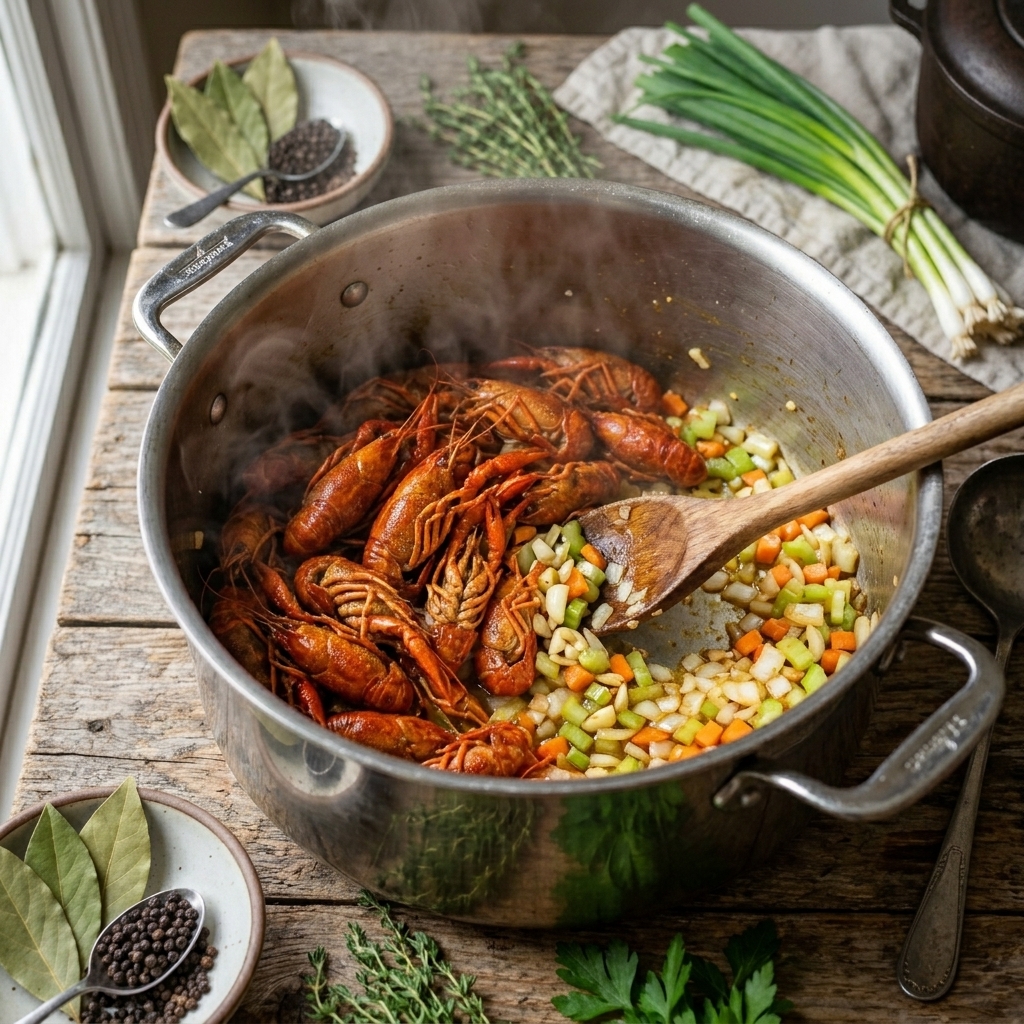
Step 3: Cook the Aromatic Vegetables
Heat a large pot and lightly sauté:
- Onion
- Celery
- Carrots
- Garlic
Cook until the vegetables soften and become aromatic.
This step creates the flavor foundation of your crawfish stock recipe.
Step 4: Add Crawfish Shells and Water
Add the shells into the pot.
Then pour in cold water until the shells are covered.
Starting with cold water helps gradually extract flavor from the shells and vegetables.
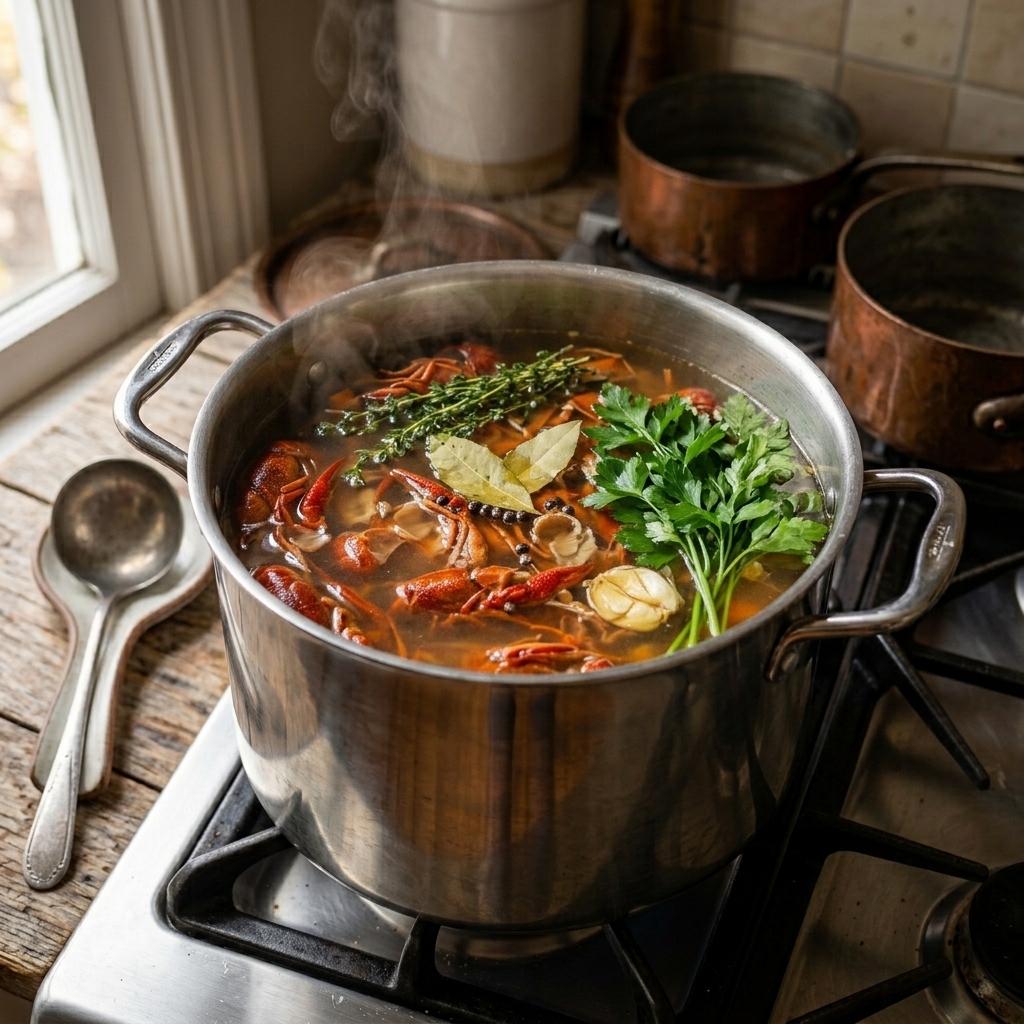
Step 5: Simmer Slowly
Bring the mixture to a gentle boil.
Then reduce heat and allow the stock to simmer.
Recommended cooking time:
45 minutes to 1 hour
Avoid boiling aggressively because high heat can make seafood stock cloudy and bitter.
During simmering:
- Remove foam from the surface
- Stir occasionally
- Monitor the aroma
A good crawfish stock recipe should smell sweet, savory, and seafood-rich.
Step 6: Strain the Crawfish Stock
After simmering for 45 minutes to 1 hour, turn off the heat and allow the stock to rest for a few minutes.
Then follow these steps:
- Place a fine mesh strainer over a large bowl or another clean pot.
- Slowly pour the stock through the strainer.
- Press the shells gently with a spoon to extract additional liquid.
- Discard the remaining shells and vegetables.
- For an extra-clear stock, strain again through cheesecloth.
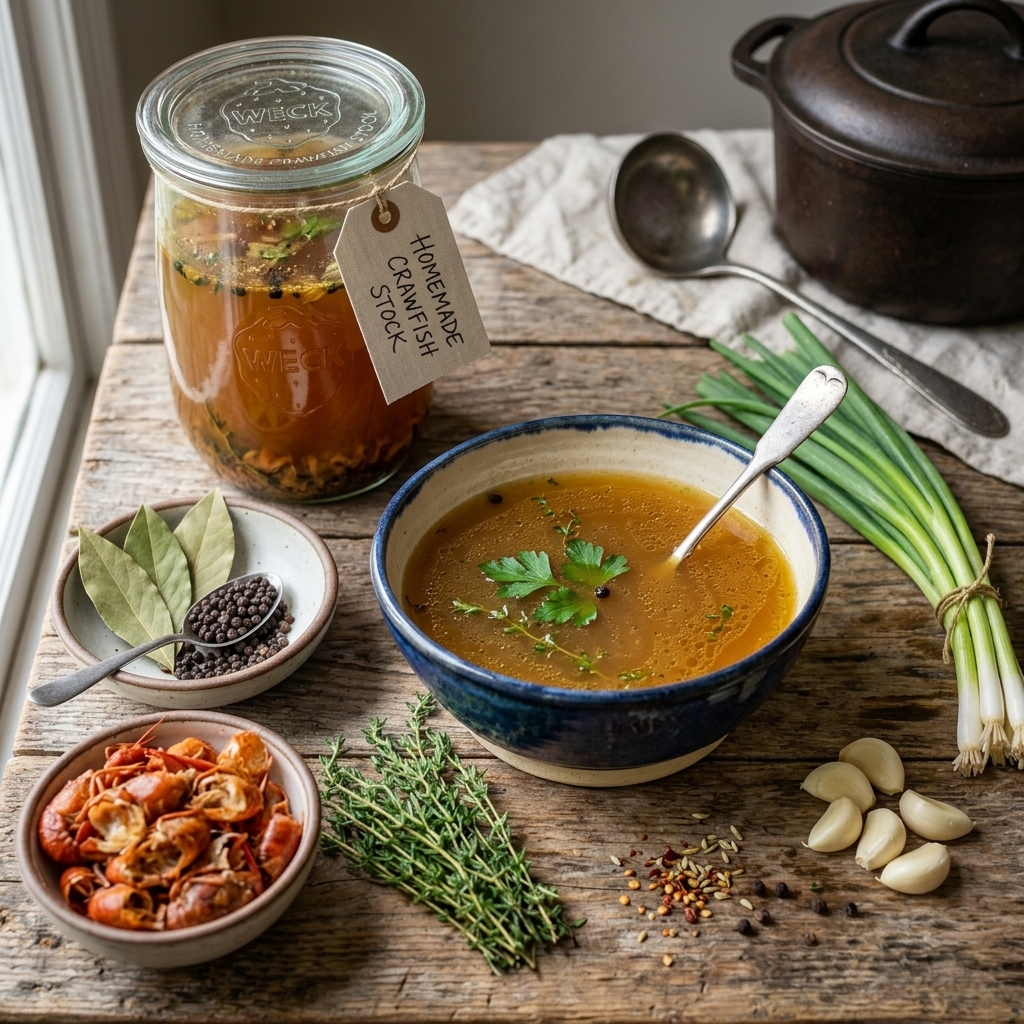
The final liquid should have:
- A deep orange or golden color
- A strong seafood aroma
- A smooth texture
- A balanced savory flavor
How to Concentrate a Crawfish Stock Recipe for More Flavor
Sometimes you may want a stronger stock, especially when using it for sauces, gumbo, or étouffée.
In that case, you can reduce the stock.
Reduction Method
After straining:
- Return the liquid to a clean pot.
- Simmer uncovered for another 20–40 minutes.
- Allow some water to evaporate.
- Taste and adjust the strength.
A reduced crawfish stock recipe creates a more concentrated flavor because the seafood essence becomes stronger.
This technique is commonly used by professional chefs when creating sauces because a small amount of concentrated stock can add tremendous depth.
How Long Does Crawfish Stock Recipe Need to Cook?
One common question is:
How long should you simmer a crawfish stock recipe?
The ideal cooking time is usually:
| Cooking Method | Time | Result |
|---|---|---|
| Quick simmer | 30 minutes | Light seafood flavor |
| Standard simmer | 45–60 minutes | Balanced and flavorful |
| Concentrated stock | 90 minutes+ | Stronger seafood taste |
Although longer cooking sounds better, seafood shells do not require many hours like beef bones.
In fact, excessive cooking can sometimes create:
- Bitter flavors
- Overly strong seafood smell
- Cloudy texture
Therefore, a gentle simmer for about one hour is usually enough.

Expert Tips for Making the Best Crawfish Stock Recipe
Creating a memorable crawfish stock recipe requires more than simply boiling shells in water.
Below are professional techniques that improve flavor.
1. Always Use Fresh Crawfish Shells When Possible
Fresh shells provide the strongest natural flavor.
The best sources include:
- Crawfish boils
- Freshly peeled crawfish tails
- Seafood markets
- Homemade crawfish dishes
Frozen shells can also work, but fresh shells usually produce a more aromatic stock.
2. Roast Crawfish Shells Before Cooking
Roasting is one of the easiest ways to improve your crawfish stock recipe.
When shells are roasted:
- Natural oils become more concentrated
- Flavor becomes deeper
- Color becomes richer
This technique is especially useful when making stock for:
- Gumbo
- Bisques
- Seafood sauces
3. Do Not Over-Salt the Stock
This is a very common mistake.
Remember:
The stock will often be added to recipes that already contain seasoning.
For example:
- Gumbo includes spices
- Étouffée includes butter and seasoning
- Rice dishes often include salted ingredients
Therefore, keep the initial stock lightly seasoned.
4. Use Aromatic Vegetables Properly
The vegetables in a crawfish stock recipe are not just fillers.
Each ingredient has a purpose.
| Vegetable | Flavor Contribution |
|---|---|
| Onion | Sweetness and body |
| Celery | Fresh herbal notes |
| Carrot | Mild sweetness |
| Garlic | Savory depth |
Together, these create a balanced seafood foundation.
Common Mistakes When Making Crawfish Stock Recipe
Even experienced home cooks can make mistakes.
Here are the most common problems and solutions.
Mistake 1: Boiling Too Aggressively
A rolling boil may seem faster, but it can damage the final result.
Problem:
High heat can:
- Make stock cloudy
- Create bitter flavors
- Destroy delicate seafood aromas
Solution:
Keep the temperature low and maintain a gentle simmer.
Mistake 2: Using Too Much Water
Adding excessive water creates weak stock.
Problem:
The seafood flavor becomes diluted.
Solution:
Use enough water to cover the shells but avoid filling the pot unnecessarily.
Mistake 3: Adding Too Many Strong Spices
The purpose of a crawfish stock recipe is to highlight crawfish flavor.
Too much:
- Chili
- Cayenne
- Strong herbs
- Salt
can overpower the seafood taste.
Mistake 4: Not Removing Shell Debris
Small shell pieces can ruin the texture.
Always strain carefully.
For professional results:
- Use a fine mesh strainer
- Filter twice if necessary
How to Store Homemade Crawfish Stock Recipe
One major advantage of making homemade stock is that you can prepare it in advance.
Proper storage helps preserve flavor and freshness.
Refrigerator Storage
Fresh crawfish stock can usually stay refrigerated for:
3–4 days
Store it in:
- Glass jars
- Airtight containers
- Covered bowls
Allow the stock to cool completely before refrigerating.
Freezing Crawfish Stock
Freezing is the best long-term storage method.
A properly stored crawfish stock recipe can last:
3–6 months in the freezer
Best freezing methods:
Ice Cube Method
Great for sauces.
Steps:
- Pour cooled stock into ice cube trays.
- Freeze overnight.
- Transfer cubes into freezer bags.
Advantages:
- Easy portion control
- Quick flavor boost
- Less waste
Container Method
For larger recipes:
- Freeze in 1–2 cup portions
- Leave space for expansion
- Label with the date
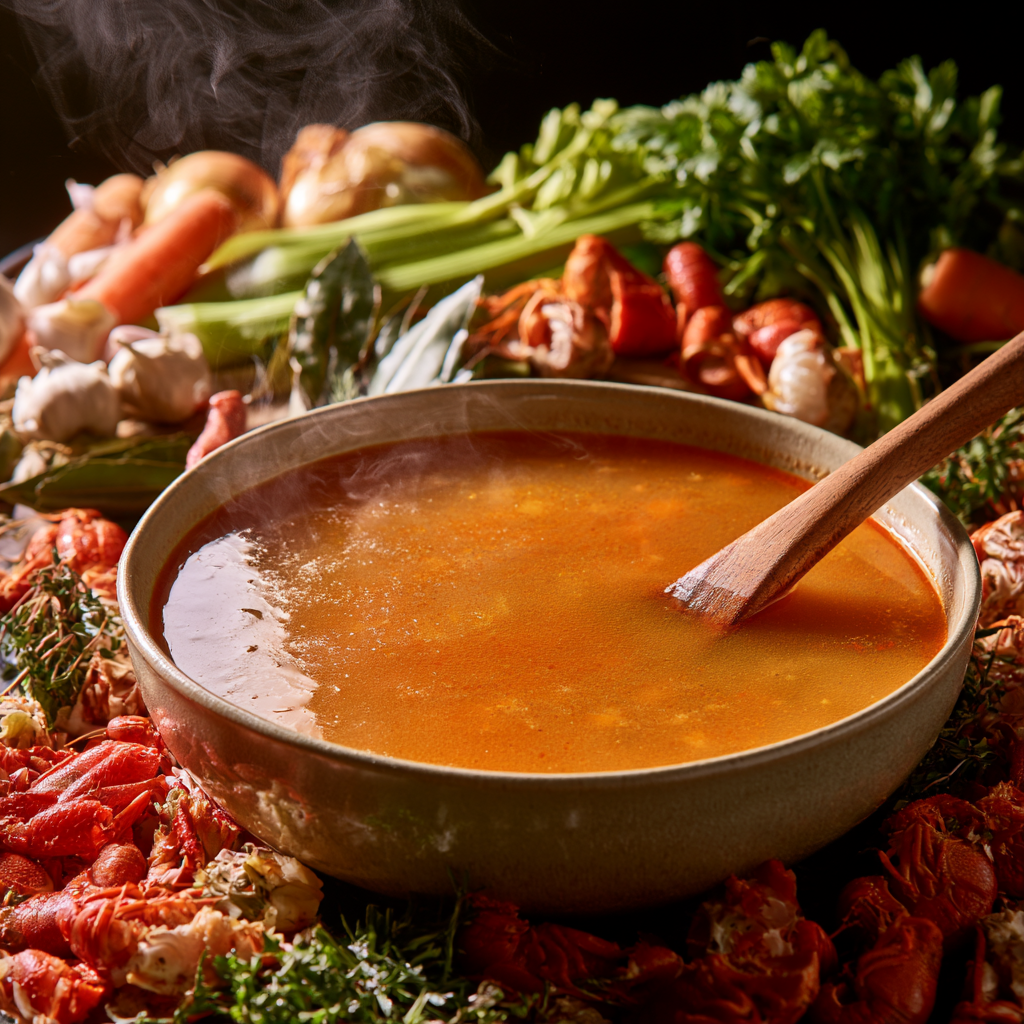
Best Recipes That Use Crawfish Stock Recipe
A homemade seafood stock is incredibly versatile.
Here are some of the best ways to use it.
1. Crawfish Gumbo
Gumbo is one of the most popular dishes where a crawfish stock recipe becomes the foundation.
The stock adds:
- Seafood richness
- Traditional Louisiana flavor
- Extra depth to the roux
2. Crawfish Étouffée
Étouffée depends heavily on flavorful liquid.
Using homemade stock creates a smoother and more authentic sauce.
3. Seafood Rice Dishes
Replace plain water with crawfish stock when cooking rice.
The result:
- More aroma
- Better texture
- Stronger seafood flavor
4. Seafood Pasta Sauce
A small amount of crawfish stock can transform a basic cream or tomato sauce.
It creates a restaurant-style seafood pasta experience.
Best Recipes That Use Crawfish Stock Recipe
A homemade seafood stock is incredibly versatile.
Here are some of the best ways to use it.
1. Crawfish Gumbo
Gumbo is one of the most popular dishes where a crawfish stock recipe becomes the foundation.
The stock adds:
- Seafood richness
- Traditional Louisiana flavor
- Extra depth to the roux
2. Crawfish Étouffée
Étouffée depends heavily on flavorful liquid.
Using homemade stock creates a smoother and more authentic sauce.
3. Seafood Rice Dishes
Replace plain water with crawfish stock when cooking rice.
The result:
- More aroma
- Better texture
- Stronger seafood flavor
4. Seafood Pasta Sauce
A small amount of crawfish stock can transform a basic cream or tomato sauce.
It creates a restaurant-style seafood pasta experience.
Case Study: How Homemade Crawfish Stock Improved a Seafood Restaurant Recipe
A small seafood restaurant in Louisiana wanted to improve the flavor consistency of its crawfish dishes.
Previously, the kitchen used commercial seafood broth.
The problems included:
- Inconsistent seafood flavor
- Higher ingredient costs
- Less authentic taste
The chefs introduced a homemade crawfish stock recipe using leftover crawfish shells from daily operations.
After the change:
| Area | Before | After |
|---|---|---|
| Flavor | Mild seafood taste | Rich crawfish flavor |
| Waste | Shells discarded | Shells reused |
| Cost | Higher broth expenses | Lower ingredient cost |
| Customer feedback | Average | Improved satisfaction |
The biggest improvement came from using every part of the crawfish instead of wasting valuable flavor sources.
Key lesson:
“Great cooking is often about extracting maximum flavor from simple ingredients.”
Chef Quote About Seafood Stock
“A great stock is the foundation of great cooking. When the base has depth, every dish built on top becomes better.”
Frequently Asked Questions About Crawfish Stock Recipe
What is the best way to make a crawfish stock recipe?
The best method is to simmer crawfish shells with aromatic vegetables such as onion, celery, carrots, and garlic for about 45–60 minutes. After simmering, strain the liquid carefully to create a flavorful seafood stock.
Can I make crawfish stock without crawfish heads?
Yes.
Although heads provide extra richness, you can still make an excellent crawfish stock recipe using:
- Shells
- Claws
- Tail shells
The flavor will simply be slightly lighter.
Can frozen crawfish shells be used for stock?
Yes.
Frozen shells work well. Simply thaw them before cooking and rinse away excess ice.
Is crawfish stock the same as seafood broth?
No.
Although they are similar, crawfish stock is specifically made from crawfish shells and focuses on extracting shellfish flavor.
Seafood broth may contain:
- Fish
- Shrimp
- Crab
- Mixed seafood
How can I make crawfish stock taste stronger?
To increase flavor:
- Roast shells first
- Reduce the stock after straining
- Use more shells
- Simmer gently
Can I use crawfish stock in recipes other than seafood dishes?
Absolutely.
It can improve:
- Rice dishes
- Soups
- Sauces
- Pasta recipes
- Vegetable dishes
Final Thoughts: Mastering the Perfect Crawfish Stock Recipe
Crawfish Stock Recipe: These best-in-class crawfish stocks are one of the quickest routes to real seafood flavor in your kitchen. The process may take quite a while, but it produces an ingredient of great depth that can be used in a multitude of dishes.
With crawfish shells, vegetables, and simmering techniques, you can make a stock that is much more flavorful than many commercial options.
Also, the crawfish stock is one of those sustainable cooking approaches that make something useful out of kitchen waste.
It doesn’t matter if the dish is gumbo, étouffée, or seafood soup; even your own recipe when you’re feeling creative. A great crawfish stock recipe gives the rich flavor base needed to take any of these dishes into something exceptional.
The best seafood meals often begin with the simplest step: creating a great stock.

Crawfish Stock Recipe
Ingredients
Equipment
Method
- Clean the Crawfish Shells: Rinse crawfish shells under cold water to remove excess seasoning, dirt, or leftover food particles.
- Roast the Shells (Optional): For a deeper flavor, roast the shells at medium heat until fragrant. This helps release natural oils and creates a richer stock color.
- Cook the Vegetables: Add onions, celery, carrots, and garlic to a large stockpot. Lightly sauté until the vegetables become aromatic.
- Add Crawfish Shells and Water: Place the crawfish shells into the pot and cover them with cold water.
- Add Herbs and Seasonings: Add bay leaves, peppercorns, parsley stems, thyme, and green onions.
- Simmer Slowly: Bring the mixture to a gentle boil, then reduce heat and simmer for 45–60 minutes. Avoid a strong boil because it can make the stock bitter or cloudy.
- Strain the Stock: Remove from heat and strain the liquid through a fine mesh strainer. For a cleaner stock, strain again using cheesecloth.
- Store or Use Immediately: Use the crawfish stock immediately or cool and store it in the refrigerator for up to 3–4 days. Freeze for longer storage.