Go Back
Gator Gumbo Recipe
Mary Johnson

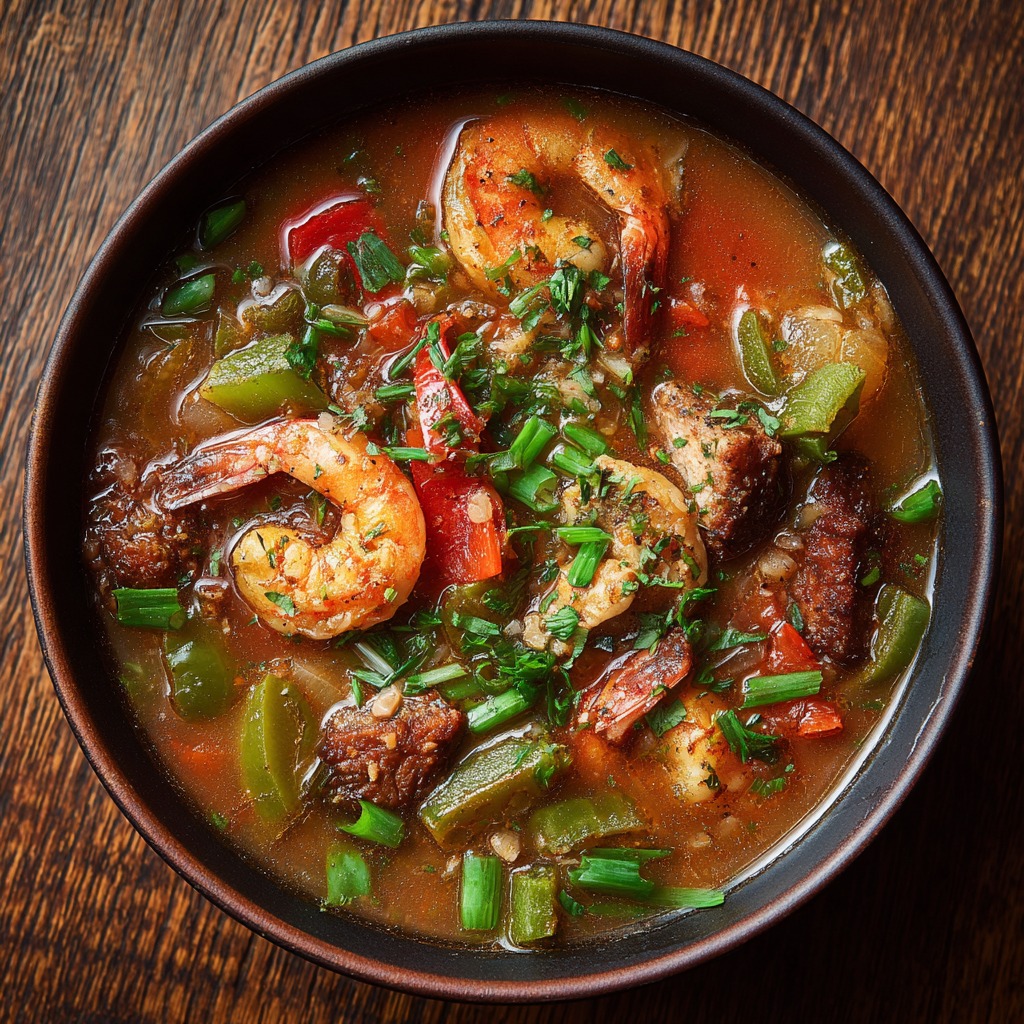
Cajun Gator Gumbo with Andouille and Okra

This gator gumbo recipe simmers tender alligator tail meat and smoked andouille in a dark, milk-chocolate roux with onion, celery, bell pepper, garlic and okra. A Cajun-style Louisiana gumbo that feeds a crowd, served over white rice with green onions, hot sauce and filé at the table.
Prep Time 25 minutes
Cook Time 1 hour 50 minutes
Optional buttermilk soak 1 hour
Total Time 2 hours 15 minutes
Servings: 8 servings
Course: Main Course
Cuisine: Southern

Ingredients
  

Alligator and sausage
  • 1½ lb alligator tail meat thawed, trimmed and cut into 1-inch cubes
  • 1 cup buttermilk optional, for soaking
  • 12 oz smoked andouille sausage sliced into half-moons
  • 1 tbsp neutral oil for browning
Roux and gumbo
  • ¾ cup neutral oil canola, vegetable or peanut
  • ¾ cup all-purpose flour
  • 1 large yellow onion diced
  • 3 ribs celery diced
  • 1 large green bell pepper diced
  • 5 cloves garlic minced
  • 2 tbsp Cajun or Creole seasoning divided; use a low-salt blend if possible
  • 1 tsp dried thyme
  • ½ tsp cayenne pepper or to taste
  • ½ tsp black pepper
  • 8 cups seafood or chicken stock low-sodium, warmed
  • 2 bay leaves
  • 2 tsp Worcestershire sauce
  • 2 cups okra fresh or frozen, sliced
  • salt and hot sauce to taste
To serve
  • 6 cups cooked long-grain white rice
  • 4 green onions sliced
  • ¼ cup fresh parsley chopped
  • filé powder optional, at the table

Equipment

  • Heavy 6- to 8-quart Dutch oven
  • Flat-edged wooden spoon or spatula
  • Whisk
  • Ladle
  • Saucepan (for warming stock)
  • Cutting board and chef's knife

Method
 

  1. If using, soak the cubed alligator in buttermilk in the refrigerator for 1 to 4 hours. Chop the onion, celery and bell pepper and keep them together; mince the garlic. Warm the stock in a saucepan.
  2. Heat 1 tbsp oil in the Dutch oven over medium heat. Brown the andouille for about 6 minutes and transfer to a plate.
  3. Drain the alligator, pat dry and toss with 1 tsp of the Cajun seasoning. Sear in two batches until lightly browned, 2 to 3 minutes per batch; it does not need to cook through. Refrigerate with the sausage until needed.
  4. Add ¾ cup oil to the pot and whisk in the flour. Cook over medium-low heat, stirring constantly and scraping the bottom, until the roux is the color of milk chocolate, 25 to 35 minutes. If it smells burnt or shows black specks, start again.
  5. Add the onion, celery and bell pepper and cook, stirring, for 6 to 8 minutes until softened. Add the garlic, thyme, cayenne, black pepper and remaining Cajun seasoning and cook 1 minute.
  6. Add the warm stock a ladle at a time, stirring well after each addition. Add the bay leaves, Worcestershire, okra and browned sausage. Bring to a boil, then simmer partly covered for 45 minutes, stirring occasionally and skimming off excess oil.
  7. Add the seared alligator and its juices. Keep at a gentle simmer (not a hard boil) for 30 to 40 minutes, until the alligator is opaque throughout and fork-tender. Body or leg meat may need 20 to 30 minutes longer.
  8. Remove the bay leaves. Season with salt and hot sauce. Stir in most of the green onions and parsley. Serve over rice, topped with the remaining herbs, with filé powder and hot sauce at the table.
Notes

  • Alligator cut: Tail meat (often sold as tenderloin) is the most tender and mild. Trim away any fat, which can taste strong.
  • Food safety: Handle raw alligator like raw poultry and cook until opaque throughout and fork-tender.
  • Filé: Stir it into individual bowls, not the simmering pot, or it turns stringy.
  • Substitutes: Use 1 lb smoked alligator sausage instead of fresh gator, or boneless chicken thighs if alligator is unavailable.
  • Storage: Refrigerate within 2 hours, store rice separately, and use within 3 to 4 days. Freeze up to 3 months. Reheat until steaming hot.