
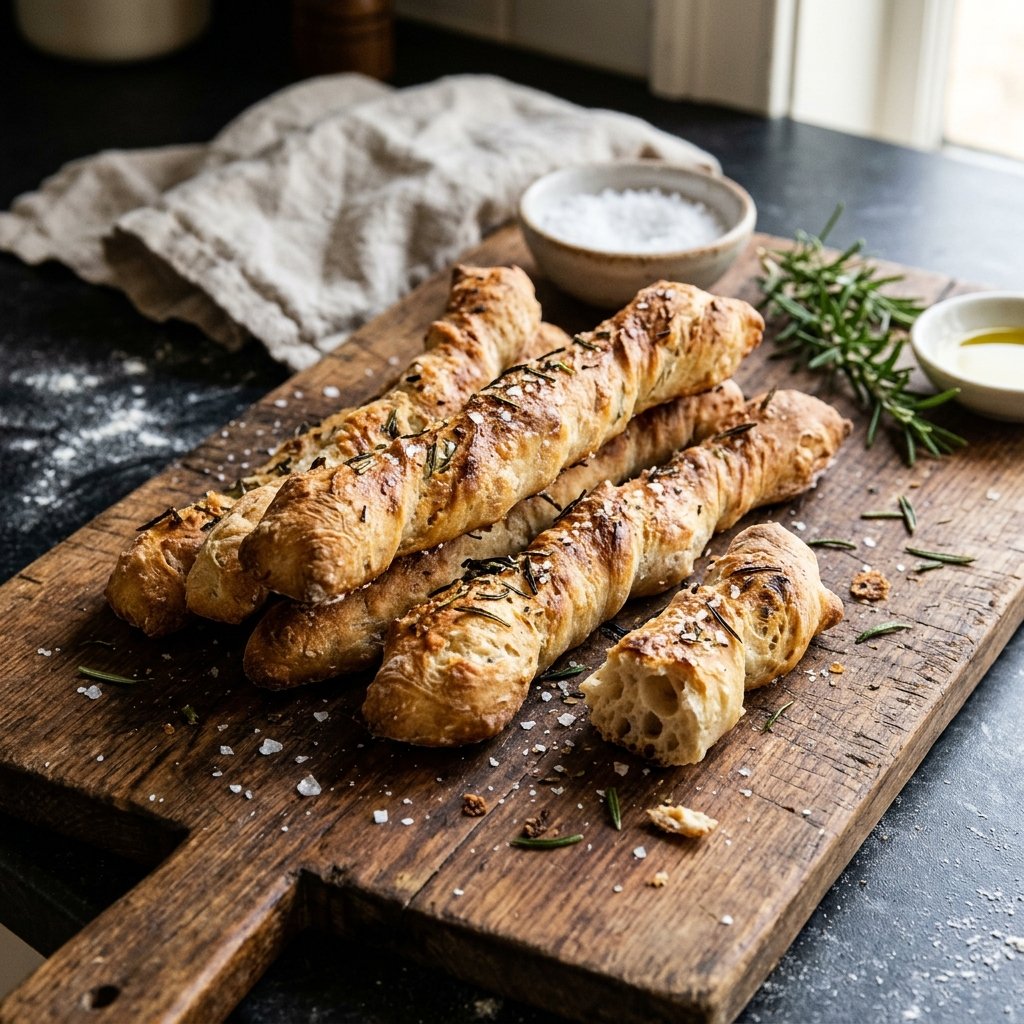
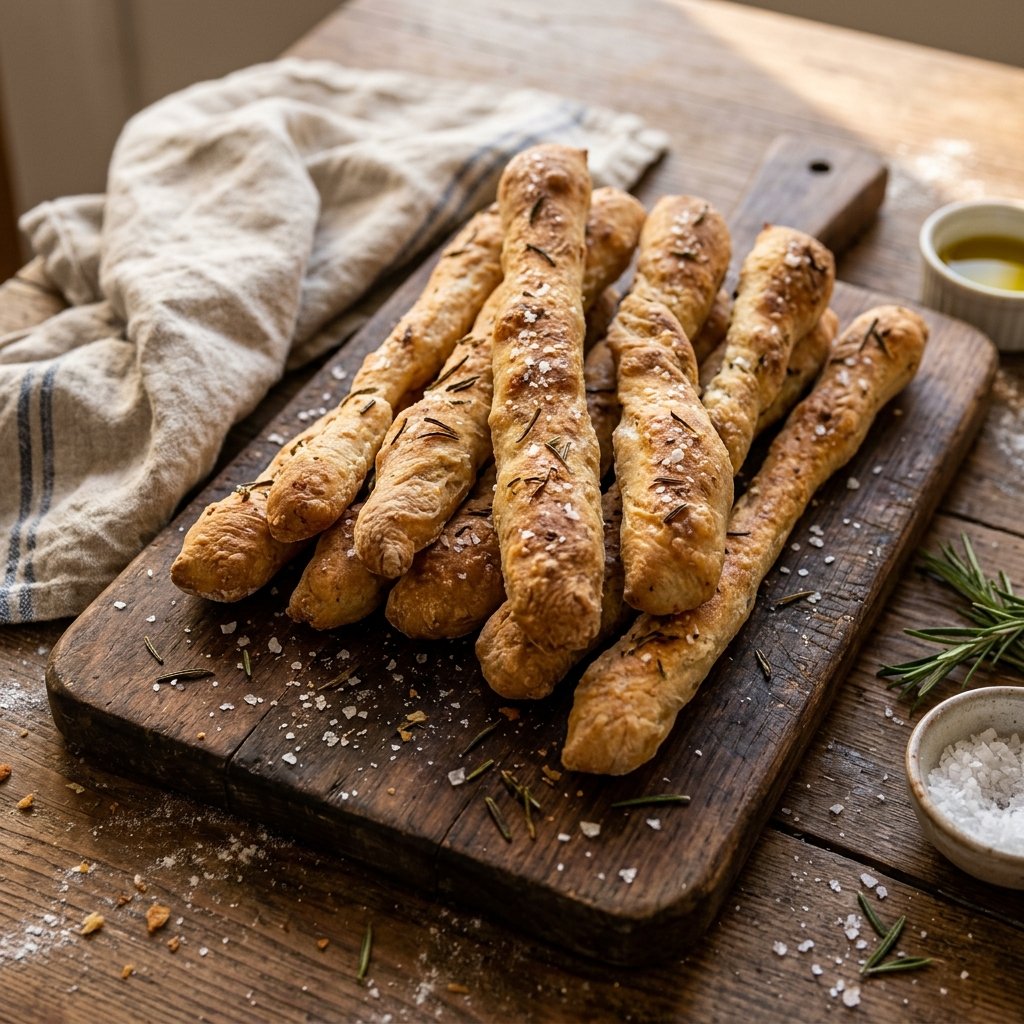
This sourdough breadsticks recipe makes sixteen long, golden sticks with a crisp, blistered outside and a chewy, open middle, brushed with olive oil and finished with fresh rosemary and flaky sea salt. The dough is leavened only with an active sourdough starter, so there is no commercial yeast, and a spoonful of honey in the dough helps the crust brown and balances the tang of the fermentation.
You can bake them the same day you mix the dough, or let the dough rest in the fridge overnight and bake them fresh for dinner the next evening. Below you will find what each ingredient does, a timeline for both schedules, how to shape them so they stay long and even, and how to steer the texture toward soft and pillowy or thin and crunchy. If you only need the quantities, jump to the recipe card.
The Short Version
- Yield: 16 breadsticks, about 10 inches (25 cm) long.
- Hands-on time: about 30 minutes, spread across the day.
- Fermentation: 4 to 6 hours at warm room temperature, or overnight in the fridge.
- Bake: 425°F (220°C) for 16 to 20 minutes.
- Leavening: active sourdough starter only, no instant or active dry yeast.
- Texture: crisp shell, chewy inside; easy to make softer or crunchier with the adjustments further down.
Why Make Breadsticks with Sourdough?
Breadsticks made with commercial yeast are fast, but they tend to taste mostly of flour and butter. A long sourdough fermentation does three things that a quick yeasted dough cannot.
Flavor. The wild yeast and lactic acid bacteria in a starter produce acids and aromatic compounds while the dough ferments. That is where the gentle tang and the slightly nutty, wheaty depth come from. In a thin breadstick, where crust makes up so much of every bite, that flavor is concentrated in a way you notice right away.
Texture. Slow fermentation gives the gluten time to develop on its own, so you need very little kneading to get a chewy, elastic crumb. The acidity also helps the crust stay crisp a little longer after baking.
Flexibility. A sourdough dough moves slowly, which means it is forgiving. If you get pulled away for an hour, nothing is ruined. And the dough can sit in the refrigerator for up to two days, so you can mix it when you have time and bake it when you need it.
If you already bake loaves, this is also one of the most satisfying ways to use a well-fed starter on a day when you do not want to commit to a full boule. If you are newer to sourdough, breadsticks are a friendly project: there is no scoring, no Dutch oven, and no worrying about oven spring in a tall loaf.
Ingredients and What Each One Does
This sourdough breadsticks recipe uses a short list of pantry ingredients. Weights are the most reliable way to measure flour and water for bread, so grams come first and cup measures follow.
- Active sourdough starter (100 g / about ½ cup). Use it at its peak, a few hours after feeding, when it has roughly doubled, smells pleasantly sour, and is full of bubbles. A sluggish starter is the most common reason sourdough doughs fail to rise. If yours needs some attention, King Arthur Baking has a clear guide to building and feeding a sourdough starter.
- Bread flour (500 g / about 4 cups). Bread flour has more protein than all-purpose flour, which means a stronger gluten network and a chewier stick that holds its shape when you stretch it long. All-purpose flour works too; the breadsticks will be a little softer and slightly less tall.
- Warm water (300 g / 1¼ cups). Aim for about 80 to 85°F (27 to 29°C), warm to the touch but not hot. Counting the water in the starter, the dough sits at about 64 percent hydration, which is firm enough to roll into ropes without sticking to everything.
- Honey (1 tablespoon / 21 g). A small amount does not make the breadsticks sweet. It feeds the fermentation a little, keeps the crumb tender, and helps the crust caramelize to a deeper gold. Any mild honey works; clover or wildflower are good choices.
- Extra-virgin olive oil (2 tablespoons in the dough, plus 3 for brushing). Oil in the dough softens the crumb and makes the ropes easier to roll. Oil on top crisps and flavors the crust.
- Fine sea salt (10 g / about 1¾ teaspoons). Two percent of the flour weight, the standard for bread. Do not skip or cut it; salt controls fermentation and carries flavor.
- Topping: fresh rosemary and flaky sea salt. Finely chopped rosemary and a pinch of flaky salt per stick. Garlic, cheese, and seed options are covered below.
Can You Use Sourdough Discard Instead?
Not for this version. Discard is starter that has not been fed recently, so it has too little active yeast to raise the dough on its own. Discard-based breadsticks rely on added instant yeast or baking powder for lift and have a different, more cracker-like character. If you have discard to use, our sourdough discard rolls are a better fit. For these breadsticks, use fed, bubbly, active starter.
Plan Your Bake: Two Timelines
Most of the time in any sourdough breadsticks recipe is waiting, not working. Pick the schedule that suits your day. Times assume a kitchen around 75°F (24°C); a cooler kitchen will need more time, a warmer one less.
| Step | Same-day schedule | Overnight schedule |
|---|---|---|
| Feed starter | 7:00 am | Day 1, 8:00 am |
| Mix dough (starter at peak) | 11:00 am | Day 1, noon |
| Add salt, begin stretch and folds | 11:30 am | Day 1, 12:30 pm |
| Bulk fermentation ends | about 4:00 pm | Day 1, about 4:00 pm, then refrigerate |
| Divide and shape | 4:00 pm | Day 2, 4:00 pm (shape straight from the fridge) |
| Final proof | 45 to 60 minutes | 60 to 90 minutes |
| Bake | about 5:00 pm | Day 2, about 5:30 pm |
The overnight version tastes a little more sour and is easier to shape, because cold dough is firmer and less sticky. The same-day version is milder, which many people prefer for breadsticks served alongside a sauce or soup.
How to Make Sourdough Breadsticks, Step by Step
1. Mix and rest the dough
In a large bowl, whisk the active starter, warm water, and honey until the starter is mostly dissolved and the mixture looks milky. Add the bread flour and 2 tablespoons of olive oil. Stir with a spatula, then use your hand to squeeze and mix until no dry flour remains. The dough will look shaggy and rough. That is right.
Cover the bowl and leave it for 30 minutes. This rest lets the flour fully absorb the water and gives the gluten a head start, so the dough becomes noticeably smoother without kneading.
2. Add the salt
Sprinkle the salt over the dough with a teaspoon of water. Pinch and fold the dough in the bowl for a minute or two until the salt disappears and the dough feels cohesive again. It may tear and look messy at first; keep going and it will come back together.
3. Stretch, fold, and bulk ferment
Over the next 90 minutes, do three sets of stretch and folds, about 30 minutes apart. With a wet hand, grab one side of the dough, stretch it up until you feel resistance, and fold it over the middle. Turn the bowl a quarter turn and repeat until you have gone all the way around. Each set takes less than a minute.
After the last set, cover the bowl and leave the dough alone until it has risen by about 50 percent, looks domed and slightly jiggly, and shows a few bubbles on the sides and surface. At around 75°F this usually takes 4 to 6 hours from mixing. Watch the dough, not the clock. A straight-sided container or a piece of tape marking the starting level makes this much easier to judge.
For the overnight schedule, cover the bowl tightly at this point and refrigerate it for 12 to 48 hours.
4. Divide the dough
Line two large baking sheets with parchment paper. Lightly oil your work surface rather than flouring it; oil keeps the dough from sticking without drying out the outside of the ropes.
Turn the dough out and gently press it into a rough rectangle. Cut it into 16 equal pieces with a bench scraper or sharp knife. The whole batch weighs about 960 g, so each piece is roughly 60 g. Weighing them is worth the extra two minutes, because pieces of the same size bake in the same time.
5. Pre-shape and rest
Roll each piece into a short, loose log about 4 inches long. Cover the logs with a towel and let them rest for 15 minutes. If you skip this, the gluten will be tight and the dough will spring back every time you try to lengthen it. After the rest, the logs relax and stretch easily.
6. Shape the breadsticks
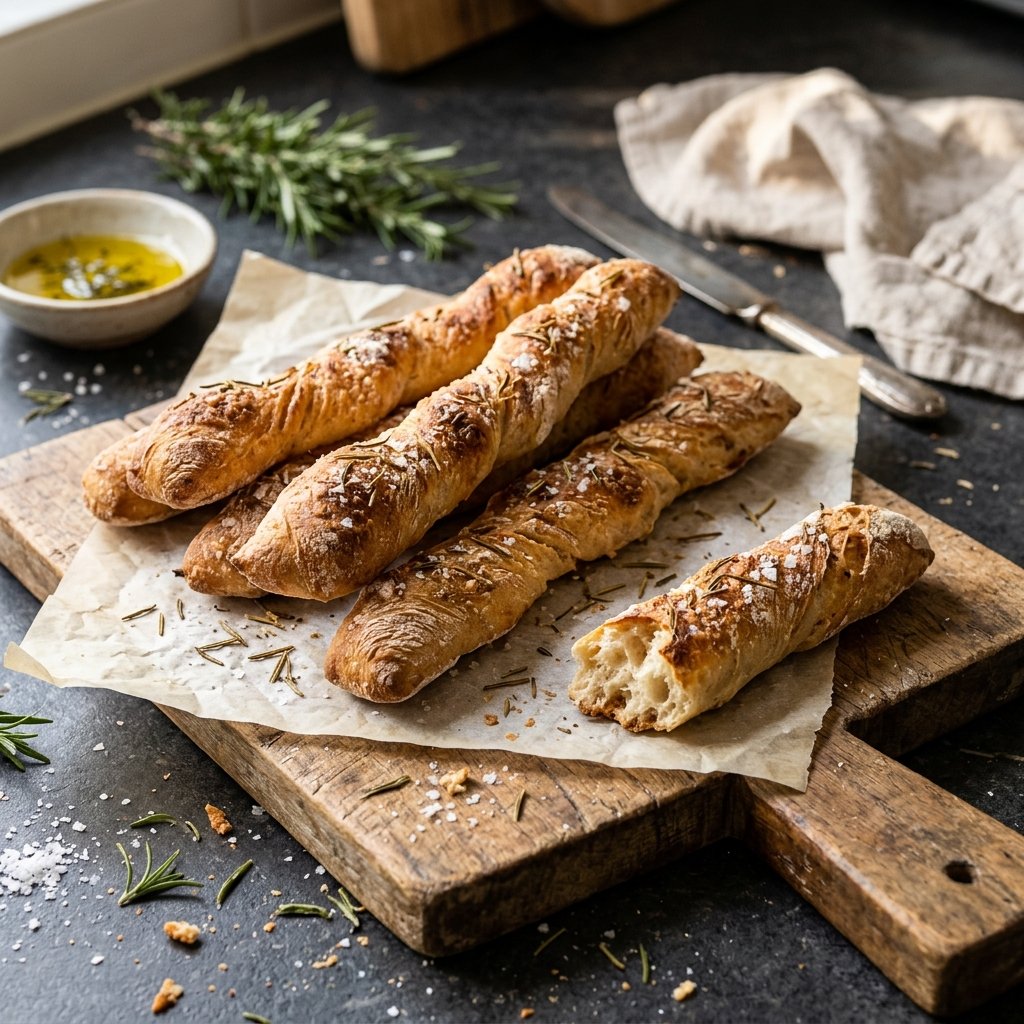
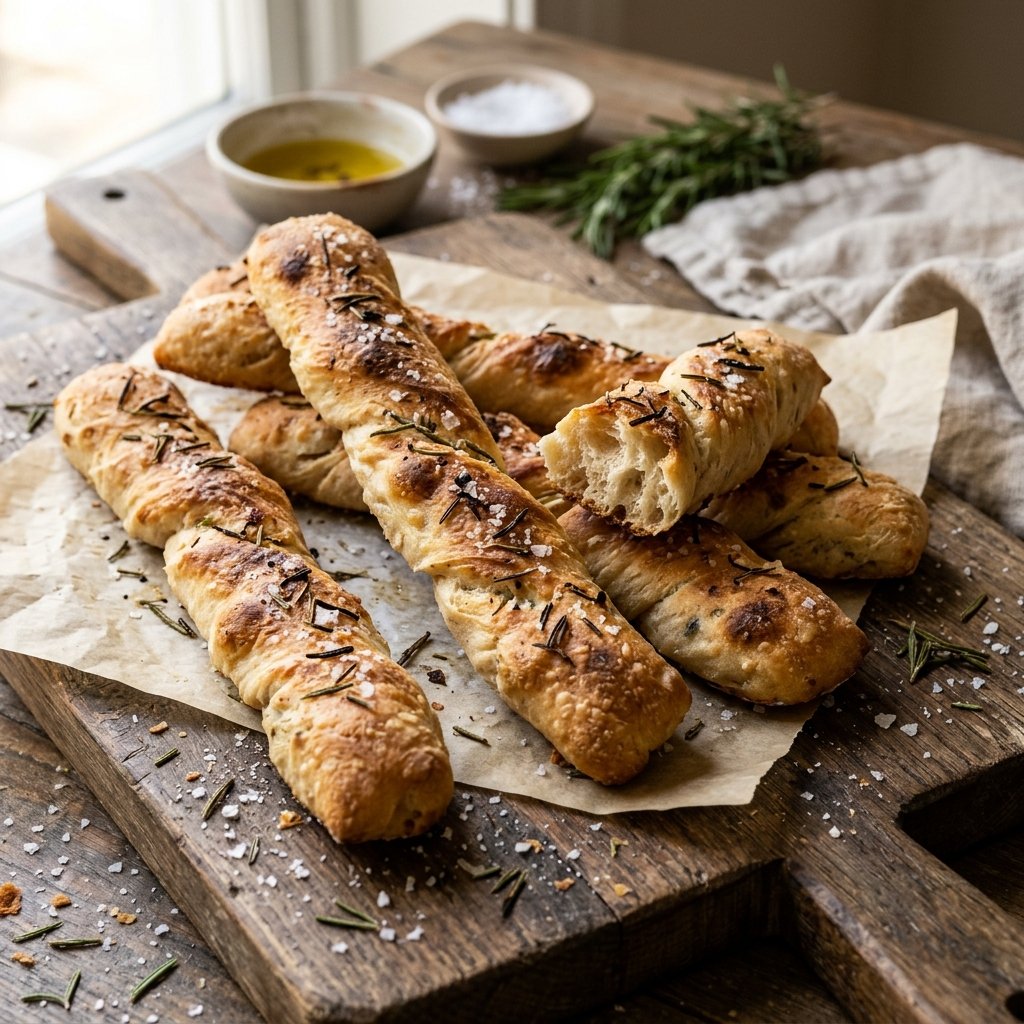
Working one log at a time, place both palms on the center and roll back and forth, moving your hands outward as the rope gets longer. Stop at about 10 inches (25 cm). For a rustic twisted look like the ones in the photos, hold each end and twist in opposite directions two or three times before laying the stick on the baking sheet. Space them about an inch apart, eight to a sheet.
If a rope keeps shrinking back, move on to the next one and come back to it after a couple of minutes. The gluten just needs a moment to relax.
7. Final proof
Cover the trays loosely and let the breadsticks proof for 45 to 60 minutes (60 to 90 minutes if the dough came from the fridge). They will not double; you are looking for a slight puffiness, and a gentle fingertip press should leave a dent that springs back slowly. Heat the oven to 425°F (220°C) with a rack in the upper and lower thirds during this time.
8. Top and bake
Brush the breadsticks generously with olive oil. Scatter the chopped rosemary over them and add a pinch of flaky salt to each one. Bake for 16 to 20 minutes, swapping and rotating the trays halfway through, until they are deep golden brown on top and underneath. Because there is honey in the dough, the color comes on a little faster than with a plain dough, so check at 14 minutes.
Brush them once more with a little oil as they come out of the oven, then let them cool on the tray for 5 minutes. They are at their best warm, within an hour or two of baking.
Soft or Crunchy? How to Change the Texture
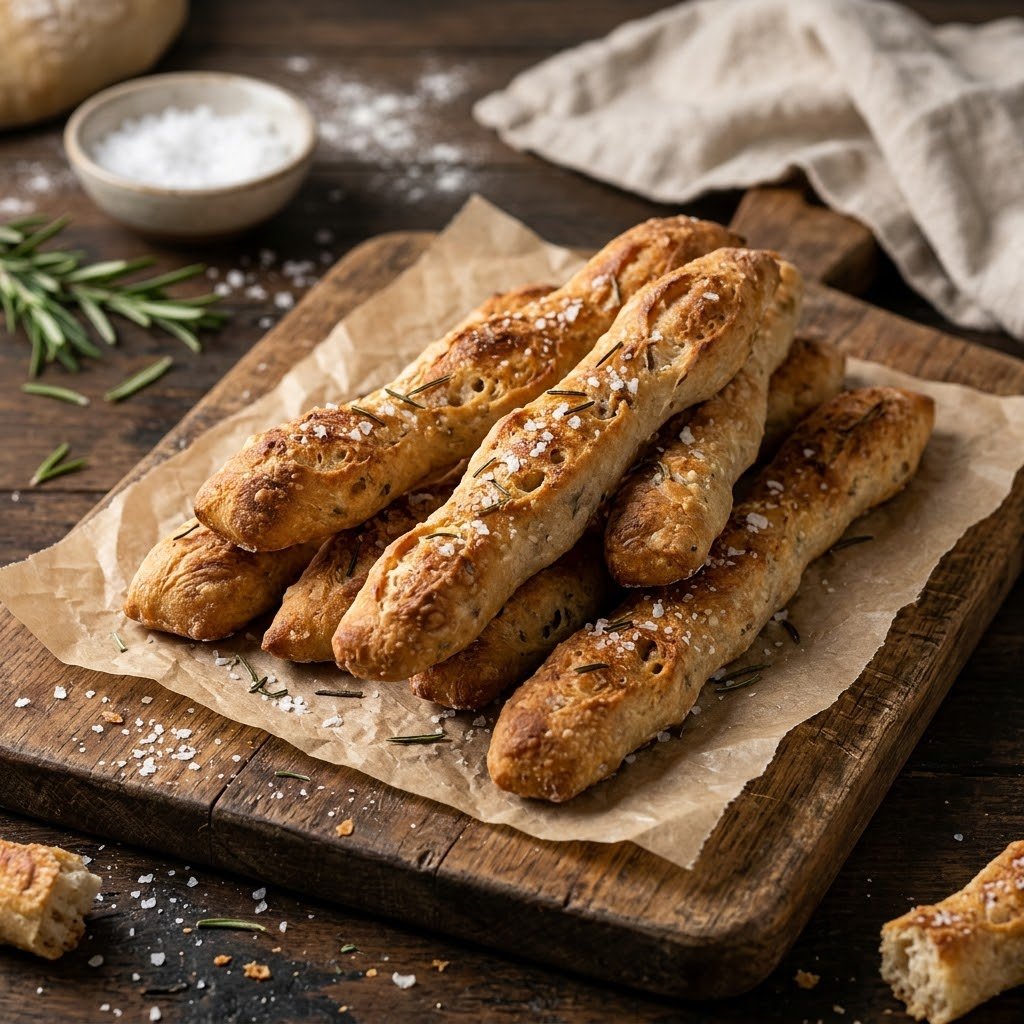
People use the word breadstick for two quite different things: the soft, pull-apart sticks served in a basket with pasta, and the thin, snappy Italian grissini that come wrapped in paper. The same dough can go either way with a few changes.
| Soft and pillowy | As written | Thin and crunchy | |
|---|---|---|---|
| Thickness of rope | About 1 inch, 8 inches long | About ¾ inch, 10 inches long | Pencil-thin, 12 to 14 inches long |
| Pieces from the batch | 12 | 16 | 24 to 32 |
| Fat | Swap the oil in the dough for melted butter | Olive oil | Olive oil |
| Final proof | Full 60 minutes, close together on the tray | 45 to 60 minutes | Skip or keep to 15 minutes |
| Oven | 400°F (205°C), 15 to 18 minutes | 425°F (220°C), 16 to 20 minutes | 375°F (190°C), 25 to 35 minutes |
| Finish | Brush with garlic butter straight out of the oven | Olive oil, rosemary, flaky salt | Cool completely on a rack to crisp |
For crunchy sticks, the lower temperature and longer bake are what matter most. They give the dough time to dry all the way through before the outside burns. Rolling them very thin helps, but even thin sticks stay bendy if they are pulled out too early.
Flavor Variations Worth Trying
Once you have the base sourdough breadsticks recipe down, the toppings are where you can play. Add them after brushing with oil and before baking unless noted.
- Honey garlic butter. Melt 3 tablespoons of butter with 1 grated garlic clove, 1 teaspoon of honey, and a pinch of salt. Brush it on the moment the breadsticks leave the oven. This gives the soft, glossy finish many people expect from restaurant breadsticks, with a gentle sweetness that suits the tang of the dough. For a sweeter spread on the side, try our Amish golden honey.
- Parmesan and black pepper. Finely grate Parmesan over the oiled sticks with plenty of cracked black pepper. Keep the flaky salt light, since the cheese is salty.
- Cheesy pull-apart. Scatter shredded mozzarella over the sticks during the last 5 minutes of baking so it melts without burning.
- Everything seasoning. Sesame, poppy seeds, dried onion, and garlic. Brush with a little beaten egg instead of oil so the seeds stick.
- Za’atar and olive oil. A generous sprinkle of za’atar, which brings thyme, sumac, and sesame. Lovely with hummus or labneh.
- Cinnamon sugar. Brush with melted butter, roll in cinnamon sugar, and serve with a honey or cream cheese dip for something sweet.
- Whole wheat. Replace up to 30 percent of the bread flour with whole wheat flour and add 15 g more water. The flavor gets nuttier and the crumb a little denser. For more on baking with whole grains, see our fresh milled flour sourdough bread.
Troubleshooting Your Sourdough Breadsticks
Most problems trace back to the starter or to fermentation time. Here are the issues that come up most often and how to fix them.
| Problem | Likely cause | What to do |
|---|---|---|
| Dense, heavy sticks | Starter past its peak or too young; bulk ferment cut short | Use starter at peak activity and wait for a clear 50 percent rise before shaping. |
| Ropes keep shrinking back | Gluten is tight | Rest the logs 10 to 15 minutes longer, covered, then roll again. |
| Flat, spread-out sticks | Over-fermented dough or over-proofed shapes | Shorten bulk or proof time, especially in a warm kitchen; refrigerate the dough if it is moving too fast. |
| Very sour flavor | Long, warm ferment or a long cold retard | Use the same-day schedule and a starter fed at a 1:5:5 ratio for a milder result. |
| Bottoms burn before tops brown | Dark pans or rack too low | Use light-colored sheets, double them up, or move the rack up a level. |
| Crust goes soft after baking | Steam trapped while cooling | Cool them on a wire rack, not stacked or covered, and re-crisp in the oven before serving. |
For more general sourdough fixes, our guide to sourdough bread problems walks through starter health, gummy crumb, and fermentation in more depth.
What to Serve with Sourdough Breadsticks
These are made for dipping and for sitting beside a bowl of something warm.
- Dips: warm marinara, olive oil with balsamic vinegar and black pepper, pesto, whipped feta, or a simple garlic and herb butter.
- Soups: a smooth dairy-free tomato soup, a rich potato soup, or a classic French onion soup.
- Pasta and salads: any red-sauce pasta, lasagna, or a big Caesar or Italian chopped salad.
- Antipasto boards: thin, crunchy sticks wrapped with a slice of prosciutto are a classic. Add olives, marinated artichokes, and a few cheeses.
If you enjoy shaping sourdough into smaller breads, try our sourdough focaccia, which uses a very similar olive oil and rosemary finish, or our crusty sourdough rolls for dinner rolls with the same tangy flavor.
Storing, Freezing, and Reheating
Room temperature. Keep cooled breadsticks in a paper bag or loosely wrapped in a towel for up to 2 days. A sealed plastic bag keeps them soft but makes the crust go leathery.
Freezing baked breadsticks. Cool completely, then freeze in a single layer on a tray. Once they are firm, move them to a freezer bag and keep for up to 3 months. Reheat straight from frozen at 375°F (190°C) for 6 to 8 minutes.
Freezing shaped dough. Shape the sticks, freeze them on a parchment-lined tray until solid, then bag them. To bake, lay them on a lined sheet, cover, and let them thaw and proof at room temperature for 2 to 3 hours until slightly puffy, then top and bake as usual.
Reheating. A few minutes in a 350°F (175°C) oven or air fryer brings back the crisp crust. Microwaving makes them chewy and tough, so avoid it.
Sourdough Breadsticks Recipe Tips Worth Remembering
- Your starter is the engine. If it does not reliably double within 4 to 8 hours of a feeding, spend a few days strengthening it before you bake.
- Judge bulk fermentation by the dough’s volume and feel, not the clock. Temperature changes everything.
- Oil the counter, not flour it, when shaping. Flour makes ropes slide instead of grip, and it can leave raw streaks on the crust.
- Rest the pre-shaped logs. Fifteen minutes saves you a lot of frustration.
- Weigh the dough pieces so every stick bakes evenly.
- Check early. Honey in the dough browns faster than plain dough.
Frequently Asked Questions
Can I make sourdough breadsticks without bread flour?
Yes. All-purpose flour works in this sourdough breadsticks recipe without other changes. The dough will be slightly softer and the sticks a little less chewy. If the dough feels sticky, hold back 10 to 15 g of water next time.
How do I know my starter is ready to use?
It should have at least doubled since its last feeding, have a domed top full of bubbles, and smell tangy and yeasty rather than sharp like nail polish. Many bakers also drop a spoonful in water; if it floats, it has plenty of gas. The float test is not perfect, but combined with the rise it is a useful signal.
Can I add instant yeast to speed things up?
You can add ½ teaspoon of instant yeast to the dough to shorten bulk fermentation to about 2 hours. The breadsticks will rise more predictably but will lose some of the depth that a slow, starter-only rise gives them.
Why are my breadsticks tough instead of chewy?
Toughness usually means the dough was under-fermented or was over-baked. Make sure the dough rises by about half during bulk fermentation, and pull the sticks as soon as they are deep golden. Too much flour on the counter during shaping can also make them dry.
Can I make the dough ahead of time?
Yes. After bulk fermentation, cover the dough and refrigerate it for up to 48 hours. Shape it straight from the fridge, and allow a longer final proof of 60 to 90 minutes. The flavor will be more pronounced the longer it rests.
Can I make these breadsticks in an air fryer?
You can bake a few at a time at 350°F (175°C) for about 8 to 10 minutes, turning once. Shape them short enough to fit the basket, and do not crowd them. For a full batch, the oven is more practical.
Are sourdough breadsticks vegan?
The dough as written includes honey, which some vegans avoid. Replace it with the same amount of maple syrup or sugar and the recipe is fully plant-based, as long as you finish with olive oil rather than butter or cheese.
Bake a Batch
A good sourdough breadsticks recipe is less about technique than about patience: an active starter, a dough that has been given time to rise, and an oven hot enough to color the crust. Get those right and you have a tray of rosemary-scented sticks that disappear faster than anything else on the table. The full recipe, with weights and cup measures, is in the card below.
Rosemary Sea Salt Sourdough Breadsticks
Ingredients
Equipment
Method
- In a large bowl, whisk the active starter, warm water, and honey until milky. Add the bread flour and 2 tablespoons of olive oil and mix by hand until no dry flour remains. Cover and rest for 30 minutes.
- Sprinkle the salt over the dough with 1 teaspoon of water. Pinch and fold the dough in the bowl until the salt is fully absorbed and the dough comes back together.
- Over the next 90 minutes, do 3 sets of stretch and folds, about 30 minutes apart: with a wet hand, stretch one side of the dough up and fold it over the middle, turning the bowl a quarter turn each time until you have gone all the way around.
- Cover and let the dough rise at about 75°F (24°C) until it has grown by about 50 percent and looks domed and bubbly, 4 to 6 hours from mixing. For the overnight option, refrigerate the covered dough at this point for 12 to 48 hours.
- Line 2 baking sheets with parchment. Lightly oil the counter, turn out the dough, and cut it into 16 equal pieces of about 60 g each.
- Roll each piece into a loose 4-inch log. Cover with a towel and rest for 15 minutes so the gluten relaxes.
- Roll each log under your palms into a 10-inch (25 cm) rope. Twist the ends in opposite directions 2 or 3 times if you like, then place on the baking sheets about 1 inch apart, 8 per sheet.
- Cover loosely and proof for 45 to 60 minutes (60 to 90 minutes if the dough was refrigerated) until slightly puffy. Meanwhile, heat the oven to 425°F (220°C) with racks in the upper and lower thirds.
- Brush the breadsticks generously with olive oil, then sprinkle with the chopped rosemary and a pinch of flaky salt each.
- Bake for 16 to 20 minutes, swapping and rotating the trays halfway, until deep golden brown on top and underneath. Start checking at 14 minutes, since the honey speeds browning.
- Brush lightly with a little more olive oil as they come out of the oven. Cool on the tray for 5 minutes and serve warm.
Notes
- Starter: use fed, active starter at its peak, not unfed discard.
- Softer sticks: make 12 thicker sticks, use melted butter instead of oil in the dough, and bake at 400°F (205°C) for 15 to 18 minutes.
- Crunchy grissini-style sticks: roll 24 to 32 pencil-thin ropes and bake at 375°F (190°C) for 25 to 35 minutes until dry and crisp.
- Vegan: swap the honey for maple syrup or sugar.
- Storage: keep in a paper bag up to 2 days, or freeze baked sticks up to 3 months and reheat at 375°F (190°C) for 6 to 8 minutes.