
This freshly milled bread recipe makes a soft, tall, 100% whole wheat sandwich loaf using wheat berries you grind yourself just before baking. The flour smells sweet and nutty instead of dusty, the crumb is tender instead of dense, and the loaf tastes like wheat in a way supermarket whole wheat never quite does. A little honey and a little butter keep it soft and make it a good everyday sandwich bread.
Freshly milled flour also behaves differently from the flour you buy in a bag. It is thirstier, it ferments faster, and it can turn a good recipe into a dense brick if you treat it the same way. This guide explains what changes and why, so the loaf comes out well the first time. If you want the quantities, jump to the recipe.
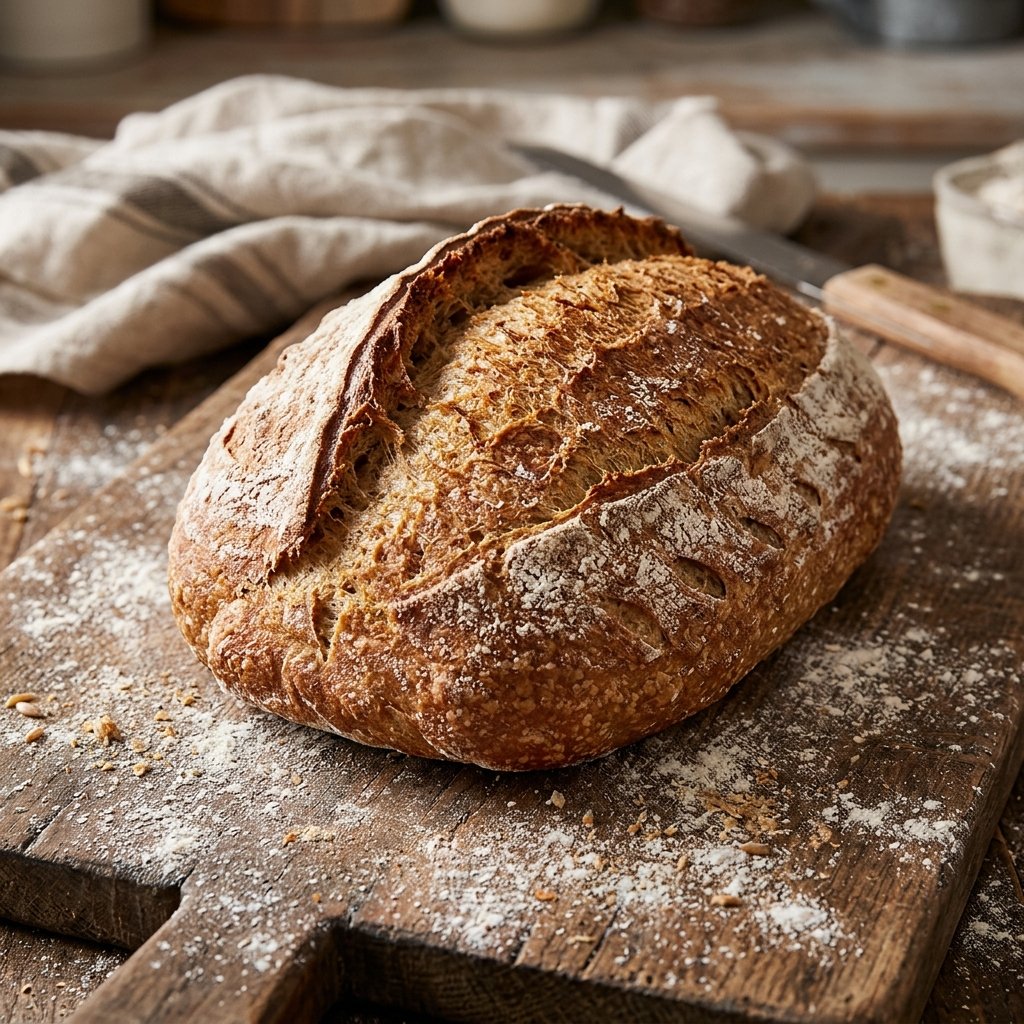
What Makes a Freshly Milled Bread Recipe Different
If you are used to baking with store-bought whole wheat flour, five things change when you mill your own.
- It needs more water. Freshly milled flour is thirsty. Home bakers commonly work at 75 to 90 percent hydration, meaning the weight of the water is 75 to 90 percent of the weight of the flour. The Fresh Loaf’s community discussions are full of bakers who start around 80 percent and adjust by feel. One bread site’s rule of thumb is that whole wheat needs at least 70 percent, not the 60 percent that works for white flour.
- It needs a rest before kneading. Freshly broken bran is slow to soak up water. A rest of 30 minutes to an hour with just the flour and water, called an autolyse, softens the bran and starts gluten forming. Some bakers using a coarser grind go much longer. This step is the single biggest difference between a heavy loaf and a light one.
- It comes out of the mill warm. Milling generates heat, so let the flour cool for 10 to 15 minutes before it touches yeast.
- It ferments quickly. The germ and bran feed the yeast, so the dough often rises faster than a recipe written for white flour. Watch the dough, not the clock.
- It goes stale quickly. The oils in the germ are what give freshly milled flour its flavor, and they are also what make it spoil faster than refined flour. Mill what you need, and refrigerate or freeze any leftover flour in an airtight container.
Pick Your Wheat
The kind of wheat berry you mill makes a big difference in flavor and color. Here are the three you are most likely to see.
| Wheat | Flavor | Best for |
|---|---|---|
| Hard white wheat | Mild, slightly sweet, lighter color | Sandwich bread, and anyone new to whole grains |
| Hard red wheat | Robust, nutty, a little more bitter | Hearty loaves and rustic boules |
| Soft wheat | Delicate, low protein | Quick breads, muffins, pancakes, not yeast bread |
One grain supplier describes hard white wheat as the “stealth” whole grain for families who are not sure about whole wheat, since it has the same nutrition as red wheat but a milder taste. This recipe uses hard white wheat for that reason. If you prefer a deeper flavor, hard red works the same way, and you can add a bit more water.
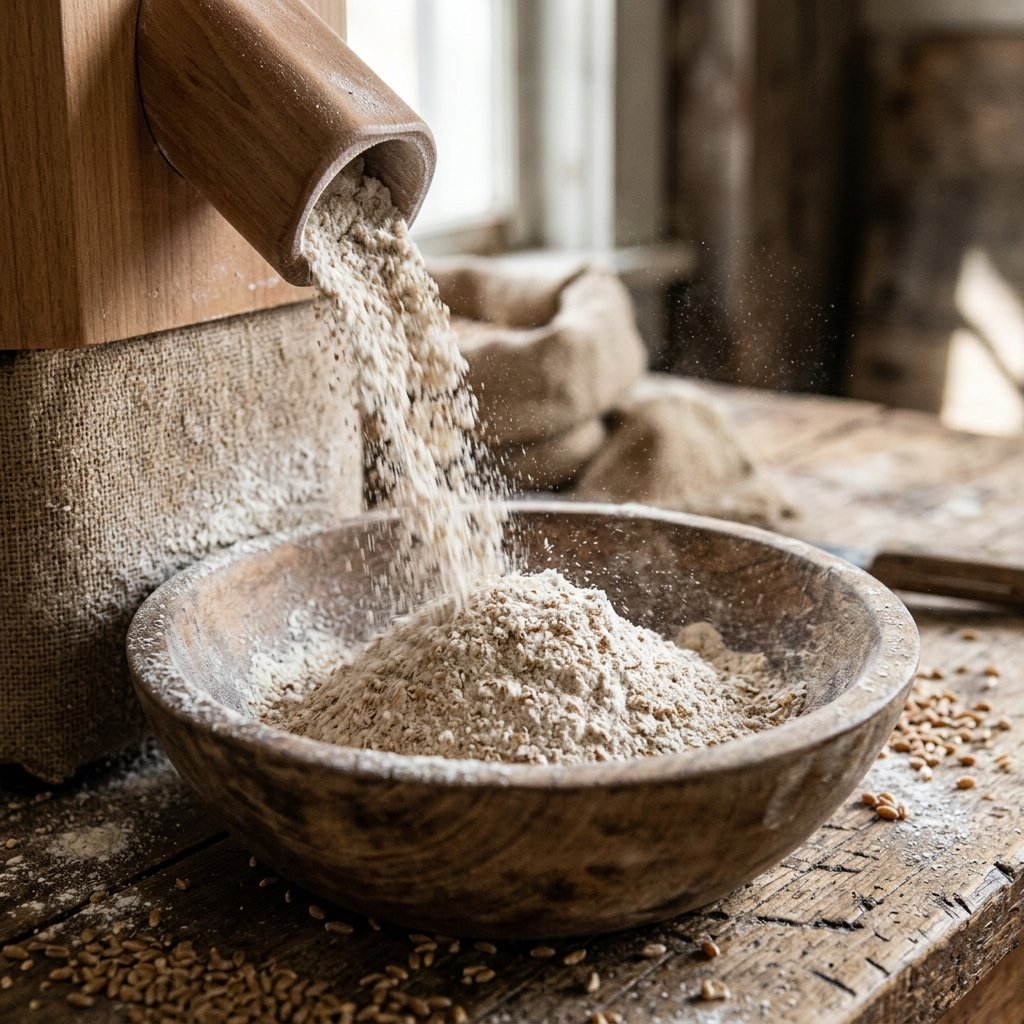
Do You Need a Grain Mill?
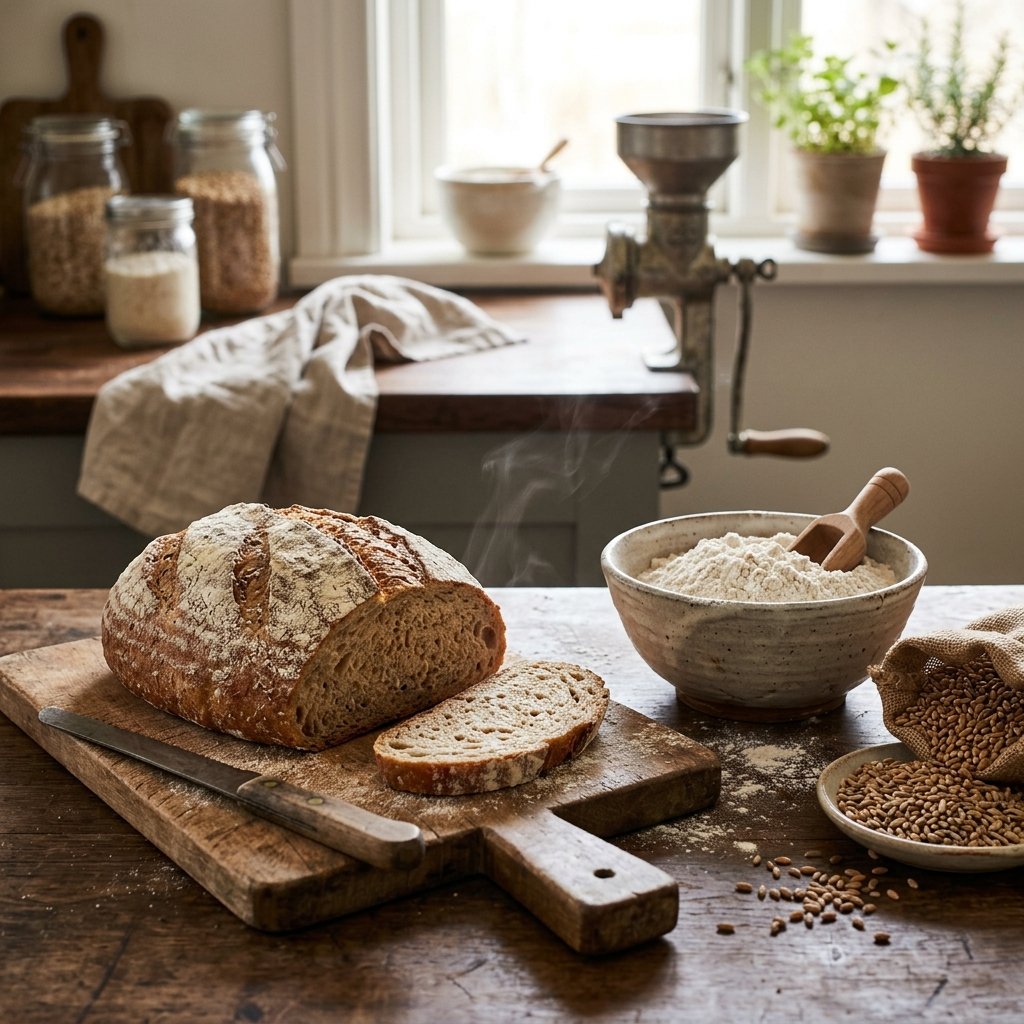
For a freshly milled bread recipe, yes, you need something that grinds wheat berries finely enough to bake with. A dedicated countertop grain mill, either an impact mill or a stone mill, gives the most consistent flour. A hand-crank mill works too, though it is slower, and the flour is usually coarser.
Some bakers use a high-powered blender to mill small batches. It can work, but blenders heat the flour and tend to give an uneven grind, so a grain mill is the better choice if you plan to bake often. Whatever you use, a coarser grind needs a longer rest in the autolyse step.
If you do not have a mill yet, start with a bag of whole wheat flour from the store. The method in the recipe below works with it too, and it is a good way to practice the technique before buying equipment.
Freshly Milled Bread Recipe
This freshly milled bread recipe makes one 9×5-inch loaf, about 12 slices. Prep time: 30 minutes of active work. Total time: about 4½ hours, including the rest, rise, and bake.
Ingredients
- 500 g (about 2⅓ cups) hard white wheat berries, milled to about 4 cups (500 g) of flour
- 375 to 400 g (about 1⅔ cups) warm water, about 100°F (38°C)
- 60 g (3 tablespoons) honey
- 28 g (2 tablespoons) melted butter or neutral oil
- 9 g (1½ teaspoons) fine salt
- 5 g (1½ teaspoons) instant yeast
Method
- Mill the wheat. Grind the wheat berries on a fine setting. Spread the flour out in a wide bowl and let it cool for 10 to 15 minutes. If you like a lighter loaf, sift out some of the coarse bran and reserve it for later.
- Autolyse. In a large bowl, mix the flour with 375 g of the water until no dry flour remains. The dough will look shaggy and wet. Cover and let it rest for 30 to 60 minutes. A coarser grind may need longer. The dough should feel smoother and less gritty when you come back to it.
- Add the rest. Add the honey, butter, salt, and yeast. Knead by hand for 10 minutes or in a stand mixer on medium-low for 6 to 8 minutes. The dough should be soft and slightly tacky, and it should pass the “windowpane” test, stretching thin without tearing. If it feels stiff, add the remaining water a tablespoon at a time.
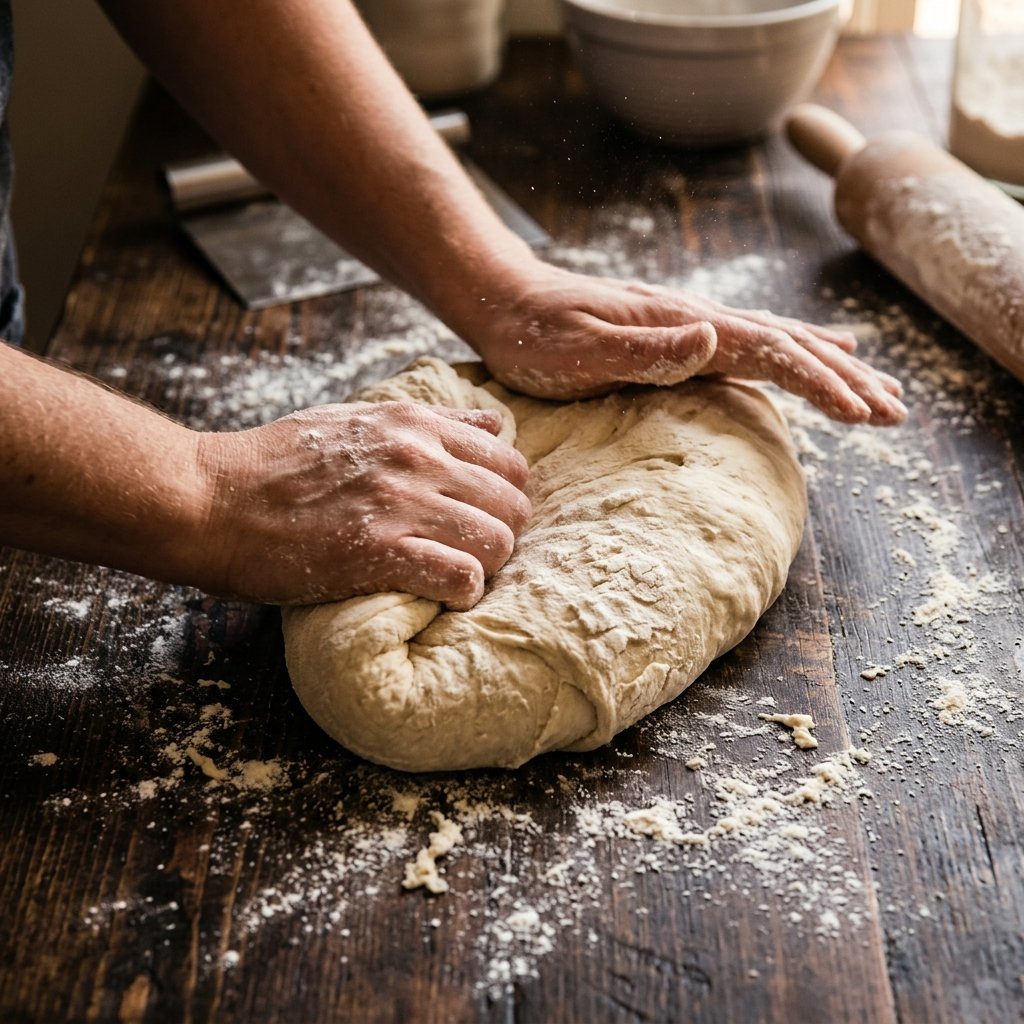
- First rise. Form the dough into a ball, place it in a lightly oiled bowl, cover, and let it rise in a warm spot for 60 to 90 minutes, until about 1½ times its size. Do not wait for it to double. Fresh flour has a weaker gluten structure, and over-proofed dough collapses.
- Shape. Press the dough into a rectangle, roll it up tightly into a log, pinch the seam closed, and place it seam-side down in a greased 9×5-inch loaf pan.
- Second rise. Cover and let it rise for 45 to 60 minutes, until the dough crowns about an inch above the rim of the pan. Meanwhile, preheat the oven to 375°F (190°C).
- Bake. Bake for 40 to 45 minutes, until the top is deep golden brown and the loaf sounds hollow when tapped on the bottom. The internal temperature should read about 200 to 205°F (93 to 96°C). If the top browns too fast, tent it loosely with foil.
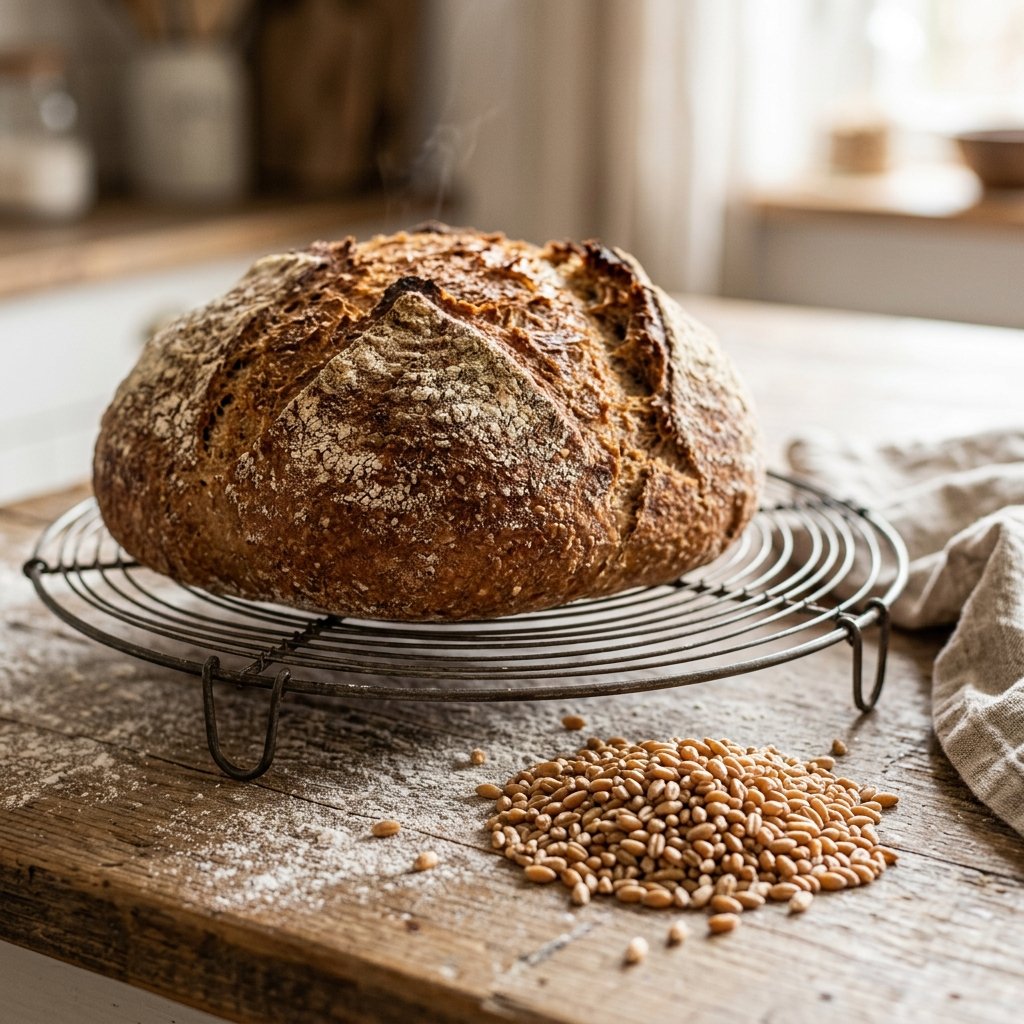
- Cool completely. Turn the loaf out onto a wire rack and let it cool for at least 1 to 2 hours before slicing. Cutting too early squashes the crumb and leaves it gummy.
A Note on Food Safety
Flour is a raw food. The FDA’s guidance on handling flour safely explains that grains grown in fields can carry bacteria such as Salmonella and E. coli, and that milling does not kill them. The same applies to flour you mill yourself. Never taste raw dough or batter, wash your hands and work surfaces after handling flour, and bake the bread fully.
Make It Your Own
- Half and half. If you want a lighter, taller loaf, use 250 g of freshly milled flour and 250 g of bread flour. Many home bakers start here, and you can raise the milled portion over time.
- Honey oat. Add ½ cup of rolled oats to the dough and sprinkle more on top before baking. Our honey wheat berry bread goes further down this path, using cooked wheat berries in the crumb.
- Seeds. Fold in ¼ cup of sunflower, flax, or sesame seeds after the autolyse.
- Dairy-free. Use olive oil instead of butter.
- Less sweet. Reduce the honey to 1 tablespoon. The bread will taste more wheaty and a little more rustic.
- Sourdough. You can replace the yeast with an active starter. Plan on a longer rise, since timing depends heavily on your starter.
If you like whole grains and enjoy baking, our anti-inflammatory bread and manna bread are other loaves worth a look, and our fresh ground flour bread is a simpler everyday option.
Freshly Milled Bread Recipe Troubleshooting
The loaf is dense and heavy. Usually not enough water, not enough rest, or underproofed dough. Add more water next time, extend the autolyse, and let the second rise reach the rim of the pan.
The loaf is gummy inside. It was cut too soon or underbaked. Cool it completely, and check that the center reached about 200°F.
The loaf collapsed. It was over-proofed. Fresh flour ferments faster than you expect, so shorten the rise.
The dough is too sticky. Freshly milled flour absorbs water slowly, so the dough tightens up as it rests. Wait before adding more flour, and use wet hands rather than flour on your work surface.
The bread tastes bitter. Red wheat and the bran can taste bitter, especially if the flour is old. Try hard white wheat, mill just before baking, or sift out some of the coarse bran.
The crumb is crumbly. The dough was too dry, or the flour was ground too coarsely. Add water and mill a finer grind.
The crust is too hard. Brush the top with melted butter right after baking and let it rest under a clean towel.
Storing Your Bread
Let the loaf cool fully, then keep it wrapped in a clean towel or in a bread bag at room temperature for 2 to 3 days. Freshly milled bread tends to stay moist, but it still dries out over time. For longer storage, slice the loaf, freeze the slices in an airtight bag, and toast them straight from the freezer. They keep well for about 3 months.
What to Serve With Fresh Milled Bread
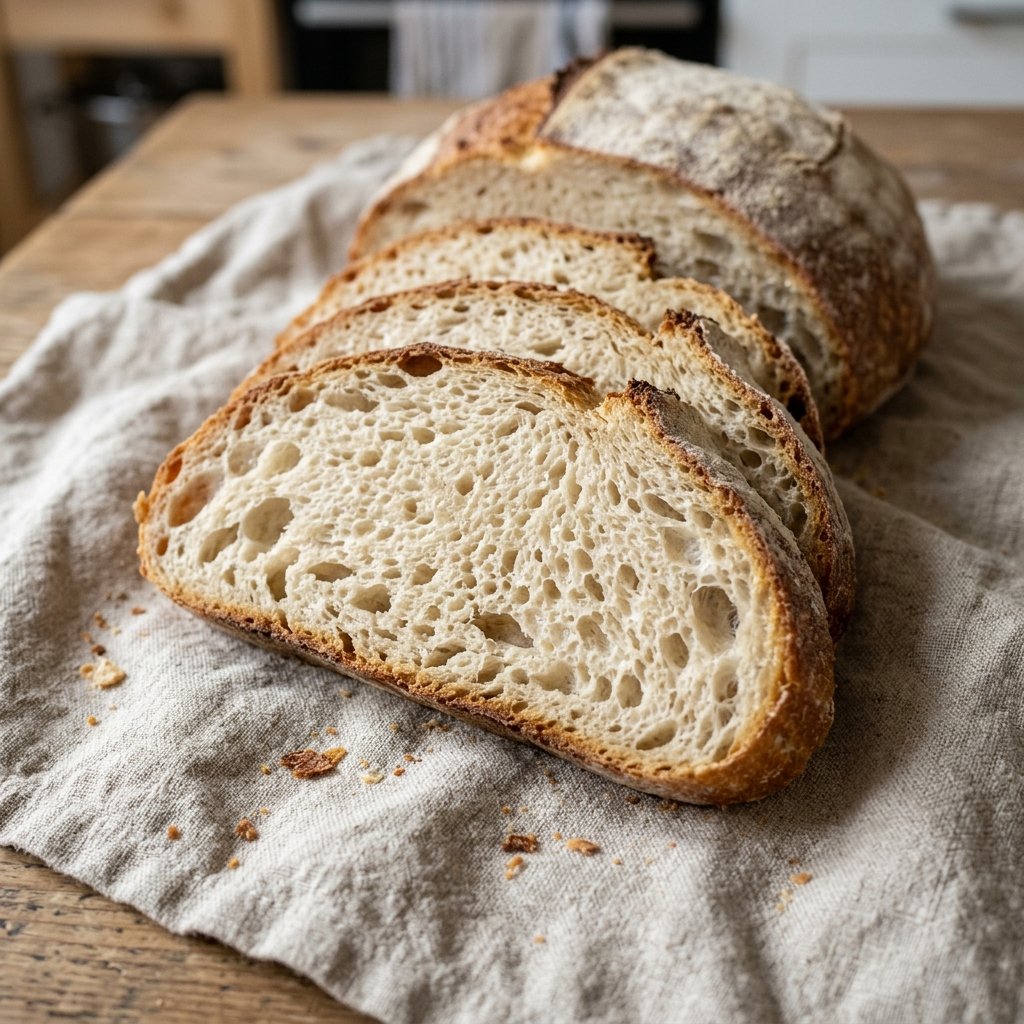
It makes excellent toast, and it is sturdy enough for sandwiches. Try it with butter and honey, soft cheese, or a thick spread of nut butter. If you want something sweeter, a slice of toast with our banana and honey bread alongside makes a good breakfast spread, and our milk and honey bread shows how honey changes a loaf.
Freshly Milled Bread Recipe FAQs
How much flour does a cup of wheat berries make?
Roughly 1½ cups of flour per cup of berries, though it varies by mill and grind. A good rule is to weigh the berries, since the flour weighs about the same. 500 g of wheat berries gives about 500 g of flour.
Why does freshly milled flour need more water?
The bran and germ are freshly broken and absorb water more slowly, and whole grain flour absorbs more water than white flour. That is why a rest before kneading matters.
Do I need to sift freshly milled flour?
No. Using it whole gives the most flavor and nutrition. Sifting out some of the coarse bran gives a lighter loaf, and you can add the bran back to another recipe.
Can I use hard red wheat instead of hard white?
Yes. The bread will taste stronger and a bit more bitter. Add a little more water, and consider using half red and half white.
Why is my freshly milled bread so dense?
Dense bread usually means too little water, too little rest, or too much bran cutting the gluten. Increase the hydration, extend the autolyse, and avoid over-kneading.
Can I mix freshly milled flour with bread flour?
Yes. A half-and-half mix gives a lighter loaf and is a good place to start.
How long does freshly milled flour last?
It is best used right away, since the oils in the germ go stale quickly. Keep any extra in an airtight container in the refrigerator or freezer.
Can I make this without a mill?
Yes. Use store-bought whole wheat flour, and use the same method: autolyse, then knead and shape. The dough may need a little less water.
Is freshly milled bread healthier?
It keeps the whole grain, including the bran and germ, which is where the fiber and many nutrients are. It is not magic, but it is real whole grain bread, and many people find it tastes better.
Final Thoughts on This Freshly Milled Bread Recipe
A good freshly milled bread recipe comes down to three habits: give the flour water and time to soften the bran, watch the dough instead of the clock, and let the loaf cool before you slice it. Do those, and your first loaf will be softer than you expect. After that, you can play with the wheat, the sweetener, and the seeds until the loaf tastes like yours.
Freshly Milled Bread (Soft 100% Whole Wheat Loaf)
Ingredients
Equipment
Method
- Mill the wheat berries on a fine setting. Spread the flour in a wide bowl and let it cool for 10 to 15 minutes. If you want a lighter loaf, sift out some of the coarse bran.
- In a large bowl, mix the flour with 375 g of the water until no dry flour remains. Cover and let it rest (autolyse) for 30 to 60 minutes. A coarser grind may need longer.
- Add the honey, butter, salt, and yeast. Knead by hand for 10 minutes, or in a stand mixer on medium-low for 6 to 8 minutes, until the dough is soft and slightly tacky. If it feels stiff, add the remaining water a tablespoon at a time.
- Form the dough into a ball, place it in a lightly oiled bowl, cover, and let it rise in a warm spot for 60 to 90 minutes, until about 1½ times its size. Do not wait for it to double.
- Press the dough into a rectangle, roll it up tightly into a log, pinch the seam closed, and place it seam-side down in a greased 9×5-inch loaf pan.
- Cover and let it rise for 45 to 60 minutes, until the dough crowns about an inch above the rim of the pan. Meanwhile, preheat the oven to 375°F (190°C).
- Bake for 40 to 45 minutes, until the top is deep golden brown and the loaf sounds hollow when tapped on the bottom. The internal temperature should read about 200 to 205°F (93 to 96°C). Tent with foil if the top browns too fast.
- Turn the loaf out onto a wire rack and let it cool for at least 1 to 2 hours before slicing.
Notes
- Freshly milled flour is thirsty. Start at about 75 percent hydration (375 g water for 500 g flour) and add more until the dough feels soft and slightly tacky. Whole wheat generally needs more water than white flour.
- Do not skip the autolyse. Resting the flour and water for 30 to 60 minutes softens the bran and makes the dough easier to work.
- Let the flour cool for 10 to 15 minutes after milling. It comes out warm.
- Fresh flour ferments quickly. Watch the dough rather than the clock, and avoid over-proofing, which makes the loaf collapse.
- Hard white wheat is mild and good for sandwich bread. Hard red wheat is stronger and nuttier, and it may need a bit more water.
- Half-and-half version: use 250 g of freshly milled flour and 250 g of bread flour for a lighter, taller loaf.
- Mill only what you need. Store any extra flour in an airtight container in the refrigerator or freezer, because the oils in the germ go stale quickly.
- Flour is a raw food and can carry bacteria such as Salmonella and E. coli. Never taste raw dough, and wash your hands and surfaces after handling flour.
- Store the cooled loaf in a bread bag or wrapped in a clean towel for 2 to 3 days. For longer storage, freeze sliced bread in an airtight bag for about 3 months.
- Times, quantities, and nutrition are estimates. Test the recipe once and adjust the water to your flour.