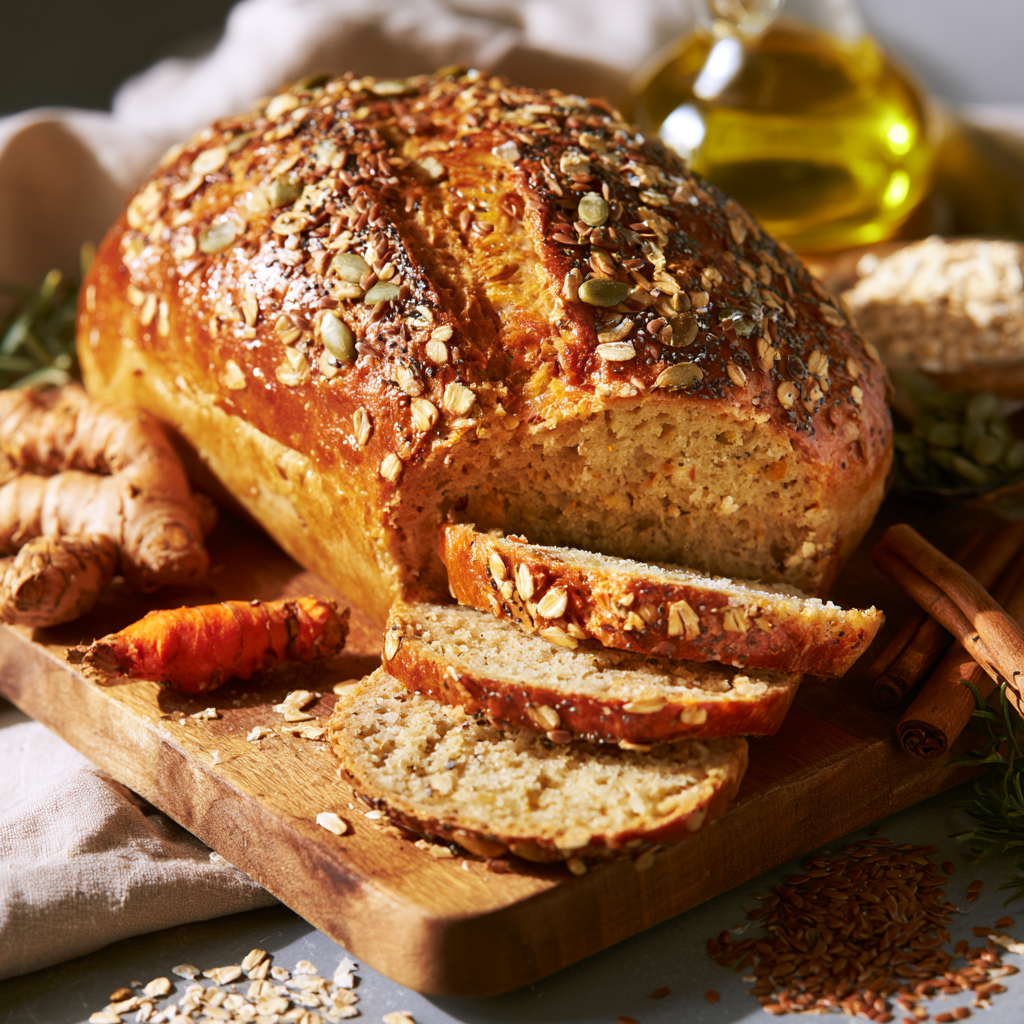
Want a wholesome loaf that tastes delicious and is easy to incorporate into your day? This simple Anti Inflammatory Bread Recipe made with whole grains, seeds and easy-to-get ingredients makes a wonderful soft, chewy loaf for daily use.
This loaf, made with wholesome foods like oats and flaxseed, olive oil for heart health, as well as the anti-inflammatory spice turmeric (not found in so many loaves bought off store shelves, making them very processed using refined flour or added preservatives). This leads to a tasty loaf that fills you up, with lots of new culinary possibilities and is easy to do at home.
This loaf is a meal prep dream, whether you have it for breakfast toast, healthy sandwiches or as the perfect accompaniment to soup. With just a few basic ingredients and an easy method, you’ll go from flour to enjoying fresh homemade bread that is as wholesome as it is comforting.
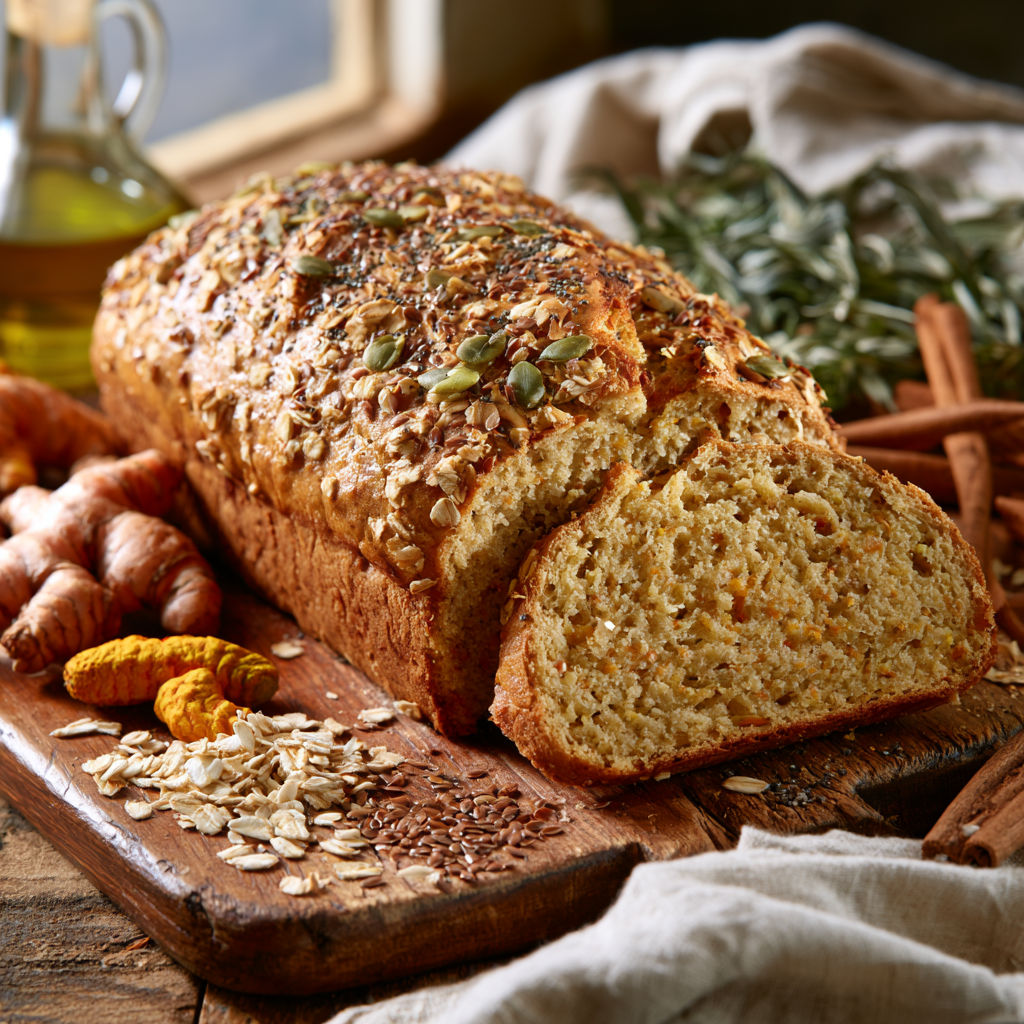
Can Bread Actually Support an Anti-Inflammatory Lifestyle?
Bread is not usually the first food that comes to mind when people think of anti-inflammatory foods. However, by picking the right ingredients and going for whole grain flours, you can completely change what nutrient value your homemade loaf provides.
This bread is a delicious, soft loaf packed with wholegrains and seeds drenched in olive oil and warming spices – making it an easy anti-inflammatory muffin-style breakfast, sandwich for lunch or alongside soup. It’s filling but not overly so, and is rich in fiber, healthy fats, and phytonutrients.
This loaf avoids preservatives and refined sugars (stuff you see in store-bought bread), AND it has an ingredient list that is very straightforward, performing well both with texture and taste.
Why You’ll Love This Bread
- Soft crumb with a hearty crust
- Rich in fiber from oats and whole wheat flour
- Contains heart-healthy fats from flaxseed and olive oil
- Naturally dairy-free
- Easy to customize
- Great for weekly meal prep
- Freezer friendly
Diet Information
This bread is:
- Dairy-Free
- Vegetarian
- High Fiber
- Refined Sugar-Free
- Nut-Free (optional)
- Easily adapted into a gluten free anti inflammatory bread recipe by replacing the flour with a quality gluten-free bread flour blend designed for yeast baking.
Ingredients
Dry Ingredients
- 2 cups whole wheat bread flour
- 1 cup rolled oats
- ¼ cup ground flaxseed
- 2 tablespoons chia seeds
- 1 tablespoon pumpkin seeds
- 2 teaspoons turmeric
- 1 teaspoon cinnamon
- 1 teaspoon sea salt
- 2 teaspoons instant yeast
Wet Ingredients
- 1¼ cups warm water
- 2 tablespoons extra virgin olive oil
- 1 tablespoon honey or maple syrup
- 1 teaspoon apple cider vinegar
Optional toppings:
- Sunflower seeds
- Rolled oats
- Sesame seeds
Step-by-Step Instructions
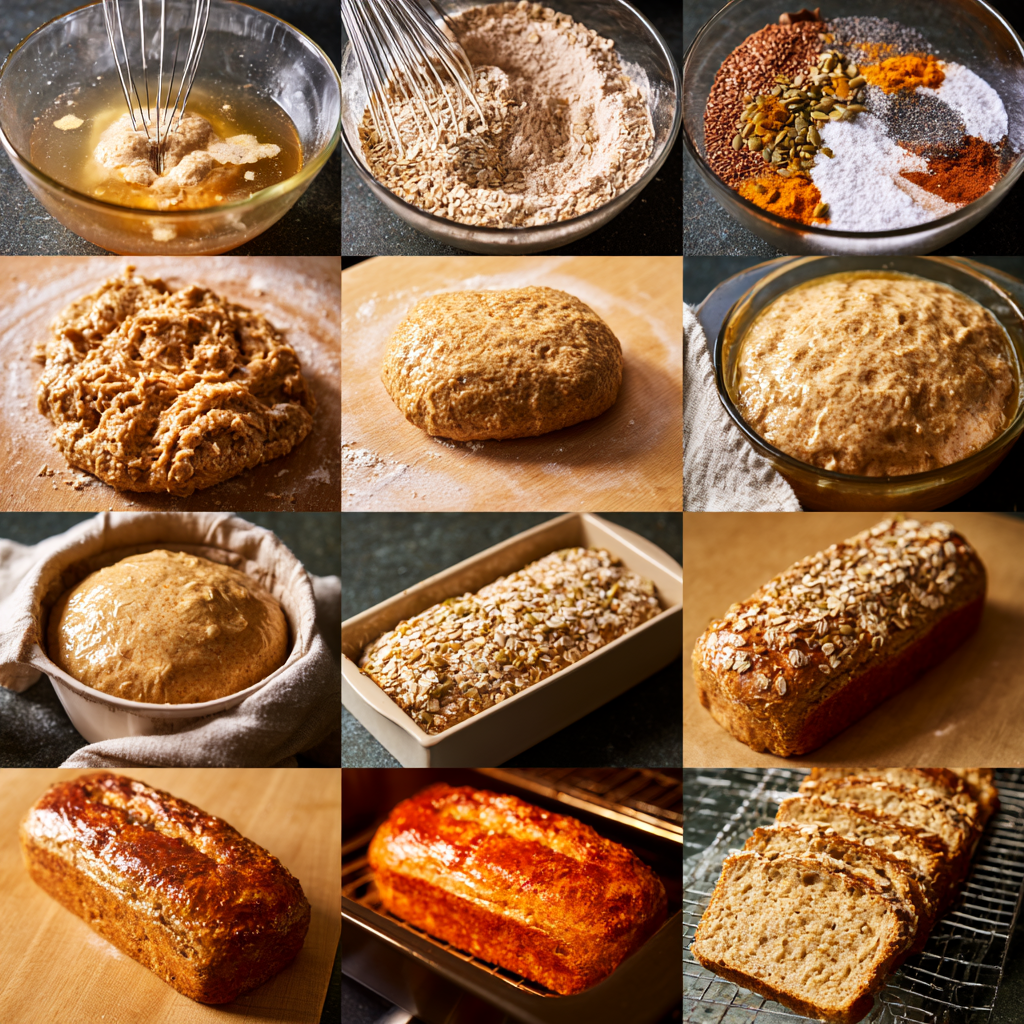
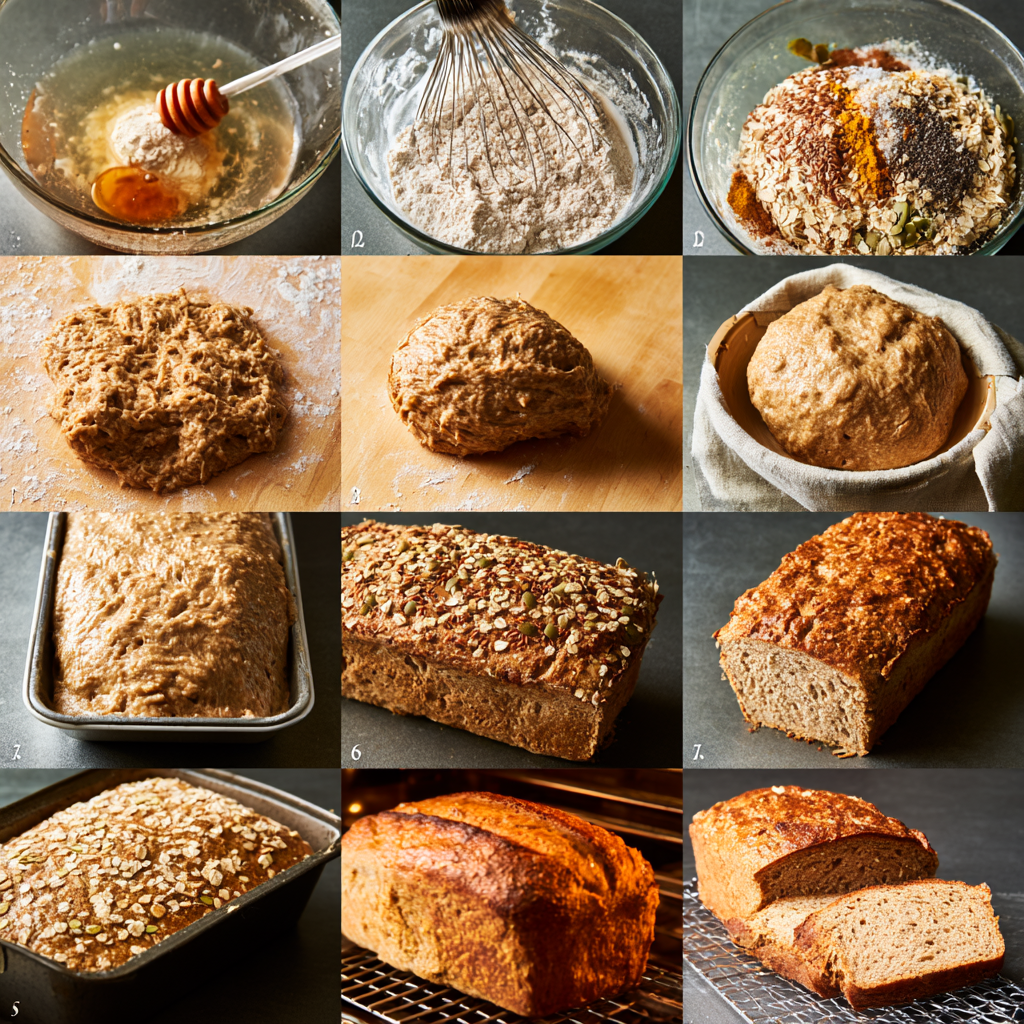
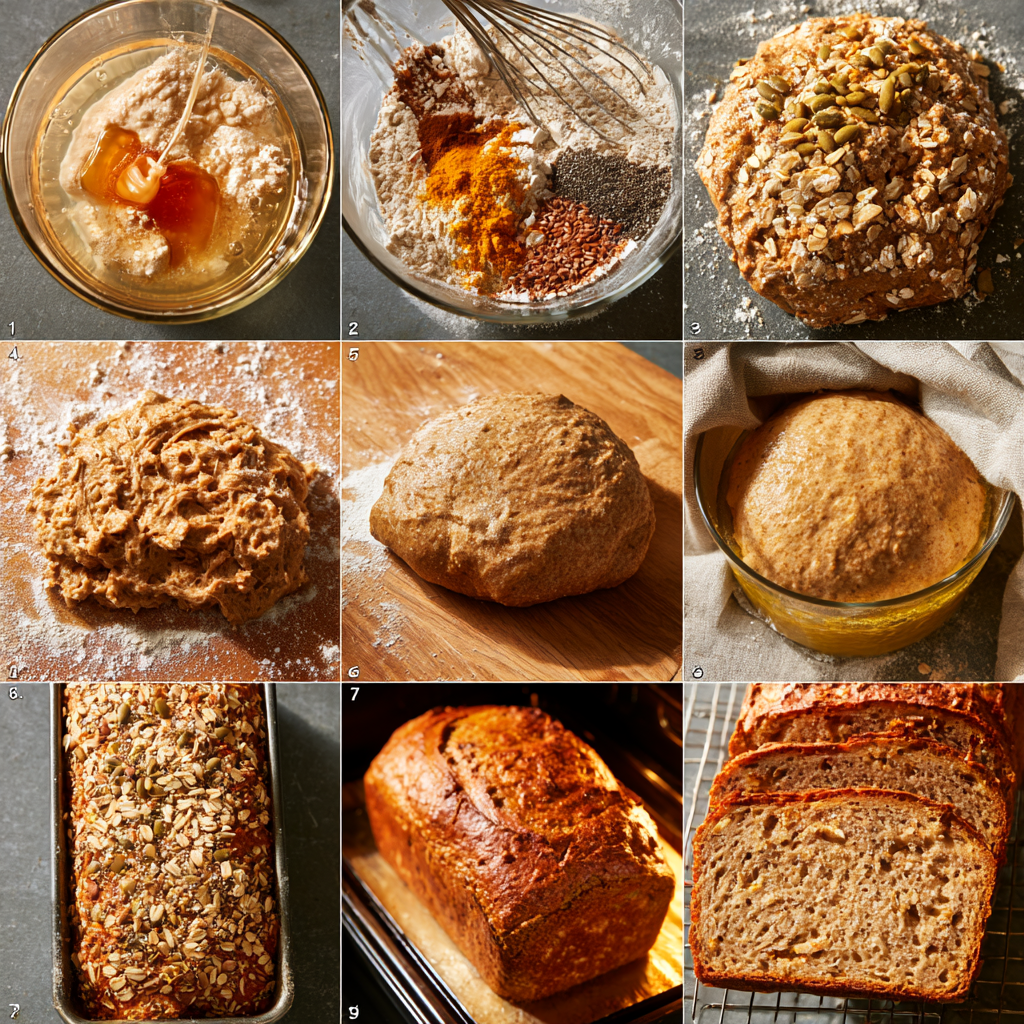
1. Activate the Dough
Mix warm water, honey, and yeast in a large bowl. Let it rest for about 5 minutes until slightly foamy.
2. Combine the Dry Ingredients
In another bowl, whisk together the flour, oats, flaxseed, chia seeds, pumpkin seeds, turmeric, cinnamon, and salt.
3. Form the Dough
Pour the olive oil and apple cider vinegar into the yeast mixture. Gradually add the dry ingredients and stir until a sticky dough forms.
4. Knead
Transfer the dough onto a lightly floured surface and knead for 8–10 minutes until smooth and elastic. A stand mixer with a dough hook also works well.
5. First Rise
Place the dough into a lightly oiled bowl, cover with a towel, and let it rise in a warm place for 60–90 minutes or until doubled in size.
6. Shape
Punch down the dough gently, shape it into a loaf, and transfer it to a greased loaf pan.
Sprinkle oats or seeds over the top if desired.
7. Second Rise
Allow the loaf to rise for another 30–40 minutes.
8. Bake
Bake at 375°F (190°C) for approximately 40 minutes until golden brown and the loaf sounds hollow when tapped.
9. Cool
Allow the bread to cool completely before slicing. This helps the crumb set properly and prevents gummy slices.
Why These Ingredients Matter
Instead of relying on refined flour alone, this loaf includes several nutrient-dense ingredients that contribute both flavor and texture.
- Whole wheat flour adds fiber, B vitamins, and minerals.
- Flaxseed provides omega-3 fats and additional fiber.
- Turmeric contributes its distinctive golden color and pairs beautifully with whole grains.
- Olive oil helps keep the bread moist while adding healthy unsaturated fats.
- Oats create a tender crumb and increase soluble fiber.
Together, these ingredients create a delicious, healthy anti-inflammatory bread that’s satisfying enough for everyday meals.
Common Baking Mistakes to Avoid
Using Water That’s Too Hot
Water hotter than about 120°F (49°C) can damage yeast and prevent proper rising. Aim for warm—not hot—water.
Adding Too Much Flour
The dough should feel slightly tacky. Adding excess flour often results in a dry, dense loaf.
Skipping the Cooling Time
Fresh bread smells amazing, but slicing too soon releases steam that keeps the center gummy.
Under-Kneading
Proper gluten development gives bread its structure. Knead until the dough becomes smooth and elastic.
Rushing the Rise
Yeast needs time to work. Let the dough double in size rather than watching the clock alone.
Nutrition Highlights
Approximate per slice:
- Calories: 175
- Protein: 6g
- Carbohydrates: 27g
- Fiber: 5g
- Fat: 5g
- Sugar: 2g
- Sodium: 220mg
These values will vary depending on ingredient brands and substitutions.
Delicious Ways to Enjoy It
This loaf pairs wonderfully with:
- Avocado and sliced tomatoes
- Hummus and roasted vegetables
- Natural peanut butter
- Homemade soups
- Grilled chicken sandwiches
- Egg breakfast toast
- Cottage cheese with herbs
Because it’s sturdy yet soft, it also makes excellent toast.
Storage Tips
Once cooled, keep in an airtight container at room temperature for up to 3 days.
Refrigerate for up to one week or freeze individual slices of cheesecake for three months if you want yours a little longer! No need to thaw; toast frozen slices straight from the freezer.
Anti-Inflammatory Bread Recipe
Ingredients
Equipment
Method
- Mix the warm water, honey, and yeast in a bowl. Let it sit for 5 minutes until foamy.
- In a separate bowl, whisk together the flour, oats, flaxseed, chia seeds, pumpkin seeds, turmeric, cinnamon, and salt.

- Add the olive oil and apple cider vinegar to the yeast mixture, then gradually stir in the dry ingredients until a dough forms.
- Knead the dough for 8–10 minutes until smooth and elastic.
- Place the dough in a lightly oiled bowl, cover, and let it rise for 60–90 minutes or until doubled in size.
- Shape the dough into a loaf and place it in a greased 9×5-inch loaf pan. Sprinkle with optional toppings.
- Cover and let the dough rise again for 30–40 minutes.
- Bake at 375°F (190°C) for 40 minutes, or until the loaf is golden brown and sounds hollow when tapped.
- Cool completely on a wire rack before slicing and serving.
Video
Notes
- Use warm water (about 105–110°F / 40–43°C) to help the yeast activate properly.
- Avoid adding too much flour; the dough should remain slightly tacky.
- Let the bread cool completely before slicing for the best texture.
- Store at room temperature in an airtight container for up to 3 days or freeze for up to 3 months.
- For a gluten-free version, substitute a gluten-free bread flour blend formulated for yeast baking.
Final Thoughts
Baking your own bread is one of the simplest ways to manage what goes into the food that you eat. Made with common pantry staples, this recipe for anti-inflammatory bread creates a satisfying texture along with healthy nutrition and fantastic taste.
This loaf fits seamlessly into a healthy lifestyle, whether you are making wholesome breakfasts or toasty sandwiches (or just eating it warm with olive oil). Bake one for now, freeze a few slices to enjoy later and rekindle warm, wholesome breads that feel just as good on the taste buds.
Frequently Asked Questions
Can I make this bread without yeast?
Yes. You’ll need to convert it into a quick bread using baking powder and baking soda, though the texture will be denser than the yeast version.
Is turmeric noticeable in the flavor?
Not strongly. It gives the bread a warm earthy note while the cinnamon balances the overall taste.
Can I make a sourdough version?
Absolutely. If you are already maintaining a starter, it is quite easy to convert this into sourdough anti-inflammatory bread by simply adding an active starter instead of the commercial yeast and adjusting for hydration.
Which flour works best for a gluten-free version?
The best gluten-free anti-inflammatory bread recipe results come from a high-quality yeast bread blend specifically formulated to be used as gluten-free bread flour. Many blends are formulated to also contain xanthan gum for improved mouthfeel.
Is this a good gut-friendly bread?
It is an ideal starting point for a gut-healthy bread recipe because of the nutrient mix between whole grains, seeds and fiber, along with plenty of fruits · vegetables or fermented foods considered part of a diet.
Can I replace whole wheat flour?
Yes. Whole wheat White whole grain flour, spelt, or even a blend of all-purpose flours like half bread and half whole will do the job. They each produce a slightly different texture but retain the character of a whole grain anti-inflammatory bread.