
This Outback remoulade sauce recipe is a copycat of the cool, peppery dip that comes with Outback Steakhouse’s Grilled Shrimp on the Barbie. It takes ten minutes, needs no stove, and is built on things most kitchens already have: mayonnaise, prepared horseradish, a grainy mustard, smoked paprika, and a spoonful of finely minced celery and onion for crunch.
Outback has never published its recipe, so every version online is a reconstruction. The one below follows the flavors most copycat cooks agree on (creamy, a little sharp from horseradish, smoky-red from paprika, with a slow cayenne finish) and explains what each ingredient does, so you can push it closer to your own memory of the restaurant sauce.
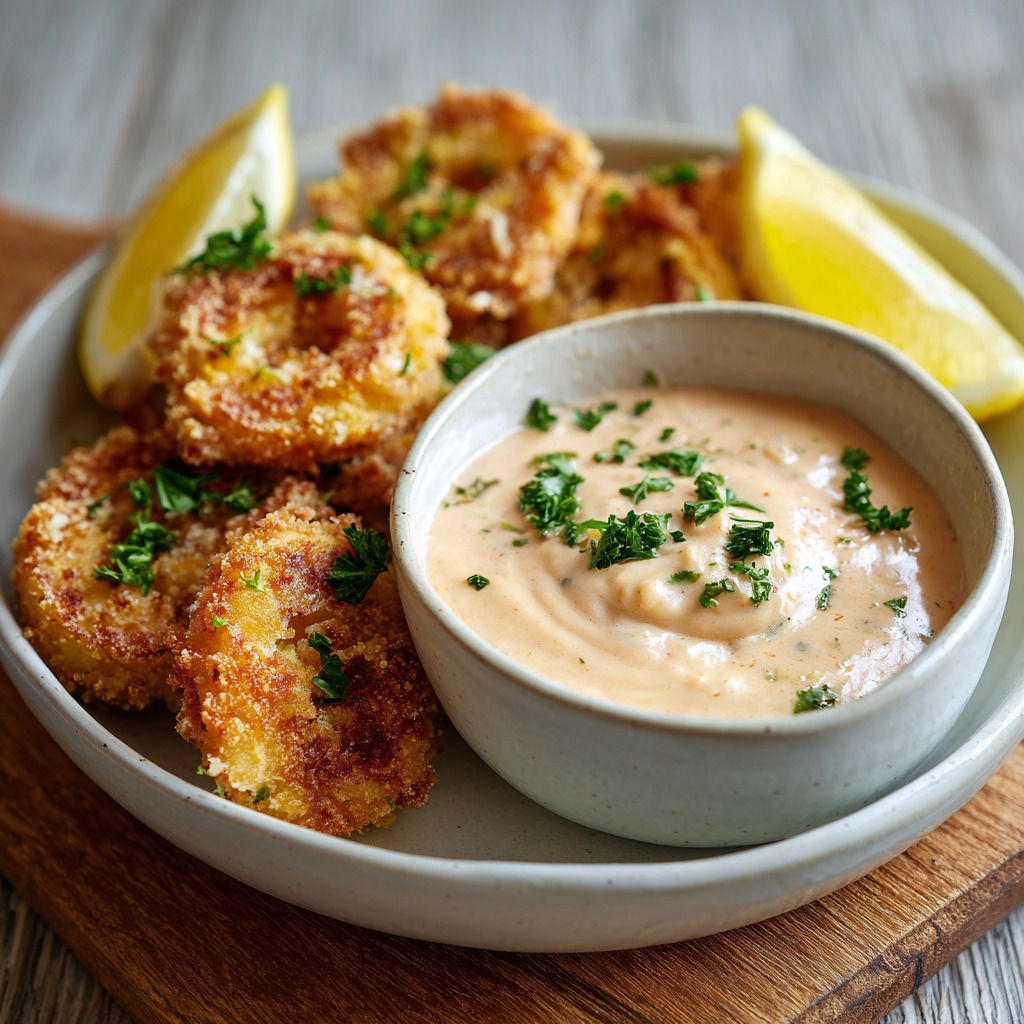
Outback Remoulade Sauce Recipe at a Glance
- Base: 1 cup mayonnaise
- Sharpness: 1 tablespoon prepared horseradish + 2 tablespoons Creole or stone-ground mustard
- Depth: 1 teaspoon Worcestershire, 1 teaspoon Louisiana-style hot sauce, 1 teaspoon lemon juice
- Color and spice: ¾ teaspoon smoked paprika, ¼ teaspoon garlic powder, a pinch of cayenne
- Crunch: 2 tablespoons minced celery, 1 tablespoon each minced onion and green bell pepper, 1 tablespoon parsley
- Method: stir, chill at least 30 minutes, serve cold. Makes about 1⅓ cups.
The full printable card with exact steps is further down the page.
What Is Outback Remoulade Sauce?
Rémoulade started as a French mayonnaise sauce with pickles, capers, and herbs. When it traveled to Louisiana it picked up Creole mustard, paprika, hot sauce, and often horseradish, and turned from pale green-white to a brick-orange color. The history of rémoulade is a good read if you are curious about how one sauce became two very different ones.
The Outback version sits on the Louisiana side of that family. It is creamy rather than chunky, it carries a clear horseradish bite, and it is mild enough that kids usually eat it. At the restaurant it is paired with grilled shrimp, which is why it leans savory and smoky instead of sweet. You can check the current dish on Outback’s menu; availability changes by location.
Remoulade vs. tartar sauce vs. Bloomin’ Onion sauce
| Sauce | Main flavor | Key ingredients | Best with |
|---|---|---|---|
| Outback-style remoulade | Smoky, sharp, mildly spicy | Mayo, horseradish, mustard, paprika, cayenne | Grilled or fried shrimp, crab cakes |
| Tartar sauce | Tangy, briny | Mayo, pickles or relish, lemon, dill | Fried fish, fish sticks |
| Bloomin’ Onion style dip | Creamy, ketchup-forward | Mayo, ketchup, horseradish, paprika | Fried onion, onion rings |
If your remoulade tastes like tartar sauce, the usual culprit is sweet relish. That is why this version swaps relish for raw celery and bell pepper: you keep the crunch without the sugary pickle note.
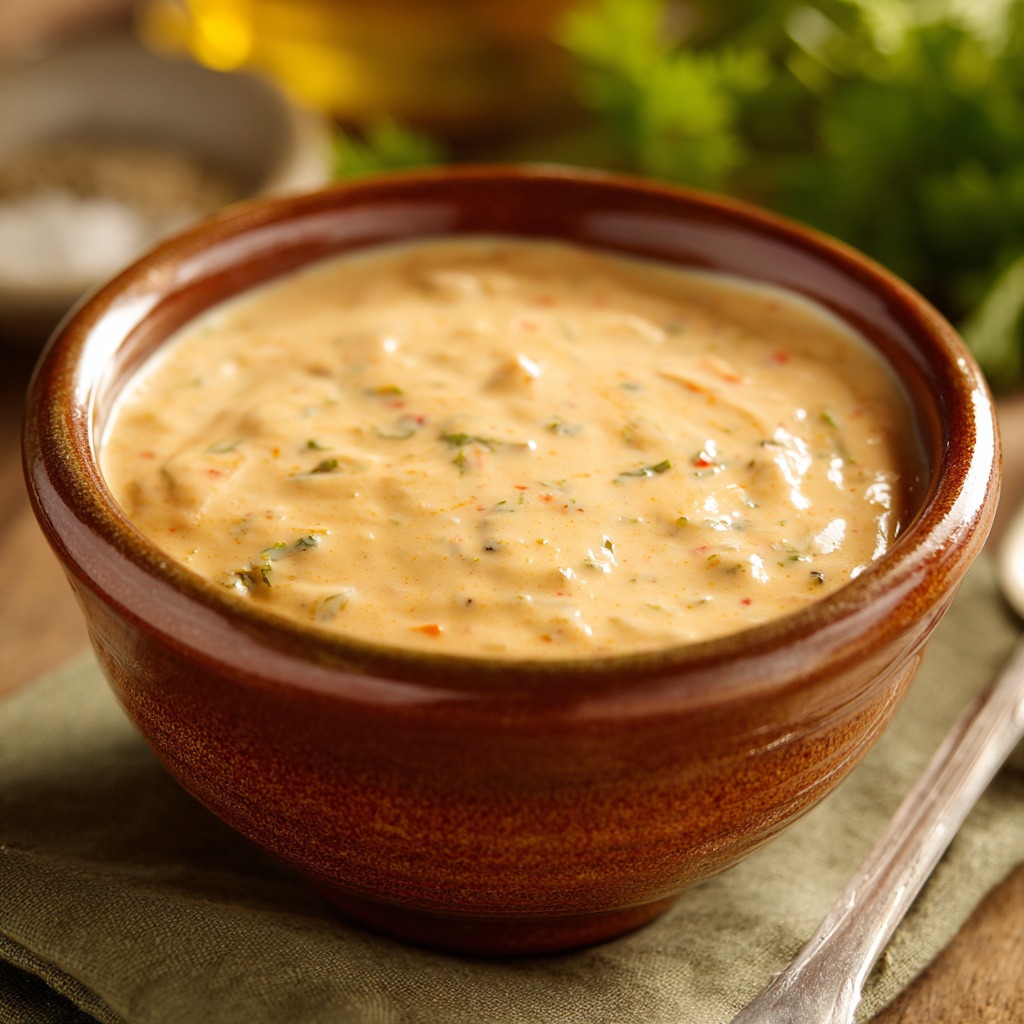
Ingredients and What Each One Does
| Ingredient | Amount | Why it’s there |
|---|---|---|
| Mayonnaise | 1 cup | The body. A full-fat, slightly tangy mayo gives the closest restaurant texture. |
| Creole or stone-ground mustard | 2 tbsp | Grainy texture and vinegar sharpness. Dijon works; yellow mustard makes it milder. |
| Prepared horseradish | 1 tbsp | The signature nose-tingling bite. Drain it lightly so the sauce stays thick. |
| Worcestershire sauce | 1 tsp | Savory depth that makes the sauce taste “finished.” |
| Louisiana-style hot sauce | 1 tsp | Vinegary heat rather than raw fire. |
| Fresh lemon juice | 1 tsp | Lifts the mayo so it doesn’t feel heavy. |
| Smoked paprika | ¾ tsp | The orange-red color and the light smoky note that pairs with grilled shrimp. |
| Garlic powder | ¼ tsp | Rounder garlic flavor than raw garlic, and it won’t turn harsh overnight. |
| Cayenne pepper | ⅛–¼ tsp | Slow heat at the end. Start low. |
| Celery, finely minced | 2 tbsp | Fresh crunch without sweetness. |
| Onion and green bell pepper, finely minced | 1 tbsp each | The Louisiana “trinity” in miniature. Green onion is a gentler swap. |
| Fresh parsley, chopped | 1 tbsp | Color and a clean finish. |
| Salt and black pepper | To taste | Taste after chilling; the flavor gets stronger as it rests. |
Smart substitutions
- No horseradish? Use 1 extra teaspoon of mustard plus a little more hot sauce. You lose some bite, but it still tastes like remoulade.
- No smoked paprika? Sweet paprika plus a tiny pinch of chipotle powder gets close.
- Lighter sauce: Replace up to half of the mayonnaise with plain Greek yogurt. It will be tangier and a bit thinner.
- Egg-free: Any vegan mayonnaise works; check that your Worcestershire is anchovy-free if that matters to you.
- Like the pickle flavor? Add 1 tablespoon of chopped dill pickles or capers, not sweet relish.
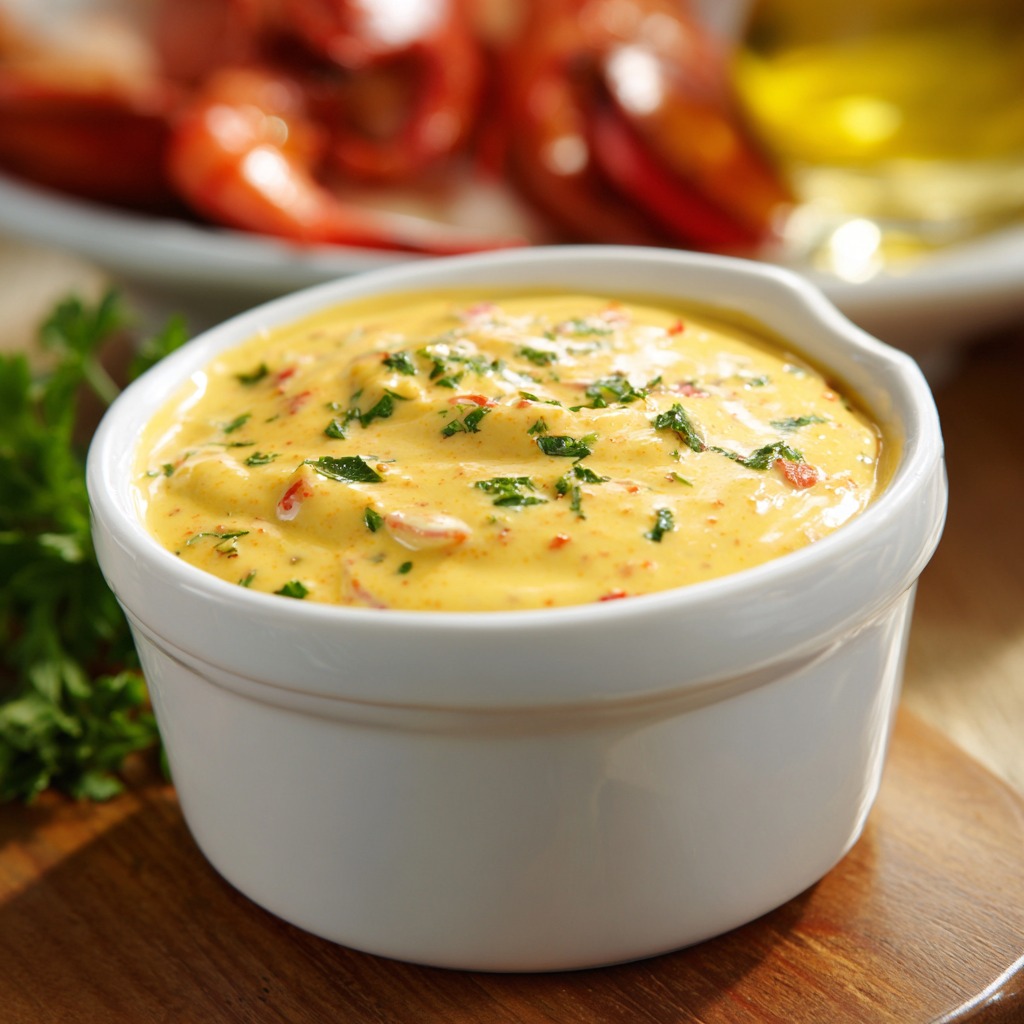
How to Make the Outback Remoulade Sauce Recipe
The whole method is mixing, but the order and the mincing make a real difference to the texture.
- Mince the vegetables very fine. Celery, onion, and bell pepper should be cut smaller than a grain of rice. Big pieces make the sauce look like slaw dressing and stop it from clinging to shrimp.
- Build the wet base. In a bowl, whisk the mayonnaise, mustard, horseradish, Worcestershire, hot sauce, and lemon juice until completely smooth.
- Bloom the spices in the base. Whisk in the smoked paprika, garlic powder, and the smaller amount of cayenne. Stirring the powders into the mayo before the vegetables go in prevents little dry clumps.
- Fold in the crunch. Add the minced vegetables and parsley and fold with a spoon.
- Chill, then season. Cover and refrigerate for at least 30 minutes, ideally 2 hours. Taste only after chilling, then adjust the salt, pepper, cayenne, or lemon.
Texture check
The finished sauce should coat the back of a spoon and hold a soft ridge when you drag a shrimp through it. Too thick: whisk in a teaspoon of lemon juice or water. Too thin (usually from wet horseradish or Greek yogurt): add a tablespoon more mayonnaise and chill again.
Getting Closer to the Restaurant Taste
Because nobody outside Outback knows the exact formula, think of this Outback remoulade sauce recipe as a dial rather than a fixed answer. These are the adjustments that matter most:
- If it tastes flat: add more horseradish, ½ teaspoon at a time. Horseradish is the flavor people remember most from the restaurant sauce.
- If it tastes too much like mayo: add a few drops of lemon and a pinch of salt. Acid and salt cut richness faster than extra spice.
- If the color is pale: more smoked paprika, not more cayenne. Cayenne adds heat long before it adds color.
- If you want it smoother: blitz the finished sauce with an immersion blender for 5 seconds. Many restaurant remoulades are nearly smooth with only small flecks.
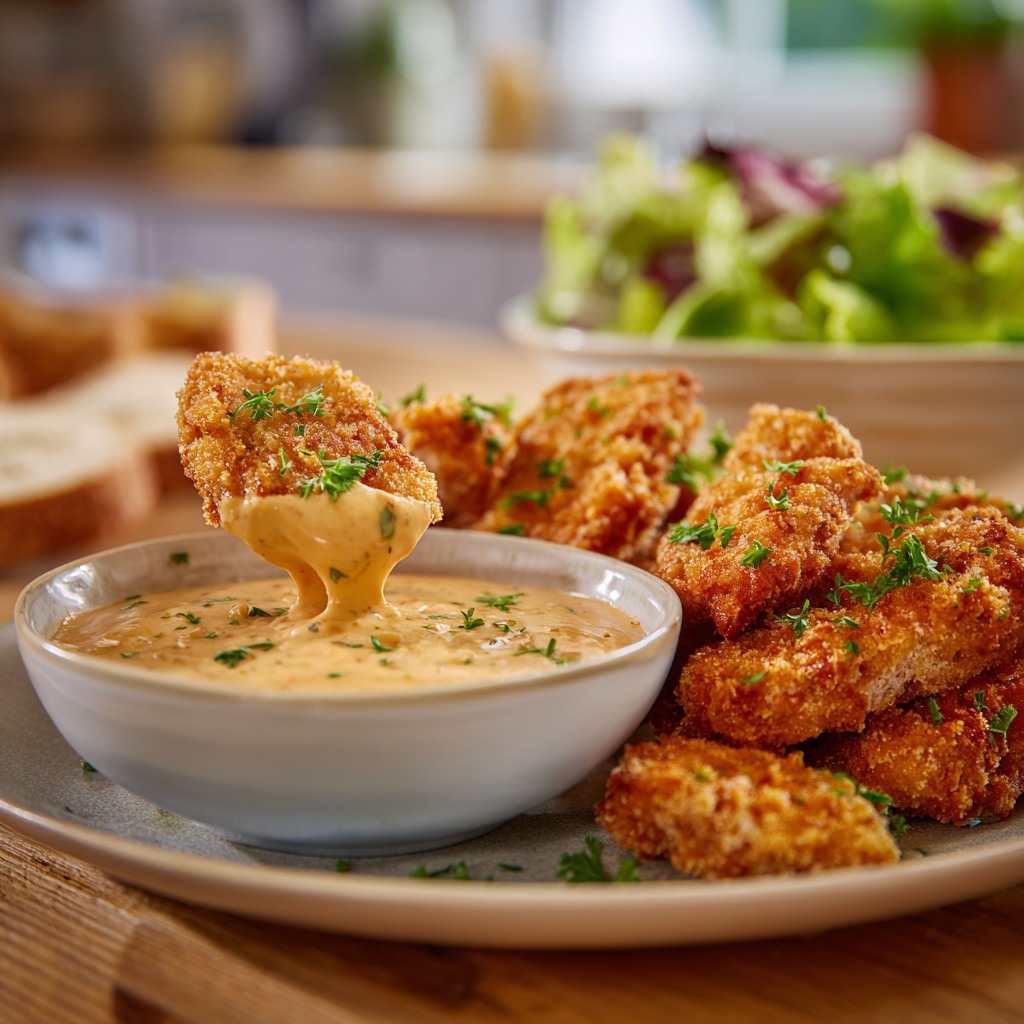
What to Serve with Remoulade Sauce
Grilled shrimp is the classic, but this sauce works anywhere you would reach for tartar sauce or a spicy mayo.
Seafood
Thread shrimp on skewers, brush with oil and Cajun seasoning, and grill for 2 to 3 minutes per side for an at-home Shrimp on the Barbie. On busy nights, the sauce is just as good with air fryer SeaPak popcorn shrimp, tempura shrimp, or crispy fish sticks. It is also a natural match for crab cakes, fried oysters, and buttery poor man’s lobster.
Louisiana-style favorites
Spread it on a shrimp or catfish po’ boy, spoon it over fried green tomatoes, or serve it as the dip for Cajun fried alligator bites.
Everyday uses
- Burger and chicken sandwich spread
- Dip for fries, sweet potato fries, and onion rings
- Dressing for a quick shrimp salad or crab salad
- Drizzle over roasted potatoes or grilled vegetables
If you like having a few dips on the table, pair it with a Cajun ranch dressing or this fried pickle dipping sauce. For a second take on the same restaurant sauce, there is also a quicker remoulade sauce Outback version on the site.
Variations
- Extra spicy: double the cayenne and add a teaspoon of sriracha.
- Cajun remoulade: replace the paprika and cayenne with 1 teaspoon of your favorite Cajun or Creole seasoning, then taste before adding salt (those blends are salty).
- Pink remoulade: stir in 1 tablespoon of ketchup for a sweeter, rosier sauce closer to a seafood cocktail dip.
- Herby remoulade: add chopped capers, tarragon, and chives for a sauce closer to the French original.
Mistakes That Ruin the Sauce
- Serving it right away. Fresh-mixed remoulade tastes like seasoned mayo. The horseradish and paprika need time to bloom.
- Adding all the cayenne at once. Heat builds as the sauce rests. Add the rest after chilling if you need it.
- Using sweet relish. It pushes the flavor toward tartar sauce.
- Chunky vegetables. Mince them fine or the sauce won’t cling.

Storage and Make-Ahead
Store the sauce in a covered jar in the refrigerator for up to 5 days. The fresh vegetables slowly release water, so stir before serving. Making this Outback remoulade sauce recipe a day ahead actually improves the flavor.
Because it is mayonnaise-based, don’t leave it on the table for more than 2 hours (1 hour on a hot day above 90°F), in line with the USDA’s “Danger Zone” guidance. For a party, set out a small bowl and refill it from the fridge.
Freezing is not recommended. Mayonnaise separates when thawed and the vegetables turn limp.
Nutrition Note
Almost all the calories come from the mayonnaise. Based on standard full-fat mayo labels, a 2-tablespoon serving lands at roughly 140 to 150 calories, nearly all from fat. Using light mayo or swapping half the mayo for Greek yogurt roughly halves that. Treat these as estimates; your brand of mayo makes the biggest difference.
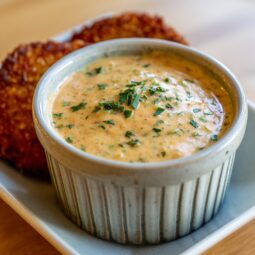
Outback Remoulade Sauce (Copycat)
Equipment
- Medium mixing bowl
- Whisk or spoon
- Measuring cups and spoons
- Airtight container (for storage)
Ingredients
- 1 cup mayonnaise full-fat for the closest texture
- 2 tbsp Creole or stone-ground mustard Dijon also works
- 1 tbsp prepared horseradish lightly drained
- 1 tsp Worcestershire sauce
- 1 tsp Louisiana-style hot sauce
- 1 tsp fresh lemon juice
- ¾ tsp smoked paprika
- ¼ tsp garlic powder
- ⅛-¼ tsp cayenne pepper start with less
- 2 tbsp celery very finely minced
- 1 tbsp onion very finely minced, or green onion
- 1 tbsp green bell pepper very finely minced
- 1 tbsp fresh parsley chopped
- salt and black pepper to taste
Instructions
- Mince the celery, onion and green bell pepper very finely, smaller than a grain of rice.
- In a bowl, whisk the mayonnaise, mustard, horseradish, Worcestershire sauce, hot sauce and lemon juice until smooth.
- Whisk in the smoked paprika, garlic powder and ⅛ teaspoon cayenne until no dry specks remain.
- Fold in the minced vegetables and parsley.
- Cover and refrigerate for at least 30 minutes, ideally 2 hours, so the horseradish and paprika can bloom.
- Taste after chilling and adjust with salt, pepper, more cayenne or a few drops of lemon. Serve cold with grilled or fried shrimp, crab cakes, fish or fries.
Notes
- Yield: about 1⅓ cups.
- Storage: up to 5 days in a covered container in the refrigerator; stir before serving. Do not freeze.
- Food safety: don’t leave it at room temperature for more than 2 hours (1 hour above 90°F).
- Smoother sauce: blitz with an immersion blender for 5 seconds.
- Lighter: replace up to half the mayonnaise with plain Greek yogurt.
- Nutrition: estimated from standard full-fat mayonnaise; varies by brand.
Outback Remoulade Sauce FAQs
What does Outback serve remoulade sauce with?
Outback pairs its remoulade with the Grilled Shrimp on the Barbie appetizer. At home it is just as good with fried shrimp, crab cakes, fish, and fries.
Is Outback remoulade sauce spicy?
It is mildly spicy. The heat comes from horseradish, cayenne, and hot sauce, but the mayonnaise keeps it gentle. Use less cayenne for kids, or more for a Cajun-level kick.
Can I buy Outback remoulade sauce?
Outback’s remoulade isn’t sold as a bottled grocery product, so making it at home is the reliable way to have it on hand. You can ask your local restaurant about an extra side with a to-go order.
What’s the difference between remoulade and tartar sauce?
Tartar sauce is mostly mayo, pickles, and lemon. Louisiana-style remoulade adds mustard, horseradish, paprika, and hot sauce, so it is spicier, smokier, and orange in color.
How long does homemade remoulade last?
Up to 5 days in a covered container in the refrigerator. Discard it if it smells sour or separates and won’t stir back together.
Can I make it without horseradish?
Yes. Add a little more mustard and hot sauce instead. It will be a softer sauce, but still clearly a remoulade.
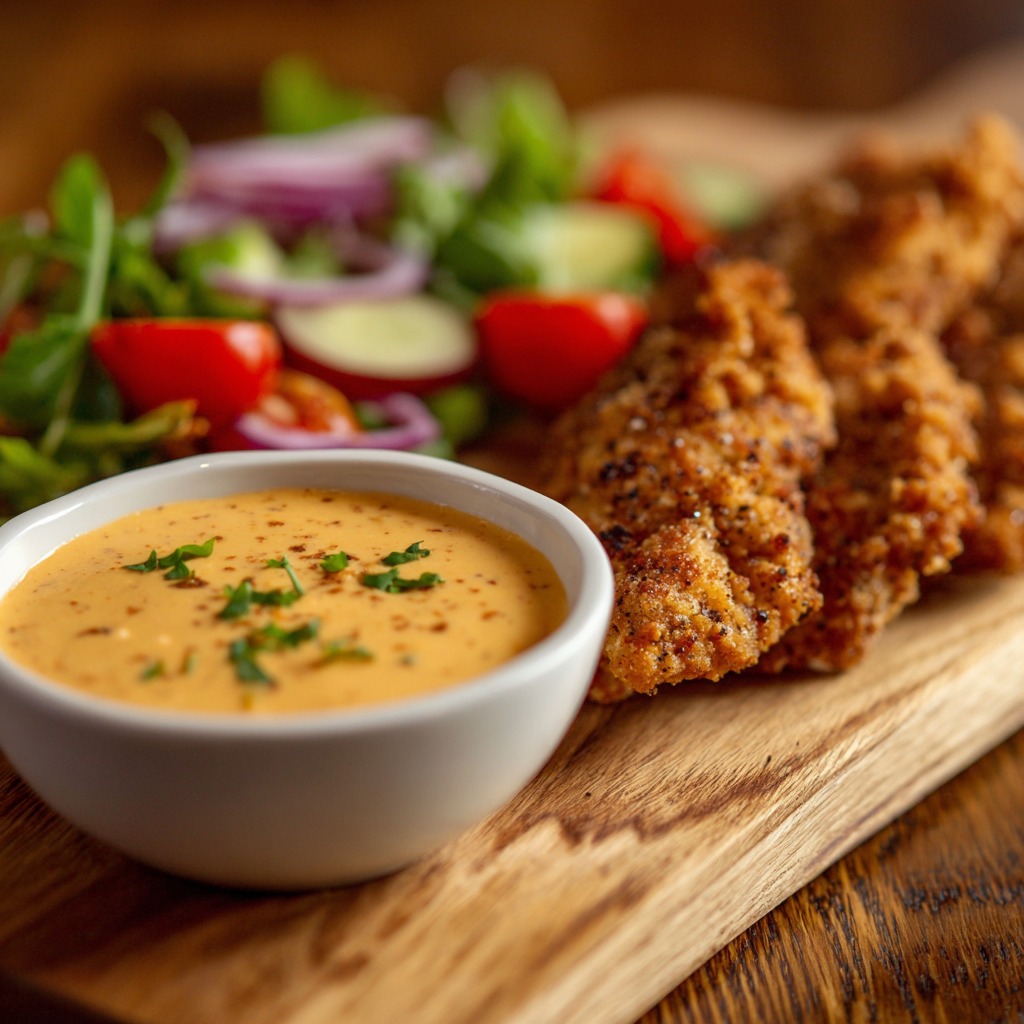
Make a batch of this Outback remoulade sauce recipe, let it rest, and taste it with the food you plan to serve. A remoulade that seems too strong on a spoon usually tastes just right on a hot, salty shrimp.