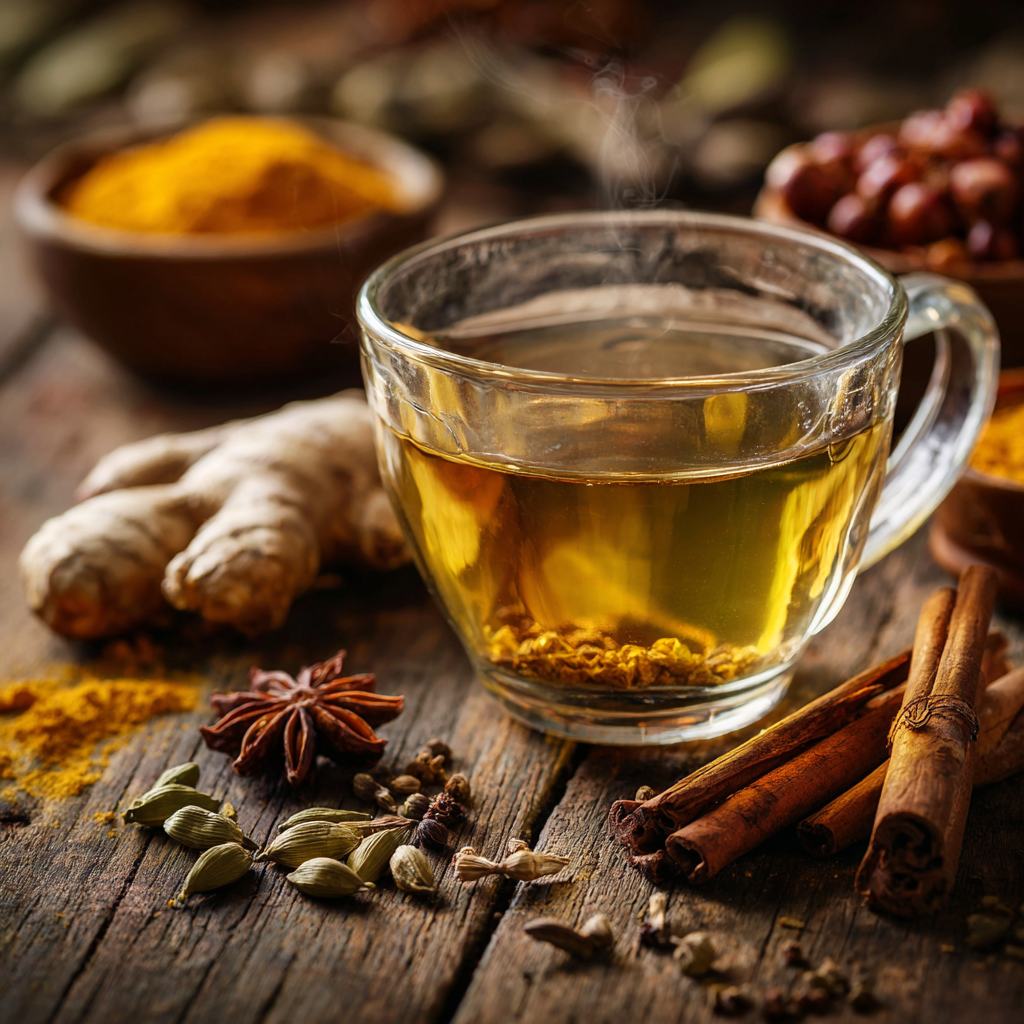
Ayurvedic Tea Recipe is the beloved natural remedy for balance and well-being that has been cherished by people all over the world for ages. Based on ancient Indian traditions, this herbal tea is a mixture of selected spices, herbs and natural ingredients that help to create harmony between the body systems. In contrast to standard teas, an ayurvedic tea recipe emphasizes balancing the energies active in the body and is consequently both a calming beverage and mindful of health behavior.
Sometimes people opt for ginger, turmeric and/or cinnamon or cardamom in the prepared ayurvedic tea recipes because each ingredient has its own health benefits. All of these components cooperate to promote digestion, stimulate the immune system and serve as a mild detoxifier. What I love about this tea is that it can be made to suit whatever you need, and according to the seasons, so it becomes a nourishing drink yet feels tailored specifically for me.
As life becomes faster, integrating an ayurvedic tea recipe into your daily routine is a simple yet effective way towards reconnecting with natural wellness in today’s fast-paced world. Be it morning to ignite the body, or evening for relaxation, this age-old beverage is a perfect way of practicing calm and self-care. As it gains traction, this trend is part of a generally growing sentiment towards natural remedies and well-being.
Table Of Contents
- The Principles Behind Ayurvedic Tea
- Common Ingredients in an Ayurvedic Tea Recipe
- Health Benefits of Ayurvedic Tea
- How to Prepare an Ayurvedic Tea Recipe
- When and How to Consume Ayurvedic Tea
- The Historical Roots of Ayurvedic Tea
- Ayurvedic Tea for Stress and Relaxation
- Detoxifying Ayurvedic Tea Blends
- Tips for Choosing Quality Ingredients
- Potential Considerations and Limitations
- Integrating Ayurvedic Tea into a Healthy Lifestyle
- The Growing Popularity of Ayurvedic Tea
The Principles Behind Ayurvedic Tea
The three doshas that Ayurveda is based on are Vata, Pitta and Kapha. This energy-dominance is often kept in mind while preparing ayurvedic tea recipes, which use ingredients to maintain their balance. For instance, warming spices like ginger and cinnamon calm Vata as well as Kapha; cooling herbs such as fennel or mint will heal Pitta. You can also learn to pick what’s best for your body type based on these principles.
Common Ingredients in an Ayurvedic Tea Recipe
This is the recipe of herbal tea in Ayurveda; it has various natural components that promote health benefits. Ginger aids digestion and lowers inflammation, turmeric is a potent antioxidant, while cinnamon also helps de regulate blood sugar levels. Nutritional Supplementation. Other ingredients, such as cloves (Syzygium aromaticum), cardamom (Elettaria cardemommum) and black pepper, are commonly used to enhance flavouring or absorption of nutrients. These combinations yield a harmonizing and nutritious herbal brew (infusion).
Health Benefits of Ayurvedic Tea
Amidst the most significant of factors that drag oneself to an ayurvedic tea recipe is its extensive range & a quite envious list in terms of health benefits. Regular consumption may improve digestion, enhance immune function and aid detoxification. Along with these benefits, it will help to relax your body, and all the anxiety and stress can be cleared through such tea, as well as enhance mental clarity. Due to being formulated from natural ingredients, they are usually gentle on the body and safe for everyday use.
How to Prepare an Ayurvedic Tea Recipe
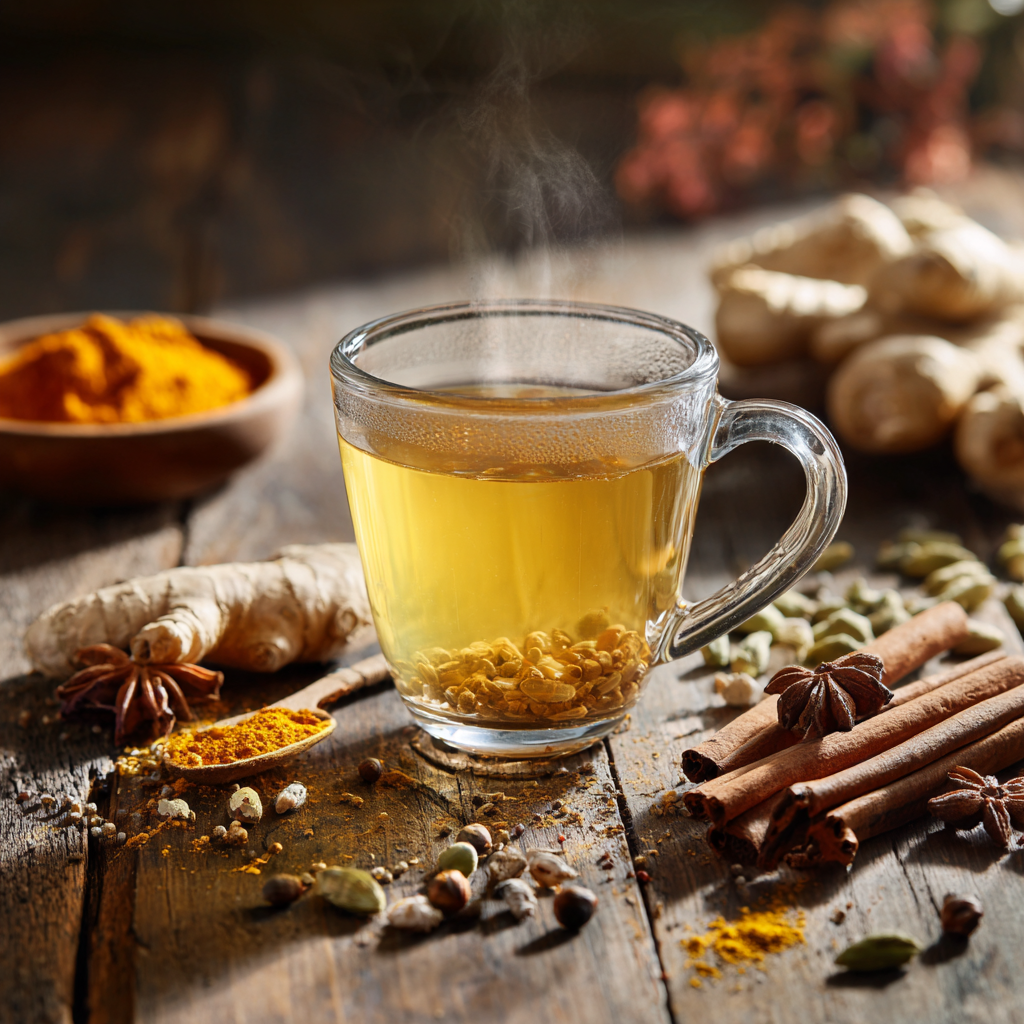
Making ayurvedic tea recipes is easy and can be done according to your taste preferences. Usually, you would start with boiling water and adding your preferred herbs or spices. Then, the mixture is simmered for several minutes to draw out its flavors and medicinal qualities. You can sweeten it with natural sugars like honey after you strain. This process is soothing, and it turns into a ritual instead of just being a task.
When and How to Consume Ayurvedic Tea
Apart from following the steps to make an ayurvedic tea recipe, timing is very crucial in realizing its full benefits. Having it in the morning can also be beneficial to stimulate the digestive tract, and energizing while drinking it at night may serve to relax you more into sleep. You should drink it in small amounts, somewhat warm and with just the right amount of time for your body to absorb all its properties.
Customizing Your Ayurvedic Tea Recipe
A recipe for ayurvedic tea has the flexibility of cooking. You can customize the ingredients according to your health goals, seasons or personal taste preferences. Adding warmer spices when it’s cold, or incorporating cooling herbs in the summer, is how you can keep it balanced. Ayurvedic tea is all about flexibility, making it a practical and personalized approach to natural wellness.
The Historical Roots of Ayurvedic Tea
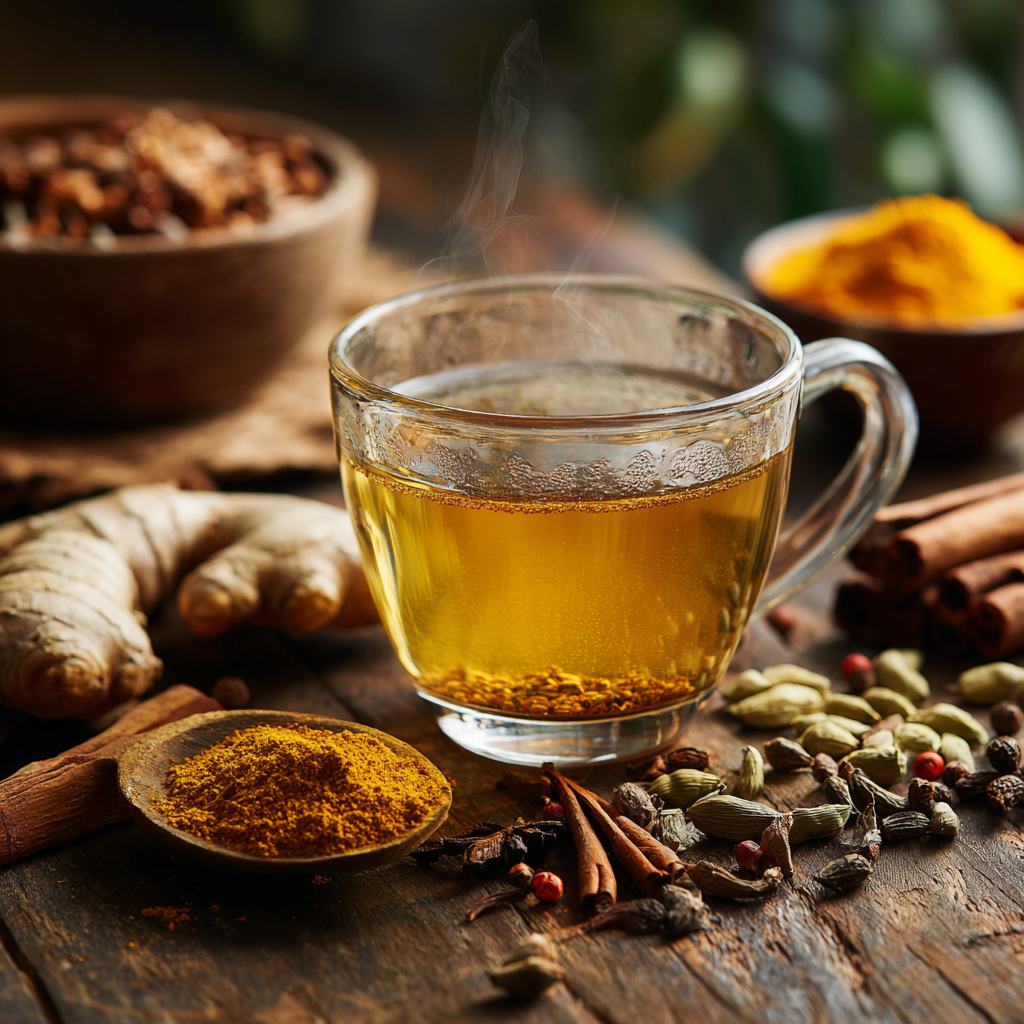
Very old Ayurvedic tea recipe history goes back thousands of years in ancient India, where Ayurveda emerged as a holistic healing system. Practitioners often used herbal infusions to address imbalances and promote health. These teas were not simply unsystematic combinations but genuine blends, paying attention to the deep understanding of plant characteristics and how they affect our bodies.
Ayurvedic Tea vs. Regular Herbal Tea
Although both are produced from natural elements, an ayurvedic tea recipe is directed by a well-known classical approach of medication. While regular herbal teas are more for appreciating the taste or for general health, Ayurvedic tea has a purpose: to balance doshas and even treat specific conditions. This effectively makes Ayurveda Tea an individualized and functional beverage as opposed to a generic herbal tea.
Seasonal Ayurvedic Tea Variations
Adapting any ayurvedic tea recipe according to the seasons is an important feature of it. We tend to use warming ingredients (ginger, black pepper and cinnamon) in winter for support of circulation and immunity. On the other hand, summer recipes are often accompanied by cooling herbs such as mint (8), fennel juice (9) or coriander seeds to help keep the body cool and balanced in hot weather.
Ayurvedic Tea for Digestion
One of the most popular ayurvedic tea recipes is to aid digestion. The ingredients ginger, cumin, fennel and coriander, for example, are often blended together to stimulate digestion, reduce bloating or ease nutrient absorption. Consuming such tea after meals enables the body to digest food more easily.
Ayurvedic Tea for Stress and Relaxation
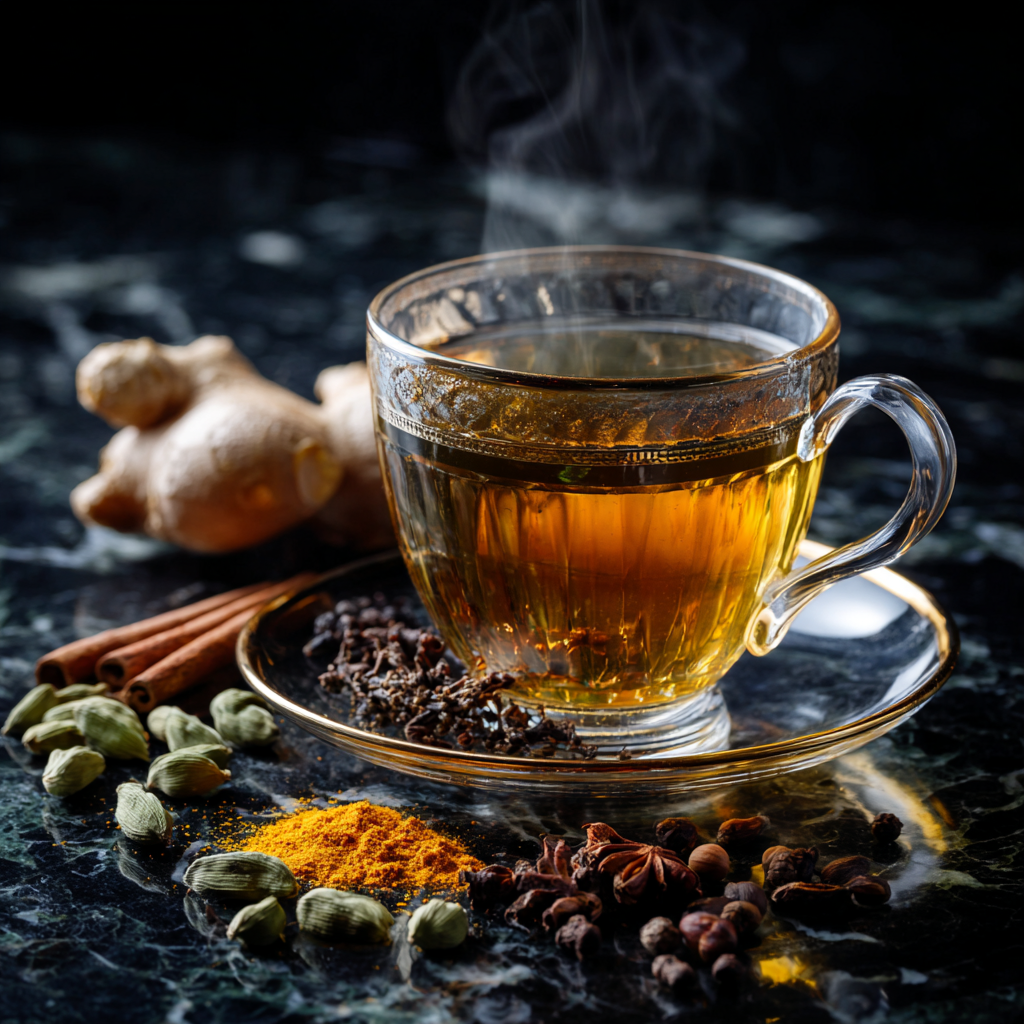
With contemporary lifestyles come immense levels of stress, and an ayurvedic tea recipe is helpful for it also. Ashwagandha, tulsi (holy basil) and cardamom are all balancing herbs. With frequent use, these constituents may support relaxation, mental clarity and a feeling of anxiety relief.
Detoxifying Ayurvedic Tea Blends
Detoxification is yet another major health benefit of an ayurvedic tea recipe. I would also tell him that there are several ingredients, such as turmeric, ginger and lemon, to expel toxins from the body. When enjoyed as part of a balanced lifestyle, these ingredients may aid liver function and hydration even though the notion of “detox” is sometimes exaggerated in popular health trends.
Tips for Choosing Quality Ingredients
The ayurveda tea recipe works only if the ingredients are good. Buy whole and organic spices & herbs when possible – They will definitely give you better taste, but also they have the most health benefits. Steer clear of highly processed or fake ingredients, as these will decrease the purity and effectiveness of the tea in question.
Potential Considerations and Limitations
While a recipe for ayurvedic tea is considered relatively safe, it must not be assumed that every person will have the same effect routinely. Many of them have side effects as well, and some can interact with medications or may not be appropriate for use in people who are suffering from certain health conditions. While your dog may like the scent of it all, some things can irritate a sensitive stomach. It is better to be cautious with herbal remedies instead of thinking that they are effective for everyone.
Integrating Ayurvedic Tea into a Healthy Lifestyle
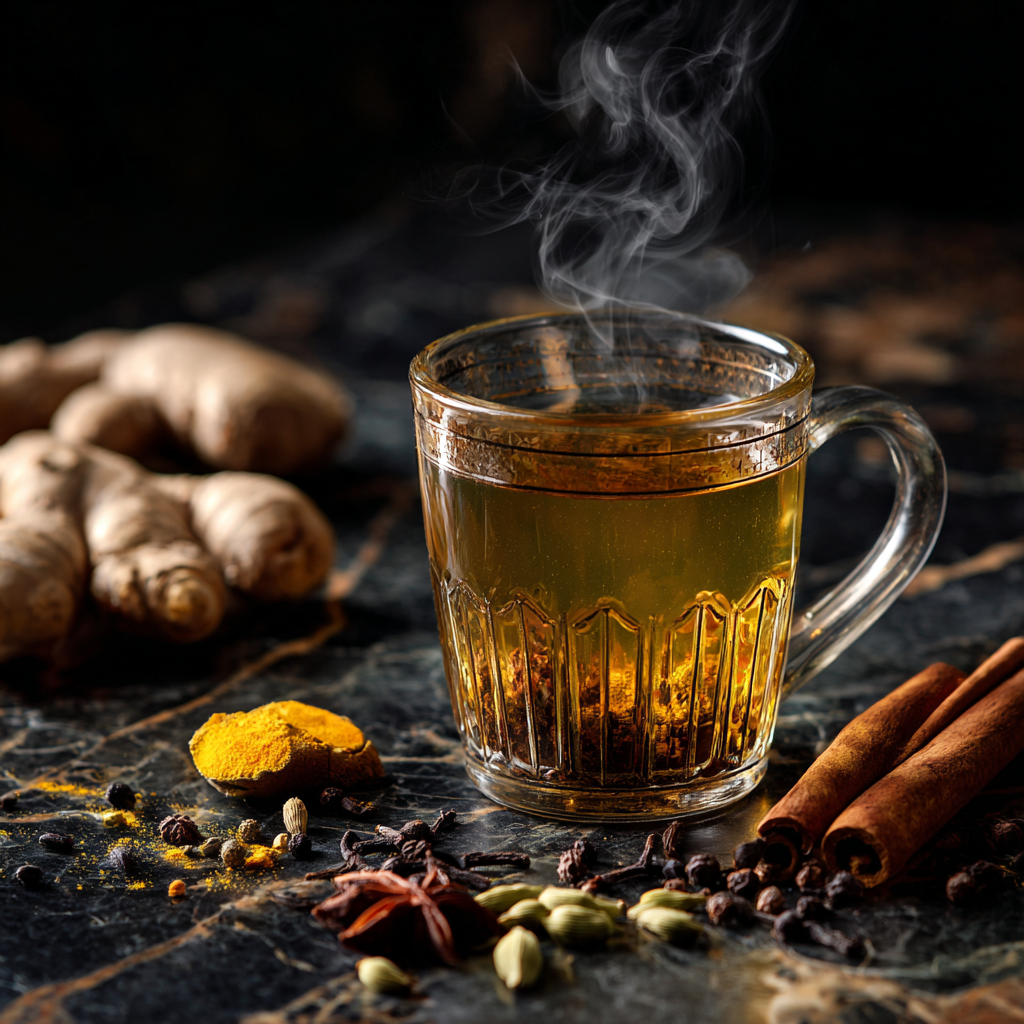
The Ayurvedic tea recipe may be a helpful component of a wider health regimen. Yet it is no substitute for a balanced diet, adequate sleep and medical treatment when appropriate. Instead, it seems to work more as an adjunct with other healthy lifestyle choices.
The Growing Popularity of Ayurvedic Tea
In recent years, the ayurvedic tea recipe has gained global attention as people look for natural and holistic ways to improve their well-being. This trend reflects a broader shift toward preventive health and mindful living. However, it’s important to stay critical and avoid treating it as a cure-all—its benefits are real, but they are part of a bigger picture of overall health.
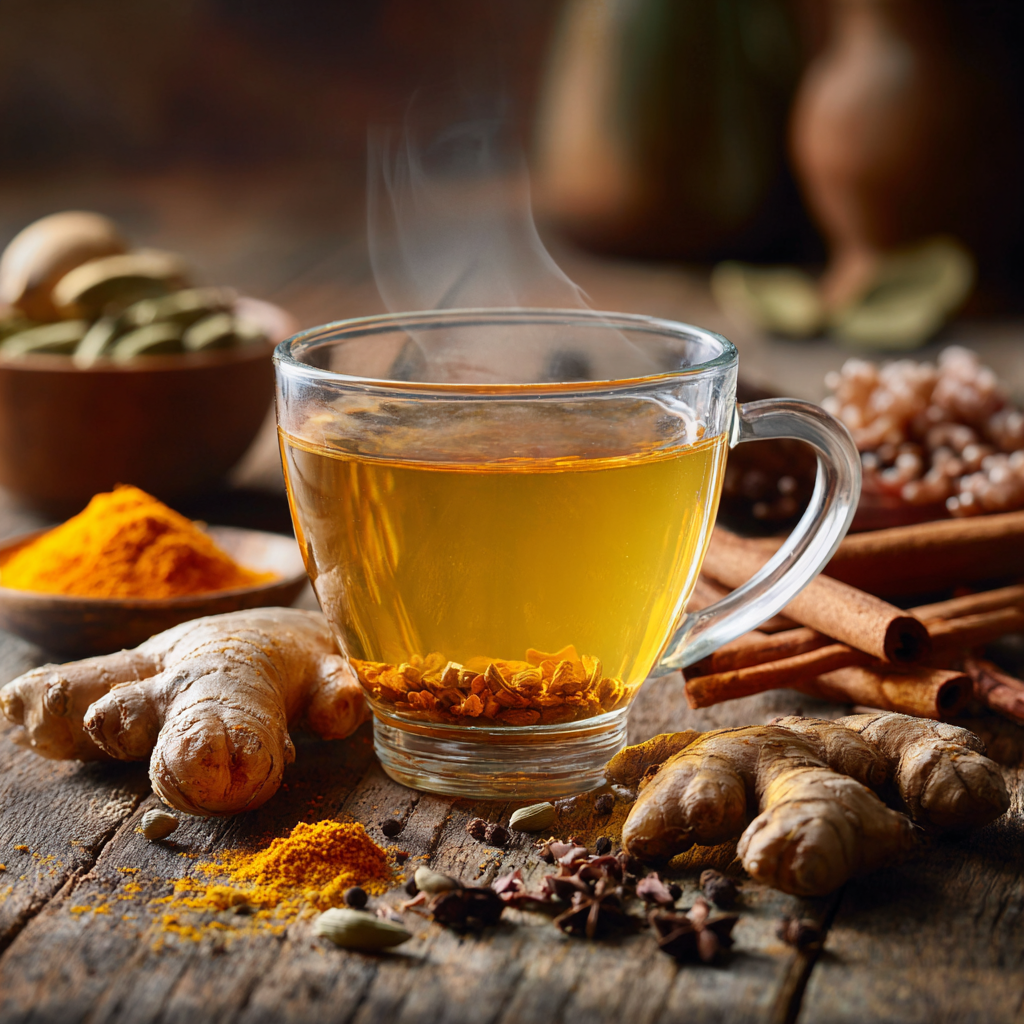
Ayurvedic Tea Recipe (Traditional Herbal Wellness Tea)
Equipment
- Small saucepan or pot
- Measuring cups and spoons
- Strainer or sieve
- Mug or teacup
- Stirring spoon
Ingredients
- 2 cups water
- 1 teaspoon fresh grated ginger or ½ teaspoon dried
- ½ teaspoon turmeric powder or small fresh piece
- 1 cinnamon stick or ½ teaspoon ground cinnamon
- 2 –3 cardamom pods lightly crushed
- 2 cloves optional
- 1 –2 black peppercorns optional
- 1 teaspoon honey or natural sweetener optional, added after brewing
- A few drops of lemon juice optional
Instructions
- Pour the water into a saucepan and bring it to a gentle boil.
- Add all the spices and herbs to the water.
- Reduce heat and let the mixture simmer for 8–10 minutes to extract flavors.
- Turn off the heat and allow it to steep for an additional 2–3 minutes.
- Strain the tea into a mug to remove the solid ingredients.
- Add honey or lemon if desired, then stir and serve warm.
Notes
- You can adjust the spice levels depending on your preference or tolerance.
- For a milder version, reduce strong ingredients like ginger or black pepper.
- Honey should not be added while the tea is very hot; let it cool slightly first.
- This ayurvedic tea recipe can be consumed once or twice daily, but excessive intake may not provide additional benefits.
- If you have specific health conditions or are taking medication, it’s sensible to check whether certain herbs are appropriate for you.
Share Your Twist!
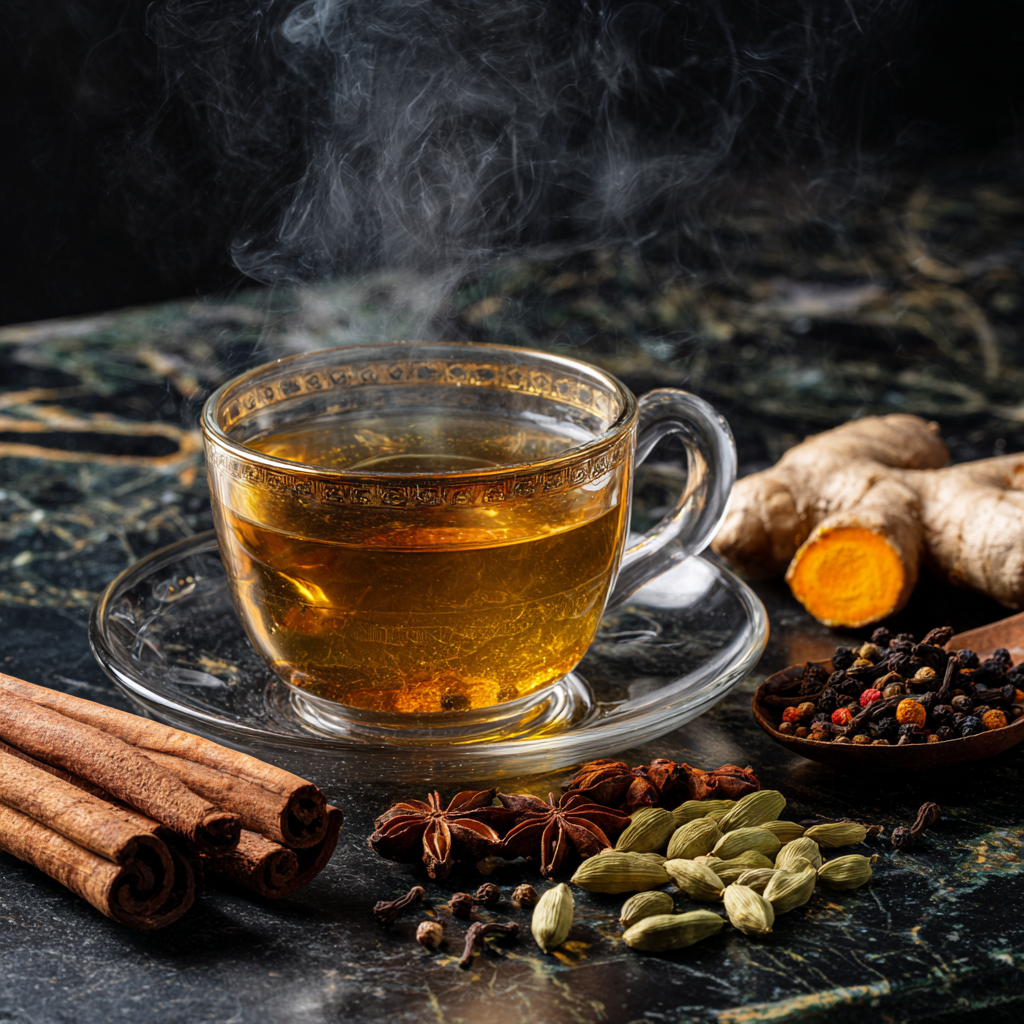
Do you have your own version of this ayurvedic tea recipe? So get creative and make it your own! Mix it with other herbs, change the spices or simply use flavors that you like. That is why everybody has a different taste, and that means every recipe gets its best form whenever prepared.
Let us know how you prepare your tea. Did you make it any differently? Try a new combination? Tell them what you learned and how they should approach it in the comments. Your little twist could be just what someone is looking for!