
Japanese Mounjaro is a homemade drink made from matcha, ginger, umeboshi (pickled plum) and a little kombu (kelp). It is earthy, lightly salty, tangy and gently warming, and it takes about 10 minutes. The name is a social-media nickname borrowed from a prescription medicine, and the drink is nothing like that medicine. This page shows you how to make it, what it can and cannot do, and who should be careful with it.

What Japanese Mounjaro Is, and What It Is Not
Mounjaro (tirzepatide) is a prescription medicine for type 2 diabetes, and a related product is prescribed for weight management. “Japanese Mounjaro” and “natural Mounjaro” are viral names for homemade drinks, and neither contains tirzepatide or has any connection to the drug or its maker. The ingredients are real staples of Japanese cooking, but there is no good evidence that this drink causes weight loss or works like the medication. Treat it as a pleasant, low-calorie drink, not as a treatment. Never stop or change a prescribed medicine because of a drink you saw online, and talk to your doctor about any weight or blood-sugar goals.
Two versions circulate online: the matcha, ginger, umeboshi and kombu tonic in this recipe, and a separate vinegar-based drink made with ume plum vinegar, lemon and grated daikon or ginger. Peptide Dossier explains the difference in its guide to what the viral drink is and is not. Looking for the chicken and vegetable stir-fry that carries the same name on this site? See our Japanese Mounjaro stir-fry.
Who Should Be Careful With This Drink
- Thyroid conditions, pregnancy or breastfeeding: kombu is a very concentrated source of iodine, and too much iodine can affect the thyroid. If this applies to you, ask your doctor first or leave the kombu out, and do not drink the kombu tonic every day.
- High blood pressure or a low-sodium diet: umeboshi is very salty. Start with half a plum, or skip it.
- Caffeine sensitivity: matcha contains caffeine. Use less matcha in the afternoon, or skip it late in the day.
- Reflux or sensitive teeth: the drink is acidic. Rinse your mouth with water after drinking it.
- Children under 1 year: never give them honey.
Japanese Mounjaro Ingredients
Makes 1 to 2 servings.
- 1½ cups (355 ml) water
- 1 piece of kombu, about 2×2 inches (5 cm), rinsed
- 1 teaspoon very finely grated fresh ginger (or 2 to 3 thin slices)
- ½ to 1 small umeboshi, pitted and mashed
- 1 teaspoon matcha powder, sifted
- 1 to 2 teaspoons lemon juice (optional)
- 1 to 2 teaspoons honey or maple syrup, to taste (optional)
- Ice, for serving cold (optional)
- Garnish: a mint leaf or a thin lemon slice

How to Make It
- Infuse the kombu (2 to 3 minutes). Put the rinsed kombu and water in a small saucepan. Warm over medium-low heat until steam rises and tiny bubbles form at the edges, but do not boil, because boiling can make kombu briny and slimy. Remove and discard the kombu, or save it for stock.
- Add ginger and umeboshi (1 to 2 minutes). Stir in the grated ginger and mashed umeboshi, and let it steep for about a minute. Taste it. It should be gently warm and pleasantly tangy.
- Whisk the matcha. In a mug or bowl, sift the matcha. Add a splash of the hot liquid and whisk until smooth and foamy, using a bamboo whisk or a small frother, then whisk in the rest of the liquid.
- Balance and sweeten. Add lemon juice and honey or maple syrup, starting small.
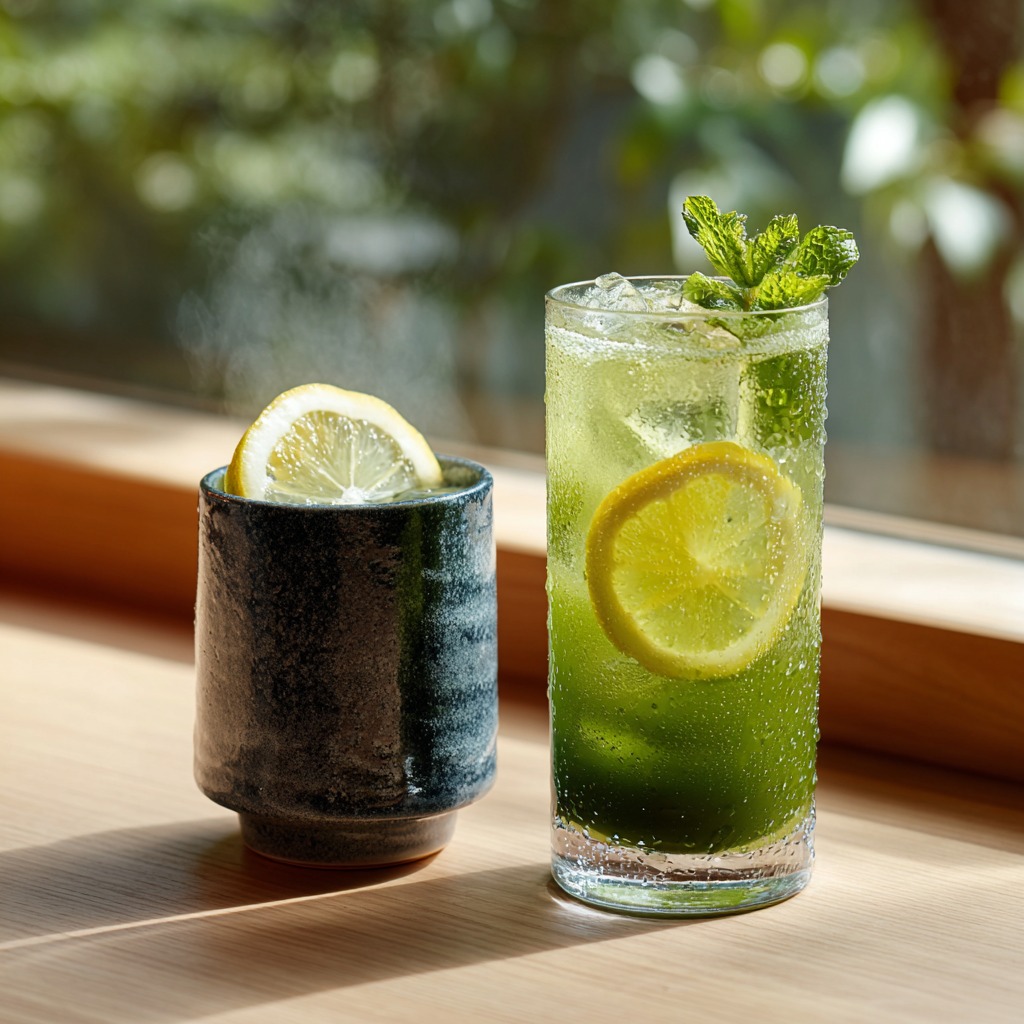
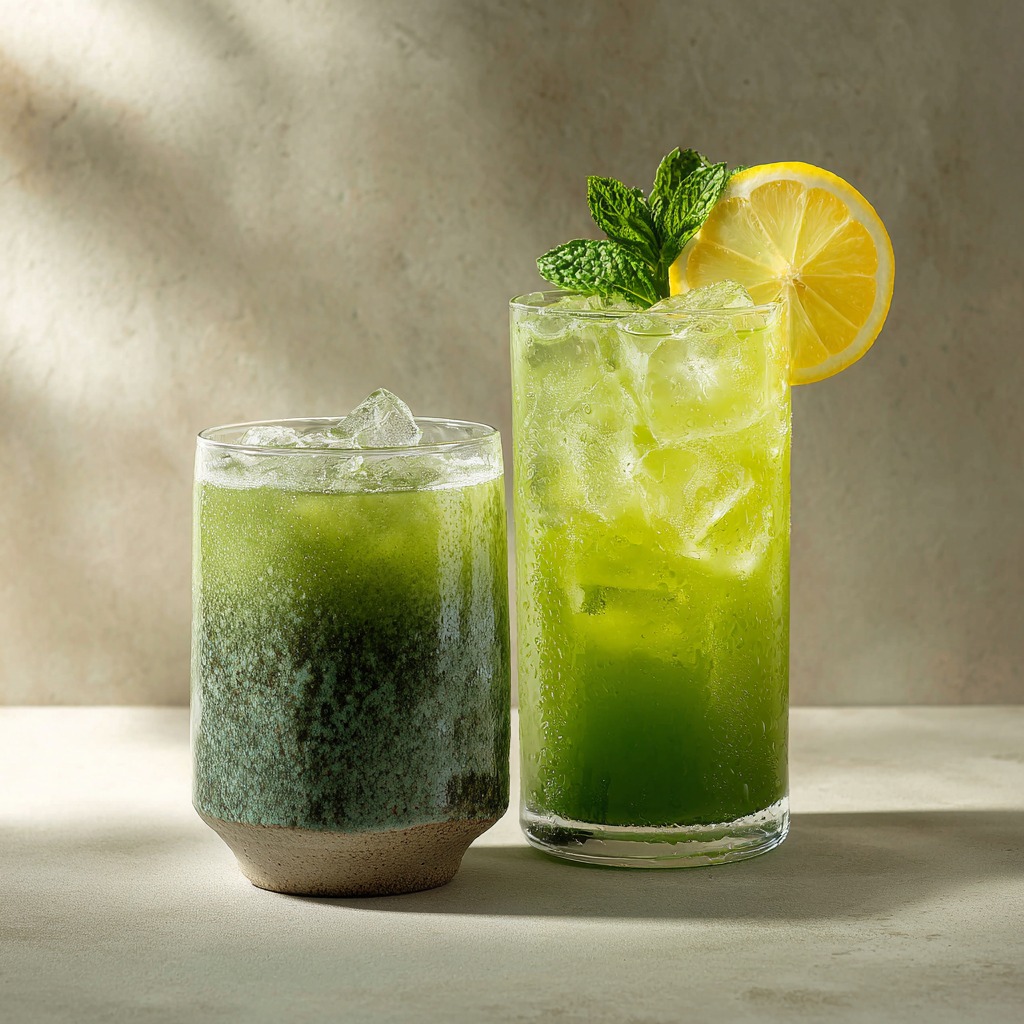
- Serve. Drink it hot, or let it cool for a few minutes, pour it over ice and garnish.
Tips and Swaps
- Keep the heat gentle. Matcha turns bitter in boiling water, so use water that has cooled slightly.
- Taste the umeboshi first. Brands vary a lot in saltiness and sourness, so begin with half a plum.
- No kombu? Skip it, and add a pinch of sea salt for savoriness. This is also the choice if you need to avoid iodine.
- No umeboshi? Use ½ to 1 teaspoon of rice vinegar with a tiny pinch of salt. The flavor will be different.
- No fresh ginger? Use ⅛ teaspoon of ground ginger or a ginger tea bag.
- Silkier or frothier: strain it through a fine mesh sieve, or use a handheld frother.
- Extras: a little yuzu or lemon zest, or a pinch of toasted sesame seeds.

What Does Each Ingredient Bring?
- Matcha: a grassy, slightly bitter flavor and some caffeine.
- Ginger: warmth and a clean, spicy bite.
- Umeboshi: salty, sour, fruity tang.
- Kombu: a subtle savory (umami) depth, and iodine.
- Lemon and honey: brightness and a little sweetness, to balance the salt.
Any health effects are modest at best. Do not count on this drink for weight loss, “detox” or medical benefits.
What to Have With It
Try it warm after dinner with sliced pear, apple or citrus, in the afternoon with edamame, cucumber slices or a rice ball (onigiri), or at breakfast with yogurt and berries. For something sweet, serve it alongside our matcha gateau.
Storing and Reheating
- Fresh is best. If you must keep it, refrigerate it without ice in a sealed jar for up to 24 hours, and shake or whisk before drinking, since the matcha settles.
- Reheating: warm it gently over low heat, without boiling.
- Freezing: not recommended, since the delicate flavors fade.

Japanese Mounjaro Recipe Card
Japanese Mounjaro Recipe
Ingredients
Equipment
Method
- Infuse the kombu: Add rinsed kombu and water to a small saucepan. Heat gently over medium-low until small bubbles appear (do not boil). Remove kombu and discard or reserve for stock.
- Add flavor: Stir in grated ginger and mashed umeboshi. Let steep for about 1 minute to infuse warmth and tang.
- Whisk the matcha: In a separate bowl or mug, sift 1 teaspoon of matcha powder. Add a splash of the hot infusion and whisk vigorously until smooth and frothy. Gradually pour in the rest of the liquid while whisking.
- Adjust flavor: Add lemon juice for brightness and honey (or maple syrup) to taste. Stir well.
- Serve: Hot version: Pour into a mug, garnish, and serve immediately.Iced version: Cool slightly, pour over ice, and top with mint or lemon slice.

Notes
- Taste balance: Start with ½ umeboshi if you’re new to it—it’s salty and tangy!
- No kombu? Substitute with a pinch of sea salt for a touch of umami.
- Vegan option: Use maple syrup instead of honey.
- Storage: Best enjoyed fresh but can be refrigerated for up to 24 hours; whisk before serving.
- Do not confuse this recipe with the prescription medication Mounjaro. This is a natural, food-based wellness drink—not a medical product.

Japanese Mounjaro FAQs
Does Japanese Mounjaro help you lose weight?
There is no good evidence that it does. It is a low-calorie drink that may replace a sugary one, but it is not a weight-loss treatment.
Is it the same as the drug Mounjaro?
No. The drink contains no tirzepatide and has no connection to the medicine.
Can I drink it every day?
It is safest as an occasional drink, especially because of the iodine in kombu and the sodium in umeboshi. Ask your doctor if you have a thyroid or blood pressure condition.
Where can I buy kombu and umeboshi?
Asian grocery stores, many supermarkets and online shops sell them.
Is there a vegan version?
Yes. Use maple syrup instead of honey.