
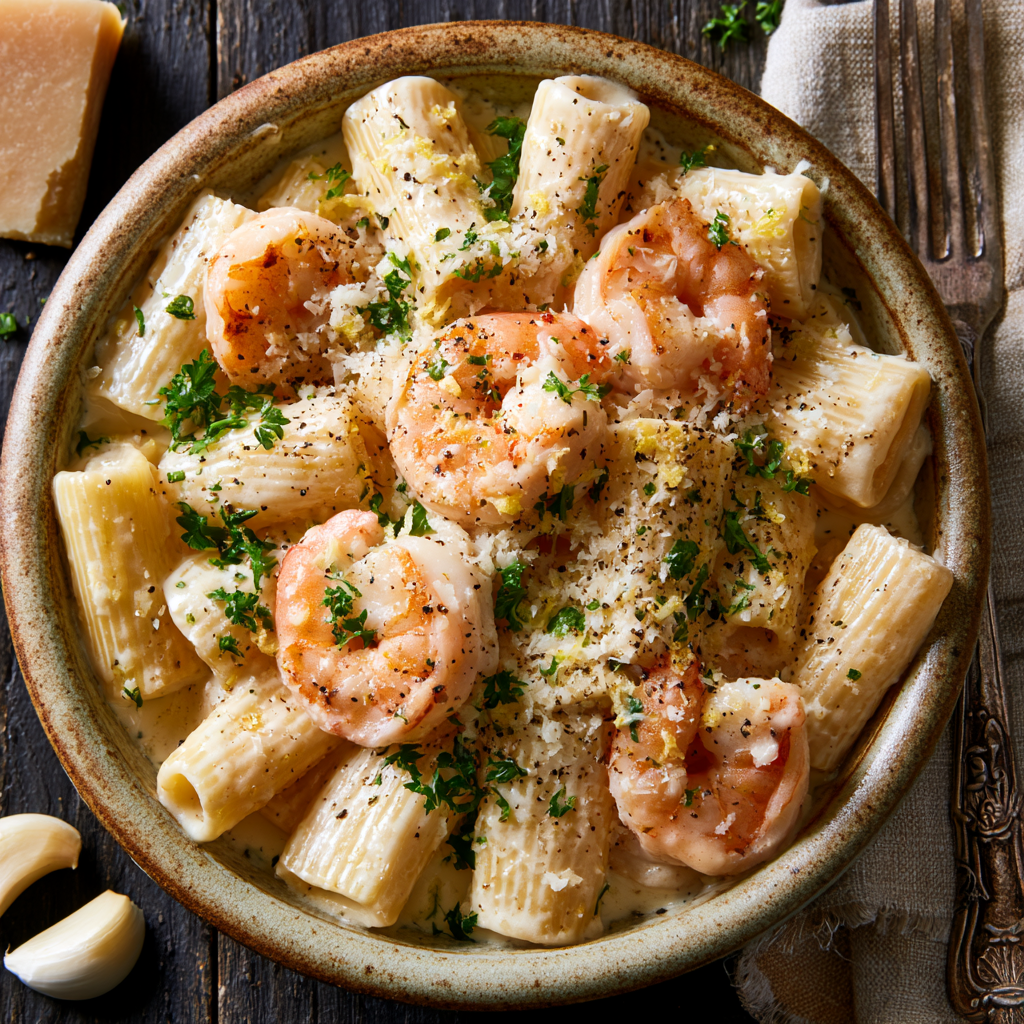
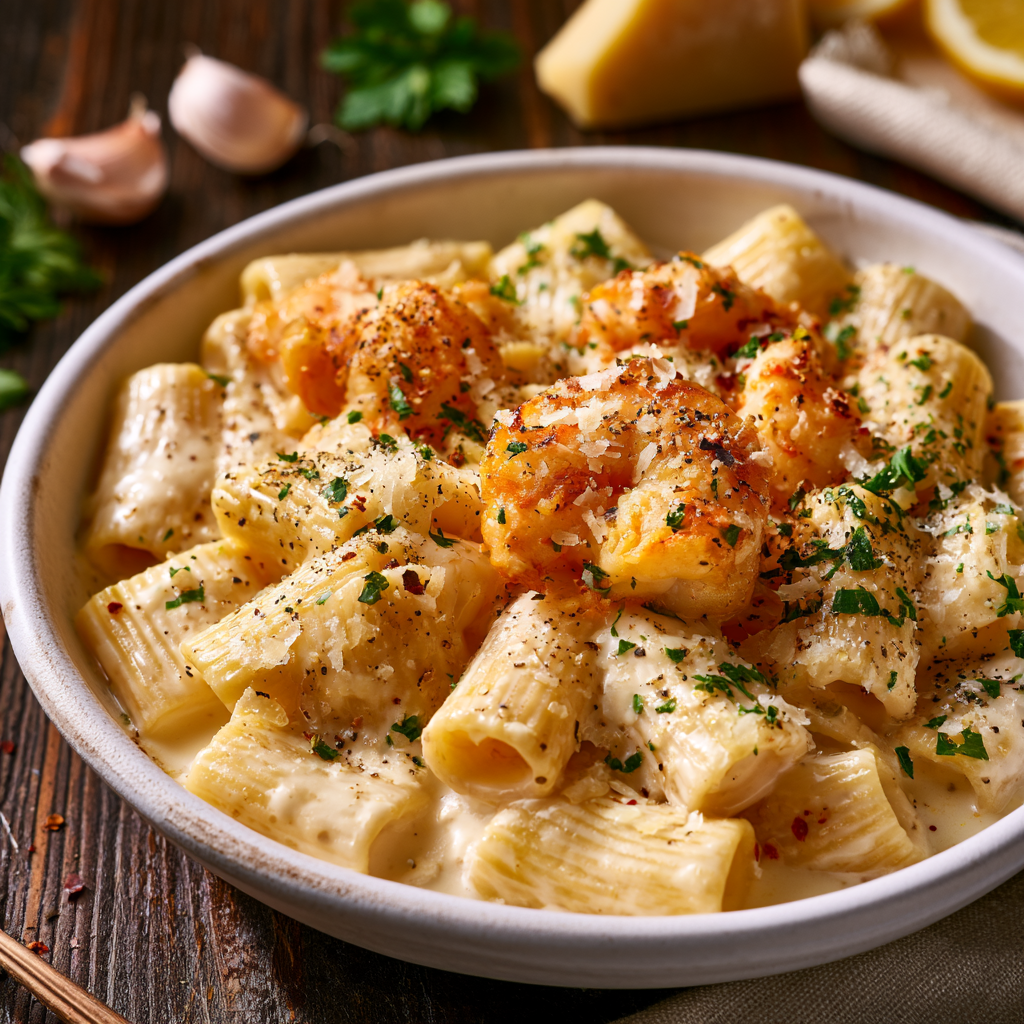
Shrimp Rigatoni Recipe offers weeknight comfort with restaurant-level appeal. In addition, it pairs succulent shrimp with al dente rigatoni in a garlicky Parmesan cream sauce. This combination elevates the dish without lengthy prep. Finally, the finished dish tastes fancy without hours in the kitchen.
Its versatility is one of the reasons this Shrimp Rigatoni Recipe is so popular. It is suitable for any occasion. Additionally, it fits a weeknight dinner, quick prep when guests stop by, or a craving for hearty seafood pasta. The ingredients are common. The preparation is simple, and the dish is both beautiful and delicious.
This shrimp rigatoni is ready in about 30 minutes and packs tons of flavour with every slurp.
However, it beats so many complicated pasta recipes.
A couple of new ingredients and a few simple cooking skills help you make this creamy pasta that outshines many.
Why You’ll Love This Shrimp Rigatoni Recipe
Many pasta recipes exist.
However, this stands out because it balances ease of preparation and taste.
For a Shrimp Rigatoni Recipe, all these ingredients serve a purpose.
They are creamy without being heavy.
They are rich, but not so much as to overshadow the shrimp’s delicate sweetness.
This is another reason why people love this recipe. Moreover, it’s flexible. It can be easily modified based on taste and dietary preference. Additionally, toss in veggies for nutrition. Ramp up the heat with Cajun seasoning, or substitute cream for a lighter version. The options here are basically limitless. Consequently, you will never get tired of this recipe.
The best part is that this dish can be prepared by cooks with varying experience levels. The easy, pointed approach appeals to beginners, and experienced home cooks can adjust the sauce and spices for their own version.
Perhaps most importantly, the whole thing cooks up using one pot and a skillet; cleanup is super quick after dinner.
What Is Shrimp Rigatoni?
Shrimp rigatoni is an Italian American pasta dish combining its main ingredients (shrimp and large tube-shaped rigatoni) with a sauce. Though creamy garlic Parmesan sauce is one of the most common types, many differ with tomato sauces, spicy Cajun cream, lemon butter (or crostini), roasted garlic or pesto.
Rigatoni is particularly well suited for creamy sauces because of its wide tubes and ridged exterior. Unlike smoother pasta shapes, rigatoni captures sauce both inside and outside the pasta, ensuring every bite is packed with flavor.
Thai shrimp adds a natural sweetness and subtle seafood flavour that balances the richness of this sauce without overwhelming the dish. The combination of the two comes together to form a meal hearty enough to fill you up for dinner yet also light enough that you can enjoy it any time year-round.
The origin of shrimp rigatoni is Italian but has become a staple in numerous American kitchens because this recipe brings together the best of classic comfort (pasta) and fresh seafood, easy enough for even those new to cooking types.
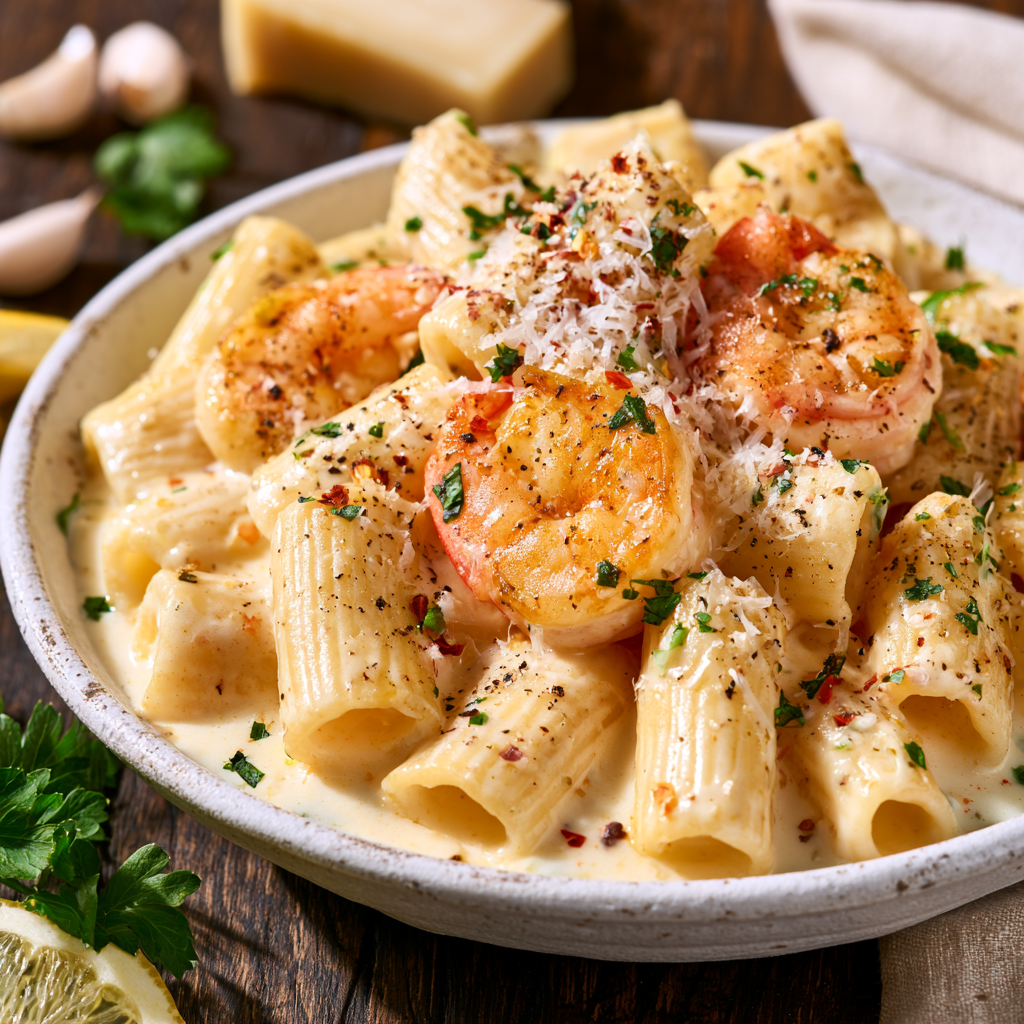
What Makes This Shrimp Rigatoni Recipe So Delicious?
The answer is in having balance. Here is how each constituent brings a distinct touch to the final plate.
And the shrimp lends freshness and natural sweetness to soak into it, while garlic noir/ butter builds a deep umami base. And the heavy cream gives you a sumptuous mouthfeel, and then Parmesan cheese, freshly grated, which is nutty richness with just enough saltiness!
The fresh parsley in the recipe brightens up everything, and using Italian seasoning adds great flavour to all of the ingredients without being too much on top of adding any taste towards seafood. A splash of pasta-cooking water emulsifies the sauce to a silky texture that clings to every piece.
Another key player is the rigatoni itself. With its ridges and hollow centre, it catches the creamy sauce so that each bite is a balanced blend of pasta, shrimp, and Parmesan.
Result: A workhorse pasta weeknight dinner that tastes all rich and creamy and indulgent right from the first bite.
Ingredients You’ll Need
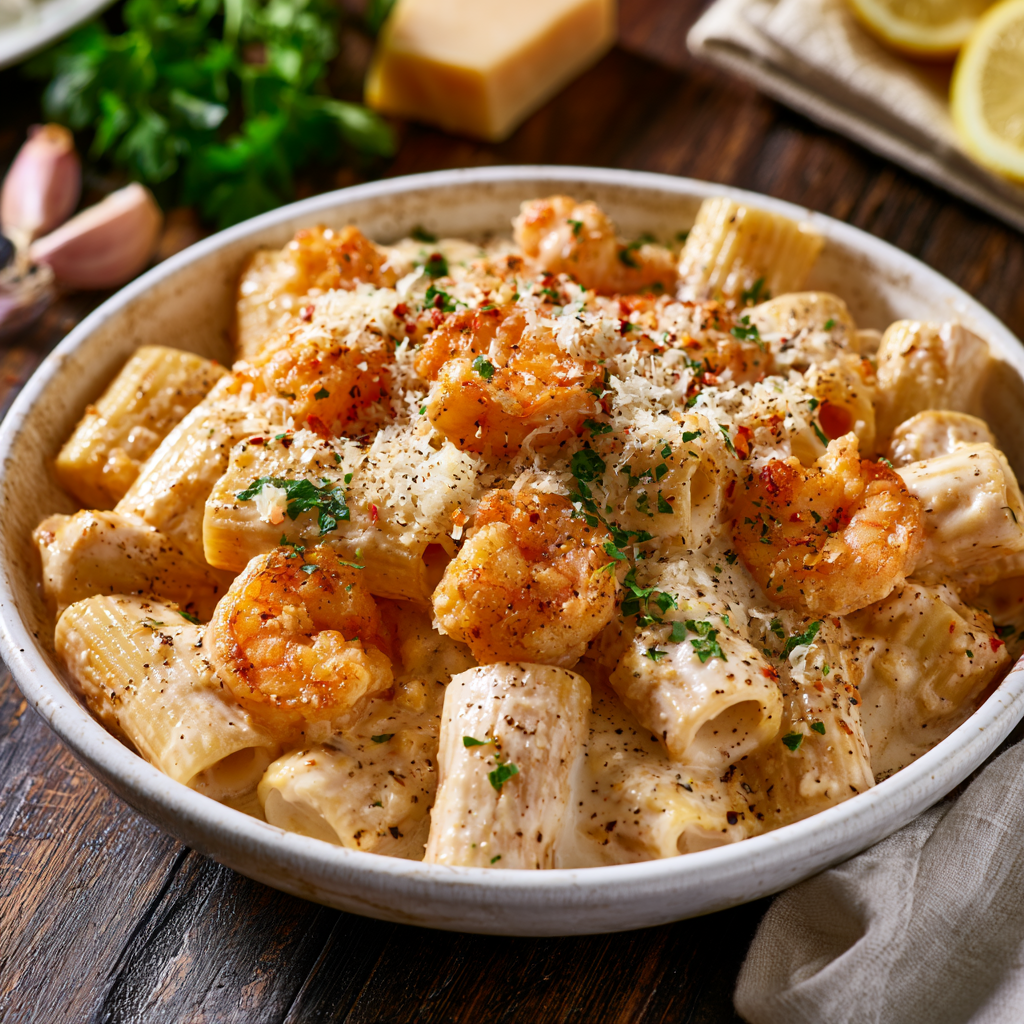
One of the greatest advantages of this shrimp rigatoni recipe is that it relies on simple, everyday ingredients that work together beautifully.
For the pasta, choose high-quality rigatoni. Its sturdy shape holds creamy sauces much better than thinner pasta varieties.
Large shrimp are ideal because they remain juicy after cooking and provide a satisfying bite. Fresh shrimp are excellent, but properly thawed frozen shrimp work equally well and are often more convenient.
Garlic is essential for building flavor, while butter and olive oil create the perfect cooking base for the shrimp. Heavy cream gives the sauce its rich texture, and freshly grated Parmesan melts smoothly into the cream to produce a velvety finish.
Seasonings such as paprika, Italian seasoning, salt, and freshly ground black pepper enhance the natural flavors without overwhelming the dish.
Fresh parsley adds color and freshness, while optional ingredients like spinach, mushrooms, cherry tomatoes, roasted red peppers, or crushed red pepper flakes allow you to customize the recipe according to your personal preferences.
Kitchen Tools You’ll Need
This recipe does not require professional equipment to prepare, but having the proper tools makes cooking so much easier.
To boil the pasta evenly, a big stockpot is important, while for cooking the shrimp and stirring in most of this creamy sauce without crowding the pan very much, you need plenty of room, which usually only fits in a homemade rich deep skillet.
A strainer allows you to quickly drain the pasta while holding back some of that precious cooking water before throwing it away. When making the sauce, precise amounts of ingredients will be measured using measuring cups and spoons.
Chopping garlic and parsley like chefs do with a clean, sharp chef knife, bold through boards of wood surfaces. Lastly, if you’re using a block of Parmesan cheese instead of shredded, which we all know melts better than pre-packaged shreds! use a fine cheese grater.
Choosing the Best Shrimp
The shrimp you choose will make a big difference in the final product. Since they remain tender and juicy while also offering a satisfying bite, large or jumbo shrimp are generally the preferred choice.
If you can get the freshest shrimp, that is always a great choice, but frozen shrimp are usually caught and flash-frozen not long after being pulled from water, so thawed properly, they should be equally delicious!
Buy shrimp that are already peeled and deveined if you can; this will save time preparing. For the shrimp, pat them very dry with paper towels before cooking! This excess moisture will cause them to steam in the skillet instead of facilitating a beautiful golden sear.
Be careful not to overcook the shrimp, since they only take a few minutes per side. Cooked shrimp should be pink and opaque in colour, with their tails curled into a loose C shape.
Why Rigatoni Is the Perfect Pasta Choice
There are plenty of pasta shapes that can hold up to creamy sauces, but rigatoni remains the top contender for this dish.
The shape is wide and tubular, providing good cavity to hold sauce within each piece of pasta even as the great ridges on its exterior catch additional creamy Parmesan-style sauce. This imparts uniform flavour with every mouthful.
Rigatoni is another hearty pasta that also stands up and keeps its shape with shrimp, tossed in a sauce. It doesn’t become too soft or fall apart easily like a thinner pasta would, making it perfect for hearty seafood-based meals.
However, if you do not have rigatoni available, use penne or ziti (or even better, half-lengths of regular-sized mezzi rigatoni). But you would still choose good, old-fashioned rigatoni for its wisdom in holding fat and cream.
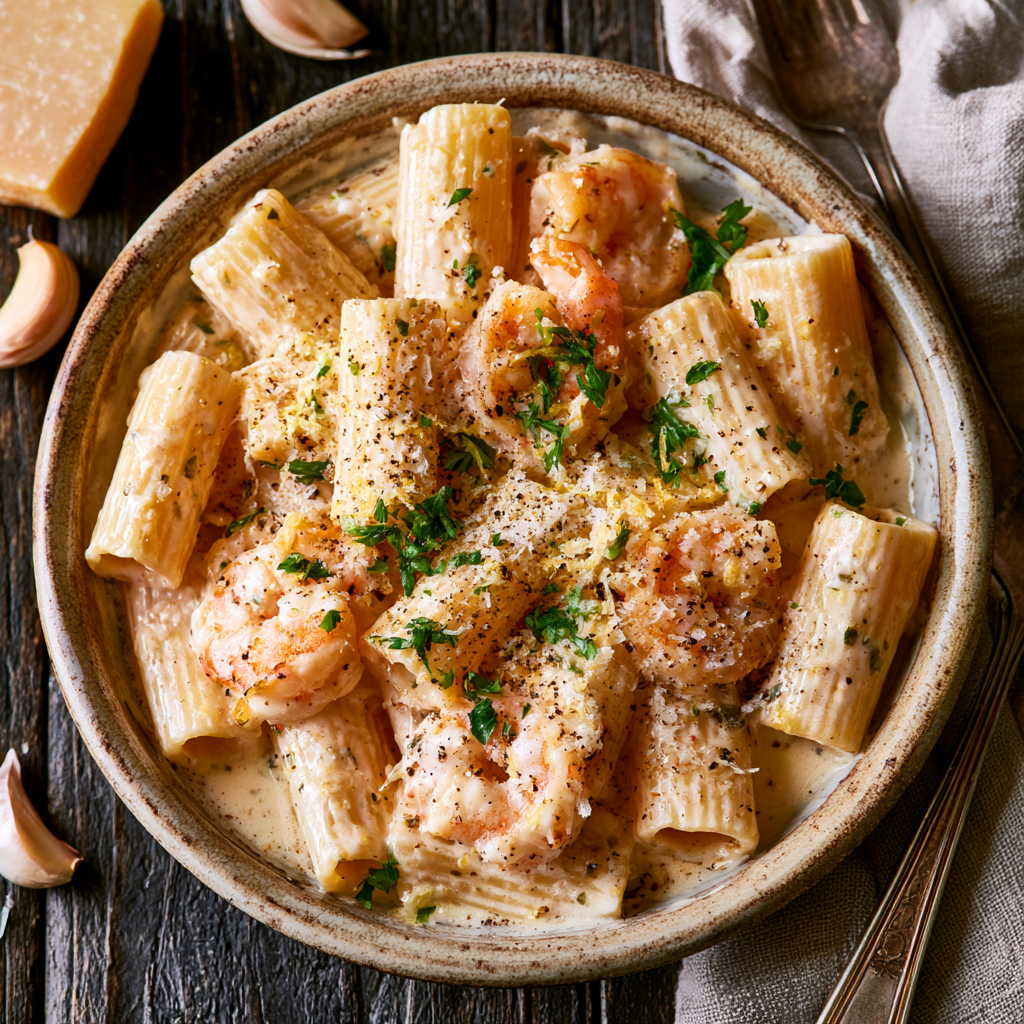
How to Make Shrimp Rigatoni
This Shrimp in Rigatoni recipe is pretty darn easy. With a little care and timing, you will be serving up the creamiest, tastiest pasta you’ll have ever eaten outside of Italy.
Go ahead and bring a large pot of salted water to boil. Stir in the rigatoni and cook as directed on the package until al dente. You want the pasta to be cooked through but still have a bit of bite. Be sure to save about 1 cup of the starchy pasta water when draining, and you can add it in later if your sauce needs some adjusting.
Meanwhile, dry the shrimp well with paper towels and sprinkle them all over with paprika, Italian seasoning salt and freshly ground black pepper. In a large skillet, heat the olive oil and butter over medium-high heat. Add the shrimp in a single layer after the butter has melted. Cook until pink and just opaque, about one to two minutes per side. Immediately transfer the shrimp to a plate; they will continue cooking after being removed from heat.
With the same skillet, reduce heat to medium and add minced garlic. Sauté it for 30 seconds until fragrant, but watch closely so that you do not let it brown. Add the heavy cream and give it a gentle stir, then add in freshly grated Parmesan cheese. Keep stirring until cheese is completely melted and the sauce becomes smooth and creamy.
Toss in pre- cooked rigatoni until all parts of pasta are combined with the sauce. Add the cooked shrimp back into your pan and gently combine. If the sauce appears too thick, add a splash of reserved pasta water a bit at a time until you achieve your desired consistency.
Top with freshly chopped parsley, more shredded Parmesan cheese and black pepper. Enjoy while the sauce is still warm and creamy.
Secrets to a Perfect Creamy Sauce
A few simple techniques can go a long way, since the sauce is really what defines and characterises any great shrimp rigatoni recipe.
Try to use freshly grated parmesan cheese; mine was pre-shredded. Because of its moisture content and porosity, fresh parmesan melts more evenly than pre-grated varieties; it produces an unctuous mouthfeel without graininess. Once you are adding the cheese, turn the burner down a touch and stir like mad to help it incorporate better into the cream.
The richest texture comes from using heavy cream here, but don’t boil the sauce after adding in cheese either. So the sauce won’t separate and will remain smooth.
Another key component is pasta water, reserved. It thickens and emulsifies the sauce naturally, helping it to stick to your pasta without weighing it down too much because of starch that is released on cooking.
Then don’t over-season the sauce. The flavours of garlic, butter, Parmesan and shrimp are plenty flavorful already, so making sure each ingredient shines is key.
Expert Tips for the Best Shrimp Rigatoni Recipe
Small details often separate a good pasta dish from an exceptional one.
For the most part, opt for large or jumbo shrimp (the bigger they are, the less likely they are to dry out in cooking). Note: For frozen shrimp, thaw completely and dry very well before placing in the skillet.
Don’t overcrowd the pan, and cook shrimp in a single layer. Steam gets trapped in overcrowded pans and doesn’t cause proper browning; it’s worse for both flavour and texture.
Season across the layers of the recipe, and not just all at once at the last minute. Add some seasoning to the shrimp, taste your sauce before adding it all together and adjust a little just ahead of serving.
Fresh herbs also make a huge difference. Chopped parsley or basil makes for a fresh note to balance the richness of cream sauce.
To finish with a pop of flavour, make sure to add the juice of half a fresh lemon. The acidity cuts the richness and makes you appreciate how sweet shrimp can be.
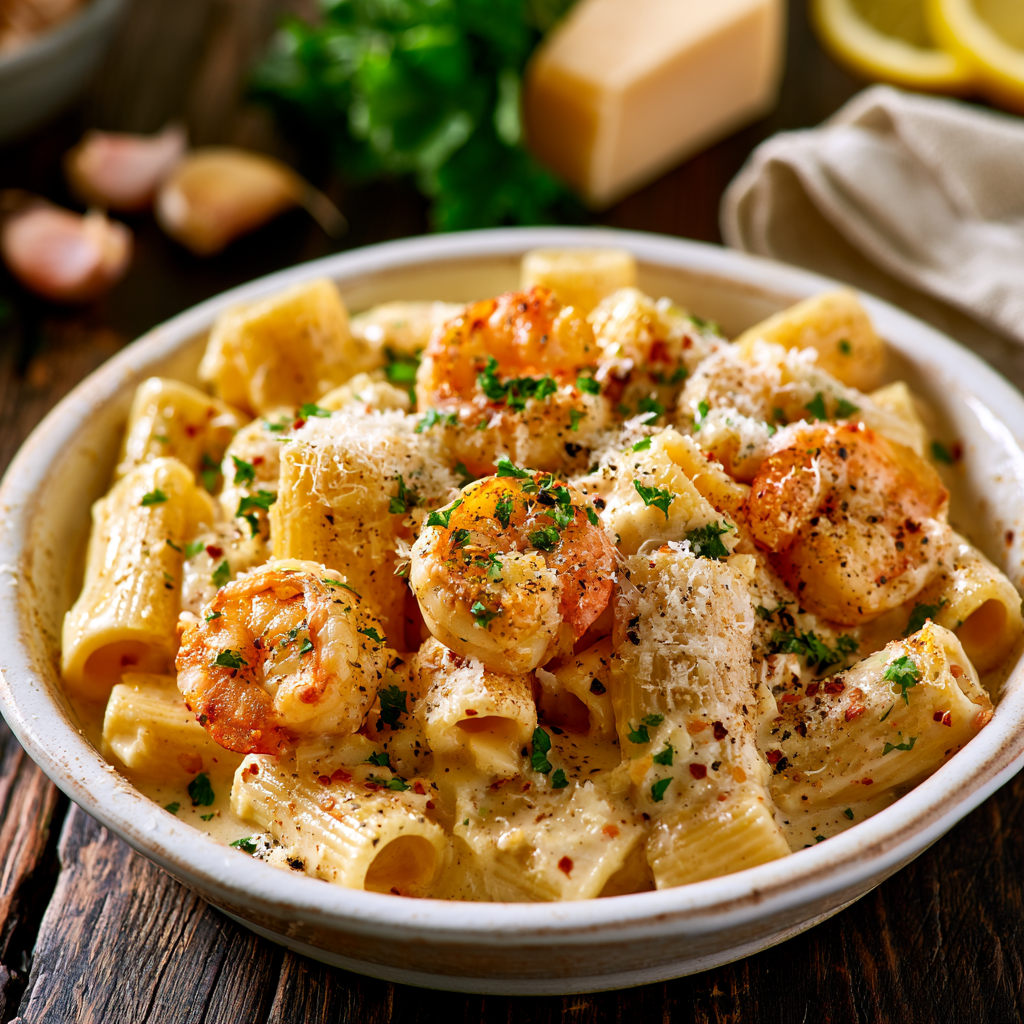
Common Mistakes to Avoid
Even a simple recipe can go wrong if a few common mistakes are overlooked.
Overcooking shrimp is one of the biggest mistakes we often make while preparing it. Shrimp cooks so quickly that if you leave them in the pan for just a minute too long, they’ll be tough instead of tender.
Overcooking: Overcooked pasta is another mistake. The Rigatoni is meant to stay al dente because it’ll continue cooking on the stove after it combines with the hot sauce.
The final texture can also be influenced by using pregrated Parmesan cheese. Most packaged cheeses have anti-caking agents, making it difficult to melt into a smooth sauce without graininess.
Cooking the garlic over high heat is another common error. Burnt garlic develops a bitter taste that can overpower the entire dish.
Finally, avoid skipping the reserved pasta water. This simple ingredient helps bind the sauce naturally and creates the perfect consistency.
Flavor Variations
For one thing, this shrimp rigatoni recipe has become a go-to simply because it works so well in oh so many directions. You can easily adapt to your family’s taste buds or turn it into an entirely different flavour profile.
If you like it spicy, use Cajun seasoning with crushed red pepper flakes or diced jalapeño chillies. That added kick of heat goes phenomenally with the creamy Parmesan sauce.
If you like veggies, sprinkle in fresh spinach, mushrooms, broccoli florets, asparagus or zucchini (the last two almost always end up hidden) and roasted red peppers. These add nutrients and texture too, but not a huge change to the recipe.
Sun-dried tomatoes create a sweet-and-sour flavour, and pesto makes for an herb-forward summer version.
If you want a little fancier meal, we’ll switch the cream for half-and-half or even make lemon butter sauce instead of an all-cream-based one.
If you want to make a different meaty seafood pasta with the same creamy base, feel free to swap out grilled chicken for grilled scallops or salmon.
What to Serve with Shrimp Rigatoni
While this pasta is perfectly delicious straight out of the pot, you can make it even better by serving it with matching side dishes.
Garlic bread is a top pick because you can mop and soak up every last creamy morsel. Even warm focaccia or a crusty loaf of Italian bread works perfectly.
A fresh Caesar or mixed green salad cuts through the pasta richness. There you have it: lighter vinaigrettes to balance out the creaminess without all that richness overpowering.
Roasted vegetables such as asparagus, broccoli, Brussels sprouts, zucchini, or green beans add both color and nutrition to the plate.
For dessert, fresh berries, lemon sorbet, panna cotta, or classic tiramisu make excellent finishing touches.
Storage, Freezing, and Reheating
Leftover shrimp rigatoni can be stored in an airtight container in the refrigerator for up to three days.
Reheat using low heat on the stove or microwave in 30-second intervals, stirring occasionally. A dash of milk, cream or chicken broth helps rebuild the silky mouthfeel in the sauce.
Cream-based sauces can separate during freezing and thawing, but whatever freezes is fine. To keep the quality high, it is best to freeze pasta for a maximum of 2 months and defrost overnight in the refrigerator before reheating.
Whenever possible, enjoy the dish fresh, as seafood and cream sauces always taste best immediately after cooking.
Nutrition Information
The exact nutritional values depend on the ingredients and serving size, but one generous serving typically contains approximately:
- Calories: 620–700
- Protein: 32–36 grams
- Carbohydrates: 48–55 grams
- Fat: 30–35 grams
- Saturated Fat: 15–18 grams
- Fiber: 2–4 grams
- Sodium: 650–850 milligrams
Adding vegetables or using lighter dairy products can reduce calories while increasing the nutritional value of the meal.

Frequently Asked Questions
Can I use frozen shrimp?
Yes. Frozen shrimp work perfectly as long as they are completely thawed and patted dry before cooking.
Can I substitute another type of pasta?
Absolutely. Penne, ziti, mezzi rigatoni, fusilli, and even fettuccine are excellent alternatives, although rigatoni remains the best choice for holding creamy sauces.
Can I make this recipe without heavy cream?
Yes. Half-and-half, evaporated milk, or a combination of milk and cream cheese can be used for a lighter version.
How do I know when the shrimp are cooked?
Shrimp are fully cooked when they turn pink, become opaque, and curl into a loose “C” shape. If they curl into a tight circle, they’ve likely been overcooked.
Can I prepare this recipe ahead of time?
Yes. You can cook the pasta and prepare the sauce in advance, but cook the shrimp just before serving for the best texture.
Is this recipe spicy?
No. The classic version is mild, but you can easily increase the heat with Cajun seasoning or crushed red pepper flakes.
What vegetables work best?
Spinach, mushrooms, asparagus, broccoli, peas, zucchini, kale, and roasted red peppers all pair beautifully with the creamy sauce.
Can I use pre-cooked shrimp?
Yes, but add them only during the final minute of cooking to warm them through. Otherwise, they may become tough.
What’s the best cheese for this recipe?
Freshly grated Parmesan cheese is the best option because it melts smoothly and adds a rich, authentic flavor.
Can I make this recipe gluten-free?
Yes. Simply replace the regular rigatoni with your favorite gluten-free pasta while following the same cooking method.
Final Thoughts
If you need a recipe for shrimp rigatoni that is comforting, easy and tastes like restaurant quality, you found it! You literally have to make this for dinner right now. Succulent shrimp and al dente rigatoni cooked in a cheesy garlic sauce are the perfect combination, making it great for easy family dinners or something special.
Versatility is a huge strength of this recipe. Add seasonal vegetables, change the spice level and play with different herbs or cheese- make it your own. This recipe is simple and easy to make, whether this is the first time making seafood pasta from home or if you are an experienced cook already.
After perfecting this creamy shrimp rigatoni, you will not be shocked if it becomes one of your favourite homemade pasta dishes. Fast enough for a weeknight, fancy enough to serve guests and good enough that everyone wants seconds.
Creamy Shrimp Rigatoni Recipe
Ingredients
Equipment
Method
- Bring a large pot of salted water to a boil and cook the rigatoni until al dente according to the package instructions. Reserve 1 cup of pasta water before draining.

- Pat the shrimp dry with paper towels and season with paprika, Italian seasoning, salt, and black pepper.
- Heat olive oil and butter in a large skillet over medium-high heat. Cook the shrimp for 1–2 minutes per side until pink and opaque. Remove from the skillet and set aside.
- Lower the heat to medium and sauté the minced garlic for about 30 seconds until fragrant.
- Pour in the heavy cream and stir gently. Add the Parmesan cheese gradually, stirring continuously until the sauce becomes smooth and creamy.
- Add the cooked rigatoni to the skillet and toss until evenly coated with the sauce.
- Return the shrimp to the skillet and gently combine everything together.
- If the sauce is too thick, stir in a small amount of the reserved pasta water until you reach the desired consistency.
- Garnish with chopped parsley, extra Parmesan cheese, and freshly cracked black pepper.
- Serve immediately while warm and enjoy.
Video
Notes
- Avoid overcooking the shrimp to keep them tender and juicy.
- Freshly grated Parmesan melts much better than pre-shredded cheese.
- Reserve pasta water before draining—it helps create a silky, restaurant-quality sauce.
- Add spinach, mushrooms, or roasted red peppers for extra flavor and nutrition.
- For a spicy version, mix in Cajun seasoning or crushed red pepper flakes.
- Store leftovers in an airtight container in the refrigerator for up to 3 days.
- Reheat gently with a splash of milk or cream to restore the sauce’s creamy texture.
- This recipe serves approximately 4 people and takes about 30 minutes from start to finish.