
Golden Paste Recipe is a simple homemade mixture of turmeric, black pepper, coconut oil, and water. This golden paste recipe takes less than 15 minutes to make and makes a smooth turmeric paste that can be added to drinks, smoothies, or everyday dishes.
Turmeric has been used in traditional wellness practices for centuries, and golden paste has become a popular way to enjoy turmeric in a more convenient form. The combination of turmeric, black pepper, and healthy fats helps create a balanced recipe while allowing you to control the ingredients without the use of unnecessary additives.
In this guide, you will learn how to make golden paste at home with the exact ingredients, step-by-step instructions, storage tips, recipe variations, and practical ways to use it. New to turmeric paste or looking for an easy homemade golden paste recipe? This guide will show you how to make it successfully.
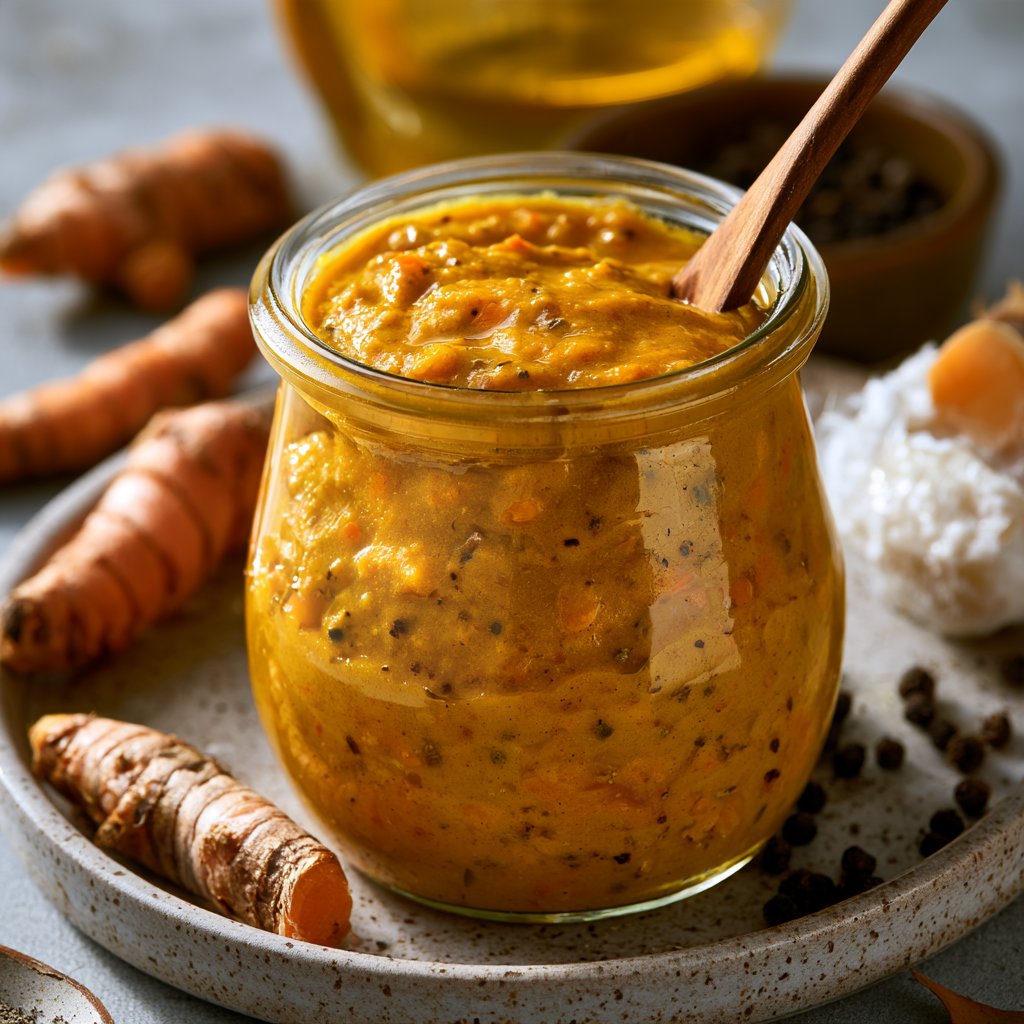
What Is Golden Paste?
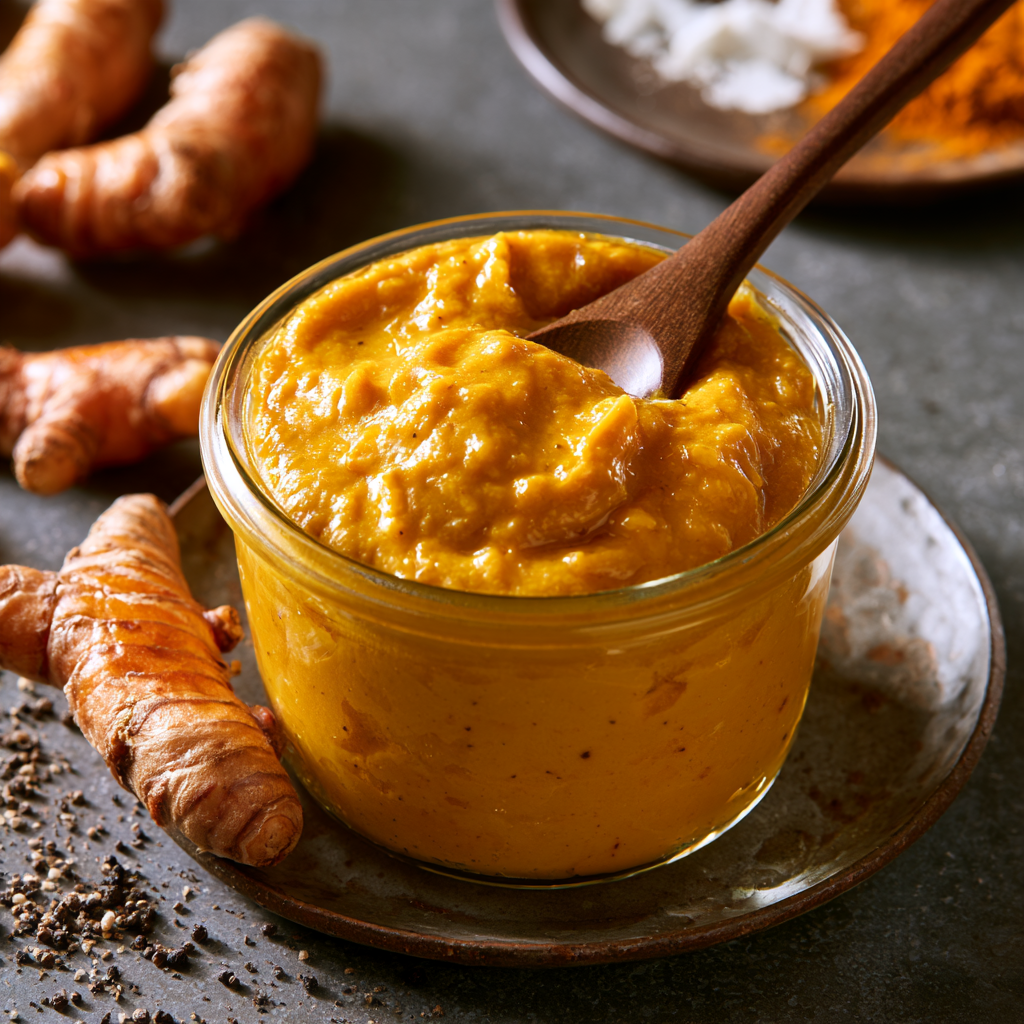
Golden paste is a cooked mixture of turmeric, black pepper, a healthy fat (usually coconut oil), and water. The cooking process activates the turmeric and helps the ingredients come together into a smooth, dense paste that can be divided up and stored for daily use.
The paste is born out of South Asian culinary and medicinal traditions, where turmeric was blended with milk, ghee or honey to treat everything from inflammation to digestive woes. The specific preparation known as ‘golden paste ‘- turmeric mixed with oil and black pepper to increase bioavailability became popularised in the modern era, most notably by Australian veterinarian Dr Doug English, who wrote about it in horses before it became more widely popularised in humans.
You can buy golden paste in stores or make it at home, but there are definite advantages to making it yourself. You control the quality of your turmeric, the black pepper is adjustable to your tolerance, and there are no preservatives or stabilisers. Store-bought versions are also much more expensive per serving. A batch of homemade turmeric golden paste costs a fraction of the price and takes less time to make than a trip to the health food store.
Golden Paste Recipe Ingredients
The core golden paste recipe requires just four ingredients. Optional add-ins can improve flavor or adjust the recipe for specific dietary needs.
| Ingredient | Amount | Purpose |
|---|---|---|
| Turmeric powder (or fresh grated turmeric) | ½ cup (50g) | Primary active ingredient; source of curcumin |
| Filtered water | 1 cup (240ml) | Forms the paste base; adjust for consistency |
| Black pepper (freshly ground) | 1½ tsp | Enhances curcumin absorption via piperine |
| Coconut oil (virgin, unrefined) | 70ml (¼ cup + 1 tbsp) | Fat-soluble carrier; aids curcumin absorption |
Optional ingredients:
- Cinnamon (½ tsp) — adds warmth and balances flavor
- Ginger powder or fresh ginger (½ tsp) — complements turmeric and supports digestion
- Raw honey — stir in after cooling to sweeten without destroying enzymes
- Vanilla extract — a few drops, especially if using in golden milk
Note on ingredient quality: the amount of curcumin in turmeric powder can vary widely depending on brand and origin. Look for turmeric with at least 3–5% curcumin, which good suppliers will put on the label. Virgin, unrefined coconut oil contains more beneficial compounds than refined coconut oil.
How To Make Golden Paste: Step-by-Step
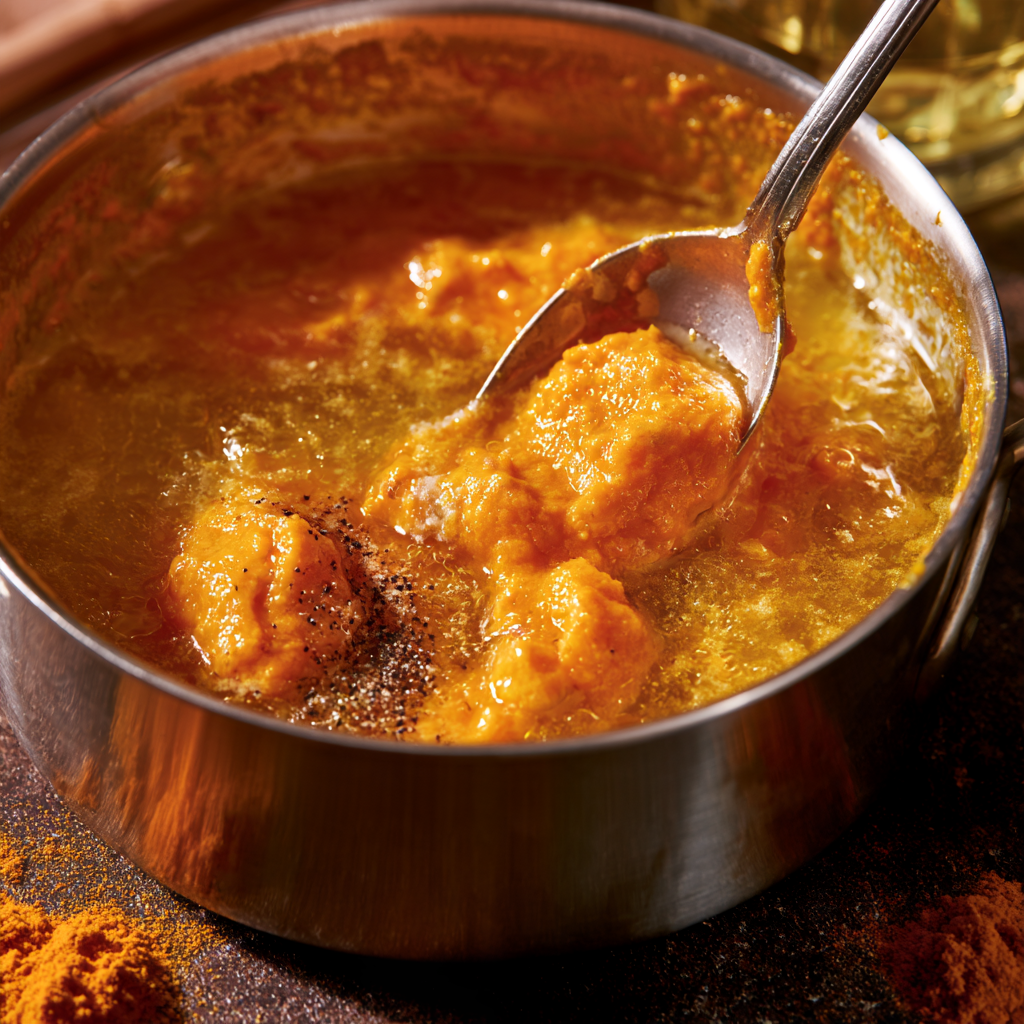
This recipe yields approximately 250ml of paste (roughly 25–30 servings at 1 teaspoon per serving). Total time: 15 minutes.
Step 1: Prepare the turmeric mixture
Combine the turmeric powder and water in a small saucepan. Stir until there are no dry lumps. If you’re using fresh turmeric root, peel and grate it finely before adding it to the water — use approximately 150g of fresh root in place of 50g of powder.
Step 2: Cook the turmeric paste gently
Set the pan over low to medium-low heat. Cook, stirring constantly, for 7 to 10 minutes. The mixture will thicken to a paste-like consistency. Keep the heat low; you’re not boiling it, just warming it through. High heat will destroy some of turmeric’s helpful compounds, and the paste can burn or stick.
Step 3: Add black pepper and coconut oil
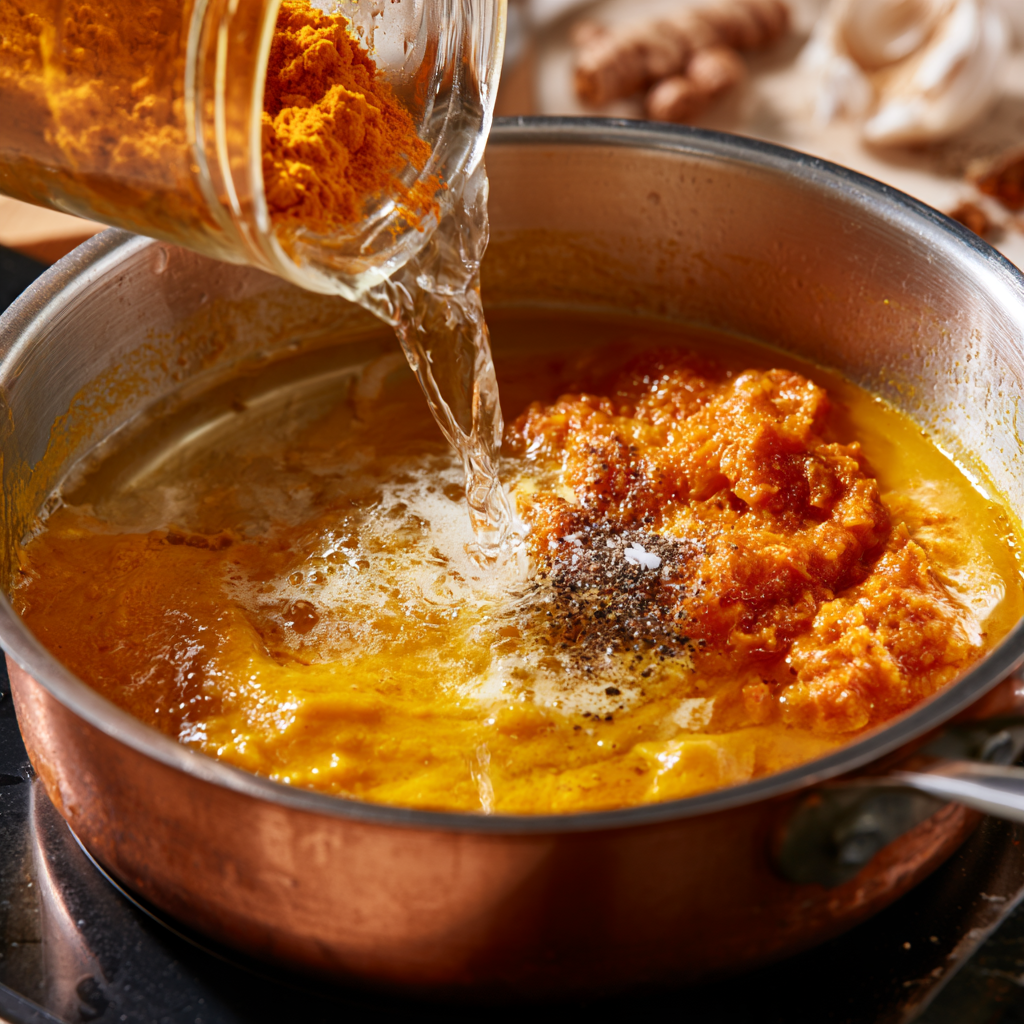
Remove the pan from heat. Add the freshly ground black pepper and coconut oil while the paste is still warm (not boiling). Stir thoroughly until the oil is fully incorporated and the paste is smooth and glossy.
Step 4: Cool and store the paste
Allow the paste to cool completely at room temperature before transferring it to a clean glass jar with a tight-fitting lid. Store in the refrigerator immediately.
Golden Paste Recipe Variations
Golden paste with fresh turmeric
Fresh turmeric root makes a more vivid, aromatic paste. Method: Grate 150g of fresh turmeric root, peeled, and do the same. Initially, the paste will be a little more liquid but will set in the fridge. New turmeric also has turmerone, a volatile oil compound not present in the dried powder that some researchers think can augment the effects of curcumin.
Golden paste without coconut oil
If you are avoiding coconut oil due to dietary preference or allergy, substitute an equal amount of extra virgin olive oil or avocado oil. Both are healthy fats that help with fat-soluble absorption. The texture will be a little different, a little less firm, but it will still work as a paste.
Vegan golden paste recipe
The standard recipe is already fully vegan. Just avoid adding honey (use maple syrup instead if sweetness is desired) and confirm your coconut oil is ethically sourced if that matters to your practice.
Golden milk paste recipe
To make a golden milk paste optimized for lattes, add ½ teaspoon of cinnamon, a pinch of cardamom, and a splash of vanilla extract in Step 3. This variation dissolves more easily into warm plant-based milk and requires no further seasoning when making drinks.
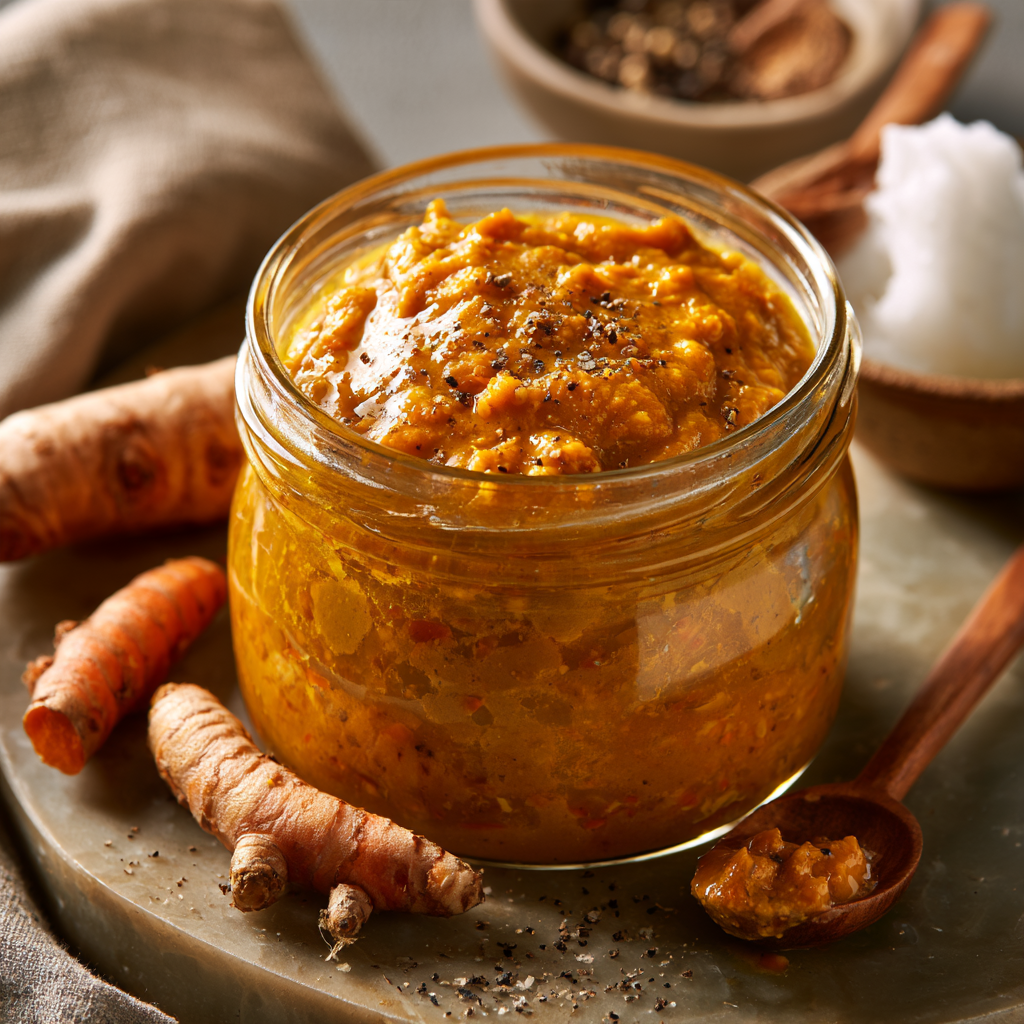
How To Use Golden Paste
How much golden paste to use daily
Begin with a small quantity – ¼ teaspoon per day – and gradually increase to ½ to 1 teaspoon per day over the course of one to two weeks, depending on your tolerance. Some people take up to 1 tablespoon, but there is no universally recommended daily dose. If you take blood thinners or have certain health conditions, check with your doctor before upping your intake too much.
Ways to add it to food and drinks
Golden paste is versatile. Here are practical ways to use it:
- Golden milk: Dissolve 1 teaspoon into warm oat, almond, or coconut milk. Add honey to taste.
- Smoothies: Blend ½ teaspoon into a morning smoothie. It pairs well with mango, banana, and ginger.
- Soups and stews: Stir 1 teaspoon into lentil soup, bone broth, or vegetable curry during cooking.
- Scrambled eggs or tofu scramble: A small amount adds color and depth of flavor.
- Rice or grain dishes: Stir into cooking water for golden rice.
- Salad dressings: Whisk into olive oil-based dressings.
Best time to consume golden paste
There’s no hard research on the best time, but a lot of people find it easiest to fit it into a morning routine, whether in a beverage or with food. It is better absorbed with a meal containing fat. If you find turmeric mildly stimulating, don’t consume it directly before bed.
How Long Does Homemade Golden Paste Last?
Homemade turmeric golden paste lasts 2 to 3 weeks in the refrigerator when stored correctly. Use a clean, dry glass jar with an airtight lid. Avoid introducing water or wet spoons into the jar, as moisture accelerates spoilage.
Signs the paste has spoiled:
- Visible mold or fuzzy growth on the surface
- A sour or off-putting smell (different from turmeric’s natural earthiness)
- Discoloration that’s noticeably different from the original golden-orange color
- Unusual texture or separation that doesn’t resolve with stirring
Golden paste cannot be frozen in the traditional sense for long-term storage, but you can portion it into an ice cube tray, freeze it, and transfer the cubes to a freezer bag. Frozen cubes last up to three months and can be added directly to warm drinks or soups.
Benefits of Golden Paste Ingredients
Caution with health claims around golden paste is important. Much of the supporting research involves curcumin in isolated or supplement form, often at higher doses than you’d get from a teaspoon of paste. That said, there is strong evidence for its key ingredients.
Turmeric and curcumin
Curcumin is the most studied polyphenol from turmeric. Research published in journals including Nutrients and Frontiers in Pharmacology suggests it has antioxidant and anti-inflammatory activity in laboratory and clinical settings. A 2017 review published in Foods noted curcumin’s potential to support joint health, cognitive function, and metabolic markers, but researchers are quick to point out that bioavailability remains the primary challenge.
Black pepper and piperine
Black pepper is present in almost every golden paste recipe because of the active compound in black pepper called piperine. In a landmark study in 1998 by Shoba et al. (Planta Medica), co-administration of piperine with curcumin was found to increase the bioavailability of curcumin by 2,000% in human subjects. A dash of black pepper makes a noticeable difference.
Healthy fats and absorption
Curcumin is fat-soluble, which means it dissolves in fat, not water. Eating it with a healthy fat such as coconut oil or olive oil aids its absorption through the intestinal wall. This is the physiological reason for the oil in the recipe, not merely a cooking preference.
Common Mistakes When Making Golden Paste
Too much heat: Turmeric cooked at high temperatures for long periods can degrade curcumin and other helpful volatile compounds. Always use low to medium-low heat, and stop heating the mixture as soon as it thickens.
Wrong ingredient ratio: Too much water and the paste will be runny and not keep well. Too little makes it thick and difficult to cut. Make the recipe exactly as written the first time through, then play with texture on subsequent batches.
Adding coconut oil while boiling: When you add oil to a boiling mixture, it separates, not emulsifies. Remove the pan from the heat first – the residual heat will be sufficient to melt the oil and incorporate it smoothly.
Improper storage: Using a plastic container or leaving the paste exposed to air speeds up oxidation and flavour degradation. Store in a clean glass jar with a lid and refrigerate right after cooling.
Not using black pepper: This is the most common mistake in turmeric paste recipes made at home. Without piperine, the curcumin you’re taking is not very bioavailable. Black pepper is non-negotiable in a working recipe.
Golden Paste Recipe Tips for Best Results
Choose good turmeric. Not all turmeric powder is the same. Look for reputable brands that provide organic, high-curcumin varieties. Generally, Indian or Sri Lankan turmeric is regarded as being of good quality. Even better if you can get your hands on fresh turmeric root from a farmers market or Asian grocery.
Make sure you get the texture right. The finished paste should be thick enough to hold a pile on a spoon, but soft enough to be easily stirred. If your paste is too thick after cooling, thin it out with a teaspoon of warm water. If it’s too thin, cook a minute or two longer next time.
Balance the taste. Turmeric is earthy and slightly bitter. If you find the taste hard to swallow, add cinnamon and a little honey (after cooling). These additions also make it much easier to stir into drinks and breakfasts without overpowering other flavours.
Use a wooden or a silicone spoon. Turmeric stains like hell. Metal spoons work just as well – but use older ones, or ones you reserve for this purpose. The golden-orange pigment will also stain plastic containers, and for that reason glass storage jars are highly recommended.
Start Your Golden Paste Habit This Week
One of the simplest ways to incorporate turmeric into your routine on a regular basis is to make a homemade golden paste recipe. Four ingredients. 1 pan, 15 minutes. The result: a versatile, evidence-informed ingredient that works across dozens of meals and drinks, for a two- to three-week supply.
Research into curcumin is ongoing, and golden paste is not a substitute for medical treatment. But as a practical daily habit based on well-understood nutritional science bioavailability, fat-soluble compounds, piperine synergy it holds up well.
Launch your first batch this week! Adjust the pepper and texture to your taste, try it in a golden milk latte, and see how it fits into your routine. Most people who stick with it for a month find it becomes one of those little habits they don’t want to give up.
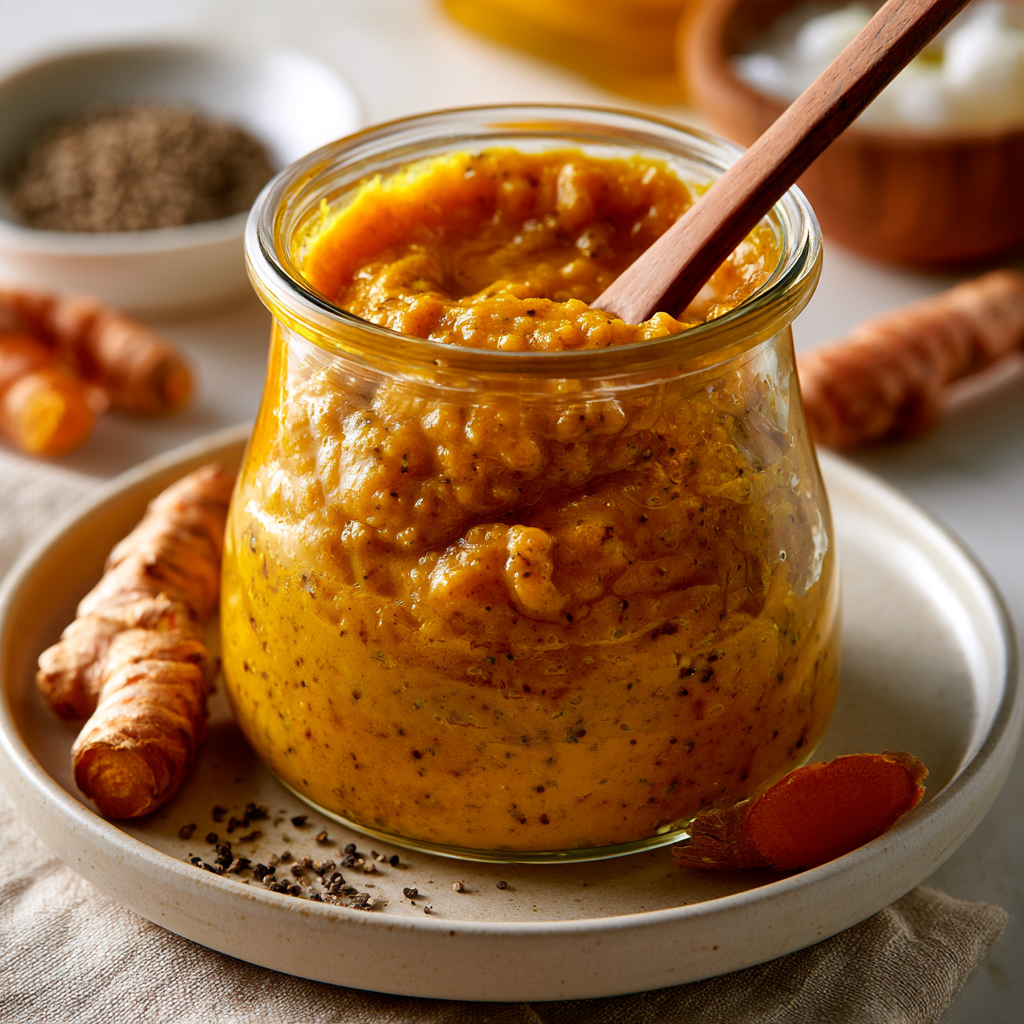
Golden Paste Recipe (Homemade Turmeric Golden Paste)
Ingredients
Equipment
Method
- Add turmeric powder and water to a small saucepan and mix until smooth with no lumps.

- Cook the mixture over low to medium-low heat for 7–10 minutes, stirring constantly until it thickens into a paste.
- Remove from heat and add black pepper and coconut oil while the mixture is still warm. Stir until fully combined and smooth.
- Allow the golden paste to cool completely.
- Transfer the paste into a clean glass jar with an airtight lid and store it in the refrigerator.
- Use ½ to 1 teaspoon in drinks, smoothies, soups, or meals as desired.
Notes
– Use a clean, dry spoon each time to keep the paste fresh.
– For a smoother texture, use freshly ground black pepper and high-quality turmeric powder.
– Fresh turmeric root can be used instead of turmeric powder for a more aromatic flavor.
– Add honey only after the paste has cooled.
– Adjust the water quantity slightly to achieve your preferred consistency.
Frequently Asked Questions
What is the best golden paste recipe?
The most effective golden paste recipe combines ½ cup of turmeric powder, 1 cup of water, 1½ teaspoons of freshly ground black pepper, and 70ml of virgin coconut oil. Cook the turmeric and water on low heat until it thickens, then remove from heat and stir in the pepper and oil.
How do you make golden paste at home?
Combine turmeric powder and water in a saucepan over low heat. Stir continuously for 7–10 minutes until it forms a thick paste. Remove from heat, add freshly ground black pepper and coconut oil, mix until smooth, cool completely, and store in a glass jar.
How long does golden paste last in the fridge?
Homemade golden paste lasts 2 to 3 weeks in the refrigerator when stored in a clean airtight glass jar. It can also be frozen in ice cube trays for up to 3 months.
Can you make golden paste without black pepper?
Yes, you can make golden paste without black pepper, but it is commonly added because black pepper contains piperine, which may help improve curcumin absorption.
How much golden paste should you take daily?
Start with ¼ teaspoon per day and gradually increase to ½ to 1 teaspoon over one to two weeks. It is usually taken with food.
Can you use fresh turmeric root instead of powder?
Yes. Use approximately 150g of peeled and finely grated fresh turmeric root instead of 50g (½ cup) of turmeric powder. Fresh turmeric creates a brighter color and more aromatic paste.