
This recipe for Haitian macaroni and cheese, often called macaroni au gratin, is a baked, creamy, savory pasta dish that tastes different from the American version most people know. Instead of a flour-and-butter sauce, it gets its richness from evaporated milk, plenty of cheese, and a base of sautéed onion and bell pepper seasoned with epis, the fresh green seasoning blend that sits at the heart of Haitian cooking. The result is rich and golden on top, soft and cheesy underneath, and a little more savory than you might expect.
Recipes vary from family to family in Haiti and in the diaspora, and this one is a home-cook version meant to be easy to follow. It explains what sets the dish apart, how to make a quick epis, how to keep it creamy instead of dry, and how to make it ahead for a holiday or a gathering. If you want the quantities, jump to the recipe.
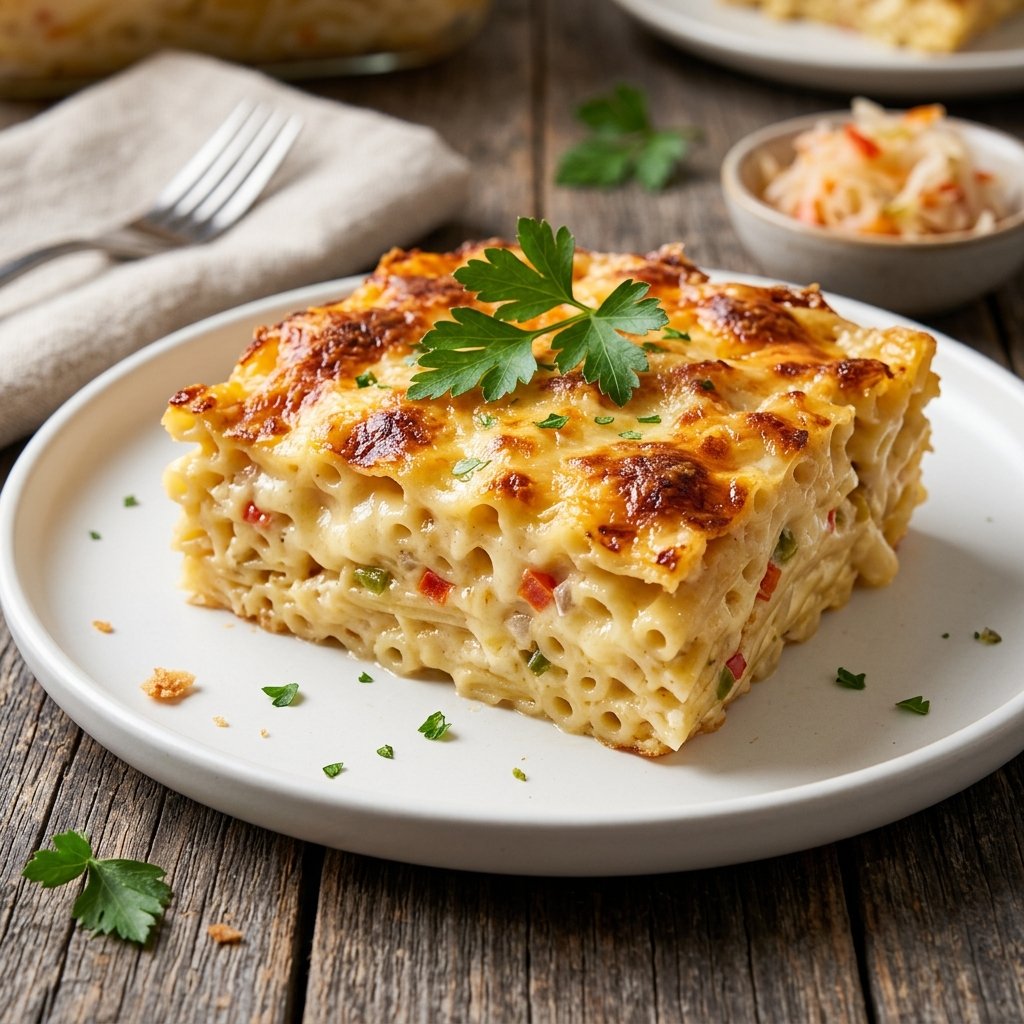
What Makes Haitian Macaroni and Cheese Different
“Au gratin” is the French term for a dish topped with melted cheese or breadcrumbs, and French is one of Haiti’s official languages. As one Compassion International kids’ recipe explains, in this dish it means cheese, and children in Haiti often eat it around Christmastime. Beyond the name, a few things make the Haitian version stand out:
- Evaporated milk instead of a roux. Many Haitian recipes skip the flour-and-butter béchamel and use evaporated milk as the base of the sauce, which gives a smooth, slightly sweet creaminess. Do not confuse it with sweetened condensed milk, which is a very different product.
- Epis. This is the green seasoning paste made with peppers, garlic, herbs, and scallions that flavors Haitian rice, meats, and stews. It gives the macaroni a savory, herby backbone that you do not find in standard mac and cheese.
- Sautéed onion and bell pepper. They add sweetness and texture.
- Mayonnaise. The Compassion recipe notes that mayo, not butter, is the more traditional addition. It adds richness and helps the top brown.
- Sometimes meat. Some cooks add diced ham, and other versions use shrimp or flaked fish, depending on the family and the occasion.
Haitian vs. Southern Baked Mac and Cheese
If you are used to Southern-style baked macaroni, this is how the two compare.
| Haitian macaroni au gratin | Typical Southern baked mac | |
|---|---|---|
| Sauce base | Evaporated milk, often without a roux | Milk, sometimes with eggs or a roux |
| Seasoning | Epis, onion, bell pepper, sometimes scotch bonnet | Mustard, paprika, pepper, sometimes garlic powder |
| Fat | Mayonnaise or butter | Butter |
| Extras | Ham, shrimp, or fish in some versions | Usually none |
| Flavor | Savory, herby, slightly sweet and rich | Cheesy and mild, often with a custard-like texture |
You can see another Caribbean take in our Bahamian macaroni and cheese, and our shorter guide to Haitian mac and cheese covers some different tips.
Make a Quick Epis
Epis is made fresh in many Haitian homes, and families have their own blends. This quick version is good enough to start with, and it keeps in the refrigerator, so you can double it and use the rest for rice, chicken, or beans.
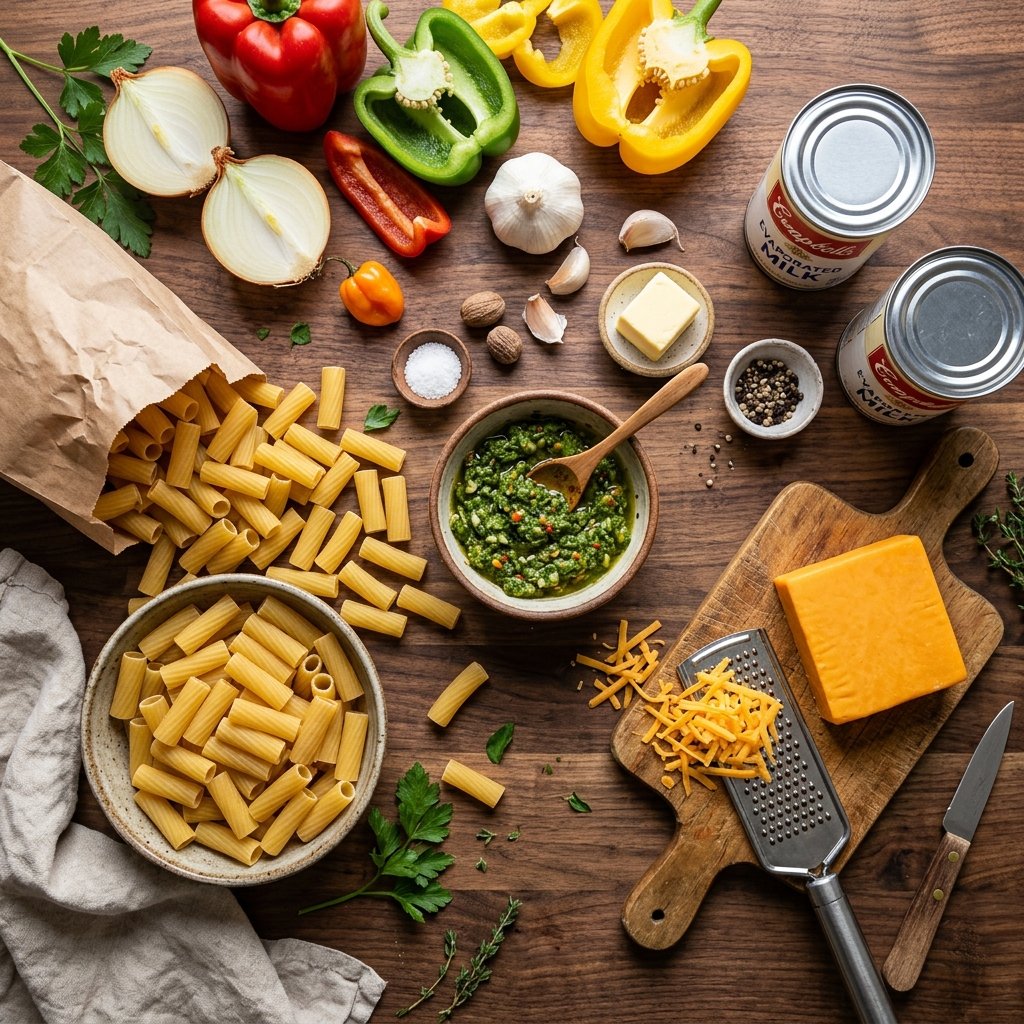
Quick epis (makes about ½ cup). Blend ½ cup chopped green bell pepper, 3 scallions, 4 garlic cloves, ¼ cup parsley leaves, 1 teaspoon fresh thyme leaves, ½ teaspoon salt, 1 tablespoon lime juice or white vinegar, and 2 tablespoons oil until it forms a thick, rough paste. For heat, add a small piece of scotch bonnet or habanero pepper, seeds removed. Start with a quarter of a pepper, since they are very hot. Wear gloves when you handle it.
If you are short on time, you can use a spoonful of store-bought epis or a mix of minced garlic, scallions, and thyme. It will be less complex, but it will still taste far better than leaving it out.
Recipe for Haitian Macaroni and Cheese
This recipe for Haitian macaroni and cheese serves 8 to 10 as a side dish. Prep time: 25 minutes. Cook time: 30 minutes. Rest time: 10 to 15 minutes. It fits a 9×13-inch baking dish.
Ingredients
- 1 lb (450 g) elbow macaroni
- 2 tablespoons oil or butter
- 1 medium onion, finely diced
- 1 red bell pepper, finely diced
- 3 cloves garlic, minced
- 3 tablespoons epis (see above)
- 1 cup (about 150 g) diced cooked ham (optional)
- 1 can (12 oz / 354 ml) evaporated milk
- ½ cup (120 ml) whole milk
- ⅓ cup (80 g) mayonnaise
- 3 tablespoons butter, cut into pieces
- 3 cups (12 oz / 340 g) shredded sharp cheddar
- 1 cup (4 oz / 115 g) shredded mozzarella or Gouda
- ¼ cup (25 g) grated Parmesan
- 1 teaspoon paprika
- ½ teaspoon black pepper
- Salt, to taste (go lightly, since the cheese and epis are salty)
- For the top: 1 cup more cheddar and 2 tablespoons Parmesan
Method
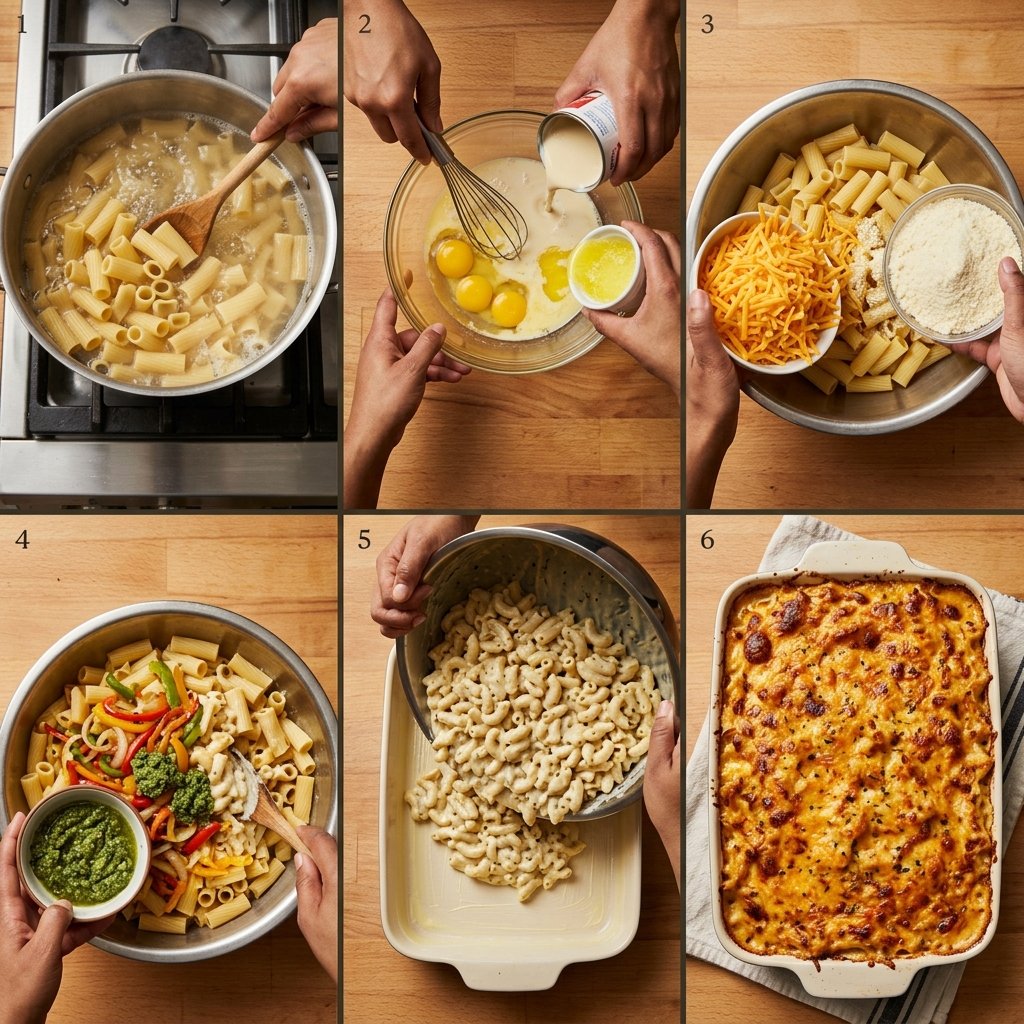
- Prep. Preheat the oven to 350°F (175°C) and grease a 9×13-inch baking dish.
- Cook the pasta. Boil the macaroni in well-salted water for about 7 to 8 minutes, until just short of tender. It will keep cooking in the oven. Drain and return to the hot pot.
- Cook the base. While the pasta cooks, heat the oil in a skillet over medium heat. Cook the onion and bell pepper for 4 to 5 minutes, until soft. Add the garlic and cook for 30 seconds. Stir in the epis and ham, if using, and cook for 2 minutes. Remove from the heat.
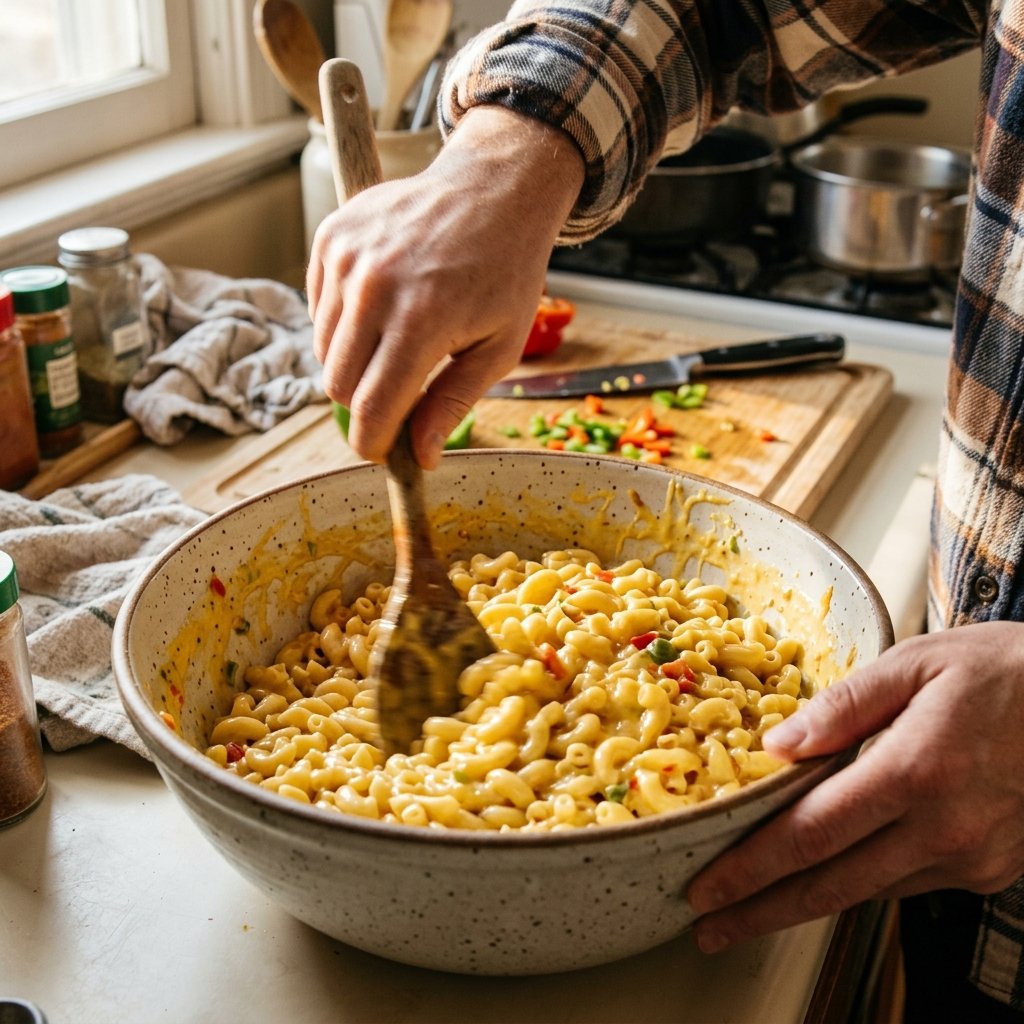
- Mix. To the hot macaroni, add the sautéed base, both milks, mayonnaise, butter, cheddar, mozzarella, the ¼ cup Parmesan, paprika, and pepper. Stir until the cheese starts to melt and the mixture looks creamy and loose. It should look a little too wet at this point, because the pasta absorbs liquid as it bakes. Taste and add salt if needed.
- Assemble. Transfer to the baking dish and smooth the top. Scatter the extra cheddar and Parmesan over it.
- Bake. Bake uncovered for 25 to 30 minutes, until the cheese is melted, bubbling at the edges, and golden on top. If you want a deeper crust, broil for 1 to 2 minutes at the end, watching closely.
- Rest. Let it sit for 10 to 15 minutes before scooping. This helps it set, so the portions hold together.
Tips for a Creamy, Not Dry, Result
- Undercook the pasta. Fully cooked macaroni turns mushy and soaks up the sauce. Pull it a minute or two early.
- Keep the mixture loose. It should look wetter than you expect before baking.
- Shred your own cheese. Pre-shredded cheese often contains anti-caking starch, which can make the sauce grainy and drier.
- Use a mix of cheeses. Sharp cheddar for flavor, and a good melter such as mozzarella or Gouda for stretch.
- Do not skip the rest. Fresh from the oven, it is soupy. After 10 to 15 minutes, it is creamy and sliceable.
- Cover if the top browns too fast. Tent loosely with foil, and uncover for the last 10 minutes.
- Egg for a firmer set. If you like a sliceable, custard-like casserole, stir 1 lightly beaten egg into the milk mixture before combining. Some cooks do this, and others do not.
Variations
- With ham. The optional ham in the recipe adds salt and chew. Add it with the epis so it browns a little.
- With shrimp or fish. Fold in a cup of cooked shrimp or flaked, cooked fish with the cheese for a seafood version.
- With chicken. Shredded rotisserie chicken turns it into a main dish.
- Spicy. Add a little finely chopped scotch bonnet or habanero to the epis, or serve pikliz on the side.
- Béchamel style. If you prefer a roux-based sauce, make a white sauce with butter, flour, and milk, then stir in the epis and cheese.
- Lighter. Replace the mayonnaise with extra butter, and use reduced-fat evaporated milk, though the flavor will be less rich.
What to Serve With Haitian Macaroni and Cheese
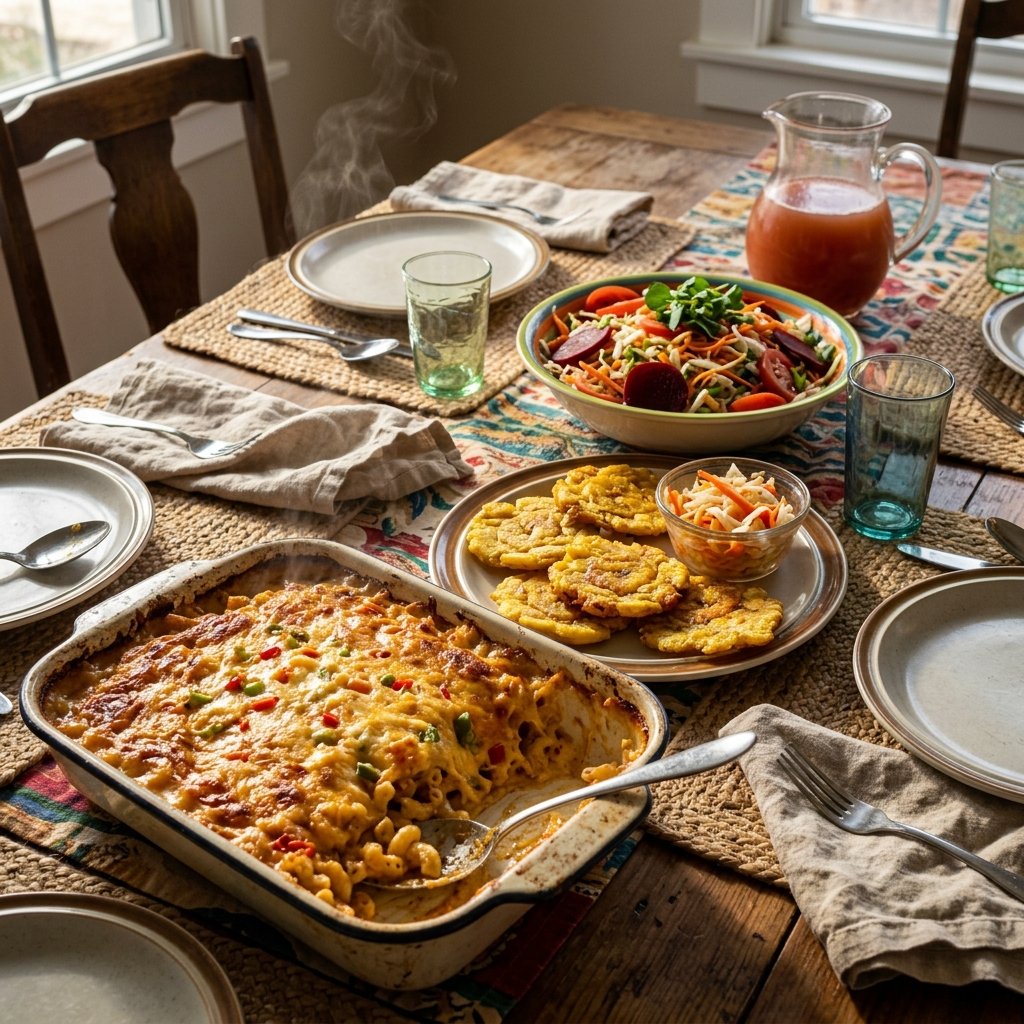
It sits well beside rich, savory main dishes, and cooks often serve it at holidays and family gatherings. Typical partners include roast or fried chicken, braised or fried pork, rice and beans, fried plantains, and pikliz, the spicy pickled cabbage relish that adds sharp contrast. A simple green salad or steamed vegetables also help balance the richness. If you are building a holiday table, our Haitian cake is a good dessert to finish with.
Make Ahead, Store, and Reheat
Make ahead. Prepare the epis and the sautéed base up to 2 days in advance and keep them in the refrigerator. You can also assemble the whole dish a day ahead, cover it, and refrigerate it. Add 10 minutes to the baking time since it goes into the oven cold.
Leftovers. Refrigerate in an airtight container within 2 hours and eat within 3 to 4 days. The USDA’s page on leftovers and food safety has the general rules.
Reheating. Add a splash of milk, cover, and warm in a 350°F oven or in the microwave until steaming hot (165°F). The milk brings back the creaminess.
Freezing. Baked macaroni and cheese can be frozen for about 2 to 3 months, though it tends to turn slightly grainy. Thaw overnight in the refrigerator and reheat with a little milk.

Troubleshooting
It is dry. The pasta was overcooked, the mixture was not loose enough, or it baked too long. Stir in a splash of warm milk after baking, and next time add more evaporated milk before it goes in the oven.
It is greasy. Too much mayonnaise or butter, or very oily cheese. Reduce the fat a little and drain the ham well.
It is bland. Season the epis well, taste the mixture before baking, and add a little more salt and pepper. A spoonful of extra epis can fix a flat batch.
It is too salty. The cheese, ham, and epis all add salt. Next time, skip adding salt to the mixture and taste first.
The sauce is grainy. Pre-shredded cheese or overheated dairy can cause this. Shred your own, and avoid boiling the milk mixture.
The top is pale. Add more cheese on top and broil for 1 to 2 minutes.
Recipe for Haitian Macaroni and Cheese FAQs
What is Haitian macaroni and cheese called?
It is commonly called macaroni au gratin, and often just Haitian mac and cheese.
What is epis?
Epis is a green seasoning paste made from peppers, garlic, herbs, and scallions, used as a flavor base in Haitian cooking. You can make it fresh or buy it.
Can I make it without epis?
You can, but it will taste more like a standard baked macaroni. A mix of minced garlic, scallions, thyme, and parsley is the closest quick substitute.
Why does it use evaporated milk?
Evaporated milk gives a smooth, creamy sauce without needing a roux. It also holds up well in the oven.
Do I have to use mayonnaise?
No. You can use all butter, though mayonnaise is described as more traditional in some recipes and helps the top brown.
Can I make it spicy?
Yes. Add a small amount of scotch bonnet or habanero to the epis, or serve pikliz alongside it.
Can I add meat?
Yes. Ham is common, and shrimp, fish, or chicken also work.
Can I make it ahead?
Yes. Assemble it a day ahead, refrigerate, and bake straight from the refrigerator with 10 minutes extra.
How is it different from American mac and cheese?
It uses evaporated milk and epis, is baked until golden, and tends to taste more savory and herby than the typical American version.
Final Thoughts on This Recipe for Haitian Macaroni and Cheese
A good recipe for Haitian macaroni and cheese comes down to a few things: a well-seasoned epis, loose and creamy sauce before baking, a mix of cheeses, and a rest after it comes out of the oven. Make it for a holiday table, a potluck, or a Sunday dinner, and serve it with something savory and something sharp. Once you know the base, you can adjust the heat, the meat, and the cheese until it tastes like yours.
Haitian Macaroni and Cheese (Macaroni au Gratin)
Ingredients
Equipment
Method
- Preheat the oven and lightly grease a baking dish.
- Cook the macaroni in salted water until just shy of al dente, then drain well.
- In a large bowl, combine the evaporated milk, epis, mayonnaise, melted butter, shredded cheese, ham (if using), black pepper, and salt if needed.
- Add the cooked macaroni and stir until evenly coated in a creamy mixture.
- Transfer to the prepared baking dish and sprinkle additional cheese over the top.
- Bake until the macaroni is heated through and the top is golden and bubbly.
- Let rest for 10–15 minutes before serving.
Notes
- Avoid overcooking the pasta, as it will continue cooking in the oven.
- Keep the mixture loose and creamy before baking to prevent dryness.
- Taste before adding salt because the cheese, ham, and epis may already be salty.
- Freshly grated cheese helps create a smoother sauce.
- Adjust the heat by adding scotch bonnet pepper to the epis.
- Ham can be replaced with shrimp, fish, or chicken, or omitted entirely.
- For make-ahead preparation, assemble, cover, and refrigerate for up to one day. Allow extra baking time and ensure the center is thoroughly heated.
- Rest the dish before serving so it sets while remaining creamy.