
This pesto pasta recipe takes 25 minutes and needs only a handful of ingredients, but a few small details decide whether dinner turns out silky and bright green or dry, oily and dull. The most important one is free: a splash of the starchy water the pasta cooked in, which turns basil pesto into a glossy sauce that clings to every piece.
Below you will find the full pesto pasta recipe for 4 servings, a chart showing how much pesto and pasta water to use for any batch size, the best pasta shapes, and quick fixes for pesto pasta that has gone wrong. There are also easy ways to use jarred pesto or turn the bowl into a creamy, chicken or shrimp dinner.
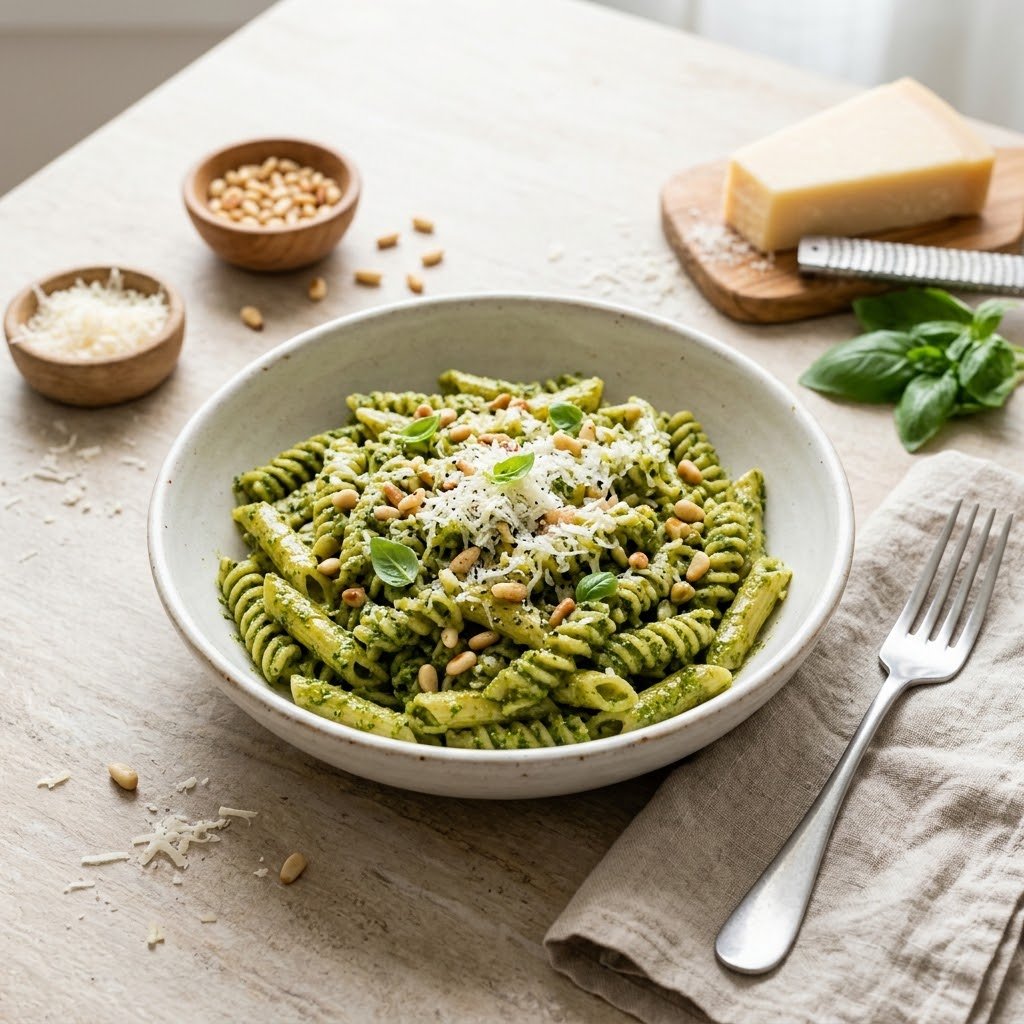
Why This Pesto Pasta Recipe Stays Silky and Green
Pesto is a raw sauce, so technique matters as much as the ingredients. Three simple choices make the biggest difference.
- The olive oil is stirred in by hand. Food processor blades break extra-virgin olive oil into tiny droplets and release its bitter-tasting polyphenols. Pulsing the solids first and adding the oil in the bowl keeps the flavor rounder.
- Lemon juice protects the color. Chopping basil triggers the browning reaction that turns pesto army green. America’s Test Kitchen found that 4 teaspoons of lemon juice per 2 cups of basil helps keep it bright, so that is the amount used here.
- The sauce comes together off the heat. Hot pasta water loosens the pesto in a serving bowl before the pasta goes in. The pasta’s own heat is enough to warm the sauce and melt the cheese, without darkening the basil on the stove.
How Much Pesto per Pound of Pasta?
Use about 1 cup of homemade pesto per pound of dry pasta. Jarred pesto is usually more concentrated, so about ⅔ cup is a good starting point. Use this chart to scale this pesto pasta recipe up or down.
| Servings | Dry pasta | Homemade pesto | Jarred pesto | Pasta water to start | Pasta water to save |
|---|---|---|---|---|---|
| 2 | 6 oz (170 g) | 6 tablespoons | ¼ cup | 2 tablespoons | ½ cup |
| 4 | 12 oz (340 g) | ¾ cup | ½ cup | ¼ cup | 1 cup |
| 6 | 18 oz (510 g) | 1 cup + 2 tablespoons | ¾ cup | 6 tablespoons | 1½ cups |
| 8 | 1½ lb (680 g) | 1½ cups | 1 cup | ½ cup | 2 cups |
Treat the water amounts as a starting point. Thick homemade pesto and long pasta often need a little more, while thin jarred pesto usually needs less.
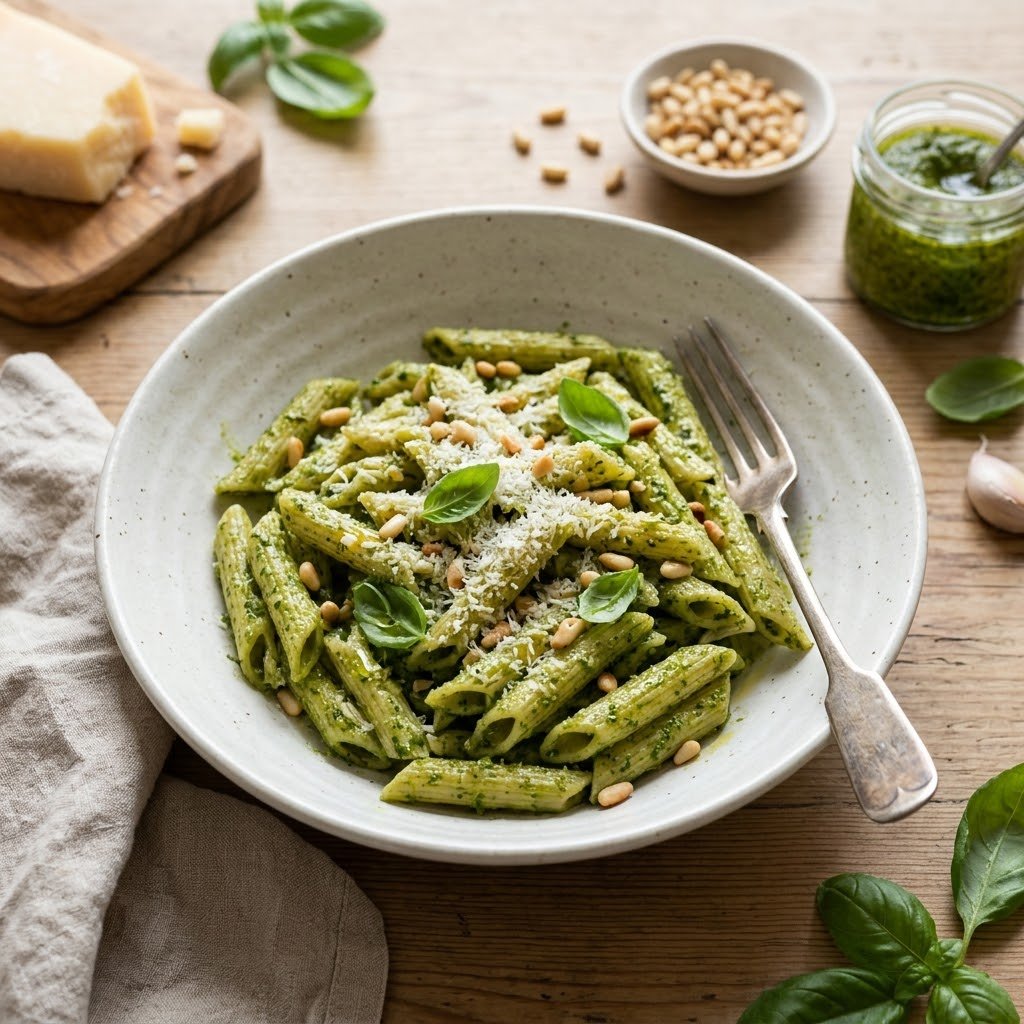
Ingredients for Basil Pesto Pasta
- Fresh basil, 2 packed cups (60 g): choose bright, unblemished leaves and dry them completely, since water dilutes the sauce and speeds up browning.
- Pine nuts, ¼ cup (35 g), plus 1 tablespoon for serving: a light toast brings out their buttery flavor. Walnuts or almonds are good, less expensive swaps.
- Parmigiano-Reggiano, ½ cup (45 g), plus more for serving: grate it yourself from a wedge. Pre-grated cheese often contains anti-caking agents and can turn grainy.
- Extra-virgin olive oil, ⅓ cup (80 ml): a mild, fresh oil works best. This is less oil than many pesto recipes use because the pasta water does part of the work.
- Garlic, 2 small cloves: raw garlic is strong, so start small.
- Fresh lemon juice, 4 teaspoons, and fine sea salt, ½ teaspoon.
- Dry pasta, 12 oz (340 g): fusilli, penne and spaghetti all work. Bronze-cut pasta has a rougher surface that grips the sauce especially well.
How to Make Pesto Pasta
1. Start the water and toast the nuts
Bring 4 quarts of water to a boil and add 1 tablespoon of kosher salt. Meanwhile, toast the pine nuts in a dry skillet over medium-low heat for 3 to 4 minutes, stirring often. They burn quickly, so tip them onto a plate as soon as they turn golden. Set 1 tablespoon aside for serving.
2. Pulse the pesto, then stir in the oil
Pulse the pine nuts, garlic and salt in a food processor until finely chopped. Add the basil and lemon juice and pulse, scraping down the sides, until everything is finely chopped. Add the cheese and pulse 2 or 3 more times. Scrape the mixture into a large serving bowl and stir in the olive oil with a spoon.
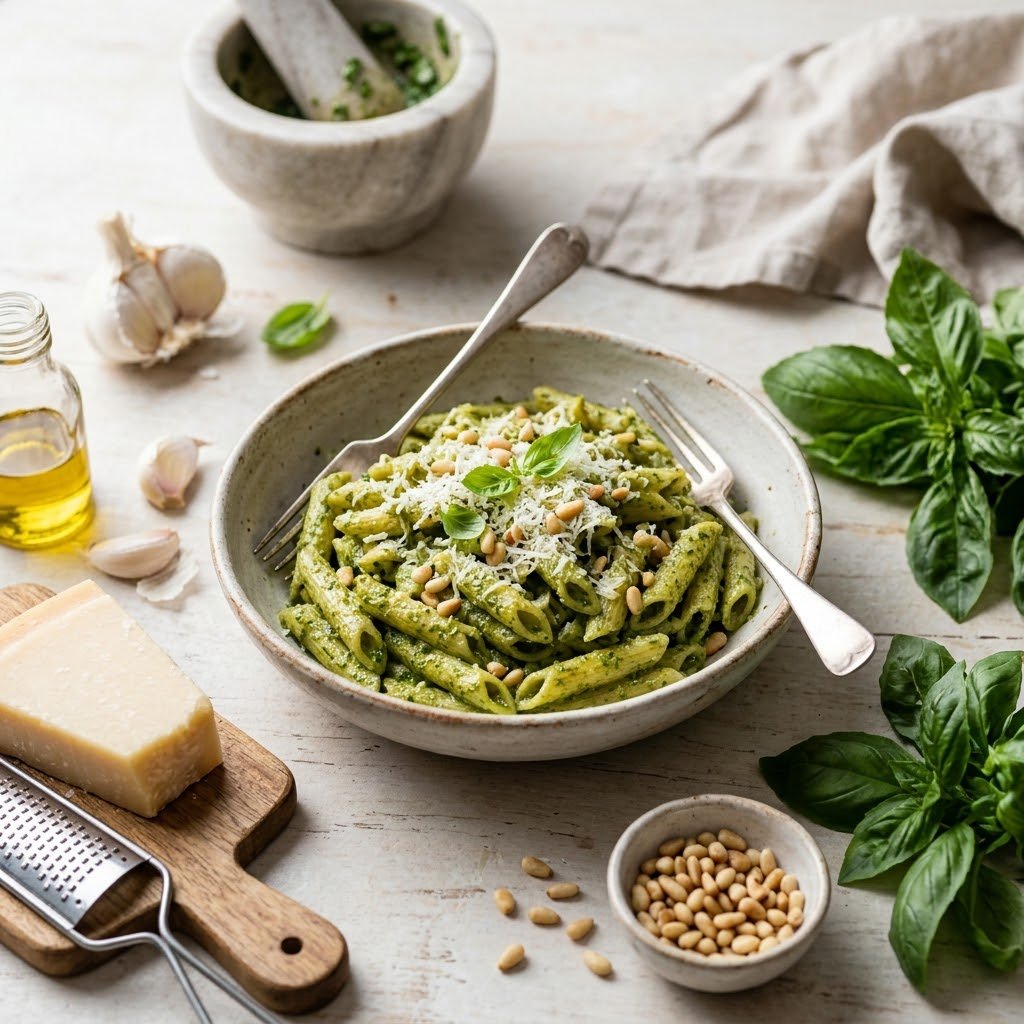
3. Cook the pasta and save the water
Boil the pasta until al dente, using the shorter time on the package. Just before draining, scoop out 1 cup of the cloudy cooking water with a mug. It is easy to forget this step, so put the mug beside the colander as a reminder.
4. Loosen the pesto
Whisk ¼ cup of the hot pasta water into the pesto in the serving bowl. It will turn paler and creamy. This gives you a smooth sauce before the pasta goes in, so the cheese is less likely to clump.
5. Toss hard and serve right away
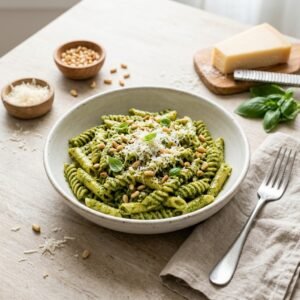
Drain the pasta without rinsing it and add it to the bowl while it is still dripping. Toss vigorously for about 1 minute, adding more pasta water 1 tablespoon at a time until the sauce looks glossy and coats the pasta. It should look a little looser than you want, because the pasta keeps absorbing liquid. Taste, adjust the salt, and top with extra cheese, the reserved pine nuts, small basil leaves and black pepper.
Best Pasta for Pesto
Almost any shape works, but each one holds the sauce a little differently.
| Pasta shape | Why it works | Good to know |
|---|---|---|
| Trofie | Short twists, the classic partner in Liguria | Can be harder to find; often takes longer to cook |
| Linguine or trenette | Flat strands carry a thin coat of sauce | Toss well and add a little extra water |
| Fusilli or rotini | Spirals trap pesto and bits of nuts | The easiest choice for beginners |
| Gemelli or casarecce | Twists and grooves hold thick sauce | Great for leftovers |
| Penne rigate | Ridges and hollow centers catch the sauce | Sturdy with chicken or vegetables |
| Spaghetti | Easy to find and silky when well tossed | Use tongs and serve quickly |
| Farfalle | Holds up well when served cold | A good pick for pesto pasta salad |
Fresh pasta works too. Pesto is also lovely with homemade shapes such as our ricotta cavatelli.
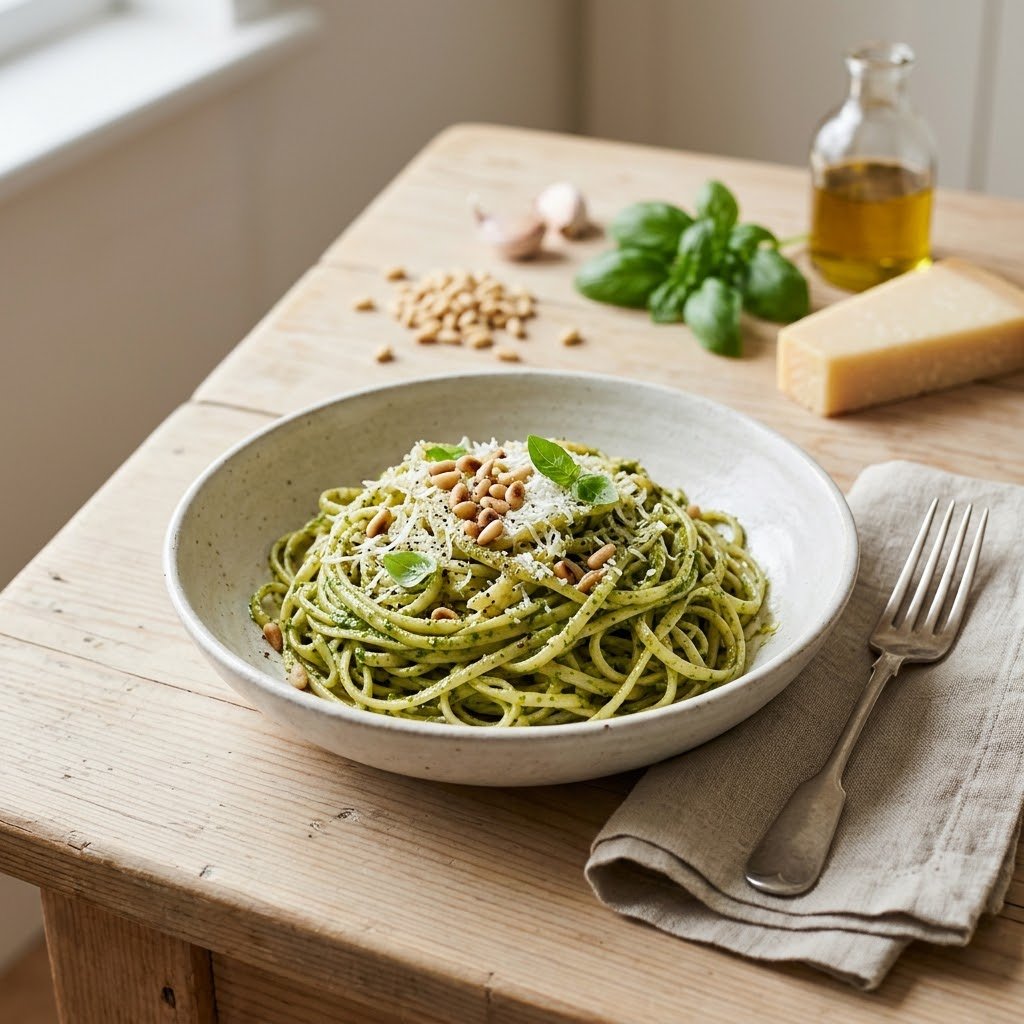
How to Fix Pesto Pasta
Most problems can be fixed in the bowl in less than a minute.
| Problem | Why it happens | Quick fix |
|---|---|---|
| Dry or sticky | The pasta absorbed the sauce | Toss in hot pasta water, 1 tablespoon at a time |
| Oily or separated | Too little starchy water or gentle tossing | Add 1 to 2 tablespoons of hot pasta water and toss hard for 30 seconds |
| Bitter | Over-blended olive oil or very strong basil | Stir in ¼ to ½ teaspoon of honey, a squeeze of lemon and a little more cheese |
| Dark or dull | The pesto was heated in a hot pot or skillet | Finish with fresh chopped basil and lemon zest, and toss off the heat next time |
| Bland | Underseasoned pasta water | Add a pinch of salt, more Parmesan and a little lemon juice |
| Too salty | Salty cheese, jarred pesto or pasta water | Add a squeeze of lemon and a spoonful of ricotta or unsalted hot water |
| Clumpy cheese | Pre-grated cheese or adding too much cheese at once | Toss with more hot pasta water and grate the cheese finely next time |
How to Make Jarred Pesto Taste Fresh
Store-bought pesto makes this an easy pesto pasta for busy nights. For 12 ounces of pasta, stir together ½ cup of jarred pesto, 1 tablespoon of lemon juice, 2 tablespoons of grated Parmesan and a small handful of chopped fresh basil. Start with 2 tablespoons of pasta water, since jarred pesto can be thinner and saltier than homemade. Taste before adding any extra salt.
Turn Pesto Pasta Into a Full Dinner
Cook any add-ins separately, then fold them into the bowl after the pasta is sauced. Amounts below are for the full 4-serving recipe.
- Pesto pasta with chicken: sear 1 pound of bite-size chicken breast or thigh in olive oil until it reaches 165°F (74°C).
- Pesto pasta with shrimp: cook 1 pound of peeled shrimp for 2 to 3 minutes per side, until pink and opaque. If you like a sweeter contrast, the shrimp from our honey butter shrimp skillet are a fun match.
- Cherry tomatoes: halve 1 pint and fold in raw, or blister them in a hot skillet for 3 to 4 minutes.
- Greens: place 2 cups of baby spinach or arugula in the bowl before adding the hot pasta and let it wilt as you toss.
- Beans or peas: add 1 can of drained white beans, or drop 1 cup of frozen peas into the pasta pot for the last minute.
- Roasted vegetables: zucchini, broccoli and bell peppers all pair well with basil.
To round out the meal, serve a green salad with balsamic basil vinaigrette and a slice of sourdough focaccia or a few sourdough breadsticks.
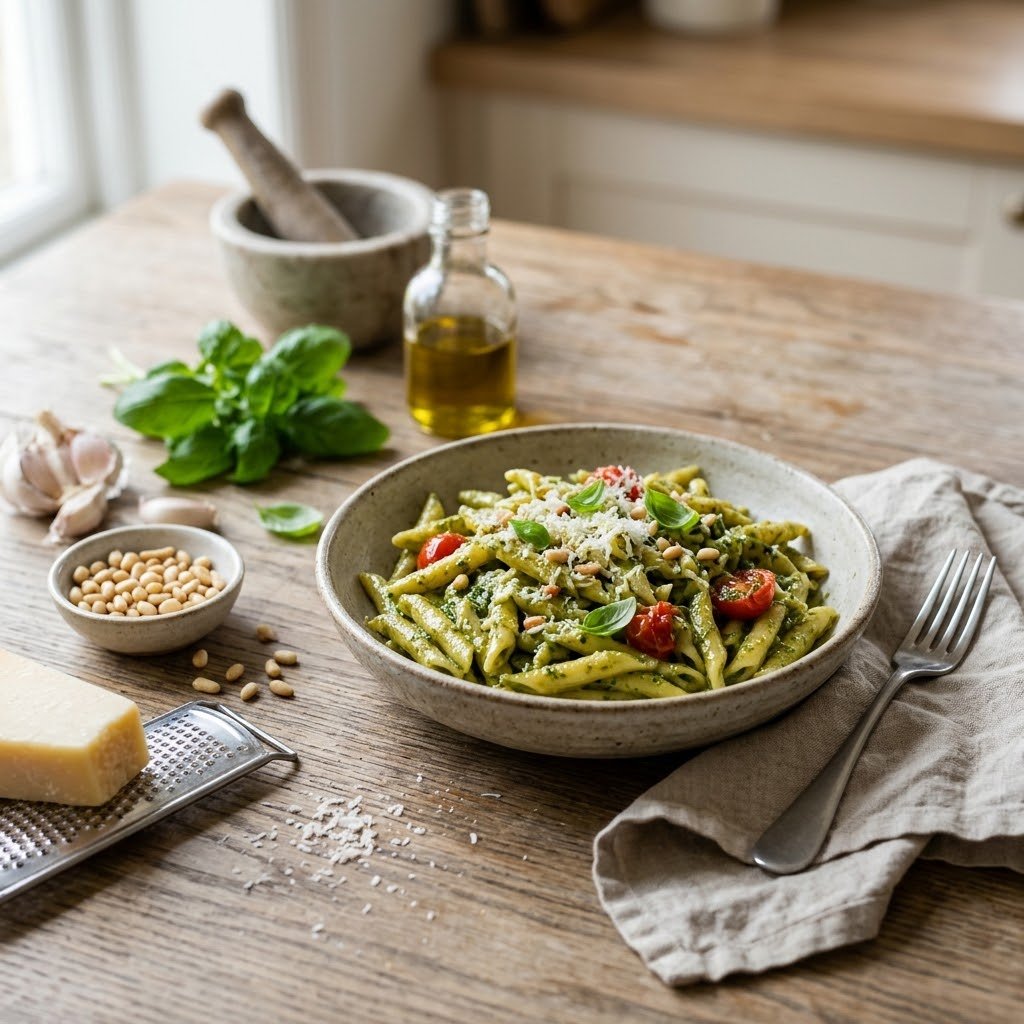
Creamy Pesto Pasta and Other Variations
- Creamy pesto pasta: warm ⅓ cup of heavy cream in a small pan, take it off the heat, and whisk it into the pesto in place of the first ¼ cup of pasta water. Mascarpone or Greek yogurt also work if stirred in off the heat. If you love creamy sauces, try our Boursin Alfredo sauce next.
- Ligurian pasta al pesto with potatoes and green beans: this classic Genoese way of serving pesto cooks everything in one pot. Use 10 ounces of pasta, 1 medium potato cut into ½-inch cubes and 4 ounces of trimmed green beans. Add the potato to the boiling water first, then time the pasta and beans so that everything finishes together.
- Pesto pasta salad: rinse short pasta under cold water after cooking, toss it with the pesto and an extra 1 tablespoon of lemon juice, then fold in tomatoes and small mozzarella balls.
- Nut-free: replace the pine nuts with toasted sunflower seeds or pepitas.
- Vegetarian: traditional Parmigiano-Reggiano is made with animal rennet, so choose a vegetarian hard cheese if you avoid it.
- Vegan: replace the cheese with 3 tablespoons of nutritional yeast and add a little extra salt.
- Gluten-free: use a sturdy gluten-free pasta, and save extra cooking water because it can be less starchy.
Is This Authentic Pasta al Pesto?
This is a weeknight version inspired by pesto alla genovese from Liguria in northern Italy. The traditional sauce is built on seven ingredients: Genovese basil, extra-virgin olive oil, Parmigiano-Reggiano, Pecorino Fiore Sardo, pine nuts, garlic and coarse salt. It is usually crushed in a mortar, which is where the name comes from, since pestare means to pound or crush in Italian.
Our pesto pasta recipe uses a food processor for speed and adds lemon juice to help the color. For a closer match, skip the lemon and replace 2 tablespoons of the Parmigiano with Pecorino.
Storing Pesto and Leftover Pesto Pasta
| What | How to store it | How long |
|---|---|---|
| Homemade pesto | Refrigerated in a small airtight jar | Up to 4 days |
| Frozen pesto | Frozen in an ice cube tray, then moved to a freezer bag | About 2 months for best quality |
| Leftover pesto pasta | Refrigerated in an airtight container | Up to 4 days |
Many recipes say homemade pesto keeps for a week or more, but raw garlic and herbs in oil call for more care. Oregon State University Extension advises that pesto must be refrigerated and used within 4 days or frozen. Never leave it at room temperature for storage.
To reheat leftovers, warm them gently over low heat with a splash of water, stirring until just heated through. They are also very good at room temperature or cold, like a pasta salad.
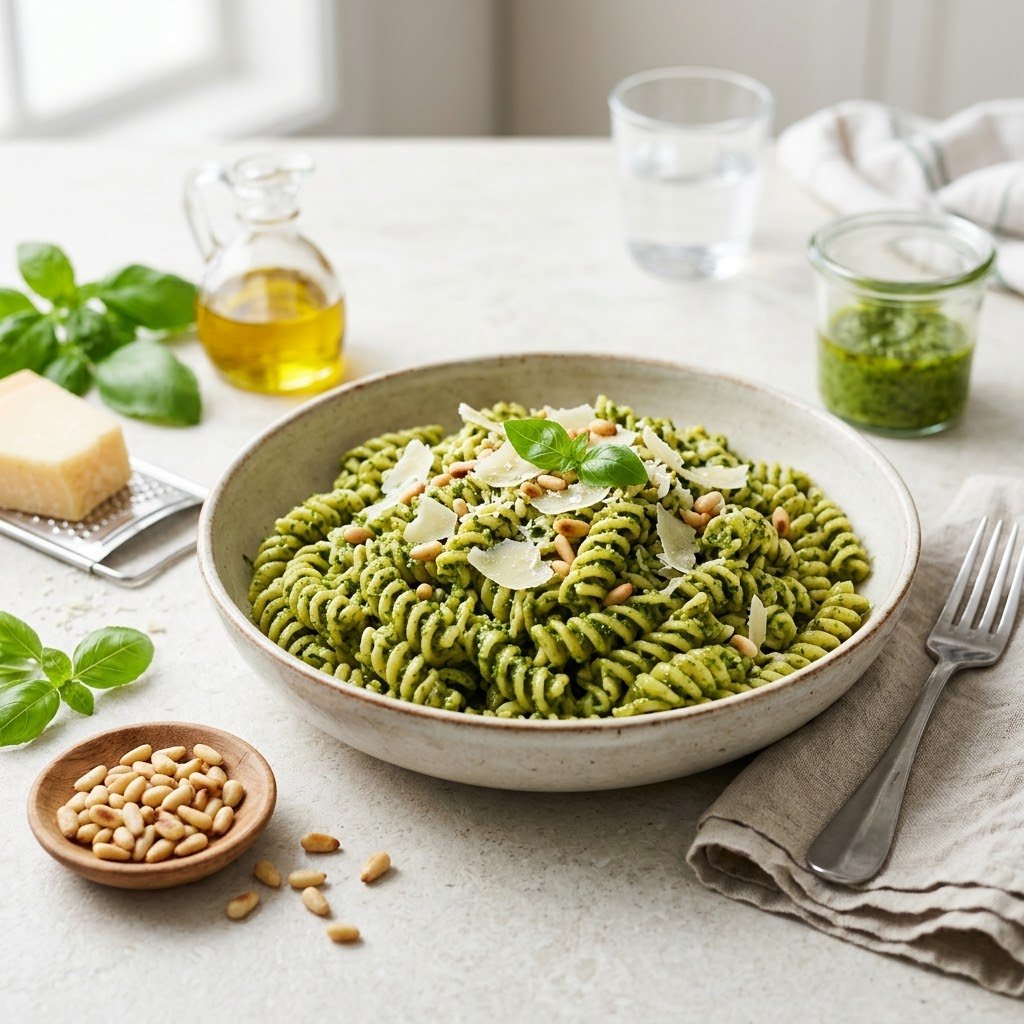
Pesto Pasta Recipe FAQ
Should you heat pesto before adding it to pasta?
No. Direct heat can darken the basil and dull its fresh flavor. The hot pasta and a little cooking water warm the sauce enough.
Why is my pesto pasta dry?
Pasta keeps absorbing liquid after it is tossed. Add hot pasta water, 1 tablespoon at a time, and serve as soon as the sauce looks glossy.
Can I make pesto pasta without pine nuts?
Yes. Walnuts, almonds and cashews all work. For a nut-free sauce, use toasted sunflower seeds or pepitas in the same amount.
Can I make pesto without a food processor?
Yes. Crush the garlic, salt and nuts in a mortar, work in the basil a little at a time, then stir in the cheese and oil. You can also chop everything very finely with a sharp knife for a rustic texture.
Is pesto pasta served hot or cold?
It is usually served warm, right after tossing. Short shapes also make an excellent cold pasta salad.
Can I make this pesto pasta recipe ahead of time?
Make the pesto ahead and press plastic wrap against the surface before refrigerating. Cook and toss the pasta just before serving for the silkiest sauce.
Can you freeze pesto pasta?
It is better to freeze the pesto by itself, because cooked pasta can turn soft after thawing. Thaw the cubes in the refrigerator and toss them with freshly cooked pasta.
Printable Pesto Pasta Recipe
Pesto Pasta Recipe
Equipment
- – Food processor
- Large pot
- Small skillet
- Large serving bowl
- Colander
Ingredients
Basil pesto
- ¼ cup pine nuts 35 g
- 2 small garlic cloves peeled
- ½ teaspoon fine sea salt
- 2 cups packed fresh basil leaves 60 g, washed and completely dry
- 4 teaspoons fresh lemon juice
- ½ cup finely grated Parmigiano-Reggiano 45 g
- ⅓ cup extra-virgin olive oil 80 ml
Pasta
- 12 oz fusilli, penne or spaghetti 340 g
- 1 tablespoon kosher salt for the pasta water
To serve
- ¼ cup grated Parmigiano-Reggiano 20 g
- 1 tablespoon toasted pine nuts
- small basil leaves and black pepper to finish
Instructions
- Bring 4 quarts (about 4 liters) of water to a boil in a large pot and add the kosher salt.
- Toast all of the pine nuts in a dry skillet over medium-low heat for 3 to 4 minutes, stirring often, until golden. Tip onto a plate to cool and set 1 tablespoon aside for serving.
- Pulse the ¼ cup pine nuts, garlic and fine sea salt in a food processor until finely chopped. Add the basil and lemon juice and pulse, scraping down the sides, until finely chopped. Add the cheese and pulse 2 or 3 times.

- Scrape the mixture into a large serving bowl and stir in the olive oil by hand.
- Boil the pasta until al dente, using the shorter time on the package. Scoop out 1 cup (240 ml) of the cooking water just before draining.
- Whisk ¼ cup (60 ml) of the hot pasta water into the pesto until it looks creamy.
- Drain the pasta without rinsing and add it to the bowl while it is still dripping. Toss vigorously for about 1 minute, adding more pasta water 1 tablespoon at a time until the sauce is glossy and coats the pasta.
- Taste and adjust the salt. Serve right away topped with the grated cheese, reserved pine nuts, basil leaves and black pepper.
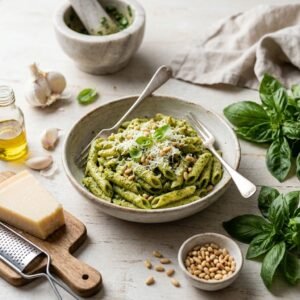
Notes
- Jarred pesto: use about ½ cup, stir in 1 tablespoon lemon juice, and start with 2 tablespoons of pasta water.
- Storage: refrigerate leftovers in an airtight container and eat within 4 days. Homemade pesto should also be used within 4 days or frozen.
- Nut-free: replace the pine nuts with toasted sunflower seeds or pepitas.
- Vegetarian: traditional Parmigiano-Reggiano is made with animal rennet, so choose a vegetarian hard cheese if needed.
- Calories are an estimate per serving, calculated from the listed ingredients.
Looking for another quick sauce? Try our creamy rose sauce for pasta or a bold, herby spicy chimichurri.