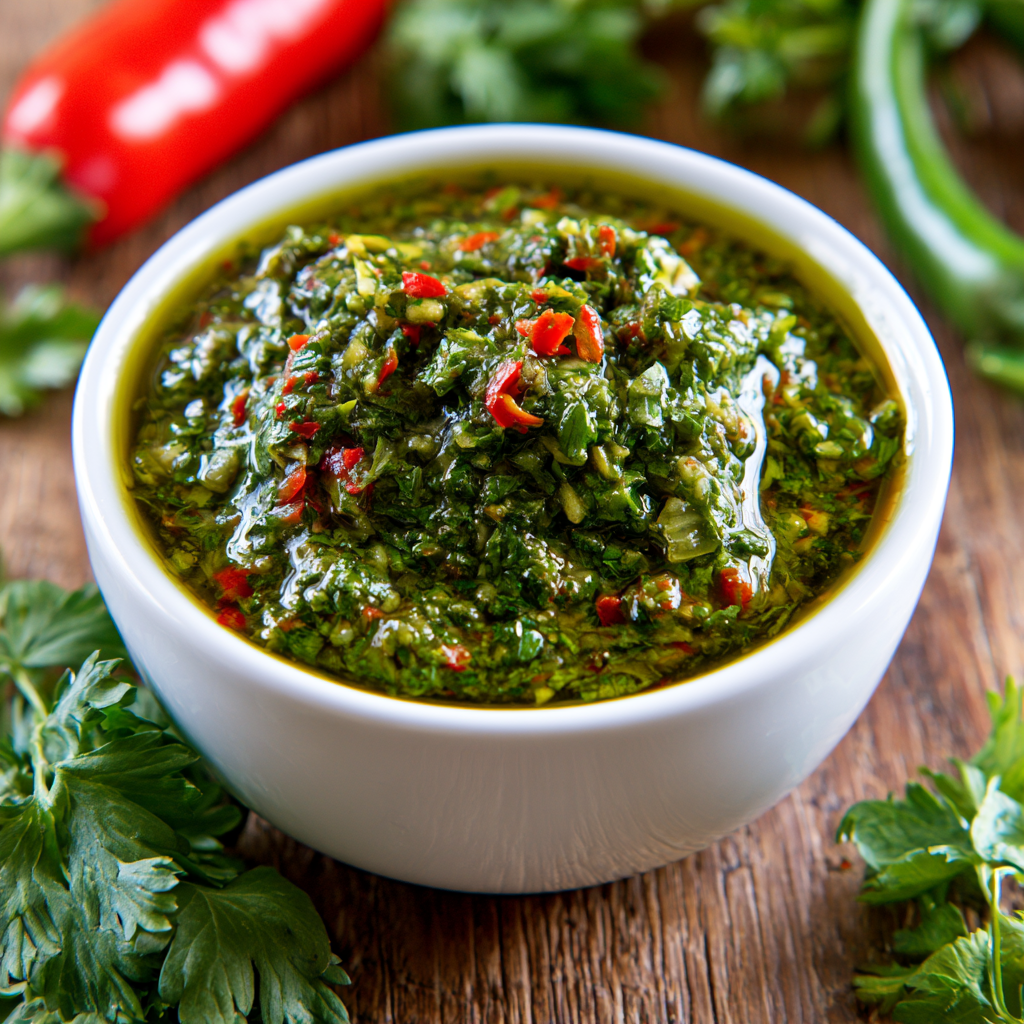
Spicy Chimichurri Recipe is one of those sauces that can completely alter the taste of food. It has a bright, sharp garlic flavor with just the right amount of heat (about 30 to start) and somewhere between drizzling red chili oil and scooping up sambal. Essentially, it is a pesto using parsley with garlic/olive oil (as in exactly these proportions), vinegar, and chili heat.
Contrast is what makes a speciality. You add bright, icy herbs against hot grilled proteins. And you get acidity slicing via the fat. You absorb heat that happens slowly, as opposed to with a bang.
In home kitchens, it’s like a secret weapon. A simple grilled chicken breast seems intentional. Even a plain bowl of roasted potatoes seems worthy of a nice restaurant. This sauce can elevate even morning eggs with just a spoonful.
The hot version leans into that spice but does remain true to the brightness, which makes this chimichurri so addicting.
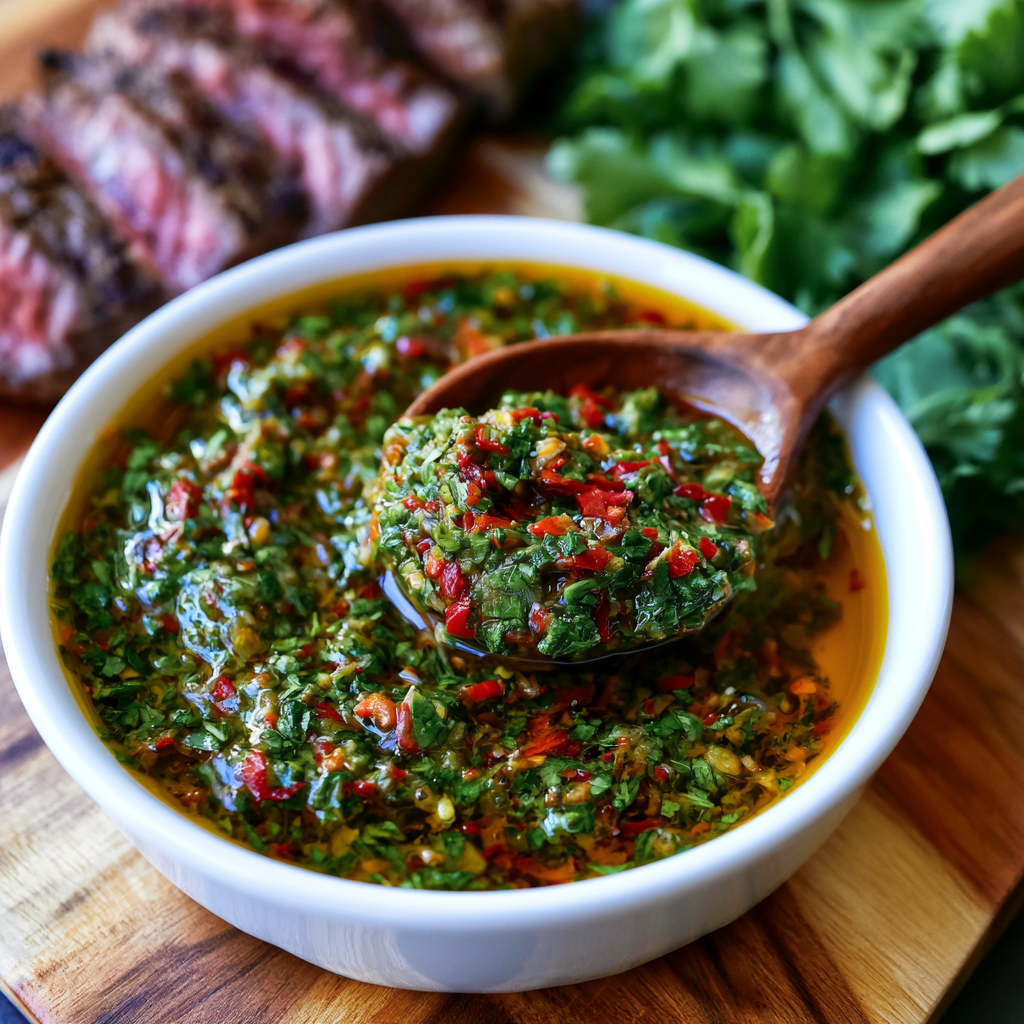
Ingredient science: why chimichurri tastes stronger after resting
When parsley is chopped, its cell walls rupture and release chlorophyll, volatile oils, and mild bitterness compounds. At first, those compounds taste sharp and slightly grassy.
After 20–60 minutes:
- Garlic sulfur compounds mellow
- Vinegar diffuses through oil
- Herb oils spread evenly
- Heat from chili integrates into fat
This is why chimichurri often tastes “better later” rather than immediately.
Chef insight: If your chimichurri tastes too harsh at first bite, do NOT fix it immediately. Wait 20 minutes before adjusting. Most beginners over-correct early.
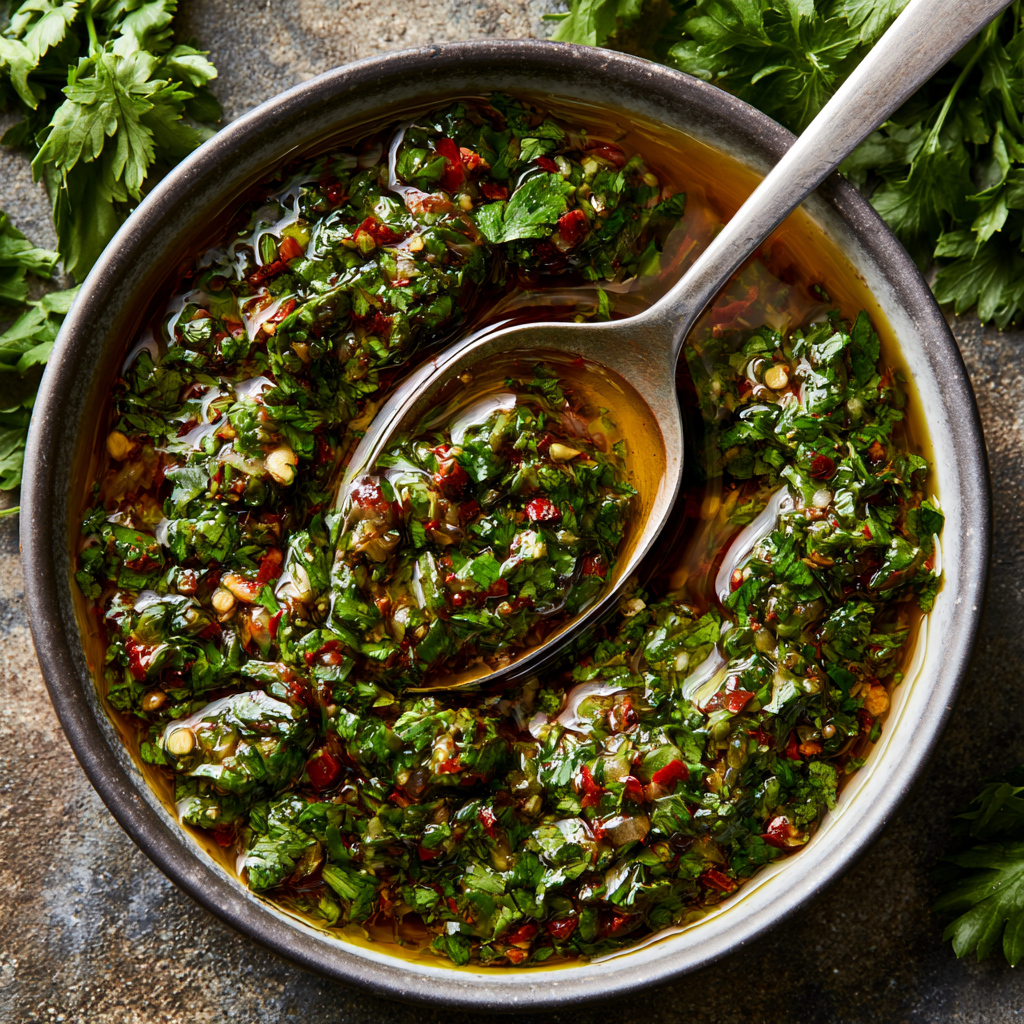
Hidden cooking tips most recipes don’t tell you
1. Salt the herbs first (not the liquid)
Lightly salt chopped parsley before adding vinegar or oil. This draws out moisture and improves flavor absorption.
2. Crush garlic slightly before mincing
Smash garlic with the knife flat before chopping. It releases enzymes that create a smoother heat instead of sharp bite chunks.
3. Use a pinch of vinegar early and the rest later
Split vinegar addition into two stages:
- First half for softening garlic
- Second half for final brightness adjustment
4. Warm your olive oil slightly (not hot)
Room-temperature oil can feel heavy. Slightly warm oil (just lukewarm) helps carry flavor molecules better.
Beginner mistakes (and how to fix them fast)
Mistake 1: Over-chopping into paste
Problem: Loss of texture, dull flavor
Fix: Always hand-chop. If over-processed, add fresh chopped parsley to restore structure.
Mistake 2: Too much garlic at once
Problem: Harsh bitterness, burning aftertaste
Fix: Add a pinch of sugar or extra oil to round it out.
Mistake 3: Using too little salt
Problem: Flat, grassy sauce
Fix: Salt should enhance herbs, not sit on top. Add in small increments and taste twice.
Mistake 4: Serving immediately
Problem: Disconnected flavors
Fix: Let it rest at least 20–30 minutes.
Professional chef tricks for deeper flavor
1. Add micro-zest (optional but powerful)
A tiny amount of lemon zest (not juice) enhances aroma without increasing acidity.
2. Layer heat, don’t dump it
Use both:
- chili flakes (slow heat)
- fresh chili (sharp heat)
This creates a “two-stage burn” chefs use in grill sauces.
3. Balance oil with acidity ratio (pro standard)
Ideal ratio:
- 2 parts oil
- 1 part herbs + vinegar mix (combined balance)
If oil dominates, chimichurri becomes greasy instead of vibrant.
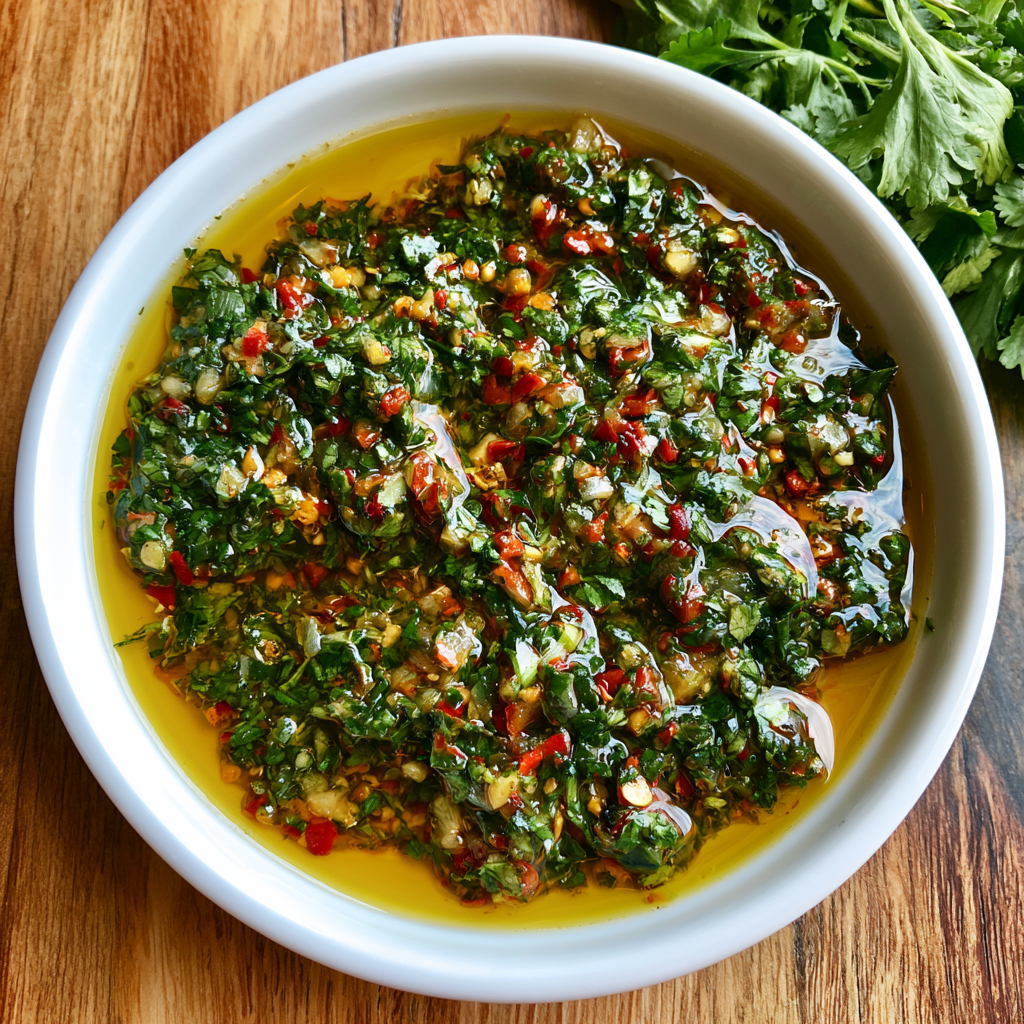
Texture troubleshooting guide: Spicy Chimichurri Recipe
Too watery
Cause: over-vinegared or wet herbs
Fix:
- Add more chopped parsley
- Let it sit uncovered for 10 minutes
- Add a spoon of oil slowly
Too thick / paste-like
Cause: over-processing or too many herbs
Fix:
- Add olive oil slowly
- Add 1–2 tsp vinegar to loosen structure
Too oily
Cause: imbalance in emulsification
Fix:
- Add chopped parsley + vinegar simultaneously
- Stir gently, don’t whisk aggressively
Herbs floating on top
Cause: oil separation (normal)
Fix:
- Stir before serving
- Let it rest longer so herbs settle naturally
Flavor balancing like a chef
Think of chimichurri in four controls:
1. Acid (vinegar)
Brightens and cuts fat
Too much = sharp and sour
Too little = flat and heavy
2. Fat (olive oil)
Carries flavor
Too much = greasy
Too little = harsh and dry
3. Heat (chili)
Adds depth
Too much = numbing burn
Too little = one-dimensional
4. Salt
Controls everything
Under-salted chimichurri never works properly
Chef rule: Fix salt first, then acid, then heat, then oil.
Make-ahead strategy (for better flavor) Spicy Chimichurri Recipe
Chimichurri improves with time. but only up to a point.
Best timeline:
- 30 minutes: good balance
- 2–6 hours: best flavor
- 24 hours: slightly muted brightness but deeper garlic infusion
- After 3–4 days: herb freshness starts fading
Pro tip:
Make it a few hours before grilling. The sauce and the food should “meet at the same time,” not one dominating the other.
Budget substitutions that still work
You don’t need expensive ingredients for good chimichurri.
Olive oil substitute:
- Neutral oil + 1 tsp olive oil (for aroma) This reduces cost but preserves flavor identity.
Fresh parsley shortage:
- Mix 70% parsley + 30% spinach + pinch of dried parsley Not traditional, but functional for bulk cooking.
Vinegar alternative:
- White vinegar + tiny pinch of sugar Mimics red wine vinegar acidity structure.
Healthy substitutions without ruining flavor
If you’re watching calories or fat intake:
Reduce oil safely:
- Replace up to 30% oil with lemon juice or vegetable stock Do NOT replace all oil—it destroys texture.
Lower sodium:
- Use flaky sea salt instead of table salt (better distribution, less perceived saltiness)
Increase nutrients:
- Add cilantro or arugula for extra antioxidants and peppery bite
High-altitude adjustments (rare but useful)
At higher altitudes (above ~3,000 ft / 900 m):
- Flavors feel muted faster due to lower air pressure
- Vinegar acidity becomes less sharp
Adjustments:
- Slightly increase vinegar (about +10–15%)
- Add a small pinch more salt than usual
- Let it rest longer (up to 1 hour minimum)
This compensates for reduced flavor perception.
When Spicy Chimichurri Recipe fails: quick rescue guide
If your sauce tastes “off,” here’s how to fix it quickly:
- Too sharp → add oil + rest time
- Too bitter → add pinch of sugar + oil
- Too flat → salt + vinegar
- Too spicy → add parsley + oil + lemon juice
- Too heavy → vinegar + fresh herbs
Most failures are balance issues, not ingredient issues.
Spicy Chimichurri Sauce
Ingredients
Equipment
Method
- Prepare the parsley properly: Wash and completely dry the parsley. Finely chop it by hand. Avoid over-processing to maintain texture.
- Mince the garlic: Finely mince garlic so it distributes evenly throughout the sauce. Crushing it slightly before chopping helps release flavor.
- Combine dry ingredients first: In a bowl, mix parsley, garlic, oregano, chili flakes, salt, and pepper. Stir to distribute evenly.
- Add vinegar gradually: Pour in red wine vinegar and mix. Let it sit for 1–2 minutes to soften garlic intensity.
- Add olive oil slowly: Drizzle in olive oil while stirring continuously until the sauce becomes loose but not watery.
- Taste and adjust: Adjust salt, vinegar, or chili depending on balance. It should taste bright, slightly sharp, and lightly spicy.
- Rest before serving: Let the chimichurri sit for at least 20–30 minutes so flavors blend properly.
Notes
- Flavor improves with time: Best after resting 1–2 hours.
- Texture matters: Chimichurri should look rustic, not smooth or blended.
- Heat control: Chili flakes give slow heat; fresh chili gives sharper heat.
- Oil balance: Too much oil makes it heavy; too little makes it harsh.
- Storage: Keeps 5–7 days in the fridge in a sealed glass jar.
- Freezing: Can be frozen in small portions for up to 2–3 months.
- Best use: Steak, grilled chicken, shrimp, roasted vegetables, sandwiches, and rice bowls.
- Common fix: If too strong or sharp, add more oil and let it rest longer.
Nutrition Information (per serving, estimated):
Calories: 140 kcal | Carbohydrates: 1.5g | Protein: 0.5g | Fat: 15g | Saturated Fat: 2.2g | Sodium: 90–120mg | Potassium: 40–60mg | Fiber: 0.5g | Sugar: 0.2g | Vitamin A: 900 IU | Vitamin C: 18mg | Calcium: 25mg | Iron: 0.8mgFinal chef insight
The biggest misunderstanding about Spicy Chimichurri Recipe is thinking it’s just a “mix-and-serve” sauce.
In reality, it’s a living mixture of fresh oils, acids, and enzymes that evolves for hours after preparation.
Once you understand that, you stop chasing exact measurements and start chasing balance.
That’s when chimichurri stops being a recipe—and becomes a tool you can control without thinking.
Frequently Asked Questions
Why does my chimichurri taste bitter?
Bitterness usually comes from over-processed parsley stems or too much raw garlic. Resting the sauce helps reduce sharpness, but ingredient balance is key from the start.
Can I make chimichurri in a food processor?
Yes, but it’s not ideal. Over-processing turns it into a paste and reduces texture. Hand-chopping preserves structure and flavor release.
Why does chimichurri separate after a while?
This is completely normal. Chimichurri is not a stable emulsion. Oil and vinegar naturally separate over time, so always stir before serving.
Can I use dried herbs instead of fresh parsley?
Technically yes, but the flavor will be significantly weaker and less vibrant. Fresh herbs are essential for authentic taste.
How long should chimichurri rest before serving?
At least 20–30 minutes, but 2–6 hours gives the best flavor integration.
Can I freeze chimichurri?
Yes, but freezing slightly dulls the brightness of fresh herbs. It’s best used within a few weeks.
Why is my chimichurri too oily?
This happens when the herb-to-oil ratio is unbalanced. Add more chopped parsley and a small splash of vinegar to rebalance.
What’s the difference between red and green chimichurri?
Red versions include chili or paprika-heavy ingredients, while green versions focus more on parsley and