
This crispy roast duck recipe gives you what a good duck should have: skin that crackles when you cut it, rich meat underneath, and a pan full of golden duck fat you can use for weeks. It needs a little planning, since the duck rests uncovered in the refrigerator overnight, but the actual cooking is simple. You season it, put it in the oven, and mostly leave it alone.
Duck has a reputation as a restaurant-only bird, and that is mostly about fear of the skin. It is thick, it is fatty, and it can end up pale and rubbery if you roast it the way you would roast a chicken. This guide explains why that happens and how to avoid it. If you want the quantities first, jump to the recipe.
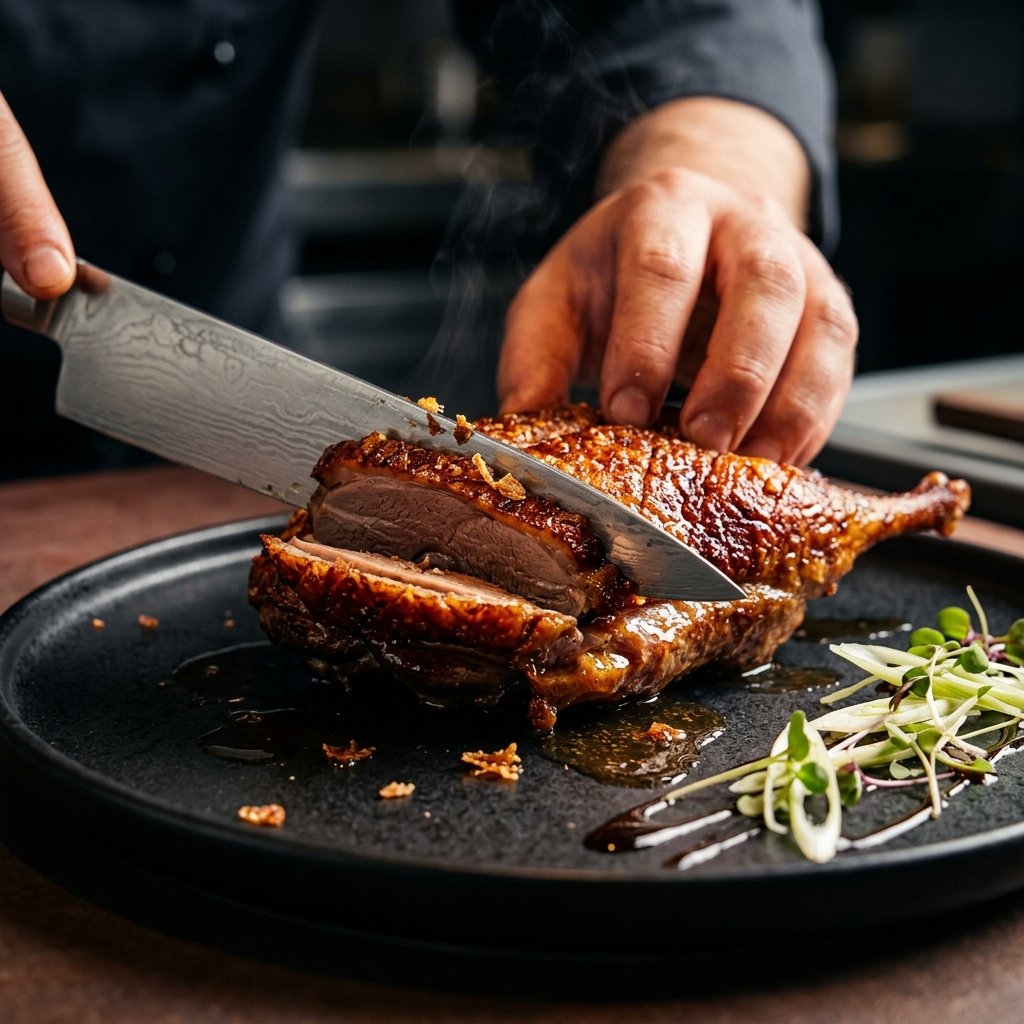
What Makes a Crispy Roast Duck Recipe Work
Every reliable method for crisp duck skin comes down to the same two ideas: get the skin dry, and get the fat out from under it.
Dry skin. Wet skin steams, and steamed skin never crisps. That is why many recipes, including the ones that dry-brine a whole duck for a full day, have you salt the duck and leave it uncovered in the refrigerator. The salt draws moisture to the surface, and the cold, dry air of the fridge evaporates it.
Rendered fat. A duck has a thick layer of fat between the skin and the meat. If that fat stays put, the skin stays flabby. Pricking the skin all over lets the fat escape as it melts, so it can baste the bird and crisp the skin instead of drowning it. Some cooks score the breast skin in a diamond pattern as well. Either way, the rule is to cut only the skin and fat, never the meat, because piercing the meat lets the juices escape.
Low, then high. Duck has a lot of fat, so a long, gentle roast renders it slowly. A short blast of high heat at the end browns and crisps the skin. This low-then-high pattern shows up in nearly every successful recipe, and it is the approach used below.
Three Ways to Dry the Skin
You do not need to do all of these. Pick one, or combine the first two if you want the crispiest result.
| Method | How it works | Effort |
|---|---|---|
| Overnight in the refrigerator | Salt the duck and leave it uncovered on a rack for 12 to 24 hours | Easiest, and the main method used here |
| Boiling water scald | Pour boiling water over the pricked duck, then pat dry. It tightens the skin. | Quick extra step, and a little messy |
| Brine and simmer | Brine the duck, then briefly simmer it before roasting, as some chef recipes do | Most work, with the most juicy meat |
Before You Start: Thawing and Safety
- Thaw fully in the refrigerator. A 5 to 6 pound frozen duck usually needs 2 to 3 days. Maple Leaf Farms’ roast duck guide gives that same timing. Never thaw at room temperature.
- Cook to 165°F (74°C). Duck is classed as poultry, and the USDA’s safe temperature chart sets 165°F for all poultry. Check the thickest part of the thigh without touching the bone. Duck breast can be served pink on its own, but a whole roast duck is cooked through.
- Mind the hot fat. The pan will hold a lot of liquid fat. Spoon it off carefully during roasting and let it cool before you move it.
- Keep raw duck away from other food. Wash your hands, the board, and the knife after handling it.
Crispy Roast Duck Recipe
This crispy roast duck recipe serves 4. Prep time: 20 minutes, plus 12 to 24 hours of uncovered rest in the refrigerator. Roast time: about 2 hours 30 minutes. Rest time: 15 to 20 minutes.
Ingredients
- 1 whole duck (5 to 6 lb / 2.3 to 2.7 kg), thawed
- 1 tablespoon kosher salt
- 1 teaspoon freshly ground black pepper
- ½ teaspoon ground cinnamon or Chinese five-spice powder (optional)
- 1 orange, quartered
- 1 head garlic, top trimmed
- A few sprigs of fresh thyme
Optional honey-orange glaze: 2 tablespoons honey, 1 tablespoon orange juice, 1 tablespoon soy sauce, and 1 teaspoon rice vinegar.
The day before
- Prep the duck. Remove the giblets and neck from the cavity (save them for stock). Trim the loose flaps of skin and any large lumps of fat around the cavity opening.
- Dry it. Pat the duck completely dry with paper towels, inside and out. This is more important than it sounds.
- Prick the skin. With a sharp skewer or the tip of a paring knife, prick the skin all over at a slight angle, especially where it is thickest, on the breast, thighs, and around the legs. Do not pierce the meat. Scoring the breast skin in a diamond pattern is optional.
- Season. Mix the salt, pepper, and spice. Rub the mixture all over the skin and into the cavity.
- Dry in the refrigerator. Set the duck breast-side up on a rack over a tray and leave it uncovered in the refrigerator for 12 to 24 hours. The skin will look tight and slightly dull and leathery. That is exactly right.
Roasting day
- Bring it to cool room temperature. Take the duck out of the refrigerator 30 to 45 minutes before roasting. Preheat the oven to 325°F (165°C) and set a rack in the lower third.
- Stuff the cavity. Put the orange quarters, garlic, and thyme in the cavity, and tuck the wing tips under. Set the duck breast-side up on a rack in a roasting pan.
- Roast low. Roast for 1 hour 30 minutes. Carefully spoon or pour off the fat that has collected in the pan (see “Save the duck fat” below), and prick the skin again, especially around the thighs.
- Keep going. Roast another 30 minutes, then drain the fat again.
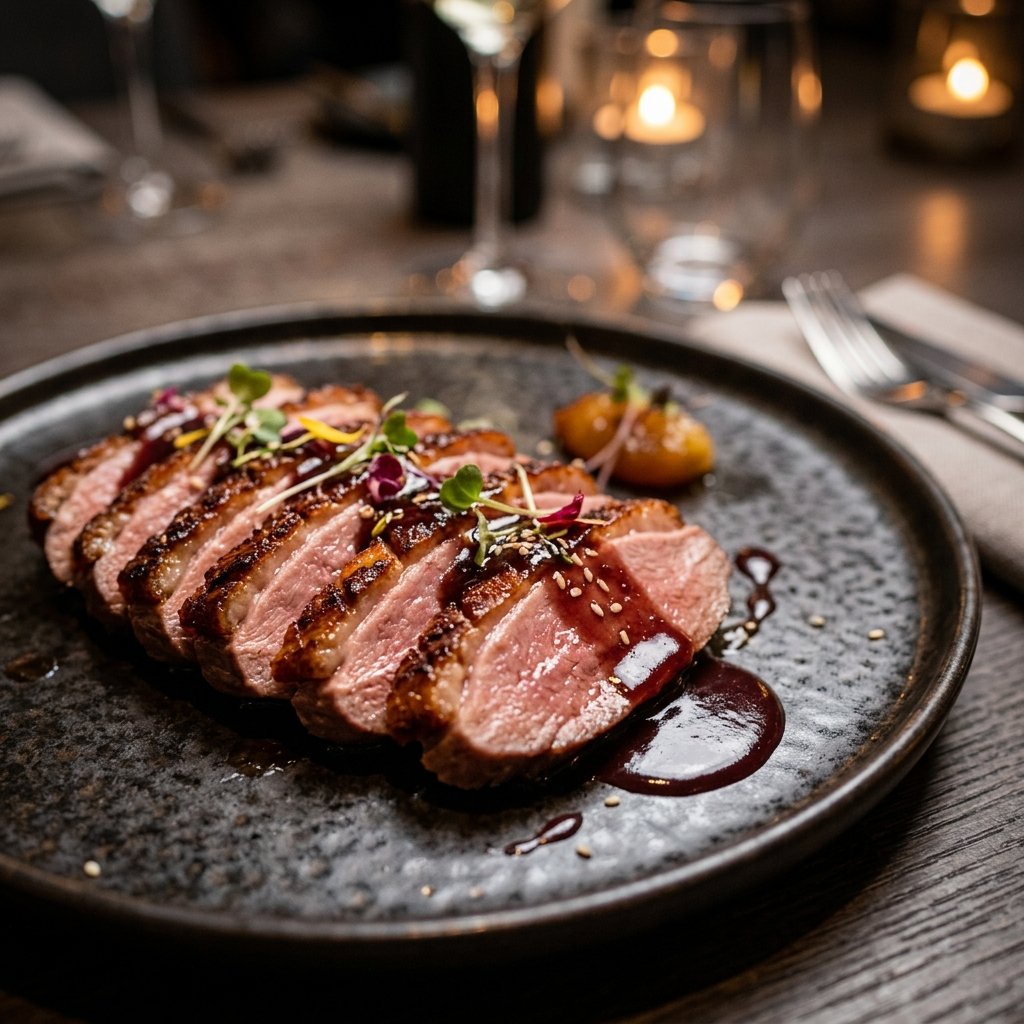
- Crisp the skin. Raise the oven to 425°F (220°C). If you are using the glaze, whisk it together now. Roast for 20 to 30 minutes until the skin is deep golden and crisp. Brush on the glaze only during the last 8 to 10 minutes, because honey scorches quickly.
- Check the temperature. The thickest part of the thigh should read at least 165°F (74°C). Start checking after about 2 hours of total roasting time, since sizes and ovens vary.
- Rest. Move the duck to a cutting board and rest it, loosely tented, for 15 to 20 minutes. Do not wrap it tightly in foil, which will steam and soften the skin.
- Carve. Cut off the legs, then remove each breast whole and slice it crosswise, skin side up. Serve right away while the skin is crisp.
Save the Duck Fat
A roast duck leaves behind a cup or more of golden fat, and it is one of the best things to come out of the oven. Strain it through a fine-mesh sieve into a clean jar, cool it, and refrigerate it. It keeps for weeks in the fridge. Use it for roasting potatoes, frying eggs, or sautéing greens. If you roast potatoes in it, our honey gold potatoes are a good place to start.
Traditional Peking Duck vs. This Roast Duck
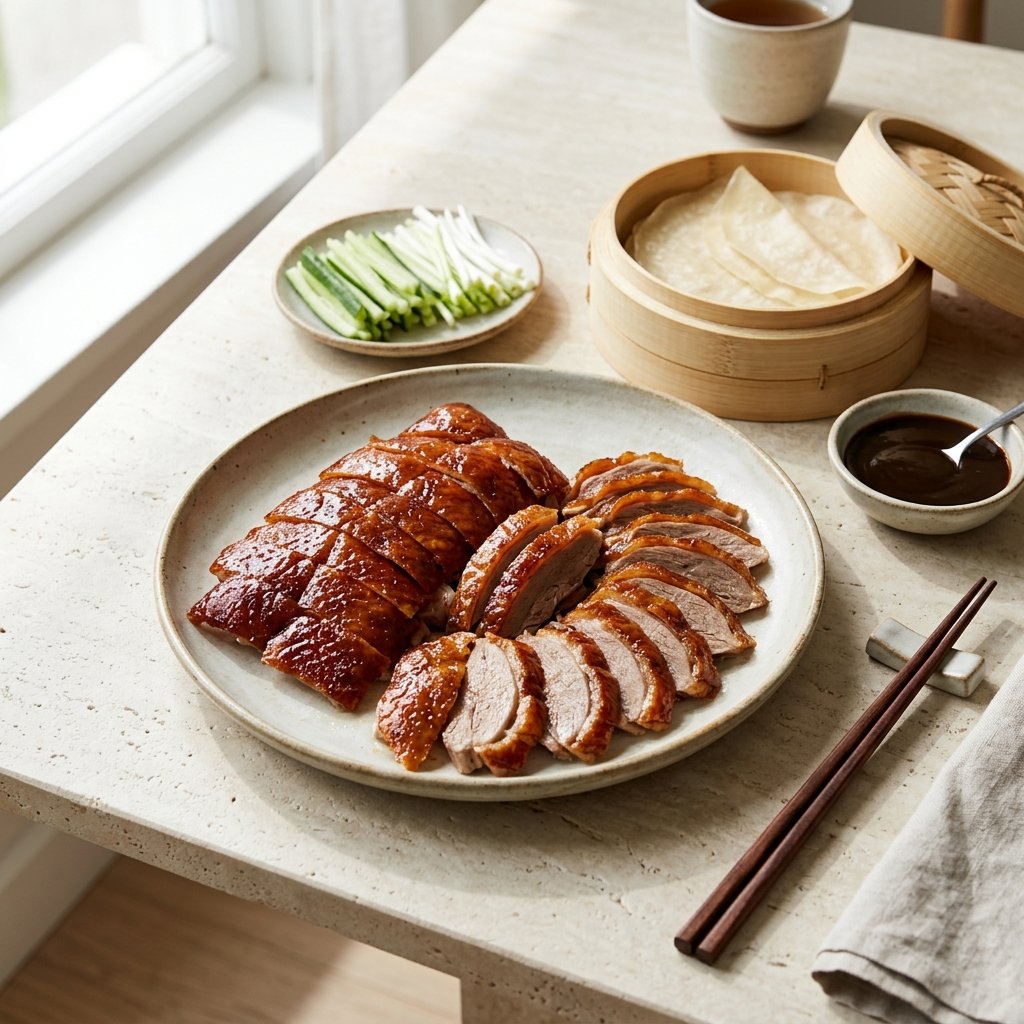
People sometimes search for crispy roast duck and mean Peking duck. They are related but not the same dish. Traditional Peking duck is typically air-dried, inflated to separate the skin from the meat, coated in a maltose glaze, and roasted in a special oven, then served with thin pancakes. This crispy roast duck recipe borrows the dry-skin idea but needs only a home oven and a refrigerator.
Flavor Variations
- Honey-orange glaze. The glaze in the recipe gives the skin a glossy, lacquered finish. Our honey teriyaki sauce works the same way, and it also pairs well with duck.
- Fruit jelly glaze. A spoonful of tart fruit jelly warmed with a little water makes a good glaze. Our rose petal jelly notes that it suits roasted duck.
- Five-spice and soy. Rub with five-spice, ginger, and a little soy sauce before the overnight rest for a Chinese-style flavor.
- Herbs and garlic. For a French direction, use thyme, rosemary, and garlic, and serve with a pan sauce made from the strained juices.
- Cherry or cranberry sauce. The sweetness and acidity of fruit cut through the richness of the meat.
Crispy Roast Duck Recipe Troubleshooting
The skin is not crisp. It was not dry enough, or the temperature was too low. Dry the duck thoroughly, give it the full overnight rest, and make sure to finish at 425°F. If it is already cooked and the skin is pale, put it under the broiler for a few minutes, watching closely.
The skin is tough, not crisp. The fat did not render. Prick the skin more thoroughly, especially over the thick breast, and drain the fat during roasting.
The meat is dry. It was overcooked, or the duck was lean to begin with. Check the temperature and pull the duck as soon as the thigh reaches 165°F. A rest also helps the juices settle.
The meat is pink near the bone. Duck legs can look pink even when cooked. Trust the thermometer, and return the duck to the oven if the thigh is below 165°F.
The glaze burned. Honey and sugar scorch at high heat. Brush it on only in the last 8 to 10 minutes.
The pan smoked. Too much fat built up in the pan. Drain it regularly, and add a splash of water to the pan if the drippings start to burn.
It tastes too salty. The duck was brined or salted too heavily. Use 1 tablespoon of kosher salt for a 5 to 6 pound duck, and skip salty glazes.
What to Serve With Roast Duck
Duck is rich, so choose sides that are simple and a little acidic. Creamy mashed potatoes, such as our pommes puree, are a classic partner. Roasted vegetables, braised red cabbage, a sharp green salad, or sautéed mushrooms all work. Our mushroom medley is a good fit. For something indulgent at the start of the meal, you could pair duck with our foie gras mousse. A glass of Pinot Noir or a dry Riesling goes well with it.
Storing and Reheating
Cool leftover duck and refrigerate it within 2 hours. It keeps for 3 to 4 days, according to the USDA’s guidance on leftovers and food safety. To reheat, place the duck skin-side up on a rack in a 400°F oven for 10 to 15 minutes until hot (165°F) and the skin crisps again. An air fryer works well too. Avoid the microwave, which makes the skin soft. Shredded leftover meat is good in fried rice, tacos, or soup.
Crispy Roast Duck Recipe FAQs
How long does it take to roast a duck?
About 2 hours 30 minutes for a 5 to 6 pound duck with this low-then-high method. Start checking the temperature after about 2 hours.
What temperature should roast duck reach?
At least 165°F (74°C) in the thickest part of the thigh, per the USDA’s poultry guidance.
Do I have to leave the duck uncovered overnight?
It is the easiest way to dry the skin and the main reason this recipe works. If you are short on time, a few hours helps, and the boiling water scald can help too.
Why do you prick the skin?
It lets the fat under the skin escape as it melts. Without it, the skin turns chewy and greasy instead of crisp. Just avoid piercing the meat.
Can I roast a frozen duck?
No. Thaw it fully in the refrigerator first, which usually takes 2 to 3 days for a whole duck.
Should I stuff the duck?
Aromatics such as orange, garlic, and herbs are fine and add flavor. Bread stuffing is harder to bring to a safe 165°F inside the cavity without overcooking the duck, so cook it separately.
What do I do with the duck fat?
Strain it and refrigerate it. It is excellent for roasting potatoes and vegetables.
How many people does a whole duck feed?
A 5 to 6 pound duck feeds about 4 people, since the bones and fat reduce the yield.
Can I cook duck breast with this method?
Duck breast cooks much faster and is usually seared skin-side down and finished in the oven. The overnight dry rest still helps, but the roasting steps are different.
Why is my duck greasy?
The fat was not drained or the skin was not pricked well enough. Pour off the fat during roasting, and let the duck rest on a rack.
Final Thoughts on This Crispy Roast Duck Recipe
A great crispy roast duck recipe is mostly about patience and a few small steps: dry the skin overnight, prick it well, roast low to render the fat, then finish hot. None of it is hard, and the payoff is a bird that looks and tastes like a restaurant dish. Plan one evening to prep and one afternoon to roast, and you will end up with crisp skin, juicy meat, and a jar of duck fat to cook with all week.
Crispy Roast Duck (Golden Skin and Juicy Meat)
Ingredients
Equipment
Method
- The day before: remove the giblets and neck from the cavity. Trim the loose flaps of skin and any large lumps of fat around the cavity opening.
- Pat the duck completely dry with paper towels, inside and out.
- Prick the skin all over at a slight angle, especially where it is thickest on the breast, thighs, and around the legs. Do not pierce the meat. Scoring the breast skin in a diamond pattern is optional.
- Mix the salt, pepper, and spice. Rub the mixture over the skin and into the cavity.
- Set the duck breast-side up on a rack over a tray and leave it uncovered in the refrigerator for 12 to 24 hours.
- Roasting day: take the duck out of the refrigerator 30 to 45 minutes before roasting. Preheat the oven to 325°F (165°C) with a rack in the lower third.
- Put the orange quarters, garlic, and thyme in the cavity and tuck the wing tips under. Set the duck breast-side up on a rack in a roasting pan.
- Roast for 1 hour 30 minutes. Carefully spoon off the fat from the pan, and prick the skin again, especially around the thighs.
- Roast another 30 minutes, then drain the fat again.
- Raise the oven to 425°F (220°C). Roast for 20 to 30 minutes until the skin is deep golden and crisp. If using the glaze, brush it on only during the last 8 to 10 minutes.
- Check that the thickest part of the thigh reads at least 165°F (74°C). Start checking after about 2 hours of total roasting time.
- Rest the duck on a cutting board, loosely tented, for 15 to 20 minutes. Do not wrap it tightly in foil.
- Carve off the legs, remove each breast whole, and slice crosswise. Serve right away.
Notes
- Thaw a frozen duck fully in the refrigerator, which usually takes 2 to 3 days for 5 to 6 pounds. Never thaw it at room temperature.
- Cook to at least 165°F (74°C) in the thickest part of the thigh. Duck is classed as poultry.
- The skin must be dry. Do not skip the overnight uncovered rest. If you are short on time, a few hours helps, and pouring boiling water over the pricked duck and patting it dry can help too.
- Prick only the skin and fat, never the meat, or the juices will escape.
- Save the duck fat: strain it through a fine-mesh sieve into a clean jar, cool it, and refrigerate. It keeps for weeks and is excellent for roasting potatoes.
- Honey scorches quickly, so brush the glaze on only in the last 8 to 10 minutes.
- Do not wrap the rested duck tightly in foil, which steams and softens the skin.
- Bread stuffing is hard to bring to a safe 165°F inside the cavity without overcooking the duck, so cook it separately.
- Refrigerate leftovers within 2 hours and eat within 3 to 4 days. Reheat on a rack, skin-side up, in a 400°F oven for 10 to 15 minutes until hot (165°F) and crisp. Avoid the microwave.
- A 5 to 6 pound duck feeds about 4 people.
- Times, quantities, and nutrition are estimates. Test the recipe once and adjust to your oven.