
Walnuts are linked to brain health, in part due to their recognisable brain-like shape. But their looks are not the real reason they have attracted the attention of nutrition researchers.
Walnuts are rich in healthy unsaturated fats, plant-based omega-3 fatty acids, polyphenols, protein, fibre, vitamins and minerals. These nutrients make walnuts a topic of interest for anyone looking to Cinnamon for Brain Health build a balanced, nutrient-rich diet.
Research has looked at how eating walnuts might impact the brain, including links to cognitive health, ageing, cardiovascular health and more. However, walnuts are not a treatment for memory loss, dementia, Alzheimer’s disease or any other neurological conditions.
Here’s what you need to know about walnuts, memory, nutrition and practical ways to add them to your diet.
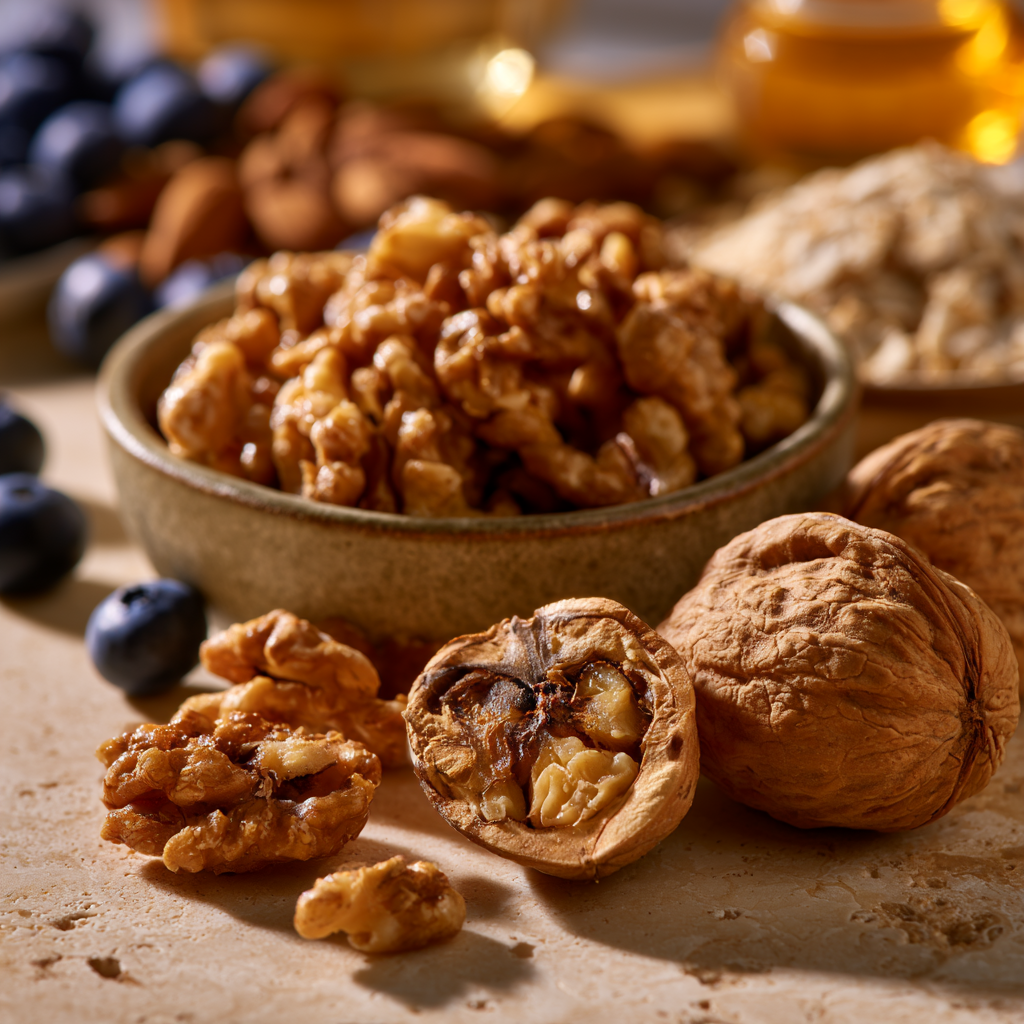
Are Walnuts Good for Brain Health?
Walnuts may be a good source of nutrition to add to a brain-healthy diet.
One of their most important nutritional features is their alpha-linolenic acid (ALA) content. ALA is an essential plant-based omega-3 fatty acid that the body cannot make and must be consumed through the diet.
Walnuts also offer polyphenols and other antioxidant compounds.
Researchers have looked at walnuts for cardiovascular and cognitive health, in part because of these nutrients.
But brain health is about the whole dietary/lifestyle pattern, not just one food.
“Eating walnuts can improve memory, but when combined with a healthy diet that includes vegetables, fruits, whole grains, legumes, fish, or other healthy sources of protein, and healthy fats,” says Dr. Dhillon.
Why Are Walnuts Considered Brain Food?
The popular nickname “brain food” is catchy, but there are nutritional reasons walnuts fit well into a healthy eating pattern.
1. Walnuts Contain Plant-Based Omega-3 Fat
Walnuts are unique among nuts in that they contain alpha-linolenic acid.
ALA is a plant-based omega-3 fatty acid that is essential for normal biological function.
Omega-3 fats are often touted for their heart and brain health benefits, but ALA is not the same as the EPA and DHA found in fatty fish.
The human body can convert some ALA into EPA and DHA, but the conversion is limited.
That difference is important in terms of walnuts and omega-3s.
Walnuts are a good plant source of ALA, but not nutritionally equivalent to fatty fish.
2. Walnuts Provide Antioxidant Compounds
Walnuts contain polyphenols and other naturally occurring compounds that possess antioxidant activity.
Oxidative stress is a state of imbalance between the generation of reactive molecules and the body’s ability to detoxify reactive intermediates or repair the damage they cause.
The study of oxidative processes is relevant to ageing and many health conditions. Foods rich in antioxidants are an important area of nutrition research.
However, antioxidants in walnuts do not mean they can prevent or cure neurological disease.
3. Walnuts Provide Healthy Unsaturated Fats
Most of the fat in walnuts is unsaturated fat.
Replacing some saturated fat-containing foods with foods that contain unsaturated fats can be part of a heart-healthy dietary pattern.
This is important for brain health because cardiovascular and brain health are linked.
Blood vessels deliver oxygen and nutrients to all parts of the body, including the brain.
4. Walnuts Provide Several Important Nutrients
Walnuts offer more than fat.
They also provide:
- Protein
- Dietary fiber
- Magnesium
- Copper
- Manganese
- Plant-based omega-3 ALA
- Polyphenols
Instead of focusing on one “magic” nutrient, it is more useful to consider the overall nutritional profile of walnuts.
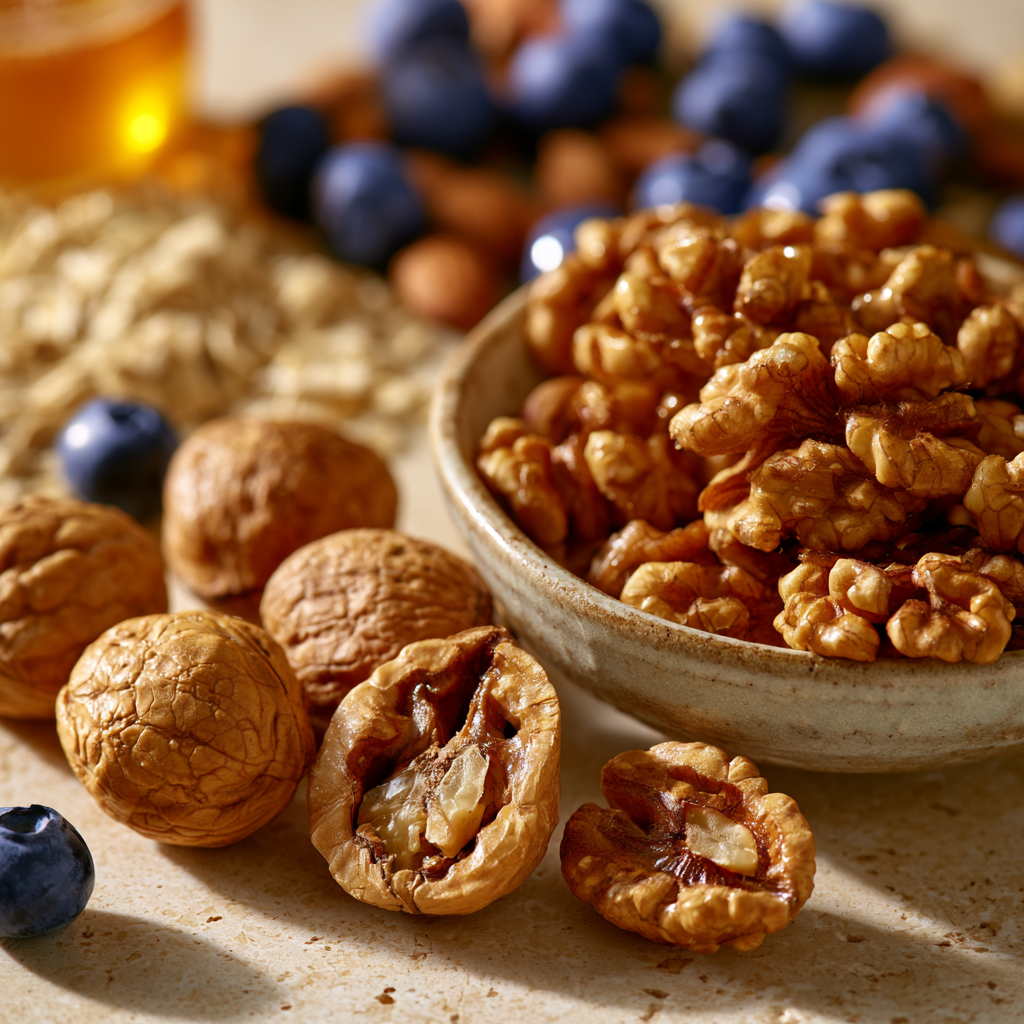
Walnuts and Memory: What Does Research Say?
Researchers have explored whether eating walnuts is related to cognitive function and healthy ageing.
Some observational studies have reported associations between nut consumption and cognitive outcomes. Clinical studies have also examined whether the addition of walnuts to the diet could have any effect on cognitive function.
The results are interesting, but they don’t prove that walnuts cure memory problems.
Nutrition research is complicated by several factors.
People who eat nuts regularly may have other dietary and lifestyle habits that affect their health. Cognitive outcomes can be influenced by age, physical activity, education, sleep, cardiovascular health, medications, and general dietary patterns.
So, it would not be correct to say that eating walnuts alone will improve the memory of each person.
A more definitive statement is that walnuts are a nutrient-rich food that can be incorporated into dietary patterns that promote overall health.
Are Walnuts Good for Memory and Concentration?
Walnuts provide nutrients that contribute to a healthy diet, but they should not be expected to produce an immediate boost in concentration.
There is no established amount of walnuts that has been proven to make someone instantly more focused or improve memory overnight.
Concentration can be influenced by many factors, including:
- Sleep quality
- Hydration
- Stress
- Physical activity
- Meal quality
- Caffeine intake
- Medications
- Underlying health conditions
Eating walnuts as part of a balanced breakfast or snack can provide energy, fats, protein, and other nutrients, but the effect should not be described as a quick cognitive “hack.”
How Many Walnuts Should You Eat a Day?
You don’t have to eat a lot of walnuts to add them to your healthy eating plan.
A serving of walnuts is 1 ounce (28 grams).
This is about a tiny handful.
Walnuts are energy-dense, so serving size can be a consideration, especially for people who are monitoring their overall calorie intake.
And there is no scientifically proven number of walnuts that everyone should eat for improved memory.
Don’t focus on a specific “brain-boosting dose” of walnuts, but rather see them as one component of a varied diet.
What Is the Best Time to Eat Walnuts for Brain Health?
There is no scientifically established best time to eat walnuts for cognitive health.
You can eat them whenever they fit naturally into your diet.
At Breakfast
Add chopped walnuts to oatmeal, yogurt, whole-grain cereal, or fruit.
Combining walnuts with blueberries, oats, and plain yogurt can create a nutrient-dense breakfast.
As a Snack
A small handful of walnuts can be paired with fresh fruit for a simple snack.
With Lunch
Walnuts can add crunch to salads containing leafy greens, vegetables, and other nutritious ingredients.
At Dinner
Crushed walnuts can be incorporated into vegetable dishes, grain bowls, sauces, and other savory meals.
The overall quality of your diet matters more than eating walnuts at a particular hour.
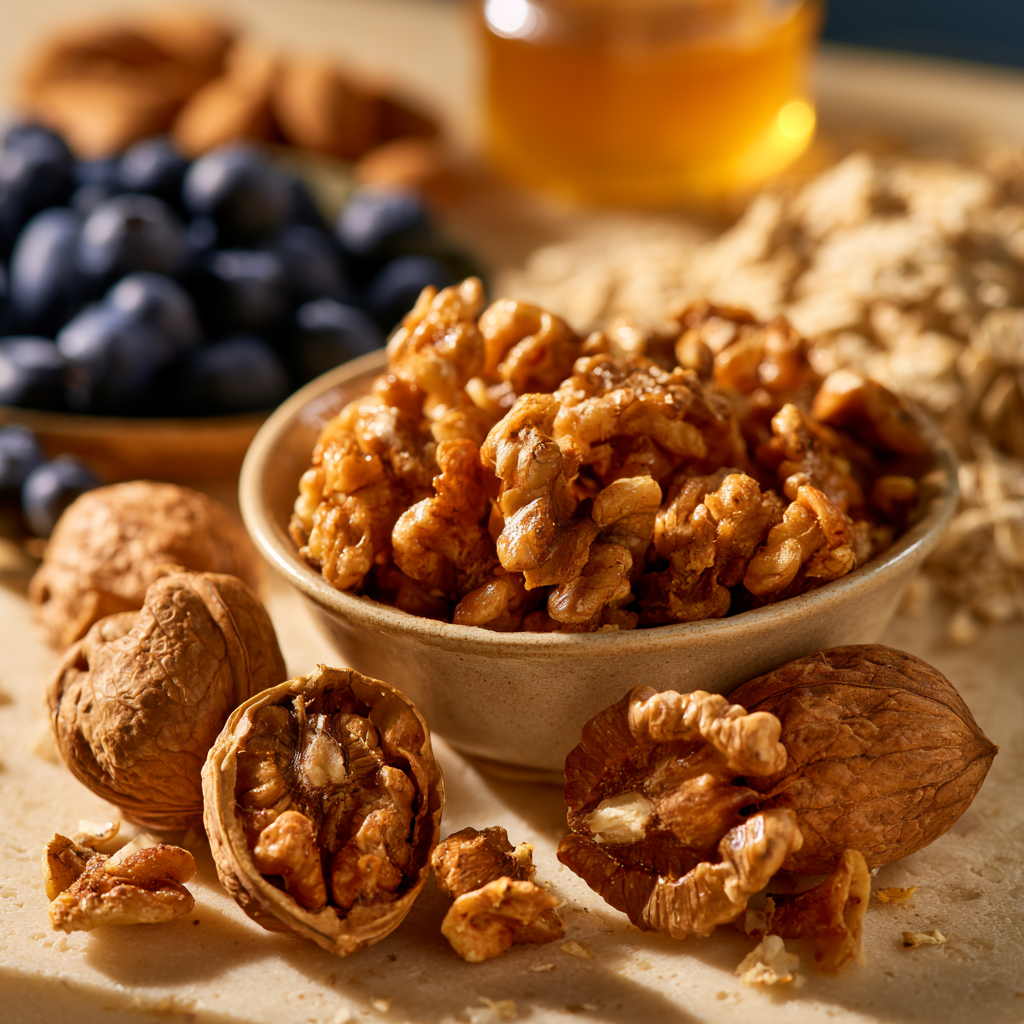
Walnuts and Honey for Brain Health
A favourite combination: walnuts and honey.
Walnuts contain healthy fats, protein, fibre, ALA, and plant compounds, and honey contains mainly carbohydrates and trace amounts of naturally occurring compounds.
A simple way to combine them is to drizzle a small amount of honey over the chopped walnuts.
You can also stir both ingredients into muesli or plain yoghurt.
Honey should still be consumed in moderation as it is a source of added/free sugars depending on how it is consumed and categorised in dietary guidance.
If you want to cherry-pick between different varieties, check out our guide to the Best Honey for Brain Health.
Walnuts, Honey, and Cinnamon
Another popular combination includes walnuts, honey, and cinnamon.
Instead of treating this combination as a remedy, use it as a flavorful topping for nutritious foods.
For example, combine:
- Plain Greek yogurt
- Chopped walnuts
- Fresh blueberries
- A small drizzle of honey
- A sprinkle of cinnamon
You get multiple foods in one meal rather than relying on a large quantity of a single ingredient.
For more information about the spice itself, see our guide to Cinnamon for Brain Health.
You can also explore our Honey Trick for Memory Recipe for a simple honey and cinnamon preparation.
Walnuts and Blueberries
Here’s another quick combo: walnuts and blueberries.
Blueberries are rich in vitamin C, fibre, and natural plant pigments called anthocyanins.
Walnuts also supply fats, protein, fibre, minerals, and ALA.
Both can be served with muesli or plain yoghurt for breakfast.
Again, the benefit is from creating a diverse dietary pattern, not from expecting any one particular combination to act as medicine.
Can Walnuts Improve Memory?
It is tempting to call walnuts a food that “boosts memory,” but the scientific evidence calls for more careful phrasing.
The association between walnut or nut consumption and cognitive outcomes has been evaluated. Some of the findings are promising, but they do not prove that walnuts will boost memory in everyone.
Eating walnuts cannot substitute for medical evaluation of unexplained or worsening memory problems.
Think of walnuts as a nutrient-rich food that can help to support the nutritional quality of your diet – not as a memory treatment 1.
Can Walnuts Prevent Memory Loss?
There’s not enough evidence to say walnuts help prevent memory loss.
Memory changes for a lot of reasons.
They may be related to ageing, stress, lack of sleep, medications, not getting enough nutrition, depression, neurological diseases, or other medical problems.
There are many possible causes of ongoing memory problems, and one should not self-medicate by simply adding walnuts or other foods to the diet.
If your memory changes are significant, ongoing, or worsening, seek appropriate medical care.
Are Walnuts Better Than Almonds for Brain Health?
Walnuts and almonds are both healthy foods, but they have different nutritional profiles.
Walnuts are unique in that they’re a good source of the plant omega-3 fatty acid ALA.
Among the nutrients almonds are particularly known for are vitamin E, protein, fibre, and unsaturated fats.
You don’t have to choose one over the other.
Unsalted, you can eat a variety of nuts. This way, you can get a broader range of nutrients.
Other Foods to Pair With Walnuts
Walnuts become even more versatile when combined with other nutrient-rich foods.
Blueberries
Add blueberries and walnuts to yogurt or oatmeal.
Oatmeal
Oats provide whole-grain carbohydrates and soluble fiber. Chopped walnuts add texture, fat, and protein.
Plain Yogurt
Yogurt and walnuts can form the foundation of a convenient breakfast or snack.
Cinnamon
Cinnamon provides flavor without requiring large amounts of additional sugar.
Fruit
Apples, bananas, pears, and berries all pair naturally with walnuts.
Leafy Greens
Walnuts can be added to salads containing spinach, kale, arugula, or mixed greens.
Easy Ways to Add Walnuts to Your Diet
Walnuts do not require complicated recipes.
Try:
- Sprinkling chopped walnuts over oatmeal
- Adding walnuts to plain yogurt
- Combining walnuts with berries
- Adding them to salads
- Blending a small amount into smoothies
- Using walnuts in homemade granola
- Adding chopped walnuts to whole-grain dishes
- Pairing walnuts with fruit for a snack
- Using them in pesto or savory sauces
Choose unsalted or minimally processed walnuts when possible, especially if you are trying to limit sodium or added sugar.
Who Should Be Careful With Walnuts?
Walnuts are not appropriate for everyone.
People With Tree Nut Allergies
Walnuts are tree nuts and can trigger severe allergic reactions in people with walnut or tree nut allergies.
Anyone with a known allergy should follow the advice provided by their healthcare professional.
Young Children
Whole nuts can present a choking hazard for young children. Age-appropriate preparation is important.
People Monitoring Calories
Walnuts are nutritious but calorie-dense. Portion awareness can help people incorporate them without unintentionally consuming substantially more energy than intended.
People Following Medical Diets
Anyone with a medical condition requiring dietary restrictions should follow individualized guidance from their healthcare team.
Common Mistakes When Eating Walnuts for Brain Health
Eating Excessive Amounts
If a small amount is nutritious, that does not mean very large amounts provide greater brain benefits.
Expecting Immediate Memory Improvement
Walnuts do not function like a medication or stimulant that instantly changes memory.
Choosing Heavily Sweetened Walnuts
Candied walnuts can contain significant added sugar. Plain, raw, or lightly roasted walnuts are usually more suitable for everyday use.
Relying on One “Superfood”
No individual food determines brain health.
Dietary patterns matter more than any single ingredient.
Using Walnuts Instead of Medical Care
Walnuts should never be used as a substitute for professional assessment of persistent memory or cognitive problems.
Frequently Asked Questions About Walnuts for Brain Health
Are walnuts good for brain health?
Walnuts contain unsaturated fats, plant-based omega-3 ALA, polyphenols, protein, fiber, and minerals. These nutrients make walnuts a nutritious food that can fit into a balanced diet that supports overall health.
How many walnuts should I eat for brain health?
There is no scientifically established number of walnuts required specifically for brain health. A typical serving is about 1 ounce, or 28 grams, which is roughly a small handful.
Can walnuts improve memory?
Research has explored walnut and nut consumption in relation to cognitive health, but current evidence does not prove that eating walnuts will improve memory in everyone.
Are walnuts good for memory loss?
Walnuts are nutrient-dense, but they are not a treatment for memory loss. Persistent, unexplained, or worsening memory changes should be discussed with a qualified healthcare professional.
What is the best time to eat walnuts for brain health?
There is no scientifically established best time to eat walnuts for brain health. You can include them at breakfast, as a snack, or with lunch or dinner according to your normal eating routine.
Are raw or roasted walnuts better for brain health?
Both raw and roasted walnuts can be part of a healthy diet. When choosing roasted walnuts, look for options without excessive added salt, sugar, or heavily processed coatings.
Can I eat walnuts and honey together?
Yes. Walnuts and honey can be combined in oatmeal, yogurt, fruit bowls, or other foods. Walnuts provide healthy fats and nutrients, while honey adds sweetness, so a small amount of honey is usually enough.
Are walnuts or almonds better for the brain?
Both walnuts and almonds are nutritious. Walnuts are notable for their plant-based omega-3 ALA content, while almonds provide nutrients such as vitamin E. Including a variety of nuts can provide a broader range of nutrients.
Conclusion
A nutritious diet can taste good overall, and adding walnuts for brain health is just one way to do it.
Walnuts supply plant-based omega-3 ALA, unsaturated fats, polyphenols, protein, fibre and key minerals. These nutritional properties have generated scientific interest in walnuts and cognitive health.
But it’s important not to present walnuts as a cure for memory loss or a guaranteed way to improve concentration.
A more practical approach is to pair a small amount of walnuts with other healthy foods like berries, muesli, vegetables, whole grains, yoghurt and fruit.
Supporting long-term brain health is an important part of the health equation, along with a varied diet, regular physical activity, adequate sleep, cardiovascular health and proper medical care.