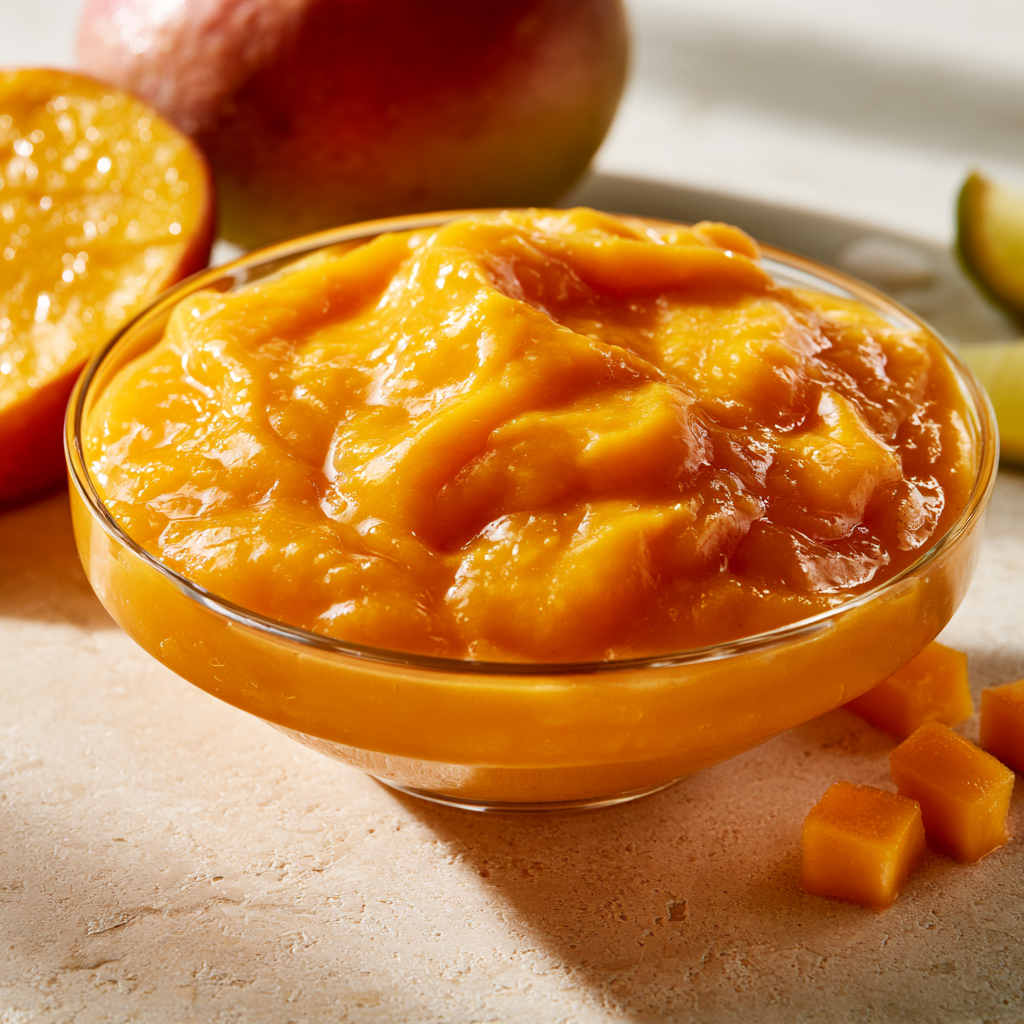
The Mango Puree Recipe, once fresh, is one of the simplest fruits to turn into a silky puree. Really, all you need is a ripe mango and a blender, but a few small decisions, like how ripe your mango is and whether you strain it or not, can make quite a big difference in the final texture.
This mango puree recipe produces a thick, naturally sweet fruit puree that requires no cooking. Use it immediately in smoothies, desserts, yogurt or sauces or divide it into portions and freeze it so you always have homemade mango puree on hand when you need it.
What Is Mango Puree?
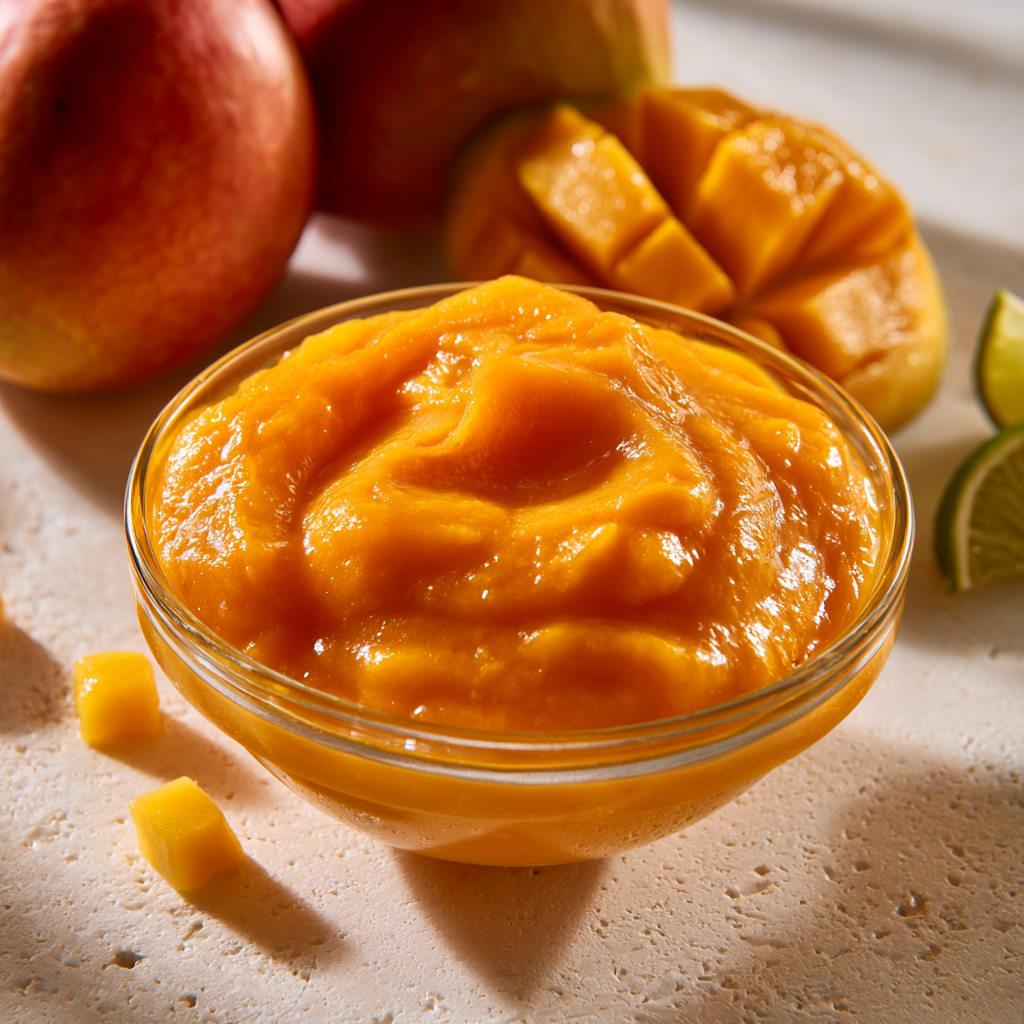
Mango puree is just the flesh of ripe mangoes, cooked until soft and blended until smooth. It retains much of the flesh and pulp of the fruit, so it is thicker than the juice of mangoes.
That thickness makes it especially handy in recipes where you want concentrated mango flavor without adding a lot of liquid. It is also great as a base for mango drinks such as smoothies, mocktails, cocktails and mango lemonade. Recipes for drinks use fresh mango puree, which is made by blending the flesh of ripe mangoes and adding a little liquid if needed to get the right consistency.
Why You’ll Like This Recipe
- No cooking required: Ripe mangoes can go straight into the blender.
- Only one main ingredient: There is no need for sugar unless your mangoes aren’t sweet enough.
- Ready quickly: Once the mangoes are peeled and cut, blending takes only a minute or two.
- Easy to customize: Keep it thick for desserts or thin it slightly for drinks.
- Freezer-friendly: Small portions are convenient for smoothies and individual drinks.
Ingredients
Fresh Mango Puree
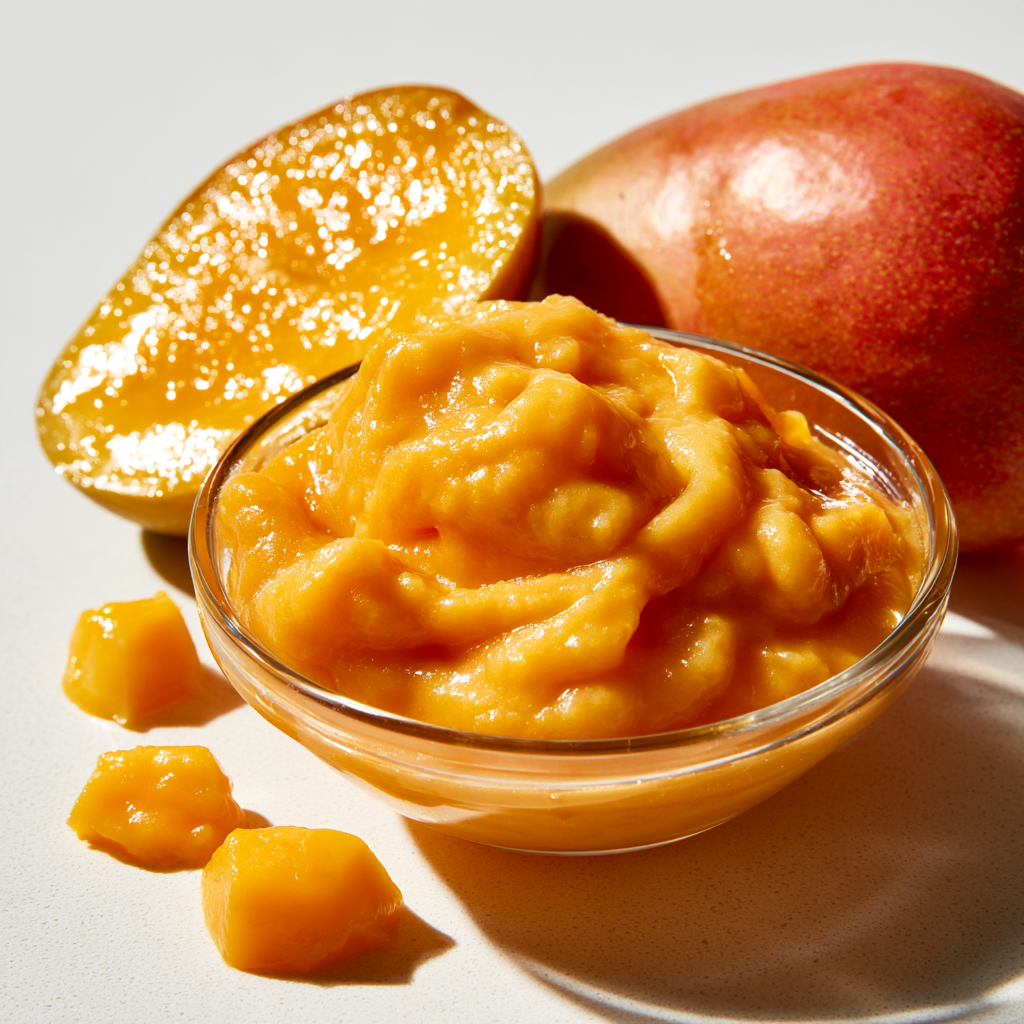
- 2 large ripe mangoes, peeled and cut into chunks
— about 2 cups of mango flesh, depending on the size and variety - 1–2 tablespoons water, only if needed
That’s it.
The mango should provide most of the sweetness and liquid. Adding too much water can turn a rich puree into something closer to mango juice, so start without any liquid and add it gradually only if your blender needs help.
Optional additions
These aren’t necessary for basic mango puree, but they can be useful depending on how you plan to use it:
- A squeeze of lime or lemon juice for a brighter, slightly tangy flavor
- Honey or maple syrup if the mango is noticeably underripe or tart
- A small pinch of salt to make the mango taste more pronounced
For drinks, lime juice is particularly useful when you want to balance the natural sweetness of ripe mango.
How to Choose Mangoes for Puree
The mango matters more than any other ingredient.
Choose mangoes that are ripe enough to give slightly when gently pressed. They should smell fruity near the stem and have soft, juicy flesh when cut. Color alone isn’t a reliable test because different mango varieties ripen differently.
Avoid mangoes that are rock-hard, since they tend to produce a fibrous, less flavorful puree. At the other extreme, discard fruit with obvious mold or extensive spoilage rather than trying to puree around it.
For the smoothest result, look for mangoes with relatively little fiber. Varieties such as Ataulfo and Alphonso are often especially pleasant for pureeing because of their soft texture, although the mangoes available in your region will work too.
Fresh vs. Frozen Mango
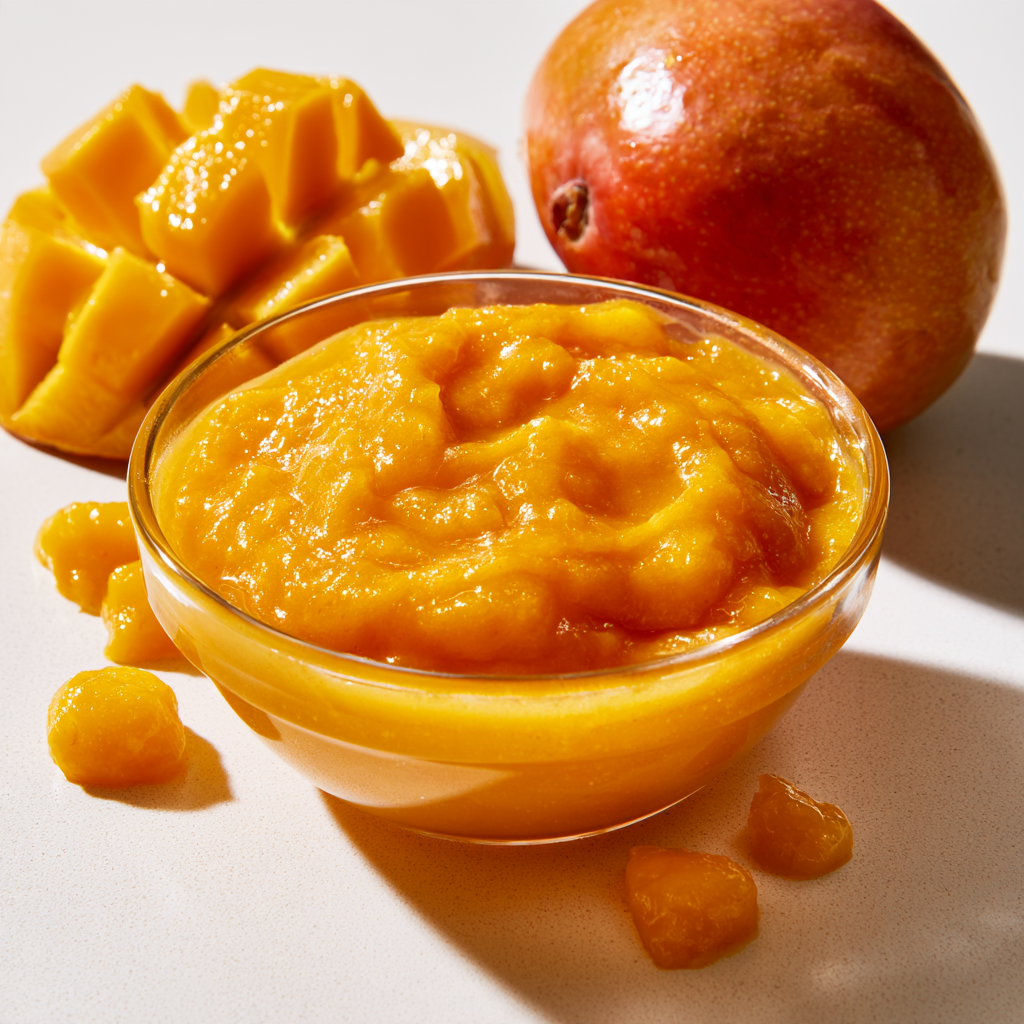
Both fresh and frozen mango can make good puree.
| Fresh mango | Frozen mango |
|---|---|
| Bright, fresh flavor | Convenient year-round |
| You choose the ripeness | Already peeled and cut |
| Requires peeling and cutting | Minimal preparation |
| Excellent when mangoes are in season | Useful when fresh mango isn’t ripe |
If using frozen mango, thaw it first for a smooth puree. Frozen mango is also convenient when you want to make a larger batch without dealing with several fresh fruits.
Equipment
You only need:
- Blender or food processor
- Knife and cutting board
- Spoon or spatula
Optional: Fine-mesh sieve for an especially silky puree.
An immersion blender can also work, particularly if you’re making a small batch in a tall container.
How to Make Mango Puree
1. Prepare the mangoes
Wash the mangoes, then peel them and cut the flesh away from the pit.
Cut the flesh into chunks roughly the same size. You don’t need perfectly uniform pieces; smaller chunks simply make blending easier.
2. Blend until smooth
Place the mango pieces in a blender or food processor.
Blend until the puree is completely smooth, stopping once or twice to scrape down the sides if necessary.
If the blades aren’t moving because the mango is particularly thick, add 1 tablespoon of water at a time and blend again.
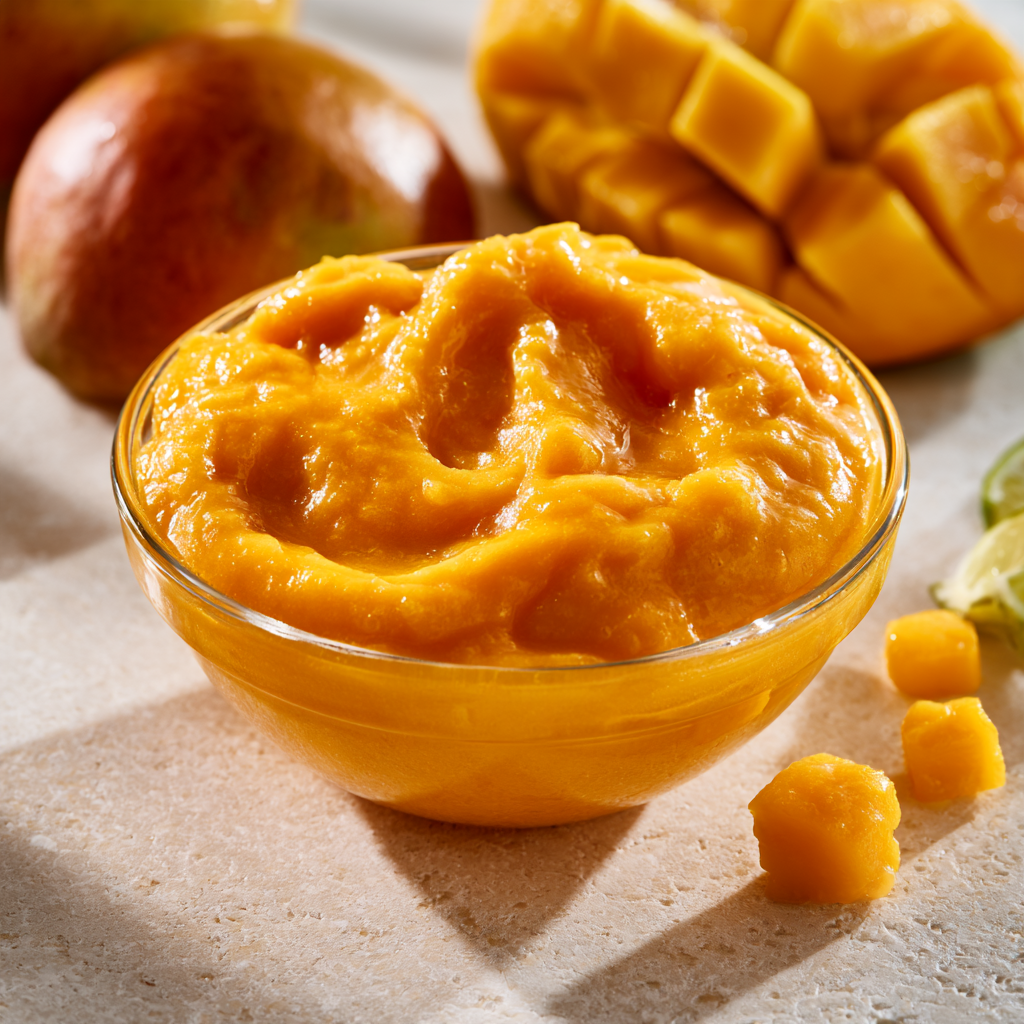
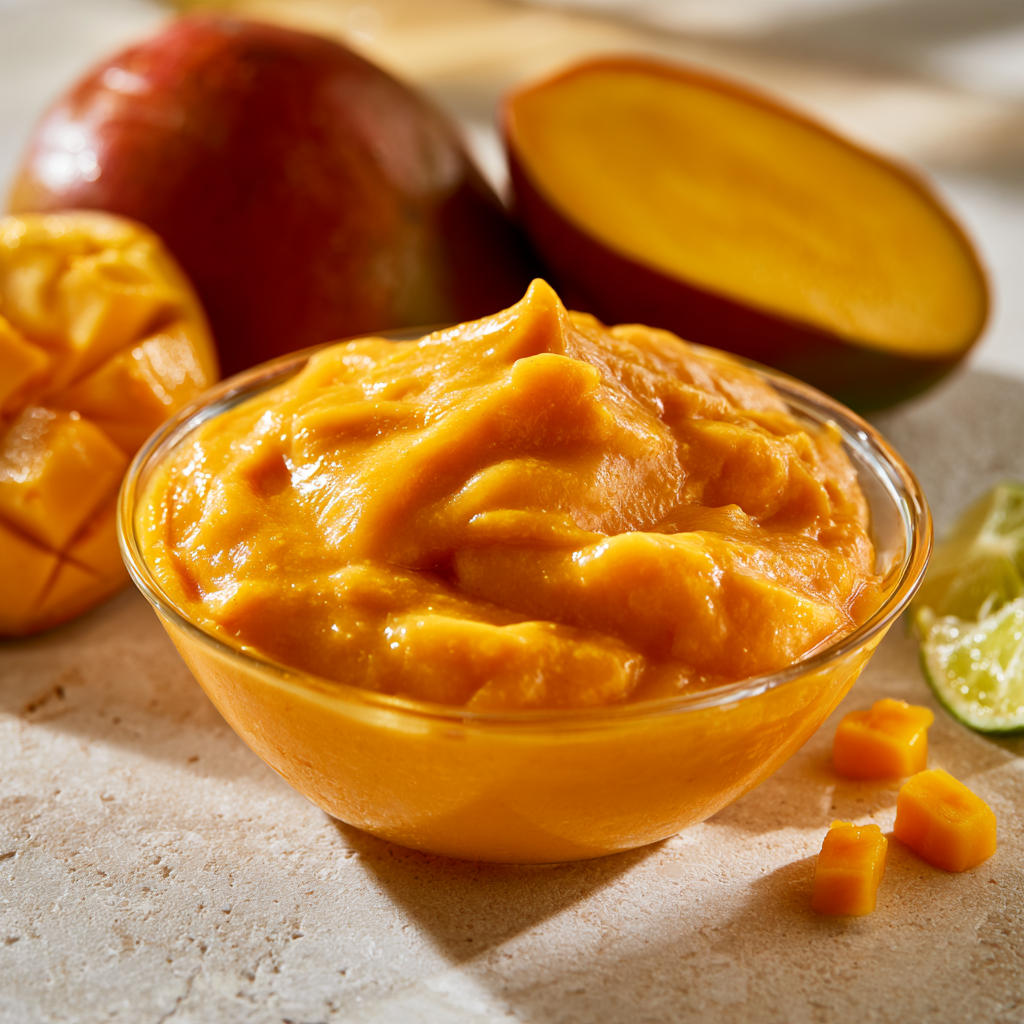
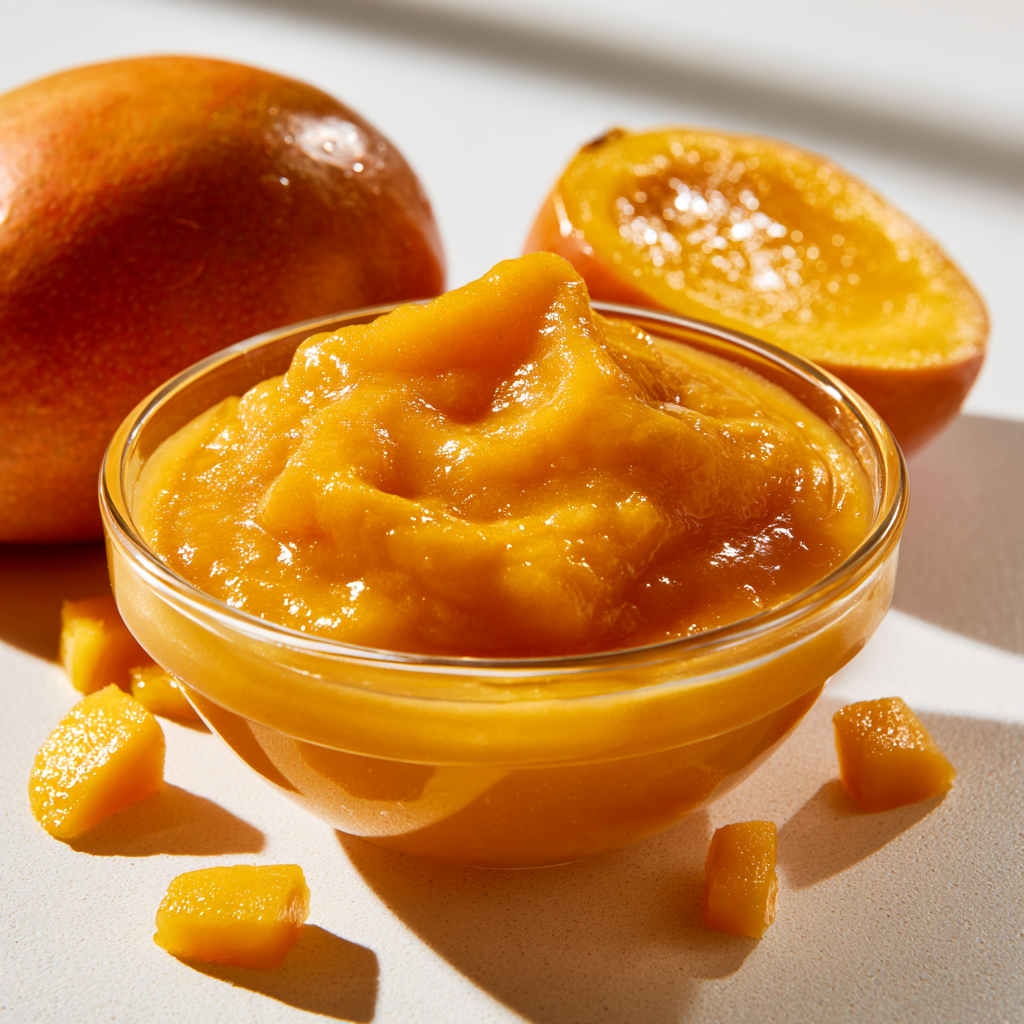
The finished puree should be thick and spoonable but still pour easily.
3. Strain if you want a silky texture
For smoothies or casual use, you can leave the puree as it is.
If you’re making mango puree for drinks, desserts, or a recipe where a very smooth texture matters, pour it through a fine-mesh sieve. Use a spatula or the back of a spoon to press the puree through.
This removes stubborn mango fibers and produces a smoother consistency. Straining is optional, but it can make a noticeable difference with fibrous mangoes.
4. Use or store
Use the puree immediately, refrigerate it for short-term use, or freeze it in small portions.
Ice cube trays are particularly handy because you can remove only the amount needed for a smoothie or drink instead of thawing the entire batch.
How Thick Should Mango Puree Be?
The ideal consistency depends on what you’re making.
- For desserts: Keep it thick and concentrated.
- For yogurt or pancakes: A spoonable puree works best.
- For smoothies: Thick puree is useful because the other ingredients provide additional liquid.
- For drinks: You may want a thinner consistency so it mixes easily with juice, sparkling water, tea, or other ingredients.
Don’t automatically add water at the beginning. Mangoes vary considerably in juiciness, and a ripe mango may already have enough moisture to blend smoothly.
Mango Puree for Drinks
Homemade mango puree makes a useful drink ingredient because it provides both mango flavor and body.
For a simple mango drink, combine a few spoonfuls of puree with cold water or sparkling water and add lime juice to taste. You can also blend it with coconut water, lemonade, iced tea, or yogurt.
Mango puree is commonly used in cocktails and mocktails as well. The National Mango Board, for example, uses fresh mango puree in recipes such as mango margaritas and mango mules.
Quick mango drink formula
For one glass, try:
- 2–3 tablespoons mango puree
- 1–2 tablespoons fresh lime juice
- ½–¾ cup sparkling or still water
- Ice
- Sweetener, if needed
Stir and taste before adding more sweetener. A very ripe mango may already provide plenty of sweetness.
Ways to Use Homemade Mango Puree
Once you have a container of puree in the refrigerator or freezer, there are plenty of ways to use it.
Breakfast
- Swirl into yogurt
- Spoon over oatmeal
- Add to chia pudding
- Serve over pancakes or waffles
- Blend into a smoothie
Desserts
- Mango cheesecake
- Ice cream or sorbet
- Popsicles
- Mango mousse
- Fruit parfaits
- Cake or cupcake fillings
Drinks
- Mango lemonade
- Mango iced tea
- Smoothies
- Mango lassi
- Mocktails
- Cocktails
- Sparkling mango drinks
Savory recipes
Mango puree can also work in sauces and dressings where its sweetness is balanced with acid, heat, or savory ingredients.
Try combining it with lime juice and chili for a simple sweet-spicy sauce, or use it as part of a mango dressing.
Substitutions and Adjustments
| If you want… | Try this | What changes |
|---|---|---|
| A thinner puree | Add water 1 tablespoon at a time | Lighter consistency |
| More acidity | Add lemon or lime juice | Brighter, tangier flavor |
| More sweetness | Add a little honey or maple syrup | Sweeter flavor |
| A very smooth puree | Strain through a fine sieve | Removes fibrous pieces |
| A richer mango flavor | Use less added liquid | Thicker, more concentrated puree |
| A frozen ingredient | Use thawed mango chunks | Slightly less fresh-tasting but very convenient |
Avoid replacing mango with another fruit in equal amounts without adjusting the recipe. Different fruits contain different amounts of water, fiber, and natural sugar, so the final consistency can change considerably.
Common Problems and How to Fix Them
The puree is too thick
Add water, coconut water, or another suitable liquid one tablespoon at a time and blend again.
For a drink, you can also leave the puree thick and dilute it when mixing the final beverage.
The puree is too thin
The easiest solution is to blend in more mango.
If you don’t have extra mango, refrigerating the puree can make it feel somewhat thicker, but it won’t remove excess water. For future batches, add liquid more gradually.
The puree is stringy
Your mango is probably fibrous.
Pass the blended puree through a fine-mesh sieve, pressing it through with a spatula. Some mango varieties naturally contain more fibers than others.
The puree isn’t sweet enough
Taste the mango before adding anything. If the fruit itself isn’t very sweet, you can add a small amount of honey, maple syrup, or another sweetener.
For drinks, balancing the puree with citrus can also make the fruit taste brighter without simply adding more sugar.
The blender struggles to move the mango
Stop the blender and scrape the sides. Add a small splash of water and start again.
Don’t add a large amount of liquid just to make blending easier—you can always thin the puree later.
Variations
Mango-Lime Puree
Blend the mango with a small squeeze of fresh lime juice. This is especially good as a base for sparkling drinks and mocktails.
Mango-Ginger Puree
Add a small piece of fresh ginger before blending. The ginger gives the sweet mango a little warmth and works particularly well in drinks.
Creamy Mango Puree
Blend ripe mango with a little plain yogurt or coconut milk when you want a creamy base for a smoothie, breakfast bowl, or dessert.
This is technically a mango mixture rather than a basic fruit puree, so it should be treated differently for storage.
Spicy Mango Puree
Add a small amount of fresh chili or chili powder along with lime juice. Start conservatively—the mango’s sweetness can make the heat seem stronger as the flavors sit together.
How to Store Mango Puree
Transfer leftover puree to a clean, airtight container and refrigerate it promptly.
For best quality, use refrigerated homemade puree within a few days. A commonly used guideline for homemade mango puree is about 3–4 days in the refrigerator, depending on handling and storage conditions.
For longer storage, freeze the puree in small portions.
Freezing mango puree
- Spoon the puree into an ice cube tray or small freezer-safe containers.
- Freeze until solid.
- Transfer frozen cubes to a labeled freezer bag or airtight freezer container.
- Use individual portions as needed.
Frozen mango puree can be particularly convenient for smoothies and drinks. The supplied reference recipe recommends keeping frozen puree for up to three months for best use.
Thaw frozen puree in the refrigerator, or add frozen portions directly to smoothies when appropriate.
Final Tip
The best homemade mango puree is when you let the mango dictate how much liquid to add, not the other way around. A ripe, juicy mango may not need anything at all. Start with the fruit alone, blend until smooth and then thin as necessary. This keeps the puree thick, intensely fruity and versatile for desserts and drinks.
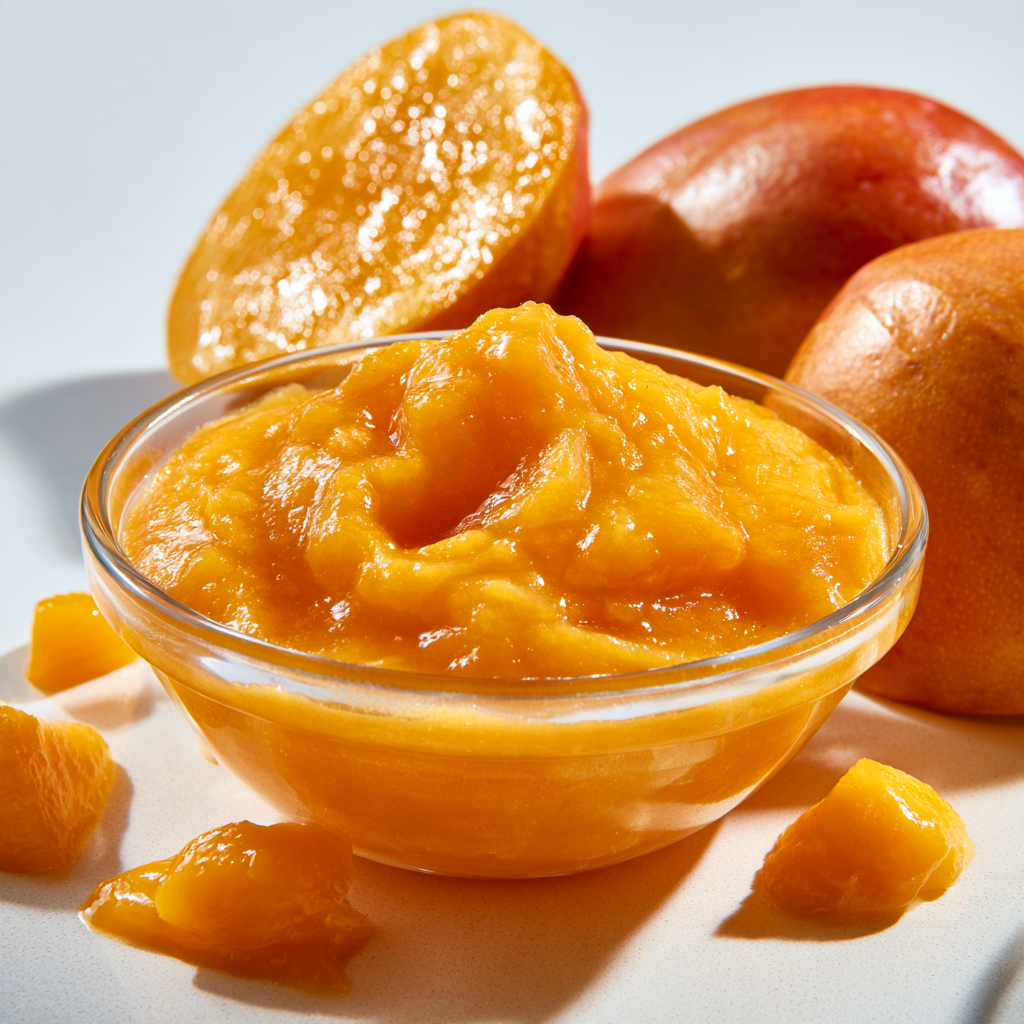
Easy Homemade Mango Puree
Ingredients
Equipment
Method
- Wash and peel the mangoes, then cut the flesh away from the pits.
- Cut the mango flesh into chunks and place it in a blender or food processor.
- Blend until smooth, stopping to scrape down the sides if necessary.
- If the puree is too thick for the blender to process, add water 1 tablespoon at a time.
- For an extra-smooth texture, pass the puree through a fine-mesh sieve.
- Taste and add a little lime juice for brightness or sweetener if the mango isn’t sweet enough.
- Use immediately, refrigerate in an airtight container, or freeze in small portions.
Notes
- Start without water and add it only when needed. This keeps the puree thick and flavorful.
- Use very ripe mangoes for the sweetest and smoothest result.
- Straining is optional but helpful when using fibrous mangoes.
- For drinks, thin the puree with water, sparkling water, lemonade, coconut water, or another suitable liquid.
- Refrigerate leftover puree and use within a few days.
- For longer storage, freeze the puree in ice cube trays or small freezer-safe containers.
Frequently Asked Questions About Mango Puree
Do I need to cook mango before making puree?
No. Ripe mango can be peeled, chopped, and blended raw. Cooking is not necessary for a simple fresh mango puree.
Can I make mango puree without a blender?
Yes. If the mango is very ripe and soft, you can mash the flesh thoroughly with a fork or potato masher. The texture may be less smooth than blender-made puree.
Should I add water to mango puree?
Only if needed. Start blending the mango without water, then add 1 tablespoon at a time if the puree is too thick for your blender.
Can I use frozen mango to make mango puree?
Yes. Thaw frozen mango before blending if you want a smooth puree. Frozen mango is a convenient alternative when fresh mango isn’t available.
Do I need to strain mango puree?
No. Straining is optional. It is useful when the mango is fibrous and you want an especially smooth puree for drinks or desserts.
How long does homemade mango puree last in the refrigerator?
Store mango puree in a clean, airtight container in the refrigerator and use it within a few days for best quality.
Can I freeze homemade mango puree?
Yes. Freeze the puree in ice cube trays or small freezer-safe containers. Once frozen, transfer the portions to an airtight freezer bag or container.
What can I use mango puree for?
Mango puree can be used in smoothies, yogurt, pancakes, desserts, popsicles, sauces, cocktails, mocktails, lemonade, and other mango drinks.