
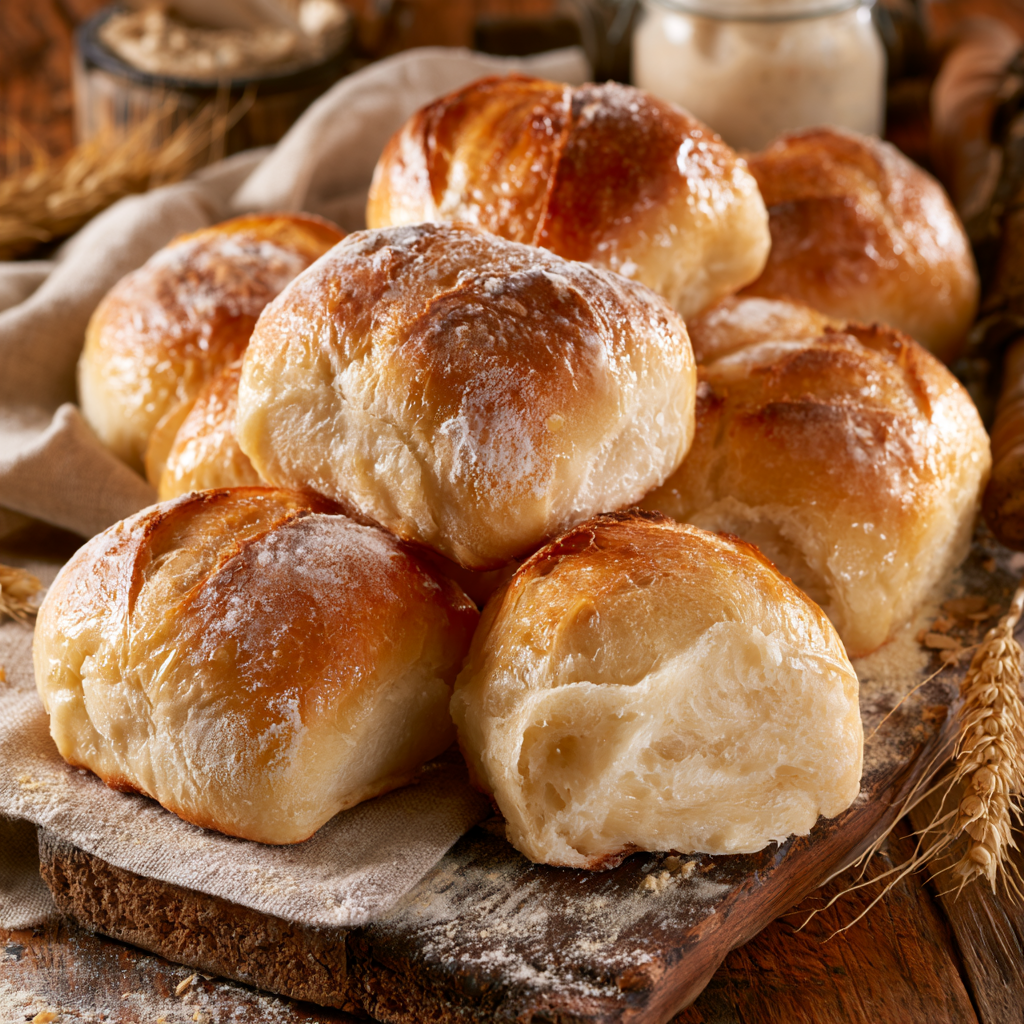
So you want the Crusty Sourdough Rolls Recipe that is out of this world, huh? These rolls have the crisp, golden crust and airy, soft crumb of sourdough with that wonderful flavor you expect from your favorite homemade artisan loaves.
Homemade sourdough rolls might seem intimidating at first, but if one uses the right techniques – and a healthy sourdough starter – anyone can produce bakery-ready results. For getting the best rolls, from selecting ingredients to perfect fermentation and baking, a lot of things matter.
This complete guide will show you all about Crusty Sourdough Rolls: what goes into them, a step-by-step method for making these rolls at home with expert baking tips and how to store or freeze the leftover sourdough buns, as well as answering your frequently asked questions. This guide will teach you how to bake them confidently and solve all issues, whether you are a beginner baker or more experienced.
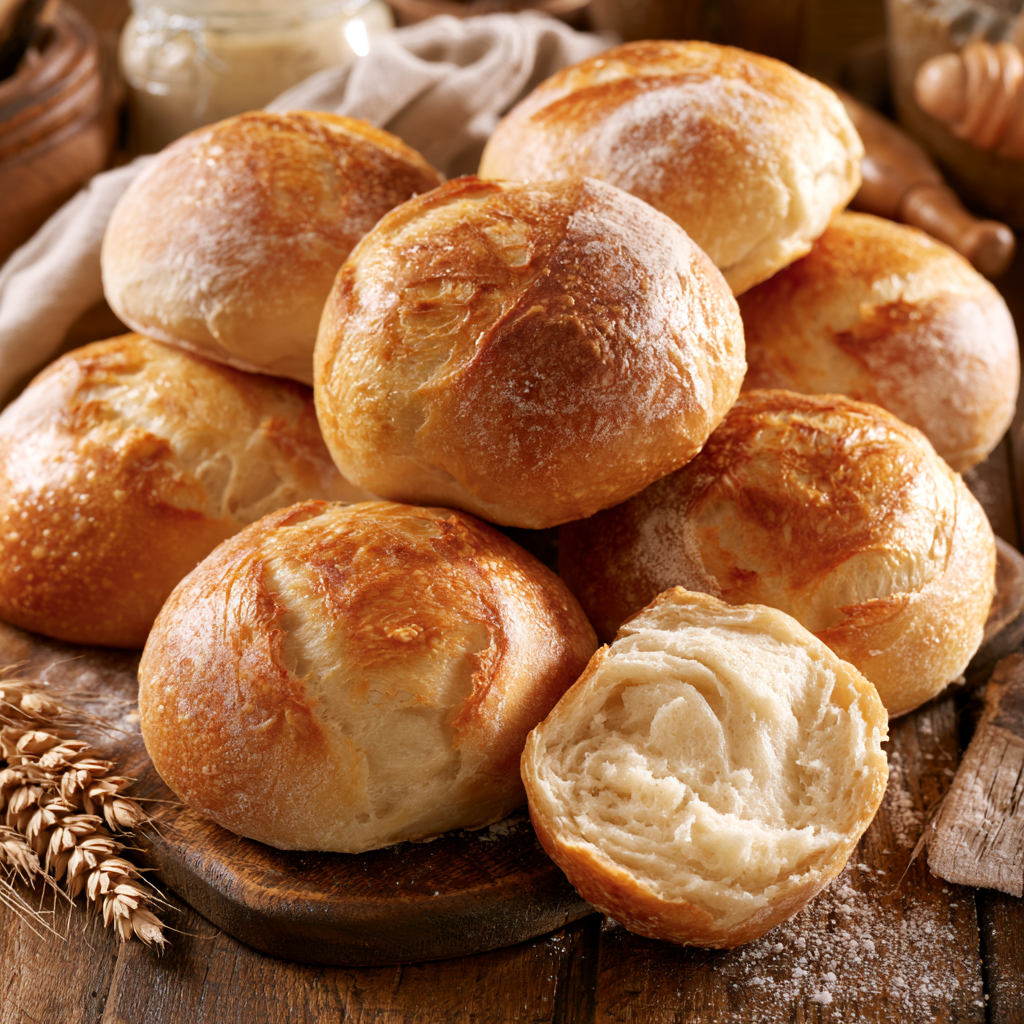
What Are Crusty Sourdough Rolls?
An artisan-style Sourdough roll recipe using a starter from naturally fermented sourdough, not modern commercial yeast. Fermentation harnesses the wild yeast and good bacteria found in your starter, developing it over time.
Unlike soft packaged bread rolls, these rolls have:
- A crispy, golden outer crust
- A chewy and airy inside texture
- A slightly tangy sourdough flavor
- A rustic bakery-style appearance
Patience is the secret to their distinctive flavor. Sourdough takes a longer ferment than ordinary bread recipes. Nevertheless, this extra time enables the flour, water and starter to come together with better taste and texture.
Why Are Crusty Sourdough Rolls Different From Regular Dinner Rolls?
Although both types of bread rolls may look similar, the process and final results are very different.
Crusty Sourdough Rolls vs Traditional Yeast Rolls
| Feature | Crusty Sourdough Rolls | Regular Dinner Rolls |
|---|---|---|
| Rising Agent | Natural sourdough starter | Commercial yeast |
| Flavor | Complex, slightly tangy | Mild and simple |
| Fermentation | Long fermentation | Short fermentation |
| Texture | Chewy crust with airy center | Soft and fluffy |
| Shelf Life | Usually stays fresh longer | Becomes stale faster |
| Baking Style | Artisan bread method | Quick bread method |
Because sourdough relies on natural fermentation, the dough develops more depth and character. Furthermore, the longer process creates a more enjoyable eating experience because every bite contains layers of flavor.
What Makes Crusty Sourdough Rolls So Popular?
The popularity of homemade crusty sourdough rolls has increased because more people are interested in traditional baking methods and homemade foods.
Here are some reasons why bakers love them:
1. Incredible Flavor Development
Commercial yeast can make bread rise quickly, but sourdough fermentation allows more time for flavor compounds to develop.
During fermentation:
- Natural enzymes break down flour components
- Wild yeast produces carbon dioxide for rising
- Beneficial bacteria create sourdough’s signature taste
As a result, the bread develops a richer flavor profile.
2. Bakery-Quality Texture at Home
One of the biggest attractions of artisan sourdough rolls is the texture.
A successful roll should have:
- A crunchy exterior
- A light and open crumb structure
- A slightly chewy bite
- A moist interior
The contrast between the crispy crust and soft inside is what makes these rolls special.
Ingredients for Crusty Sourdough Rolls
Making delicious crusty sourdough rolls requires only a few simple ingredients, but using high-quality ingredients makes a noticeable difference.
| Ingredient | Purpose |
|---|---|
| Active sourdough starter | Provides natural fermentation and helps the dough rise |
| Bread flour | Builds a strong gluten structure for chewy, airy rolls |
| Water | Hydrates the dough and influences texture |
| Salt | Enhances flavor and strengthens the dough |
1. Active Sourdough Starter
The starter is the foundation of any sourdough recipe. Before mixing your dough, make sure it:
- Doubles in size after feeding
- Has plenty of visible bubbles
- Smells pleasantly tangy and fermented
- Is at peak activity
A weak or inactive starter is one of the main reasons sourdough rolls turn out dense instead of light and fluffy.
2. Bread Flour
Bread flour is the best choice because its higher protein content creates a stronger gluten network. This results in:
- Better dough elasticity
- Improved oven spring
- A lighter, airier crumb
- A chewy texture
For added flavor and nutrition, you can replace a portion of the bread flour with whole wheat or other specialty flours.
3. Water
Water determines the dough’s hydration and greatly affects the final texture. The right amount of water helps create:
- Soft, workable dough
- An open, airy crumb
- Proper fermentation
- Crisp, crusty rolls
Slightly higher-hydration doughs typically produce a lighter interior with larger air pockets.
4. Salt
Salt does much more than season the dough. It also:
- Regulates fermentation
- Strengthens gluten development
- Improves dough structure
- Enhances the overall flavor
Using too little salt can lead to bland-tasting rolls with a weaker texture.
Optional Ingredients for Flavor
Although traditional sourdough rolls require only basic ingredients, you can add:
- Seeds for texture
- Olive oil for softness
- Butter for richness
- Honey for mild sweetness
- Herbs for savory flavors
Complete Recipe Ingredients
- 500 g bread flour
- 350 g water
- 100 g active sourdough starter
- 10 g salt
Optional:
- 1 tbsp olive oil
- Sesame seeds
- Poppy seeds
How to Make Crusty Sourdough Rolls Step by Step
Making Crusty Sourdough Rolls requires several stages. Each step plays an important role in creating the final texture.
Step 1: Prepare Your Sourdough Starter
Before starting your dough, make sure your starter is active.
Feed your starter several hours before baking and wait until it reaches peak activity.
Signs your starter is ready:
- Doubled in size
- Full of bubbles
- Slightly domed surface
- Fresh fermented smell
Using an inactive starter may result in flat or heavy rolls.
Equipment You’ll Need
- Large mixing bowl
- Digital kitchen scale
- Dough scraper
- Banneton basket (optional)
- Sharp bread lame or razor blade
- Baking tray or Dutch oven
- Cooling rack
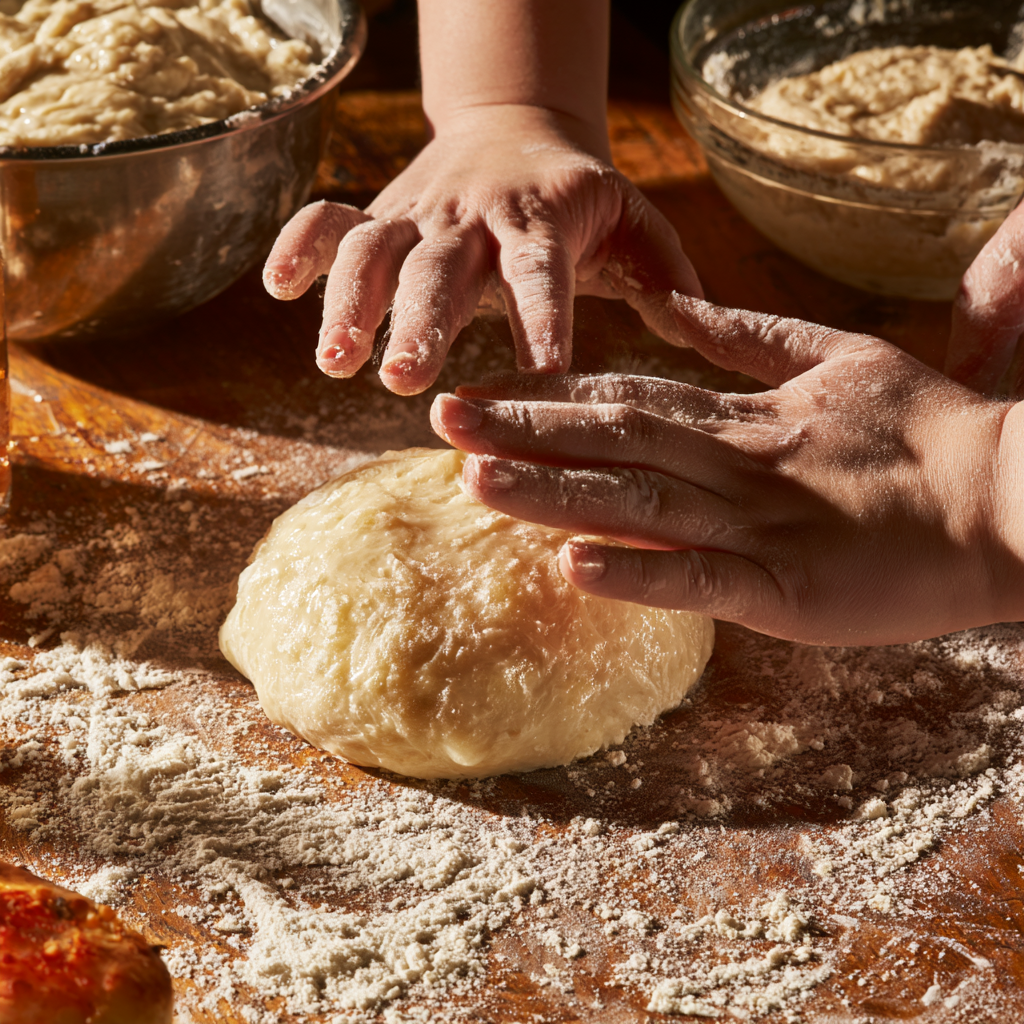
Step 2: Mix the Dough
Combine:
- Bread flour
- Water
- Active starter
- Salt
Mix until the ingredients come together.
At first, the dough may look rough and sticky. This is normal because gluten development happens gradually.
Allowing the dough to rest after mixing helps the flour absorb water and improves elasticity.
Step 3: Develop Gluten With Stretch and Fold Technique
Instead of traditional kneading, many sourdough bakers use stretch and folds.
This technique involves:
- Pulling one side of the dough upward
- Folding it over itself
- Rotating the bowl
- Repeating several times
Benefits include:
- Stronger dough structure
- Better air retention
- Improved rise
Usually, several rounds of stretch and folds are performed during the first fermentation stage.

Step 4: Bulk Fermentation
Bulk fermentation is where the dough develops most of its flavor.
During this stage:
- Yeast produces gas
- Dough expands
- Flavor compounds develop
The fermentation time depends on:
- Room temperature
- Starter strength
- Flour type
- Dough hydration
A warmer kitchen speeds fermentation, while a cooler environment slows it down.
How to Know Bulk Fermentation Is Complete
Your dough is ready when:
- It has increased by about 50%.
- Small bubbles are visible throughout the dough.
- It feels airy and elastic.
- It gently jiggles when the bowl is shaken.
Step 5: Shape the Crusty Sourdough Rolls
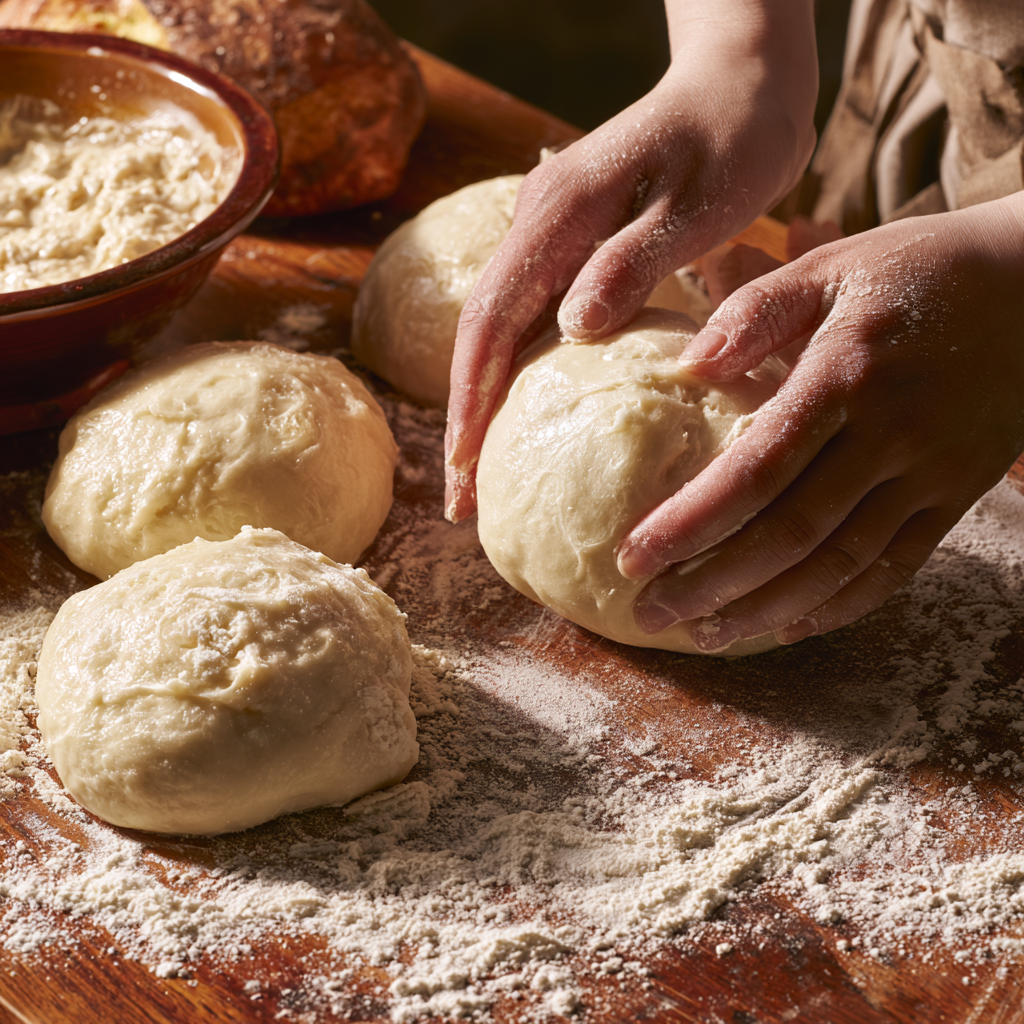
After fermentation, divide the dough into equal portions.
Shape each piece by creating surface tension on the outside.
Proper shaping helps:
- Maintain round shape
- Improve oven rise
- Create attractive rolls
Place shaped rolls on a baking tray or parchment paper for the final proof.
Step 6: Final Proofing
Final proofing allows the shaped rolls to become lighter before baking.
A properly proofed roll should:
- Look slightly expanded
- Feel soft when gently pressed
- Hold its shape
Avoid over-proofing because the dough may collapse during baking.
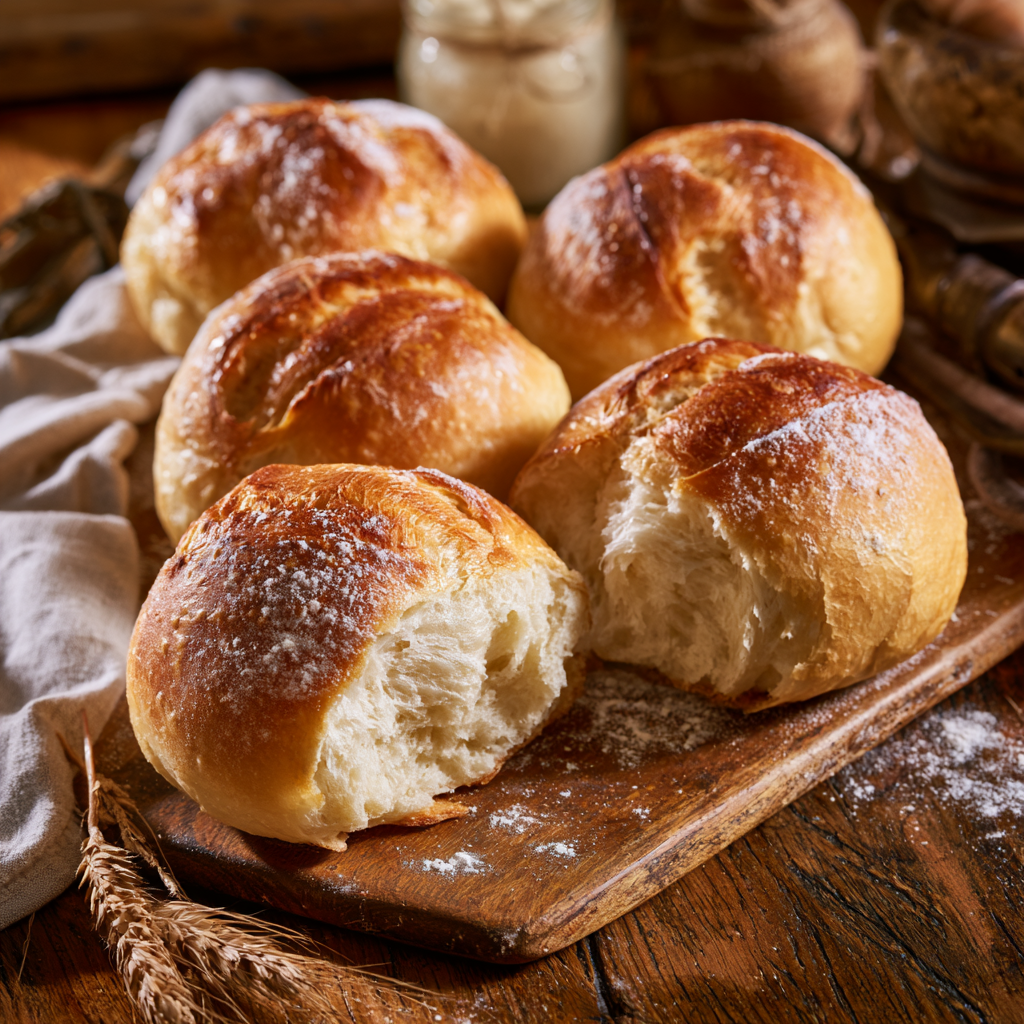
How to Create the Perfect Crispy Crust on Crusty Sourdough Rolls
The biggest secret behind delicious Crusty Sourdough Rolls is creating a thin, golden, crispy crust while keeping the inside soft and airy.
Use Steam During Baking
Steam helps the dough expand before the crust becomes firm.
Benefits of steam:
- Creates a shiny crust
- Improves oven spring
- Prevents the outside from drying too quickly
Ways to create steam:
- Add a small tray of hot water inside the oven
- Spray the oven lightly with water
- Bake using a Dutch oven
Bake at the Right Temperature
A hot oven is essential for crispy sourdough rolls.
Recommended baking conditions:
| Baking Step | Temperature |
|---|---|
| Preheating | 450°F (230°C) |
| Baking | 400–450°F (200–230°C) |
| Cooling | Room temperature |
Always allow the oven to fully preheat before baking.
Common Mistakes When Making Crusty Sourdough Rolls
Even experienced bakers sometimes face problems. Here are common issues and solutions.
| Problem | Cause | Solution |
|---|---|---|
| Rolls are dense | Weak starter or short fermentation | Use active starter and allow more time |
| Crust is not crispy | Lack of steam | Add steam while baking |
| Rolls spread flat | Over-proofing | Reduce proofing time |
| Too sour flavor | Long fermentation | Adjust fermentation schedule |
Troubleshooting Guide
Rolls are too dense
Your starter may not be active enough or the dough was under-proofed.
Rolls spread instead of rising
The dough may have over-proofed or lacked proper gluten development.
Crust is too hard
Bake for slightly less time or reduce the oven temperature by 10–15°C (or 25°F).
Expert Tips for Better Crusty Sourdough Rolls
Follow these simple tips for better results:
1. Use an Active Starter
A strong starter creates better rise and a lighter texture.
2. Do Not Rush Fermentation
Sourdough needs time. Longer fermentation creates better flavor.
3. Use a Kitchen Scale
Bread baking requires accuracy. Measuring ingredients by weight gives more consistent results.
4. Allow Rolls to Cool
Freshly baked rolls continue developing their texture while cooling.
Professional Baker’s Tips
- Always preheat your baking stone or baking tray for better oven spring.
- Score each roll with a sharp blade before baking to control expansion.
- Use filtered water if your tap water contains high chlorine levels.
- Avoid adding too much flour while shaping the dough.
How to Store Crusty Sourdough Rolls
Proper storage helps maintain freshness.
Room Temperature
Keep rolls in:
- Paper bags
- Bread boxes
- Cotton bread bags
Avoid sealed plastic bags because they soften the crust.
Freezing Sourdough Rolls
You can freeze Crusty Sourdough Rolls for later use.
Steps:
- Reheat before serving
- Cool completely
- Place in freezer-safe bags
- Freeze for up to 3 months
How to Reheat Crusty Sourdough Rolls
For the best texture:
Oven Method
- Heat oven to 350°F
- Warm rolls for 5–10 minutes
Air Fryer Method
- Heat for 3–5 minutes
Avoid microwaving if you want to keep the crust crispy.
What to Serve With Crusty Sourdough Rolls?
These artisan rolls work with almost any meal.
Breakfast Ideas
- Butter and jam
- Eggs
- Cheese spreads
Lunch Ideas
- Sandwiches
- Soup
- Salads
Dinner Ideas
- Stews
- Roasted chicken
- Pasta dishes
Delicious Variations
Try customizing your rolls by adding:
- Everything bagel seasoning
- Cheddar cheese
- Roasted garlic
- Fresh rosemary
- Kalamata olives
- Sun-dried tomatoes

Are Crusty Sourdough Rolls Healthier Than Regular Bread?
Sourdough fermentation may make bread easier to digest for some people because fermentation changes the structure of the dough.
Possible benefits include:
- Longer-lasting freshness
- Complex flavor
- Traditional fermentation process
However, nutritional value depends on the ingredients used.
Crusty Sourdough Rolls
Ingredients
Equipment
Method
- Prepare the Dough: Mix the active sourdough starter, water, and flour in a large bowl until combined. Let the dough rest for 30 minutes.

- Add Salt and Develop Gluten: Add salt and mix well. Perform stretch-and-folds every 30 minutes for the first 2 hours to strengthen the dough.
- Bulk Fermentation:Cover the dough and allow it to ferment until it becomes larger, smoother, and slightly bubbly. This usually takes 4–6 hours depending on room temperature.
- Shape the Rolls: Divide the dough into equal portions. Shape each piece into a smooth round roll and place them on a lined baking tray.
- Final Proof: Cover the rolls and let them proof for 1–2 hours until they become soft and slightly expanded.
- Bake the Crusty Sourdough Rolls: Preheat the oven to 450°F (230°C). Add steam using a Dutch oven or water tray if desired. Bake for 20–25 minutes until the rolls are golden brown and crispy.
- Cool Before Serving: Allow the rolls to cool on a rack for at least 15–20 minutes before serving for the best texture.
Video
Notes
Final Thoughts: Mastering Homemade Crusty Sourdough Rolls
You take inventive use of basic ingredients and a bit of old-school baking practices to create your own gourmet-style bread. Sourdough may take time, but it’s so worth it for the delicious loaf with a crispy crust and light, fluffy dough that you’ll get in return. With practice and mindful fermentation, you will gain the courage to make artisan rolls that everyone loves.
Share Your Twist!
Have you created your own version of these Crusty Sourdough Rolls? We would love to hear your ideas!
Share your favorite additions, baking tips, or creative variations. Try adding herbs, seeds, roasted garlic, cheese, or different flours to create a unique sourdough roll that matches your taste.
Your baking experience might inspire another bread lover to try something new. Leave your tips, photos, and favorite twists in the comments below!
Frequently Asked Questions About Crusty Sourdough Rolls
Why Are My Crusty Sourdough Rolls Not Fluffy?
Usually, the problem comes from:
- Weak sourdough starter
- Under-proofed dough
- Poor gluten development
Make sure your starter is active and give the dough enough fermentation time.
Can I Make Crusty Sourdough Rolls Overnight?
Yes. Overnight fermentation is a popular method because it improves flavor and makes baking easier.
Simply:
- Prepare dough in the evening
- Let it ferment overnight
- Shape and bake the next day
Can Beginners Make Crusty Sourdough Rolls?
Yes. Although sourdough requires patience, beginners can successfully make these rolls by following the correct steps.
Start with:
- A healthy starter
- Simple ingredients
- Accurate measurements
- Proper fermentation
How Do I Know When My Sourdough Rolls Are Done?
Your rolls are ready when:
- The internal temperature reaches around 190–200°F
- The crust is golden brown
- They sound hollow when tapped