
Being lean, low in fat and loaded with essential nutrients, Turkey Jerky Recipe was made the perfect snack for the health-conscious and fitness fan. And, unlike its big brother beef jerky, which is known to carry heavy loads of fat (even more than its weight worth), this stuff is virtually spare. Anyway. Both healthy and tasty, making your own turkey jerky gives you a chance to choose the ingredients suitable for your tastes, as well as control the sodium content to suit your specific needs.
At first glance, people might feel that creating turkey jerky perfectly is extremely daunting. Yet using some proper methods and a few critical ingredients, to most people, it’s not so hard as it looks. From slicing the turkey breast properly to making a tasty marinade, every detail matters in the texture, taste and shelf life of your jerky. Sweet, smoky, spicy, whether you go for your homemade snap, it literally satisfies every taste in the book. It achieves both maximum flavour and freedom from artificial additives and preservatives.
In this guide, we will bring you a turkey jerky recipe that is great from start to finish, including equipment lists and step-by-step instructions. You will also see helpful tips for perfect drying, methods of storage, and variations in flavour to make your jerky truly yours. By the end of this article, you will know how to make a turkey jerky that is actually delicious and suitable for snacking, going on the trail, or giving to friends as presents.
- What is Turkey Jerky?
- Ingredients Needed for Homemade Turkey Jerky
- Equipment Needed to Make Turkey Jerky
- Step-by-Step Turkey Jerky Recipe Instructions
- Tips and Tricks for Perfect Turkey Jerky
- Health Benefits of Turkey Jerky
- Turkey Jerky FAQ
- Turkey Jerky Recipe Variations
- Turkey Jerky vs Other Jerky Types
- Conclusion
- Share Your Twist!
What is Turkey Jerky?
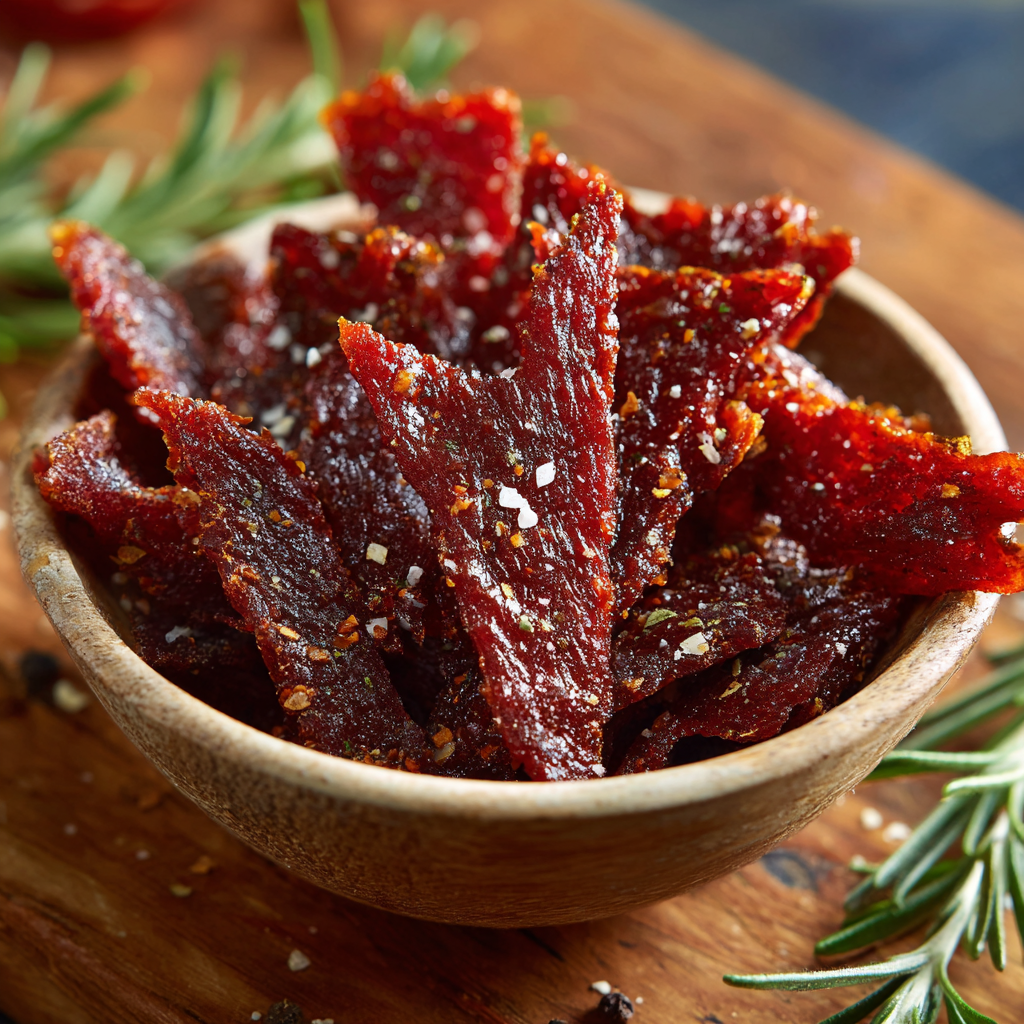
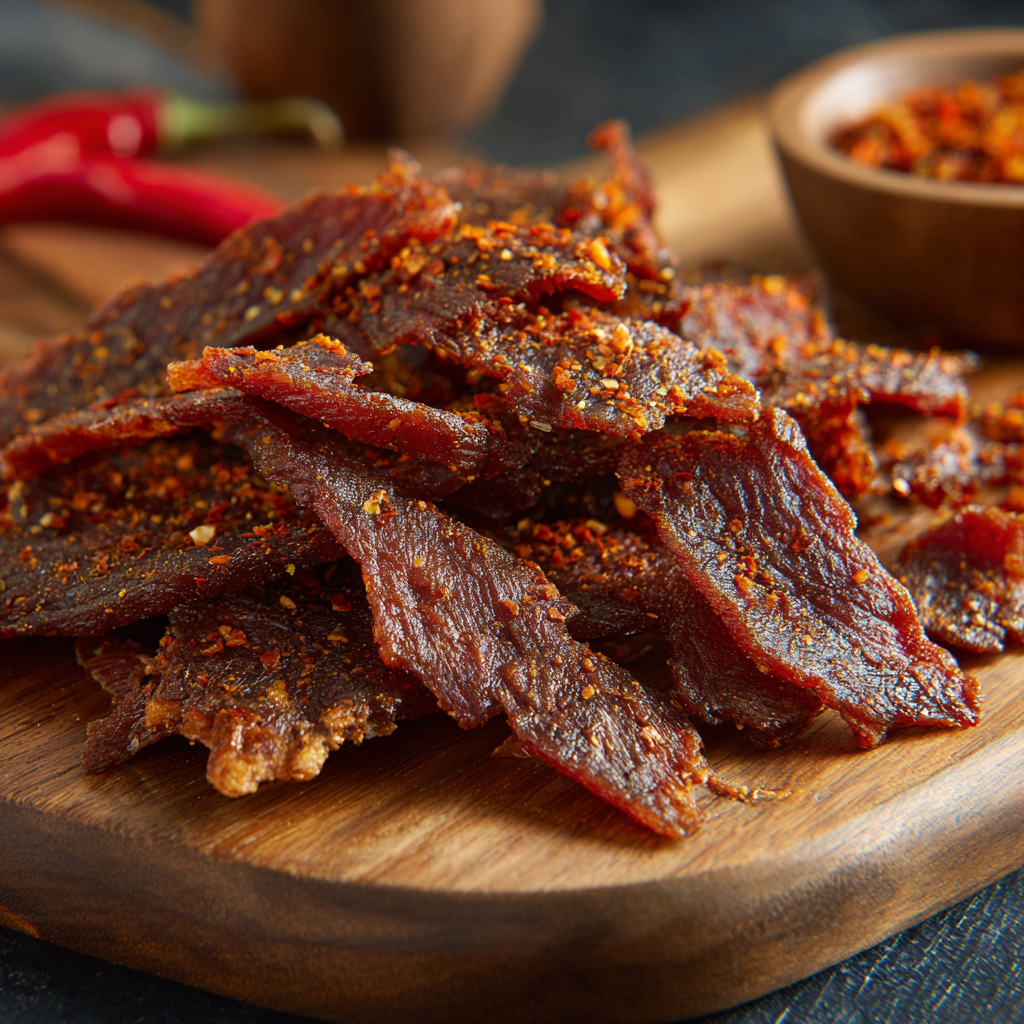
Turkey jerky is a low-temperature, slow-drying technique in which lean, thin strips of turkey meat drop below the wetness content point. Lower in fat and calories than beef jerky, turkey jerky provides athletes, fitness fans, and the protein-hungry with something healthy to nibble on.
Jerky has traditionally been preserved by salting and drying, thus preventing bacteria from building up on it. It is famous for its mild taste and capacity to take on the flavours of whatever marinades or glazes you desire. Store-bought jerky is often preserved. But with homemade turkey jerky, you get to name the ingredients, flavour, and sodium level.
Nutritional Facts (per 28g serving of turkey jerky):
| Nutrient | Amount |
|---|---|
| Calories | 70–80 kcal |
| Protein | 12–14 g |
| Fat | 0.5–2 g |
| Carbohydrates | 2–3 g |
| Sodium | 300–500 mg |
Benefits of turkey jerky:
- High in lean protein
- Low fat compared to beef jerky
- Portable and long-lasting snack
- Versatile for sweet, spicy, or smoky flavors
Quote: “Turkey jerky is the perfect blend of flavor and nutrition — a snack that fuels your body without weighing it down.” – Nutritionist, Sarah Collins
Ingredients Needed for Homemade Turkey Jerky
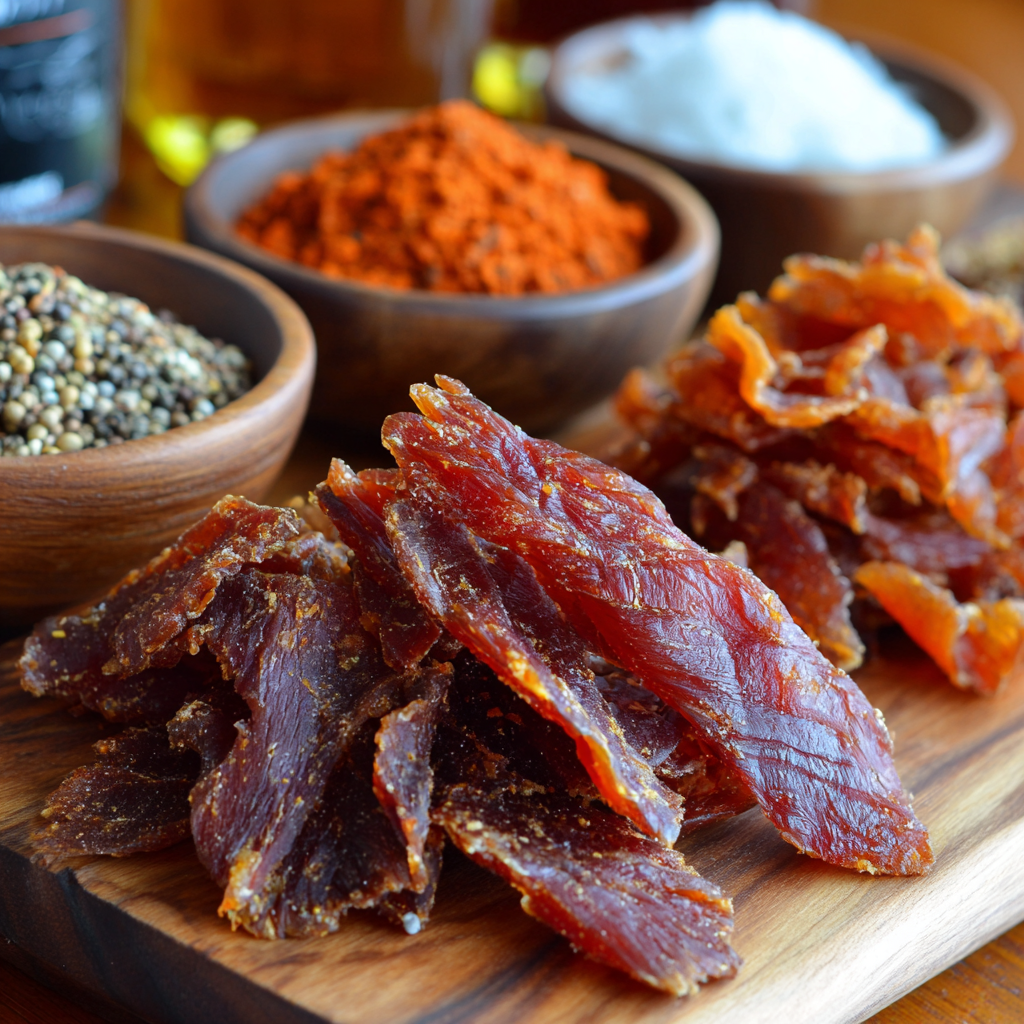
The right ingredients are key to a successful turkey jerky recipe. Here’s a complete guide to what you’ll need:
Main Ingredients:
- Turkey breast: Choose lean, boneless turkey breast for consistent texture.
- Marinade liquids: Soy sauce, Worcestershire sauce, liquid smoke, or apple cider vinegar.
- Sweeteners (optional): Honey, brown sugar, or maple syrup for a hint of sweetness.
- Spices: Garlic powder, onion powder, black pepper, smoked paprika, chili flakes.
- Salt: Helps preserve and enhance flavor.
Optional Ingredients for Variation:
- Red pepper flakes for spice
- Teriyaki sauce for a sweet-savory profile
- Ginger or mustard powder for unique flavors
Tips for Ingredients:
- Always trim fat; fat can go rancid during drying.
- Use fresh, high-quality turkey for the best taste.
- Adjust salt content depending on dietary preferences.
Substitutions:
- Gluten-free soy sauce for gluten-free turkey jerky
- Coconut sugar instead of honey for vegan-friendly options
- Liquid smoke for authentic smoky flavor without a smoker
Equipment Needed to Make Turkey Jerky
While you can make turkey jerky with minimal tools, certain equipment can enhance consistency and texture:
Basic Tools:
- Sharp knife and cutting board
- Mixing bowls for marinade
- Wire rack or baking sheet for oven drying
- Airtight containers for storage
Advanced Tools (Optional):
- Dehydrator: Provides even drying and precise temperature control
- Smoker: Infuses authentic smoky flavor
- Vacuum sealer: Extends shelf life
Tips:
- If using an oven, use low temperature (140–160°F / 60–70°C) for even drying.
- Make sure turkey strips are uniform in thickness for consistent jerky.
Step-by-Step Turkey Jerky Recipe Instructions
Preparing the Turkey
- Slice thinly: Cut turkey into 1/8–1/4 inch strips against the grain for tenderness or with the grain for chewier texture.
- Partially freeze: Freeze turkey for 30–60 minutes to make slicing easier.
- Trim fat: Remove visible fat to prevent spoilage and extend shelf life.
Pro Tip: The thinner the slices, the faster and more evenly your jerky will dry.
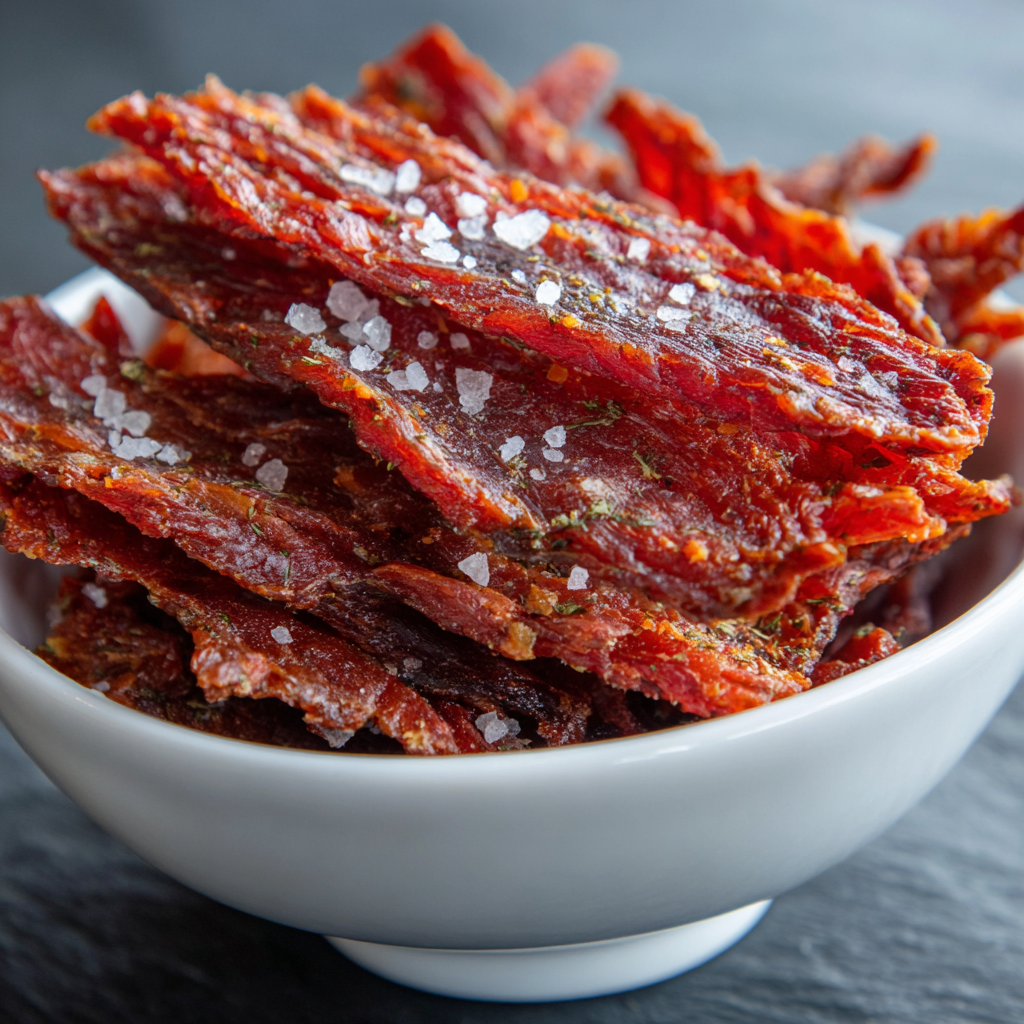
Making the Marinade
A flavorful marinade is what makes turkey jerky irresistible.
Basic Marinade Recipe:
- ½ cup soy sauce
- 1 tablespoon honey
- 2 tablespoons Worcestershire sauce
- 1 teaspoon garlic powder
- 1 teaspoon smoked paprika
- ½ teaspoon black pepper
Steps:
- Mix all ingredients in a bowl until combined.
- Add turkey slices and coat evenly.
- Cover and refrigerate for 4–24 hours depending on desired flavor intensity.
Tips for Marinade:
- Use a zip-lock bag for easy coating and less cleanup.
- Adjust sweetness, spice, or salt to taste.
- Optional: Add liquid smoke for a deep smoky flavor.
Drying the Turkey Jerky
Oven Method:
- Preheat oven to 160°F / 70°C.
- Place turkey strips on a wire rack over a baking sheet.
- Dry for 4–6 hours, flipping halfway through.
Dehydrator Method:
- Set temperature to 155°F / 68°C.
- Arrange turkey slices in single layer.
- Dry for 4–8 hours depending on thickness.
Smoker Method:
- Set smoker to 160°F / 70°C.
- Smoke turkey for 4–6 hours for flavor infusion.
Checking Doneness:
- Jerky should bend without breaking.
- Interior should be dry but not brittle.
Storing Your Turkey Jerky
Short-term storage:
- Airtight container at room temperature for up to 2 weeks
Long-term storage:
- Vacuum-sealed in fridge or freezer for 3–6 months
Tips:
- Cool jerky completely before storing
- Avoid plastic bags for long-term storage unless vacuum-sealed
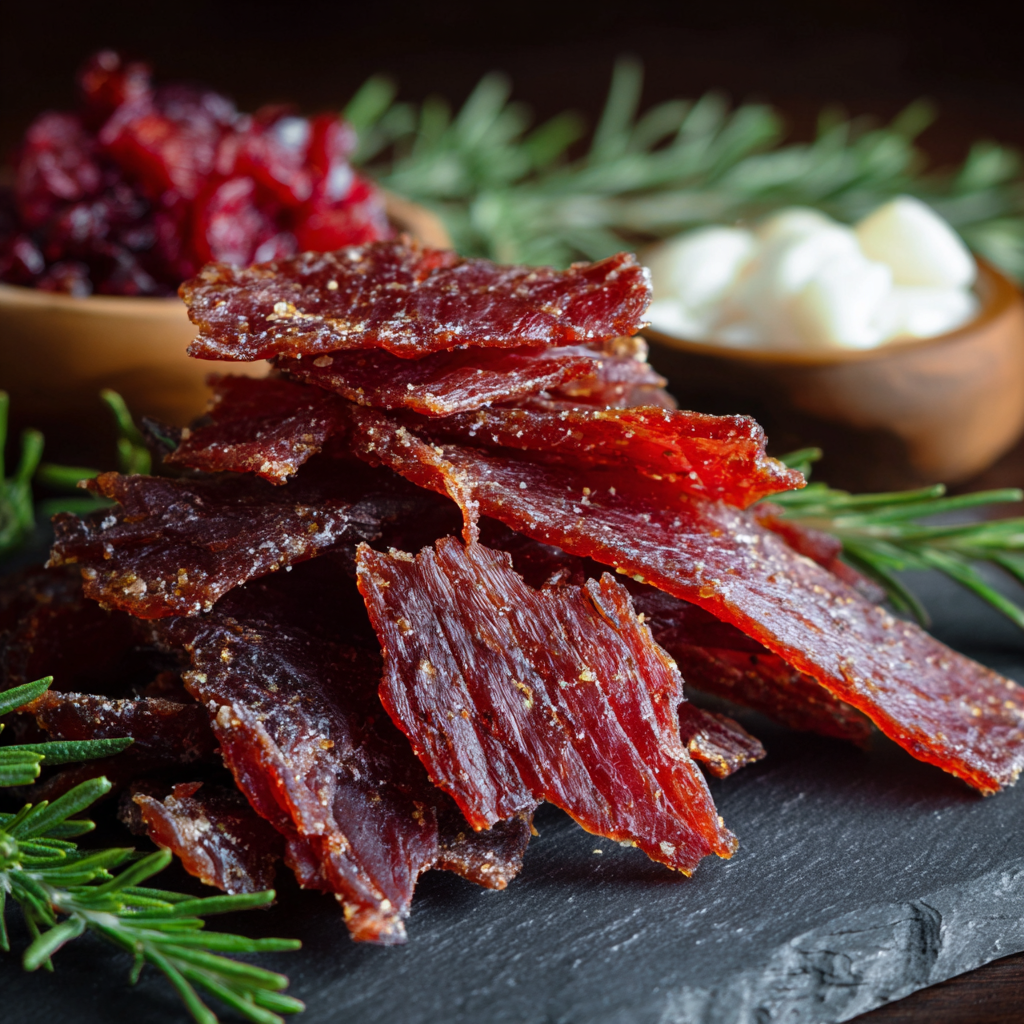
Tips and Tricks for Perfect Turkey Jerky
- Slice evenly for uniform drying
- Marinate longer for richer flavor
- Avoid overcrowding trays to allow airflow
- Adjust thickness for desired chewiness
- Experiment with herbs, spices, and smoke flavors
Pro Tip: For a professional touch, sprinkle sesame seeds or crushed black pepper after drying.
Health Benefits of Turkey Jerky
- High protein: 12–14g per 28g serving supports muscle growth
- Low fat: Lean turkey reduces calorie intake compared to beef
- Nutrient-rich: Provides zinc, iron, and B vitamins
- Portable: Great for on-the-go snacking without added sugars or preservatives
Case Study:
A 2022 study in the Journal of Nutrition & Fitness found that homemade turkey jerky provided a healthier alternative to packaged jerky, with less sodium and no artificial additives, making it ideal for athletes and dieters.
Turkey Jerky FAQ
Q1: Can you make turkey jerky without soy sauce?
Yes, use coconut aminos or a mix of vinegar and spices.
Q2: How long does homemade turkey jerky last?
2 weeks at room temperature, up to 6 months frozen.
Q3: Can turkey jerky be spicy?
Absolutely! Add chili flakes, cayenne, or sriracha to your marinade.
Q4: Is turkey jerky safe for kids?
Yes, just avoid excessive salt and spice.
Q5: Can you freeze turkey jerky?
Yes, vacuum-sealed jerky freezes well without losing flavor.
Turkey Jerky Recipe Variations
| Variation | Ingredients | Flavor Profile |
|---|---|---|
| Sweet | Honey, maple syrup, brown sugar | Sweet and mild |
| Spicy | Chili flakes, cayenne, hot sauce | Hot and zesty |
| Teriyaki | Teriyaki sauce, garlic, ginger | Sweet-savory Asian |
| Low-Sodium | Coconut aminos, garlic, pepper | Healthy & mild |
| Smoky | Liquid smoke, paprika, garlic | Deep smoked flavor |
Pro Tip: Mix and match spices to create your own signature turkey jerky recipe.
Turkey Jerky vs Other Jerky Types
- Beef Jerky: Higher fat, more calories, intense flavor
- Chicken Jerky: Similar protein, milder flavor, less chewy
- Turkey Jerky: Lean, versatile, lower calories, perfect for healthy snacking
Comparison Table:
| Jerky Type | Calories (per 28g) | Protein | Fat | Taste |
|---|---|---|---|---|
| Turkey | 70–80 | 12–14g | 0.5–2g | Mild |
| Beef | 100–120 | 11–13g | 4–7g | Strong |
| Chicken | 80–90 | 11–13g | 1–3g | Mild |
Conclusion
Making homemade turkey jerky is fun, easy, and rewarding. With the right ingredients, proper slicing, and controlled drying, you can enjoy a healthy, flavorful, and protein-packed snack anytime.
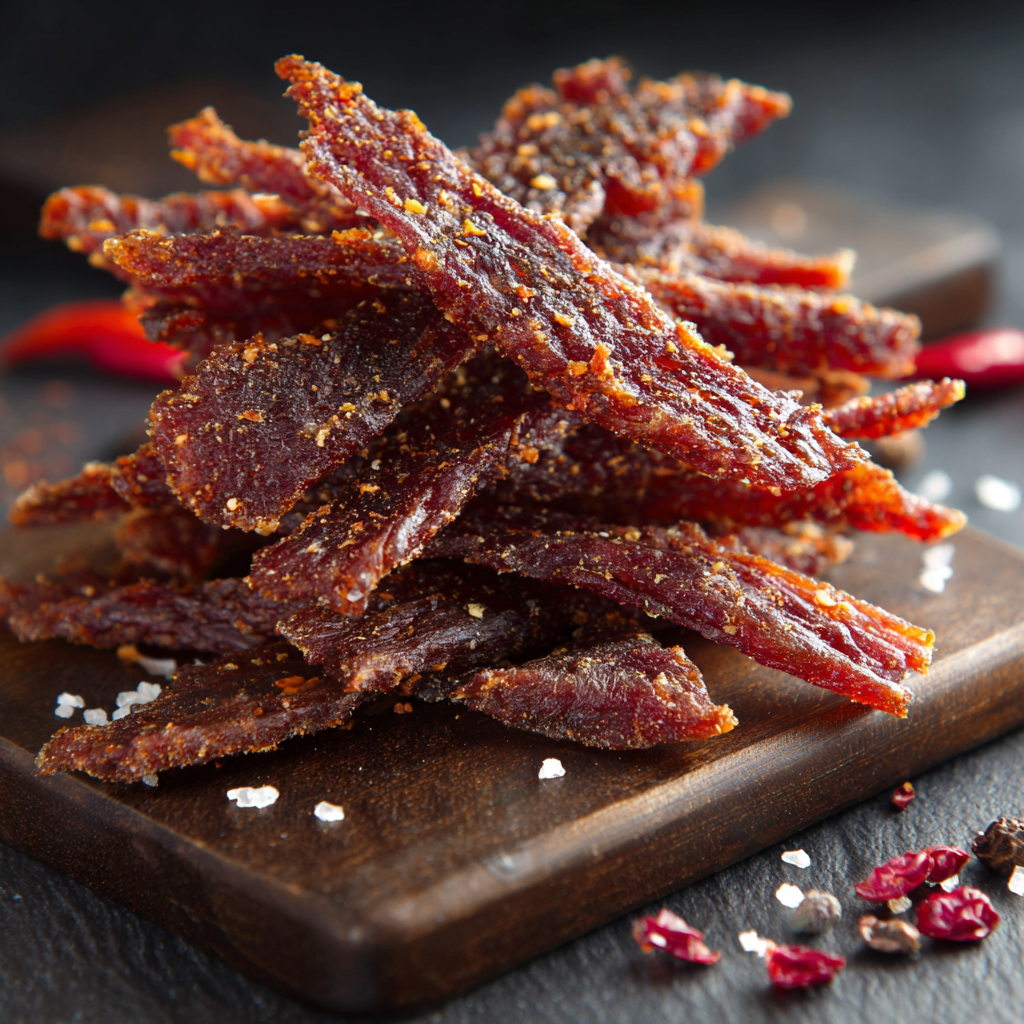
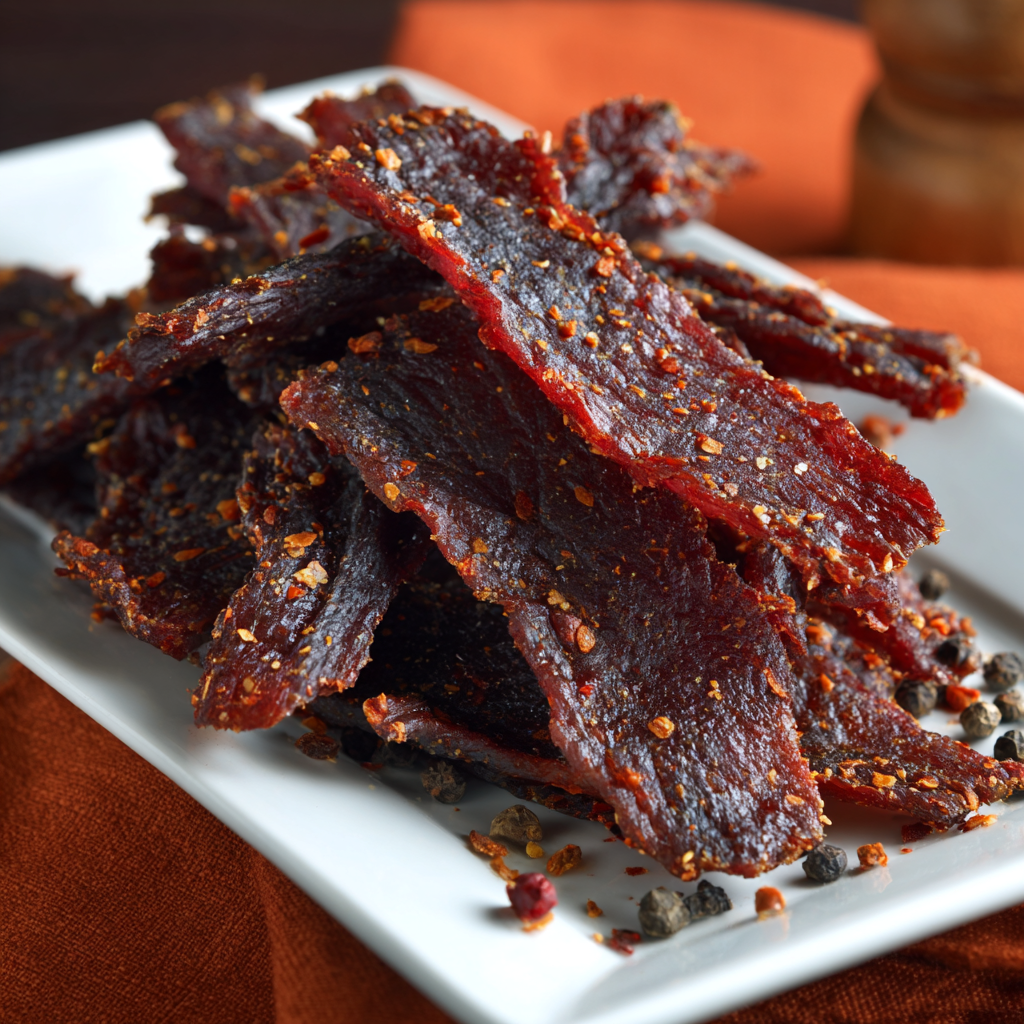
- Try variations like spicy, sweet, or smoky turkey jerky
- Store properly to enjoy long-lasting freshness
- Share your creations with friends and family for a wholesome snack
Call to Action: Try this turkey jerky recipe today and experiment with flavors! Share your version on social media and tag your friends to inspire healthy snacking.
Turkey Jerky Recipe – Homemade, Healthy Snack
Equipment
- Sharp knife and cutting board
- Mixing bowl or zip-lock bag
- Wire rack or baking sheet
- Oven or dehydrator
- Airtight container or vacuum-seal bags for storage
Ingredients
- 1 lb 450 g turkey breast, thinly sliced
- 2 tbsp soy sauce or coconut aminos for gluten-free
- 1 tbsp Worcestershire sauce
- 1 tbsp honey or maple syrup
- 1 tsp garlic powder
- 1 tsp smoked paprika
- ½ tsp black pepper
- Optional: ½ tsp chili flakes 1 tsp liquid smoke
Instructions
- Prepare the turkey: Freeze the turkey breast for 30–60 minutes to make slicing easier. Slice into thin strips (~1/8–1/4 inch thick) and trim any visible fat.
- Make the marinade: Mix soy sauce, Worcestershire sauce, honey, garlic powder, smoked paprika, black pepper, and optional spices in a bowl. Add turkey strips, coat evenly, and refrigerate for 4–24 hours.
- Dry the turkey jerky: Oven method: Preheat oven to 160°F (70°C). Arrange strips on a wire rack over a baking sheet. Bake 4–6 hours, flipping halfway through. Dehydrator method: Set to 155°F (68°C) and dry 4–8 hours until the jerky bends without breaking.
- Check doneness: Ensure the jerky is dry but pliable. It should bend without snapping and feel dry to the touch.
- Store your jerky: Cool completely. Store in an airtight container at room temperature (up to 2 weeks) or vacuum-seal and freeze (up to 6 months).
Notes
- Slice turkey evenly for consistent drying.
- Remove excess fat to prevent spoilage.
- Adjust marinade for sweet, spicy, or smoky flavors.
- Experiment with herbs, teriyaki, or chili for unique tastes.
- Use a thermometer for safe oven temperatures.
Share Your Twist!
We would like to know how your turkey jerky recipe is different. Have you tried it with a hint of spicy flavour? Or maybe a little sweeter and tangier? Perhaps a special preparation or seasoning makes you unique. Please leave your comments about how you do it or post to us on social media. Other people’s ideas can inspire us to try different flavours and methods.