
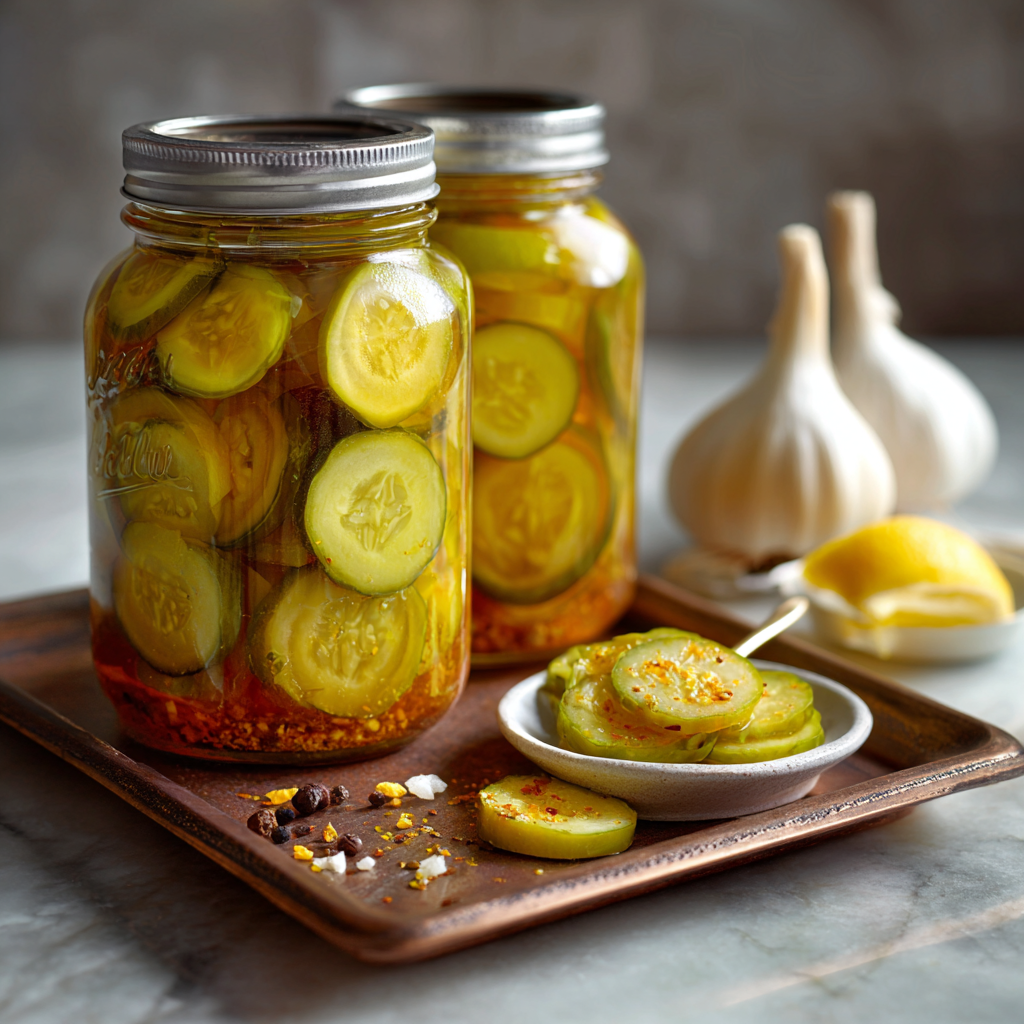
This Sun Pickles Recipe is a great way to use fresh vegetables, and it brings a pop of flavor. Sun pickling is an age-old technique of fermenting vegetables with the help of natural sunlight, both to enhance flavour and preserve freshness. This not only brings out the piquant, umami flavours of your ingredients but also yields a healthy snack teeming with probiotics that can be served alongside any meal.
The best part of a sun pickle recipe is its simplicity and availability. Using only a few simple ingredients (fresh vegetables, salt, water and sometimes sugar or spices), you can make pickles right on your windowsill or balcony. At the same time, traditional refrigerator pickles, sun pickles, use natural fermentation to achieve a unique taste that is both crisp and fragrant. This is why they are a popular choice for home cooks who like to try different natural methods of preserving.
What’s more, you’ll be using a sun pickle recipe to enjoy in-season produce at its best while keeping both your food waste and supermarket spending down. By pickling under the sun, you cut back on waste, save those leftovers and give them new life by mixing with sunlight for a delicious addition to any meal without becoming overly dependent on chemicals. Whether you’re a novice cook or a seasoned veteran, this approach to cooking provides a satisfying dose of hands-on practice that will connect you with the centuries-old tradition of cooking.

Origins of Sun Pickles Recipe
Sun pickling is an age-old way of preserving vegetables that has been followed for thousands of years. Way before modern refrigeration, people used natural fermentation to preserve seasonal produce. Fermenting vegetables in sunlight is something that occurs in warmer, sunny climates, where the heat of the sun speeds up fermentation.
In the past, sun pickles were made in a wide range of cultures from Asian lands such as China and Japan (both places where preserving vegetables in brine or rice wine was part of daily life) to Mediterranean areas where sun-dried or fermented fresh vegetables appeared at many meals. Not only did the process make food last longer, but it also improved its flavor and included beneficial probiotics that were prized for digestive health.
Today, sun pickles are still relished as a classic, natural and sustainable approach to tangy, crunchy veggies loaded with good-for-the-tummy bacteria. Home cooks of today have made variations on this timeless recipe by throwing various types of vegetables, spices, and fermentation times in, after all, because it’s not just our ancestors who loved to adapt what’s around them to their taste.
sun pickles recipe

Sun Pickles
Equipment
- Clean glass jar with a lid or cheesecloth
- Large bowl
- Knife and cutting board
- Spoon or tongs
- Weight (like a small clean rock or a fermentation weight)
Ingredients
- 2 cups fresh vegetables cucumbers, carrots, green beans, or mixed vegetables
- 1 tablespoon salt
- 2 cups water filtered or boiled and cooled
- Optional: 1 teaspoon sugar
- Optional spices: garlic cloves dill, mustard seeds, chili flakes
Instructions
- Wash and chop the vegetables into bite-sized pieces.
- Dissolve the salt (and sugar, if using) in water to make a brine.
- Place the vegetables in a clean glass jar. Add optional spices for flavor.
- Pour the brine over the vegetables, ensuring they are fully submerged.
- Place a weight on top of the vegetables to keep them under the brine.
- Cover the jar with a lid or cheesecloth and place it in direct sunlight for 3–5 days. Stir or lightly press vegetables once a day to release air bubbles.
- Taste the pickles after 3 days. Once they reach the desired tanginess, store the jar in the refrigerator to slow fermentation.
Notes
- Use clean utensils to avoid contamination.
- Fermentation time depends on sunlight intensity and ambient temperature; warmer days speed up the process.
- Feel free to experiment with different vegetables and spice combinations.
- If the brine becomes cloudy, it is normal; this is part of natural fermentation.

Share Your Twist!
Sun pickles are so adaptable to anything, and the best part about them is that you can make them your own! Sprinkle a pinch of smoked paprika for gentle smokiness, or stir in shaved ginger for zing. You can throw in colorful veggies such as purple cabbage, yellow squash, and red bell peppers to pep up the jar’s appearance a bit. Feeling adventurous? You can experiment with herbs, adding basil or thyme (or even a couple of slices of fresh chili) for heat.
Once you’ve made your unique version, share your creation with friends or on social media using the hashtag #SunPicklesRecipe. Your twist could inspire others to try their own sun-pickled experiments!

Frequently Asked Questions (FAQs)
What vegetables are best for sun pickles?
Crunchy vegetables like cucumbers, carrots, green beans, bell peppers, and cabbage work best. You can mix and match according to your taste.
How long do sun pickles take to ferment?
Sun pickles typically take 3–5 days to ferment in direct sunlight, depending on the temperature and intensity of sunlight.
Do I need to boil the brine for sun pickles?
No, you can use filtered water and dissolve salt (and sugar if desired) directly. Boiling is optional but can help ensure purity.
Can I keep sun pickles in the fridge?
Yes! Once they reach your desired tanginess, transfer them to the refrigerator to slow fermentation and keep them fresh for weeks.
Why is my brine cloudy?
A cloudy brine is normal during natural fermentation. It indicates that the beneficial bacteria are active and working.
Can I add spices or herbs to sun pickles?
Absolutely! Garlic, dill, mustard seeds, chili flakes, or fresh herbs like thyme and basil can add unique flavors to your pickles.