
Taking a pile of fresh roses and turning it into a beautiful jar of glimmering, jewel-toned jelly is nothing short of alchemical. You might think a rose petal jelly recipe sounds fancy, but honestly, it’s one of the easiest preserves you will ever make. You only requires few items, a day off from work, and an aromatic rose garden.
Whether you are spreading it on warm scones, gifting it to a friend, or simply treating yourself — this recipe is absolutely worth making.
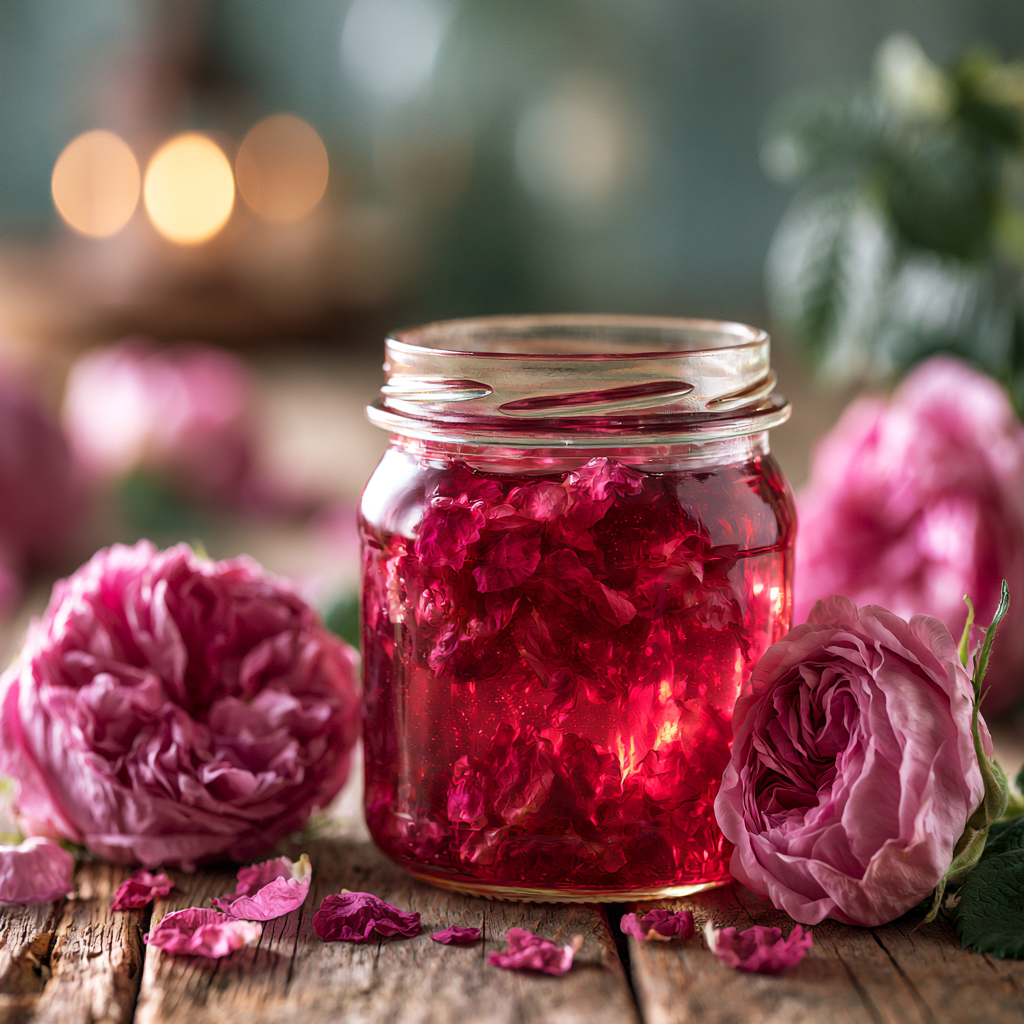
What Is Rose Petal Jelly?
Rose petal jelly is a clear (rather than cloudy like all fruit preserves), translucent preserve made by soaking fresh rose petals in hot water, straining out absolutely everything solid, and using the redolent liquid to set with sugar & pectin. There are no pieces like you would find in jam, just a clear, glassy jelly that tastes as good as it looks.
Flavor-wise, it is lightly floral, gently sweet, and subtly fruity. If you have ever sipped rose water lemonade or tasted elderflower cordial, you will have a good idea of what to expect. The depth of flavor depends entirely on your roses — the more fragrant they smell in your hand, the better your jelly will taste.
Best Roses to Use for This Rose Petal Jelly Recipe
Not all roses belong in a rose petal jelly recipe. The single most important rule: only use roses you are 100% sure have not been sprayed with pesticides. Florist roses are almost always chemically treated and should never be eaten. Stick to roses from your own garden, a trusted farmers market grower, or a culinary supplier.
As for variety, the best options are:
| Rose Variety | Fragrance | Jelly Color |
|---|---|---|
| Rosa damascena (Damask Rose) | Very strong | Deep pink |
| Rosa gallica | Strong | Ruby red |
| Wild Rose | Medium | Soft pink |
The golden rule: fragrant roses make flavorful jelly. A rose that smells like nothing will taste like nothing. Always pick petals in the morning after the dew has dried — that is when their essential oils are at their peak.
Also, remove the white base (heel) of each petal before using them. That small bitter section will ruin the flavor of your jelly if left in.
Ingredients for the Rose Petal Jelly Recipe
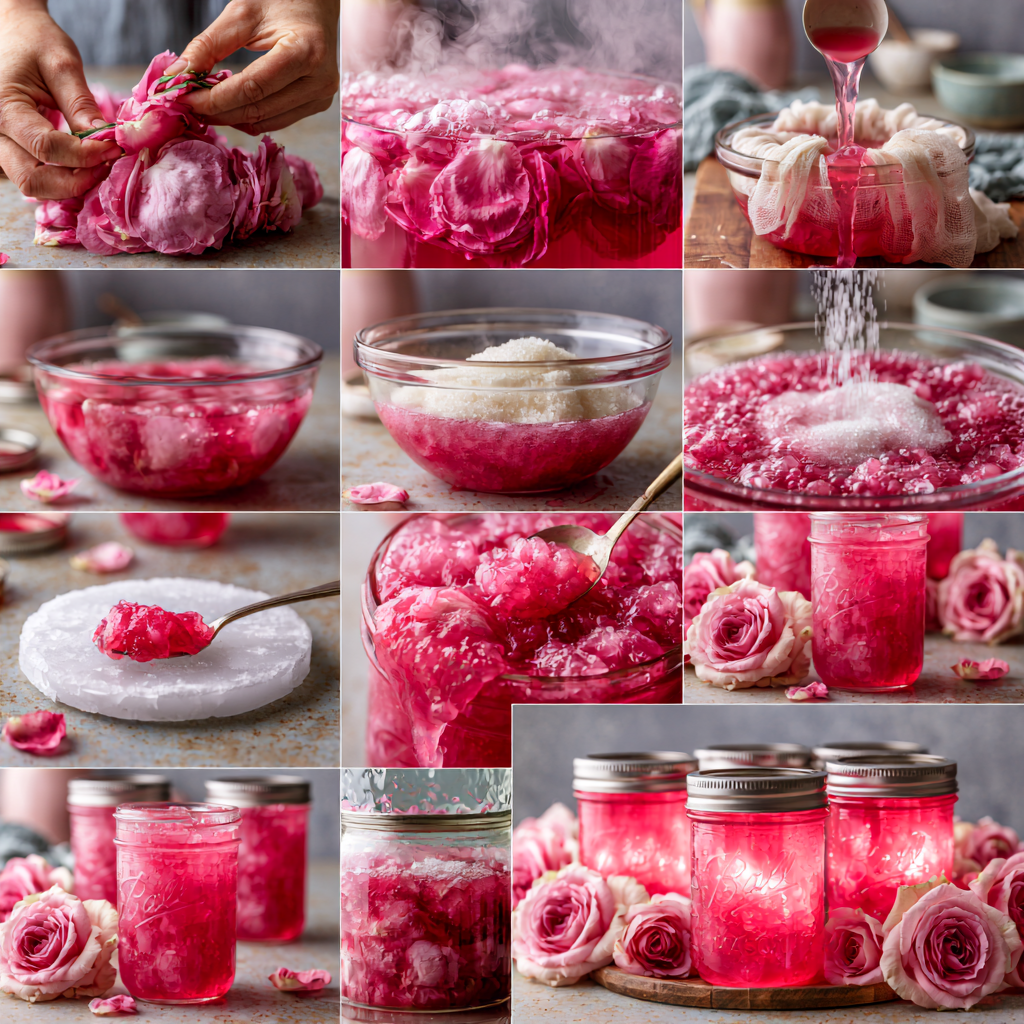
| Ingredient | Amount |
|---|---|
| Fresh rose petals (pesticide-free) | 2 cups, firmly packed |
| Water | 2 cups |
| Fresh lemon juice | 2 tablespoons |
| Powdered pectin (e.g. Sure-Jell) | 1 standard packet (1.75 oz) |
| Granulated white sugar | 3½ to 4 cups |
Makes approximately 4–5 half-pint (8 oz) jars.
The lemon juice is not optional — it is what transforms a dull, grayish-purple infusion into that gorgeous glowing pink color you see in photographs. It also acts as a natural preservative and helps the pectin work correctly.
Step-by-Step Rose Petal Jelly Recipe
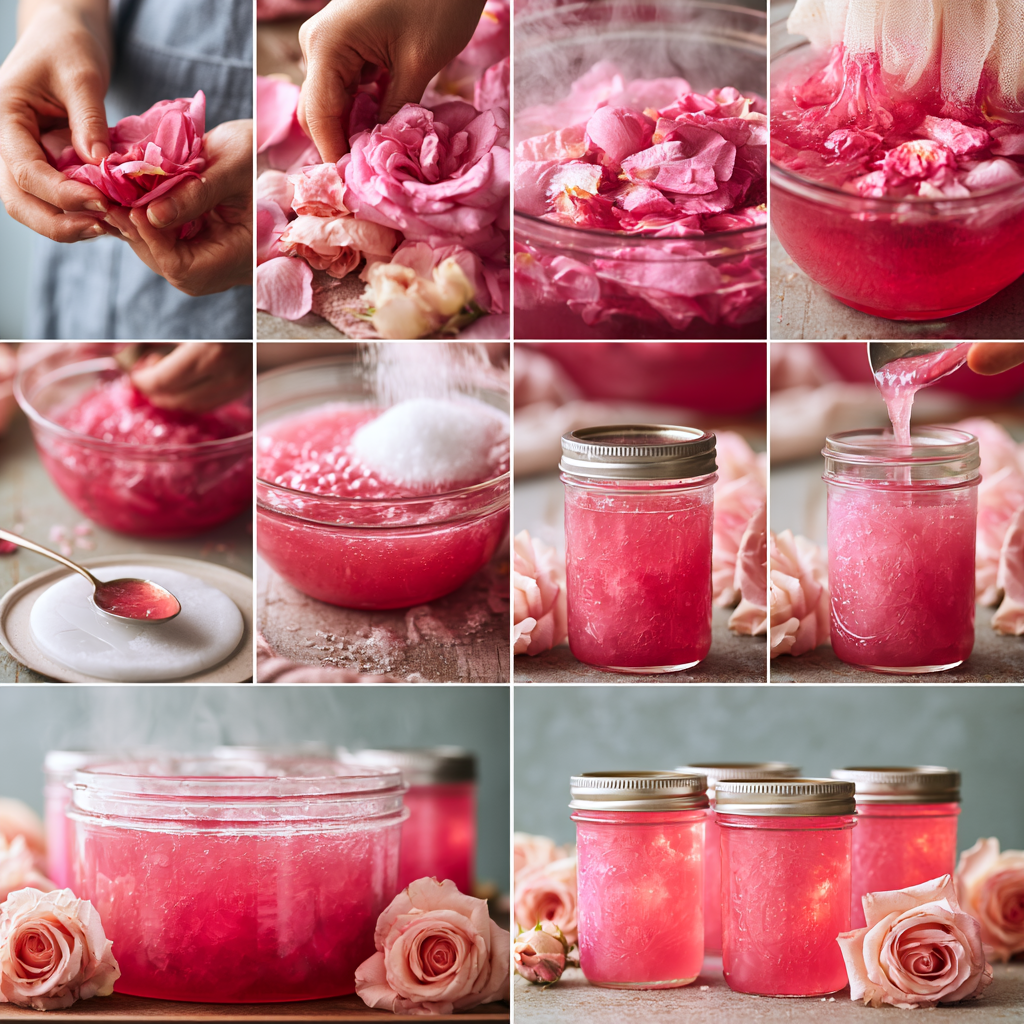
Step 1 — Prep the Petals
Trim the bitter white heel from each petal. Rinse them gently under cold water and pat dry. Do not soak them, or you will wash away the fragrance.
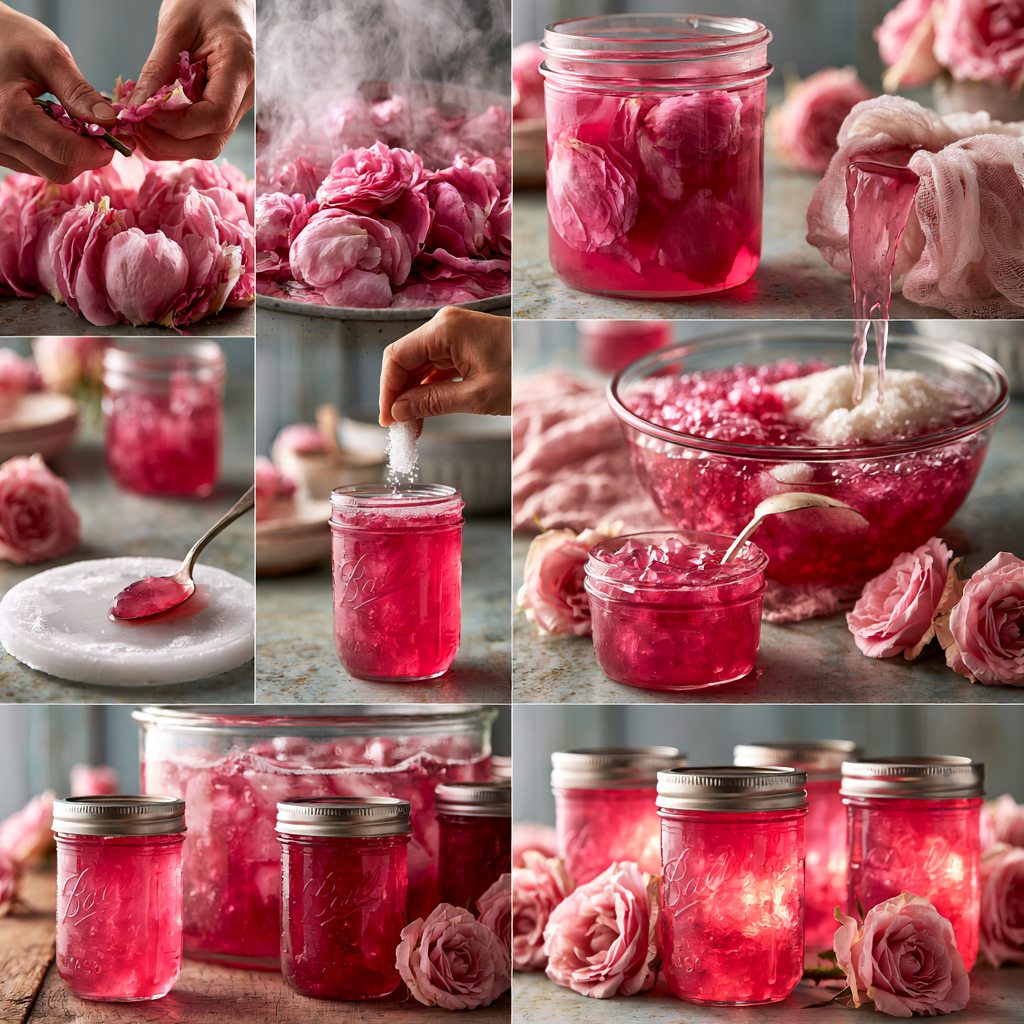
Step 2 — Make the Rose Infusion
Heat the water just below boiling, then remove 2 cups from the heat. Add your petals and the lemon juice. Watch as the petals release their color and transform the water into a beautiful pink infusion. Recover and infuse for 20–30 minutes. Pour through cheesecloth into a bowl and allow it to drip naturally. Avoid squeezing the cheesecloth, as this can make your jelly cloudy
Step 3 — Cook with Pectin
Pour the strained rose liquid into a clean saucepan. Stir in the pectin. Bring to a full rolling boil over medium-high heat, stirring constantly.
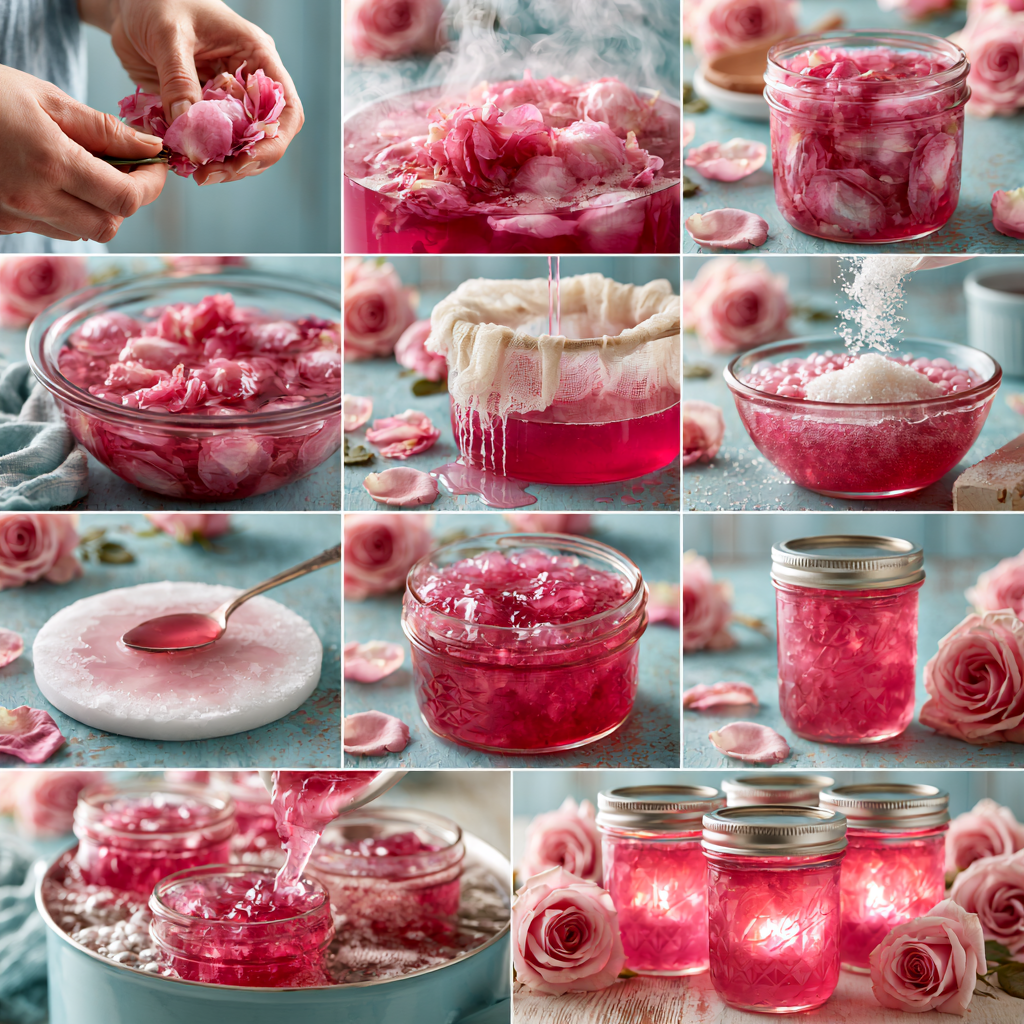
Step 4 — Add Sugar
Add all the sugar at once. Return to a full rolling boil and boil hard for exactly 1 minute, stirring the whole time. Skim off any foam with a spoon.
Step 5 — Test the Set
Drop a small spoonful on a frozen plate. Wait 30 seconds, then push it gently with your finger. If it wrinkles, you are done. If it runs, boil for another minute and test again.
Step 6 — Fill the Jars
Ladle the hot jelly into sterilized jars, leaving ¼ inch of headspace. Wipe the rims clean, then seal with lids.
Step 7 — Water Bath (Optional but Recommended)
Process jars in a boiling water bath for 10 minutes for a shelf-stable seal. Remove and leave undisturbed for 12–24 hours. Listen for the “pop” — that means they sealed perfectly.
Tips for the Perfect Rose Petal Jelly
A few things can go wrong with a rose petal jelly recipe, but all of them are easy to avoid once you know what to watch for:
- Jelly won’t set? You likely did not boil hard enough after adding the sugar, or your pectin was expired. You can re-cook it — just add a little fresh pectin, bring back to a boil, and re-jar.
- Lost its color? Too much heat for too long destroys the pigments. Cook quickly and get it into jars fast.
- Came out cloudy? You squeezed the cheesecloth. Next time, be patient and let it drip.
- Tastes bland? Your roses lacked fragrance. Try adding 1 teaspoon of rose water next time to deepen the flavor.
How to Store Rose Petal Jelly
| Method | How Long It Keeps |
|---|---|
| Sealed jars (water bath processed) | Up to 2 years in a cool, dark place |
| Refrigerator (no water bath) | 3–4 weeks |
| Opened jar (any method) | 3–4 weeks in the fridge |
Always check before eating — discard any jar with mold, a foul smell, or a lid that flexes up and down when pressed.
Ways to Use Your Rose Petal Jelly
This is where things get fun. A good homemade rose petal jelly goes far beyond toast:
- Classic: Spread on warm scones with clotted cream
- Drinks: Stir a spoonful into hot Earl Grey tea
- Baking: Use as a filling in thumbprint cookies or linzer tarts
- Savory: Glaze for roasted lamb or duck in the final 20 minutes of cooking
- Cheese board: Pairs beautifully with soft goat cheese or brie
- Dessert: Drizzle over vanilla panna cotta or cheesecake
- Gifting: A jar with a ribbon and a handwritten label is one of the loveliest homemade gifts you can give
Frequently Asked Questions
Can I make this rose petal jelly recipe without pectin?
Yes. You can use apple juice (naturally high in pectin) as part of your liquid, or cook the jelly to 220°F (104°C) and rely on the setting temperature. The trade-off is longer cooking time and slightly less vibrant color.
Can I use dried rose petals for this rose petal jelly recipe?
Absolutely — use ½ cup of culinary-grade dried petals in place of 2 cups fresh, and extend the steeping time to 45 minutes.
How many roses do I need?
Plan on 15 to 25 roses, depending on bloom size. Always pick more than you think you need — leftover petals are wonderful in tea or bath water.
Can I reduce the sugar?
Not with standard pectin — sugar is chemically necessary for the jelly to set. If you want less sugar, use Pomona’s Universal Pectin, which is specifically designed for low or no-sugar preserves.
Rose Petal Jelly Recipe
Ingredients
Equipment
Method
- Prep the petals — Trim the white bitter heel from the base of each petal. Rinse gently under cold water and pat dry.
- Make the rose infusion — Heat water to just below boiling. Remove from heat, add petals and lemon juice, cover, and steep for 20–30 minutes. Strain through cheesecloth into a bowl — do not squeeze the cloth. Discard the petals.
- Add pectin — Pour the strained rose liquid into a clean saucepan. Stir in the pectin. Bring to a full rolling boil over medium-high heat, stirring constantly.
- Add sugar — Add all the sugar at once. Return to a full rolling boil and boil hard for exactly 1 minute, stirring continuously. Skim off any foam.
- Test the set — Drop a small spoonful onto a frozen plate. After 30 seconds, push it with your finger — if it wrinkles, it is ready. If it runs, boil for 1 more minute and test again.
- Fill the jars — Ladle hot jelly into sterilized jars, leaving ¼ inch headspace. Wipe rims clean and seal with lids.
- Water bath — Process jars in a boiling water bath for 10 minutes. Remove and leave undisturbed for 12–24 hours until lids pop and seal.

Notes
- Color tip: The lemon juice is essential — it reacts with the rose pigments to create that vivid pink color. Do not skip it.
- Clarity tip: Never squeeze the cheesecloth during straining. Let it drip freely for a clear, glass-like jelly.
- Flavor tip: The more fragrant your roses smell, the better your jelly will taste. Damask roses give the best results.
- Safety: Only use roses that are 100% pesticide-free. Never use florist roses.
- No-set fix: If jelly does not set, return to the pot, add a little fresh pectin, bring back to a boil, and re-jar.
- Storage: Sealed jars keep up to 2 years in a cool, dark place. Once opened, refrigerate and use within 3–4 weeks.
- Dried petals: Substitute ½ cup dried culinary rose petals for 2 cups fresh. Steep for 45 minutes instead of 20–30.
Final Thoughts
Making a homemade rose petal jelly recipe is one of those cooking adventures, and it definitely pays you back more than the effort it requires. It is simple to do, the outcome looks great, and each jar you open feels like a mini party!
Fresh, fragrant roses (especially the same variety which we have grown in our garden), patience with cooling and straining through a tea towel to taste those bright impressions do these three things, and you are mostly there. The rest is purely the joy of bringing something elegant into your kitchen.
Have you ever made rose petal jelly? Share your questions OR results in the comments; we would love to know how yours turned out.