Ingredients
Equipment
Method
- Mix the buttermilk, hot sauce, and 1 teaspoon Cajun seasoning. Add the alligator and refrigerate for 30 minutes to overnight.
- Whisk the flour, cornmeal, 1½ tablespoons Cajun seasoning, paprika, garlic powder, pepper, and salt in a wide bowl.
- Drain the alligator, letting the excess buttermilk drip off, then toss in the coating. Rest on a wire rack for 5 to 10 minutes.
- Heat 2 inches of oil in a heavy pot to 365 to 375°F (185 to 190°C).
- Fry in small batches for 3 to 4 minutes, turning once, until deep golden and 165°F (74°C) inside. Let the oil return to temperature between batches.
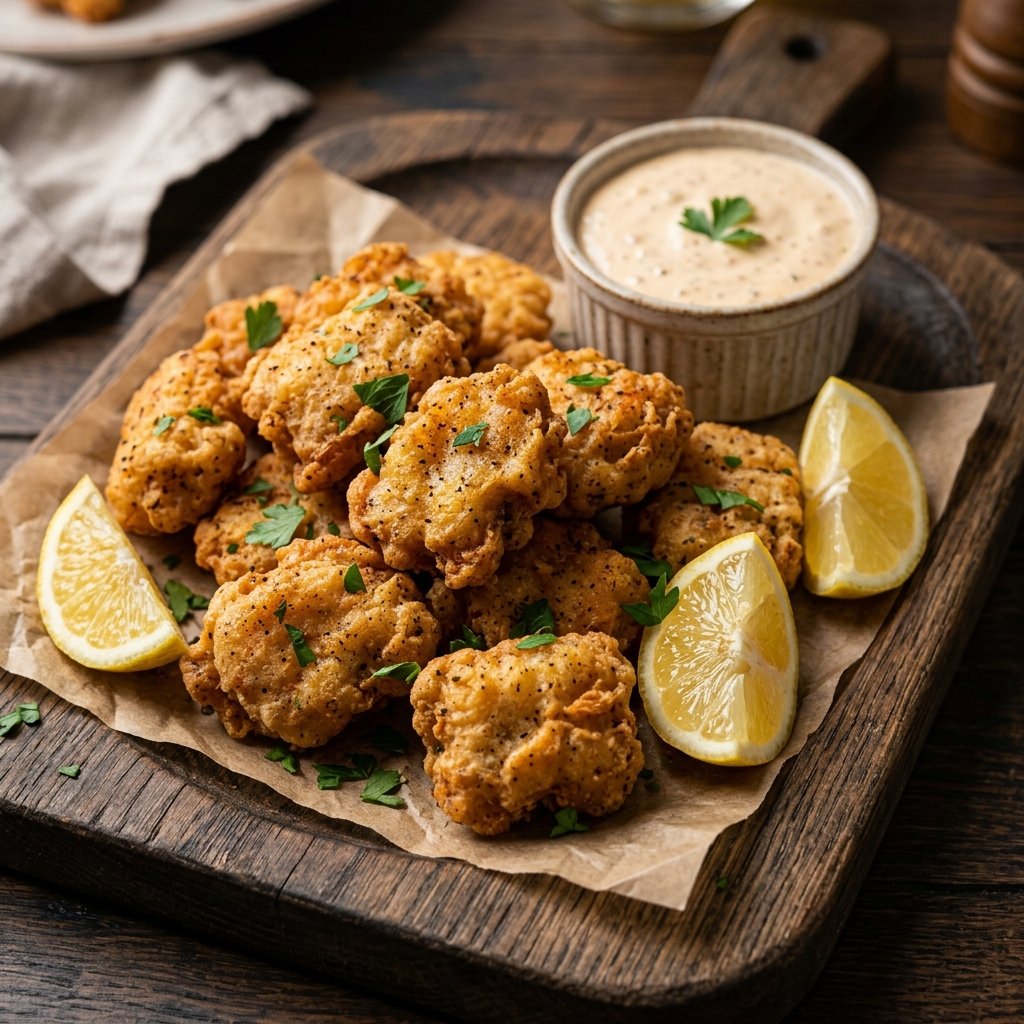
- Drain on a wire rack, sprinkle with a pinch of Cajun seasoning, and serve hot with lemon wedges and parsley.
Notes
- Tail meat or sirloin gives the most tender result. Leg and other body cuts are tougher and suit slow, moist cooking better.
- Thaw frozen alligator in the refrigerator overnight, and pat it dry before soaking.
- The USDA chart does not list alligator, so 165°F (74°C), the poultry minimum, is used as a conservative target. Check with an instant-read thermometer.
- Cajun seasonings vary in saltiness, so start with the amount listed and adjust on the next batch.
- Air fryer: skip the dredge, spray generously with oil, and cook in a single layer at 400°F (200°C), shaking halfway. Start checking around 8 minutes and pull at 165°F.
- Gluten-free: use a gluten-free flour blend or rice flour, and check your seasoning and hot sauce labels.
- Quick dipping sauce: ½ cup mayonnaise, 1 tablespoon Creole mustard, 1 tablespoon lemon juice, ½ teaspoon hot sauce, ½ teaspoon paprika, and a spoonful of chopped parsley.
- Store leftovers in an airtight container in the refrigerator within 2 hours and eat within 3 days. Reheat on a rack in a 400°F oven until hot and crisp.
- Raw alligator can carry bacteria such as Salmonella. Keep it away from ready-to-eat foods, wash hands and tools after handling, and discard the soaking liquid.