Go Back
How to Make White Rice Flour

How to Make White Rice Flour at Home

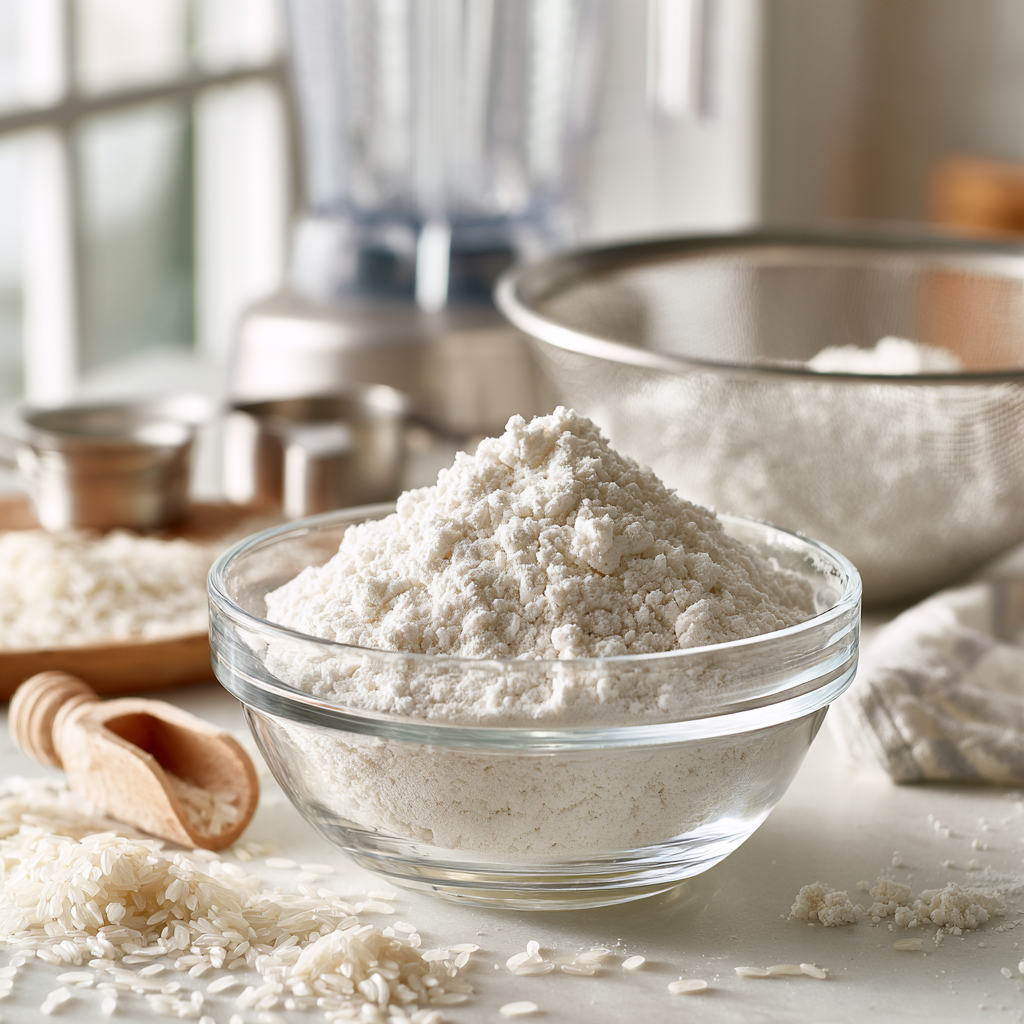
Learn how to make white rice flour at home with just one ingredient and a high-speed blender or grain mill. This easy homemade rice flour recipe takes less than 10 minutes to prepare and creates fresh, fine, gluten-free flour perfect for baking, cooking, thickening sauces, pancakes, noodles, and more. Making your own white rice flour is cost-effective, preservative-free, and allows you to control the texture for different recipes.
Prep Time 5 minutes
Cook Time 0 minutes
Total Time 5 minutes
Servings: 2
Course: Pantry Staple
Cuisine: International
Calories: 26

Ingredients
  

  • 2 cups uncooked white rice long-grain, jasmine, basmati, or medium-grain

Equipment

  • High-speed blender, grain mill, or coffee grinder
  • Fine mesh sieve
  • Large mixing bowl
  • Measuring cups
  • Airtight container or glass jar (for storage)
  • Spoon or spatula

Method
 

  1. Measure the rice. Add 2 cups of dry, uncooked white rice to your work area.
    How to Make White Rice Flour
  2. Add rice to the grinder. Place ½ to 1 cup of rice into a high-speed blender or grain mill. Avoid overfilling to ensure even grinding.
  3. Grind the rice. Blend for 30–60 seconds, or until the rice becomes a fine powder. If needed, stop and stir the rice between pulses for even grinding.
  4. Sift the flour. Pour the ground rice through a fine mesh sieve into a bowl. This removes any coarse particles.
  5. Regrind larger pieces. Return the coarse rice left in the sieve to the grinder and blend again until finely ground. Repeat until all the rice has been processed.
    How to Make White Rice Flour
  6. Cool if necessary. If the flour feels warm after grinding, allow it to cool completely before storing.
  7. Store properly. Transfer the finished white rice flour to an airtight container or glass jar. Store in a cool, dry place for up to 3 months, refrigerate for up to 6 months, or freeze for up to 1 year.
Video

Notes

  • Use only dry, uncooked rice. Cooked or damp rice will not grind into flour.
  • Grind in small batches for the finest texture.
  • Sifting is essential if you plan to use the flour for cakes, cookies, or other baked goods.
  • A grain mill produces the finest flour, but a high-speed blender works well for most home kitchens.
  • Different rice varieties produce slightly different flavors and textures. Long-grain white rice is the most versatile choice.
  • Homemade white rice flour is naturally gluten-free, but if you have celiac disease, ensure your equipment has not been contaminated with gluten-containing grains.
  • For the freshest flavor and best baking results, make only the amount of flour you expect to use within a few weeks.